
In this guide
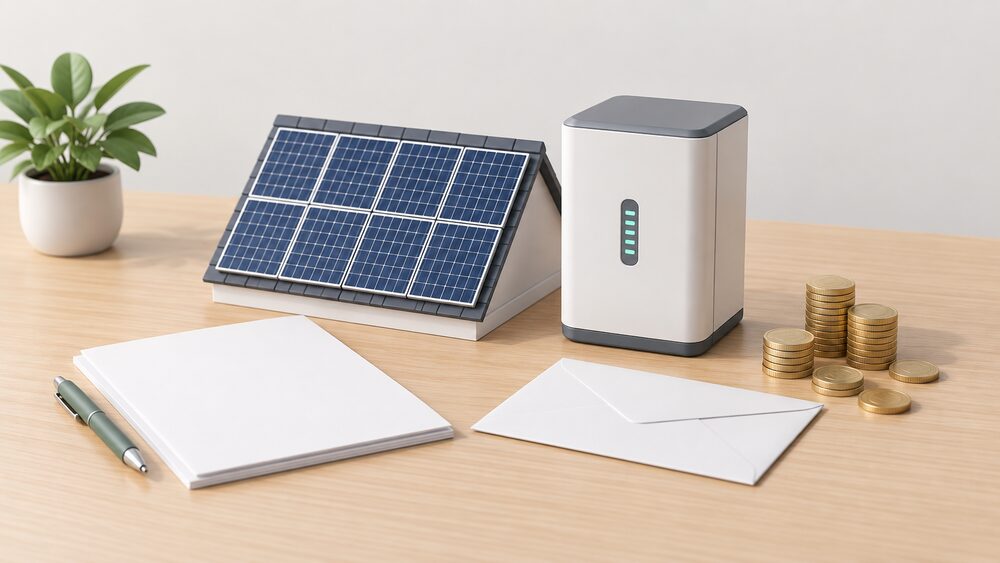
Good Energy is a British renewable electricity supplier that most households encounter for one of two reasons: they want a supply they can call genuinely renewable, or they have solar panels and want to be paid for what they export. On the export side, the company's Solar Savings tariff has paid 15p per kWh, and its Solar Savings Exclusive rate has paid 25p per kWh to customers who had panels and a battery installed by Good Energy Solar1. Against a market where export rates run from 1p to 25p per kWh, that puts the top rate at the ceiling of what is available1.
The catch is in the conditions. The 25p rate is not open to every solar household: it is tied to a system the company installed itself. The standard Solar Savings rate has also moved, falling from 15p to 12p per kWh in July 20261. Good Energy is exempt from the energy price cap, which means its import prices are not capped in the way a standard supplier's are2.
Good Energy's tariffs at a glance
Good Energy's published tariff list is split between what a new customer can actually choose and what existing customers are still on. The company states plainly that if you are already on a Good Energy tariff you can find the rates listed, but that you cannot switch to any of the closed ones, which include Variable Rate, Electric Vehicle, Heat Pump and Price Capped products4. Anyone arriving at the site to switch, or to change an existing Good Energy tariff, chooses from the current range instead4.
That distinction matters more than it first appears. A household searching for a Good Energy EV tariff or heat pump tariff may find rates published that are no longer open to them, because those products have been withdrawn from new business while remaining live for the customers already on them. The current offer is narrower: Good Energy says it offers fixed tariffs, including a fixed EV tariff and a fixed Heat Pump tariff, both of which offer off-peak energy rates3.
On the structure of tariffs generally, Ofgem describes three main types: fixed rate, standard variable, and multi-rate5. Good Energy's own smart tariff pages confirm that some of its tariffs are fixed and some are variable6. For a household, the practical question is which of those three shapes a given Good Energy product takes, because that determines whether the rate can move and whether leaving early costs anything.
| What you are choosing | Good Energy position |
|---|---|
| Fixed tariffs | Offered, including fixed EV and Heat Pump tariffs with off-peak rates3 |
| Variable tariffs | Offered; rates updated to keep the tariff fairly priced6 |
| Closed tariffs | Variable Rate, Electric Vehicle, Heat Pump, Price Capped: existing customers only4 |
| Gas time-of-use | Not offered; only the electricity tariff changes6 |
How Good Energy sources and matches its electricity
Good Energy's central claim is about matching rather than simply buying renewable certificates. The company reports an 87% half-hourly match between renewable generation and customer demand in 2026, and the Matched Clean Power Index rankings from May 2026 place it first among suppliers for real-time matching of customer electricity use to renewable generation.
That is a different proposition from the standard green tariff, where a supplier buys enough renewable certificates to cover annual consumption but makes no claim about what is flowing at any given half hour. Time-matching is the harder test, and it is the one Good Energy is staking its position on. The company describes its Standard tariff as priced to reflect the true cost of supplying 100% renewable electricity in a volatile market, as well as covering the non-energy-related costs all suppliers must pay3.
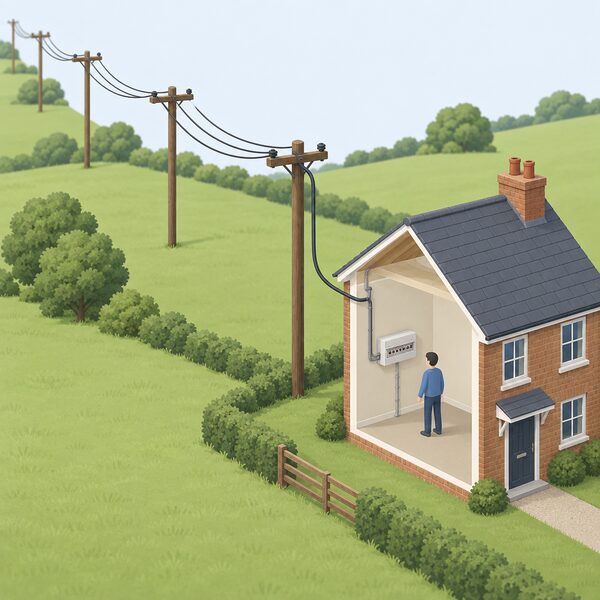
For a household thinking about independence, the honest reading is this: a Good Energy supply still comes through the same grid, the same wires and the same national system as any other supplier. What changes is the contractual and financial link to renewable generation, and the strength of the matching claim behind it. It does not make a home self-sufficient, and it does not insulate a household from wholesale price movements, because the cost of renewable electricity moves with the same market. The independence it offers is a claim about provenance, not about physical supply. Households weighing that against generating their own power can compare the two routes in tariffs and household energy independence.
The tariff range: fixed, time of use and export options
Good Energy's current range divides into import tariffs and export tariffs, and the two are often discussed together because solar households need both.
On the import side, the fixed EV and Heat Pump tariffs both offer off-peak energy rates3. Time-of-use tariffs of this kind use a smart meter to log electricity use and charge different rates during different time windows7. They are optional products, not something a household is placed on by default8. Independent guidance notes that time-of-use tariffs suit households with green technology such as a heat pump, battery storage or an electric or hybrid car, because those are the loads that can be moved into cheaper windows7.
The export side is where Good Energy is best known. Solar Savings pays for electricity exported to the grid, and Solar Savings Exclusive pays a higher rate where the company installed both the panels and the battery1. The company also runs an EV Charge tariff, which it describes as offering a saving compared with the Good Energy Standard tariff9. Since April 2026, EV ownership has been a requirement for anyone joining EV Charge.
For households comparing export options across suppliers, the wider picture is set out in Smart Export Guarantee rates and in Good Energy vs Octopus Smart Export Guarantee tariffs.
Export payments: Solar Savings and rates up to 25p per kWh

The export rates are the reason most solar households look at Good Energy, so they are worth setting out precisely. As recorded in April 2026, Solar Savings paid 15p per kWh to Good Energy customers, and Solar Savings Exclusive paid 25p per kWh to Good Energy customers who had solar panels and a battery installed by Good Energy Solar1. Across the market as a whole, export rates ran from 1p to 25p per kWh1.
The 25p figure is therefore the top of the observed range, and it comes with the tightest condition: the system has to be the company's own installation. Good Energy states that the higher rate is unlocked when solar panels and a battery are installed together9. A household with an existing system fitted by someone else would not meet that condition on the published terms.
The standard rate has also been reduced. Solar Savings fell from 15p to 12p per kWh in July 20261. That is a 3p reduction on the earlier figure, and it illustrates the central risk of export tariffs: the rate is set by the supplier and can change, so a household should not treat any export rate as fixed for the life of a system unless the tariff terms say so.
"The amount you can get paid for exporting energy from your solar panels varies from a paltry 1p to 25p per kWh."
Two practical points follow. First, the value of an export tariff depends on how much a household actually exports, which in turn depends on whether the generation is used in the home or stored. Second, the payment mechanics matter: Good Energy moved Solar Savings Exclusive payments from quarterly to monthly in April 20261. Households wanting the background on how export schemes work should read the Smart Export Guarantee and applying for an export tariff.
Smart meters, switching and how the tariffs work in practice
Good Energy's smart tariffs depend on a smart meter, and the company is direct about the sequence. If you already have a smart meter capable of communicating with Good Energy, it says it should be able to move you to your chosen tariff within a few days. If you do not have one, it will organise for a free smart meter to be installed6.
That is not a formality. Smart meters are what allow suppliers to offer time-of-use rates, where electricity may be cheaper at certain times of day10. They are compatible with Economy 7 tariffs and fixed rate tariffs, and they allow a household to switch tariffs without changing the meter11. Ofgem notes that a smart meter gives access to more flexible tariffs, including dual-rate ones12. Independent guidance is blunt that a smart meter is needed to access the full benefits of flexible tariffs and schemes13.
The dependence this creates is worth naming. A time-of-use tariff only delivers savings if the household can actually shift load into the cheap windows, and the meter is what makes the measurement possible. Without a smart meter, the flexible end of Good Energy's range is simply unavailable.
On switching, the standard comparison factors apply: unit rates and standing charges, whether prices are fixed or can change, the length of any fixed-term contract, payment methods, customer service, and any additional benefits or incentives14. Fixed rate tariffs in the wider market run for 12, 24 or even 36 months15. Good Energy's variable tariffs carry no exit fee, and the company says you are free to switch to another tariff or supplier at any time6. For fixed tariffs, it says any exit fees will be listed on the Tariff Information Label6.
Costs, discounts and how prices change

Good Energy is exempt from the energy price cap2. That is a significant structural point: the cap does not limit what the company can charge, so its prices are set by its own cost base and its renewable sourcing rather than by the capped default rates most households know. The company's own explanation is that its Standard tariff is priced to reflect the true cost of supplying 100% renewable electricity in a volatile market, plus the non-energy costs all suppliers pay3.
Price changes are announced in advance. Good Energy Standard rates change on 1 October 2026, and the Deemed & Default tariff changes on the same date3. The company states that it will always let customers know if prices are changing and explain why4. For fixed Direct Debit customers, it gives at least 10 days' notice of a first payment being taken and at least 10 days in advance of any change to the payment3.
The Direct Debit discount has a history worth knowing. On 1 November 2023, the discount on the Default tariff began applying only to customers paying by Direct Debit, with rate changes for other payment methods. Payment method is one of the levers suppliers use, and it is worth checking the Tariff Information Label for the tariff in question rather than assuming a discount applies.
For context on how the cap works and what it does and does not cover, see the energy price cap and fixed-rate energy tariffs. Households wanting to understand what a fixed term actually locks should read exit fees and tariff contract terms.
Good Energy as a company: B Corp status, accreditations and service record
Good Energy Limited is a voluntary Feed-in Tariff Licensee, and as of November 2022 it was serving over 182,000 FIT customers16. Ofgem's licensee contact list records Good Energy under the Voluntary Feed-in Tariff Licensees category, with encompassing licences17. That matters because it means the company administers legacy Feed-in Tariff payments as well as its own export products, which is a regulated function rather than a marketing one.
The Feed-in Tariff scheme itself requires participating licensed electricity suppliers to make payments on electricity generated or exported by accredited installations18. Ofgem's annual report on the scheme describes it as requiring FIT Licensees to pay owners of accredited installations for the electricity their installations generate and export, and notes that the scheme delivers further benefits including a reduction in Britain's reliance on expensive gas imports19. Owners of accredited installations are called FIT Generators, and active installations are those still within their eligibility period19.
For a household, the relevance is that Good Energy's export business sits inside a regulated framework with defined payment obligations, not outside it. The company's own renewable claims, by contrast, are commercial claims. Households comparing green supply claims across suppliers can read energy tariffs and Ecotricity tariffs for a like-for-like view.
Installation services and what owning a system means for independence

Good Energy Solar installs panels and batteries, and the installation is what unlocks the higher export rate. The company states that solar packages start from £6,380 including installation, correct as of June 2026. The higher Solar Savings Exclusive rate is available when panels and a battery are installed together9.
Owning a system changes the household's position in a way that a tariff alone cannot. A solar household generates its own electricity, uses what it can, exports the rest, and buys the shortfall. The export tariff determines what the exported portion is worth; the import tariff determines what the shortfall costs. Good Energy's structure ties the best export rate to its own installation, which means the household's return depends partly on a continuing commercial relationship with the installer as well as the supplier.
The dependence that remains is real. A solar household is still connected to the grid, still needs a supplier for the periods it cannot generate, and still relies on a smart meter to measure and be paid for export. Independent guidance notes that energy tariffs are being offered that pay households for exporting renewable energy to the smart energy system, and that these are obtainable by getting a smart meter installed20. The Feed-in Tariff scheme's own stated benefit, a reduction in reliance on expensive gas imports, describes a national effect rather than a household one19.
Scotland has moved on the licensing side: a new, opt-in licensing regime for installation and maintenance work is set out in draft legislation21. Households in Scotland weighing an installation should note that the regime is opt-in and in draft, so the position is not yet settled. For the wider picture on what self-generation does and does not change, see exporting from a home battery and solar and battery import tariffs.
Sources21 cited
- Smart Export Guarantee rates: the best and worst SEG tariffs for solar panel owners, Which?, 2026-04
- Green electricity tariffs, Centre for Sustainable Energy, 2026-07
- Price change FAQs, Good Energy, 2026-09-15
- Tariff information labels, Good Energy, 2026-09-17
- Understand your electricity and gas bills, Ofgem, 2026
- Smart tariff FAQs, Good Energy, 2026-02-19
- Time-of-use tariffs: all you need to know, Energy Saving Trust, 2026-04-24
- Smart meter cost, Smart Energy GB, 2026-04-07
- Whole home block, Good Energy, 2026-09-20
- Time-of-use tariffs: the benefits, Smart Energy GB, 2026-08-19
- Supporting energy security, Smart Energy GB, 2026-04-08
- Get help with your smart meter, Ofgem, 2026
- What is Economy 7, Smart Energy GB, 2026-04-07
- How to check your energy tariff and switch if you find a better deal, British Gas Energy Trust, 2026-07-30
- Fixed and variable tariffs: what's the difference, Energy Helpline, 2026-09-20
- Energy customers who produce renewable energy get £800,000 compensation, Ofgem, 2022-11-14
- FIT licensee contact details, Ofgem, 2026-09-17
- Feed-in Tariffs quarterly report issue 63, Ofgem, 2026-03-30
- Feed-in Tariffs Annual Report Scheme Year 13, Ofgem, 2023-12
- Myth-busting smart meter problems, Smart Energy GB, 2026-09-17
- Draft Buildings (Heating and Energy Performance) and Heat Networks (Scotland) Bill explanatory notes, Scottish Government, 2025-11-18
 Good EnergyGood Energy sells electricity it says is fully renewable, but its standard tariff is not covered by the price cap, so it usually costs more than the big suppliers.