

In this comparison
Good Energy and Octopus Energy sit at opposite ends of the Smart Export Guarantee market in structure, if not always in headline rate. Good Energy's standard Solar Savings export tariff pays 12p per kWh, and its Solar Savings Exclusive tariff pays 25p per kWh for customers who install both solar panels and a battery with Good Energy, for the first 12 months1. Octopus Energy's plain Smart Export Guarantee tariff pays 4.1p per kWh, while its Outgoing Octopus tariff pays 12p per kWh and its Intelligent Octopus Flux Export tariff averaged 27p per kWh in the year to the SEG's fifth annual report2.
The difference that matters most to a household is not the top rate but the condition attached to it. Good Energy's 25p rate is tied to buying the installation from Good Energy; Octopus's highest-paying export tariff is tied to letting Octopus control battery exports, and its SEG tariffs are open to any Octopus customer who exports electricity, whether or not they bought solar equipment from the company1.
Both are export-only arrangements layered on top of an import supply contract, and both need half-hourly metering. What follows sets out the rates, who each suits, the smart meter requirement, how rates move, and what each supplier's credentials are.
What the two suppliers offer on export
Good Energy runs two export products. Solar Savings is the standard tariff, open to households with solar-only systems or systems installed by another provider, and it pays 12p per kWh1. Solar Savings Exclusive pays 25p per kWh, but only for customers who had solar panels and a battery installed by Good Energy Solar, and only for the first 12 months1. Independent guidance describes Good Energy's solar export rates as among the more generous6.
Octopus Energy's export range is wider and its conditions differ in kind. Its plain Smart Export Guarantee tariff pays 4.1p per kWh and is available to anyone4. Outgoing Octopus pays 12p per kWh with no fixed end date3. Intelligent Octopus Flux Export averaged 27p per kWh, the second highest rate available in the SEG's fifth year, and was available to customers on the Intelligent Flux import tariff who had solar PV and battery storage but also allowed Octopus to control their battery exports2. Octopus Flux pays for export at peak times, and Intelligent Octopus Flux is a two-rate tariff with matching import and export prices and automated battery management that charges when power is cheapest and exports between 4pm and 7pm4.
The structural difference is what each supplier wants in return. Good Energy's best rate is bought with an installation contract. Octopus's best rate is bought with control of the battery. A household with panels but no battery, and no intention of buying one, is choosing between 12p from Good Energy and 4.1p or 12p from Octopus, depending on which Octopus product it takes1.

Export rates: 12p on Solar Savings, up to 25p with solar and battery

The spread between the two suppliers is best read as a set of tiers rather than a single comparison.
| Tariff | Supplier | Export rate | Condition |
|---|---|---|---|
| Solar Savings | Good Energy | 12p per kWh | Solar-only systems, or systems installed by another provider1 |
| Solar Savings Exclusive | Good Energy | 25p per kWh | Panels and battery installed by Good Energy, first 12 months1 |
| Smart Export Guarantee | Octopus Energy | 4.1p per kWh | Anyone4 |
| Outgoing Octopus | Octopus Energy | 12p per kWh | No fixed end date3 |
| Intelligent Octopus Flux Export | Octopus Energy | 27p per kWh average | Intelligent Flux import customers with solar and battery, battery exports controlled by Octopus2 |
The context for these numbers is the floor of the market. In the SEG's fifth year the lowest tied and untied tariffs were 5p per kWh (Octopus) and 1p per kWh (E Energy) respectively2. Against that, 12p is well above the bottom and 25p or 27p is at the top. Historical comparison shows how far rates have moved: in the SEG's third year the highest rate available was Octopus's Tesla Outgoing July 2022 v1 tariff at 25.48p per kWh8, and in 2020 an example put annual earnings at £82.50 for exporting 1,500kWh on Eon's Fix & Export Exclusive tariff or Octopus Energy's Outgoing Fixed tariff9.
22p depending on time of day. Both are recorded here as stated, and the disagreement is unresolved.
Who each tariff suits: solar only, solar plus battery, or export only
Independent guidance maps household types onto tariff types fairly cleanly. A household with solar panels only is probably best off looking for the best SEG rate export tariff10. A household with solar panels and a battery has more options: a dedicated solar and battery tariff, or a good SEG tariff matched with a dynamic import tariff or an Economy 7 tariff10. A household with a battery but no solar generation is best off with either a dynamic tariff or Economy 710.
Applied to these two suppliers, that produces a clear split. A solar-only household comparing Good Energy and Octopus is comparing 12p against 4.1p or 12p, and the Good Energy standard tariff is the stronger of the two on rate alone1. A solar and battery household that bought its system from Good Energy can reach 25p for 12 months1. A solar and battery household willing to hand battery control to Octopus can reach an average of 27p2. A household that wants a dedicated solar and battery import tariff alongside export has more to weigh, because the import side and the export side are separate decisions.
For households assembling a package, independent guidance suggests looking for a good SEG tariff for exported electricity and then either a dynamic tariff or a heat pump tariff for import, from the same company10. That points to suppliers offering both sides of the arrangement, which both Good Energy and Octopus do.

Smart meter requirement and how the switch works
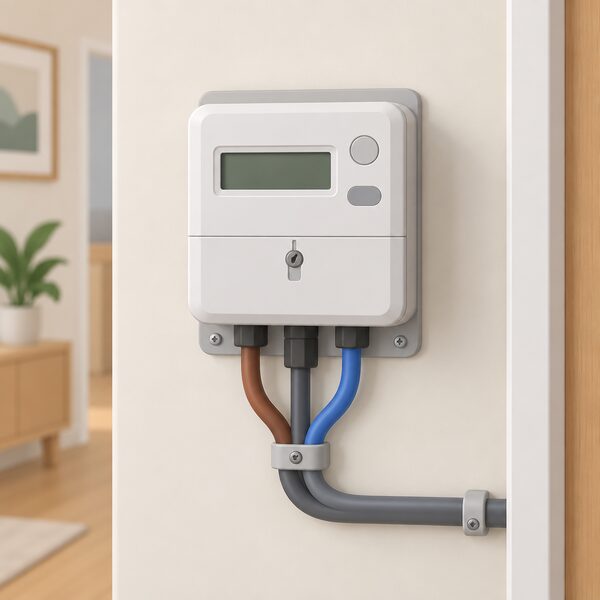
Export tariffs need half-hourly data. Signing up to a tariff that pays for exporting solar electricity requires a meter that can give half-hourly readings, generally a smart meter5. The same requirement runs through flexible tariffs generally: a smart meter is needed to get all the benefits from new flexible energy tariffs11, to access the full benefits of flexible schemes and smart tariffs12, and smart time-of-use tariffs need a meter that communicates with the supplier every half hour14. A smart meter is essential for tracking energy use with time-of-use tariffs and monitoring any exported energy15.
The SEG itself obliges suppliers to offer tariffs for exported electricity, so an export tariff is not discretionary on the supplier's side16. On the switching process, some suppliers simplify the switch from one tariff to another, offer clear guidance, handle most of the process and may help with smart meter installation, and Octopus is named among them17. Octopus's SEG tariffs are available to all Octopus customers who export electricity18.
A dual fuel switch carries a 14-day cooling-off period during which a household can change its mind and opt out, still paying for energy used19. The published facts do not set out a separate cooling-off period for export-only arrangements, and no switching timescale is given for Good Energy export tariffs. The documented contract term is the first 12 months of Solar Savings Exclusive1.
How Good Energy's export rates compare on value

On the standard tier, Good Energy's 12p per kWh matches Octopus's Outgoing tariff at 12p and sits well above Octopus's plain SEG tariff at 4.1p1. On the premium tier, Good Energy's 25p for 12 months sits just below the 27p average recorded for Intelligent Octopus Flux Export in the SEG's fifth year1.
The comparison changes once conditions are priced in. Good Energy's 25p requires buying panels and a battery from Good Energy, and the supplier states solar packages start from £6,380 including installation, correct June 20261. Octopus's highest rate requires giving Octopus control of battery exports2. Neither is a like-for-like rate comparison with the other; each is the top of a different ladder.
The floor of the market matters for judging both. With the lowest untied tariff at 1p per kWh and the lowest tied tariff at 5p per kWh in the SEG's fifth year, both suppliers pay well above the bottom of the range2. Independent coverage has described Good Energy's solar export rates as among the more generous6, and Octopus as offering some of the highest export tariff rates without requiring customers to buy their solar solutions18.
For a household weighing independence, the trade is visible. A higher export rate bought with an installation contract ties the household to one company for the hardware; a higher export rate bought with battery control ties the household to one company for the timing of its exports. The standard tariffs at both suppliers leave the household free of both conditions and pay less.
Rate changes and notice: what happens when prices move
Export rates are not fixed in the way import unit rates can be. Good Energy's Solar Savings export rate fell from 15p per kWh to 12p per kWh in July 20261. Good Energy's Standard, Deemed and Default, and Traditional Prepayment and Smart Prepayment tariffs all change rates on 1 October 20261. In April 2026 Good Energy shifted Solar Savings Exclusive export payments from quarterly to monthly4.
On the import side, the mechanics are better documented. A fixed-rate energy tariff keeps the price per unit the same even if the market price of energy changes20. A standard variable rate tariff is tied to Ofgem's energy price cap, so it changes when the cap changes21. Octopus's Agile tariff changes the price every half hour in line with the changing wholesale price of electricity22. Octopus Energy fixed-price tariffs allow switching without an exit penalty if energy prices fall below what is being paid23. Households switching should be aware of any exit fees they may have to pay24.
For the older Feed-in Tariff scheme, generation and export tariffs are adjusted every April by the RPI percentage increase or decrease over the previous calendar year, and for installations with an eligibility date in the latest quarter before 1 April the generation tariff is not adjusted by RPI until the following year25. That is a different scheme from the SEG, but it shows the pattern of annual indexation that some export arrangements follow.
The published facts do not set out a notice period for SEG export rate changes at either supplier. What is documented is that rates do move, and that Good Energy's standard export rate moved down by 3p per kWh in July 20261.
Good Energy as a supplier: accreditation, matching and company credentials
Good Energy holds encompassing licences, recorded in Ofgem's licensee contact list26. The supplier reports an 87% half-hourly match between renewable generation and customer demand in 2026, which it describes as ranking it top for time-matching in the UK1. The Matched Clean Power Index rankings from May 2026 place Good Energy first among suppliers for real-time matching of customer electricity use to renewable generation1.
Octopus Energy is a Which? Recommended Provider4. It ranked 4th in the supplier comparison table for January to March 2026, and offers prepayment27. Independent guidance records that up to 100% of Octopus's renewables in green tariffs came from renewable sources in the year to 31 March 202528.
Both suppliers operate in a market where the SEG requires suppliers to offer export tariffs16. The SEG's annual reporting shows how rates have moved across the market: the highest rate in the third year was 25.48p per kWh, and by the fifth year the lowest tied and untied tariffs were 5p per kWh and 1p per kWh respectively2.
For a household, the credentials that matter for export are narrower than for import. An export tariff depends on the supplier's ability to meter, pay and keep paying. Good Energy's time-matching record and Octopus's customer-service recognition are the documented markers here1. The wider question of what an export tariff does for a household's energy independence, and what dependence on a supplier remains, is set out in tariffs and energy independence.
Getting a quote and contacting Good Energy
Good Energy publishes hello@goodenergy.co.uk as its contact address, and the same address appears in guidance on energy refunds and on contacting your supplier26. Octopus Energy publishes hello@octopus.energy, and a separate address, hello@octoenergy.com, appears in the same Ofgem list26.
For a household comparing the two, the practical route is to establish first whether the property has the half-hourly metering an export tariff requires, then which tier of each supplier's range the installation qualifies for5. A solar-only household installed by a third party qualifies for Good Energy's standard 12p tariff and for Octopus's SEG or Outgoing tariffs, but not for either supplier's premium tier1. A household that bought panels and a battery from Good Energy qualifies for 25p for 12 months1. A household willing to let Octopus control battery exports can reach the Intelligent Flux arrangement2.
The published facts do not give a switching timescale for Good Energy export tariffs, and no quote process is documented beyond the contact addresses. Prices for solar and battery installations are installer-quoted; the only published figure is Good Energy's stated solar package starting price of £6,380 including installation, correct June 20261. For the wider picture of how export tariffs fit into a household's arrangements, see the Smart Export Guarantee and SEG export rates.
Sources30 cited
- What is the Smart Export Guarantee?, Good Energy, 2026-07-10
- Smart Export Guarantee Annual Report Year 5, Ofgem, 2025-12
- Smart Export Guarantee, Solar Energy UK, 2026-05-12
- Smart Export Guarantee rates: the best and worst SEG tariffs, Which?, 2026-04-24
- Smart meter problems and solutions, Which?, 2026-08-24
- Which? reveals the best and worst energy suppliers for sustainability, Which?, 2024
- Time of use tariffs explained, Which?, 2026-04-23
- SEG 2022-23 Annual Report, Ofgem, 2023-09
- Solar panels and renewable energy: costs and rewards in 2020, Which?, 2020-01-12
- Tariffs for renewable technology, Energy Saving Trust, 2026-08-12
- Energy flexibility, Smart Energy GB, 2026-08-17
- Smart meter cost, Smart Energy GB, 2026-04-07
- How smart meters work with heat pumps, Smart Energy GB, 2026-04-24
- Should I switch to a time of use tariff?, Energy Saving Trust, 2026-01-23
- Integrating solar panels with EV charging, Uswitch, 2025-07-02
- New calculator shines a light on solar panels, Energy Saving Trust, 2026-08-17
- Should EV owners get fixed or time of use tariff?, Uswitch, 2025-07-02
- Solar panel costs, Which?, 2026-08-03
- How to compare dual fuel tariffs, Confused.com, 2025-11-03
- Fixed rate tariffs and switching, Home Energy Scotland, 2024-02
- Switching your energy supplier, Energy Saving Trust, 2026-06-26
- Smart homes, lower carbon footprint, Energy Saving Trust, 2026-01-21
- Octopus price changes, Uswitch, 2026-07-10
- Energy savings tips, British Gas Energy Trust, 2026-02-27
- FiT FAQ v5, Ofgem, 2018-12
- FiT licensee contact details, Ofgem, 2026-09-17
- Octopus Energy details, Citizens Advice, 2026-09-20
- Green energy, Uswitch, 2024-04-01
- Energy refunds, Uswitch, 2025-10-29
- How to contact your energy supplier, Uswitch, 2026-02-09
 Export Rates Per kWhHow much will your supplier pay you for the solar power you send to the grid, and why do rates vary so much from one company to another?
 Tariffs and Energy IndependenceA tariff decides what you pay for power from the grid and what you get paid for sending solar back.
 Export Tariff EligibilityTo get paid for solar power you send to the grid, you need a certified installer, your network operator told about the connection, and a meter that records what you export.
 Solar and Battery Import TariffsWhat does a special import tariff actually get you when you have solar panels or a home battery?
 The Full Tariffs GuideWhich energy tariff suits how you live, and will switching really save you money?
 Export Tariff ApplicationsHow the Smart Export Guarantee application works, how export readings are collected, and how often payments are made.