
In this answer
Short answer
There is no minimum Smart Export Guarantee rate in any meaningful sense. The only legal floor is zero: the scheme rules require that any SEG tariff rate offered must always be above zero, and Ofgem states that all SEG tariffs must pay a rate greater than 0p per kWh at all times1. A supplier cannot pay nothing, but it can pay very close to nothing.
What suppliers actually pay is a different matter. The spread of published rates runs from 1p to 25p per kWh, and the lowest fixed tariff in the current market pays 1p per kWh with no stated end date2. One supplier's rate has been reported as low as 0.01p per kWh, which satisfies the letter of the rule while being worth almost nothing on a typical export volume3.
The practical consequence is that the SEG guarantees a payment, not a price. Rates, contract lengths and terms are set by each licensed supplier, so the gap between the best and worst export tariff is a commercial choice rather than a regulatory one. For a household with solar panels, the export tariff is therefore a shopping decision, not a protected entitlement.
The short answer: the only legal minimum is above zero
The SEG has no floor price expressed in pence. The obligation is qualitative: a SEG licensee must offer an above-zero export tariff for an eligible installation when the stated conditions are satisfied, and the scheme rules repeat that SEG tariff rates must always be above zero1. Ofgem's annual report on the scheme puts the same point in plainer terms: all SEG tariffs must pay a rate greater than 0p per kWh at all times6.
That is the whole of the guarantee. It rules out a nil-rate tariff, and it rules out a tariff that could fall to zero under a variable structure, but it says nothing about how far above zero a rate must sit. A tariff paying 0.01p per kWh is compliant. A tariff paying 1p per kWh is compliant. So is one paying 25p.
The distinction matters because the phrase "minimum SEG rate" is often read as though a floor price exists somewhere in the regulations. It does not. The floor is a boundary condition on the supplier's freedom to set rates, not a protected level of income for the household. Everything above zero is left to the market, and the market is wide.
For a household, the honest reading is that the SEG protects the principle of payment for exported electricity. It does not protect the value of that payment. The value depends entirely on which supplier's export tariff the household signs up to, and on the terms attached to it.
What the Smart Export Guarantee is and its legal basis

The SEG came into force on 1 January 2020 under the Smart Export Guarantee Order 2019, and it is a government-backed initiative rather than a voluntary industry scheme1. It is governed by that Order together with Conditions 57 and 58 of the Standard Conditions of the Electricity Supply Licence, which is where the above-zero requirement and the supplier threshold originate7.
Its purpose is narrow and specific: it enables small-scale generators to receive payments from electricity suppliers for electricity which they export back to the National Grid, providing certain criteria are met3. It replaced the export element of the Feed-in Tariff, which closed to new applicants, and it pays only for metered export rather than for generation as a whole8.
The legal architecture explains why there is no set rate. The Order and the licence conditions impose an obligation to offer a tariff and a floor of above zero; they do not fix a price, a contract length or a payment structure. Those are left to each licensee. Ofgem's role is to administer the scheme and report on it, not to set the rates6.
"SEG tariff rates must always be above zero."
Do all suppliers have to offer an export tariff?
No, and the threshold is the reason. The obligation falls on all licensed energy suppliers with over 150,000 customers, who must offer an export tariff to small-scale generators for each unit of electricity sold to the grid, as measured by the meter4. Suppliers below that customer threshold are not bound by the same duty, which means the list of SEG licensees is shorter than the list of domestic energy suppliers.
For households, that has two consequences. The first is that the supplier providing electricity to the home is not automatically the supplier that will pay for exports, although many large suppliers offer both. The second is that the range of available export tariffs is set by a defined group of companies, each of which chooses its own rate, contract length and other terms10.
Ofgem maintains a list of SEG licensees and the tariffs they offer, and it is the authoritative starting point for checking who is obliged to pay and what they currently pay3. Rates change, and a supplier that offered a strong rate in one year may not in the next.
What rates suppliers actually pay: from 1p to 25p per kWh
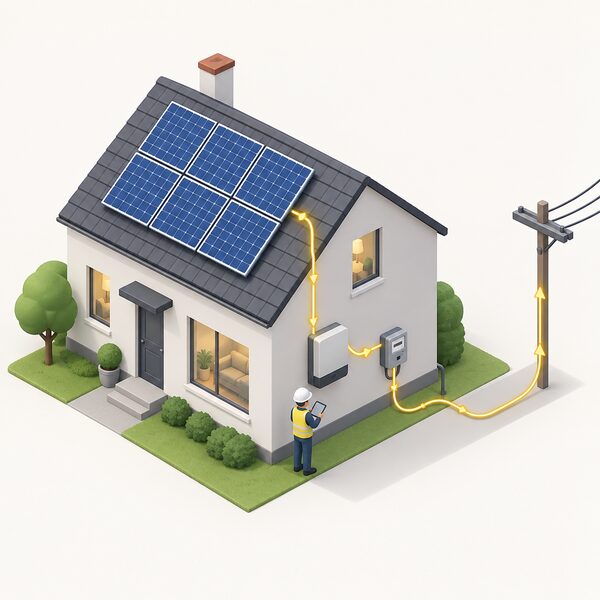
The published range is broad. The amount paid for exporting energy from solar panels varies from 1p to 25p per kWh across the market2. At the bottom, a fixed SEG tariff with no stated end date pays 1p per kWh; at the top, premium tariffs and bundled offers reach 15p per kWh and above2.
| Tariff type | Rate | Contract length |
|---|---|---|
| Lowest fixed SEG tariff | 1p per kWh | No stated end date2 |
| Reported lowest rate | 0.01p per kWh | Set by supplier3 |
| Typical basic tariff | around 2p per kWh | Set by supplier11 |
| Premium or bundled offer | 15p per kWh and above | Set by supplier11 |
| Market range | 1p to 25p per kWh | Varies2 |
The gap between the bottom and the top is not explained by the technology. It reflects how much each supplier values exported electricity, whether the tariff is bundled with an import deal, and whether the supplier wants export volume for its own supply obligations. A basic tariff and a premium tariff can sit with the same company.
The comparison that matters most to a household is against the import rate. SEG rates are often less than what you pay for electricity, so it is worth shopping around12. The standard variable unit rate for electricity in England, Scotland and Wales was 26.11p per kWh from 1 July to 30 September 2026, including VAT, for direct debit customers5. Exporting a unit at 1p and buying it back at 26.11p is a wide spread, and it is the reason export income is a modest offset rather than a route to free electricity.
Why there are no set tariffs and suppliers set their own rates
The absence of a set rate is a deliberate feature of the scheme's design. Unlike the Feed-in Tariff, electricity suppliers determine the tariff they are willing to pay to small-scale generators, so households shop around for the best deal4. SEG licensees determine the rate, contract length and other terms which SEG generators will receive, subject only to the above-zero condition1.
That freedom extends to structure as well as level. A variable SEG tariff varies the price based on market demand, as long as the price never falls below zero13. A fixed tariff holds a rate for a stated term, or in some cases with no fixed end date at all2. Contract lengths are set by the licensee, not by the scheme10.
The result is a market in which the same household, with the same panels and the same export volume, can be paid very different amounts depending on which supplier it chooses. The scheme guarantees that a payment exists; it does not guarantee that the payment is worth having. That is the trade-off Parliament accepted when the SEG replaced the administratively set Feed-in Tariff.
Which products qualify, and the metering that goes with them
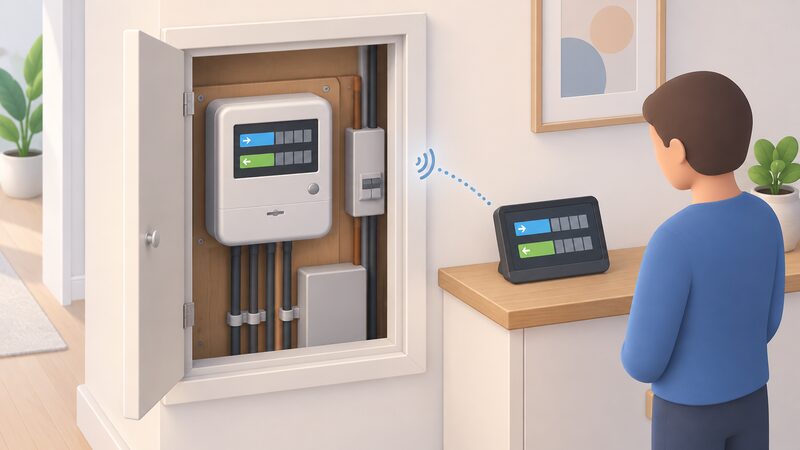
Eligibility rests on the installation and the meter. The system must have been installed by an MCS certified installer using certified products, and generators must have a smart meter to monitor exports in order to qualify14. Payments are calculated using export meter readings, and the export meter must be capable of taking measurements at half-hourly intervals for the volumes for which payment is sought1.
There is a separate route for smaller installations without an export meter. Installations are only eligible for deemed export if they have a capacity of 30 kilowatts or less and do not have an export meter fitted9. Where an accredited installation with a total installed capacity of 30kW or less has an export meter commissioned, the deemed export arrangements cease16.
Connection arrangements sit alongside the tariff. No export limitation scheme is needed if total generation capacity is 3.68kW or less, which most domestic solar PV systems meet17. Where a household plans to install generation but does not want to export to the grid, an export limitation scheme is needed unless generation capacity is lower than minimum demand18.
Is the SEG the same as the old feed-in tariff?
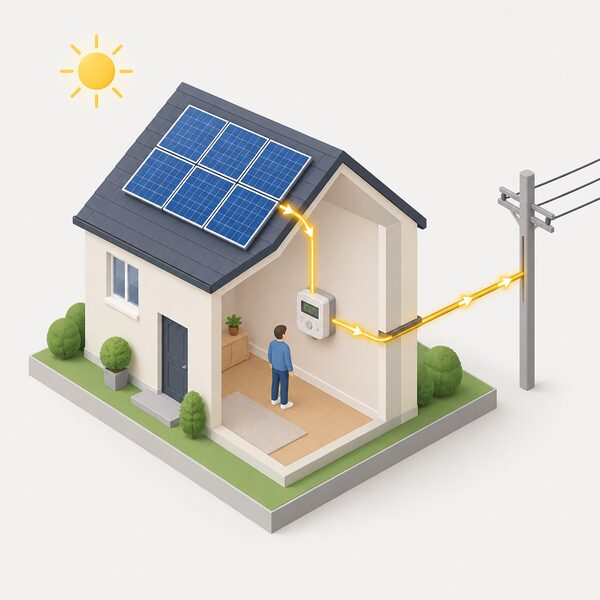
No, and the differences run through the whole scheme. The Feed-in Tariff paid a generation tariff for everything produced plus an export payment; the SEG pays only for exported units, at rates suppliers choose. The Feed-in Tariff has closed to new applicants, while the SEG launched on 1 January 2020 and remains open1.
Households that already receive FIT export payments face a specific step. In order to register for the SEG, a household must first opt out of FIT export payments for its installation by contacting its FIT licensee8. That is a one-way move for the export element: the FIT export payment stops, and the SEG tariff takes its place.
There is some flexibility for households that want both. Some suppliers allow you to keep your FiT tariff and sign on to their SEG export tariff, so the two arrangements can coexist where the supplier permits it14. That is a supplier's commercial choice rather than a scheme rule, and it varies between companies.
The practical difference for a household is the loss of a set rate. The Feed-in Tariff fixed payments administratively; the SEG leaves them to the market, with only the above-zero floor as protection. Households weighing the two can read more in Feed-in Tariff vs Smart Export Guarantee.
How to find and compare SEG export tariffs
Comparison starts with the licensee list. Ofgem publishes the suppliers obliged to offer an export tariff and the rates they pay, which is the only complete register of what is available3. From there, the useful comparison is between the rate, the contract length and whether the tariff is bundled with an import deal.
For solar households, the guidance is direct: you are probably best off looking for the best SEG rate export tariff19. That is a statement about the market rather than a recommendation of any company, and it follows from the spread between 1p and 25p per kWh2.
Switching has a wrinkle. You can move to another supplier without moving your SEG tariff, but you may find yourself moved to a less generous export rate by your old supplier20. The export arrangement and the import arrangement are separate contracts, and changing one does not automatically change the other. Households that want to keep a strong export rate while changing import supplier need to check the terms on both sides.
The wider tariff picture, including how export rates sit alongside import structures, is set out in Smart Export Guarantee Rates: What Suppliers Pay Per kWh and in the pillar guide to UK energy tariffs.
What owning export-eligible kit means for household independence
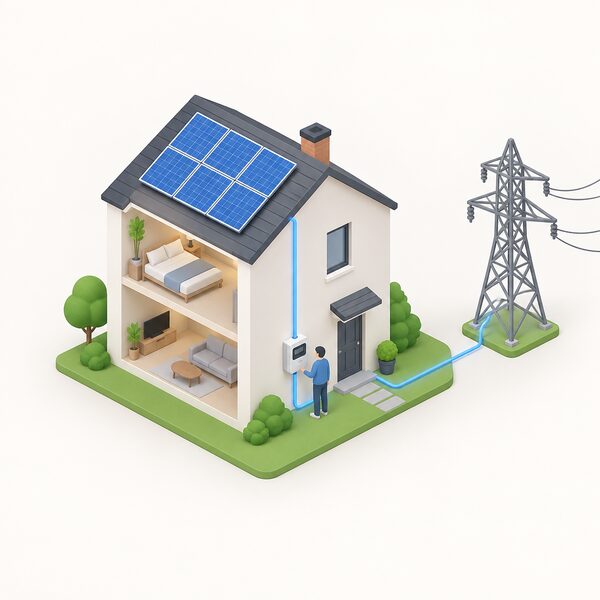
Export-eligible kit changes the direction of a household's relationship with the grid, but only partly. A home with solar panels and a smart meter can sell exported units rather than giving them away, and the SEG obliges large suppliers to buy them at a rate above zero1. That is a real transfer of value from supplier to household, and it is the first time many homes have been paid for anything they produce.
The dependence that remains is substantial. The household still relies on the grid to take its export, on a licensed supplier to buy it, and on a smart meter to measure it1. It relies on the supplier's commercial judgement for the rate, since the scheme sets no floor beyond zero1. And it relies on the import tariff for the electricity it buys back, at a unit rate far above the export rate in most cases5.
The scheme's structure also limits how far export income can go. Rates are set by suppliers, contract lengths are set by suppliers, and the terms can change when a household moves import supplier10. A household that wants to maximise what its kit earns needs to treat the export tariff as a live contract to be reviewed, not a set-and-forget arrangement.
For a fuller account of how export payments fit into a household's overall position, see Tariffs and Household Energy Independence and The Smart Export Guarantee: How Households Are Paid for Export.
Sources20 cited
- Smart Export Guarantee (SEG), Ofgem, 2026
- Smart Export Guarantee rates: the best and worst SEG tariffs, Which?, 2026
- Smart Export Guarantee (SEG) generators, Ofgem, 2026
- Export payments, Electricity North West, 2026
- Current gas and electricity prices, Centre for Sustainable Energy, 2026
- Smart Export Guarantee Annual Report Year 5, Ofgem, 2025
- Smart Export Guarantee (SEG) electricity suppliers, Ofgem, 2026
- Feed-in Tariffs: FIT generators, Ofgem, 2026
- Key terms explained: Feed-in Tariffs, Ofgem, 2026
- Feed-in Tariffs: scheme closure, Ofgem, 2026
- Feed-in Tariff guide, Uswitch, 2026
- Solar panel costs, Which?, 2026
- Smart Export Guarantee, Energy Saving Trust, 2026
- Smart Export Guarantee, MCS Certified, 2026
- Smart Export Guarantee, Parliamentary Office of Science and Technology, 2026
- FIT Guidance for Licensed Electricity Suppliers V17.1, Ofgem, 2024
- Installations of up to 3.68kW per phase, SSEN, 2026
- G99 fast track process, Electricity North West, 2026
- Tariffs for renewable technology, Energy Saving Trust, 2026
- Can I switch energy supplier if I have solar panels?, Uswitch, 2026
 Export Rates Per kWhHow much will your supplier pay you for the solar power you send to the grid, and why do rates vary so much from one company to another?
 Exporting From a Home BatteryCan you actually get paid for electricity your home battery sends to the grid?
 Export Tariff ApplicationsHow the Smart Export Guarantee application works, how export readings are collected, and how often payments are made.
 Export Tariff EligibilityTo get paid for solar power you send to the grid, you need a certified installer, your network operator told about the connection, and a meter that records what you export.
 What Does a Smart Meter Cost?There is no upfront charge for a smart meter or a standard installation: the cost is recovered indirectly through energy bills.
 The Full Solar Panels GuideHow much do solar panels cost, and what could they save you each year?