
In this answer
Short answer
The Smart Export Guarantee (SEG) pays households for electricity they export to the grid, and the rate is set by each supplier rather than by government. That single design choice explains why the answer to "which tariff pays the most" changes from month to month. Ofgem's Year 5 report puts the average tied tariff at 14.54p per kWh against 4.39p for untied tariffs, a gap of more than three to one1. Individual rates in circulation run from 1p to 25p per kWh2.
The highest published figures sit well above the average. Ofgem's own generator guidance records SEG payments reaching up to 25 pence per kWh as of June 2026, comparable to the unit rate of electricity3. Which? reports that Octopus offers some of the highest export tariff rates, while noting that a household does not have to buy that company's solar solutions to take the tariff4. At the other end, some suppliers pay much less than 15p per kWh5.
What matters for a household's energy independence is that export income is set by a commercial counterparty, not by a regulator. The scheme guarantees a floor above zero and nothing more. Choosing well means reading contract length, tie-in conditions and battery rules as carefully as the headline rate.
What the Smart Export Guarantee pays households for
The SEG requires energy suppliers to compensate households and businesses for the low-carbon electricity they export back to the National Grid2. It replaced the Feed-in Tariff scheme, and like its predecessor it pays for exported units rather than for generation as a whole7. Ofgem describes the scheme as enabling small-scale generators to receive payments from electricity suppliers for electricity exported back to the grid, providing certain criteria are met8.
The obligation falls on larger suppliers. All licensed energy suppliers with over 150,000 customers must offer an export tariff to small-scale generators for each unit of electricity sold to the grid, as measured by the meter9. That is a legal duty, not a voluntary scheme, which is why a household with certified generation can expect at least one offer. The rate attached to that offer is a different matter entirely.
Payments are calculated using export meter readings10. A fixed SEG tariff pays a set rate per kWh of electricity exported over the length of the contract, which makes budgeting straightforward but leaves the household exposed if market rates rise during the term11. The scheme's only price guarantee is a floor: SEG tariff rates must always be above zero, and all SEG tariffs must pay a rate greater than 0p per kWh at all times10.
For a household's independence, the SEG converts a physical surplus into a small cash flow, but it does not remove reliance on a supplier. The generator still needs a licensed counterparty, a registered meter and a settled account. The Feed-in Tariff, now closed to new applicants, paid around £78.4 million in export payments in its fourteenth year on just over 1.3 TWh exported, which gives a sense of the scale of the older scheme12.
Export rates: 1p, 4p, 15p and 25p per kWh compared

Published rates span an unusually wide band for what is nominally the same product. The table below sets out the figures that appear in official and independent sources, with the tariff name where one is given.
| Tariff or source | Rate | Term | Source |
|---|---|---|---|
| Highest recorded in Ofgem guidance | up to 25p per kWh | as of June 2026 | 3 |
| SEG Install Exclusive | 20p per kWh | no fixed end date | 2 |
| Export 12m | 15p per kWh | 12-month fixed term | 2 |
| Octopus SEG tariff | 15p per kWh | not stated | 13 |
| British Gas Export and Earn Plus | 15.1p per kWh | not stated | 13 |
| E.ON Next Export Business v1 | 8.5p per kWh | 12-month fixed term | 14 |
| OVO SEG tariff | 4p per kWh | not stated | 15 |
| OVO SEG tariff (independent listing) | 4.0p per kWh | 12-month fixed term | 2 |
| Lowest listed | 1.0p per kWh | unknown | 2 |
The spread is not explained by geography or by the technology installed. It reflects commercial strategy: some suppliers use a generous export rate to attract solar households and then sell them import electricity, while others offer the statutory minimum above zero and little more. Independent guidance notes that some suppliers offer 15 pence or more per kilowatt-hour but some pay much less5, and that rates can reach as high as 20 to 40p per kWh on the most competitive products16.
A household comparing offers should treat the headline rate as one term among several. A 20p tariff with no fixed end date can be withdrawn or repriced; a 15p tariff fixed for 12 months gives certainty for a year. The independent statistics listing shows tariff length and payment cycle recorded as unknown for some products, which is itself a warning that the terms are not always published clearly2.
There are no set tariffs: why rates vary between suppliers
Tariff rates are set by each supplier separately16. Ofgem confirms that SEG licensees determine the rate, contract length and other terms which SEG generators will receive, and that suppliers can set their own rates provided they offer more than £0 per unit of metered exported power10. There is no cap, no index and no mandated review date.
That structure produces the variation seen above. It also means rates can move without a household's consent at the end of a fixed term, and that a supplier can withdraw a product entirely. Where a supplier fails, the Supplier of Last Resort process moves customers to a new company, but it is not guaranteed that the new tariff will be the same as the old one, so the bill could go up; the new tariff carries no exit fees18.
The practical consequence is that shopping around is not optional. Independent guidance is direct on the point: unlike the Feed-in Tariff, SEG rates vary by supplier, so it is best to shop around for the best deal7. A household that accepts the first offer from its existing supplier may be accepting a rate several times lower than the market's best.
Tied tariffs: 337.8 GWh, or 76.2% of exported electricity
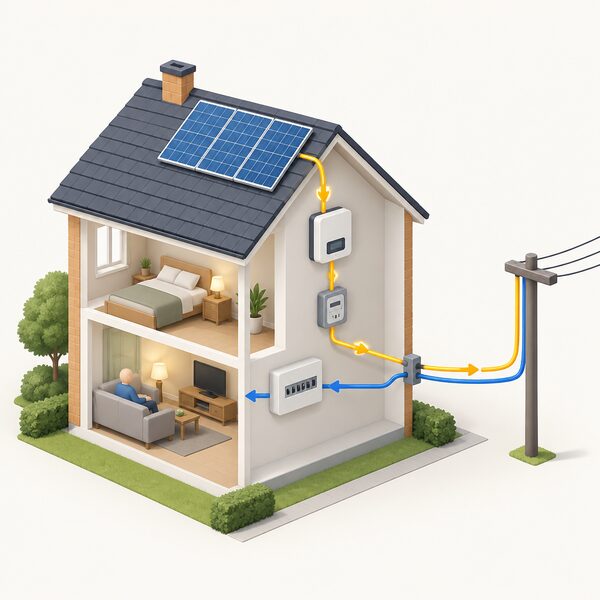
Most exported electricity is paid under tied tariffs, meaning the export tariff is taken from the same company that supplies the household's import electricity. Ofgem's Year 5 report records 337.8 GWh, or 76.2% of exported electricity, on tied tariffs, with the remaining 105.3 GWh (23.8%) on untied tariffs1. By installation count, 226,674 (83.8%) were on tied tariffs at the end of SEG Year 51.
The financial reason is plain in the same report: tied tariffs offered significantly higher rates, at 14.54p per kWh on average, than untied ones at 4.39p per kWh1. Tied tariffs also accounted for 1,284 MW (81.0%) of total installed capacity at the end of SEG Year 5, compared to 300 MW (19.0%) for untied tariffs1.
The trade-off is dependence. A tied tariff concentrates both the import supply and the export purchase in one company, so a household's exposure to that supplier's pricing, service and solvency is doubled. The scheme permits the alternative: a household can apply for a SEG tariff with any SEG licensee, and that licensee does not need to be the same company as the current energy supplier8. Untied tariffs pay less on average, and the household carries the administrative burden of two relationships.
Switching arrangements add a further wrinkle. In theory a household can move to another supplier without moving its SEG tariff, but it may find itself moved to a less generous export rate by the old supplier16. Feed-in Tariff recipients have a separate option: they can discard the FiT export rate and replace it with a SEG tariff while retaining the main generation tariff portion of the FiT payment16.
How Half Hourly Settlement may change export payments
Market Wide Half-Hourly Settlement (MHHS) will result in changes in how suppliers are settled when purchasing electricity to match their customers' demand19. The programme is the structural change most likely to alter export payments over the next few years, because it gives suppliers a clearer picture of when electricity is worth most.
The metering groundwork is already in the licence conditions. An export meter must be capable of taking measurements at half-hourly intervals in relation to the exported electricity volumes for which the SEG generator seeks payment20. That requirement is what makes time-varying export pricing technically possible for domestic generators.
Citizens Advice expects the settlement change to shift the retail market: following Marketwide Half Hourly Settlement, it expects suppliers to offer more Time of Use (ToU) tariffs21. Ofgem's consultation on the technical approach to market wide half hourly settlement is recorded as closed19.
Not every household would need a sophisticated tariff to benefit. Independent analysis of vehicle-to-grid economics found that a simple Economy 7 tariff would unlock most of the value achievable with a responsive half-hourly tariff, which suggests the gains from complex optimisation are smaller than the marketing implies22. For export specifically, the direction of travel is towards rates that vary by time of day rather than a single flat pence-per-kWh figure, which would make the "highest rate" question harder to answer with one number.
Choosing the highest-paying SEG tariff for your home
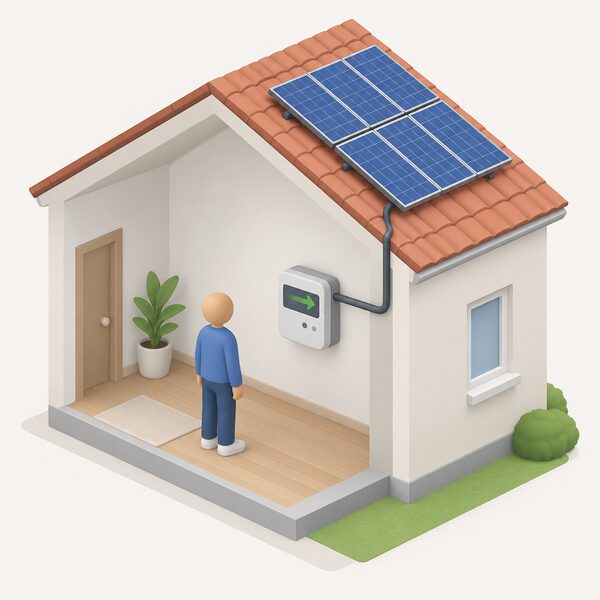
The right tariff depends on what else the household owns. For solar panels alone, independent guidance is straightforward: the best SEG rate export tariff is the priority23. For a home with a heat pump and solar panels, the optimum is a good SEG for export and then either a dynamic tariff or a heat pump tariff for import23. Where a battery is also present, the same logic applies: a good SEG tariff for exported electricity and then either a dynamic tariff or a heat pump tariff for import, from the same company23.
Battery ownership changes the calculation in ways that are easy to miss. A household can still apply for the SEG with an energy storage system, and a battery could store electricity from the grid before exporting it later11. But having a storage battery may render a household ineligible for some SEG tariffs, and exports, and therefore payments, reduce if a storage battery is present24. The tariff conditions, not the headline rate, decide whether a battery home can access a given product.
Metering is the other gate. Generators must have a smart meter to monitor exports3, and a registered smart meter that records exported electricity is required even where the household is not signing up to a smart tariff11. A meter capable of half-hourly readings, generally a smart meter, is needed to sign up to a tariff that pays for exporting solar electricity6. Most accredited Feed-in Tariff installations remain eligible for the SEG provided they have a smart or export meter installed25.
"SEG Licensees determine the rate, contract length and other terms which SEG Generators will receive."
The independence question is worth stating plainly. A SEG tariff turns a household's surplus into income, but the rate, the term and the counterparty are all chosen by a commercial supplier operating under a duty that stops at zero. The household that reads the contract length, the tie-in conditions and the battery rules alongside the pence-per-kWh figure is the one best placed to capture the difference between 4.39p and 14.54p1.
Sources25 cited
- Smart Export Guarantee Annual Report Year 5, Ofgem, December 2025
- Smart Export Guarantee, Solar Energy UK, 2026
- The Smart Export Guarantee, POST, 2026
- Solar panel costs, Which?, 2026
- Solar photovoltaic, CAT, 2026
- Smart meter problems and solutions, Which?, 2026
- Buying a house with solar panels, Energy Saving Trust, 2026
- Smart Export Guarantee (SEG) generators, Ofgem, 2026
- Export payments, Electricity North West, 2026
- Smart Export Guarantee, Ofgem, 2026
- Smart Export Guarantee, Energy Saving Trust, 2026
- FIT annual report SY14, Ofgem, December 2024
- Feed-in Tariff guide, Uswitch, 2026
- Smart Export Guarantee, E.ON Next, 2026
- Export, OVO Energy, 2026
- Can I switch energy supplier if I have solar panels?, Uswitch, 2026
- Smart Export Guarantee, House of Commons Library, 2026
- Energy supplier out of business, Uswitch, 2026
- Energy price cap technical approach to market wide half hourly settlement, Ofgem, 2026
- Draft licence conditions, GOV.UK, 2019
- Citizens Advice response to Ofgem's call for input on the future of domestic, Citizens Advice, 2024
- V2GB vehicle to grid Britain, Cenex, 2026
- Tariffs for renewable technology, Energy Saving Trust, 2026
- Solar panel battery storage, Which?, 2026
- Feed-in Tariffs (FIT) generators, Ofgem, 2026
 Export Rates Per kWhHow much will your supplier pay you for the solar power you send to the grid, and why do rates vary so much from one company to another?
 Tariffs and Energy IndependenceA tariff decides what you pay for power from the grid and what you get paid for sending solar back.
 Solar Export PaymentsIf you have solar panels, how do you actually get paid for the electricity you send back to the grid?
 Solar and Battery Import TariffsWhat does a special import tariff actually get you when you have solar panels or a home battery?
 The Full Solar Panels GuideHow much do solar panels cost, and what could they save you each year?
 The Full Tariffs GuideWhich energy tariff suits how you live, and will switching really save you money?