In this guide
The Smart Export Guarantee (SEG) pays households for electricity they export to the grid, and the application is made to an electricity supplier that offers a SEG tariff, not to Ofgem. Generators apply directly to a SEG licensee, and that licensee does not need to be the same company that supplies the home's electricity1. SEG licensees must offer a SEG tariff to all eligible generators, so the choice is about rate and terms rather than about access1.
The scheme launched on 1 January 2020 under the Smart Export Guarantee Order 2019, replacing the Feed-in Tariff, which closed to new applications in April 20192. Ofgem administers the SEG on behalf of the Department for Energy Security and Net Zero, which owns the policy4. Payments are made by the chosen SEG licensee for electricity exported back to the National Grid5.
Two conditions shape everything that follows. The installation must be located in Great Britain, so the scheme does not extend to Northern Ireland, and it must have a smart or export meter capable of half-hourly measurement1. Payments are calculated using actual export meter readings, and the rate, contract length and other terms are set by the licensee5.
What the Smart Export Guarantee is and who must offer it
The SEG enables small-scale generators to receive payments from electricity suppliers for electricity exported back to the National Grid, provided certain criteria are met1. It is a government-backed initiative, and the obligation falls on licensed electricity suppliers known as SEG Licensees, who must offer a tariff and pay eligible generators10. Standard Condition 57 of the Electricity Supply Licence states that a SEG Licensee, whether Mandatory or Voluntary, shall make SEG Payments to SEG Generators in accordance with Schedule A6.
The mandatory obligation applies to energy suppliers with over 150,000 customers, covering more than 90% of the retail market, with an implementation date of 31 December 2019 for mandated suppliers11. Smaller suppliers are not required to be SEG licensees because they have not met the minimum threshold of domestic electricity customers, but they can choose to opt in and participate in the SEG arrangements and corresponding obligations for the entire SEG year10. Where they do, they must adhere to the rules and guidance associated with the SEG12.
Supplier status is not permanent. All licensed electricity suppliers are required to participate in declaring their SEG status on an annual basis, and each year they go through the same notification process to confirm their status to Ofgem10. The status notified to Ofgem then applies for the duration of the relevant SEG year, from 1 April to 31 March10. A supplier that is not a SEG licensee can still choose to make export payments to generators but is not bound by the SEG arrangements10.
For a household, this structure matters in a specific way. The right to a SEG tariff comes from the licence conditions rather than from a negotiation, so an eligible generator cannot simply be refused by a mandatory licensee. What is not fixed is the price: licensees determine the rate, contract length and other terms5. The scheme guarantees a route to payment, not a particular level of it.
Eligible technologies: solar PV, wind, hydro, micro-CHP and anaerobic digestion
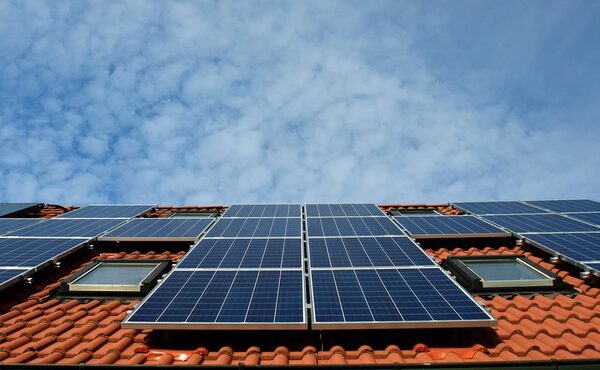
The eligible low-carbon energy sources under the SEG Order are anaerobic digestion, hydro generation stations, combined heat and power systems with an electricity capacity of 50 kilowatts or less, solar photovoltaic, and wind up to the maximum capacity specified in the SEG Order6. Ofgem's own list of eligible technologies matches this: solar photovoltaic, wind, micro combined heat and power, hydro and anaerobic digestion5.
The capacity ceiling inherited from the Feed-in Tariff framework is 5MW total installed capacity for solar photovoltaic, wind, hydro and anaerobic digestion13. The same 5MW limit appears in the Feed-in Tariff guidance for renewable installations and in the supplier guidance, so the figure is consistent across the documents that describe the predecessor scheme14.
In practice the SEG is a solar scheme. Ofgem's SEG Year 3 report recorded 30 installations for other technology types, of which 23 were micro-combined heat and power and seven were wind16. That distribution is worth stating plainly, because a household considering wind, hydro or anaerobic digestion is looking at a scheme whose administrative machinery and supplier tariffs are built around solar PV.
| Technology | Eligible under SEG | Capacity reference |
|---|---|---|
| Solar PV | Yes | Up to 5MW under the FIT framework13 |
| Wind | Yes | Up to 5MW under the FIT framework13 |
| Hydro | Yes | Up to 5MW under the FIT framework13 |
| Anaerobic digestion | Yes | Up to 5MW under the FIT framework13 |
| Micro-CHP | Yes | Electricity capacity of 50kW or less6 |
Most accredited FIT installations will be eligible for the SEG, provided they have a smart or export meter installed17. That matters for households that accredited under the older scheme and are now looking at export payments under the newer one.
The smart meter requirement and how exports are measured
A registered smart meter that records exported electricity is required, even where the household is not signing up to a smart tariff18. The meter must be capable of taking measurements at half-hourly intervals in relation to the exported electricity volumes for which payment is sought6. Exports under the SEG must be metered on a half-hourly basis and registered for settlement, but they are not required to be settled on a half-hourly basis2.
The government's position is that SMETS-compliant smart meters are compatible with microgeneration and enable measurement of export on a half-hourly basis12. Ofgem's guidance for generators describes the requirement as an export or smart meter capable of taking measurements at half-hourly intervals3. SEG payments are calculated by using export meter readings5.
The distinction between measurement and settlement is the part households most often misread. A half-hourly record of export does not mean the household is paid half-hourly, or that it is on a dynamic tariff. It means the licensee has a metered basis on which to calculate payment, which the licence conditions require it to use.
Where a household already receives FIT export payments for one installation and wants SEG payments for another, the two can coexist only if the installations are completely separate, with distinct import and export meters and different import and export MPANs19. The same separation rule appears in the supplier guidance13. A generator must not also receive or benefit from the FIT export tariff, or receive SEG payments from another SEG Licensee, for the same installation6.
How to apply: choosing a supplier and submitting your SEG application
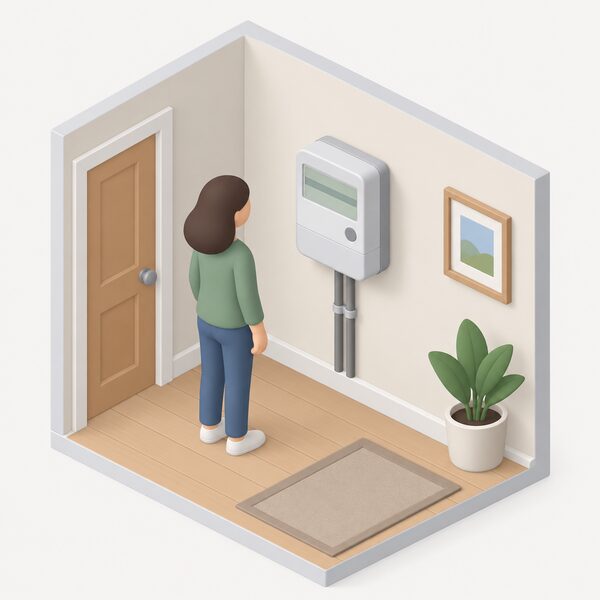
The application route is direct. Generators who wish to receive payment for exported electricity need to apply to a SEG licensee, meaning an electricity supplier that offers a SEG tariff1. Ofgem publishes a list of SEG licensees every year, and generators should contact SEG licensees directly for information about the scheme and to apply18.
There is no single national application form and no queue. The steps are:
- Confirm the installation is eligible and located in Great Britain1.
- Confirm a smart or export meter capable of half-hourly measurement is fitted3.
- Identify a SEG licensee from Ofgem's published list18.
- Apply directly to that licensee, which must offer a SEG tariff to all eligible generators1.
- Receive written confirmation of the export tariff, which the licensee must provide as soon as reasonably practicable after a request for SEG payments6.
The licensee's conduct is regulated as well as its obligation to pay. Information about the SEG arrangements must be complete and accurate, capable of being easily understood by the SEG Generator, and must not mislead; it must also be fair, transparent, appropriate and delivered professionally6. That standard is the lever a household has if a tariff is described in a way that turns out not to match the contract.
The licensee must also assess the eligibility of installations, make SEG payments based on export meter readings, handle complaints from SEG generators, and provide data to Ofgem on tariff offerings, uptake and payments4. Ofgem's guidance for generators covers how the SEG works, who can apply and how, the SEG contract and payments, and what to do if there is a complaint21.
Because the licensee sets the rate, contract length and other terms, the application is effectively a choice between offers rather than a registration5. A household comparing options is comparing contracts, and the terms that matter are the ones the licensee writes: rate, length, and what happens at the end of the term. The SEG eligibility and requirements page covers the accreditation and metering conditions in more detail, and SEG export rates covers what individual suppliers pay.
Export rates: what a kilowatt-hour sent to the grid is worth
Suppliers can set their own SEG tariff rates, provided they offer more than £0 per unit of metered exported power7. As of June 2026, SEG payments can reach up to 25 pence per kWh, which is comparable to the unit rate of electricity7. That ceiling is a reported maximum across the market, not a rate any particular household is entitled to.
The floor is the more important structural fact. A rate above zero is the only price condition the scheme imposes, so the spread between the best and worst offers is a matter of commercial choice by licensees rather than a regulated band7. The rate, contract length and other terms are determined by the licensee5. Details of SEG payments, including the amount due and the contract length, are likewise determined by the chosen SEG licensee1.
Some suppliers offer deals with alternative payment models, but generators are entitled to payments based upon actual meter readings even where such deals exist1. That entitlement is the backstop: whatever a supplier's preferred model, the metered basis is available.
For a household, the practical consequence is that the export rate is a contract term to be read, not a published national figure to be assumed. The rate applies to metered exported units, so the value of the arrangement depends on both the rate and the volume exported, and the volume depends on the size of the installation, the household's own use, and whether a battery is present. Smart Export Guarantee rates sets out how the offers differ between suppliers, and fixed vs variable export rates covers the difference between a rate that is fixed for a term and one that moves.
How battery storage changes your exports and your payments
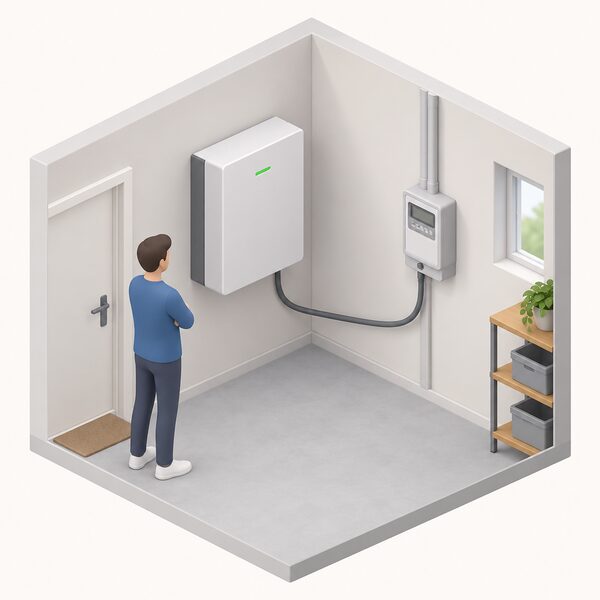
An energy storage system does not block a SEG application. Guidance from the Energy Saving Trust states that a household with an energy storage system can still apply, and gives the example that a battery could store electricity from the grid before exporting it later18. Ofgem's guidance on co-location of electricity storage and hydrogen production under the RO, FIT, REGO and SEG was updated to include an appendix on the co-location of battery storage with installations receiving a SEG tariff22.
The battery changes the economics rather than the eligibility. Export volume is what the meter records, and a battery allows a household to decide when that export happens, including exporting stored grid electricity rather than only surplus generation18. Because payments are based on actual export meter readings, the meter is the arbiter of what is paid1.
"the prospective SEG Generator must not also receive or benefit from the FIT Export Tariff or receive SEG Payments from another SEG Licensee for the installation."
That restriction is the boundary to watch. A battery does not create a second claim on the same installation, and a generator cannot stack SEG payments from two licensees for one installation6. Where a household has an accredited FIT installation, the position is different again: it cannot receive both FIT export and SEG payments, but it can opt out of FIT export payments and receive SEG payments instead while continuing to receive FIT generation payments18. The exporting from a home battery page covers the metering and co-location detail, and SEG payments for battery storage answers the narrower question.
Readings, statements and how payments are made
The licence conditions are explicit about the basis of payment: the SEG Licensee must calculate that SEG Payment using actual Export Meter Readings6. Ofgem's guidance for licensees states that SEG licensees should calculate SEG payments using actual meter readings23. The licensee must take all reasonable steps to provide written confirmation of the Export Tariff as soon as reasonably practicable after receiving a request for SEG Payments6.
Statements should be readable. Energy Ombudsman guidance on billing explanations states that a statement of account should include start and end readings for billing periods, the tariff, VAT and payments received24. That is the checklist a household can apply to a SEG statement: if the start and end readings are absent, the basis of the payment is not visible.
Payment frequency is set by the licensee rather than by the scheme. The amount due and the contract length are determined by the chosen SEG licensee1. Ofgem's annual reporting gives the scale of the flow: payments totalling £1,664,969 were paid out to SEG Generators in 2021-22, described as a significant increase on the £1,664,969 in payments made and 24.4 GWh exported in SEG Year 28. A total of 82,431 registrations received payment for their exported electricity by the end of the reporting period9.
| Item | What the rules require |
|---|---|
| Basis of calculation | Actual export meter readings6 |
| Meter capability | Half-hourly measurement intervals6 |
| Written confirmation | As soon as reasonably practicable after a request for SEG payments6 |
| Statement content | Start and end readings, tariff, VAT and payments received24 |
| Rate and contract length | Determined by the chosen SEG licensee1 |
The obligations on licensees are listed together in Ofgem's reporting: offering at least one SEG tariff to eligible installations, assessing eligibility, making SEG payments based on export meter readings, handling complaints, and providing data to Ofgem on tariff offerings, uptake and payments4. A household that cannot get a reading reflected in a payment, or cannot get a statement that shows the readings, is dealing with a failure against that list.
Switching export supplier, and what happens when the import supply changes

The SEG supplier does not have to be the same company that provides the home's energy18. A household can apply for a SEG tariff with any SEG licensee, and the licensee does not need to be the same company as the current energy supplier1. It can choose to use separate companies for SEG payments, electricity supply and gas supply1.
That separation is the main independence the scheme offers. The export contract can be moved without moving the import supply, and the import supply can be moved without disturbing the export contract, because the two are separate commercial relationships with separate licensees. The Smart Export Guarantee page covers the scheme as a whole, and Good Energy vs Octopus SEG compares two named offers.
Where the import supplier fails, the process is automatic. Ofgem states that a household does not need to do anything if its current supplier goes out of business, and that it will be moved automatically to a new supplier with supply not interrupted25. Under an Energy Supply Administration Order, a household can switch to another supplier without any exit fees26. The SEG relationship sits with its own licensee, so the failure of an import supplier is not the same event as the failure of a SEG licensee.
SEG payments are not linked to other financial support around renewable energy installations, so eligible households could combine SEG payments with other financial support18. That is a statement about the scheme's design rather than about any particular household's position, and the terms of any other support determine whether it applies.
Where SEG came from and the rules behind it
The SEG is governed by the Smart Export Guarantee Order 2019 and Conditions 57 and 58 of the Standard Conditions of the Electricity Supply Licence10. It came into force on 1 January 2020 under that Order4. The Order introduces the SEG and provides for payments to be made by mandated electricity suppliers to small-scale low-carbon generators exporting electricity to the grid2.
The scheme replaced the Feed-in Tariff, which closed to new applications in April 20197. The Feed-in Tariff scheme itself had a 5MW total installed capacity limit for solar photovoltaic, wind, hydro and anaerobic digestion, and Ofgem processed applications and granted accreditations for non-micro wind and solar PV installations with declared net capacity over 50kW, all anaerobic digestion and hydro installations, and community and school applicants13. The Feed-in Tariff scheme closed to new applications, and the SEG took over the export payment role3.
The policy was consulted on before it was made. The government consultation on the future for small-scale low-carbon generation set out that smaller suppliers could opt to voluntarily provide a SEG tariff but must adhere to the rules and guidance associated with the SEG12. The draft licence modifications required to implement the SEG were published as Part B of that consultation28. The government's announcement of the new laws described the obligation as applying to energy suppliers with over 150,000 customers, covering more than 90% of the retail market, with an implementation date of 31 December 2019 for mandated suppliers11.
Ofgem's role is administrative: it has been appointed to administer the SEG on behalf of government in line with the policy design, and it publishes guidance, the licensee list and the annual report9. The Department for Energy Security and Net Zero is responsible for the SEG policy4. For a household, the lineage explains the shape of the scheme: a licence obligation to pay for metered export, a rate set by each licensee, and an administrator that publishes who is offering what.
Sources28 cited
- Smart Export Guarantee (SEG): generators, Ofgem, 2026-09-17
- Smart Export Guarantee guidance, Ofgem, 2019-06
- Feed-in Tariffs: scheme closure, Ofgem, 2026-09-17
- Smart Export Guarantee Annual Report Year 5, Ofgem, 2025-12
- Smart Export Guarantee (SEG), Ofgem, 2026-09-17
- Draft licence conditions, Department for Business, Energy and Industrial Strategy, 2019
- Research briefing CBP-9585, House of Commons Library, 2026-05-13
- SEG 2021-22 Annual Report, Ofgem, 2022-09
- SEG 2022-23 Annual Report, Ofgem, 2023-09
- Smart Export Guarantee (SEG): electricity suppliers, Ofgem, 2026
- New laws to guarantee payment for solar homes, Department for Business, Energy and Industrial Strategy, 2019-06-09
- The future for small-scale low-carbon generation, Department for Business, Energy and Industrial Strategy, 2019-01
- FIT Guidance for Licensed Electricity Suppliers V17.1, Ofgem, 2024-09-06
- Feed-in Tariffs guidance for renewable installations V16, Ofgem, 2021-12-13
- Feed-in Tariffs Guidance for Licensed Electricity Suppliers V15.0, Ofgem, 2021-12-13
- SEG Annual Report 2022-23, Ofgem, 2023-09-29
- Feed-in Tariffs: FIT generators, Ofgem, 2026-09-17
- Smart Export Guarantee, Energy Saving Trust, 2026-05-20
- Guidance for FIT Generators V18, Ofgem, 2024-04-01
- SEG contacts, guidance and resources, Ofgem, 2026-09-17
- Smart Export Guarantee guidance for generators, Ofgem, 2019-12-12
- Guidance for generators: co-location of electricity storage and hydrogen production, Ofgem, 2024-03-20
- Guidance for SEG Licensees, Ofgem, 2019-12
- Billing explanations: hints and tips, Energy Ombudsman, 2026-09-20
- Switch your home energy supplier, Ofgem, 2026
- What happens if your energy supplier goes out of business, Ofgem, 2026
- Feed-in Tariffs Annual Report Scheme Year 13, Ofgem, 2023-12
- The future for small-scale low-carbon generation consultation, Department for Business, Energy and Industrial Strategy, 2019-02-11
 Smart Charging RewardsCovers the schemes that pay or reward households for shifting car charging, including the Demand Flexibility Service, app-based reward programmes and supplier incentives.
 Exporting From a Home BatteryCan you actually get paid for electricity your home battery sends to the grid?
 Submit Meter ReadingsThe routes for sending readings, by app, online account, phone and automated line, and the timing that gets them onto the right bill.
 Storage Heater ControlsExplains manual input and output dials, automatic charge control and the smart charging used by modern high-retention heaters.
 Solar and Battery Import TariffsWhat does a special import tariff actually get you when you have solar panels or a home battery?
 Batteries and Smart TariffsA home battery can earn its keep if your electricity prices change through the day.