
In this answer
Short answer
The short answer is that there is no single national interval written into the Smart Export Guarantee for submitting export readings. What the scheme rules do say is that SEG payments are calculated by using export meter readings, and that the licensee must calculate a payment using actual export meter readings rather than an estimate1. The practical rhythm most households meet is a six month cycle, because a missed reading is picked up three months later and the previous six months are then paid in one payment3.
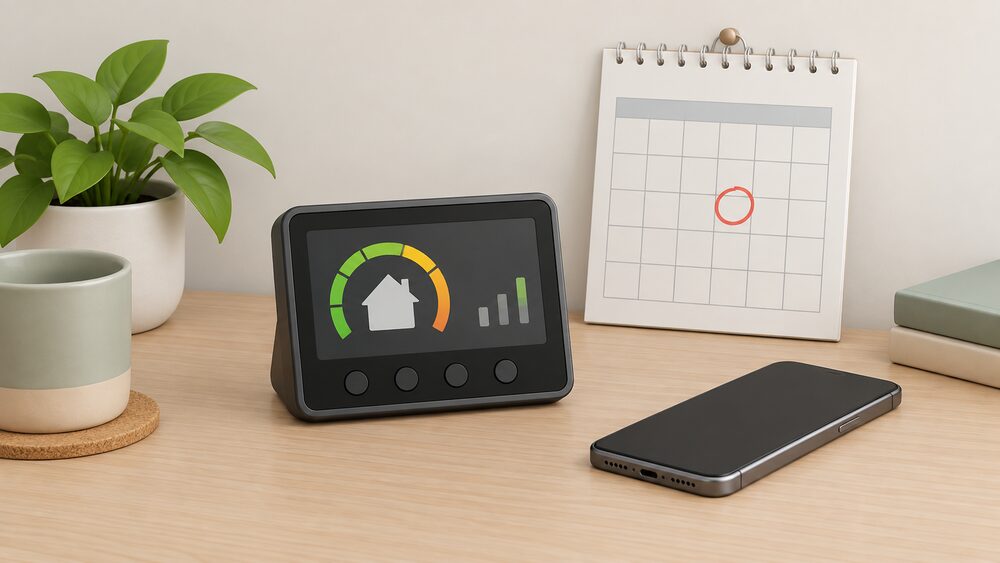
What governs the detail is the meter, not the calendar. Installations eligible for the Feed-in Tariff are also eligible for the SEG provided they are fitted with an export or smart meter capable of taking measurements at half-hourly intervals1. A smart meter sends readings to the supplier on a half-hourly, daily or, in some cases, monthly basis depending on preferences and supplier arrangements, so for many homes the "submission" is automatic and the household's job is only to check the figures4.
Where a manual reading is needed, submission routes are set by the supplier. Independent guidance lists website, mobile app, phone, online chat, email and text as the channels generally available, and notes that EDF asks customers to sign in to an online account while Octopus offers a monthly reminder link, app scanning and email4. The interval that matters for accuracy is shorter than six months: independent guidance recommends a reading at least once a month, ideally on the same day each month4.
How often export meter readings must be submitted
The six month figure that circulates comes from payment practice rather than a stated submission rule. Under the domestic renewable scheme rules, if a reading is missed it is submitted three months later and payment for the previous six months is made in one payment3. That produces a twice yearly rhythm in the payment record even where the underlying obligation is different.
The supplier-side floor is annual. Licence condition SLC 21B.4 requires suppliers to take all reasonable steps to take a meter reading at least once a year, and that requirement is retained under the proposed implementation6. Independent guidance puts it the same way, saying most suppliers will require at least one meter reading per year4. All licensed electricity suppliers are also required to participate in declaring their SEG status on an annual basis, which is a reporting duty on the supplier rather than on the household7.
For accuracy, the recommended interval is much shorter. Independent guidance advises submitting a meter reading at least once a month and ideally on the same day of the month4. Consumer guidance on import meters takes the same line, recommending readings every month or every three months as a minimum8. Citizens Advice states plainly that it is important to send monthly meter readings9.
The FIT scheme, which many export households came from, sets its own verification rhythm: FIT licensees are required to verify generation and export meter readings at least once every two years10. That is a verification duty, not a household submission duty, and it sits alongside the quarterly reading deadlines that apply to certain accredited installations12.
| Duty | Interval | Who it binds | Source |
|---|---|---|---|
| Payment calculation | Actual export readings | SEG licensee | 2 |
| Supplier meter reading | At least once a year | Supplier | 6 |
| Recommended manual submission | At least monthly | Household | 4 |
| FIT reading verification | At least once every two years | FIT licensee | 10 |
| Missed reading catch-up | Previous six months in one payment | Scheme rules | 3 |
Why payments stop if readings are not submitted
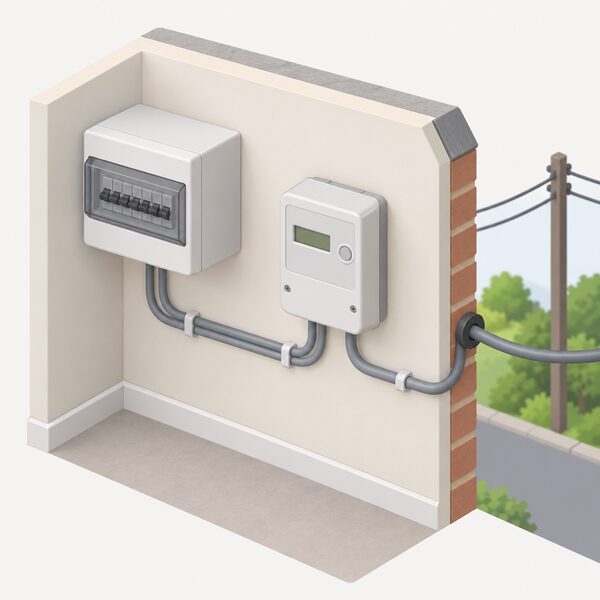
Export payments depend on a measured figure. The scheme rules require the licensee to calculate the payment using actual export meter readings, so where no reading exists there is nothing compliant to pay against2. Where a reading is missed and then submitted three months later, the previous six months are paid in one payment, so the money is deferred rather than lost3.
The harder failure is a meter that stops working. Ofgem guidance notes that a smart meter may stop recording the energy used, or may no longer send readings to the supplier14. Where a meter fault interrupts the record, FIT payments stop from the date of the last accurate meter reading15. Failure to keep meters in good working order, or to notify within 28 days, is treated as non-compliance under the scheme rules, which could lead to suspension, loss of payments or revocation of accreditation3.
There is also a boundary between schemes. Generators cannot receive SEG payments as well as FIT payments for exported electricity16. Where a smart meter is fitted, deemed export payments stop and the household instead receives export payments for the amount of electricity recorded by the meter exported to the grid17. SEG payments may be received where FIT export payments are received for a different installation, as long as the installations are completely separate with distinct import and export meters and different import and export MPANs18.
How to submit readings, and where to find the export figure
Submission is supplier-led. Independent guidance lists website, mobile app, phone, online chat, email and text as the channels generally available, and records that EDF asks customers to sign in to their online account while Octopus provides a monthly reminder without account log-in, an app that scans the meter with a phone camera, and email4. SEG applications themselves are made online, using the supplier's form with smart meter data and an MCS certificate19.
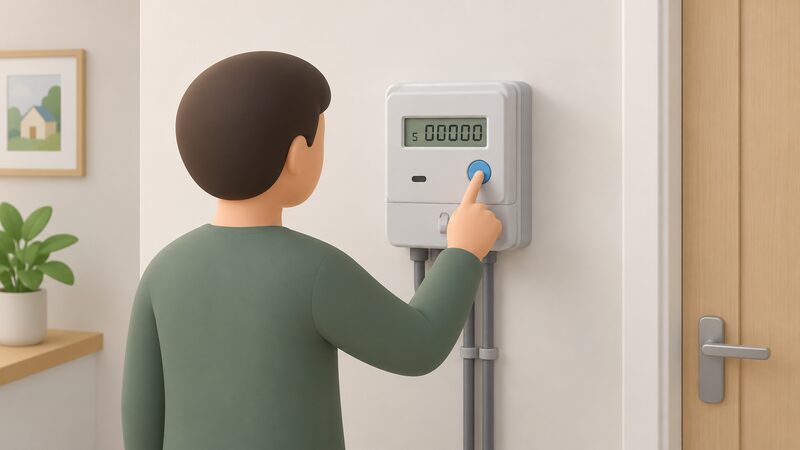
Finding the export figure depends on the meter. On an import/export meter with a blue button, pressing the button repeatedly until the display shows a small 5 followed by five numbers gives the export reading20. More generally, an export meter is always located at the point where the installation connects into the distribution or transmission network and must measure export separately from any other energy source unless pro-rating is available22.
Where a submission fails, the supplier holding the export contract is the first point of contact, since the route is theirs. For network matters, SSEN publishes ge@ssen.co.uk for its meter board replacement service23. Ofgem's load control consumer protection guidance lists sses.licensing@ofgem.gov.uk for that specific subject24. If a supplier goes out of business, official guidance is to take a meter reading as soon as possible and keep a record of it to make sure the billing is correct under the new supplier25.
Half-hourly export data and what the meter records
The scheme's metering requirement is a capability test. Installations eligible for the FIT are also eligible for the SEG provided they are fitted with an export or smart meter capable of taking measurements at half-hourly intervals1. The export meter must be capable of taking measurements at half-hourly intervals in relation to the exported electricity volumes for which payment is sought2. Parliament's briefing states that generators must have a smart meter to monitor exports26.
What a smart meter actually does with that capability varies. Half hourly meter readings mean the meter sends a reading to the supplier every 30 minutes27. In practice a smart meter sends readings directly to the supplier on a half-hourly, daily or, in some cases, monthly basis28. The half-hourly recording of energy use enables the supplier to charge different rates for use at different times of the day or week, which is why the same data underpins both export payment and time-of-use import pricing29.
"you'll need a meter that can give half-hourly readings, generally this will be a smart meter"
For a household, the significance is that export income is measured rather than assumed. Independent guidance describes the arrangement as being paid for the exact amount of unused electricity exported back to the grid, as recorded by the smart export meter31. That is a stronger position than a deemed or estimated figure, and it is also the reason a meter fault has an immediate financial effect rather than a delayed one. The trade-off is dependence: the reading, the payment calculation and the statement all sit with the supplier and its systems, and the household's independence extends only as far as the meter and the contract.
What happens if a reading deadline is missed
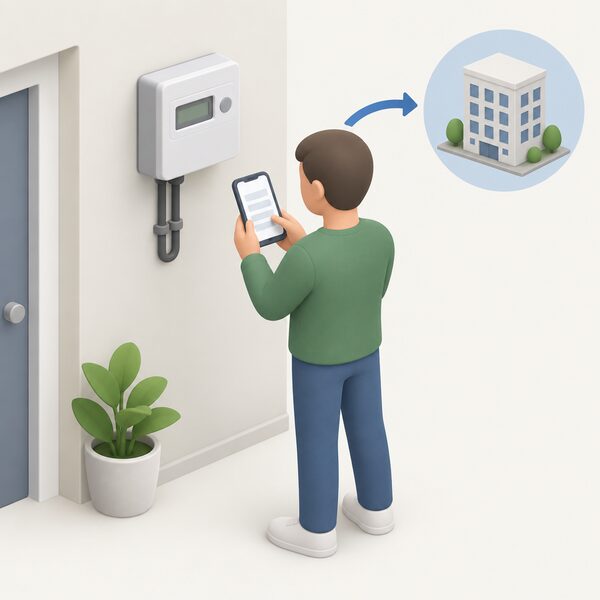
Deadlines in this area fall into two families. The first is the scheme reporting deadline: SEG licensees are required to submit data to Ofgem by 30 June after the end of the relevant SEG year32. That is a supplier obligation and does not affect an individual household's payment directly, but it is the reason suppliers chase readings before their own reporting date.
The second family is the reading deadline itself. For certain accredited installations, quarterly generation meter readings must be submitted to the FIT licensee within 28 calendar days from the end of the relevant quarterly period12. Where a reading is missed under the domestic renewable scheme rules, it is submitted three months later and payment for the previous six months is made in one payment3. Where no readings are submitted at all, the supplier estimates consumption, which independent guidance warns could lead to being charged more than necessary4.
Connection deadlines are a separate matter and carry a harder consequence. Where connection works are not completed by the longstop milestone date, the export capacity can be retracted33. That applies to the connection agreement rather than to a reading, but it is the point at which a missed date removes the ability to export at all.
For a household, the practical position is that export income is reliable only while the meter records and the readings arrive. The scheme pays on measured export, the supplier sets the submission route, and the interval that protects accuracy is monthly rather than six monthly. The dependence that remains is on the meter, the supplier's systems and the contract term, none of which the household controls. Households weighing the wider picture can compare arrangements on the Smart Export Guarantee page, check what each supplier pays on SEG export rates, and read the application and payment process in full under applying for an export tariff.
Sources35 cited
- Smart Export Guarantee, Ofgem, 2026-09-17
- Draft licence conditions, GOV.UK, 2026-09-17
- Domestic RHI: Guide to metering, Ofgem, 2026
- How to submit a meter reading, Uswitch, 2026-04-23
- How do smart meters work, Smart Energy GB, 2026-08-27
- Energy Consumer Outcomes: proposed implementation, Ofgem, 2026-06-23
- SEG electricity suppliers, Ofgem, 2026
- Gas meters and electricity meters: what you need to know, Which?, 2026-01-16
- Energy supplier has increased your direct debit, Citizens Advice, 2026-09-17
- Supplier Performance Report Jul-Dec 2023, Ofgem, 2026-09-17
- Feed-in Tariffs Annual Report Scheme Year 13, Ofgem, 2023-12
- Guidance for suppliers V14, Ofgem, 2021-08
- Feed-in Tariffs: Guidance for renewable installations V16, Ofgem, 2021-12-13
- Get help with your smart meter, Ofgem, 2026
- Feed-in Tariffs, Energy Ombudsman, 2026-09-20
- G98 Single Premises Summary Guide, Energy Networks Association, 2026-09-17
- Feed-in Tariffs: FIT generators, Ofgem, 2026-09-17
- FIT Guidance for Licensed Electricity Suppliers V17.1, Ofgem, 2024-09-06
- Smart Export Guarantee, MCS Certified, 2026-04-27
- Import/export meters, NIE Networks, 2026-09-20
- How to read your electric meter: import/export meters, NIE Networks, 2026-09-19
- Guidance for FIT generators V18, Ofgem, 2026-04-01
- Meter board replacement, SSEN, 2026-09-20
- Load control consumer protection guidance, Ofgem, 2026-08-07
- What happens if your energy supplier goes out of business, Ofgem, 2026
- POST note 771, UK Parliament, 2026-06-25
- Time of use tariffs: the benefits, Smart Energy GB, 2026-04-24
- How to use a smart meter to save money, Smart Energy GB, 2026-04-24
- How smart meters work with heat pumps, Smart Energy GB, 2026-04-24
- Smart meter problems and solutions, Which?, 2026-08-24
- Can I switch energy supplier if I have solar panels?, Uswitch, 2026-06-04
- SEG 2021-22 Annual Report, Ofgem, 2022-09
- G99 NI installations, NIE Networks, 2026-09-17
- G99 NI fast track installations, NIE Networks, 2026-09-19
- Feed-in Tariff guide, Uswitch, 2026-07-13
 Take a Meter ReadingWhich numbers do you actually read on a gas or electricity meter, and which ones do you ignore?
 Meter Readings and EstimatesWhy is my energy bill estimated, and how often should my meter be read?
 SMETS1 and SMETS2 MetersIs your smart meter an old first generation model or a newer one, and does it matter?
 Submit Meter ReadingsThe routes for sending readings, by app, online account, phone and automated line, and the timing that gets them onto the right bill.
 Meters and Time-of-Use TariffsDo you need a smart meter for a time-of-use tariff, and does it have to send readings every half an hour?
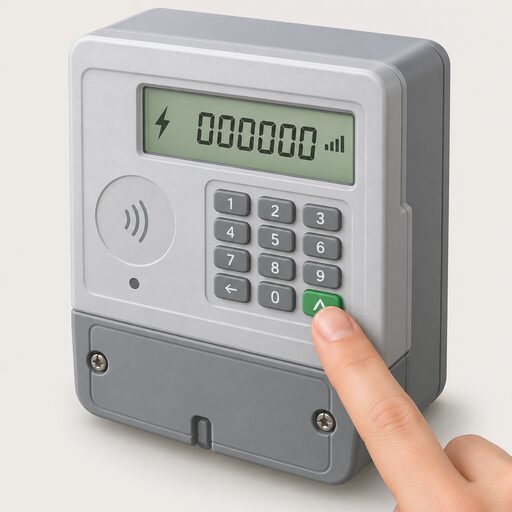 Get a Reading From a Smart MeterHow to bring up a meter reading on a smart electricity or gas meter when a manual reading is still needed, and the difference between the meter itself and the in-home display.