
In this guide
Home energy data ownership in the UK rests on a single legal classification: smart meter data is personal data, owned by the consumer, and the consumer is the source of consent for any onward data-sharing1. That is the foundation. Everything else, who can see the readings, how often they travel, and what happens when you change supplier, follows from it.
In practice the data itself is narrow. The only data transmitted over the national smart meter network is how much gas and electricity you use and your chosen tariff2. Personal information such as your name, address and bank details are not stored on your smart meter1. Only your supplier, or third parties given explicit permission, can see how much energy you are using and when1.
The routes to your own records are straightforward. A smart meter automatically sends your electricity and gas meter readings to your supplier, so there is no manual reading to submit3. The in-home display shows how much energy you are using during the day4, and the communications hub transmits data to that display showing how much energy is being used or sold back to the grid5. Getting a smart meter is free from your supplier4.
What a smart meter collects, and what it never collects
The data a smart meter generates is consumption data: how much gas and electricity a property uses, and when. The national network carries that plus your chosen tariff, and nothing else2. Personal information such as your name, address and bank details are not stored on your smart meter1. There is no central repository of smart metering energy consumption data held by the DCC, Government or any other organisation, and data is encrypted between the smart meter and the user8.
That distinction matters because a great deal of equipment in a home looks similar and behaves differently. Energy monitors and smart thermostats are not smart meters: they are not linked to your energy accounts and do not send any information to your energy suppliers9. A household running a monitor alongside a smart meter is generating two separate streams of data, only one of which reaches the supplier.
The ownership position is set out in data protection guidance: smart meter data is classified as personal data, owned by the consumer, and the consumer is the source of consent for any onward data-sharing1. Consent is not a formality. You have control over who can access the energy use data from your smart meter, including how often and for what purpose, except where access is required for regulated purposes such as billing10.
Where the data does sit beyond the meter and the supplier is in aggregators and intermediaries. Electralink stores data on smart meter installation, numbers and location, supplier switching, and industrial and commercial consumption, among other datasets, but does not have access to comprehensive domestic smart meter data1. That gap is worth knowing: the domestic record is held by your supplier, not pooled centrally for anyone to browse.
For a household pursuing independence, the practical consequence is that your consumption record is an asset you hold rights over but do not physically possess. It sits with a supplier you can change. The full guide to household energy independence sets that dependence in context.
Who can see your data: you, your supplier and the DCC network
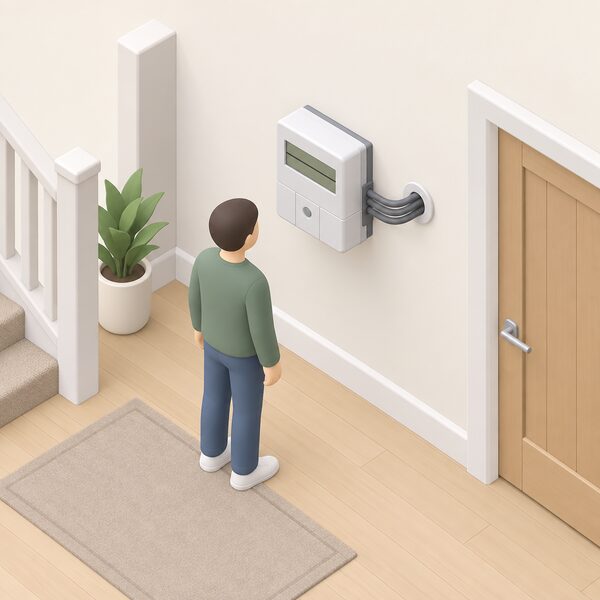
Only your energy supplier can see how much energy you are using and when11. The DCC, which runs the national communications network, can only access your energy consumption data with your explicit permission7. Third parties reach it only with explicit permission from the consumer1.
The DCC's role is often misunderstood. It is a communications body, not a data holder with open access. Energy suppliers need to liaise with the Data Communications Company to resolve some communications issues12, which is the main reason a household hears the name at all. The network operator is a separate entity again: you can find out who your network provider is via the Energy Networks Association website13. The National Energy System Operator does not connect directly to homes or other domestic properties14.
"Only your supplier (or third parties when given explicit permission from the consumer) can see how much energy you are using and when"
The consent architecture has three layers. Monthly data for billing processes is mandatory1. Beyond that, access is permissioned. And the consumer is the source of consent for any onward data-sharing1. A household that wants its half-hourly record used for a flexibility service, a research project or a comparison tool has to give that permission, and can withdraw it.
There is a limit worth stating plainly. Consent governs onward sharing, not the supplier's core billing access. A household cannot opt out of the meter telling the supplier what it consumed, because that is what the meter is for. What it can control is the granularity beyond the mandatory monthly billing data and who else sees it.
For households on heat networks the position is different in a way that bears directly on independence. Heat networks are natural monopolies, one entity is the supplier for all homes and businesses on the network, and consumers cannot switch suppliers or move to a different tariff unlike gas and electricity consumers15. Households that get their heat delivered through a heat network are not covered by the energy regulator Ofgem16, and a customer cannot transfer their supply to an alternative energy source, such as gas, usually for a period in excess of 20 years17. Data access rights exist, but the switching route that makes them useful does not.
Reading frequency: half-hourly, daily or monthly, and who decides
Automatic meter readings provide your energy supplier with monthly, weekly, daily, or even half-hourly readings6. The frequency is one of the things the consumer controls, alongside who can access the data and for what purpose, except where regulated purposes such as billing require it10. Monthly data for billing processes is mandatory1.
The granularity question is not academic. Half-hourly data is what makes time-of-use tariffs, export payments and demand flexibility measurable. The Home Energy Model, used for building energy performance work, simulates energy performance for each half-hour of the day, as compared to each month for SAP18. A household with only monthly data cannot verify a half-hourly claim about its own performance.
At the display end, the in-home display gives near real-time data on energy use5. That is a different stream from what the supplier receives: the display is for the household, the network transmission is for billing and settlement. A household can see its own consumption in near real time while the supplier receives a coarser record, depending on the settings chosen.
The practical value of finer data shows up in verification. A household that has installed solar, a battery or a heat pump and wants to know whether the system performs as modelled needs half-hourly records, because monthly totals hide the shape of the day. The self-sufficiency ratio and self-consumption measures both depend on that shape. Without half-hourly data, a household is relying on the installer's model rather than its own meter.
How the data travels: a dedicated network, not your Wi-Fi
Your smart meter does not need, or connect to, the public internet or your home Wi-Fi2. Information is transmitted over a wide area network using mobile-phone or radio masts, sent from each property's communications hub2. The communications hub transmits the data to an in-home display which shows how much energy is being used or sold back to the grid5.
This is a deliberate design choice with consequences for independence. The meter's communications do not depend on the household's broadband, so a lost connection or a cancelled broadband contract does not stop readings reaching the supplier. Equally, the household cannot route its own meter data through its own network or store it locally as a matter of course. The data path runs from the meter, through the communications hub, over the wide area network, to the supplier.
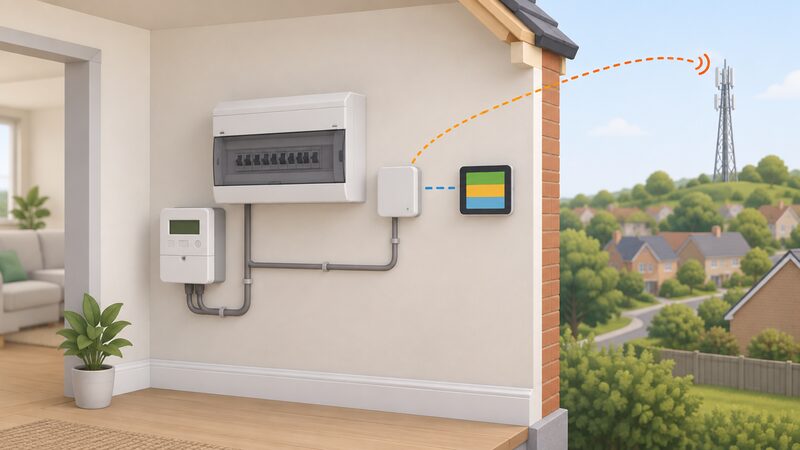
The separation between the two paths is the point. The in-home display shows how much energy is being used or sold back to the grid5, which is the household's own view. The supplier receives the billing record. Neither path runs through the home's internet connection, and neither is under the household's physical control.
For a home with generation and storage, that matters when the question is who holds the authoritative record of export. The meter and its communications hub are the measurement point, and the data leaves the property over a network the household does not administer. Local monitoring systems can log the same events, but they are not the settlement record. The local control versus cloud question runs through this: a household can hold its own operational data locally, but the metered record that determines payments sits with the supplier and the network.
Your right to refuse a smart meter, or switch the smart functions off
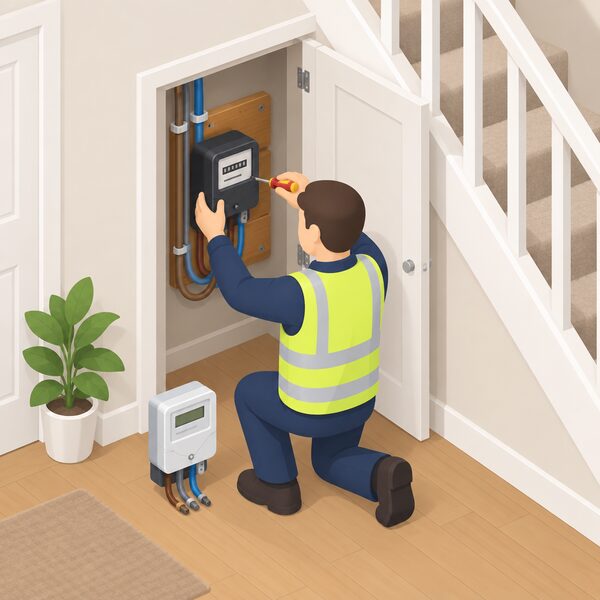
Consumers have the right to refuse a smart meter19. It is your right to refuse the installation of a smart meter, but replacement options may be limited if a traditional meter is faulty or unsafe7. There are no provisions in the Bill that would allow anyone to enter a property by force to install a smart meter, and consumers retain the right to refuse installation16.
The refusal right is not absolute in every circumstance. Where a traditional meter needs to be replaced because it is faulty or unsafe, the alternatives available to a household may be limited7. That is a practical constraint rather than a legal override: the right to refuse stands, but the menu of replacement meters may narrow.
Smart functionality can also be limited without refusing the meter. Energy smart appliances can be switched on or off remotely but only if the consumer gives consent19. The same consent principle governs data: you have control over who can access the energy use data from your smart meter, including how often and for what purpose, except where required for regulated purposes such as billing10.
For a household weighing independence, the trade-off is concrete. Refusing a smart meter keeps the data path out of the national network but also removes access to more flexible tariffs, including dual-rate tariffs3, and to the half-hourly record that makes export and flexibility payments verifiable. The behind-the-meter systems page covers what can be measured inside the property without the meter.
What happens to your data when you switch supplier
A SMETS2 smart meter keeps its smart functions across all energy suppliers, using the purpose-built national network, and is now the meter type for any new smart meter installation7. Cross-compatibility means a smart meter will keep its smart functions across all energy suppliers, so switching supplier does not strand the meter7. First-generation meters have been the subject of an upgrade programme11.
The switching process itself is straightforward for households that pay a supplier directly. If you pay a supplier directly for the electricity or gas you use at home, you can choose to switch to a different supplier or tariff at any time20. If you have to pay your energy bills, you can choose to switch your supplier or tariff at any time, including in rented properties20. The information needed is your postcode, the name of your current supplier, the name of your current tariff, the amount you pay per unit in kilowatt hours, and the amount of energy you use each year20.
Supplier failure is handled automatically. You do not need to do anything if your current supplier goes out of business; Ofgem will automatically move you to a new supplier and make sure your energy supply is not interrupted20. The consumption record moves with the supply point rather than being tied to the failed company.
| Situation | What happens to the meter and its data |
|---|---|
| Switch to a new supplier | SMETS2 keeps smart functions across all suppliers7 |
| Supplier goes out of business | Ofgem moves you to a new supplier automatically, supply not interrupted20 |
| Rented property, tenant pays bills | Tenant can switch supplier or tariff at any time20 |
| Property has its own meter | May have your own contract with an energy supplier21 |
Where a household does not pay the supplier directly, the position changes. Residents paying a landlord or site owner by meter readings or estimates do not have the right to choose their own energy supplier and do not have access to all the protections available to domestic energy customers21. They do have the right to see the bills and contract between the landlord or site owner and the energy supplier22. Where a resident has their own contract, for example because the property has its own gas or electricity meter, they may be able to switch their business energy supplier21.
Where smart meters fall short: signal, faults and estimated bills
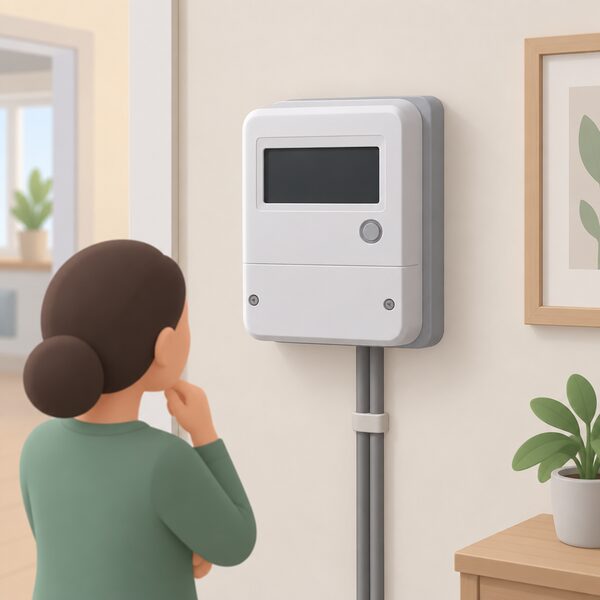
Smart meters fail in two characteristic ways. Your smart meter may stop recording the energy you use, or may no longer send readings to your supplier3. When that happens, the household loses the accurate-reading benefit and may return to estimated billing, which is the outcome the meter was meant to remove.
The scale of the problem is documented. A third (35%) of households with a smart meter reported experiencing an issue with it in the last three months, consistent with earlier findings23. That is a substantial minority, and it is the strongest argument for a household keeping its own record of consumption alongside the meter.
The remedies are defined. If you suspect an issue with your smart meter, or your energy supplier identifies an issue, they should promptly investigate, resolve it themselves or with third parties, and keep the consumer informed10. If a smart meter installation fails due to a fault within the energy supplier's control, the consumer will receive compensation24. Energy suppliers need to liaise with the Data Communications Company to resolve some communications issues12.
For a household with generation, the failure mode has a second edge. If the meter stops recording, the export record stops too, and payments that depend on metered export become unverifiable. Keeping a parallel local log of generation and export is the practical hedge, and it is the same discipline that supports sizing a self-sufficient home system on evidence rather than assumption.
Getting a smart meter: cost, eligibility and tenants' rights
A smart meter is obtained free of charge by contacting the supplier4. The cost is borne through the supplier arrangement rather than charged to the household at installation. Any household that pays for its energy, whether owning or renting, can book an installation where the meter is expected to work in the property10. Where the energy bill is in the tenant's name, the choice to have a smart meter installed is the tenant's, and letting the landlord know first is recommended10.
Eligibility is broad. Whether you are on a pre-payment plan or renting, you can benefit from a smart meter25. For private renters specifically, if the energy bills are in your name or you prepay for your energy, you can choose to have a smart meter, after checking the tenancy agreement and letting the landlord know7.
The benefits that come with installation are set out consistently: bills based on accurate meter readings and not estimates, no need to submit meter readings yourself, up-to-date information on your energy use that could show ways to save money, the ability to add credit automatically or without visiting a shop in prepayment mode, and access to more flexible tariffs including dual-rate tariffs3. The meter's in-home display also shows how much energy you are using during the day4.
| Item | Position |
|---|---|
| Cost | Free from your supplier4 |
| Owner-occupiers | Can book where the meter is expected to work10 |
| Private renters | Can choose one if bills are in their name or they prepay, after checking the tenancy agreement and telling the landlord7 |
| Prepayment customers | Can benefit, and can add credit automatically or without visiting a shop25 |
| Residents paying a landlord or site owner | No right to choose a supplier and no access to all domestic protections21 |
The limit sits with households that do not hold their own supply contract. Residents paying a landlord or site owner by meter readings or estimates cannot choose their own energy supplier and do not have access to all the protections available to domestic energy customers21. They can see the bills and contract between the landlord or site owner and the energy supplier22, but the meter and its data are not theirs to direct. For those households, energy independence starts with the tenancy or site agreement rather than the meter.
Why your meter data matters for tariffs, export payments and home energy independence
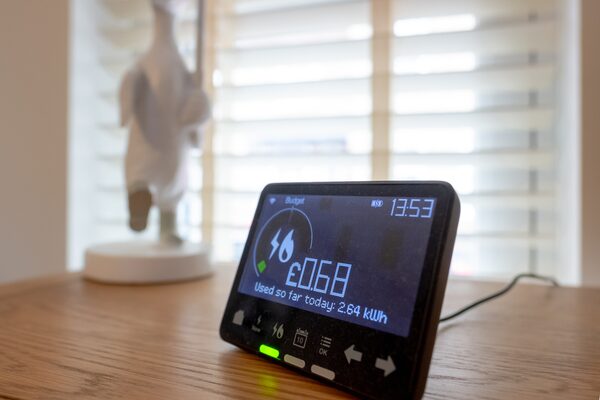
Smart meter data is used to bill you for the energy you use, to offer you new products and services such as new tariffs where you have given permission, and to help make the energy system more efficient by recording demand more accurately3. Those three uses map onto the three things a household needs from its data: an accurate bill, access to tariffs that reward flexibility, and a verifiable record of what it generated and exported.
The tariff route is the most immediate. A smart meter gives access to more flexible tariffs, including dual-rate tariffs3. Except by switching, you do not control the tariff your energy supplier sets, but you can change how much energy you use5. Half-hourly data is what makes a time-of-use tariff meaningful, because it is the measurement that shows whether consumption actually moved.
The export route depends on the same measurement. The communications hub transmits data to an in-home display showing how much energy is being used or sold back to the grid5. That export figure is the basis on which export payments are calculated, and it is why a meter fault that stops recording has consequences beyond the bill.
"The data provided by your smart meter puts you in control of your energy usage, meaning you can take energy-saving steps"
Time-of-use and dual-rate tariffs require accurate data that includes the time of use as well as the amount of energy, which can only be accessed by homes with a smart meter3. The smart metering Data Access and Privacy Framework determines the levels of access to energy consumption data from smart meters for energy suppliers, network operators and third parties3. Generation payments are not affected by having a smart meter3.
The independence question is where the data sits and who can act on it. A household can hold its own operational data from inverters, batteries and monitoring systems, and can use it to size and verify a system. The metered record that determines billing and export payment sits with the supplier, reached over a network the household does not administer, and released to third parties only with explicit permission1. That is the dependence that remains even in a home that generates, stores and manages most of its own energy.
Two further limits are worth naming. The National Energy System Operator does not connect directly to homes or other domestic properties14, so there is no direct relationship between a household and the system operator. And for households on heat networks, the data relationship comes with a supply relationship that cannot be changed: consumers cannot switch suppliers or move to a different tariff unlike consumers in gas and electricity15, and a customer cannot transfer their supply to an alternative energy source, such as gas, usually for more than 20 years17. Data ownership is real in both cases; the ability to act on it is not equal.
Sources25 cited
- Data protection and smart meter data, Open Energy, 2026-09-20
- Does a smart meter need Wi-Fi?, Smart DCC, 2026
- Get help with your smart meter, Ofgem, 2026-09-17
- Getting a smart meter, Ofgem, 2026
- How do smart meters send readings?, Smart DCC, 2026
- How to get a smart meter, Smart DCC, 2026
- Smart meters, Energy Ombudsman, 2026-09-20
- Written evidence on smart meters, Science and Technology Committee, 2016-06
- How do you know if you have a smart meter?, Smart DCC, 2026
- Smart meters: your rights and expectations, GOV.UK, 2025-08-08
- Upgrading Britain's first generation smart meters, Smart DCC, 2026
- FAQs, Energy Ombudsman, 2026-09-19
- Network operators, Energy Ombudsman, 2026-09-20
- Domestic and homeowners, National Energy System Operator, 2026-09-17
- Heat networks consumer protections draft guidance, Ofgem, 2025-09-05
- Smart meters research briefing, House of Commons Library, 2026-09-20
- Heat networks affected by the Energy Prices Act 2022, Energy Ombudsman, 2026-09-20
- Energy Performance of Buildings Scotland regulations 2025 update, Scottish Government, 2025-10
- Smart meters research briefing, House of Commons Library, 2023-09-26
- Switch your home energy supplier, Ofgem, 2026
- Alternative homes energy guidance, Ofgem, 2026
- If you live in a home with a business energy contract, Ofgem, 2026
- Energy Consumer Satisfaction Survey findings report, Ofgem, 2024
- Final decision on smart meter GSOPs, Ofgem, 2026-01-30
- Smart meters, Welsh Government, 2026
 Smart Meter Data and Who Sees ItWhat does your smart meter actually record, and who gets to see it?
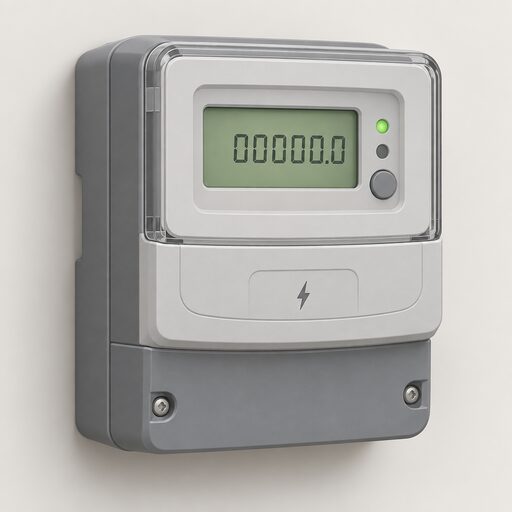 Take Control of Your EnergyHow do you read your own energy use and keep hold of your meter readings?
 Consumer Access DevicesHow do you get your smart meter readings into your own app instead of the supplier's display?
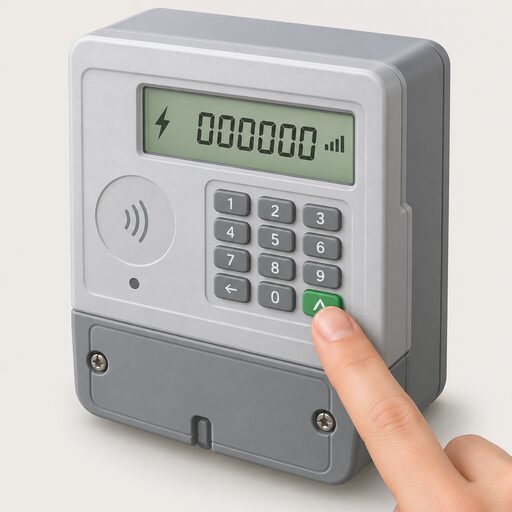 Get a Reading From a Smart MeterHow to bring up a meter reading on a smart electricity or gas meter when a manual reading is still needed, and the difference between the meter itself and the in-home display.
 Take a Meter ReadingWhich numbers do you actually read on a gas or electricity meter, and which ones do you ignore?
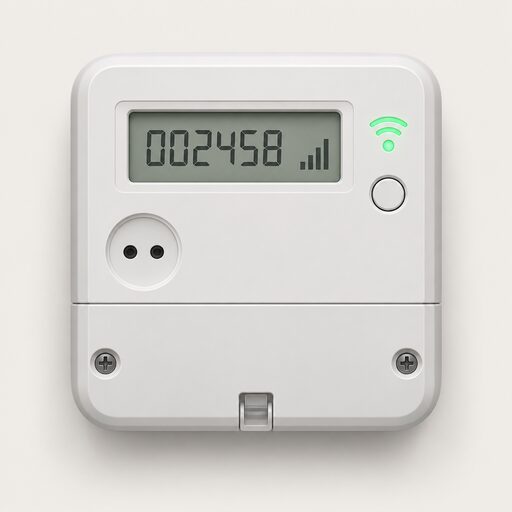 The Full Smart Meters GuideDo smart meters really save you money, and how do you use one to cut your bills?