
In this guide
Community energy in Wales is the part of the energy system owned and run by the communities it sits in, rather than by a utility or an outside investor. The Welsh Government's stated aim is that it should help ensure all Welsh communities, especially those that host renewable developments, benefit from the move to net zero1. The scale is still small: Wales had 0.99 GW of locally owned renewable energy at the end of 20242, against a raised target of 1.5 GW by 20352.
The flagship example is the Swansea Community Energy and Enterprise Scheme (SCEES), established in 2015. It raised £467,000 from 170 investors, installed solar behind-the-meter systems on nine schools and one care home, holds a long-term lease and power purchase agreement for 20 years, pays investors a 6% annual return and has generated a community benefit fund of over £500,0003. That single scheme shows the whole model: local money, local roofs, a long contract, and a surplus that stays in the area.
For a household, community energy is a different route to independence from installing your own panels. It buys a share of local generation rather than a system on your own roof, and it leaves the grid connection, the supplier relationship and the maintenance with someone else. What it does not do is make a home self-sufficient. The sections below set out the Welsh targets, the named schemes, the funding routes and the limits.
What community energy in Wales means
Community energy in Wales covers a range of ownership models, from a society of local shareholders owning a solar array on a school roof to a development trust running a hydro scheme. The Welsh Government frames it as a way of keeping value local: renewable energy is one of the key methods by which the people and communities of Wales can reduce their contribution to climate change4, and the community energy sector is meant to help ensure that all Welsh communities, especially those that host renewable developments, benefit from the move to net zero1.
The policy machinery has been building for more than a decade. The Minister for Environment and Sustainable Development made an oral statement on developing community energy schemes in Wales on 26 February 20135. Since then the Welsh Government has set a local ownership target, raised it, and consulted on legislation. The proposed Renewable Energy (Wales) Bill would legislate to enable greater community ownership from renewable energy4, and the Welsh Government Energy Service supports renewable energy projects in Wales from the concept stage through to financial close and completion6.
The scale of the opportunity is set by Wales's energy profile. Total energy use across Wales was 92.8 TWh in 2019, of which 40% provides heat to homes, businesses and industry7. Domestic heat use alone was 15.7 TWh in 20197. Community schemes that generate electricity address only part of that picture; heat is the larger share and the harder one to localise.
"Renewable energy is one of the key methods by which the people and communities of Wales are able to reduce their contribution to climate change"
Swansea Community Energy and Enterprise Scheme: the flagship example
SCEES was established in 2015 and is the clearest worked example of the Welsh community energy model3. It has installed solar behind-the-meter systems on nine schools and one care home, and it holds a long-term lease and power purchase agreement for 20 years3. The host buildings buy the electricity generated on their own roofs, which gives the scheme a predictable income for two decades.
Behind-the-meter means the generation sits on the customer's side of the meter rather than being exported to the grid, so the electricity is consumed where it is produced and displaces a retail purchase rather than earning an export tariff. That structure is what makes the economics work for a school or a care home: the host gets cheaper power without capital outlay, and the society gets a revenue stream long enough to service a share offer.
The regional context matters. Two-thirds of renewable electricity capacity in Wales comes from the Swansea Bay City and Cardiff Capital regions, which represent 33% (925 MW) and 29% (824 MW) respectively; North Wales accounts for 23%, with 639 MW, and Mid Wales 419 MW, or 15%8. The Swansea Bay City Region alone contributed 33% of Wales's total onshore renewable electricity generation in 2023, with 52 MW of new capacity commissioned that year9. It also represented almost a third (34%) of energy use in Wales in 20197, so generation and demand are unusually well matched in the area.
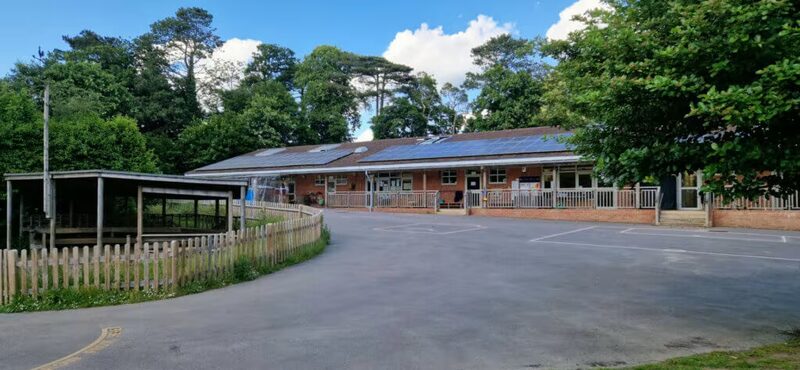
How a community share offer works: £467,000 from 170 investors
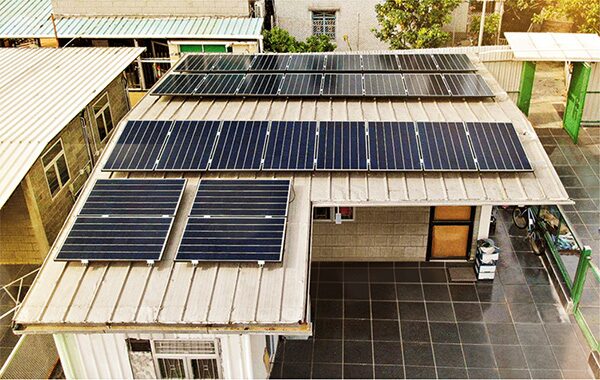
A community share offer raises capital from local people who become members of a society and hold shares in the scheme. SCEES raised £467,000 from 170 investors3. That is the whole financing mechanism in one line: many small holdings, pooled into an asset that no single household could justify buying alone.
The money buys the generating equipment and pays for installation. The scheme then earns income from selling electricity to the host buildings under the power purchase agreement, and from any export. Out of that income it pays investor returns, services any debt, covers maintenance and administration, and puts a surplus into a community benefit fund. The 20-year lease and PPA term is what makes the arithmetic bankable: a lender or a shareholder can see two decades of revenue against a known cost base3.
For a household, the trade is different from buying your own panels. A share is a financial stake in local generation, not a system on your roof, so it does not change your own import dependence or your exposure to peak prices. It does put capital into an asset that stays in the area, and it gives a vote in how the society is run. The community energy share offers page sets out how societies are structured and what membership involves.
Returns and community benefit: 6% a year and over £500,000 for the community
SCEES investors now receive a 6% annual return, and the scheme has generated a community benefit fund of over £500,0003. Those two numbers are the point of the model: a financial return to the people who put money in, and a separate pot for the wider community that did not.
The community benefit fund is distinct from the investor return. It is the surplus left after costs, returns and reserves, and it is spent locally. The Welsh Government has consulted on how such funds from large projects could be coordinated to generate the most value creation, retention and distribution of value4, which suggests the policy direction is toward more structured, larger funds rather than ad hoc arrangements.
For comparison, the standard benchmark for community benefits from onshore renewable energy developments in the devolved nations is benefits equivalent to £5,000 per MW of the development per annum for the lifetime of the project10. The Welsh Government has also recommended a 10% offer for community ownership, meaning individuals and households4.
The independence question here is about where the money goes, not where the electrons go. A community benefit fund keeps value in the area and can be spent on whatever the community decides, but it does not reduce any household's reliance on the grid or on a supplier. The community energy funding page covers how funds are raised and spent.
Sero and the home energy upgrade route into community energy
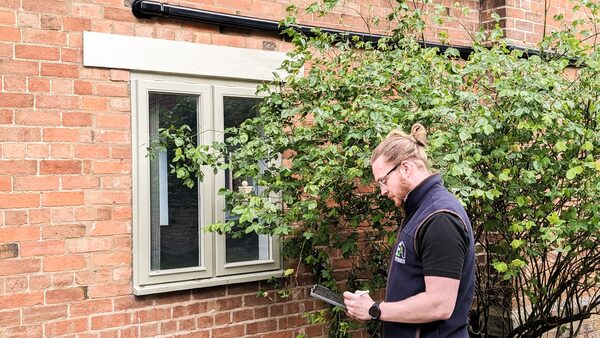
Alongside generation societies, Wales has a home retrofit route that sits closer to individual households. The Development Bank of Wales runs the Green Homes Wales scheme, which helps homeowners in Wales to improve their homes with energy efficiency upgrades11. Eligible measures are certain types of energy efficiency improvement measures and low carbon heating systems12.
The retrofit process starts with an assessment. Published guidance on the Warm Homes Local Grant states that retrofit assessments can take 1 to 3 hours on site13. That visit establishes what the property needs and what is eligible; the installation itself follows separately and its duration depends on the measures chosen.
The Welsh Government's wider retrofit and fuel poverty work gives the context. The Energy Company Obligation scheme reported 155,891 households (5.4% of the GB total households receiving measures) benefiting in the six years since the scheme was introduced, approximately 20,000 households in Wales annually14. The Welsh Government Fuel Voucher Scheme supported approximately 117,000 individuals, depending on the size of households, through prepayment households across Wales, and expanded its partner network by approximately 40 to 50 new partners15.
The link between retrofit and community energy is indirect but real. A home that has cut its heat demand needs less energy from any source, local or imported, and a community scheme that includes retrofit advice reaches households that would never buy a share offer. The Sero home energy upgrade programme page covers the programme in more detail.
What the Sero tariff and billing look like for residents
The published price data for Welsh households comes from the Ofgem cap tables and the Energy Price Guarantee regional rates, not from any community scheme. Under Charge Restriction Period 15b, the Wales and Mersey electricity cap for a single-rate metering arrangement at 2,700 kWh is £1,066.42, and the South Wales figure for the same arrangement is £885.7916. The documents give two different figures for the Wales and Mersey single-rate case, £1,066.42 and £971.92, and the conflict is not ruled on, so both stand16.
Gas figures for the same period show £765.84 for South Wales prepayment at 11,500 kWh and £747.46 for Wales and Mersey prepayment at the same consumption16.
For earlier periods, the Energy Price Guarantee regional rates for April to June 2023 give electricity unit rates of 31.70 p/kWh excluding VAT for South Wales on other payment methods, and 35.75 p/kWh excluding VAT for North Wales and Mersey on standard credit17. Benchmark maximum charges published for an earlier charge restriction period give an annual gas bill of £847.31 at 12,000 kWh for South Wales on other payment methods, and an annual electricity bill of £921.80 at 3,100 kWh for South Wales on single-rate metering18.
| Region and fuel | Basis | Figure | Period |
|---|---|---|---|
| Wales and Mersey electricity | Single-rate, 2,700 kWh | £1,066.42 (also given as £971.92) | CRS 15b16 |
| South Wales electricity | Single-rate, 2,700 kWh | £885.79 (also given as £975.47) | CRS 15b16 |
| South Wales gas | Prepayment, 11,500 kWh | £765.84 (also given as £791.76) | CRS 15b16 |
| Wales and Mersey gas | Prepayment, 11,500 kWh | £747.46 (also given as £774.04) | CRS 15b16 |
| South Wales electricity | Unit rate, other payment | 31.70 p/kWh ex VAT | EPG, Apr to Jun 202317 |
| North Wales and Mersey electricity | Unit rate, standard credit | 35.75 p/kWh ex VAT | EPG, Apr to Jun 202317 |
A community generation scheme does not change these caps. What it can change is how much of a household's consumption is met from local generation rather than bought at the capped rate, which is why the two subjects sit on the same page.
Sero eligibility, installation and exit terms

Eligibility for the home upgrade route is set by the scheme rules. Green Homes Wales covers certain types of energy efficiency improvement measures and low carbon heating systems, described in the rules as the eligible measures12. The Warm Home Discount (England and Wales) Regulations 2026 set out a separate core group definition: a person must be the owner or occupier of domestic premises in England or Wales at which they are supplied with electricity or gas wholly or mainly for domestic purposes, occupy as sole or main residence, and meet the published eligibility criteria19.
Exit and change terms are explicit. The Green Homes Wales scheme rules state that the scheme may be suspended or closed, meaning that no further improvement grant letters are issued under it, either temporarily or permanently12. Grant amounts and eligibility requirements for new letters may be changed at any time prior to issue, and limits may be imposed on the number of letters per installer12. A household therefore cannot assume the terms available at the start of a process will still apply at the end.
On supplier arrangements, the Welsh Government's proposed public energy company would not replace existing energy suppliers or directly set household energy prices20. Separately, licensed electricity suppliers that were scheme suppliers in the preceding year but are not participating in the current year must place a statement on their website that they are not participating and notify former core group customers in writing, on or before one month after the start of the current year19.
Policy support: Welsh and UK government backing for community energy
Welsh policy support runs through several documents. The Welsh Government consulted on renewable energy targets, with the consultation closing on 18 April21, and on a vision for energy in Wales to 2050 to be presented by 2025, alongside the creation of a national energy plan by 20244. The recommendations in that work are linked to the Socio-Economic Duty through support for community and local ownership of renewable energy assets in Wales4, and the Well-being goal Wales of Cohesive Communities assessment states that strong support for community ownership of renewable energy should support greater resources into community action and enterprise4.
The headline target has moved. Wales previously had a target of 1 GW by 2030 for renewable electricity and heat capacity locally owned12, and had already achieved 97% of that target12. The Welsh Government then raised its local ownership target for renewable energy to 1.5 GW by 20352. A separate statement gives at least 1.5 GW of renewable energy capacity to be locally owned by 2035, excluding heat pumps21.
At UK level, the Strategic Spatial Energy Plan was jointly commissioned by the UK, Scottish and Welsh governments on 22 October 2024 and is developed by NESO22. Great British Energy's Community Fund was launched providing £5 million in grant funding for community energy groups10. A working paper published on 21 May 2025 sought views on a mandatory community benefit fund scheme and shared ownership of renewable generation infrastructure10.
The proposed Welsh public energy company is the newest piece. It would be owned by the people of Wales23, would bring together existing energy organisations and help ensure that more of the economic benefits from Wales's energy resources flow to people, communities, businesses and public services in Wales20, and would aim to increase Welsh ownership of energy projects and help communities, businesses and public services make better use of energy produced in Wales20. It would build on existing Welsh Government-supported energy delivery functions24 and help retain more of the value from energy development in Wales for people and communities24.
Funding routes and deadlines for community energy groups

The main Welsh route is Ynni Cymru, whose purpose is to promote community ownership of renewable energy and drive Wales's transition to a low-carbon economy25. Its capital grants scheme provides financial support to community energy organisations, social enterprises, public sector bodies, and SMEs developing innovative local energy projects25. In the round reported on 17 September 2025, green energy projects across Wales shared over £12.9 million, across 48 successful projects26.
Community energy organisations in England, Scotland and Wales became eligible for the Energy Redress Main Fund on 23 July 2026, following lobbying by Community Energy England; the Main Fund is around 75% of scheme funding27. That is a significant widening of access for Welsh groups.
| Route | Who it is for | What it offers | Date |
|---|---|---|---|
| Ynni Cymru capital grants | Community energy organisations, social enterprises, public sector bodies, SMEs | Support for innovative local energy projects; over £12.9 million across 48 projects in one round | 17 September 202526 |
| Great British Energy Community Fund | Community energy groups | £5 million in grant funding | Launched 21 March 202510 |
| Energy Redress Main Fund | Community energy organisations in England, Scotland and Wales | Around 75% of scheme funding | Open from 23 July 202627 |
For comparison, the Community and Renewable Energy Scheme in Scotland is delivered by Local Energy Scotland and provides advice and funding to communities across Scotland looking to develop renewable energy, heat decarbonisation and energy efficiency projects, including shared ownership projects28. It has offered funding of over £58 million to date29, made £44 million available since 201330, and made up to £5.25 million available in a single financial year31. There is also dedicated guidance for repowering projects, including support on financing, evaluation and governance28. The Welsh routes are smaller and newer than the Scottish scheme, which has been running since 2013.
What community energy means for household energy independence
Community energy gives a household a stake in local generation without a system on its own roof. That is a real form of independence: the capital stays local, the income stays local, and the community benefit fund is spent locally. SCEES shows the model working at scale for a Welsh community, with £467,000 raised from 170 investors, a 6% annual return, over £500,000 in community benefit and a 20-year lease and PPA3.
What it does not do is make a home self-sufficient. A share in a solar array on a school roof does not reduce the shareholder's own import dependence, does not insulate them from the price cap, and does not keep the lights on in a power cut. The household remains connected to the grid, supplied by a licensed supplier, and exposed to the same regional cap figures as its neighbours16. The dependence that remains is the grid connection, the supplier relationship, and for heat, gas or another fuel.
The wider Welsh picture shows how much of the energy system is still not locally owned. Wales had 0.99 GW of locally owned renewable energy at the end of 2024 against a 1.5 GW target for 20352. Total energy use was 92.8 TWh in 2019, with 40% of it providing heat7. Community electricity schemes address a fraction of that, and heat, the larger share, is the harder problem.
For a household weighing the options, the choice is between a share in a local scheme and a system on your own roof. The community energy versus own solar page sets out the trade-offs, and the household energy independence guide places community schemes in the wider picture of generation, storage and heat. Community energy is one route among several, and it is strongest where a community has a host building, a long contract and a society willing to run it.
Sources31 cited
- Written statement: publication of spring 2023 biannual update on renewable energy deep dive, Welsh Government, 2023-04-27
- Written statement: publication of Energy Generation and Energy Use in Wales first combined edition report, Welsh Government, 2026-03-18
- Behind-the-meter energy systems guidance, Welsh Government, 2026-06-29
- Preparing Wales for a Renewable Energy 2050, Welsh Government, 2023-10
- Oral statement: developing community energy schemes in Wales, Welsh Government, 2013-02-26
- Annex: Welsh Government response to each recommendation, Preparing Wales Renewable Energy 2050 report, Welsh Government, 2024-06-14
- Energy Use in Wales report, Welsh Government, 2022-06
- Energy Generation in Wales 2021, Welsh Government, 2022-12
- Energy Generation in Wales 2023, Welsh Government, 2025-02
- UK Solar Roadmap, Department for Energy Security and Net Zero, 2025
- Choosing a retrofit co-ordinator: what you need to know, Development Bank of Wales, 2025-09-30
- Green Homes Wales loan standard terms and conditions, Development Bank of Wales, 2026-09-17
- Warm Homes Local Grant, Surrey County Council, 2026-09-17
- Outcome summary: tackling fuel poverty 2020 to 2035, Welsh Government, 2021
- Written statement: Welsh Government Fuel Voucher Scheme, Welsh Government, 2022-06-10
- Charge Restriction Period 15b cap tables, Ofgem, 2025-11
- Energy Price Guarantee regional rates, April to June 2023, UK Government, 2023
- Benchmark maximum charges for the charge restriction period 13a, Ofgem, 2025
- The Warm Home Discount (England and Wales) Regulations 2026, legislation.gov.uk, 2026-03-27
- Shape plans for a new clean energy company owned by Wales to benefit Wales, Welsh Government, 2026-09-07
- Renewable energy deep dive biannual recommendations update 2, Welsh Government, 2023-04-27
- Accelerating to net zero: responding to the CCC progress report, UK Government, 2024-12-17
- Shape plans for a new clean energy company owned by Wales to benefit Wales, Business Wales, 2026-09-07
- Formation of a consolidated Welsh public energy company, Welsh Government, 2026-09-07
- £10 million to support community-led energy projects across Wales, Welsh Government, 2025-05-01
- £12.9 million to support Welsh communities' transition to renewable energy, Welsh Government, 2025-09-17
- Energy industry voluntary redress scheme, Community Energy England, 2026-07-23
- Local and small-scale renewables, Scottish Government, 2026-09-17
- Heat in buildings strategy 2022 update: progress, Scottish Government, 2022-10-31
- Energy Efficient Scotland route map, Scottish Government, 2018-05-02
- Heat in buildings strategy: achieving net zero emissions in Scotland's buildings, Scottish Government, 2021-10-07
 Community Energy StatisticsHow much of the UK's energy comes from projects owned by local people, and is that number growing?
 Wales Renewable Energy TargetsWales aims for renewable sources to meet the equivalent of 70% of its electricity consumption by 2030 and 100% by 2035, with at least 1.5 GW locally owned by 2035.
 Energy Supply in WalesWales makes more electricity than it uses, but how much of it comes from renewables, and will that reach all of it by 2035?
 Community Energy in EnglandCommunity energy lets neighbours own their own power together, often through solar panels, and share the money it makes.
 Community Energy in the UKWhat community energy means in practice, the legal structures used, and the types of project householders can join or benefit from.
 Community Energy in NICan a community group in Northern Ireland sell power to its neighbours, and is there funding to get a project off the ground?