
In this answer
Short answer
The Taff Bargoed Park hydropower scheme is a community hydro project in the South Wales valleys, and it belongs to a family of local generation schemes that turn a natural water resource into electricity owned and run for local benefit. Hydropower systems use energy from streams and rivers to turn a turbine, which produces electricity1. That is the whole principle: no fuel, no combustion, just flowing water and a generator.
For a household, the interest is less in the scheme's own output than in what it demonstrates. A community hydro scheme is a working example of local ownership, local revenue and local control of generation, the same model that underpins community energy across the UK. The Welsh Government has put £10 million behind a programme to help Welsh communities cut energy bills2, and community energy organisations are recognised for the advice, lead generation and installation work they can do for households3.
What follows sets out what the scheme is, how hydro generation works, how community ownership and revenue operate, what any of this means for a household's energy independence, and where to look for updates.
The Taff Bargoed Park hydropower scheme: what it is
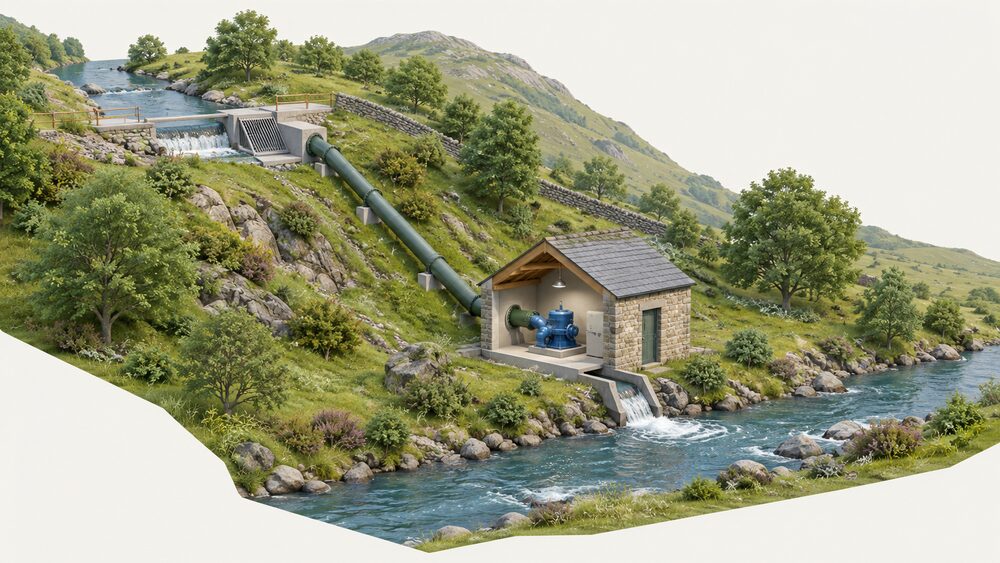
Taff Bargoed Park sits in the South Wales valleys, and the hydropower scheme there is a community-scale installation rather than a utility power station. It draws on a resource that has been used in Wales for generations: hydropower or hydroelectricity, generated from dams, sluices and mill wheels, was used for many years to generate electricity in a local area7. The scheme is a modern continuation of that tradition, using a controlled flow of water to drive a turbine rather than a mill wheel.
The technology is well understood and long established. Hydroelectric energy systems work in a similar way to wind turbines, where flowing water turns a turbine, which is used to generate electricity8. Micro hydro plant uses running water turning a turbine to produce electricity9. The difference between a micro hydro plant and a large hydro station is scale, not principle: a community scheme takes a modest head of water and a modest flow, and generates a correspondingly modest but steady output.
For a household, the significance is that the scheme is a named, physical example of generation that belongs to the place it sits in. It is not a remote asset owned by a distant utility. That distinction matters when considering what energy independence looks like at community level, and it connects to the wider picture set out in Community Energy in Wales and Community Energy in the UK.
How the scheme generates electricity
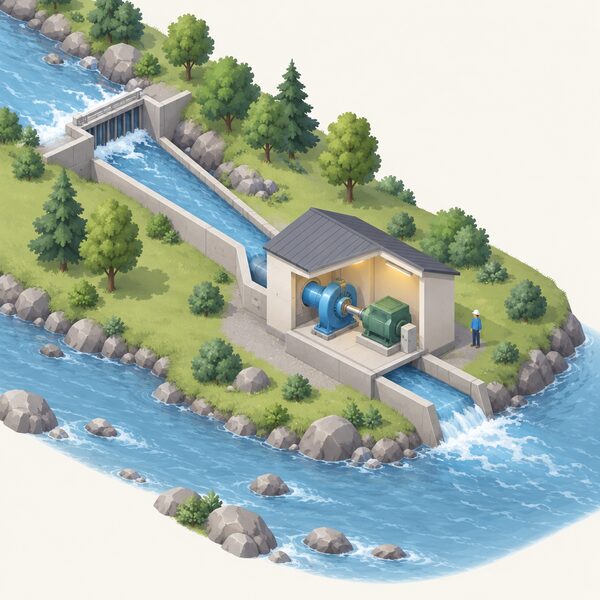
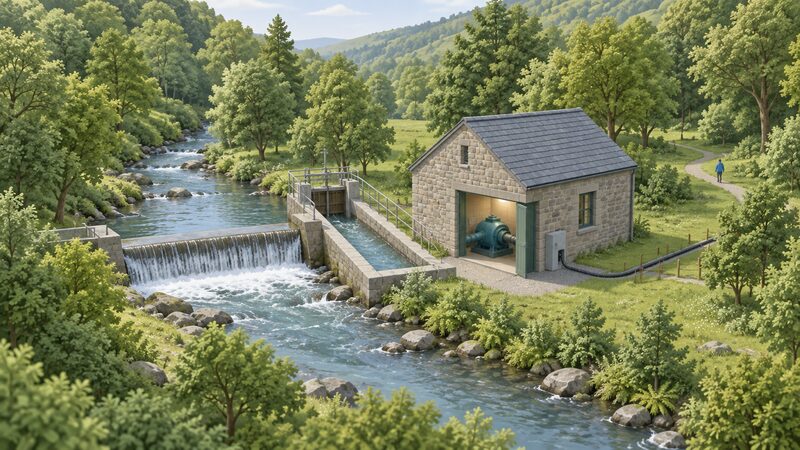
The generation process is straightforward. Water is taken from the river or stream, channelled to a turbine, and the force of the falling or flowing water turns that turbine, which drives a generator. Hydropower systems use energy from streams and rivers to turn a turbine, which produces electricity1. The water then returns to the watercourse downstream. There is no fuel and no combustion, and the output depends on the head of water available and the flow rate at the site.
Scale is the key variable. The Feed-in Tariff scheme, which supported small-scale renewable and low-carbon technologies up to a Total Installed Capacity of 5MW in England, Wales and Scotland4, gives a sense of what counts as small-scale in policy terms. Within that, microgeneration in the 0 to 50kW band accounted for 3,489.9 MW of installed capacity5. A community hydro scheme sits somewhere in that range, depending on its site.
The Feed-in Tariff scheme itself is a useful reference point for what small-scale generation has meant in aggregate. During SY14, 8.3 TWh of renewable electricity was produced, for which FIT generators were paid just over £1.84 billion5. That figure covers all supported technologies, not hydro alone, but it shows the volume of generation that small-scale schemes collectively contribute.
For a household, the practical point is that hydro output is steady compared with solar. A river flows day and night, so a hydro scheme generates outside daylight hours and through the winter, when solar output is at its lowest. That steadiness is the quality that makes hydro attractive where the resource exists, and it is why the comparison with solar is not straightforward. The wider context is covered in Solar Panels vs Small Wind for Home Generation and The Winter Gap.
Community ownership and local benefit
Community ownership is the feature that distinguishes a scheme like this from a commercial hydro plant. The model is well established in the UK. Community-owned, not-for-profit organisations operate local energy assets and return value to their area: SaveEnergy, for example, is a community-owned, not-for-profit organisation based in the Thames Valley10. Great British Energy is committed to enabling Smart Local Energy Systems with a presumption on community ownership6, which signals that the model has official backing.
The revenue question is where community schemes differ most from household generation. Brixton Energy Solar Co-operative funnelled surplus revenue into home energy efficiency and fuel poverty initiatives to benefit local residents11. That is the community energy proposition in one line: generation produces a surplus, and the surplus is spent locally rather than distributed to shareholders.
Community energy organisations can also act as a delivery channel for household retrofit. Where the Warm Homes Plan moves towards an area-based delivery approach, their potential activities include giving locally tailored energy advice, including supporting households post-installation, lead generation for local retrofit schemes, engaging hard to reach households, helping to ensure that low income and vulnerable households are benefitting from such schemes, and delivering installations3. A hydro scheme that generates revenue can therefore feed directly into household energy efficiency work in its area.
Funding routes exist to support this kind of project. Great British Energy, and local authorities Camden and Haringey, offer funding opportunities to support community energy projects12. In Scotland, there is dedicated guidance for repowering projects, including support on financing, evaluation and governance, as well as targeted support from Local Energy Scotland through the Community and Renewable Energy Scheme (CARES), including help to develop proposals13. The funding landscape is set out more fully in Funding for Community Energy Projects and Community Energy Share Offers and Co-operative Ownership.
What the scheme means for household energy independence
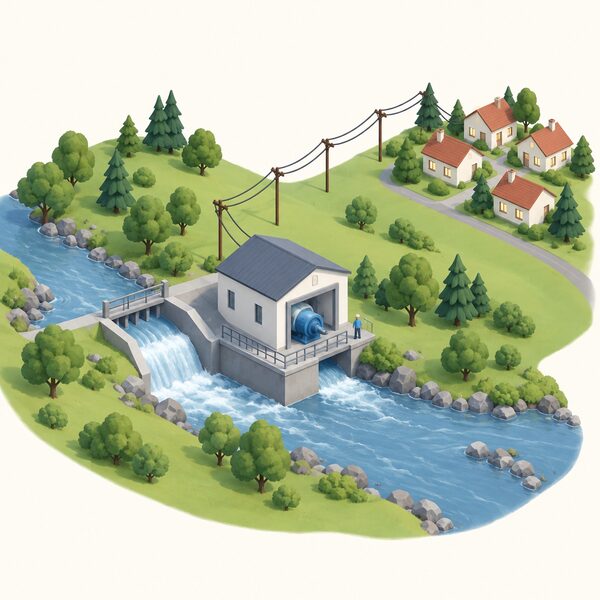
A community hydro scheme does not make an individual household self-sufficient. It generates electricity at community scale and sells or distributes it, and the household still draws from the grid in the usual way. What it does change is the ownership of some of the generation a household relies on, and the destination of the revenue that generation produces.
The distinction matters. Household energy independence has several layers: generating your own power, storing it, using it at the right time, and reducing the imports embedded in whatever you buy from a supplier. A community scheme addresses the last of these by adding local generation to the mix, and it addresses the revenue question by keeping surplus value in the area. The measures of independence are set out in Self-Sufficiency Ratio and Other Measures of Energy Independence and How Much Imported Energy a UK Household Uses.
For a household considering its own generation, the comparison with solar is instructive. Rates for selling electricity to the grid are much lower than tariffs for using electricity from the grid, so using solar electricity yourself is much more cost-effective14. The same logic applies to any local generation: value is greatest when the power is used locally rather than exported. That is the argument for community schemes that supply their own area, and it is explored in Self-Consumption and Local Energy Supply.
There are limits to be honest about. A hydro scheme depends on a water resource that most households and most sites do not have. It depends on a site with sufficient head and flow, on planning consent, and on an operator to maintain it. And it depends on the grid for distribution unless it supplies a private network. The dependence that remains is real: the grid, a supplier, and the equipment's maintenance. What the scheme offers is a share of local ownership, not independence from the system. The broader picture is in Household Energy Independence in the UK and Microgrids and Local Energy Systems.
Hydropower and solar compared for a household
The two technologies are not substitutes for most homes. Hydro needs flowing water; solar needs daylight and roof or ground space. Where a household has a stream with sufficient head and flow, hydro can generate steadily through the day and night and through the winter. Where it does not, solar is the practical option, with the caveat that its output is seasonal and its value depends on self-consumption.
The economics of self-consumption apply to both. Rates for selling electricity to the grid are much lower than tariffs for using electricity from the grid, so using solar electricity yourself is much more cost-effective14. A household with solar and a battery, or solar and a hot water diverter, captures more of its generation's value than one that exports it all. The options are compared in Solar Diverter vs Battery and How Much Does a Battery Increase Solar Self-Consumption?.
For a household that cannot host hydro but wants a stake in local generation, community energy offers a route. The choice between joining a scheme and installing your own generation is set out in Joining a Community Energy Scheme vs Installing Your Own Solar.
Visiting and finding out more
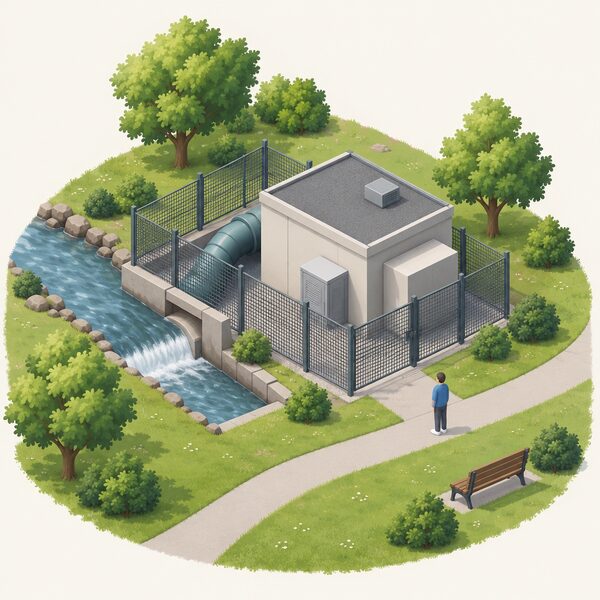
Community hydro schemes are often sited in public parks and accessible countryside, and the surrounding area can usually be viewed on foot. Generating equipment itself is normally enclosed, both for safety and for protection from weather and debris. Anyone planning a visit should check access arrangements with the site or the operator, since paths, fencing and opening times vary.
For updates on community energy funding and schemes, the funding bodies and membership organisations publish round dates and outcomes. The Energy Saving Trust's energy incentives and schemes page was last reviewed on 04 September 202615. The London Community Energy Fund is listed as open, with its feasibility and delivery application deadline of 30 September 2026 and its development stream opening in October 202612. For scheme-specific news, the operator or the relevant community energy body is the place to look.
Households wanting advice on their own energy options have official routes. Home Energy Scotland provides free, independent and impartial energy advice to householders, community groups and businesses throughout Scotland16. In Northern Ireland, homeowners should seek independent advice on solar panels, heat pumps, and other energy efficiency measures from organisations offering that service17. Area Based Schemes in Scotland are for private homeowners and landlords in Scotland to help with the cost of certain energy efficiency measures18.
"Hydropower or hydroelectricity, generated from dams, sluices and mill wheels, was used for many years to generate electricity in a local area."
Sources18 cited
- Renewable energy, Consumer Council, 2026
- £10 million to help Welsh communities cut energy bills, Welsh Government, 2026-03-03
- Delivering warm homes through community power, Energy Saving Trust, 2025-10-09
- Guidance for FIT generators, Ofgem, 2026-04-01
- Feed-in Tariff annual report SY14, Ofgem, 2026-09-17
- Batteries, Community Energy England, 2026-09-20
- Hydropower, nidirect, 2026-09-17
- Generating renewable electricity, Energy Saving Trust, 2025-12-11
- Hydro-electricity, Planning Portal, 2026
- SSEN and SaveEnergy help during power cuts, Scottish and Southern Electricity Networks, 2026-02-17
- Community energy delivers affordable power, Energy Saving Trust, 2025-09-22
- London Community Energy Fund ninth round, Community Energy England, 2026-09-17
- Local and small-scale renewables, Scottish Government, 2026-09-17
- Solar panels, London Borough of Hammersmith and Fulham, 2026-09-17
- Energy incentives and schemes, South Cambridgeshire District Council, 2026-09-17
- Area Based Schemes, Glasgow City Council, 2026-06-08
- Support to generate your own electricity, nidirect, 2025-09-22
- Energy Efficient Scotland: Area Based Schemes, West Lothian Council, 2026-09-17
 Community Energy in WalesWales wants more of its energy owned by local people, not big companies.
 Community Energy StatisticsHow much of the UK's energy comes from projects owned by local people, and is that number growing?
 Community Energy in the UKWhat community energy means in practice, the legal structures used, and the types of project householders can join or benefit from.
 Community Wind and HydroExplains how community-owned wind and hydro projects are organised, financed and shared with local households, and the scale of installed community capacity across the UK.
 Community Energy in NICan a community group in Northern Ireland sell power to its neighbours, and is there funding to get a project off the ground?
 Community Energy in EnglandCommunity energy lets neighbours own their own power together, often through solar panels, and share the money it makes.