

In this answer
Short answer
Group buying brings households together to unlock better deals on sustainable upgrades, and it is backed by local councils and trusted partners, having already helped thousands of UK households1. The best-known example is Solar Together, a group-buying scheme for solar panels and battery storage offered by some local councils to make solar more affordable2. Since 2018 the Solar Together scheme has installed 79,500 solar panels in the UK3.
The mechanism is a reverse auction. Instead of a household chasing installers, installers compete for the group's business, and the scheme organisers vet every installer and agree fair terms up front, which they say means no hidden fees and quality assurance1. Registration is free and carries no obligation to install1. Schemes now cover a wider range than panels alone, from solar panels and battery storage to heat pumps and EV chargers1.
For a household, the appeal is a pre-negotiated price and a pre-vetted installer without the work of sourcing quotes. The limits are equally clear: participation depends on whether a local council has joined, the offer is made to the property rather than the person, and the system still depends on the grid for everything it does not generate.
What group-buying schemes are and how they work
Group buying is a procurement model rather than a product. It brings households together so that their combined demand is put out to tender, and the organisation running the scheme selects the best deal from those submitted1. The same principle underpins collective energy purchasing, where a group of consumers gets together via a third party to buy a specific plan from a gas and electricity supplier, with suppliers bidding against each other in a reverse auction5.
Applied to home upgrades, the model works in stages. Registration involves completing a brief survey that helps the scheme create a personal offer for your home, with questions focused on the property itself1. Those registrations are aggregated, and a reverse auction is then held where pre-vetted solar installers submit bids for the work4. The winning bid sets the price available to everyone who registered. Once a household accepts, the installer takes over and the scheme stays in the loop to make sure everything runs smoothly1.
Group buying sits alongside other forms of financial help for solar. Independent guidance lists grants, group-buying schemes where participants get a discounted price, free solar panels for those in certain circumstances, and interest-free loans as the main forms of support6. It is worth separating these: a group-buying scheme is a purchasing route, not a subsidy, and the discount comes from pooled demand rather than from public money.
The model has also been applied to heat pumps, where group purchasing is one of the ideas tested for cutting carbon emissions from UK homes3.
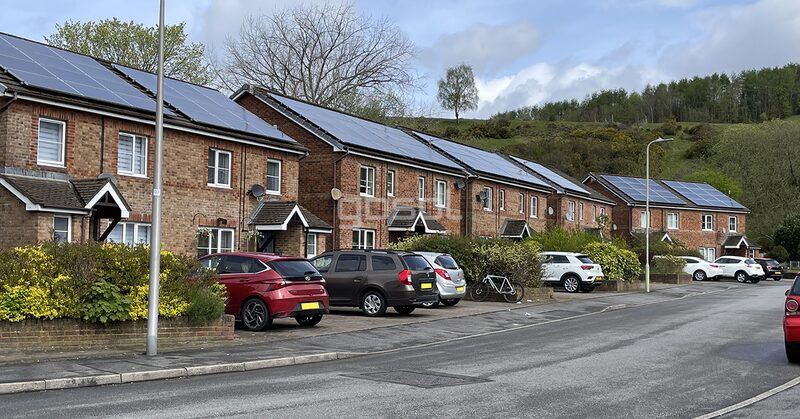
Solar Together: the UK's main group-buying scheme
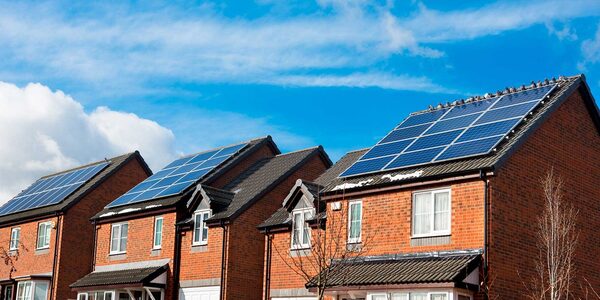
Solar Together is the scheme most households will encounter. Councils describe it as a group-buying scheme for solar panels and battery storage7, and as one that brings households together to get high-quality solar panels at a competitive price8. Independent guidance describes it as an initiative offered by some local councils to make solar panels more affordable through a group-buying scheme that secures savings on installation costs2.
Its scale is the clearest evidence of how widely it has been taken up: 79,500 solar panels installed in the UK since 20183. That figure covers installations across all participating areas rather than any single council.
Delivery is local. Wirral Council works with Liverpool City Region Combined Authority through the Climate Emergency initiative7. Birmingham ran its own variant, Switch Together Birmingham, offering high-quality solar photovoltaic panels and battery storage as a group-buying scheme that brings Birmingham households together8. In Norfolk the scheme operates as Switch Together Norfolk, again described as a group-buying scheme bringing households together to get high-quality solar panels at a competitive price, with a reverse auction among pre-vetted installers4. Cheshire's version is described as a group-buying initiative offering homeowners and small businesses discounted solar panel installations through collective purchasing9.
The practical consequence of this patchwork is that there is no single national register. A household in one council area may have a live scheme while a neighbouring authority has none, and the terms, the technologies offered and the auction timetable are set locally. The scheme's own materials describe the model as proven and backed by local councils and trusted partners1.
What the schemes cover: solar, batteries, heat pumps and EV chargers
The original schemes were about panels. The current generation is broader: group buying is described as covering everything from solar panels and battery storage to heat pumps and EV chargers1. Battery storage is the most common addition, and many solar companies now provide solar and battery systems as a package, so this is an option worth considering9.
Heat pumps sit in a different funding landscape. The Boiler Upgrade Scheme funds the installation of a heat pump, biomass boiler or heat battery10, and supports installation of heat pumps, biomass boilers and heat batteries in homes and non-domestic buildings11. Heat pumps that integrate with solar photovoltaic systems are eligible under the scheme10, and ground source heat pumps as part of a shared ground loop are also eligible11. A group-buying scheme does not replace that grant; the two can apply to the same installation where the installer meets the scheme's requirements.
| Upgrade | Covered by group buying | Separate scheme or rule |
|---|---|---|
| Solar PV | Yes, the core offer1 | Registered with the DNO, usually by the installer12 |
| Battery storage | Yes, commonly bundled with panels1 | Registered alongside the PV system12 |
| Heat pumps | Yes, in broader schemes1 | Boiler Upgrade Scheme funds heat pumps, biomass boilers and heat batteries10 |
| EV charge points | Yes, in broader schemes1 | Separate certification and registration apply |

How to register and who is eligible
Registration is deliberately light. It involves completing a brief survey that helps the scheme create a personal offer for your home, with questions focused on the property1. It is free and without obligation1. There is no charge for taking part and no commitment to buy at that stage.
Eligibility is set by the local scheme. Cheshire's initiative states that it offers homeowners and small businesses discounted solar panel installations9, which indicates that the model can extend beyond owner-occupiers. For a renter, the constraint is structural rather than administrative: the panels attach to a building the tenant does not own, so the landlord's consent would be needed. The offer is made for a specific property, based on the survey answers about that home.
Two checks sit outside the scheme and remain the household's responsibility. Planning requirements still apply: joining a Solar Together scheme does not remove the need to check planning requirements13. And the electrical connection must be notified: a solar panel system needs to be registered with your Distribution Network Operator, and the installer will usually register your system12. Solar photovoltaic is an eligible technology type for the Smart Export Guarantee, the mechanism through which exported electricity is paid for14.
The sequence, once an offer is accepted, runs as follows.
- Accept the offer, which triggers a property survey1.
- A surveyor visits to assess whether the roof is suitable and to confirm the number of panels, their location, cabling locations and colour1.
- The installer carries out the work and the scheme quality-checks it1.
- The installer registers the system with the DNO12.
Who installs the panels in a group-buying scheme
The installer is chosen by competition, not by the household. Installers compete for the group's business through an auction-style system1, and in the Norfolk scheme a reverse auction is held where pre-vetted solar installers submit bids for the work4. Only firms that have passed the scheme's vetting take part, and the organisers state that they carefully vet all installers and agree on fair terms up front, which they say means no hidden fees and quality assurance1.
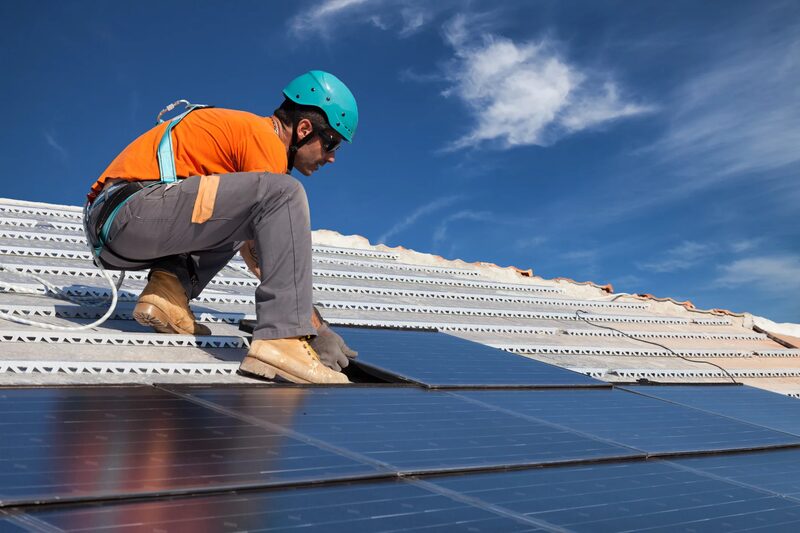
That vetting is the scheme's main quality claim, and it is worth understanding what it does and does not cover. It establishes that the firm is on the approved list for that round. It does not change the underlying regulatory position: domestic customers must buy solar panels through an installation company15, and self-installation is not recommended, with a qualified installer certified with MCS the appropriate route16. MCS certification is the industry's own benchmark for solar photovoltaic installation17.
Structural questions are separate again. Where a roof's load-bearing capacity is in question, assessment must be done by a qualified structural engineer16. That is a distinct professional judgement from the installer's own survey.
The wider market context is useful for comparison. In a January 2026 survey of solar panel owners, nearly half told Which? they had used an independent solar panel installer, while 25% used a larger solar panel company18. Group-buying participants form a third route again, sitting outside both of those categories because the installer is appointed by the scheme rather than chosen by the household.
Group buying versus arranging your own installer

The two routes differ in who does the work of finding a firm and agreeing a price. In group buying, installers compete for the group's business rather than the household chasing them, and the terms are agreed up front by the scheme1. In the direct route, the household obtains quotes and compares them. Independent guidance on solar costs suggests getting at least three quotes, to allow prices to be compared for a specific system and home18.
On price, the evidence is mixed rather than decisive. Independent guidance on collective purchasing notes that while collective switch deals are often cheaper than deals you could find elsewhere, this is not always the case, and advises comparing deals using price comparison sites5. That guidance concerns energy tariffs rather than solar installations, but the caution transfers: pooling demand is a reason to expect a better price, not a guarantee of one.
The trade-off is choice against convenience. A group-buying participant accepts the winning installer, the specified equipment and the scheme's timetable in exchange for a pre-negotiated price and pre-vetted contractor. A household arranging its own installation keeps control of brand, specification and scheduling, and can weigh competing quotes against each other. The Which? survey finding that nearly half of owners used an independent installer, with 25% using a larger company, shows how much of the market sits outside the scheme route18.
There is also a timing dimension. Group-buying rounds run to a cycle: registration opens, the auction closes, offers are issued, and installation follows. A household that needs work done outside that cycle cannot use the scheme. A household willing to wait for the next round may get a better price than one buying immediately.
For households weighing the two, the relevant pages are getting quotes for a home energy installation and comparing installation quotes, which set out what a quote should contain. Checking a firm's registration is covered in checking an installer before you buy, and the consumer codes that apply to energy installation work are compared in RECC and HIES compared.
What owning a group-bought system means for energy independence
A group-bought system is owned outright in the ordinary way, and that ownership is the source of its independence value. Once the installation is paid for, the electricity the system generates is free, although the household still pays for any additional electricity used from the grid and for maintenance costs19. The system reduces the volume of electricity bought from a supplier; it does not remove the connection.
The economics of self-consumption reinforce this. Rates for selling electricity to the grid are much lower than tariffs for using electricity from the grid, so using solar electricity yourself is much more cost-effective than exporting it19. A household's return depends more on how much of its own generation it uses than on export payments, which is why battery storage is commonly bundled with panels9.
Ownership also has to be verified, not assumed. Guidance for households moving into a property with panels advises checking whether you now own the panels or whether they belong to a private company20. That distinction matters because some routes to solar involve a third party retaining legal ownership of the system15, and the financial comparison between routes turns on the up-front cost of the system if purchased outright against the up-front cost if purchased with a loan21.
What remains dependent is substantial. The household still relies on the grid for evening and winter demand, on a supplier for billing and export payments, and on the installer's warranty and the manufacturer's product warranty for faults. Where a scheme appoints the installer, the household's aftercare relationship is with that firm, and the protections that apply to installation work are the ordinary ones. The pages on workmanship warranties and aftercare and insurance-backed guarantees set out what those protections cover, and installers and energy independence places the group-buying route in the wider picture. The starting point for the whole subject is the pillar guide, home energy installers and retailers.
Sources21 cited
- Group buying, Switch Together
- Free solar panels and solar buyback, Which?
- Group purchasing for heat pumps, Nesta
- Solar Together Norfolk, South Norfolk and Broadland Council
- Collective purchasing energy guide, Uswitch
- Should you get solar panels?, Which?
- Solar panels, Wirral Council
- Switch Together Birmingham, Birmingham City Council
- Solar panel installation in Cheshire, Fuse Energy
- Boiler Upgrade Scheme guidance for installers, Ofgem
- Boiler Upgrade Scheme: installers, Ofgem
- Solar power, Electricity North West
- Common queries about planning permission, Wiltshire Council
- Smart Export Guarantee: generators, Ofgem
- Information regarding free solar PV systems, RECC
- Solar panel installation, Energy Saving Trust
- Solar photovoltaic (PV), MCS Certified
- Solar panel costs, Which?
- Solar power facts, Energy Saving Trust
- Moving house energy checklist, Energy Saving Trust
- Grants and loans, Energy Saving Trust
 Community Energy in EnglandCommunity energy lets neighbours own their own power together, often through solar panels, and share the money it makes.
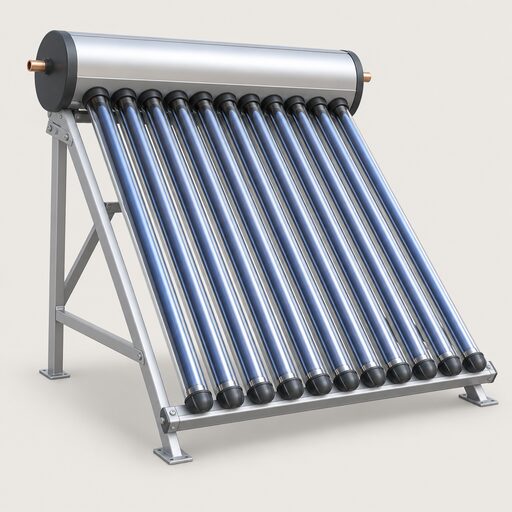 Solar Thermal Water HeatingSolar thermal panels heat your water using the sun, working alongside your boiler rather than replacing it.
 Community Energy in the UKWhat community energy means in practice, the legal structures used, and the types of project householders can join or benefit from.
 Peer-to-Peer Energy TradingSharing power with your neighbours sounds simple, so why does it need a supplier in the middle?
 Selling a Home With Energy KitCovers the paperwork a sale requires when a home has solar panels, a heat pump, insulation or a leased roof, and how warranties, export payments and guarantees transfer.
 Community Energy in NICan a community group in Northern Ireland sell power to its neighbours, and is there funding to get a project off the ground?