
In this guide
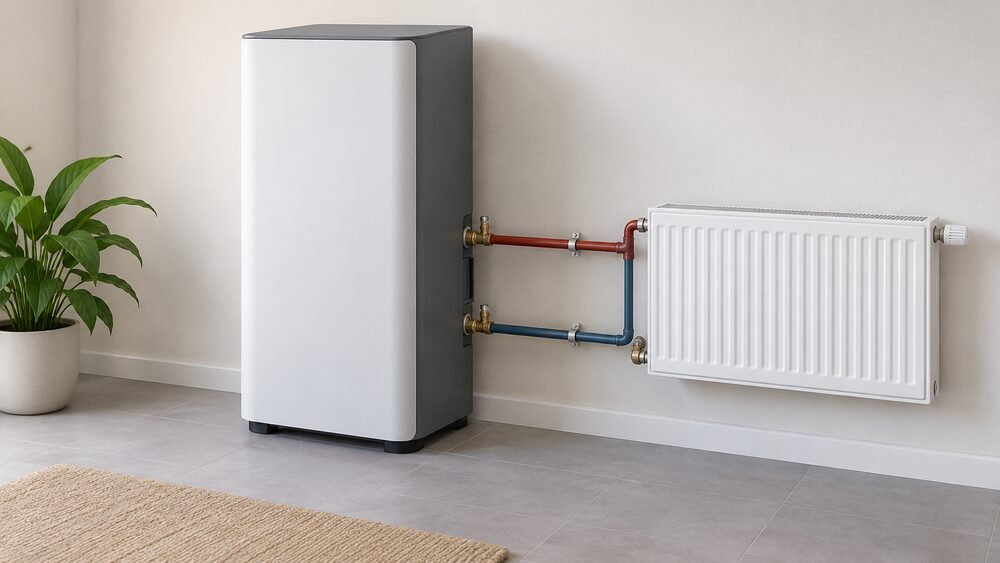
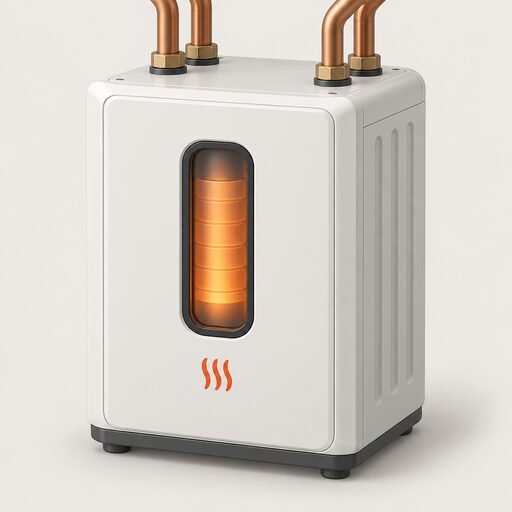
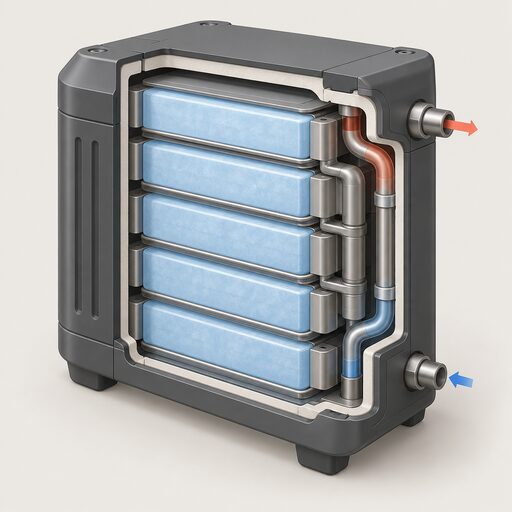
A heat battery stores energy as heat rather than as electricity. It takes electricity from the grid or from a home renewable source, or surplus heat from a boiler, heat pump or another heating system, holds it in a thermal storage medium, and releases it to heat hot water for taps or for a wet central heating system1. The government's own working definition describes an electric heating appliance used flexibly to use periods of cheap and clean electricity generation by heating a thermal storage medium, which then heats water through a heat exchanger to feed a central heating system or a sanitary hot water system2.
The running cost is the part that decides whether one makes sense. For an average flat or small home, a heat battery on an off-peak tariff is put at £1,774 a year for space heating, against £2,690 for an electric boiler on Economy 7 and £800 to £1,050 for a heat pump3. A typical figure for an average home on Economy 7 or another off-peak tariff is around £1,770 a year3.
That gap is the whole story of electric heat storage. The appliance is close to 100% efficient at the point of use, because all the electricity it draws becomes heat, but the price of that electricity is what sets the bill, and the tariff structure decides whether the storage is an asset or a liability4.
What a heat battery is and what it does in a home
There are two families of heat battery, and the difference matters for what the unit can do. One stores heat in a material that changes phase, and the other stores heat in a material such as a ceramic where there is no phase change1. Both take energy in as heat, and both give it back as heat.
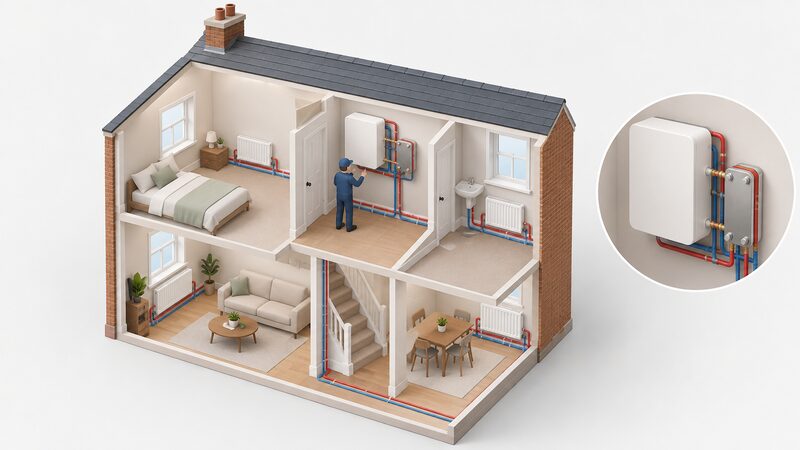
The inputs are wider than electricity alone. A heat battery can be charged from electricity, whether from the grid or from a home renewable source, and from surplus heat from a boiler, a heat pump or another heating system1. On the output side, heat batteries can heat hot water for a central heating system or for the taps, and some can be used as a thermal store within a central heating system, typically alongside a heat pump1.
The units run at 55 to 60°C and connect to an existing wet central heating system through a heat exchanger, which is what allows them to serve ordinary radiators rather than requiring a bespoke emitter set3. They are described as most suitable for smaller homes that do not have space for an outdoor heat pump unit, which places them in the same territory as flats and terraced houses with limited external space3.
There is a system benefit beyond the individual home. Heat batteries can help balance the electricity grid, because they can absorb power in periods of surplus generation and release it later7. That is the same flexibility argument that applies to any storage, and it is why the technology appears in official thinking about a smart and secure electricity system2.
Running costs: £1,774 a year for an average flat or small home
The cost figures for electric heating are best read as a table, because the ranking changes with the tariff and the home type. All of the following are for an average flat or small home as of June 20263.
| System | Tariff basis | Annual space heating cost | Installed cost |
|---|---|---|---|
| Heat battery | Off-peak tariff | £1,774 | Not stated |
| Electric boiler | Economy 7 | £2,690 | £3,000 to £6,000 |
| Heat pump | Single-rate | £800 to £1,050 | £6,000 to £18,000 |
| Night storage heater (high heat retention) | Economy 7 | £676 | £400 to £800 per heater |
| Night storage heater (integrated) | Economy 7 | £711 | £600 to £800 per heater |
| Dynamic storage heater | Single-rate | £1,080 | £400 to £600 per heater |
The heat battery sits between the storage heaters and the electric boiler on running cost, and it is the only one of the three that also produces hot water for the taps. The heat pump is cheaper to run than all of them on this basis, but it carries the highest installed cost and needs somewhere to put an outdoor unit3.
A separate official figure puts heat pumps at £2,100 to £2,500 a year to run in a three-bedroom semi-detached house across Great Britain regions, as of March 20268. That is a different home type and a different basis from the flat figures above, and the two should not be read as contradicting each other: they describe different buildings.
For a household, the practical point is that a heat battery's running cost is a function of the price of the electricity that charges it. Where that electricity is bought at an off-peak rate, the storage does useful work. Where it is bought at a peak rate, the storage adds capital cost without changing the unit price, and the bill approaches that of direct electric heating.
Thermal stores: the long-established way to hold heat in water
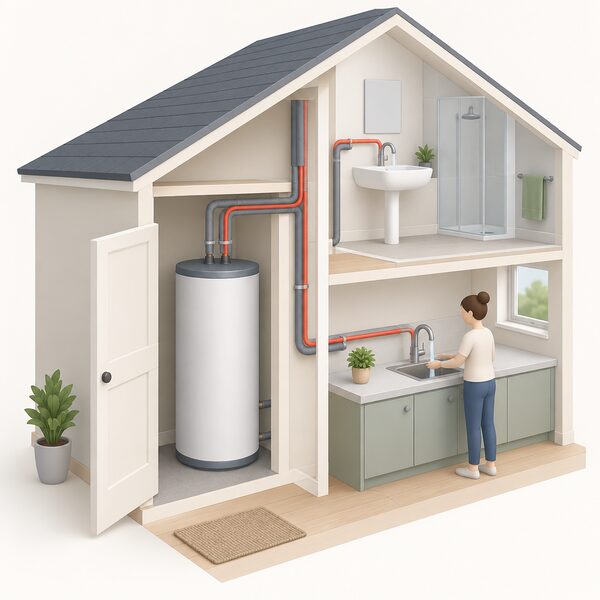
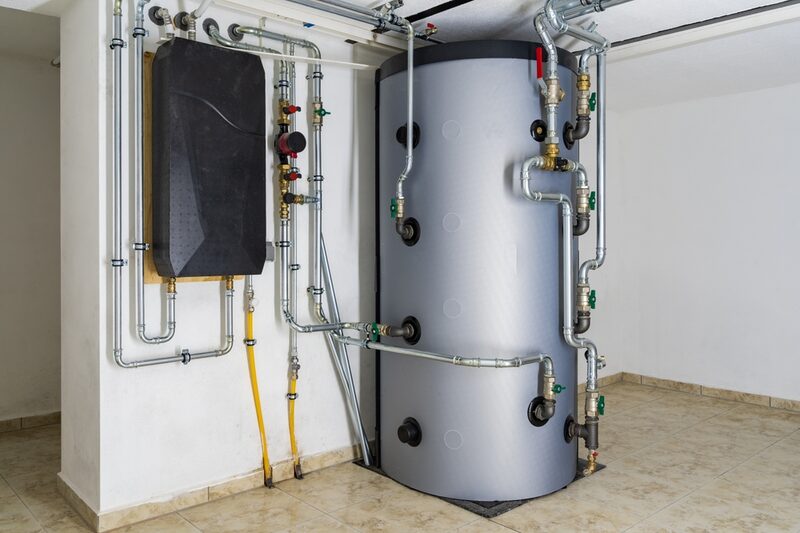
A thermal store is the older and simpler answer to the same problem. Water-based thermal stores are insulated water tanks that can store heat as hot water for several hours1. The heated water is usually held in a large, well-insulated cylinder often called a buffer or accumulator tank9.
Their functions are broader than hot water supply. A thermal store usually serves two or more of the following: providing hot water, storing heat from a solar thermal system or a biomass boiler, acting as a buffer for a heat pump, storing heat from multiple sources, and heating water using an immersion heater through a diverter1. That multi-source capability is the reason they persist in off-gas-grid homes where a single generator would be too inflexible.
Thermal stores have proved to work particularly well with wood-fuelled biomass boilers, heat pumps, wind energy and solar water heating systems9. They can also be used with solar, wind, biomass and hydro renewable systems10. The sizing rule differs by fuel: a pellet boiler can be paired with a relatively small thermal store because it can cope quite quickly with changes in heat demand, while a log boiler needs a large thermal store9.
One regulatory distinction is worth stating plainly, because it is often assumed to work the other way. UK building regulations advise that water cylinders, but not thermal stores, need to regularly reach temperatures of more than 60°C5. A thermal store is therefore outside that particular piece of cylinder advice, which affects how it is commissioned and controlled rather than whether it can supply hot water.
Electric boilers: zero emissions at the point of use, but electricity is 3 to 4 times the price of gas
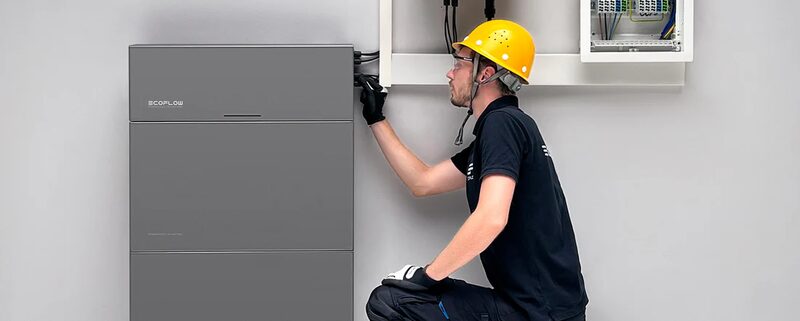
An electric boiler uses electricity to heat water before sending it through radiators or underfloor heating pipes5. It has no flue and no gas pipe, so it does not need to be on an outside wall, which gives more flexibility over where it goes4. Usually these systems include a large hot water tank to store the heat5.
The efficiency argument is real but narrow. Electric heaters are more efficient than gas boilers because all the electricity they use is turned into heat4. Even so, electric heating is more efficient than using a boiler, but the higher cost of electricity more than offsets that advantage5. That is the trade in one sentence: near-total conversion efficiency at the appliance, against a unit price that is several times the price of gas.
Installation carries its own requirements. A qualified electrician must fit an electric boiler4. The most common electric meters for an electric boiler are Economy 10 meters5. Electric boilers are an option if you are off the gas grid, and because there is no flue there is more flexibility over installation; they are designed for smaller homes11.
The running cost conflict is unresolved in the published figures. One set puts an electric boiler at £2,690 a year for space heating in an average flat or small home on Economy 7, while another puts it at £3,220 on the same basis, both dated June 20263. Distributor guidance gives a wider and lower band again, £500 to £1,500 a year in one document and £1,200 to £2,500 in another3.
Cost and installation: £1,000 to £2,000 for the unit, £3,000 to £6,000 fitted
Electric boilers cost £3,000 to £6,000 to install3. For heat batteries, the installation cost varies, and they are eligible for a £2,500 grant through the Boiler Upgrade Scheme3.
A worked quotation gives a sense of the split between unit and labour. A mockup quote of £4,900 breaks down as £2,000 for the unit, £2,000 for installation and £600 for electrical work12. That is a modelled figure rather than a market price, and it is the only itemised breakdown available here.
For comparison, the wider electric heating market runs as follows. Panel heaters cost £100 to £200 each to install3. Home battery storage, which is a different product storing electricity rather than heat, ranges from £1,500 to £10,000, with a 5kWh battery system around £4,60013. Official guidance puts domestic battery storage at up to £10,000 depending on size, with a typical 5kWh system around £4,60014.
Heat pump installation has been reported at between £8,000 and £15,000 depending on the work needed to the home15. The Warm Homes Plan gives the full average cost of a fully funded installation of solar panels and a battery as £9,000 to £12,00016.
Where the published price is absent, prices are installer-quoted. There is no reliable national price list for heat batteries, and the range depends on whether the unit is replacing an existing cylinder, whether the electrical supply needs upgrading, and whether the property already has a wet distribution system.
Economy 7 and time-of-use tariffs: charging cheap overnight, paying peak rates by day
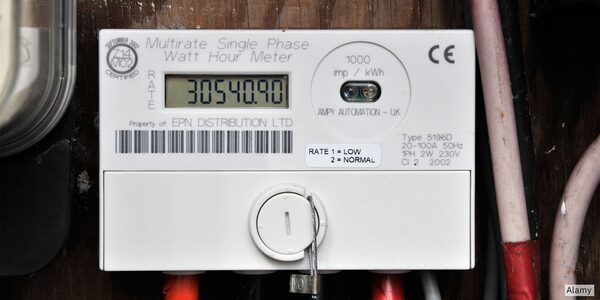
Economy 7 is a time-of-use electricity tariff that charges two different prices for the electricity used, depending on the time of use17. It gives a set number of hours of cheap electricity through the night, with daytime electricity charged at a higher peak rate11. The cheaper rate usually runs between midnight and 7am, offering cheaper prices for seven hours during the night18.
The structure is one cheaper period during the night and more expensive electricity during the day19. Some variations offer 8.5 or 10 hours8. The regional network operator, the company responsible for physically supplying electricity to the property, defines the window, which runs for a seven-hour period at some point between 11.00pm and 8.00am, and can be between 7 and 9 hours depending on the region20. People with Economy 7 typically use these hours to charge their electric storage heaters with heat8.
The economics depend on how much load can be moved. As a general rule of thumb, more than 35% of electricity would need to be used at night to make Economy 7 cost-effective20. A separate source puts the threshold at least 40% at night21. The two figures differ, and the higher of the two is the more cautious test.
The assumed rates used in the running cost figures above are 34.38p per kWh on-peak and 15.43p per kWh off-peak, with a 58:42 split3. For comparison, most suppliers charge around 26.3p per kWh of electricity on their single-rate standard variable tariffs in the South Wales (SWALEC) region, as of 8 September 202620. That comparison is the crux: an Economy 7 customer pays more than the single-rate price for the majority of their consumption in exchange for a discount on the minority.
Economy 7 is typically used with electric storage heaters but is available to anyone19. It requires a special multi-rate meter to be installed at the home22. In Scotland, Economy 7 meters are known as white meters, because the meters supplied by energy companies are white17.
Heat battery, thermal store or electric boiler: which suits which home
The three technologies overlap but do not compete for the same job.
A heat battery suits a smaller home without space for an outdoor heat pump unit, and it can serve both radiators and taps3. It is the option that combines storage with hot water production in one unit, and it is the one with a grant pathway opening up6.
A thermal store suits a home with more than one heat source, or one that intends to add them. It works with wood-fuelled biomass boilers, heat pumps, wind energy and solar water heating systems9, and with solar, wind, biomass and hydro renewable systems10. It is the natural choice where a log boiler or a solar thermal array is already present or planned, and where the store can be sized to the fuel: small for a pellet boiler, large for a log boiler9.
An electric boiler suits a home off the gas grid, particularly a smaller one, where the priority is a wet system without a flue and without a gas connection11. It usually comes with a large hot water tank to store the heat5.
The cost of going the direct electric route with battery storage is worth stating. Regular electric heating with battery storage is three times as expensive as a heat pump setup, and the battery needed would be three times as big13. That is the penalty for using electricity directly rather than through a heat pump, and it applies to the storage as well as the heat source.
For a household thinking about independence, the distinction is between independence from gas and independence from the grid. All three of these technologies remove the gas connection. None of them removes the electricity connection, and a heat battery or electric boiler makes the household more dependent on the electricity supply, not less, because the entire heating load now runs through it.
Where electric heating fits as gas boilers are phased out
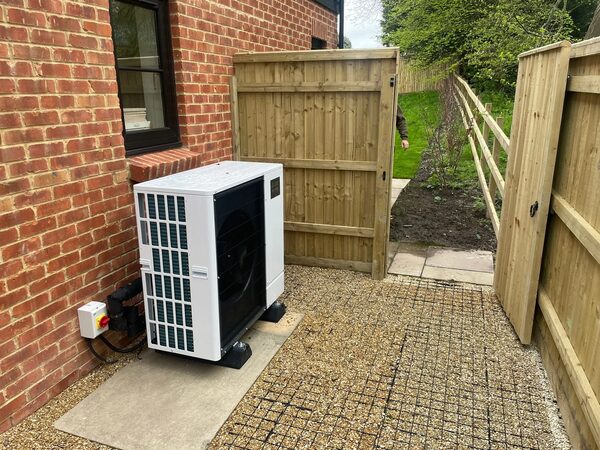
Electric heating is described as ideal for homes without gas, flats, upgrades from storage heaters, well-insulated homes and part-time occupancy homes23. That list is a fair summary of where the technology earns its place: buildings with no gas connection, buildings with limited space, and buildings where the heating load is intermittent.
The direction of policy is toward electrification of heat. The government target is for all new installations to use low-carbon heating such as air-source heat pumps by 203524. The government aims to begin phasing out installation of new natural gas boilers from 2035, though no legally binding regulatory decision has been made24. In Scotland, the proposed framework would set a backstop date of 2045 for low or zero emissions heating in existing buildings25.
The grant landscape is moving but incomplete. The Boiler Upgrade Scheme provides upfront capital grants to support the installation of heat pumps and biomass boilers in homes and non-domestic buildings26, and it covers ground source heat pumps among its eligible technologies27. A £2,500 grant for heat batteries will also be available once the legislation and appropriate product standards are in place6. The government is providing grants to encourage property owners to install low carbon heating systems such as heat pumps28.
The eligibility conditions are the practical obstacle. Heat batteries will not be eligible for the Warm Homes: Social Housing Fund until they can be MCS certified, because the scheme requires both an installation standard and a product standard29. Warm Homes: Local Grant requires MCS certification for low carbon heating measures, with the exception of high heat retention storage heaters covered by PAS 203030. Phase change material heat batteries for hot water cannot currently be installed through the scheme until there is a formally approved convention or they are a formally recognised technology category in SAP29.
There is also a tax asymmetry. Heat batteries are currently the only major heating technology that does not qualify for VAT relief7. Batteries that store energy in the form of heat, that is thermal or heat batteries, are not included in the VAT relief for energy-saving materials31.
Sources31 cited
- Storing energy, Energy Saving Trust, 2026-07-15
- Delivering a smart and secure electricity system: implementation, GOV.UK, 2024-05-08
- Electric heating, Centre for Sustainable Energy, 2026-06
- Electric central heating, Which?, 2025-09-22
- Electric heating, Energy Saving Trust, 2026-07-01
- Carbon Budget and Growth Delivery Plan: heat and buildings factsheet, GOV.UK, 2026-06-23
- No home left behind: how to support lower income homes in the heat transition, Association for Decentralised Energy, 2026-09-20
- Should I switch to a time of use tariff, Energy Saving Trust, 2026-01-23
- Thermal energy stores, Energy Saving Trust, 2025-05-15
- Renewable energy storage, Electricity North West, 2026-09-19
- Heating fuel, Uswitch, 2026-01-27
- Would performance guarantees increase consumer confidence in heat pumps, Nesta, 2026-06-02
- Battery storage, Energy Saving Trust, 2026-08-19
- Battery storage, Parliamentary Office of Science and Technology, 2026-06-25
- Heat pump installation costs, Public Accounts Committee, 2024-05-26
- Families to save in biggest home upgrade plan in British history, GOV.UK, 2026-01-20
- What is Economy 7, Confused.com, 2025-08-20
- What is Economy 7, Energy Helpline, 2026-09-20
- Tariffs for renewable technology, Energy Saving Trust, 2026-08-12
- Economy 7 guide, Uswitch, 2026-09-08
- Getting the most from Economy 7, National Energy Action, 2026-09-10
- Energy: your questions answered, Confused.com, 2026-07-03
- The complete guide to electric heating in the UK, Fischer Future Heat, 2026-03-19
- Heat and buildings strategy, GOV.UK
- Heat in buildings strategy: business and regulatory impact assessment, Scottish Government, 2021-11
- Boiler Upgrade Scheme quarterly report issue 17, Ofgem, 2026-08-31
- Boiler Upgrade Scheme: installers, Ofgem, 2026-09-17
- Home and business grants schemes and advice, East Hertfordshire District Council, 2026-09-17
- Warm Homes: Social Housing Fund Wave 3 scheme guidance addendum, Department for Energy Security and Net Zero, 2026-06
- Warm Homes: Local Grant policy guidance, Department for Energy Security and Net Zero, 2026-07
- VAT energy saving materials and grant funded heating supplies, HM Revenue and Customs, 2026-09-17
 Heat Batteries with Heat PumpsCan a heat battery replace a hot water cylinder if you have no space for one?
 Energy IndependenceA heat pump runs your heating on electricity instead of gas or oil, so how much does that really cut what you pay and how exposed you are when fuel prices jump?
 Heat Battery Trials and ResultsDo heat batteries actually work in real UK homes, and what did the trials find?
 Domestic Fuel CellsA fuel cell boiler makes electricity and heat at the same time, usually from mains gas.
 Controls and Time-of-Use TariffsCheaper electricity at night only saves money if your heating actually uses it then.
 Heat Pump Electricity TariffsA heat pump tariff gives you cheaper electricity for part of the day, so running your heating costs less than on a standard rate.