In this guide
A heat pump and a boiler do the same job by opposite means. A boiler burns a fuel and releases heat; a heat pump uses electricity to move existing heat from the air, the ground or water into the home. That difference is the whole comparison: it sets the efficiency, the running cost, the emitters the system needs, and the amount of the household's energy supply it still depends on.
The efficiency gap is large and consistent across official sources. Heat pumps can be over three times more efficient than boilers1, and the amount of energy needed can be less than a third of what a gas boiler needs to produce an equivalent amount of heat2. The Climate Change Committee puts heat pumps at around three to four times more efficient than gas boilers, which it says should lead to lower household energy bills3. Heat pumps and similar technologies typically reduce energy use by at least three times compared with boilers4.
The cost picture is less flattering at the point of purchase. An average heat pump is around £11,600, currently four times more expensive than a gas boiler5, and installation costs are higher than gas boilers in part because of the additional retrofitting a heat pump system usually needs7. The Boiler Upgrade Scheme pays £7,500 towards an air-to-water heat pump and £7,500 towards a ground source heat pump, including water source heat pumps and those on shared ground loops8.
The short answer: efficiency against purchase price
A heat pump is the more efficient machine and the boiler is the cheaper one to buy. Which costs less to run over a year depends on the price of electricity against the price of gas, and on how well the system is designed for the house it serves.
The efficiency advantage is not marginal. Heat pumps, both for individual homes and large-scale ones for heat networks, use electricity as the energy source and are typically over three times more efficient than the most efficient gas boilers or electric heaters10. The Scottish Government's own assessment puts it in the same terms: the higher efficiency of a heat pump means the amount of energy needed can be less than a third of the amount needed by a gas boiler to produce an equivalent amount of heat2.
That is a statement about energy, not about money. A heat pump that uses a third of the energy still pays the electricity unit rate for it, and electricity has historically cost more per unit than gas. The comparison therefore turns on the ratio between the two unit prices, which is exactly the test the government's own heat pump methodology applies to hybrid systems: the ratio of the heat pump's coefficient of performance to the boiler's efficiency must be greater than the ratio of the unit costs of the heat pump's energy source and the boiler's energy source13. Where that condition holds, the heat pump is the cheaper way to produce the heat. Where it does not, it is not.
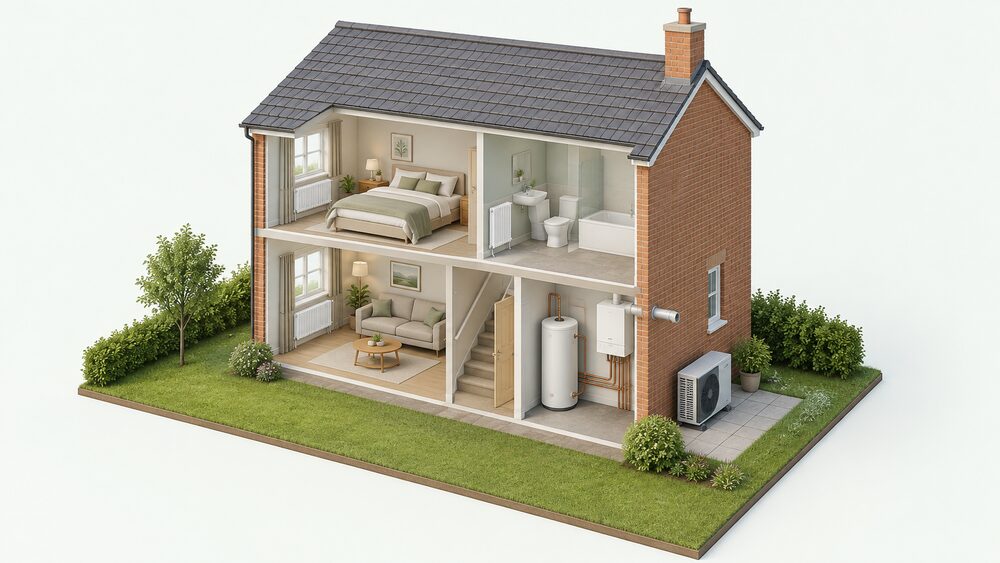
For a household, the practical answer is that a heat pump is a different heating system rather than a like-for-like appliance swap. It runs at lower flow temperatures, it needs emitters sized to deliver the same heat at those temperatures, and it normally needs a cylinder for hot water. Those requirements, not the machine itself, are what drive the installation cost and the disruption.
The figures: cost, carbon and grant
The figures that matter fall into three groups: what the system costs, what it saves in energy and carbon, and what the grant covers.
On cost, the Boiler Upgrade Scheme statistics for 2026 Q2 give a nominal median installation cost of £12,908 for an air-to-water heat pump and £27,232 for a ground source heat pump, both including the grant value, in England and Wales8. The reported range around those medians is wide, and the median installed capacity differs by technology8:
| Measure | Air-to-water | Ground source |
|---|---|---|
| Median installed cost, 2026 Q2 | £12,908 | £27,232 |
| Lower quartile | £11,128 | £18,136 |
| Upper quartile | £15,627 | £42,110 |
| Median installed capacity | 8.0 kW | 10.5 kW |
The parliamentary figure of around £11,600 for an average heat pump, four times a gas boiler, is a separate and earlier comparison5.
On energy and carbon, the government's consumer-facing guidance states that a heat pump produces up to 70% less CO2 over 15 years than a gas boiler and zero emissions at the point of use9. The Scottish Government's assessment states that the higher efficiency of a heat pump means the amount of energy needed can be less than a third of that needed by a gas boiler for equivalent heat12. An earlier government study of hybrid heat pumps modelled a carbon saving of 690 to 950 kgCO2 per year, or 24 to 34%, against a condensing gas boiler counterfactual15.
On the grant, the position from 21 July 2026 is £7,500 towards an air-to-water heat pump and £7,500 towards a ground source heat pump, including water source heat pumps and those on shared ground loops15. Air-to-water vouchers are valid for three months and ground source vouchers for six months15. The scheme has issued 116,832 vouchers and paid 88,092 redemptions between May 2022 and July 2026, with 140,474 applications received, 98% of them for air-to-water installations8.
What drives the numbers
Three things drive the figures: the compressor, the temperature difference it has to work across, and the emitters that deliver the heat.
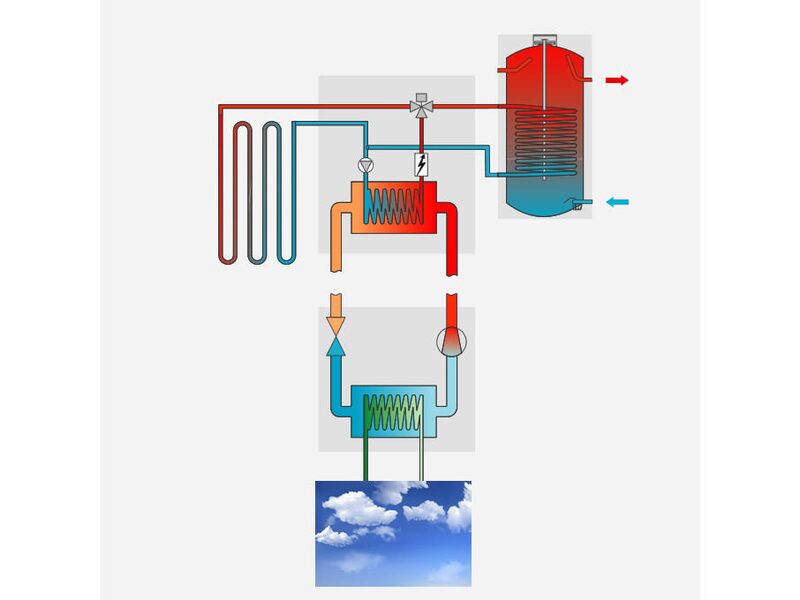
Most heat pumps use an electrically driven compressor13, and the compressor must be driven by electricity16. The heat itself comes from air, ground or water18. Because the machine moves heat rather than creating it, the efficiency is a multiple rather than a percentage, and that multiple is what produces the three-to-four-times comparison with gas boilers3.
The efficiency is not fixed. The higher the temperature difference between the heat source and the target heat, the harder the compressor works and the more electricity it requires19. This is the single most important design fact in the comparison. A heat pump feeding radiators sized for a higher flow temperature will work across a larger temperature difference than one feeding underfloor heating or oversized radiators at a lower flow temperature, and it will use more electricity for the same heat. Cold weather raises the temperature difference from the source side; a high flow temperature raises it from the target side. Both push electricity use up.
That is why the emitter question is not cosmetic. A wet system has to distribute heat using a liquid16, and the heat pump must be capable of meeting the full space heating and hot water heating demands of the property20. A system that meets the space heating demand at a low flow temperature but cannot recover the house on the coldest day has been sized or specified wrongly, and the household experiences it as a heating system that never quite gets there.
Cold weather: output holds, running cost rises
Heat pumps work in cold weather, and the reason is in how they are specified rather than in how they behave on a mild day. A heat pump is sized for the coldest design condition the property is expected to see, so the output is there when the temperature drops. What changes is the cost of producing it.
The mechanism is the temperature difference. As the outside air gets colder, the gap between the source and the target heat widens, the compressor works harder, and the electricity required rises19. A ground source heat pump is less exposed to this because the ground temperature is more stable than the air temperature, which is part of why ground source installations carry a higher capital cost and a lower running sensitivity to weather.
The practical consequence for a household is that a cold snap shows up on the electricity bill rather than in a failure to heat. It also means the annual running cost depends heavily on how the system is controlled: a heat pump run at a steady low flow temperature for long periods performs differently from one cycled on and off at a high flow temperature, and the design should reflect that.
The carbon position is unaffected by the weather in the way the cost position is. A heat pump produces zero emissions at the point of use and up to 70% less CO2 over 15 years than a gas boiler9, because the emissions sit at the power station rather than at the flue. As the grid decarbonises, that figure improves; as the outside temperature falls, the running cost rises. The two are separate questions and are often conflated.
England, Scotland, Wales and Northern Ireland
The grant and the regulatory framework are not the same in all four nations, and the differences matter to what a household can claim and what it must comply with.
The Boiler Upgrade Scheme operates in England and Wales, which is why the published statistics cover those two nations8. Scotland runs its own support through Home Energy Scotland rather than through the Boiler Upgrade Scheme, and its Heat in Buildings Strategy sets a different trajectory: a proposed backstop date of 2045 for low or zero emissions heating in existing buildings12, and a pathway for all buildings to use zero emissions heating and cooling systems by 204518. The remainder of existing fossil fuel based heat networks was to decarbonise by 2045 at the latest18.
Wales has its own building regulations position: installation of either a ground source or air source heat pump will have to comply with the Building Regulations22. The Welsh strategy also refers to plans to phase out the installation of all new gas boilers beyond 2035, and sets out a regulatory route map for phasing out all new gas boiler installations for commercial properties by 203323.
Northern Ireland is not covered by the Boiler Upgrade Scheme statistics in the same way, and the grant position there is administered separately. Where a household is considering a heat pump, the nation it sits in determines which scheme applies, which conditions attach, and which building regulations the installation must satisfy.
The rules: grant conditions, planning and building regulations
The rules fall into two layers: what the grant requires of the system, and what planning and building regulations require of the installation.
For the grant, the heat pump must provide both space and hot water heating and be capable of meeting the full space heating and hot water heating demands of the property20. It must distribute heat using a liquid16, and it must have a compressor driven by electricity16. Those conditions rule out air-to-air systems, which are not considered a renewable system in ECO424. A ground source heat pump may also be comprised of a shared ground loop, treated as a district heating variant measure type under ECO424.
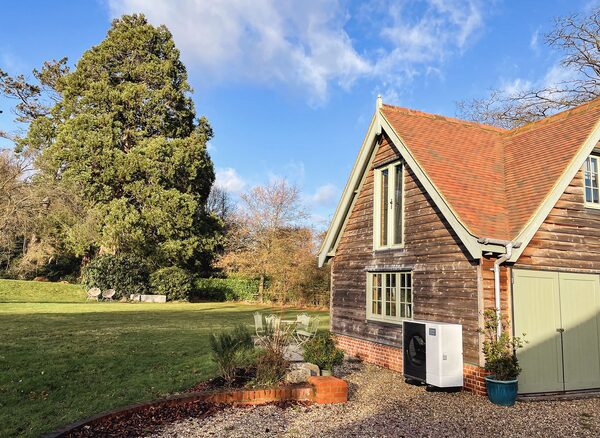
For planning, an air source heat pump usually falls under permitted development if it meets a set of conditions:
- The installation must comply with the Microgeneration Certification Scheme Planning Standards (MCS 020a)25.
- The outdoor compressor unit must not exceed 1.5 cubic metres on a house or 0.6 cubic metres for a block of flats25.
- All parts must be at least one metre from the property boundary26.
- Installations on pitched roofs are not permitted development25, and on a flat roof all parts must be at least one metre from the external edge25.
- Only the first installation is permitted development on a house which is not detached or a block of flats; for detached houses, the first two are permitted development25.
- Permitted development rights do not apply within the curtilage of a listed building or within a site designated as a scheduled monument25.
Noise is the condition most likely to catch a household out. Noise levels for an air source heat pump on its own must stay at or below 42 decibels, measured a metre from any habitable room26. Where the unit exceeds the MCS standards and permission is needed, noise must not exceed 37 dB LAeq at any time, measured on the boundary of the site with any neighbouring residential property27. In a conservation area or World Heritage Site the unit must not be installed on a wall or roof which fronts a highway25.
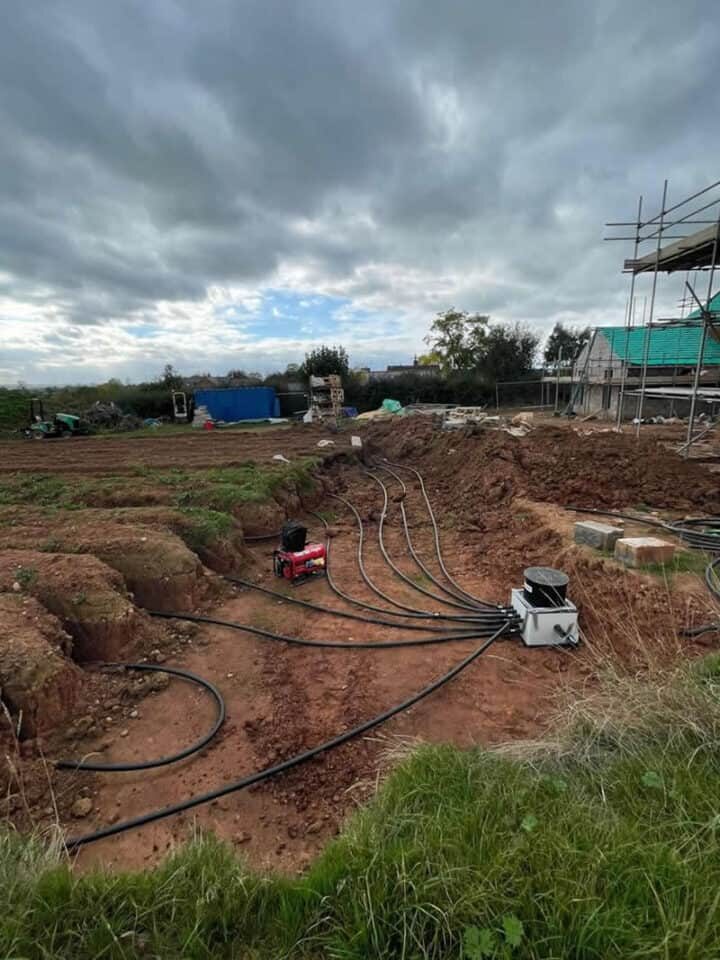
Ground source heat pumps on domestic premises are usually considered permitted development and do not need a planning application28. In a listed building or conservation area, the council should be contacted to check local requirements28. Building Regulations parts A to T apply to air source heat pumps, plus Regulation 726, and gas boilers must have a minimum efficiency of 86% for gas and 85% for oil29.
What it means for energy independence
A heat pump changes what a household depends on. It removes the gas supply from the heating system and replaces it with electricity, and it reduces the amount of energy the home needs to buy in the first place. It does not make the home self-sufficient.
The reduction is real and measurable. Heat pumps and similar technologies typically reduce energy use by at least three times compared with boilers4, and the amount of energy needed can be less than a third of a gas boiler's for equivalent heat2. A household that needs less energy is less exposed to price movements in whatever it buys, and a household that no longer buys gas has removed one fuel supply, one standing charge and one set of safety obligations from the property.
What remains is electricity. The home still draws from the grid, still depends on a supplier and a tariff, and still depends on the network being able to deliver the load. The compressor, the controls and any monitoring app remain the manufacturer's, which is a dependence that does not appear on an energy bill but is real: a system whose controls are tied to a company's servers or a discontinued app is a system with a third party in the middle of it.
The wider industrial picture is that the technology is a UK export opportunity as well as a domestic one. Air source heat pumps represent the most promising export opportunity, contributing 35% of export driven GVA by 2050, and cumulative cost savings in the High Diversification scenario at the high innovation level reach £110.8bn in 2050, compared with £67.8bn and £71.7bn in the High Hydrogen and Minimally Constrained scenarios30.
For the household, the honest summary is that a heat pump trades a gas dependence for an electricity dependence and reduces the total energy required. That is a meaningful shift in a home's position, and it is not independence. The heating and energy independence page sets out the wider picture, and the boilers and home heating guide covers how the alternatives compare.
Sources30 cited
- Carbon Budget and Growth Delivery Plan: heat and buildings factsheet, GOV.UK, 2026
- Heat in Buildings Strategy: achieving net zero emissions in Scotland's buildings, Scottish Government, 2021
- The Seventh Carbon Budget, Climate Change Committee, 2025
- Written evidence on heat pumps and energy use, UK Parliament, 2023
- Public Accounts Committee report on heat pump costs, UK Parliament, 2024
- Public Accounts Committee summary on heat pump costs, UK Parliament, 2024
- Heat pump installation costs and retrofitting, UK Parliament POST, 2026
- Boiler Upgrade Scheme statistics, July 2026, GOV.UK, 2026
- Heat pumps: cleaner heating for your home, GOV.UK, 2026
- Bristol Warm Homes Plan, Bristol City Council, 2025
- Heat in Buildings Strategy: business and regulatory impact assessment, Scottish Government, 2021
- Heat in Buildings Strategy: business and regulatory impact assessment, Scottish Government, 2021
- Heat pump methodology: HEM TP 12, GOV.UK, 2026
- Heat in Buildings Strategy: child rights and wellbeing impact assessment, Scottish Government, 2021
- Boiler Upgrade Scheme guidance for installers v5.1, Ofgem, 2026
- Boiler Upgrade Scheme installer guidance, Ofgem, 2022
- Boiler Upgrade Scheme guidance for installers v2.1, Ofgem, 2023
- Heat in Buildings Strategy: strategic environmental assessment, Scottish Government, 2021
- Research on electricity network constraints and the new build heat standard, Scottish Government, 2024
- Boiler Upgrade Scheme property owner guidance v2.3, Ofgem, 2023
- Summary of updates to Boiler Upgrade Scheme guidance for property owners v2.4, Ofgem, 2023
- Building regulations and heat pumps, Welsh Government, 2026
- Approved Document L Volume 1 consultation, Welsh Government, 2025
- ECO4 new measures and products guidance v3.0, Ofgem, 2026
- Planning permission for air source heat pumps, Planning Portal, 2026
- Building regulations renewables guidance, Bedford Borough Council, 2026
- Air source heat pumps: householder planning advice, Central Bedfordshire Council, 2026
- Planning permission for heat pumps, Planning Portal, 2026
- Building regulations for boilers and heating, Planning Portal, 2026
- Energy innovation needs assessment: heat and buildings, GOV.UK, 2025
 Replacing a Gas or Oil BoilerSwapping a gas, oil or LPG boiler for a heat pump changes how your home is heated and how much it costs.
 Heat Pump Running CostsWhat does a heat pump cost to run each year, and is it cheaper than a gas boiler?
 The Full Boilers and Heating GuideWhich boiler suits your home, and when is it worth swapping the old one?
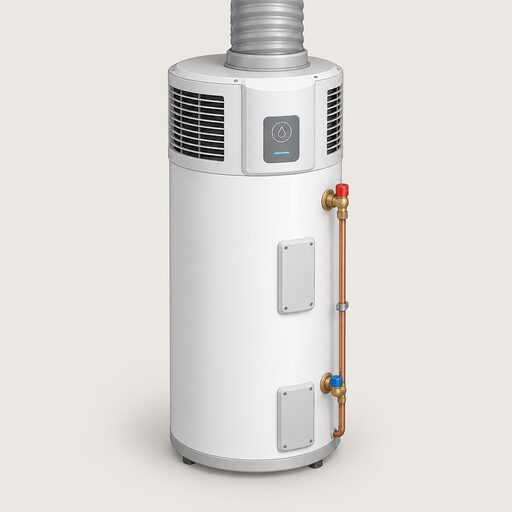 Hot Water Heat PumpsA hot water heat pump heats only the water in your cylinder, using air instead of a boiler flame.
 Radiators and EmittersWill your radiators still heat the house properly with a heat pump?
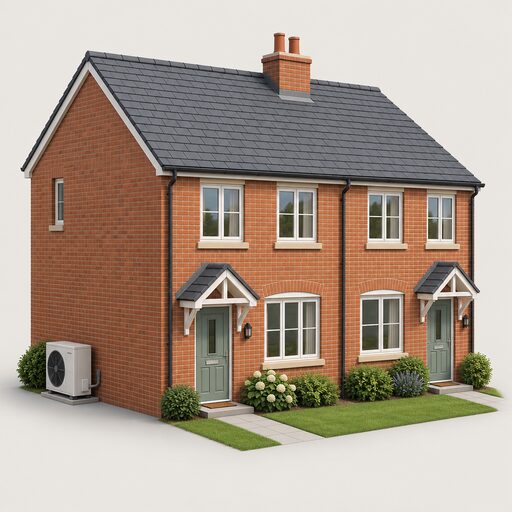 Which Homes Suit a Heat PumpMost UK homes can have a heat pump fitted, so the real question is whether yours makes it easy or expensive.