
In this guide
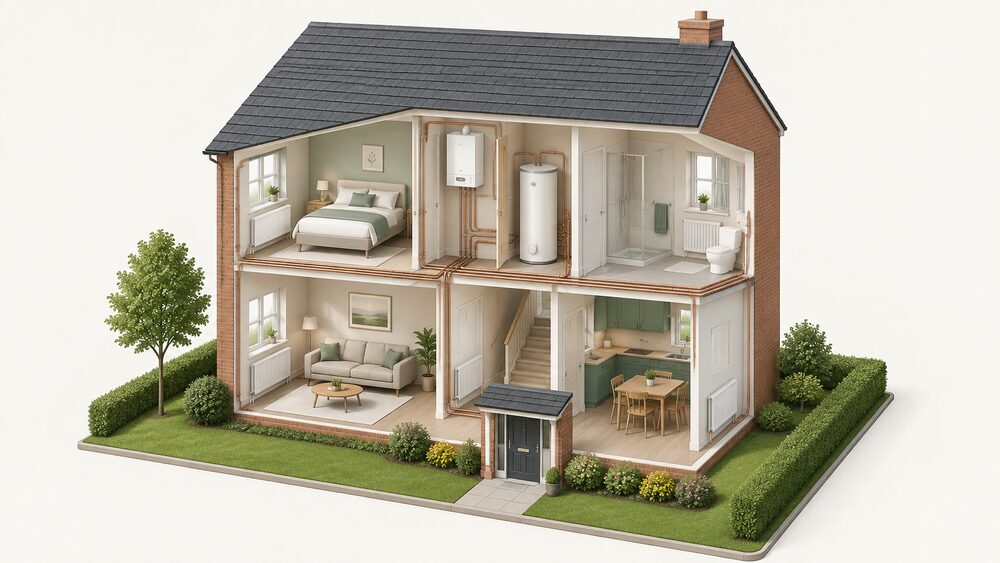
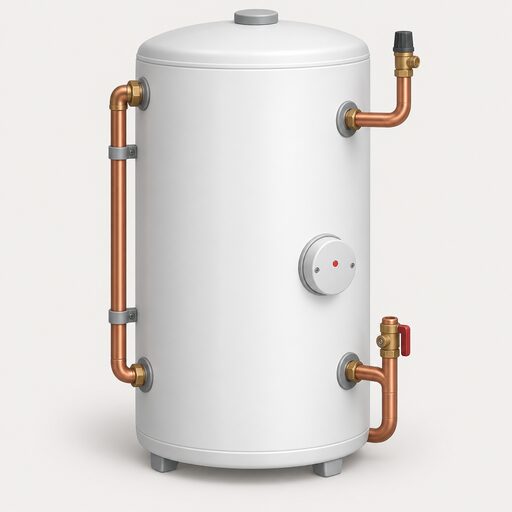
An electric boiler uses electricity to heat water, which is then circulated through radiators or underfloor heating pipes in a conventional wet central heating system1. From the rest of the house it behaves exactly like a gas or oil boiler: the same pipework, the same radiators, the same controls. The difference is inside the casing, where an element replaces a burner, so there is no combustion, no flue, no gas supply and no carbon monoxide. Most electric boilers sold for homes are combi models, channelling hot water through radiators or underfloor heating and heating the hot water supply as well2, although a boiler can instead be connected to a water tank2, and systems of this kind often include a large hot water tank to store the heat1.
At the appliance, an electric boiler is very efficient: up to 99%3, with most units offering at least 99%4. That figure describes what happens to a unit of electricity once it reaches the boiler, not what that unit cost to buy. Electric heating is more efficient than using a boiler, but the higher cost of electricity more than offsets that advantage1. An electric boiler on Economy 7 is costed at £2,690 a year for space heating in an average flat or small home, while flow boilers are put at around £3,220 a year on a single-rate tariff for an average home5. Those are the two figures that dominate the decision.
Installed cost is quoted at £3,000 to £6,0005. The properties where electric boilers recur are smaller homes, homes off the gas grid6, and flats and tower blocks where a flue is not an option7. They are also used as a back-up or top-up to a heat pump8. For independence, the honest position is this: an electric boiler frees a household from gas, oil and LPG deliveries entirely, but ties it completely to the grid and to an electricity supplier, and electricity is the most expensive heating unit to buy.
How an electric boiler heats a wet system
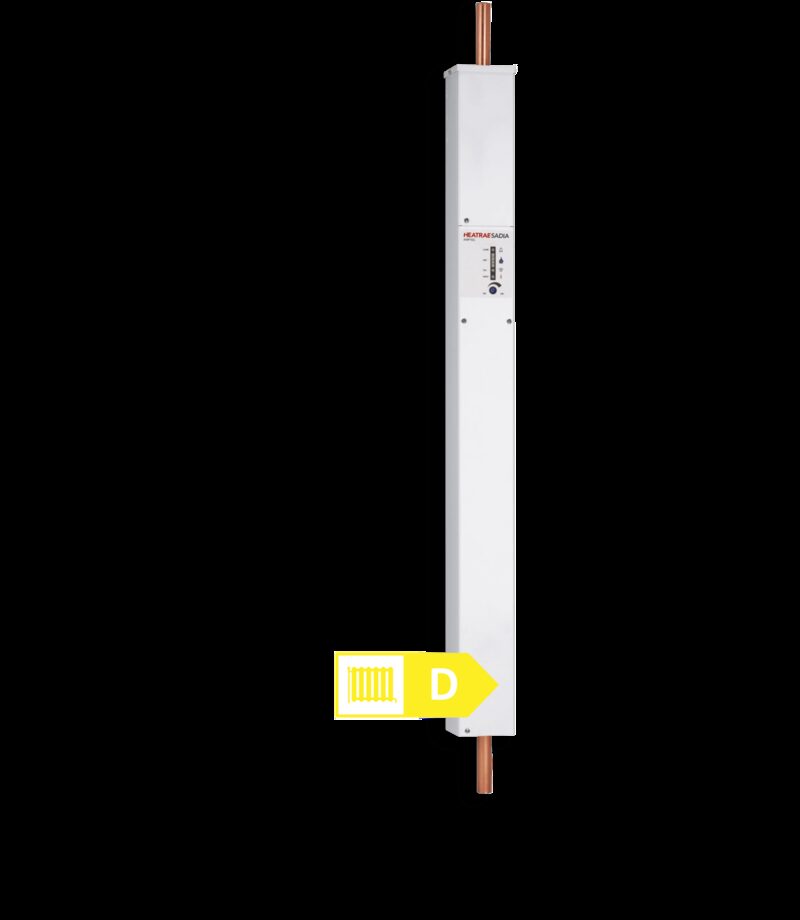
Electricity passes through a heating element inside the boiler, heating water that then circulates through the central heating system, including the radiators, and that water can also serve taps and showers11. That is the contrast with electric radiators and panel heaters, which put the heat straight into the room air and need no pipework at all.
The important distinction within electric boilers is when the electricity is drawn. A direct electric boiler draws electricity at the moment when the home needs heat12. It has no store of its own, so every kilowatt hour is bought at whatever the tariff charges at that instant. That is what makes it a flow boiler. Systems built around a large hot water tank1, or the electric thermal store boilers described by consumer testing9, break that link and allow heat to be made at one time and used at another. Heat batteries and zero emission boilers take the same principle further.
Because the water circuit is conventional, the rest of the heating system is unchanged. Radiators, thermostatic valves, cylinders and controls all work as they would with a gas boiler, which is why an electric boiler can replace one without redesigning the emitters. The nearest points of reference on this site are combi boilers and system boilers, since most electric models are configured one way or the other. The dependence that remains is complete reliance on the electricity supply: no power, no heat, with no fuel store in the house to fall back on.
Efficiency: up to 99% at the appliance, but the meter decides
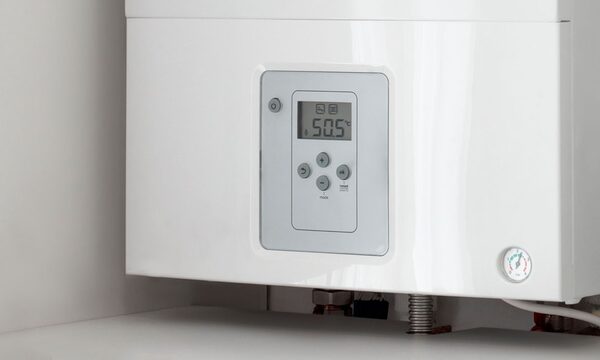
The headline is up to 99% for an electric boiler3, with most units offering at least 99%4. Makers put it as almost 100% efficiency, because the generation of heat does not lead to energy loss2, and some state 100% efficiency ratings for electric boilers generally13. The reason is simple: there is no flue, so there are no combustion gases carrying heat out of the building.
Set against that, electric boilers are described as much more energy efficient than gas boilers, but electricity is more expensive to buy7. Makers themselves list the high price heating bill as a disadvantage, electricity being a high price energy2. The efficiency gap at the appliance is real but narrow, and it is dwarfed by the difference in the price of a kilowatt hour of gas and a kilowatt hour of electricity.
"So, even though electric heating is more efficient than using a boiler, the higher cost of electricity more than offsets"
This is why a 99% figure cannot be read as a cost claim. It is a conversion efficiency, not a tariff. A heat pump behaves differently again, because it moves heat rather than making it, and that comparison is set out on heat pumps compared with boilers. For how efficiency figures are defined and labelled across boiler types, see boiler efficiency, ErP ratings and SEDBUK.
Running costs: £2,690 to £3,220 a year, and why the documents differ
Two costed figures sit side by side and they do not agree on the same basis. An electric boiler on Economy 7 is costed at £2,690 a year for an average flat or small home, while flow boilers are put at around £3,220 a year on a single-rate tariff for an average home5. The documents describe different tariffs and different property sizes, and the two figures have not been reconciled: both are independent guidance dated June 2026. Separately, distributor estimates of annual running cost disagree with each other, one giving £500 to £1,500 and another £1,200 to £2,500, and those too are unresolved.
| Basis | Annual cost | Dated |
|---|---|---|
| Electric boiler, Economy 7, average flat or small home | £2,6905 | 2026-06 |
| Flow boiler, single-rate tariff, average home | around £3,2205 | 2026-06 |
| Oil boiler, average annual running cost | around £1,10014 | 2026-06 |
For comparison within the same set of independent figures, an oil boiler is put at around £1,100 a year, though prices can rise sharply during periods of high oil costs14. The point is not that one fuel wins, but that the spread between electricity and fuel-burning alternatives is wide enough to change what size of home an electric boiler is workable in.
Three things drive the number in any individual house: the heat demand of the fabric, the tariff the electricity is bought on, and whether any of the demand can be shifted to cheaper hours. The most common electric meters for electric boilers are Economy 10 meters1, which give more off-peak hours than the classic seven. The mechanics of that are covered on Economy 7, Economy 10 and heating tariffs, and the wider picture on electric heating running costs and home heating running costs by fuel.
What it costs to buy and install
Installed, an electric boiler is costed at £3,000 to £6,0005. A maker's own estimate is lower, at an average of £3,000 to £4,20015. The appliance itself is a smaller part of that than people expect: a wall-mounted electric boiler with cylinder is put at £1,750 to £2,000, average £1,875, and an electric boiler with in-built cylinder at 12kW at £1,500 to £2,500, average £2,0004. One maker gives immediate installation costs for its own electric boiler range of £1,300 to £1,70016.
| Item | Cost | Source type |
|---|---|---|
| Electric boiler, fitted | £3,000 to £6,0005 | Independent, 2026-06 |
| Electric boiler, fitted, maker estimate | £3,000 to £4,20015 | Maker, 2025-01 |
| Wall-mounted electric boiler with cylinder, unit | £1,750 to £2,000 (average £1,875)4 | Independent, 2024-01 |
| Electric boiler with in-built cylinder, 12kW, unit | £1,500 to £2,500 (average £2,000)4 | Independent, 2024-01 |
Electric boilers are described as having a relatively low purchase price compared with other home heating installations of the same heating performance2. What lifts the fitted total is the electrical work. Where a household is changing fuel, it is likely that rewiring will be needed and possibly a new supply fuse9. That is the single most significant hidden cost in a gas-to-electric conversion and it varies enormously between properties. Energy efficient boilers do not qualify for the reduced rate of VAT and carry 20% VAT17.
Quotes for the electrical upgrade are installer-specific and no published range exists for them. Broader pricing context is on new boiler cost in the UK.
Where an electric boiler fits: off-grid homes, flats and small properties
Three types of property recur across the evidence. First, homes off the gas grid: electric boilers are an option if you are off the gas grid6, are described by makers as suiting homes off the mains gas network18, and can be installed where there is no mains gas network supply8. Second, flats and tower blocks: they do not have a flue, so are more suitable for homes where a flue is not an option, such as tower blocks7. Third, small homes: electric boilers are described as suited to smaller properties19, and makers describe them as particularly suited to small urban homes2.
The limit is the mirror image of the same fact. Electric boilers may not be suited to large homes or homes that have a high heat demand20, and using one to provide heating and hot water for a larger home can quickly become very expensive because of the high price of electricity2. On general sizing, a 24 to 30kW boiler is suitable for any home with up to three bedrooms, whereas larger houses require a boiler that is 35kW or more4. A high output on an electric boiler means both a large heat demand bought at electricity prices and a heavy electrical supply requirement, and the two constraints bite together. Boiler sizing sets out how output is matched to a property.
Siting and installation: no flue, no outside wall, a qualified electrician
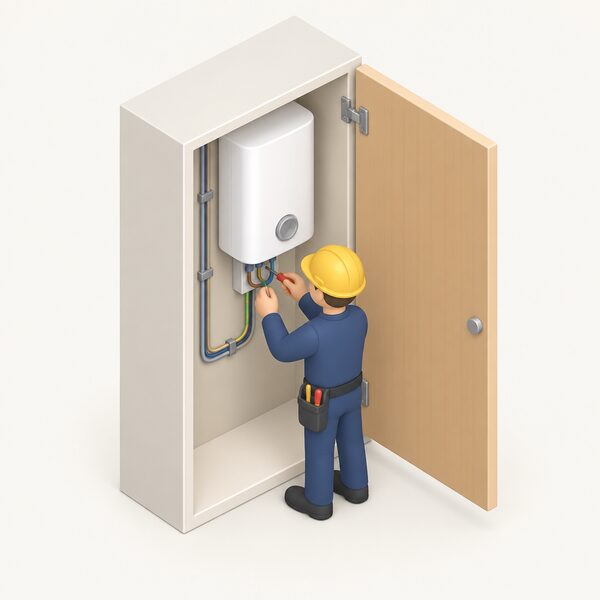
An electric boiler does not need to be on an outside wall, unlike a gas boiler, because there is no flue or gas pipe9. Removing that constraint is the practical advantage of electric: the boiler can be installed in the same place as the old one, or in a new location20. There is no outdoor space requirement.
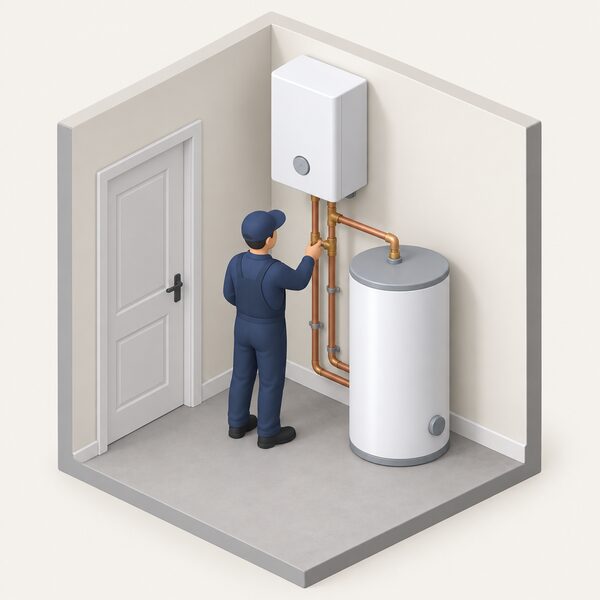
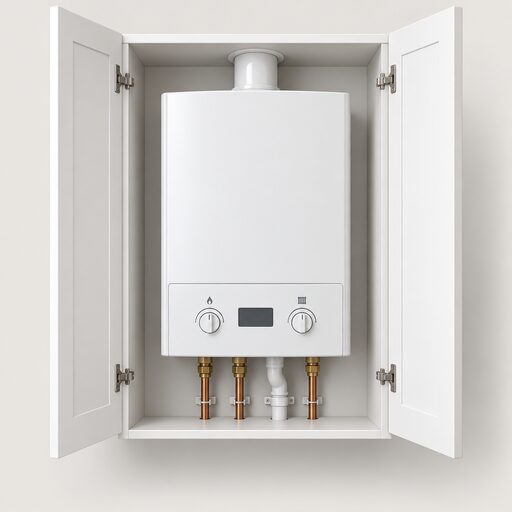
Wall-mounted electric boilers can be installed within a closet2, and several ranges can be securely installed in a cupboard or small space because no flue is required16. Modern boilers can be fitted inside a cupboard without the need for ventilation, though the installer advises whether a given position works21.
Against that flexibility sits the electrical side. A qualified electrician must fit an electric boiler, and a fuel change will likely mean rewiring and possibly a new supply fuse9. The supply, the circuit and the protective devices are the governing constraint, and this is the subject of electrical safety and supply for electric heating.
On permissions, planning permission is not normally required for installing or replacing a boiler or heating system in England if all the work is internal22. Building regulations approval is needed from the council or a registered building control approver where the installer is not on a Competent Persons Scheme10. See building regulations for heating systems and boiler installation.
Timings follow the scope of work. A like-for-like combi replacement takes around four to six hours; a system boiler two to three days; a conversion from a system or conventional boiler to a combi up to two days; and installation in general anywhere from four to six hours to three or four days23. Someone should be at home during the work, since the engineer needs access to the boiler, the radiators and possibly the loft23.
Back-up and top-up: the electric boiler alongside a heat pump
One of the clearest current roles for an electric boiler is supporting a heat pump. Electric boilers can be installed alongside heat pumps to provide a backup, or top-up, heat source8. Electric boilers can also be used in buildings as primary heat generators as well as for central heating backup24.
Hybrid arrangements work on the same logic: the boiler provides additional support when demand is higher, such as during colder weather or when extra hot water is needed25, and cascaded or hybrid systems use a back-up boiler or other heating source to make up any shortfall in extremely cold weather26.
There is a resilience argument too. In a ground source scheme serving tower blocks, an electric boiler can quickly and easily be connected in each block, ensuring residents do not go without heating or hot water27.
The independence trade-off here is subtle. Running an electric boiler as a top-up means peak-cold heat is bought at the worst efficiency the household can achieve, since a heat pump delivers several units of heat per unit of electricity and a boiler delivers one. Where the back-up covers only genuine shortfall rather than routine operation, the effect on the annual bill stays small.
Emissions and the decarbonisation picture
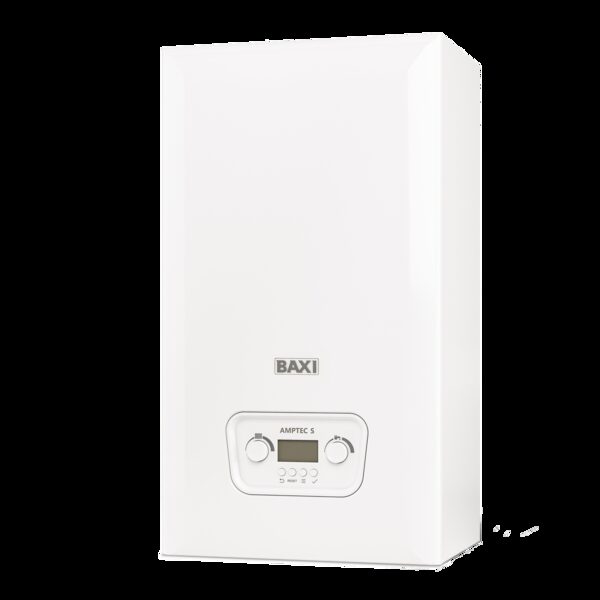
An electric boiler emits zero carbon emissions at source13. Whether the heat is low carbon depends entirely on the grid mix behind the meter, not on the appliance. Electrification and low-carbon electricity supply make up the largest share of emissions reductions in the Climate Change Committee's pathway, 60% by 204028.
Electric boiler is listed as a low-carbon heat source alongside electrically powered heat pumps, waste heat, geothermal heat, solar thermal and biofuels29. For comparison with fuel-burning alternatives, official worked examples of fuel changes give an old oil-fired boiler at 0.298 kgCO2/kWh, an LPG boiler at 0.241 kgCO2/kWh and a wood pellet boiler at 0.053 kgCO2/kWh30.
Wider policy on the direction of travel is covered on will gas boilers be banned in the UK? and the Future Homes Standard and new build heating.
Maintenance, servicing and safety
Boilers should be serviced annually to stay in good working order and maintain efficiency10, and that recommendation is applied to electric boilers specifically: it is important to get an electric boiler serviced annually31. Annual servicing also protects the warranty32, a point developed on boiler warranties and boiler servicing and maintenance.
The burden is lighter than with a burner. Electric boilers have low servicing and maintenance costs8, and one maker states that its solid-state electric boilers have no moving parts, so there is minimal servicing required7. For reference, a boiler service is costed at £70 to £160, with the price varying by type of boiler, age, location and the company chosen33.
The safety position is genuinely different. Electric boilers pose no risk of a gas leak of any kind34, and electric appliances have no fumes, so there is no risk of carbon monoxide poisoning, no annual safety checks required and no need for additional ventilation35. Carbon monoxide comes from fossil fuel burning appliances that are incorrectly installed, poorly maintained or poorly ventilated36. None of that applies to an electric element.
The gas-specific duties, and where they do and do not apply, are on gas safety in the home and carbon monoxide and home heating safety.
Grants, VAT and what public funding covers
The Boiler Upgrade Scheme provides upfront capital grants to support the installation of heat pumps and biomass boilers, with biomass attracting £5,000 in limited circumstances, and scheme rules state that an installation cannot be funded by more than one source of public funds37. An electric flow boiler is not within that list.
The Energy Company Obligation takes a broader view of low carbon heating, listing heat pumps, energy-efficient boilers, heating controls and electric storage heaters among eligible measures38. On tax, energy efficient boilers do not qualify for the reduced rate and carry 20% VAT17. Devolved detail is set out on grants pages for England, Scotland, Wales and Northern Ireland.
Tariffs, solar and the limits of self-supply
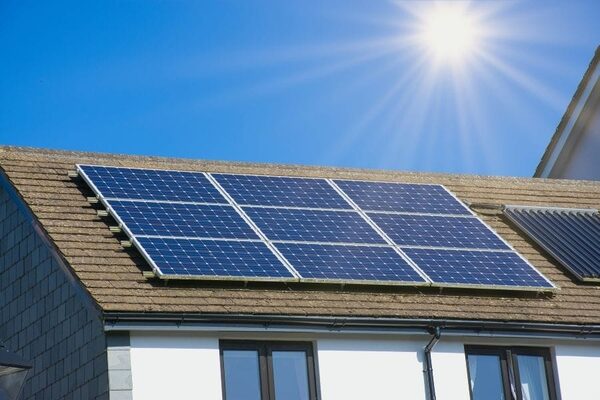
Since every unit an electric boiler uses is bought or generated as electricity, the tariff and any on-site generation matter more than with any fuel-burning appliance. Smart time-of-use tariffs are described as much more valuable where the household has an electric vehicle, a heat pump or a home battery39.
On solar, electric thermal store boilers can be powered using solar panels9. The constraint is timing. A direct electric boiler draws electricity at the moment when the home needs heat12, and that moment is usually a winter evening, when solar output is nil. Without a store, either a hot water tank1 or a battery, self-generated electricity cannot be moved to the hours when heat is wanted. Solar-specific tariffs generally require battery storage as well as panels and supply from that company40.
For energy independence, then, an electric boiler is a partial step. It removes gas, oil and LPG from the house, removes the flue, removes combustion risk and removes fuel deliveries. It replaces all of that with a single, total dependence on the grid and on an electricity supplier, at the highest unit price of any common heating fuel. Storage, generation and tariff choice are the levers that narrow that gap, and the running-cost figures at the top of this page assume none of them. See also home heating and energy independence and the wider boilers and heating guide.
Sources40 cited
- Electric heating advice, Energy Saving Trust, 2026-07-01
- Electric boiler guide, Netatmo, 2026-09-20
- Heating efficiency comparison, EDF Energy, 2026-09-17
- Boiler statistics, Uswitch, 2024-01-04
- Electric heating costs, Centre for Sustainable Energy, 2026-06
- Heating fuel guide, Uswitch, 2026-01-27
- Different types of boilers, Baxi, 2026-09-17
- Where do electric boilers fit, ACV, 2026-09-20
- Electric central heating, Which?, 2025-09-22
- Upgrading and replacing your boiler, Centre for Sustainable Energy, 2026-06
- Electric boiler comfort guide, Netatmo, 2026-09-20
- Switching to electric heating checklist, tepeo, 2026-09-07
- Fischer electric boiler, Fischer Future Heat, 2026-08-25
- Heat pumps vs oil boilers, EDF Energy, 2026-06-16
- Electric boilers vs gas boilers, EDF Energy, 2025-01-23
- Is it a good idea to have an electric boiler, Trianco, 2024-12-09
- Tax on energy saving products, GOV.UK, 2026-09-17
- Electric boilers range, Baxi, 2026-09-17
- New boiler cost, Uswitch, 2024-11-06
- Electric boiler vs gas boiler, Viessmann, 2024-01-31
- Does a boiler cupboard require ventilation, Ideal Heating, 2026
- Boilers and heating planning permission, Planning Portal, 2026-09-17
- How long does it take to fit a boiler, Uswitch, 2026-09-16
- Vitotron 100, Viessmann, 2024-05-06
- Hybrid heat pumps, SGN, 2026
- Cascaded heat pumps, Energy Saving Trust, 2024-04-24
- Gentoo Group tower block ground source heating, Kensa, 2026-09-17
- The Seventh Carbon Budget, Climate Change Committee, 2026
- Approved Document L Volume 1, Welsh Government, 2026-04
- Building regulations discussion document, Department of Finance NI, 2023-10-11
- Electric boiler service and repair, Heatrae Sadia, 2026-09-17
- How long does a boiler last, Ideal Heating, 2026-09-17
- How much is a boiler service, Vaillant, 2026-09-17
- Electric vs gas boilers, Heatable, 2025-12-03
- Electrical safety, Dimplex, 2026-09-17
- Carbon monoxide poisoning, nidirect, 2026-09-17
- Boiler Upgrade Scheme guidance for installers, Ofgem, 2026-07-02
- ECO4 Flex, South Cambridgeshire District Council, 2026-09-17
- Should I switch to a time of use tariff, Energy Saving Trust, 2026-01-23
- Solar panel installation, Energy Saving Trust, 2026-09-07
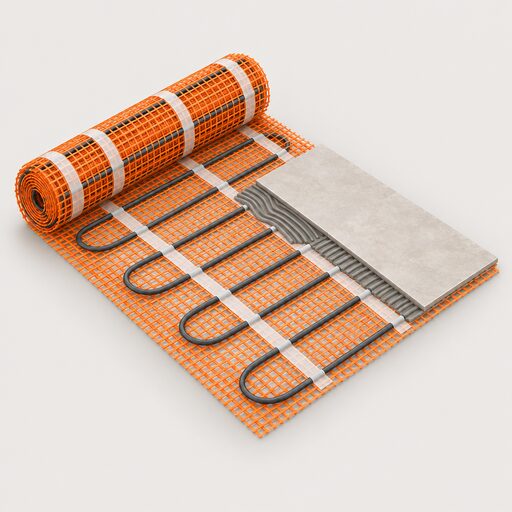 Underfloor Heating SystemsWhich rooms suit electric underfloor heating and which need a wet system?
 Combi BoilersWhat a combination boiler is, how it produces heating and instantaneous hot water from one unit, and the flow rate and mains pressure it depends on.
 Air-to-Water Wet SystemsAir-to-water heat pumps feed radiators, underfloor heating and a hot water cylinder, and are the most common domestic heat pump in the UK.
 New Boiler Cost in the UKWhat a replacement boiler costs in the UK by type and fuel, and what drives the installation element: conversions, relocations, flue work and system upgrades.
 The Full Boilers and Heating GuideWhich boiler suits your home, and when is it worth swapping the old one?
 Gas Boilers GuideMains gas boilers heat around 23 million UK homes.