In this guide
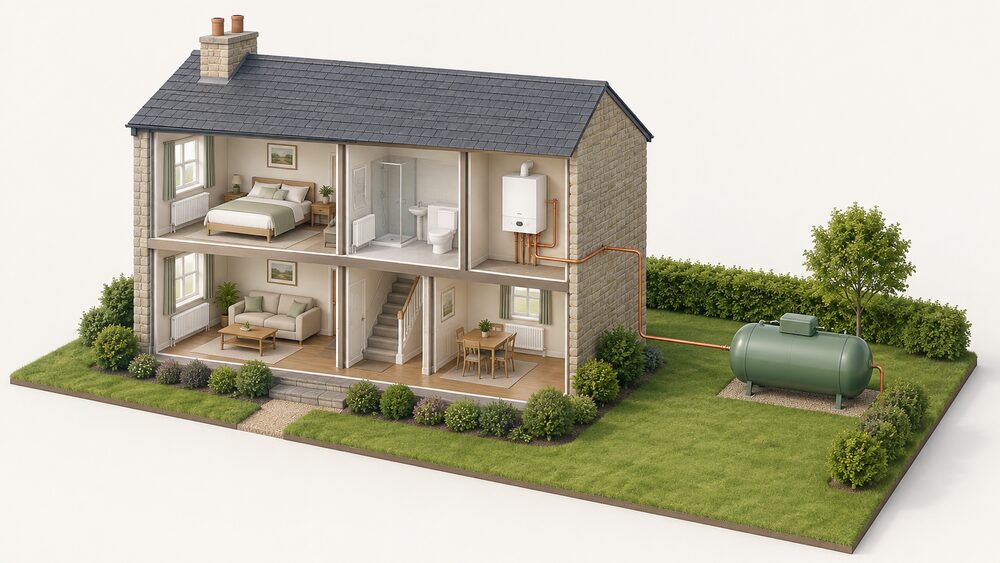
LPG stands for Liquefied Petroleum Gas, a term used to describe both propane and butane. It is a by-product of two large energy industries: the processing of natural gas liquids and the refining of crude oil. At normal temperature and pressure it is gaseous, and it changes to a liquid when subjected to modest pressure or cooling, which is what allows a household's entire winter fuel supply to sit in a single tank in the garden1.
For a home off the gas grid, an LPG boiler works much like a mains gas one: combi, system and open-vent variants are all available, they burn a piped gas at a flame, and they must be installed and serviced by a Gas Safe registered engineer. The difference is that the gas arrives by road tanker or in cylinders rather than through a main, and is stored in a tank outside the property that has to be topped up by a supplier2. LPG is the fuel of choice for 193,000 homes in the UK4.
The trade-off is cost. LPG is described by independent off-grid heating guidance as one of the most expensive heating fuels, and a Commons briefing puts the cost of heating a typical three bedroom house with LPG at 100 per cent higher than with mains gas. Standard assessment fuel prices from 1 January 2026 give bulk LPG at 9.60p per kWh and bottled LPG at 12.01p per kWh5.
What LPG is and where it comes from
LPG is a colourless hydrocarbon gas held in liquid form10. It is obtained during the processing of crude oil, or direct from the North Sea11; one supplier states that 66 per cent of LPG comes as a natural by-product of gas and oil extraction12. It is purified and kept as a liquid in tanks and gas bottles13. In liquid form the tank pressure is about twice the pressure in a normal truck tyre, which is one reason the industry describes the fuel as safe to store and handle when done correctly1.
The two forms, propane and butane, are naturally suited to different uses. Butane comes from refining petrol and has a boiling temperature of minus 2 degrees Celsius, which is why it is generally a cylinder fuel for indoor and portable appliances rather than the fuel in an outdoor bulk tank through a British winter14. Central heating supply is normally propane.
For the household lens, the crucial point is stated plainly by the industry itself and by independent reviewers: LPG is derived from fossil fuels, so it is not a renewable alternative2, and it produces carbon dioxide when burnt8. What it does deliver is a form of storage independence. Fuel sits on site rather than arriving continuously through a network, so a full tank is a buffer against supply interruption, but the household remains dependent on a road delivery chain, a supplier contract and, usually, a supplier-owned tank.
Who LPG heating is for
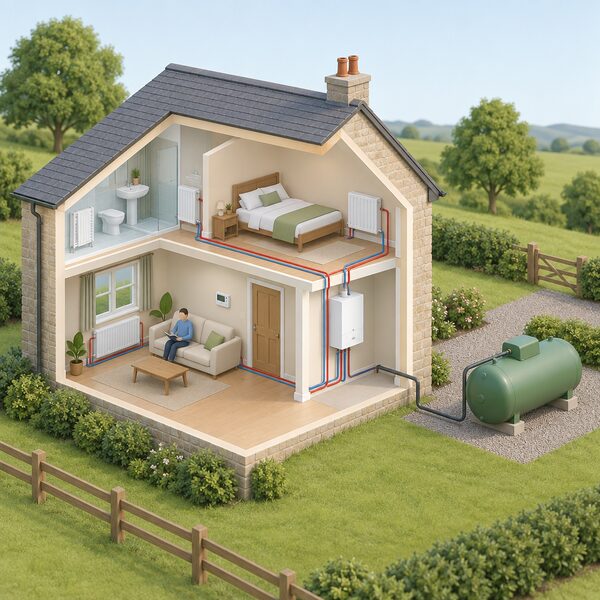
In the UK, 84 per cent of domestic properties are connected to the gas grid, but some two million properties are off-grid and depend on alternative fuel sources for heating and cooking15. Off-gas grid households use a range of fuels including heating oil, LPG, solid fuels, mains electricity and microgeneration5. Within that group, LPG serves 193,000 homes, a much smaller population than oil, which is the fuel of choice for around one million homes in Great Britain4.
An LPG boiler is typically found in rural properties considered off grid without access to a mains gas supply2. It suits homes where a tanker can reach the site, where there is space for a tank at a safe distance from the building, and where the household wants a conventional wet central heating system with radiators and familiar controls rather than a change of heating technology.
Grant policy pushes in a different direction. The Boiler Upgrade Scheme offers £9,000 towards an air-to-water or ground source heat pump for eligible off-grid properties heated by LPG or oil, against £7,500 for other eligible homes in England and Wales17. The industry body's own polling of rural off-grid homeowners found that more than nine in ten, 93 per cent, would not be able to afford to decarbonise their heating system via heat pumps18. Those two findings sit awkwardly together and explain much of the policy argument around off-grid heat. Households weighing the options can compare the technologies on heat pumps compared with boilers and the wider picture on heating a home off the gas grid.
In Wales, a separate one-off £200 Heating Oil and LPG Payment has been made available to low income households heating their homes with those fuels. Grant availability otherwise differs across the four nations; the lane pages on grants in England, Scotland, Wales and Northern Ireland set out the schemes.
Combi, system and open-vent: the LPG boiler range
There are LPG variants of combi, system and open-vent boilers available, so the choice of system layout is the same one a mains gas household faces2. Manufacturers list LPG-fired boilers in combi, system or conventional form20, and boiler selectors commonly ask the fuel question with two options, natural gas and LPG21. Some model families carry dedicated LPG versions for off gas areas22.
| Boiler type | How it behaves on LPG | Where the fuel comes from |
|---|---|---|
| Combi | Heats water on demand with no cylinder; LPG combis are available and are often more compact than oil boilers20 | Bulk tank, or cylinder storage rather than a fuel tank3 |
| System | Sealed system feeding a hot water cylinder; available as an LPG variant2 | Bulk tank, above or below ground15 |
| Open-vent (regular) | Conventional layout with feed and expansion tanks; LPG variant available19 | Bulk tank |
Some boilers designed for mains gas can be converted to use LPG8. Conversion is a manufacturer-specified change of injectors and settings carried out by a registered engineer, not a user adjustment. Where a household already has radiators and pipework, the emitters and controls generally carry over: heating controls can be installed on a gas, oil or LPG boiler to make it more energy efficient21. Detail on each layout is on the combi boilers, system boilers and regular boilers pages, and on output selection in boiler sizing.
The independence consequence of the layout choice is practical. An LPG combi gives the option to use cylinder storage rather than getting a fuel tank installed3, which suits a small property or a site where a bulk tank cannot be sited, but it means a household managing cylinder changes rather than a scheduled tanker delivery.
Efficiency and emissions: 0.241kgCO2/kWh at 93 per cent
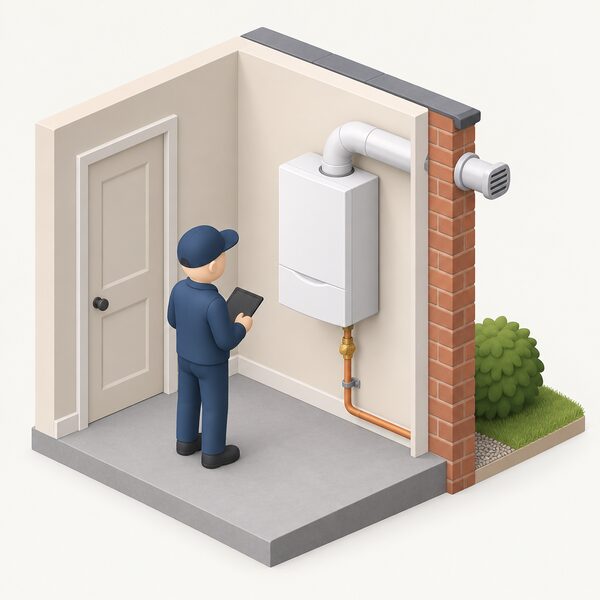
Building regulations guidance for Wales uses an LPG boiler with emissions of 0.241kgCO2/kWh and primary energy of 1.141kWhPE/kWh at 93 per cent efficiency in its worked example, against an old oil-fired boiler at 0.298kgCO2/kWh and 1.180kWhPE/kWh at 85 per cent efficiency9. The Northern Ireland building regulations discussion document uses the same LPG figures, and its primary energy calculation of 1.141 divided by 0.93 gives 1.23 kWhPE/kWh, which it records as acceptable23.
Those numbers are assessment figures, not a promise about a particular appliance. Independent guidance puts an A-rated condensing boiler at 92 to 94 per cent efficiency24, and the minimum efficiency standards applying to new and replacement boilers from February 2023 require 92 per cent for condensing standard or combination gas boilers, including LPG, against 91 per cent for oil condensing standard boilers and 86 per cent for oil condensing combination boilers25.
| Measure | LPG boiler | Oil boiler |
|---|---|---|
| Worked example efficiency | 93%9 | 85%9 |
| Worked example emissions | 0.241kgCO2/kWh9 | 0.298kgCO2/kWh9 |
| Minimum standard from Feb 2023, standard condensing | 92%25 | 91%25 |
| Minimum standard from Feb 2023, combination | 92%25 | 86%25 |
Against other fuels, the industry body states that LPG emits 35 per cent less CO2 than coal and 12 per cent less than oil4, while its bioLPG page gives 33 per cent less than coal and up to 20 per cent less than oil26. Those two figures for the oil comparison disagree, and both come from the same trade association, so the carbon advantage over oil is best read as real but modest: independent off-grid guidance puts it simply as slightly lower than oil27. LPG is also said to produce 90 per cent less carbon monoxide and 50 per cent less smog than mains natural gas28. More on rating systems is on boiler efficiency and ErP ratings.
Cost: cheaper to install than most off-grid options, dear to run
Installed prices for LPG boilers are installer-quoted and depend on the boiler, the system and the tank arrangement, so no single figure applies. For context, published ranges for comparable appliances put a gas boiler installation at £500 to £3,50029 and oil boilers for properties with no access to mains gas at £3,300 to £4,00030. The industry body states that the cost of LPG installation, compared with electric, oil and air source heat pumps, is significantly cheaper15. The new boiler cost page covers how quotations are built up.
Running cost is where the fuel decides the case. A litre of LPG converts to 7.1kWh on government estimates, and cost an average 57p per litre in July 2025 according to Sutherland Tables8. Standard assessment prices from 1 January 2026 give bulk LPG at 9.60p per kWh and bottled LPG at 12.01p per kWh, a gap that shows why cylinder supply is a stopgap rather than a heating strategy for a large house7. A Commons briefing estimates annual heating costs for a three-bed semi-detached house on bulk propane at £1,800 to £2,200 as of March 2026, and puts LPG at 100 per cent higher than mains gas for a typical three bedroom house6.
Independent guidance is consistent: LPG is the most expensive of the three main boiler fuels21, and the biggest disadvantage of LPG is that it is one of the most expensive heating fuels27. Two contract features add to the bill. The tank is usually owned by the company that supplies the gas, so an ongoing annual rental charge will apply, and homeowners are usually tied into long contracts, which limits the options when looking for a better deal27. Running costs by fuel are set out on home heating running costs, and the fuel-by-fuel comparison on LPG vs oil boilers.
Tanks, cylinders and storage
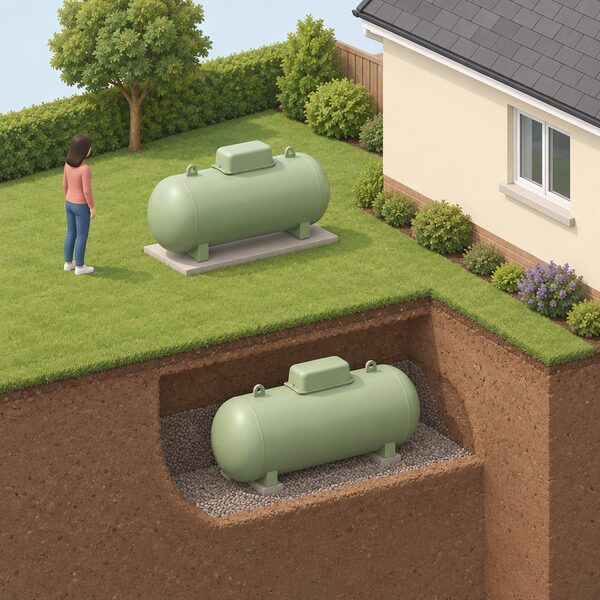
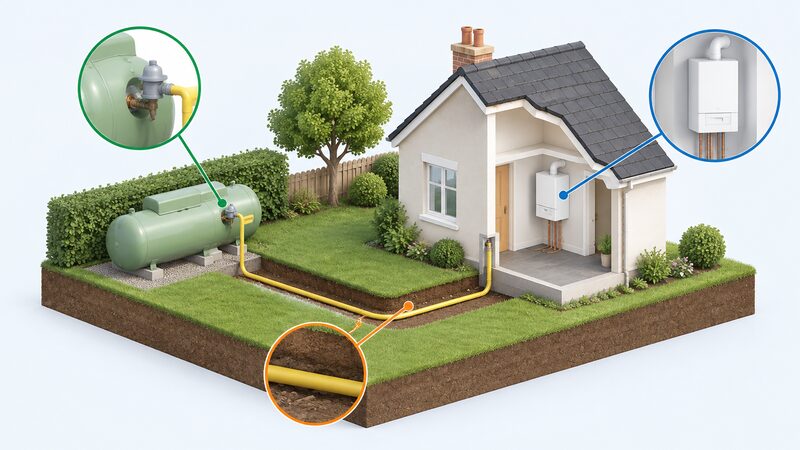
LPG can be easily stored in bulk tanks or portable cylinders1, or in a mix of the two13. Suppliers offer pressurised gas bottles for small appliances, larger cylinders, and bulk tanks for whole-house heating14. Bulk storage can be above ground or underground10, and tanks can be buried below ground to improve the appearance of a building15, with the tank then hidden from view14. Approved Document J guidance in Wales covers LPG storage installations with capacities up to 1.1 tonne, the domestic range31.
Ownership is the point that catches households out. A tank may need to be bought or rented from the supplier, which adds to the cost, and if the supplier is switched the tank ownership must be transferred to the new supplier or a new tank installed8. Under the industry customer charter, all bulk domestic LPG customers whose gas is supplied via a bulk tank are able to switch supplier along with ownership of their tank once they are no longer bound by any exclusivity period in a supply contract32.
On planning, installing a fuel tank is considered to be permitted development in England, not needing planning permission, subject to limits and conditions33, and planning permission is not normally required for the installation or replacement of a boiler or heating system if all the work is internal34. Manufacturer guidance states that permission may be required from the local authority for above and underground external tank installations, while also stating that installing an underground tank does not require any planning permission from the local authority2. Those statements are not fully consistent, and the permitted development limits are the governing rules.
Deliveries need not be ordered manually. Telemetry systems can alert the supplier when fuel is low, making deliveries manageable and efficient15; one household case study describes a tank with an auto top up function that tells the supplier whenever the household is running low35. That is convenient, and it is also a data link to the supplier.
Safety: Gas Safe engineers and annual servicing
LPG appliances are gas appliances, and the rules that follow are the same. The Health and Safety Executive strongly advises that all gas appliances, flues and pipework should be installed, regularly maintained and serviced at least annually by a Gas Safe registered engineer36. The industry body puts the household duty this way:
"Remember all of your gas appliances, including your gas boiler, gas cooker and gas fire should be safety checked once a year"
An LPG boiler service should be booked with a fully qualified engineer, and manufacturers note that an LPG gas engineer may spot an issue that can be easily repaired at the time, saving on potentially expensive repairs later14. One practical advantage for rural homes is that there are far more Gas Safe engineers available and qualified than there are OFTEC engineers who work on oil-based systems3. Servicing scope is covered on boiler servicing and maintenance and the wider duties on gas safety in the home.
Warning signs on any gas appliance include lazy yellow or orange flames instead of crisp blue ones, black marks on or around the appliance, a pilot light that keeps going out, and too much condensation in the room38. Carbon monoxide risk is dealt with on carbon monoxide and home heating safety.
The fuel itself is described as very safe when used and transported correctly, while remaining a flammable fuel37, and it is not odourless, which makes leaks easier to detect28.
How LPG compares with oil and mains gas
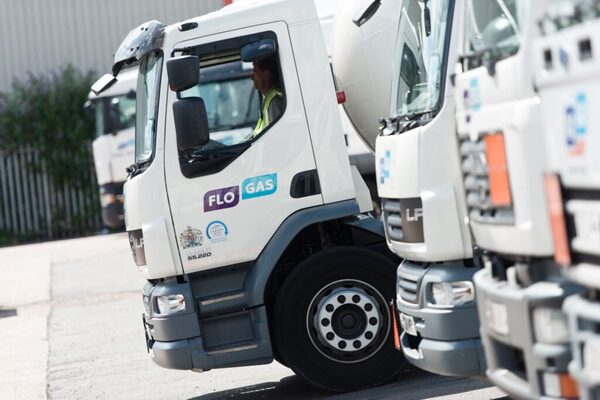
The main difference between mains gas and LPG is that LPG is delivered by road and stored in a tank rather than being piped directly into the home8. Against oil, which is the main alternative for off-grid wet central heating, the differences reported by suppliers and independent guidance are these: LPG combi and system boilers are often more compact than oil boilers20, LPG boilers tend to produce less noise when the heating is on2, flame temperature is easily controlled, appliances require less maintenance, and the fuel burns cleaner with less soot and ash build-up, with combustion described as virtually odourless41.
| Point | LPG | Oil |
|---|---|---|
| Delivery | Road tanker or cylinders to an on-site tank8 | Road delivery to an on-site tank |
| Worked example emissions | 0.241kgCO2/kWh9 | 0.298kgCO2/kWh9 |
| Tank on site | Up to 30 years28 | Replacement typically every 15 to 20 years28 |
| Engineer | Gas Safe registered36 | OFTEC engineers, fewer in number3 |
| Cost | Most expensive of the three main boiler fuels21 | Cheaper per unit than LPG21 |
Set against mains gas, LPG loses on price by a wide margin, 100 per cent more for a typical three bedroom house5, and gains nothing in convenience. It is only a sensible comparison for households that have no mains connection at all. Related reading sits on oil boilers and heating oil and gas boilers.
Phase-out dates, bioLPG and hybrid systems
Policy on new fossil fuel boilers has moved. The Climate Change Committee recorded the delayed phase-out date for oil and LPG boilers, from 2026 to 2035, and assessed that a 2035 phase-out date for fossil boilers is potentially compatible with Net Zero42. Manufacturer guidance states that the proposed phase-out on the installation of fossil fuel appliances is 2035, which now includes LPG, oil and coal43. No date binds an existing installation, and the position is covered in full on will gas boilers be banned in the UK.
The fuel's own decarbonisation route is bioLPG. It is described as chemically identical to LPG and compatible with all LPG products, requiring no changes to infrastructure or appliances26, and renewable liquid gases are said to be usable with existing tanks, boilers, fires, cylinders, hobs and ovens, in fact any LPG appliance26. That compatibility is real and useful: it means an LPG boiler is not stranded if a renewable substitute reaches the market. What the documents do not establish is volume or price, and suppliers frame renewable DME and bio-propane as fuels a household will be able to use in future12 rather than as a current default supply.
Hybrid arrangements are the other route. Industry guidance states that the combination of a heat pump with an LPG or oil condensing boiler along with biofuel can significantly reduce carbon emissions, and that oil and LPG boilers can be used in hybrid heat pump systems44. For households switching away from LPG entirely, note that under Boiler Upgrade Scheme rules a biomass boiler may replace a fossil fuel heating system fuelled by oil, LPG or coal, but may not replace the heating system in a property with a gas supply, including where that supply has been capped or clamped45.
The independence question, finally, is honest enough to state plainly. An LPG household is free of the gas network and of an energy supplier's unit tariff, and holds weeks of fuel on site. It is not free of fossil fuel, of a road delivery chain, of a supplier contract that usually owns the tank and often runs for a fixed term, or of the manufacturer whose engineers and parts keep the boiler running. It pays one of the highest fuel prices available for that arrangement.
Sources45 cited
- What is LPG?, Liquid Gas UK, 2026-09-20
- What is an LPG boiler?, Vaillant, 2026
- LPG boilers, Worcester Bosch, 2026-09-17
- LPG in the home, Liquid Gas UK, 2026-09-20
- Off-gas grid households briefing, House of Commons Library, 2026-09-17
- Domestic heating costs research briefing, House of Commons Library, 2026
- SAP 10 fuel prices from 1 January 2026, BRE Group, 2026-01-01
- LPG central heating, Which?, 2025-09-22
- Approved Document L Volume 1, Welsh Government, 2026-04
- Is LPG better for my oil-fuelled off-grid home?, Flogas, 2026-09-20
- LPG properties and hazards, Flogas, 2026-09-20
- What is LPG?, Flogas, 2026-09-20
- What is LPG?, Flogas, 2026-09-20
- LPG explained, Calor, 2026-09-20
- New to LPG, Liquid Gas UK, 2026-09-20
- Off-grid heating options, OFTEC, 2026-09-17
- Boiler Upgrade Scheme statistics, July 2026, Department for Energy Security and Net Zero, 2026-08-27
- The views of rural households, Liquid Gas UK, 2026-09-20
- What is an LPG boiler?, Vaillant, 2026
- Options if you live off grid, Alpha Innovation, 2025-11-06
- Finding the best combi boiler for your home, Energy Saving Trust, 2026-05-19
- Vaillant ecoTEC plus combi boilers, Quiet Mark, 2026-09-17
- Building regulations discussion document, Department of Finance Northern Ireland, 2023-10-11
- Best boilers guide, Confused.com, 2025-11-03
- Scottish House Condition Survey 2024 key findings, Scottish Government, 2026-02
- BioLPG, Liquid Gas UK, 2026-09-20
- What heating options are available off the grid, OFTEC, 2026-09-20
- What is LPG?, Liquid Gas UK, 2026-09-20
- Heat pump costs explained, Ideal Heating, 2026-09-17
- Different boiler types, Uswitch, 2026-09
- Approved Document J: combustion appliances and fuel storage, Welsh Government, 2026-09-17
- Liquid Gas UK customer charter, Liquid Gas UK, 2026-09-20
- Fuel tanks and permitted development, Planning Portal, 2026-09-17
- Boilers and heating: planning permission, Planning Portal, 2026-09-17
- Bungalow owners switch from oil to LPG, Liquid Gas UK, 2026-09-20
- Domestic gas safety FAQs, Health and Safety Executive, 2026
- Using a Gas Safe engineer, Liquid Gas UK, 2026-09-20
- Gas safety advice, Cadent Gas, 2026-09-20
- What to do if you smell gas, SGN, 2026
- LPG emergencies, Calor, 2026-09-20
- New to LPG, AvantiGas, 2026-09-20
- CCC assessment of recent net zero announcements, Climate Change Committee, 2023-10-12
- How to apply for the Boiler Upgrade Scheme, Vaillant, 2026
- Off-grid heating guidance, Heating and Hotwater Industry Council, 2026-09-17
- Boiler Upgrade Scheme guidance for installers, Ofgem, 2023-09-25
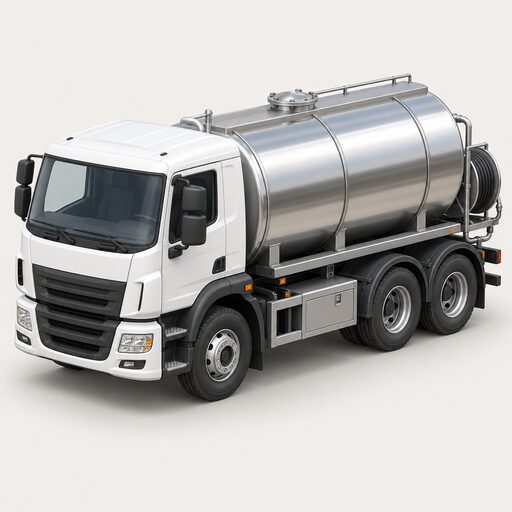 Heating Oil and LPG SupplyHow heating oil and bulk LPG reach off-grid homes, who owns the tank, what the fuels cost, why neither is covered by the price cap, and what supply risk looks like in winter.
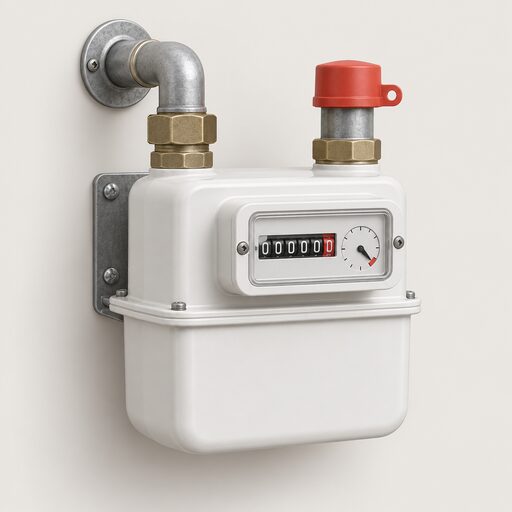 Replacing a Gas or Oil BoilerSwapping a gas, oil or LPG boiler for a heat pump changes how your home is heated and how much it costs.
 Hybrid Heat PumpsHow hybrid systems pair a heat pump with a gas, oil or LPG boiler, what decides which appliance runs, what they cost, how much gas they displace, and why the Boiler Upgrade Scheme will not fund them.
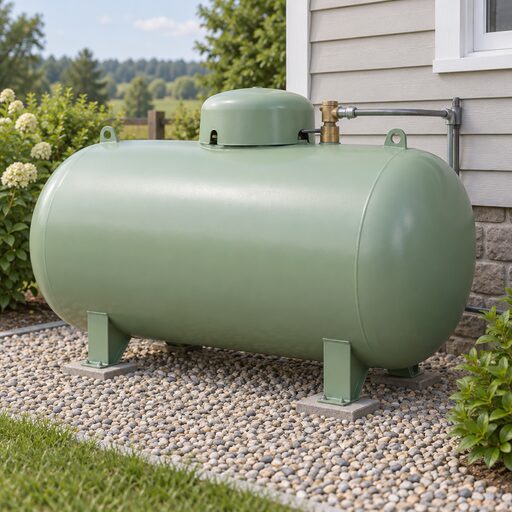 LPG and Heating Oil SuppliersWho owns the tank in your garden, and can you switch supplier if they do?
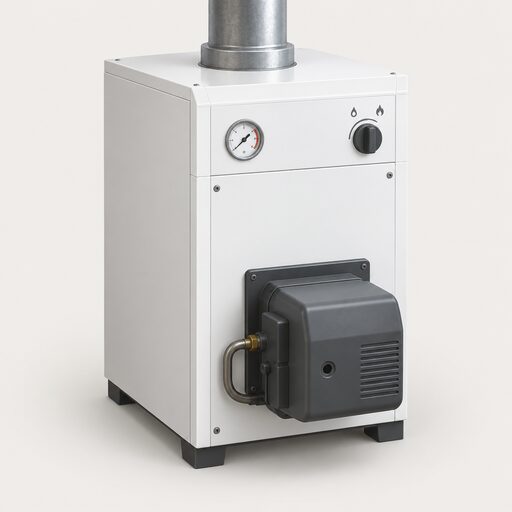 Oil Boilers and Heating OilHow oil-fired boilers work, the kerosene they burn, and the tanks, burners and servicing they need.
 Running Costs by FuelHow the cost of heat compares across mains gas, heating oil, LPG, electricity, solid fuel and heat pumps once efficiency and the price cap are applied.