
In this guide
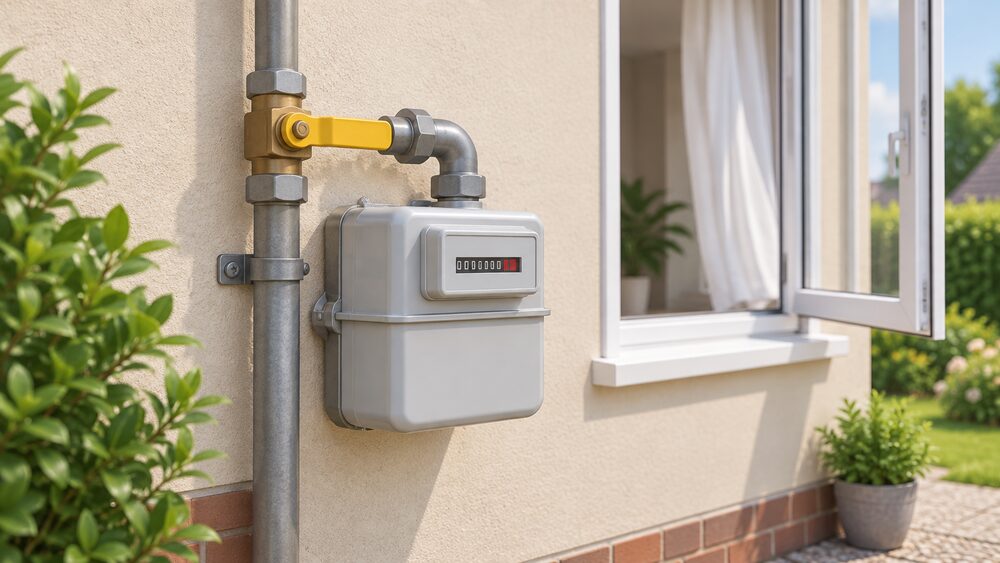
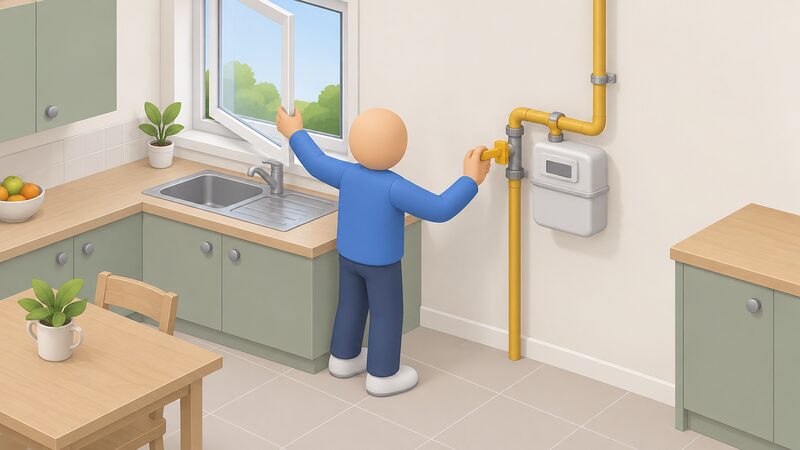
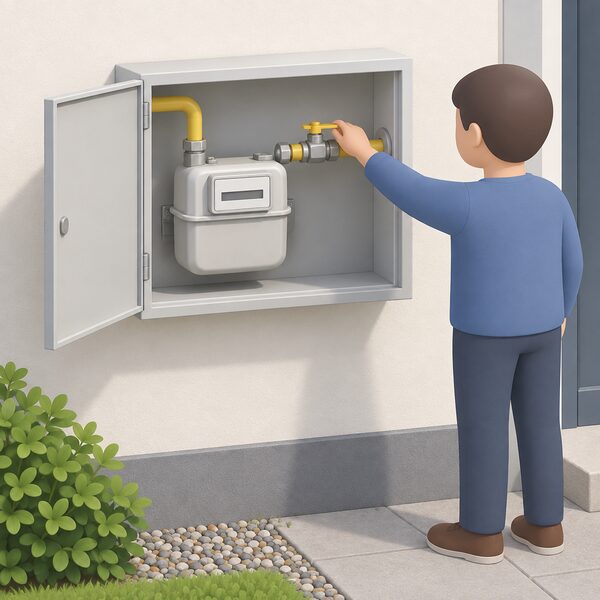
If you smell gas, the sequence is short and it matters: open doors and windows, turn the gas off at the meter using the emergency control valve unless the meter is in a cellar, touch no electrical switches, extinguish naked flames, leave the property and call the National Gas Emergency Service on 0800 111 999 from outside1. The line is free and answered 24 hours a day1. Northern Ireland uses a different number, 0800 002 0013.
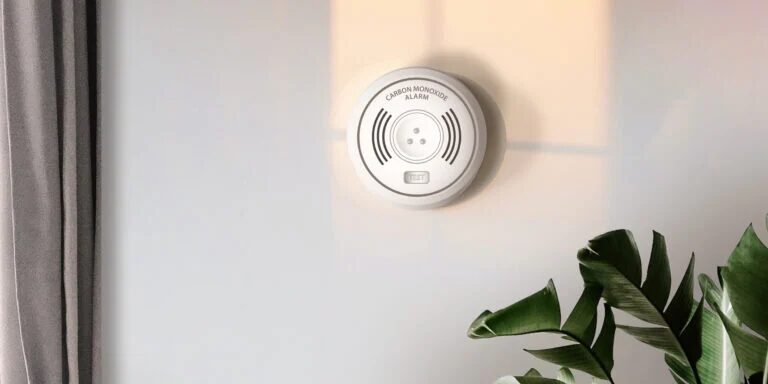
The same number covers a suspected carbon monoxide release, which IGEM classes alongside a smell of gas and a gas escape as a gas emergency4. Carbon monoxide has no smell or taste, so it is not detected by nose at all; the alarm, the symptoms and the state of the flame are the signals5. If anyone is unwell, the priority shifts from the building to the people: fresh air first, then medical advice5.
What follows sets out the immediate steps, who attends and how quickly, what the emergency engineer will and will not do, the warning signs that precede an escape, and the annual servicing and registration checks that keep a household out of this situation. It also covers the landlord's gas safety record, which is a legal duty on rented homes and not on owner occupiers7.
Smell gas? Ventilate, shut the valve, touch nothing electrical
The actions are consistent across the network operators and the consumer bodies, and the order matters less than doing all of them. Open doors and windows to ventilate2. Turn off the gas at the meter using the Emergency Control Valve, unless the meter is in a cellar or basement2. Do not use electrical switches, do not smoke or use naked flames, and do not stay in a cellar or basement where gas is present1.
The reason for the switch rule is blunt: turning a switch on or off could ignite a gas leak2. That extends beyond light switches. Confused.com lists switches, doorbells and mobile phones among the electrical devices to avoid, and advises making the phone call from outside the property, particularly from a mobile12. Gas itself is odourless, and a substance called mercaptan is added so that it can be detected at all12.
The emergency control valve sits close to the meter. It is shut by turning the lever so that it is at 90 degrees to the gas pipe12. Where the meter is in a cellar or basement and the smell comes from there, the advice is not to go down: the cellar should not be entered and the building should be evacuated instead12.
For homes on bottled or tanked gas rather than mains, the procedure differs. Liquid Gas UK advises closing the manual outlet valve on the cylinder or tank, turning off all appliances and the property's emergency valve, opening doors and windows, not switching lights or electrical equipment on or off, calling the supplier, dialling 999 for the fire brigade and leaving the premises14.
Call 0800 111 999: free, 24 hours, and answered by an advisor
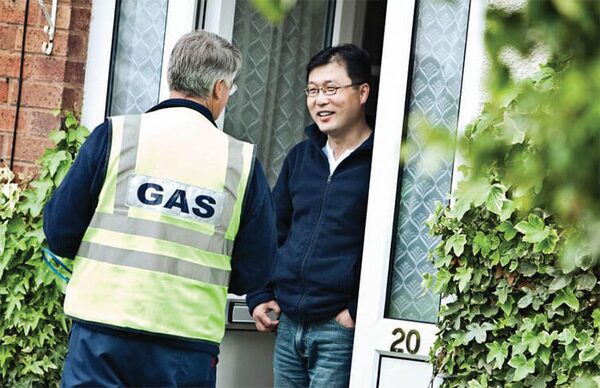
The National Gas Emergency Service is reached on 0800 111 999, a freephone number answered around the clock1. Energy Networks Association gives the same number with the instruction to call immediately3. The service is free to call3. The Met Office repeats the number for gas emergencies, and HSE's guidance for householders carries it as the National Grid Gas Emergency freephone line16.
When the call connects, an advisor takes your details, gives advice on what to do and dispatches an emergency gas engineer2. Northern Gas Networks describes the same flow: a trained advisor talks the caller through the steps, then arranges for an engineer to attend, carry out a full safety check, make the situation safe and provide safety advice17. SGN asks callers to disclose any vulnerabilities or special circumstances the advisors need to be aware of2.
The engineer will carry identification and will need entry to the property to make it safe2. Northern Gas Networks states its engineers arrive within one or two hours9.
Emergency numbers outside Great Britain
The 0800 111 999 line covers England, Wales and Scotland. Northern Ireland has its own number, 0800 002 001, given both by Energy Networks Association and in a government product safety report3. The Republic of Ireland uses 1850 20 50 503.
| Nation or territory | Emergency number |
|---|---|
| England, Wales and Scotland | 0800 111 9993 |
| Northern Ireland | 0800 002 0013 |
| Republic of Ireland | 1850 20 50 503 |
The Isle of Man, Jersey and Guernsey are not covered by the numbers above in the material available here, and households there should confirm the local arrangement with their network operator or supplier. What is consistent is that the call is free and the response is treated as an emergency wherever it is made.
What the emergency engineer does on arrival
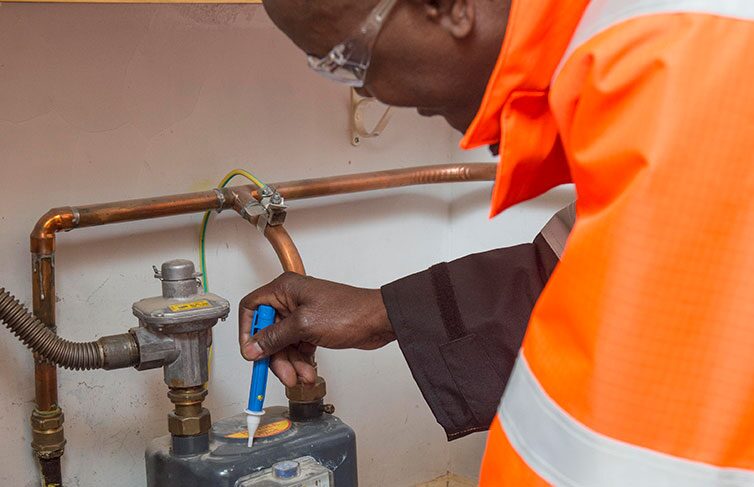
The engineer's job is to make the situation safe, not to repair. Northern Gas Networks states that its engineers do not repair appliances or pipework inside the home, but assess the situation, identify potential hazards and take the right action to make things safe in a gas emergency15. Cadent's description of the safety check is more detailed: the engineer checks that gas appliances burn correctly, are suitable for the room, physically stable, securely fitted and properly connected to the gas pipework, with adequate permanent air supply, functioning safety devices and correctly operating flues, chimneys and air vents19.
Where further work is needed, it falls to a separate visit. Northern Gas Networks advises that a Gas Safe Registered engineer may be needed to make further repairs to appliances or pipework9. Cadent says the same for extra work on ovens, boilers and fires13.
The practical consequence for a household is that the emergency visit ends with the property safe, not necessarily with the appliance working. A boiler or cooker isolated during the visit stays off until a registered engineer has attended to it. That is the point at which the household's dependence shifts from the network to a trade professional, and the choice of that professional is the household's own.
Suspected carbon monoxide: fresh air first, then medical advice
Carbon monoxide is a poisonous gas with no smell or taste5. The Northern Ireland guidance is more emphatic: it is a highly poisonous gas that cannot be seen, tasted or smelled, and it can kill quickly without warning20. That is why the response differs from a gas escape. There is nothing to smell, so the alarm or the symptoms carry the warning.
If carbon monoxide is suspected in the property, the steps are to open all doors and windows, move everyone into the fresh air, and call the Gas Emergency Service on 0800 111 99921. Northern Ireland's guidance adds that anyone affected should stay outside in the fresh air, and that anyone who may have been exposed to carbon monoxide at levels suggesting symptoms should go immediately to a local emergency department5. HSE advises seeking urgent medical advice from either a GP or an A&E department where symptoms appear and exposure is suspected6.
The symptoms to watch for, per HSE, include headaches or dizziness, breathlessness, nausea, loss of consciousness, tiredness, pains in the chest or stomach, erratic behaviour and visual problems6. Liquid Gas UK lists headaches, nausea and dizziness when appliances are in use, and advises turning them off immediately14. Cadent notes that symptoms without any smell of gas could themselves be a sign of a carbon monoxide leak13.
Warning signs of a gas appliance problem
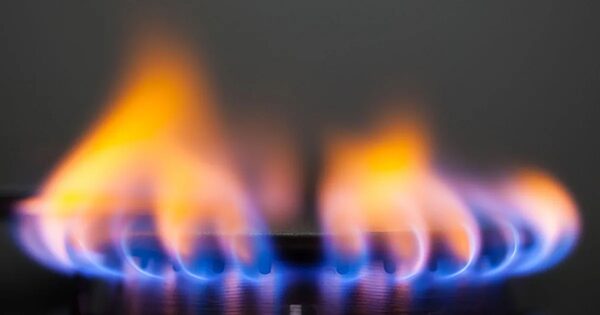
Long before an alarm sounds, appliances give physical signals. Cadent lists black marks and stains around the appliance, lazy orange or yellow flames instead of crisp blue ones, and high levels of condensation in the accommodation23. SGN describes the same flame fault as burning a floppy yellow or orange rather than crisp and blue24. A healthy flame should be crisp and blue21.
Other signs point to a leak rather than a combustion fault. Confused.com lists a weaker hob flame, hissing sounds from pipes or appliances, unexpectedly higher gas usage, dying plants and feeling unwell12. It also notes that a gas stove giving off a tired-looking orange or yellow flame instead of the usual blue one is a tell-tale sign12.
| Warning sign | What it suggests |
|---|---|
| Black marks or stains around the appliance | Incomplete combustion23 |
| Lazy orange or yellow flame instead of crisp blue | Incomplete combustion23 |
| High condensation in the accommodation | Incomplete combustion23 |
| Weaker hob flame, hissing from pipes | Possible leak12 |
| Unexplained higher gas usage | Possible leak12 |
| Symptoms with no smell of gas | Possible carbon monoxide13 |
A pilot light that keeps going out belongs in the same list of appliance faults, though the material here does not give a UK figure for it. The pattern across all of these is that the appliance is telling the household something before the emergency number is needed. Acting on the sign, by switching the appliance off and arranging a service, is the step that keeps the household out of the emergency.
What the emergency service does not do
Two expectations need correcting. The first is that the emergency engineer will test the air for carbon monoxide or service the appliance. Northern Gas Networks states its engineers do not repair appliances or pipework inside the home15. The second is that the emergency visit resolves the appliance fault. It does not: further repairs require a Gas Safe Registered engineer13.
Where carbon monoxide is suspected, the official guidance points elsewhere for the investigation. The Northern Ireland guidance advises stopping use of all cooking and heating appliances, opening windows, seeing a doctor at once, and calling a qualified engineer to check all cooking and heating appliances20. That is a separate appointment from the emergency call, and it is the one that establishes whether an appliance is the source.
The distinction matters for a household's energy independence. The emergency service is a network function, funded through the distribution networks and free at the point of call1. The appliance work is a private transaction with a registered business. A household that has kept up annual servicing is far less likely to need either.
Prevention: annual servicing by a Gas Safe registered engineer
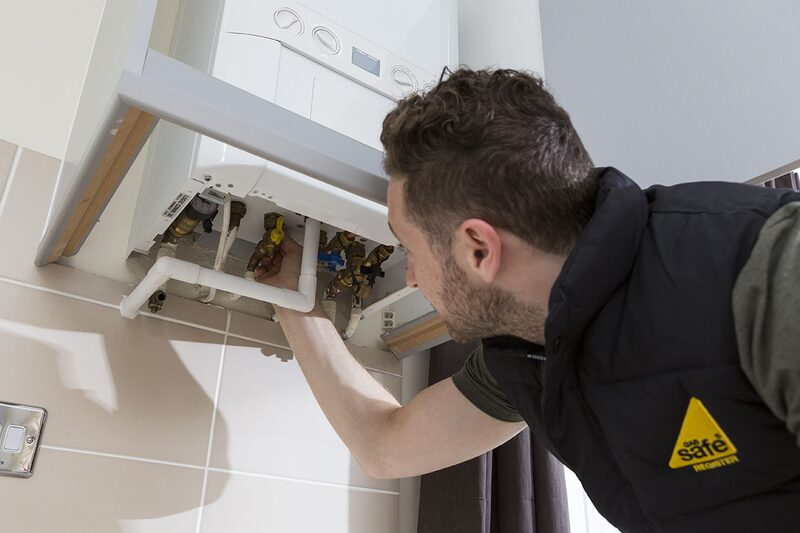
HSE strongly advises that all gas appliances, flues and pipework are installed, regularly maintained and serviced at least annually by a Gas Safe registered engineer7. Northern Gas Networks puts the same interval on boilers, cookers and water heaters24, and SGN advises an annual check by a registered Gas Safe engineer for anyone with a gas boiler17. Liquid Gas UK advises annual servicing of gas boilers, gas cookers and gas water heaters23.
The landlord's legal check runs on the same 12 month cycle. HSE states that a gas safety check must be done every year on each gas appliance and flue8, and that the annual check must be carried out within 12 months of the installation of the appliance7. Where a tenant prevents access, HSE inspectors look for at least three attempts to complete the check7.
The independence argument here is straightforward. A serviced appliance is less likely to produce the warning signs in the previous section, and a household that knows its engineer is registered is not exposed to illegal work. Gas Safe Register is the official register for gas engineers, and by law all gas engineers must be on it and hold current qualifications to install, repair or maintain domestic gas appliances25.
Checking your engineer is Gas Safe registered
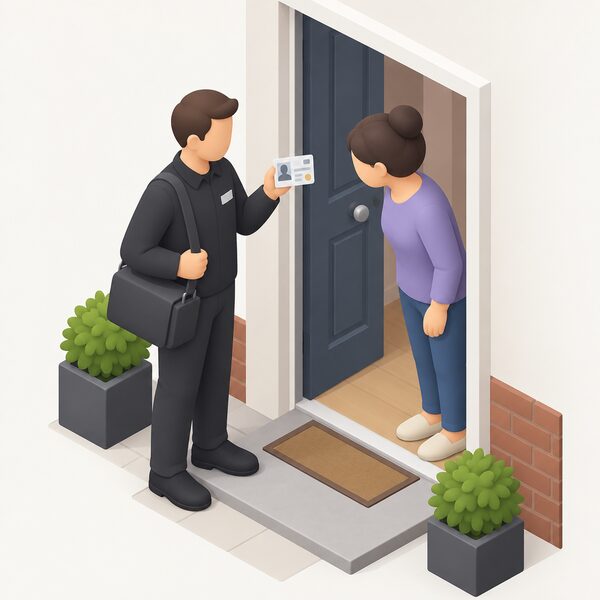
Every gas engineer carries a Gas Safe Register ID card, and every registered engineer should be able to show one, either as a hard copy or on a phone4. The card has two sides worth checking. On the front: the engineer's photograph, the start and expiry dates, the licence number, a security hologram, and confirmation that the engineer is from the business you contacted20. On the back: the engineer's qualification to do the gas work you asked them to do, and confirmation that those qualifications are current20.
The register itself can be checked in three ways. The Gas Safe website carries the register, and the helpline is 0800 408 550010. A text check is available by texting Gas and the business registration number, or Gas and the engineer's seven digit licence number, to 850807. Confused.com advises checking the Gas Safe website or asking to see the registration card if there is any doubt12.
| Check | Detail |
|---|---|
| Card front | Photograph, start and expiry dates, licence number, hologram, business match20 |
| Card back | Qualification for the work, and that it is current20 |
| Phone | Gas Safe Register on 0800 408 550010 |
| Text | Gas plus business registration number, or Gas plus seven digit licence number, to 850807 |
| Online | Gas Safe Register website12 |
Gas Safe Register also handles finding a registered engineer, reporting illegal gas work undertaken by someone not registered, and complaints about unsatisfactory gas work4. For gas appliance and boiler problems, Cadent directs households to the register on 0800 408 550011. The registration requirement itself is enforced through the register: applicants must prove the necessary qualifications and experience to carry out gas work, and provide National Insurance numbers for any engineers they want to register25.
Gas safety certificates and landlords: the CP12
The annual gas safety check and the record that follows it are a landlord duty, not a homeowner one. By law, landlords must carry out an annual safety check and provide the tenant with a Gas Safety Certificate3. The check must be done by a qualified Gas Safe engineer28. Where there is a live gas supply to rented premises, a safety check must be carried out irrespective of whether the tenant uses gas7.
The record keeping is specific. The landlord must keep a record of the safety check for 2 years, issue a copy to each existing tenant within 28 days of the check being completed, and give a copy to any new tenant before they move in7. Tenants who rent and need a check arranged should contact the landlord to arrange a safety check for all gas appliances and flues by a Gas Safe registered engineer19.
Owner occupiers have no equivalent legal certificate. HSE's guidance for owner occupiers sits alongside the landlord duty and does not impose one10. The advice for owners is the servicing regime described above: an annual check by a registered engineer, on a voluntary basis, as a matter of safety rather than law.
There is no fixed price for a landlord gas safety record. Gas Safe Register states it has no control over engineers' charges and advises obtaining quotes from three different engineers before hiring7. Prices are installer-quoted. The HSE Gas Safety Advice Line, by contrast, is free and offers advice on gas safety7.
Where the household's independence ends
A gas supply is the one utility a household cannot make for itself. The emergency arrangements reflect that: the response is a network function, the number is free, and the engineer who attends comes from the local distribution network rather than from a business the household chose1. What a household controls is everything on its own side of the meter: whether appliances are serviced annually, whether the engineer is registered, whether warning signs are acted on, and whether the emergency control valve can be reached without entering a cellar.
The dependence that remains is real and worth stating plainly. Until a registered engineer has attended, an appliance isolated during an emergency stays out of use. The household waits on a trade appointment, and on parts, and on the appliance's own condition. Annual servicing is the only lever that reduces the chance of reaching that point, and it is a legal duty only for landlords7. For everyone else it is advice, strongly given, from HSE and from every network operator in the country7.
For the wider picture of how a home's energy supplies are controlled and isolated, see how to turn off the gas, water and electricity in an emergency, and for the alarms that give early warning, how to test and maintain smoke, heat and carbon monoxide alarms. Households arranging the annual service itself will find the frequency question covered in how often should I have my boiler serviced?, and renters in who arranges a boiler service if you rent?.
Sources28 cited
- Smell gas, WW Utilities, 2026
- Smell gas, SGN, 2026
- Get winter ready, Energy Networks Association, 2026
- Know or suspect you have a gas emergency, IGEM, 2026
- Carbon monoxide poisoning, nidirect, 2026
- Carbon monoxide, Health and Safety Executive, 2026
- Gas safety FAQs, Health and Safety Executive, 2026
- Safety checks: what you need to know, Health and Safety Executive, 2026
- Gas emergencies, Northern Gas Networks, 2025
- Gas safety FAQs for owner occupiers, Health and Safety Executive, 2026
- Make the right call, Cadent Gas, 2026
- What to do if you smell gas, Confused.com, 2026
- Smell gas, Cadent Gas, 2026
- Safety advice, Liquid Gas UK, 2026
- Take no chances with gas safety, Northern Gas Networks, 2026
- What to do in a power cut, Met Office, 2026
- Carbon monoxide advice, Northern Gas Networks, 2026
- Product safety report: Cata and Culina gas hobs, GOV.UK, 2023
- Getting your gas back on, Cadent Gas, 2026
- Gas Safe Register, nidirect, 2025
- Carbon monoxide, SGN, 2026
- Gas safety and carbon monoxide, nidirect, 2025
- Summer CO awareness, Cadent Gas, 2026
- Be aware or it could be game over, WW Utilities, 2026
- Registration to carry out gas work, GOV.UK, 2026
- Using a Gas Safe engineer, Liquid Gas UK, 2026
- Landlord and tenant rights and responsibilities in the private rented sector, GOV.UK, 2019
- Building regulations guidance Part J: heat producing appliances, Welsh Government, 2025
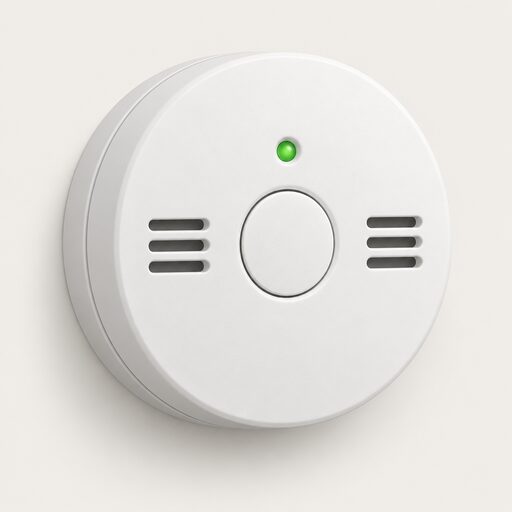 Carbon Monoxide SafetyHow carbon monoxide arises from gas, oil, LPG and solid fuel appliances, where alarms must be sited and what the requirements are in each UK nation.
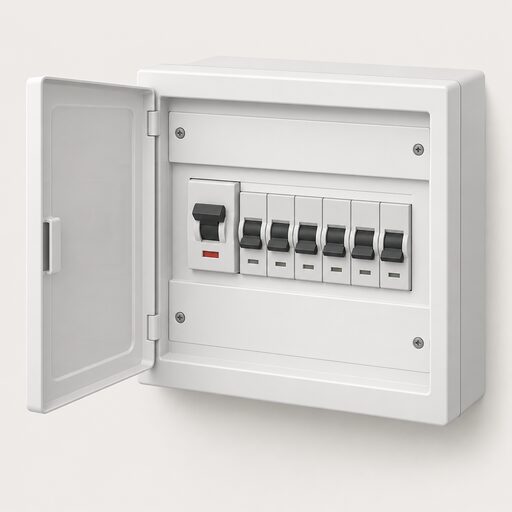 Turn Off Gas, Water, PowerWhere the gas emergency control valve, internal stopcock and consumer unit main switch are usually found and how each is operated.
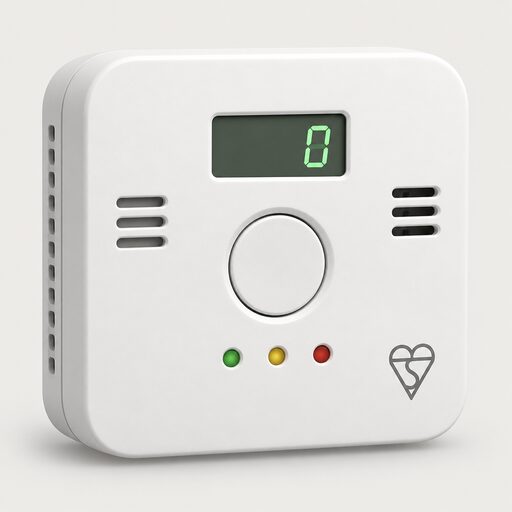 Test Smoke and Heat AlarmsHow often alarms should be tested, what the different beeps mean and when a unit has reached the end of its life.
 Generator SafetyCovers the main hazards of running a generator at a home: exhaust fumes and carbon monoxide, hot surfaces and refuelling fires, electric shock and earthing.
 Thaw a Frozen Condensate PipeHow to identify a frozen condensate as the cause of a boiler lockout, the safe way to thaw the external pipe and how to restart the boiler afterwards.
 Alarm Rules in Rented HomesHow many smoke and carbon monoxide alarms a rented home must have, where they must be sited, and how the rules differ across England, Scotland, Wales and Northern Ireland, including the standards alarms must meet and who tests them.