
In this answer
Short answer
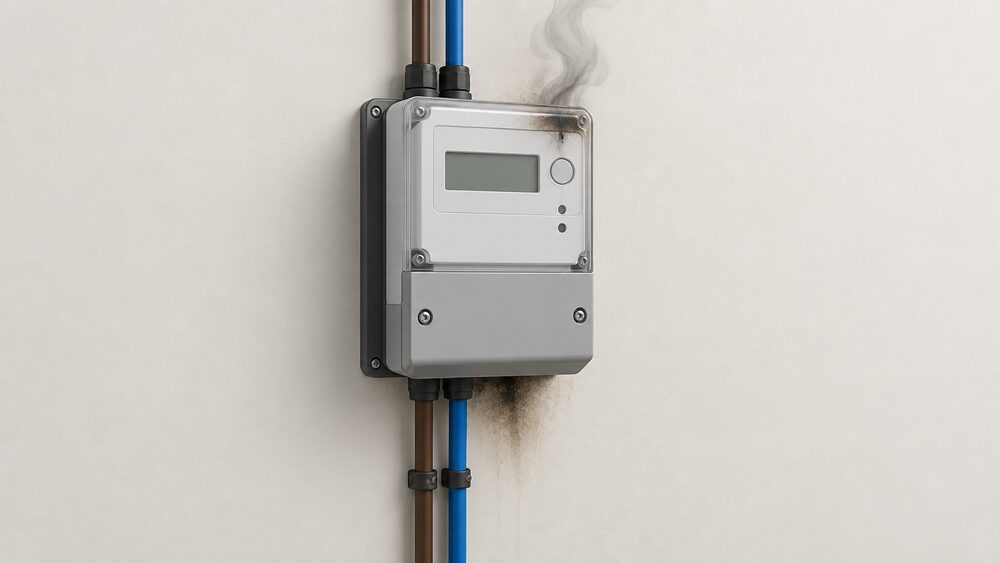
A sparking, smoking or burning electricity meter is an emergency, not a maintenance job. If the meter is sparking or on fire, call 9991. If it is safe to reach the consumer unit, switch the supply off there first, then keep clear of the meter and its cables. Do not open the meter, do not touch the tails, and do not throw water on electrical equipment.
The meter is the supplier's equipment, not the household's. If a smart meter stops working, the household contacts the supplier, which is responsible for maintenance and will fix or replace the meter as needed2. If the supply is cut off because of a faulty energy meter, the contact is the energy supplier rather than the network operator3. The distribution network operator (DNO) handles the cables and the connection to the property, not the meter itself.
Fire risk from smart meters is very low, and it is incredibly rare for a smart meter to be faulty and even rarer for there to be a fire4. That is the independent position, and it is worth holding on to while still treating smoke, flame or a burning smell as a genuine emergency. The rest of this page sets out what to do first, how to tell a fault from normal operation, who to call, and how a replacement works.
What to do first: isolate at the consumer unit and keep clear
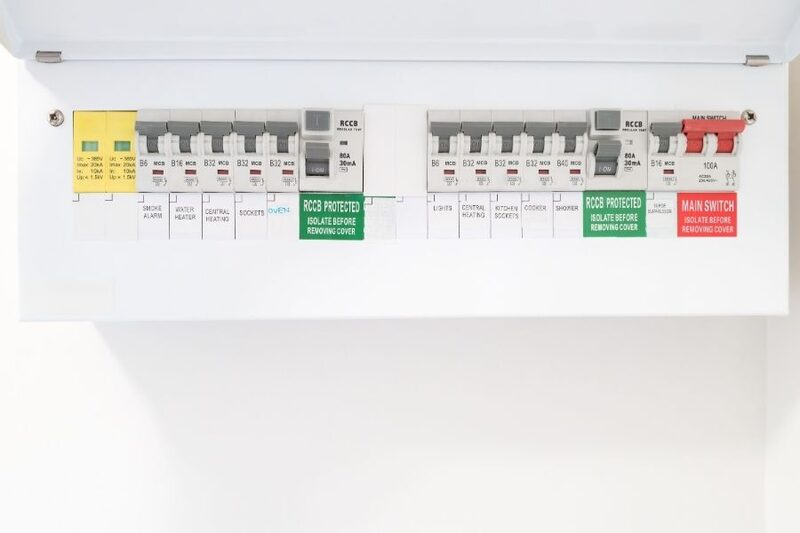
The consumer unit, still widely called the fuse box, is the row of switches and breakers that controls the circuits in the home. Residual current devices (RCDs) in a consumer unit immediately switch off the electricity if they detect a fault, and are designed to protect people from electric shocks and earth faults5. If the meter is sparking, smoking or burning and the consumer unit is reachable without passing the meter, switching off there cuts the supply to the installation.
The meter itself may sit inside the property or in an external meter box or cubicle8. Where it is outside, the household may not be able to reach an isolator at all, and the correct action is to keep well clear and call for help. Where it is inside, the same rule applies: isolate if it is safe, then leave the area.
Once the supply is off, the immediate danger from the meter is reduced but not removed: a smouldering component can still reignite. Keep people and pets away from the meter position, and do not use the area until it has been checked.
Sparking versus normal meter operation: how to tell the difference
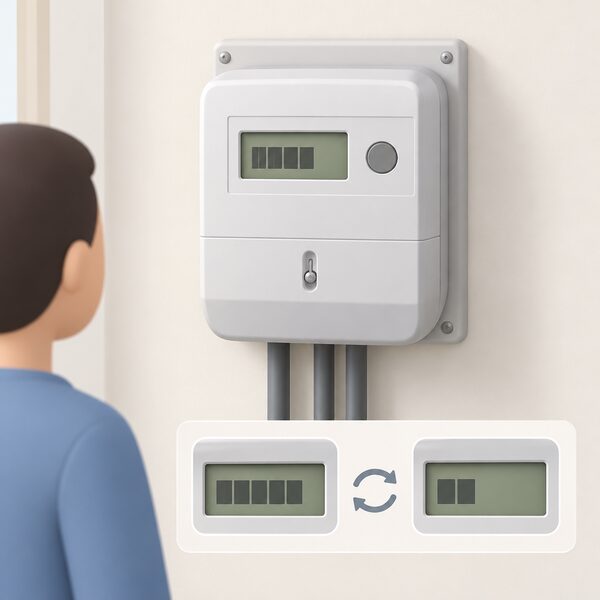
A meter that appears to be doing something odd is not necessarily faulty. Electricity meters display readings in ways that can look like activity to someone unfamiliar with the unit. A two rate single display electricity meter has only one digital display, and will either flash up the different rate readings in a cycle or have a button to press to cycle through the readings9. An Economy 7 meter shows two meter readings, a low or off-peak rate and a normal, high or on-peak rate, or a button to press to see each rate on an electronic meter10. On an Economy 7 smart meter, pressing 6 on the keypad cycles to 'IMP R02' followed by 8 digits, usually the peak or normal reading11.
None of that is sparking. What a household should treat as a fault is visible arcing, a buzzing or crackling sound, burn marks, a hot casing, fuses blowing or circuit-breakers tripping. Electrical Safety First lists exactly these among the signs that should not be ignored4. A flashing display is normal; a flash of light from inside the sealed unit, or a crackling noise, is not.
Smart meters are as accurate as traditional meters when it comes to measuring electricity or gas usage12, and they send automatic readings to the supplier on a half-hourly, daily, or in some cases monthly basis13. A meter that has stopped sending readings is a fault to report, but it is not a safety emergency in the way that sparking or smoke is.
Who to call: your electricity supplier, the DNO and when to dial 999
The first call depends on what is happening. If the meter is sparking or on fire, it is 9991. If the meter is faulty but not dangerous, it is the electricity supplier, the company the household pays its electricity bills to3. If the household does not know who the supplier is, calling 105 reaches the local electricity network operator (DNO), which can say who the supplier is14. Wales & West Utilities also offers a supplier lookup line on 0870 608 152415.
The split of responsibility matters. The supplier is the contact for a faulty meter, and for late, incorrect or missing bills, back billing, being overcharged, poor customer service and refusing to refund credit from an account16. The DNO is the contact for the connection itself: a domestic customer contacts the local distribution network to find out whether a property is connected, or how to get connected17. A household that has been cut off because of a faulty energy meter contacts the energy supplier, not the network operator3.
| Situation | Who to contact |
|---|---|
| Meter sparking, smoking or on fire | 9991 |
| Faulty meter, no immediate danger | Electricity supplier3 |
| Supply cut off by a faulty meter | Energy supplier, not the network operator3 |
| Don't know who the supplier is | Call 105 for the local DNO14 |
| Connection or new supply query | Local distribution network operator17 |
What a smoking or burning meter means and why it is dangerous
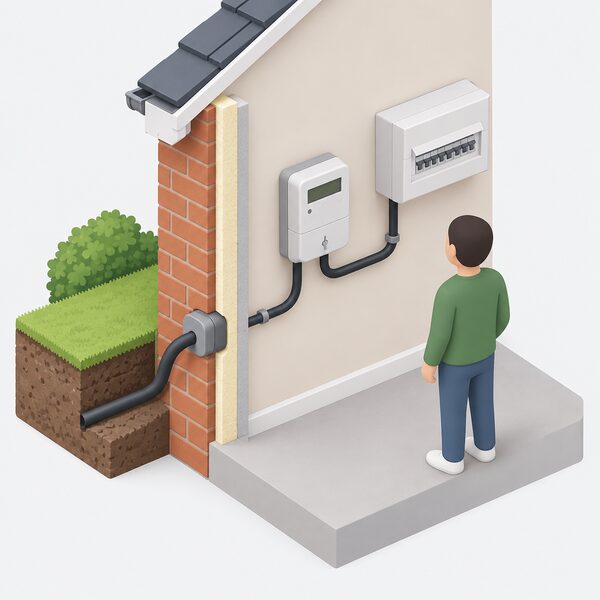
A smart meter is an electronic device that records the consumption of electric energy and gas in intervals of an hour or less18. It records how much gas and/or electricity a home uses and shares readings automatically with the energy supplier19. It measures gas and electricity usage and cost, displays this on an in-home display, and sends usage information securely to the supplier20. It is connected to the mains electricity supply and/or the gas pipe going into the home21.
That connection is the point. A meter carries the full supply current for the property, and its terminals and internal components are under continuous load. Smoke or a burning smell from the unit points to overheating insulation, a loose connection or a failing component. Because the meter is sealed and mains-powered, the household cannot inspect or repair it, and the fault has to be dealt with by the supplier.
"When it comes to smart meters, fire risk is very low."
The independent assessment is that fire risk is very low and that a faulty smart meter is incredibly rare4. The practical reading of that is not complacency but proportion: a meter that is working normally is not a fire hazard, and a meter that is smoking is a fault that needs the supplier or the emergency services immediately.
Getting the meter replaced: supplier obligations and access
Under their licence conditions, energy suppliers are required to take all reasonable steps to install a smart meter where a meter is fitted for the first time or a traditional meter needs replacing due to a fault22. Suppliers were also required to meet binding annual targets for installing smart and advanced meters under the rollout framework23. The practical effect is that a faulty traditional meter is normally replaced with a smart meter rather than a like-for-like unit.
For the Radio Teleswitch Service switch-off, the position is explicit: the supplier must replace the meter to make sure there is no disruption to the electricity supply24, and the supplier should upgrade the household to a smart meter for free6. The electricity supplier must make sure a suitable meter is installed, and that service is not disrupted14.
Access is the household's part of the job. NIE Networks asks customers to ensure the area around the meter is clear and there is good access, and the installer will ask for all electrical appliances to be turned off before power is switched off7. During a smart meter appointment, key safety checks should be carried out, and an in-home display should be offered and demonstrated25.
Staying safe in the meantime: smells, scorch marks and warning signs
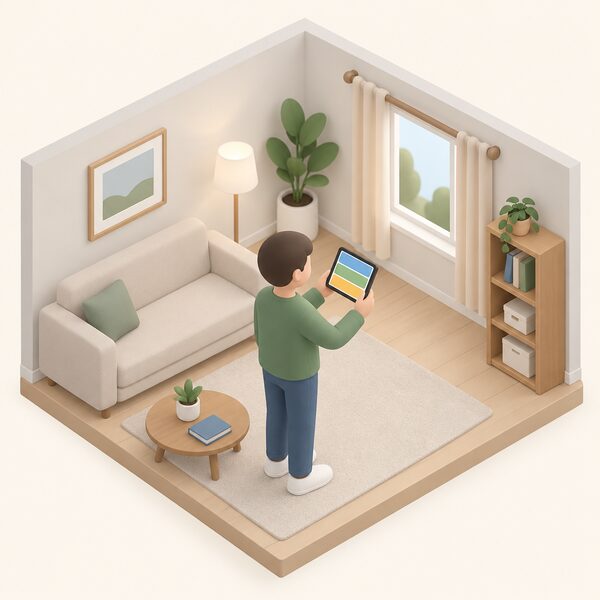
Between reporting a fault and the visit, the household's job is to watch and to keep clear. Electrical Safety First advises not ignoring burn marks, arcing (buzzing or crackling) sounds, fuses blowing, circuit-breakers tripping, or equipment that feels hot to touch4. Any of these at the meter or the consumer unit is a reason to isolate the supply if it is safe and to call the supplier.
Smoke and heat alarms are the backstop. Electrical Safety First advises ensuring there is at least one smoke or heat alarm per floor in the property4. A meter fault that develops while the household is asleep is exactly the scenario those alarms exist for.
A smart meter is accompanied by an in-home display, a portable touchscreen device that shows near real-time energy usage data26. If the display goes blank or the meter stops recording, that is a fault to report: a smart meter may stop recording the energy used, or may no longer send readings to the supplier27. A meter may also fail to work in smart mode after a supplier switch, in which case readings have to be taken manually and submitted to the new supplier28.
What this means for a household's energy independence
A meter fault is the clearest illustration of where a home's energy independence ends. The household can isolate at the consumer unit, keep the area clear and watch for warning signs, but the meter itself belongs to the supplier, which is responsible for maintenance and will fix or replace it as needed2. The supply, the meter and the connection to the network are all outside the household's control.
That dependence is not a reason to avoid smart metering, but it is a reason to understand it. A smart meter records consumption and shares readings automatically, which is what makes accurate rather than estimated billing possible13. It also means the device sits on the mains supply and on a communications link the household does not own. Where a supplier fails, the position is set out in the rules on what happens if an energy supplier goes out of business29, and complaints about a supplier or network operator follow the Ofgem complaints route16.
The safety position is straightforward. Fire risk from smart meters is very low, and a faulty smart meter is incredibly rare4. Sparking, smoke or a burning smell at the meter is nonetheless an emergency: isolate if it is safe, keep clear, and call 999 if the meter is sparking or on fire1.
Sources29 cited
- Smart homes safety advice, Electrical Safety First, 2026-09-19
- Smart meters guidance, Welsh Government, 2026
- Get compensation if you have a power cut, Citizens Advice, 2026-09-17
- Smart meters are safe, Smart Energy GB, 2026-03-16
- Consumer units and fuse boxes, NICEIC, 2025-09
- RTS meter switch-off, Energy Saving Trust, 2026-05-08
- Meter replacements, NIE Networks, 2026-09-19
- Safe isolation FAQs, NIE Networks, 2026-09-19
- How to read your energy meter, Citizens Advice, 2026-09-17
- Getting the most from Economy 7, National Energy Action, 2026-09-10
- Energy meters, Energy Helpline, 2026-09-20
- How accurate are smart meters?, Smart DCC, 2026
- Do smart meters cost more?, Smart Energy GB, 2026-03-16
- RTS switch-off, Home Energy Scotland, 2026-09-20
- Smart meters, Wales & West Utilities, 2026-09-20
- Complain about your energy supplier or network operator, Ofgem, 2026
- Domestic and homeowners connections help, NESO, 2026-09-17
- How to bleed a radiator, Uswitch, 2026-09-04
- How do smart meters work?, Smart Energy GB, 2026-08-27
- An introduction to smart meters and prepay, Smart Energy GB, 2026-03-16
- Do I already have one?, Smart Energy GB, 2026-03-16
- Smart meters, Energy Ombudsman, 2026-09-20
- Supplier smart metering installation targets, Ofgem, 2026-09-17
- Radio Teleswitch Service switch-off, Age UK, 2026-05-08
- Smart meters: your rights and expectations, GOV.UK, 2025-08-08
- How do smart meters help the environment?, Smart DCC, 2026
- Get help with your smart meter, Ofgem, 2026-09-17
- What happens if your energy supplier goes out of business, Ofgem, 2026
- Emergencies, E.ON Next, 2026-09-17
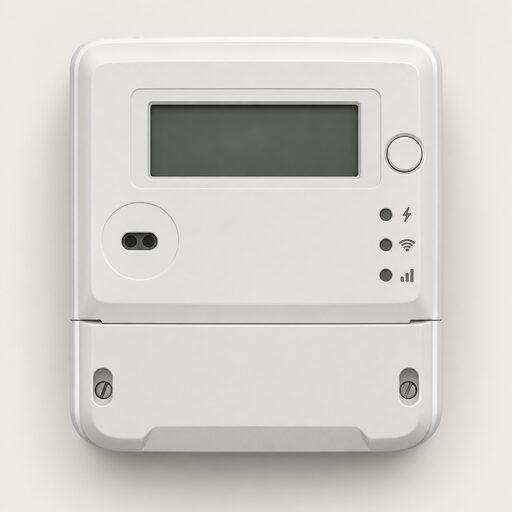 Smart Meter Faults and FixesYour smart meter has stopped working.
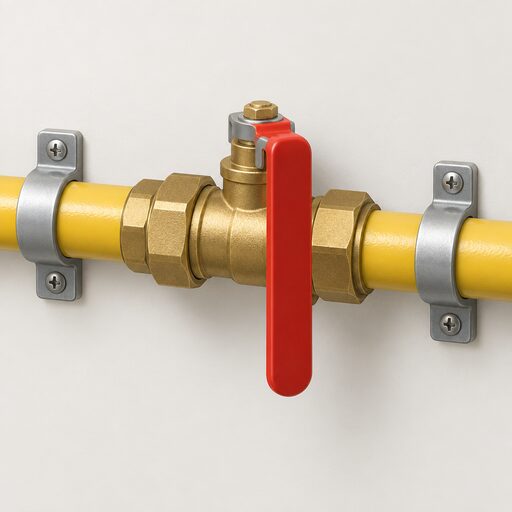 Smell Gas or Suspect COThe emergency steps for a suspected gas escape or carbon monoxide alarm, including ventilation, ignition sources and turning the supply off at the emergency control valve.
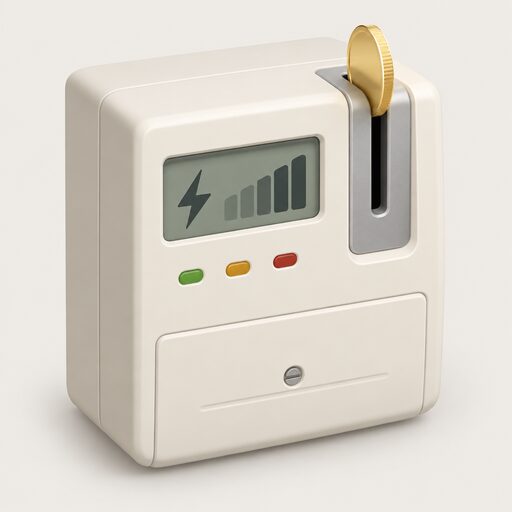 Prepayment MetersHow do you top up a prepayment meter for gas or electricity, and what happens when the credit runs out?
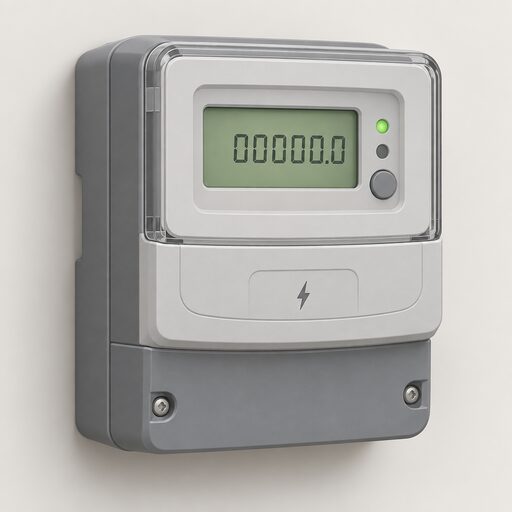 Take Control of Your EnergyHow do you read your own energy use and keep hold of your meter readings?
 Report a Faulty MeterWhat to do when a meter over-records, stops recording or produces impossible readings: the evidence to gather, how to raise it with the supplier, the 5 working day and 8 week deadlines, and how the Energy Ombudsman handles meter disputes.
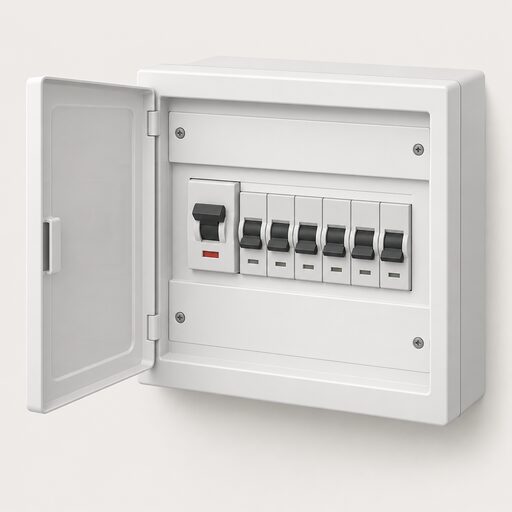 Turn Off Gas, Water, PowerWhere the gas emergency control valve, internal stopcock and consumer unit main switch are usually found and how each is operated.