In this guide
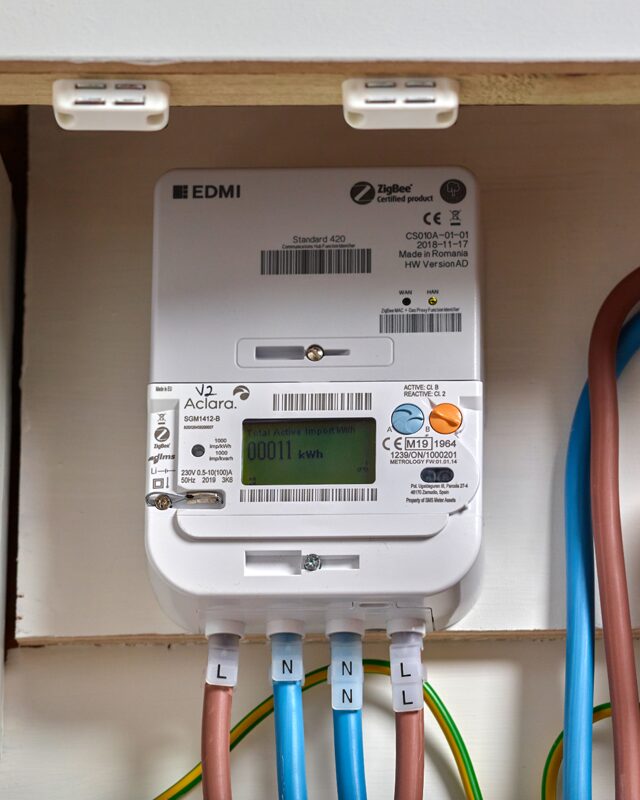
A smart meter measures gas and electricity to the same standard as the meter it replaced. By law, all smart meters have to be approved and certified by the Office for Product Safety and Standards to prove their accuracy1, and the regulator's trade body guidance states plainly that meters must meet strict accuracy standards monitored by that body2. Meters fitted under the national programme are also compliant with the Smart Meter Equipment Technical Specification, the technical rulebook for the equipment itself3.
What people usually mean when they ask whether smart meters are accurate is something narrower: whether the number on the bill matches the energy used. That is a question about the whole chain, not about the measuring element. The measuring element is certified. The chain from meter to communications hub to supplier billing system is where things fail. Official figures put the share of smart meters working as they should at 92% as of March 20264, and meters that are not communicating still record consumption accurately, working in effect like a traditional meter5.
The practical consequence is that most accuracy complaints are really billing complaints, and they are handled through the supplier first, then the Energy Ombudsman. Smart metering has become the leading cause of consumer complaints to suppliers, at 30% of complaints, up from 29% when it was the second most common cause6. This page sets out how the readings become a bill, what to do when they do not, and the rules and time limits that govern escalation.
Accuracy compared with a traditional meter
Every independent and official source on the point gives the same answer. Smart Energy GB states that smart meters are just as accurate as traditional meters1, repeats it in its factual guidance10 and in its comparison with home energy monitors11, and the Data Communications Company, which runs the national network, states that for measuring electricity or gas usage smart meters are as accurate as traditional meters5. Citizens Advice goes further and describes smart meters as a significant technical improvement over standard meters12. The protections attached are the same too: people with smart meters have the same consumer protections as people with traditional meters10.
Where the figures diverge is on the share that works. Which? reported 90% of smart meters working as they should in September 202413; the government figure for March 2026 is 92%4. Both are counts of communicating meters, not of measurement error. An earlier consumer satisfaction survey found 12% of households reported that their smart meter display did not match their bill, down from 20% in January and February, and satisfaction with smart meters at 72%14.
Supplier-level billing accuracy figures show how much the billing chain, rather than the meter, drives the experience. These are independent statistics for January to March 2026.
| Supplier | Bills accuracy, smart meters |
|---|---|
| 100Green | 99.8%15 |
| ScottishPower | 97.55%16 |
| Octopus Energy | 96.44%17 |
| British Gas | 88.12%18 |
A separate consumer guide puts an overall accuracy rate of 95.5% on smart meters reporting domestic energy consumption19. These numbers measure different things from different vantage points, which is why they do not reconcile: the supplier tables track bills issued against actual consumption, the 92% and 90% figures track meters in smart mode.
How meter readings become your bill
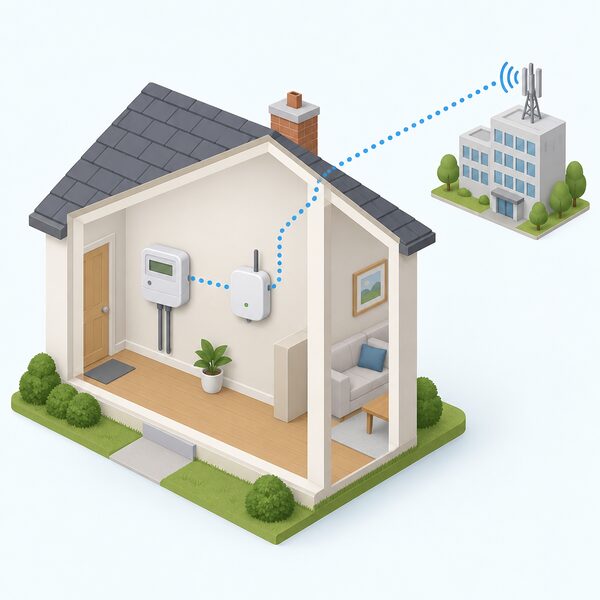
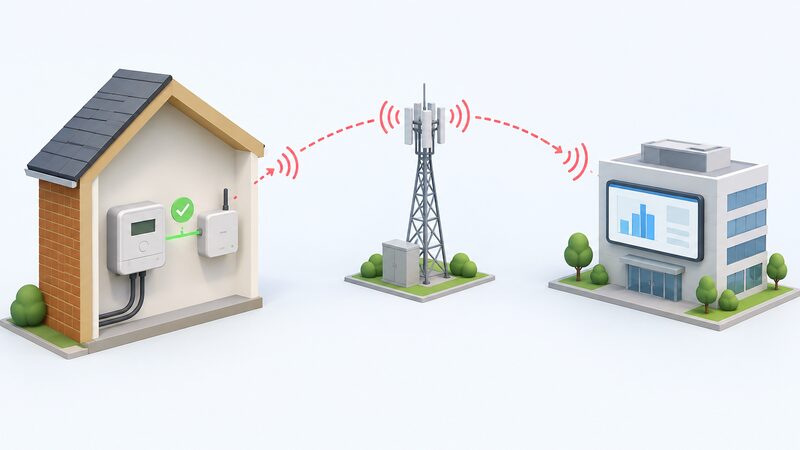
A smart meter automatically sends electricity and gas readings to the supplier, so bills are based on actual readings rather than estimates20. Energy use is recorded automatically in half-hour periods, which is what allows a supplier to bill for actual rather than estimated consumption21. Readings are transmitted on a half-hourly, daily or in some cases monthly basis22, and independent guidance describes readings going to the supplier at least once a month11. The route is the Data Communications Company network, a dedicated secure national system; readings arrive automatically and reliably, letting suppliers bill only for energy used5.
Two things follow for a household. First, there is normally no need to read the meter or submit readings manually23, and the Energy Saving Trust confirms that readings should be accurate without the householder submitting them24. Second, the accuracy of the bill now depends on a chain the household does not control: the meter, the communications hub, the network and the supplier's billing system. Where that chain works, there is nothing to do. Where it does not, the household has less visibility than someone reading a dial, which is why in-home displays and consumer access devices matter as a cross-check.
Households without a smart meter, or with one that has stopped communicating, need to submit readings regularly to keep bills accurate24. That advice is unchanged by the rollout.
When readings go wrong: estimated and corrected bills
An estimated bill can still appear on a smart meter account, usually because the automated reading arrived on a different day from the one on which the bill was created. Any difference between the estimate and actual use is corrected on the next bill25. That is a timing artefact rather than a measurement error.
A bill that rises sharply after installation is a different case. Smart Energy GB attributes this to previously low estimates, with the smart meter now tracking use accurately1. The underlying consumption has not changed; the billing basis has.
The scale of estimated billing problems is substantial. Citizens Advice found that 49% of the people it helped with an estimated or inaccurate billing issue had a smart meter, for cases between 1 January and 31 October 202426. Ofgem's proposed billing accuracy monitoring makes the standard explicit: estimated meter reads are not classed as accurate if they differ from actual consumption, and suppliers' bills are to be tested so that actual meter readings match real consumption and charges are applied correctly, with statistical sampling permitted27.
A meter that cannot communicate still measures correctly
This is the most frequently misunderstood point in the whole subject. Ofgem states that a smart meter not operating in smart mode will still record energy usage accurately30. Smart Energy GB says the same: meters that are not operating exactly as they should still accurately measure energy usage, working like a traditional meter31, and most smart meters are currently operating exactly as they should10.
So a meter in dumb mode is a communications problem, not an accuracy problem. The register on the meter face remains the legal record of consumption and can be read manually and submitted. What is lost is the automation, the in-home display feed and any tariff that depends on half-hourly data.
The rollout and what it means for your meter
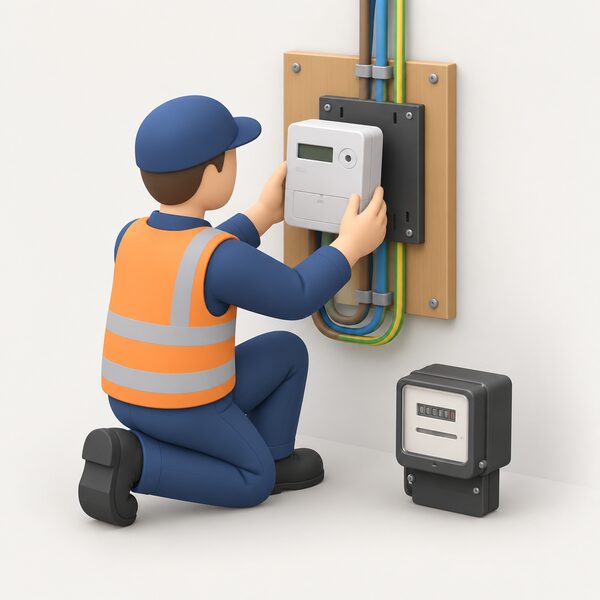
The Rollout Framework that ran from 1 January 2022 to 31 December 2025 has now concluded32, and that framework period is described by the regulator as covering 2022 to 202533. The smart meter rollout has been underway for over 12 years34. The Data Communications Company has stated an intention to complete the rollout by the end of 203035, and the supplier obligation to offer every consumer a smart meter was due to expire at the end of 202536. Smart meters are replacing analogue gas and electricity meters as part of a national infrastructure upgrade to modernise Great Britain's energy system21. Independent guidance notes that the rollout has now passed its breakeven point22.
For a household that has not taken one, the decision is still the bill-payer's, and consumers have the right to refuse a smart meter. The practical limit is replacement: if the current meter breaks and needs replacing, the only meters being made now are smart, so it would have to be replaced with a smart meter37. The same applies where a traditional meter is faulty or unsafe, in which case replacement options may be limited38.
The counterweight to the rollout figures is the fault record. As at March 2023, 3 million smart meters were not working properly, 9% of those installed39, a figure also reported by the Public Accounts Committee40. That is the context for the tighter standards now in force.
Communications hubs and the 2G and 3G network switch-off
The network under the meters is not uniform across Great Britain. It primarily uses long range radio in the north, including Scotland, and 2G or 3G cellular in the central and south regions42. That split decides who is affected by the switch-off and who is not.
Second-generation meters that rely on 2G or 3G will require a replacement communications hub in order to communicate with 4G networks43. An estimated seven million communications hubs, a modular component of the electricity smart meter set, will need to be replaced in the South and Central regions ahead of 2033, when the 2G and 3G networks are closed39, a figure the Public Accounts Committee also reports40. The smart meter network is to transition to 4G before 2G and 3G are switched off by 203344. Ofgem's reforms require suppliers to replace all smart meters still connected to 2G and 3G before the services are switched off by 20334. The programme's cost and benefit accounting keeps this transition separate from the original rollout, with benefits for 2034 reduced to reflect the switch-off45.
Two points of reassurance sit alongside that. Ahead of the wider closure, a 3G switch-off alone does not interrupt service: meters switch seamlessly to the 2G network43. And SMETS2 meters were designed to connect directly to the national network, so smart functionality is retained across a supplier switch. Data on that network is wrapped in two layers of encryption before being sent over a dedicated communications system, backed by the National Cyber Security Centre and in line with governance and data protection standards46. More detail sits on how smart meters communicate and SMETS1 and SMETS2 meters.
If you think your meter is inaccurate
A suspected fault is reported to the energy supplier in the same way as with a traditional meter1. The supplier is responsible for maintenance and will fix or replace the meter as needed41. Guidance from the regulator and from suppliers confirms that a smart meter is provided at no charge to the customer20.
In sequence, what happens:
- The household raises the suspected fault with the supplier, recording the date it was raised.
- The supplier promptly investigates the suspected or identified issue, resolving it itself or with third parties, and keeps the consumer informed21.
- Under the guaranteed standard for investigating smart meter operational issues, the supplier must complete an initial assessment, take an appropriate action and offer to update the consumer within five working days34.
- If that does not happen, £40 compensation is owed under the rules in force since 23 February 20267.
- If the matter is still unresolved, the complaint is escalated.
Where the meter is not sending readings, taking manual readings from the meter face and giving them to the supplier restores accurate billing in the meantime24. Further detail is on smart meter faults and troubleshooting and estimated bills with a smart meter.
Guaranteed standards and supplier obligations
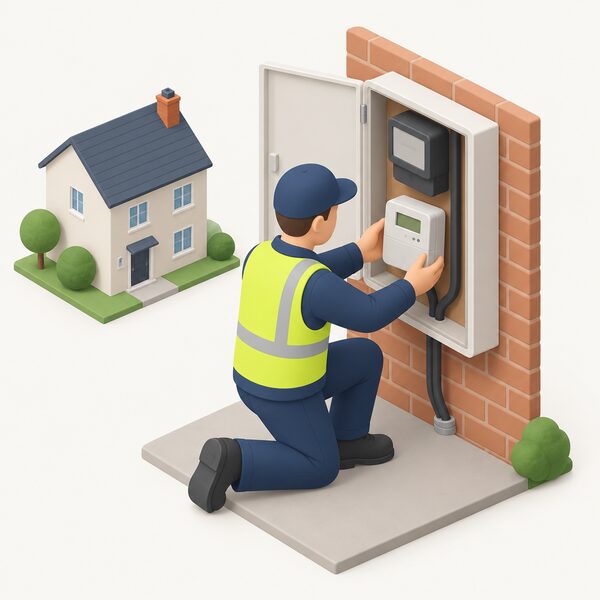
The government's guide "Smart meters: your rights and expectations" sets out the standards energy suppliers should follow at each stage of the customer's smart meter journey47. The new guaranteed standards attach automatic compensation to some of those expectations: Ofgem consulted on automatic compensation where a supplier fails to meet certain expectations21, and the reforms cover situations including delayed or failed installations4. Ofgem has announced greater levels of compensation in the event of smart meter failures48, and redress under the smart meter Guaranteed Standards of Performance is estimated at £117m across GB consumers and suppliers6.
The drafting is not entirely settled. The final decision notes that the standards reference the Electricity and Gas Acts, which could inadvertently include advanced metering, and that respondents asked for the definition to be updated to clarify that the standards apply only to SMETS meters34. Citizens Advice has pressed for the accountability gap between energy suppliers and the Data Communications Company to be closed, with changes to DCC contracts if required, so suppliers are held accountable when smart metering equipment does not work12. The standards are set out in more detail on smart meter guaranteed standards.
The Energy Ombudsman: escalation, awards and limits
A complaint must go to the supplier first. If the issue is not resolved after eight weeks, or a deadlock letter is received, the Energy Ombudsman can take the case49. Its own eligibility test is that at least eight weeks have passed since the issue was first raised, or a deadlock letter has been received, and that the complainant has sufficient evidence including the date the complaint was raised8. After a deadlock letter, the dispute must be escalated within 12 months of receiving it9. The Ombudsman handles complaints from both domestic and small business consumers in the energy sector47, and only disputes involving suppliers trading in Britain9.
| Feature | Detail |
|---|---|
| Cost to consumer | Free9 |
| Funding | Suppliers in the scheme pay a fee per case, regardless of outcome9 |
| Wait before escalating | 8 weeks, or a deadlock letter8 |
| Deadline after deadlock letter | 12 months9 |
| Evidence upload window | 14 days9 |
| Typical resolution time | Most disputes within 6 weeks of receiving evidence from both parties8 |
| Maximum award | Up to £10,000 domestic, up to £20,000 small business8 |
| Most common award | Around £50, a Time and Trouble award9 |
| Supplier must implement remedy | Within 28 days of acceptance9 |
The Ombudsman can tell suppliers to take practical action such as crediting or cancelling an account or changing a tariff, to make an apology, or to offer a financial award, or a combination, and it may make recommendations to prevent the issue recurring8. Financial awards are based on the cost of putting things right, such as ensuring accurate charging, clearing unfair charges or fixing faults8. The maximum award varies with the type of energy company and the terms of reference covering that scheme8. Which? describes the service as independent and free to use, with power to force a supplier to take action, apologise or pay compensation50.
The limits are equally firm. In its own words:
"Punish companies Dictate how companies operate Issue fines"
Smart metering is a growing share of its workload: smart meter complaints rose from 4,555 in the first half of 2025 to 4,817 in the first half of 2026, an increase of 6%51. Its scope now extends beyond suppliers to energy brokers, network operators, Green Deal providers and heat network suppliers, with heat network disputes from 1 April 2025 and a number of flexibility service providers from 8 January 202652.
Contact is by telephone on 0330 440 1624, with lines open Monday to Friday 8am until 6pm and closed on Saturday, Sunday and bank holidays53; by post to Energy Ombudsman, P.O. Box 966, Warrington, WA4 9DF53; or online by searching for the supplier's name54. Where a smart meter problem is not resolved with the supplier, Smart Energy GB directs households to Citizens Advice and the Energy Ombudsman31.
What accuracy means for a self-sufficient home
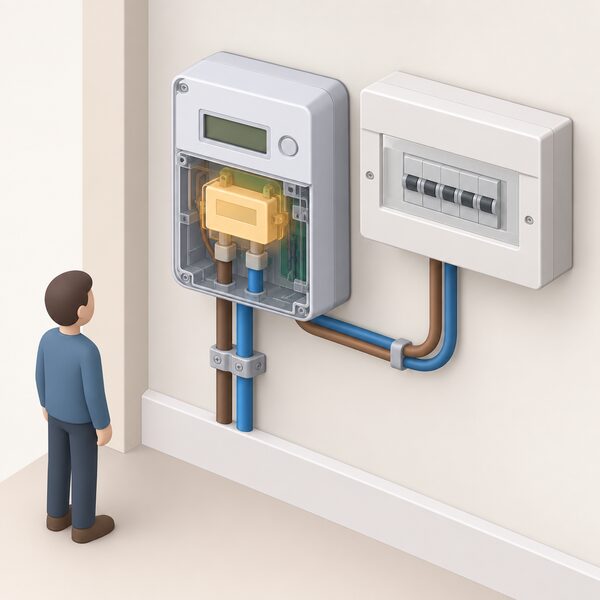
The certified measuring element is the part a household can rely on. Everything after it is a dependency. Readings travel over a network run by the Data Communications Company11, billing is performed by a supplier, and the equipment belongs to a rollout programme whose hardware will be replaced again before 203344. A meter records household consumption only and does not know when individual appliances are turned on or off, so appliance-level insight requires separate hardware.
For a household pursuing independence, the honest position is that a smart meter improves the quality of the billing record and enables time-of-use and export arrangements, while adding nothing to physical resilience: it does not generate, store or control energy. Where it matters is that half-hourly data is the evidence base for sizing solar, battery or heat pump and the gateway to time-of-use tariffs. Where it falls short, the remedy is procedural: report the fault, use the five working day standard, and escalate within the time limits. The broader trade-off is set out on smart meters and energy independence and in the pillar guide.
Sources54 cited
- Are smart meters accurate?, Smart Energy GB, 2026-03-16
- Energy UK explains smart meters, Energy UK, 2024-11-14
- Household Energy Efficiency Statistics detailed release, GOV.UK, 2023-03-30
- Tough new rules force suppliers to fix faulty smart meters, GOV.UK, 2026-03-10
- How accurate are smart meters?, Smart DCC, 2026
- Smart meter Guaranteed Standards of Performance draft impact assessment, Ofgem, 2025-08
- Smart meter problems and solutions, Which?, 2026
- What to expect from a dispute, Energy Ombudsman, 2026-09-19
- Frequently asked questions, Energy Ombudsman, 2026-09-19
- Smart facts, Smart Energy GB, 2026-03-16
- Smart meters vs home energy monitors, Smart Energy GB, 2026-08-17
- Response to Ofgem's smart guaranteed standards consultation, Citizens Advice, 2025-05-29
- Why smart meter customer service is falling short, Which?, 2024-09-23
- Energy Consumer Satisfaction Survey findings report, Ofgem, 2024
- 100Green customer service details, Citizens Advice, 2026
- ScottishPower customer service details, Citizens Advice, 2026
- Octopus Energy customer service details, Citizens Advice, 2026
- British Gas customer service details, Citizens Advice, 2026
- Average gas and electricity bills in the UK, Uswitch, 2026-08-26
- Get help with your smart meter, Ofgem, 2026-09-17
- Smart meters: your rights and expectations, GOV.UK, 2025-08-08
- Do smart meters cost more?, Smart Energy GB, 2026-03-16
- Gas and electricity meter reading, Uswitch, 2026-04-23
- How to understand your energy bill, Energy Saving Trust, 2024-11-08
- Troubleshooting smart meter issues, Smart Energy GB, 2026-04-01
- Citizens Advice helps with an energy billing issue every two minutes, Citizens Advice, 2024-11-29
- Energy Consumer Outcomes proposed implementation, Ofgem, 2026-06-23
- Struggling with energy bills, National Energy Action, 2026-05-06
- Energy bills support, British Gas Energy Trust, 2026-08-11
- Smart meter performance, Ofgem, 2026
- Smart meters not working, Smart Energy GB, 2026-03-16
- Supplier smart metering installation targets, Ofgem, 2026-09-17
- Supplier smart metering installation targets, Ofgem, 2026-09-17
- Final decision on smart meter Guaranteed Standards of Performance, Ofgem, 2026-01-30
- Supporting customers with non-communicating smart meters, Smart DCC, 2026
- Response to Ofgem consultation on improved guaranteed standards for smart meters, Consumer Scotland, 2025-05-12
- Smart meters advice, Centre for Sustainable Energy, 2025-05
- Smart meters, Energy Ombudsman, 2026-09-20
- Update on the rollout of smart meters, UK Parliament Public Accounts Committee, 2023-10-20
- Delayed smart meter programme fails to hit targets, UK Parliament Public Accounts Committee, 2023-10-20
- Smart meters, Welsh Government, 2026
- What is a smart meter?, Which?, 2026-04-07
- Do smart meters use 3G?, Smart DCC, 2024
- Smart meters explained, Uswitch, 2026-07-29
- Smart Metering 2025 Costs and Benefits Report, UK Parliament, 2025
- How to get a smart meter, Smart DCC, 2026
- Smart meters: your rights and expectations publication, Energy Ombudsman, 2026-09-20
- Smart meters must work for all consumers, End Fuel Poverty Coalition, 2025-10-22
- Worried about your energy bills, Energy Ombudsman, 2026-03-24
- How to complain about your electricity, gas or energy bill, Which?, 2026-07-30
- Energy Ombudsman H1 2026 data, Energy Ombudsman, 2026-08-24
- How we can help, Energy Ombudsman, 2026-09-19
- Creating a case with the Energy Ombudsman, Energy Ombudsman, 2026-09-20
- Raise a dispute, Energy Ombudsman, 2026-09-19
 Smart Meter Faults and FixesYour smart meter has stopped working.
 How a Smart Meter WorksHow a British smart meter measures gas and electricity, how the in-home display and the DCC's secure network fit together, what data leaves the house, what it costs, and where smart mode goes wrong.
 The Full Smart Meters GuideDo smart meters really save you money, and how do you use one to cut your bills?
 Report a Faulty MeterWhat to do when a meter over-records, stops recording or produces impossible readings: the evidence to gather, how to raise it with the supplier, the 5 working day and 8 week deadlines, and how the Energy Ombudsman handles meter disputes.
 Can a Smart Meter Be Hacked?Can someone break into your smart meter, see your personal details or switch off your power?
 Smart Meter Installation DayWhat happens during a smart meter fitting appointment: how long it takes, the supply interruption, the safety checks, the in-home display demonstration, who can book it, and what happens when gas and electricity come from different suppliers.