
In this answer
Short answer
The smart meter Guaranteed Standards of Performance are rule-based protections that set minimum service standards for energy suppliers, with automatic compensation when a supplier fails to meet them. The first three standards, covering installation timeliness, installation quality and issue resolution, came into force in February 20261. A supplier that does not tell a consumer how it plans to resolve a reported smart meter problem within five working days owes £403.
The standards are narrower than they first appear. Ofgem's final decision limits them to microbusiness customers with smart meters, excluding larger non-domestic customers and advanced meters, and to SMETS compliant meters set out in the Smart Energy Code1. Domestic consumers are covered by the same automatic payment mechanism, and the £40 figure is the standard payment, with no differing value proposed for non-domestic customers4.
For a household, the practical effect is a defined deadline and a defined sum rather than a negotiation. The standards do not make a home independent of the grid or of its supplier: they govern how quickly a supplier must act when something goes wrong with the meter that connects the home to the network. What follows sets out who is protected, what the deadlines are, how payment works, and where the scope stops.
What the Guaranteed Standards are and who they protect
The Guaranteed Standards of Performance are a consumer protection mechanism. They set out minimum performance standards that all energy suppliers must meet and, when they do not, automatic payments are issued to the affected consumers4. Ofgem frames the wider smart metering regime around consumer protections and the establishment of minimum service standards6.
The protections sit alongside the technical standards that make the metering system trustworthy. Smart meters are designed to meet national technical and security standards, using controlled access and secure data processes7. The data they carry is protected by a security process designed by GCHQ, the UK government's intelligence, security and cyber agency8. Those are separate from the service standards: one governs how the equipment is built and how data is handled, the other governs how quickly a supplier responds when the equipment or the installation goes wrong.
The government's own guidance, Smart meters: your rights and expectations, sets out the standards energy suppliers should follow at each stage of the customer's smart meter journey, from arranging an installation appointment to resolving any issues which might occur after installation9. That journey framing matters, because the standards are not confined to the meter itself. They reach the appointment, the installation visit and the follow-up.
Who is protected is the point where the standards narrow. The final decision limits the new Guaranteed Standards to microbusiness customers with smart meters, excluding larger non-domestic customers and advanced meters1. The rationale given is that applying the standards to microbusinesses is proportionate, while avoiding unnecessary complexity for larger businesses that typically have bespoke contractual protections and specialist metering requirements1. A domestic household is protected by the automatic payment mechanism; a microbusiness is protected by the same standards; a larger business is not.
The first three GSOPs: installation timeliness, quality and issue resolution
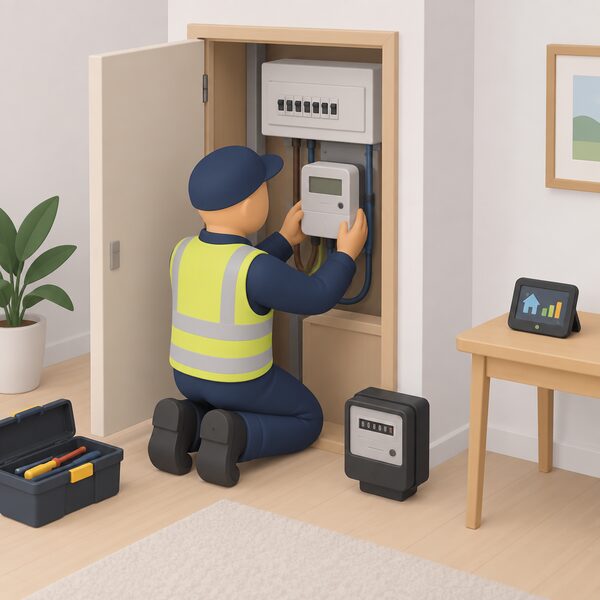
The first three new smart meter Guaranteed Standards of Performance cover smart meter installation timeliness, installation quality and issue resolution, and opened in February 20262. Each has its own scope, and the differences matter.
GSOP 1, on installation appointment availability, applies to first time smart meter installations only, meaning the installation of a smart meter in a premise where a smart meter is not already installed1. The consultation that preceded it was explicit that the standard was applicable to first time smart meter appointments only and did not apply to other types of installation appointments4. Consumer Scotland welcomed Ofgem's proposals for a six-week installation standard10, and the government's consultation document describes the requirement as one whereby suppliers must offer an installation appointment within six weeks on request or pay the consumer compensation11.
GSOP 2, on failed installations, is broader. It applies to all smart meter installation appointments, whether that be a first-time installation or the replacement of an existing smart meter, and it includes work by third-party engineers contracted through Meter Operators1. That inclusion is significant for a household, because the supplier remains the point of accountability even when the visit is carried out by someone else.
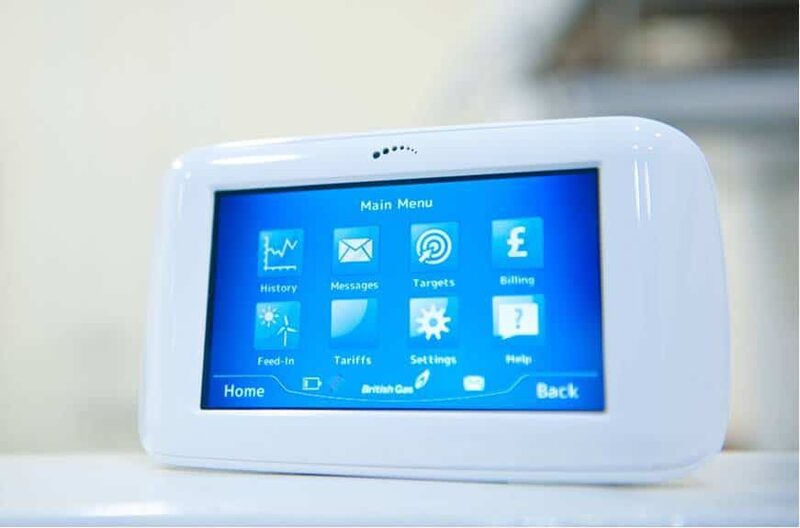
GSOP 3 covers issue resolution, and the statutory consultation confirms that consumers with issues with their in-home display are in scope of this standard4. The consultation also planned to insert other definitions relevant to the smart meter proposals, including Smart meter, IHD, First time smart meter appointment and Not operating as intended4.
| Standard | What it covers | Who it applies to |
|---|---|---|
| GSOP 1 | Installation appointment availability | First time smart meter installations only1 |
| GSOP 2 | Failed installations | All smart meter installation appointments, including replacements and Meter Operator work1 |
| GSOP 3 | Issue resolution | Includes consumers with in-home display issues4 |
Payments: £40 per breach, with no differing value for non-domestic customers
The payment level is £40. Ofgem's statutory consultation states that it will not propose a differing value to the standard payment of £404. The same figure appears in the Energy Consumer Outcomes implementation document, which describes the supplier GSOP as setting minimum standards of performance that all suppliers must meet for specific services or pay £40 automatic compensation per breach12. Ofgem's own consumer guidance repeats it: if a supplier does not meet the standard, it has to pay an extra £40 as part of the Supplier Guaranteed Standard of Performance13.
The £40 is not confined to the meter fault itself. Government announced that consumers are eligible for £40 in compensation if they face issues throughout the process of installing a smart meter, such as delayed or failed installations, following reforms brought forward by Ofgem14. Which? reports the same rule in consumer terms: if a supplier does not tell a consumer how it plans to resolve a reported smart meter problem within five working days, it owes £40 compensation under new rules from Ofgem3. Citizens Advice likewise records that a supplier will pay £40 compensation where an installation appointment standard is missed15.
The costs behind the payments were modelled before implementation. The draft impact assessment estimated £26m set up costs, annuitized to £5-6m annually, and £9m annual ongoing costs, with redress estimated at £117m5. Those are Ofgem's modelled figures for GB consumers and suppliers, not amounts any household receives.
Microbusinesses only: where the scope of the standards stops
The scope of the new standards is deliberately limited. Ofgem's final decision confirms that the Guaranteed Standards should only incorporate SMETS compliant meters, which are set out in the Smart Energy Code1. The statutory consultation had already set out a minded to position to amend the scope of each of the proposals, which would now be applicable to microbusinesses and SMETS meters only, excluding advanced meters and medium to larger non-domestic consumers4. Consumer Scotland's response to the consultation put the same question directly: do you agree with the smart meter Guaranteed Standards applying to smart meters and microbusinesses only10?
There is a precedent for the microbusiness limit in the existing non-domestic regime. The earlier consultation on the standards noted that the existing Guaranteed Standard on metering appointments only applies to micro-business consumers16. The new standards extend that logic to smart metering specifically.
Advanced meters sit outside. The final decision records that the drafting references the Electricity and Gas Acts, which could inadvertently include advanced metering, and that respondents requested the definition be updated to clarify the standards apply only to SMETS meters1. The Consumer Consent Solution has a comparable boundary: the decision was clear that the initial scope of the MMP would apply for domestic and small business Smart Meter data only, with scope to expand to cover non-domestic meters and advanced meters in future iterations17.
For a household, the boundary is mostly invisible. For a small business, it decides whether a missed appointment carries a payment. For a larger organisation, the protections come from the contract rather than the licence conditions.
The consultation that set the standards: four proposed new Guaranteed Standards
Ofgem opened the smart meter guaranteed standards consultation on 28 March 2025, seeking views on introducing smart meter guaranteed standards18. The same consultation proposed to introduce four specific new Guaranteed Standards16 and to introduce a set of new Guaranteed Standards for a range of smart metering-related issues18. The contact named on the consultation was Graeme Kelly18.
The statutory consultation that followed was handled by the smart metering team4. It set out the definitions that would be needed, including Smart meter, IHD, First time smart meter appointment and Not operating as intended4, and it confirmed that consumers with issues with their in-home display were in scope of the issue resolution standard4.
One proposed standard was drafted with explicit exclusions. The smart meter not operating in smart mode standard was to be out of scope where a smart meter is not operating in smart mode and the action of another party, other than the respective energy supplier, is required to provide a resolution, or the consumer has agreed the smart meter to not operate in smart mode, or there is no solution available from any party that will resolve the issue16. That exclusion recognises that some faults cannot be fixed by the supplier alone.
The wider policy framework consultation that followed has concluded19. The government's post-2025 smart metering policy framework consultation set out the direction for the rollout beyond the current targets, and the four-year smart metering Targets Framework, which commenced on 1 January 2022, sets energy suppliers individual minimum installation obligations6.
"We are seeking views on introducing smart meter guaranteed standards (GSOP)."
Review and what comes next for the standards
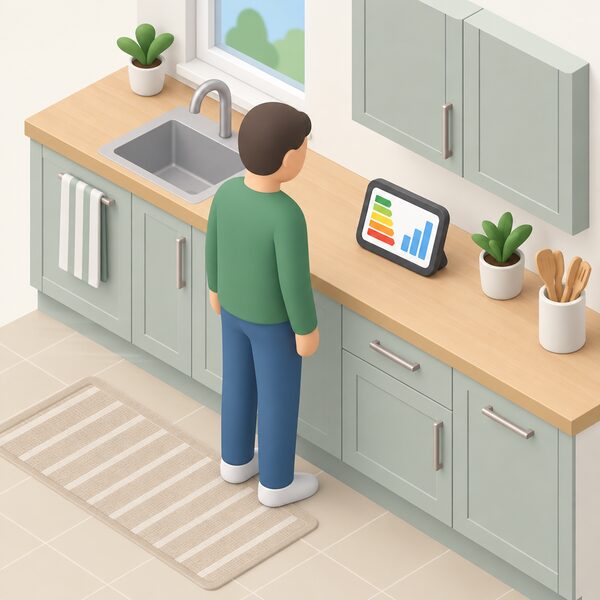
Ofgem intends to review the outcomes of these Guaranteed Standards in Q1 20275. That review is the mechanism by which the standards could be tightened, widened or left as they are, and it is the date a household or microbusiness should note if the scope question matters to them.
The standards sit inside a wider set of supplier obligations. Ofgem's smart metering installation targets page describes the regime in terms of consumer protections and the establishment of minimum service standards6. The Data Communications Company, which operates the national network the meters use, has published work on supporting customers to address non-communicating smart meters, noting that new smart meter Guaranteed Standards of Performance come into force in February 20262.
Northern Ireland sits outside the GB supplier licence regime, and its network operator publishes its own customer standards. NIE Networks lists compensation of £25 where a prepayment meter investigation deadline is missed20, £25 where a meter installation standard is not met20, and £50 or £125 for other premises where an agreed meter installation appointment is missed21. Those are separate from the Ofgem standards and are paid under the Northern Ireland arrangements.
For a household's energy independence, the standards change the terms of dependence rather than removing it. A smart meter still depends on the grid, on a supplier and on the national communications network. What the Guaranteed Standards add is a defined response time and an automatic payment when the supplier fails, which is a form of accountability rather than self-sufficiency. The limits are as firm as the benefits: the standards do not cover advanced meters, they do not extend to larger non-domestic customers, and the £40 is a fixed sum rather than a measure of the inconvenience caused.
Sources21 cited
- Final decision: smart meter Guaranteed Standards of Performance, Ofgem, 2026-01-30
- How we're working to support customers to address non-communicating smart meters, Smart DCC, 2026
- Smart meter problems and solutions, Which?, 2026
- Supplier Guaranteed Standards of Performance: Statutory Consultation, Ofgem, 2025-08-08
- Smart meter Guaranteed Standards of Performance: Draft Impact Assessment, Ofgem, 2025-08
- Supplier smart metering installation targets, Ofgem, 2026-09-20
- How do smart meters work, Smart Energy GB, 2026-08-27
- Smart meters advice, Centre for Sustainable Energy, 2025-05
- Smart meters: your rights and expectations, GOV.UK, 2025-08-08
- Response to Ofgem consultation on Supplier Guaranteed Standards of Performance, Consumer Scotland, 2025-10-10
- Smart metering policy framework post-2025: consultation document, GOV.UK, 2025
- Energy Consumer Outcomes: proposed implementation, Ofgem, 2026-06-23
- How to manage your energy supply, Ofgem, 2026
- Tough new rules force suppliers to fix faulty smart meters, GOV.UK, 2026-03-10
- Getting a smart meter installed, Citizens Advice, 2026-09-17
- Smart Meter Guaranteed Standards of Performance, Ofgem, 2025-03-28
- Consumer Consent Solution impact assessment (final), Ofgem, 2026-01
- Smart meter guaranteed standards: supplier Guaranteed Standards of Performance, Ofgem, 2025-03-28
- Smart metering policy framework post-2025, GOV.UK, 2026-03-10
- Customer standards, NIE Networks, 2026-09-20
- Customer standards: claims and complaints, NIE Networks, 2026-09-19
 Smart Meter Faults and FixesYour smart meter has stopped working.
 Why You Cannot Get a Smart MeterWhy can some homes not have a smart meter fitted, and what counts as a good enough reason?
 Smart Meter InstallationCan your supplier make you have a smart meter, and how long should you wait for an appointment?
 Smart Meter RulesCan your supplier make you have a smart meter?
 Meter Standards and AccuracyHow UK smart meters are certified for accuracy, how their readings become a bill, what happens when a meter stops communicating, and how a metering or billing dispute is escalated to a supplier and then to the Energy Ombudsman.
 Smart Meter Installation DayWhat happens during a smart meter fitting appointment: how long it takes, the supply interruption, the safety checks, the in-home display demonstration, who can book it, and what happens when gas and electricity come from different suppliers.