
In this answer
Short answer
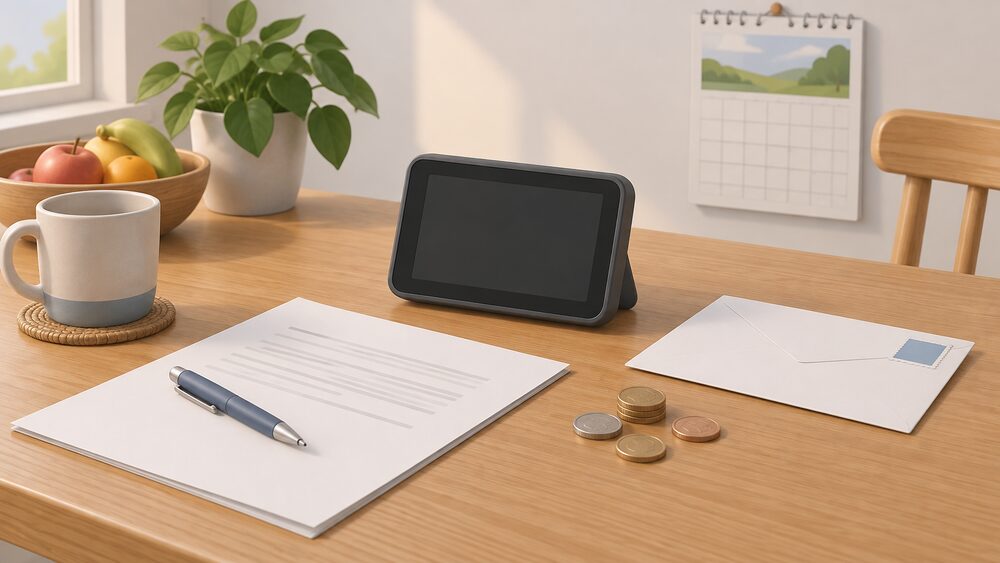
The short answer is 90 days. Under rules announced in March 2026, suppliers have no more than 90 days to repair faulty smart meters, and the same 90 day limit applies where a meter is not operating in smart mode because of an issue within the supplier's control to resolve1. Before that clock runs out, a separate and much shorter deadline applies: once a problem is reported, the supplier must tell the customer how it plans to resolve it within five working days, or £40 compensation is owed2.
Those two clocks are the practical core of the smart meter Guaranteed Standards of Performance. The first is about the physical repair or the restoration of smart mode. The second is about communication, and it bites far sooner. A household that reports a fault and hears nothing for a fortnight is already past the point at which compensation is triggered.
What follows sets out what the standards require, where Ofgem's role begins and ends, what happens to payments while a meter is faulty, the planned review, and how to raise a complaint with evidence that helps.
What the Guaranteed Standards require of your supplier
The Guaranteed Standards of Performance for smart metering are a set of licence-backed obligations covering the customer journey. On installation, suppliers must offer an appointment within six weeks of a request or pay the consumer compensation6. On faults, the supplier must complete an initial assessment, take an appropriate action and offer to update the consumer within five working days3. Where a meter has dropped out of smart mode, suppliers must take all reasonable steps to get it back working in smart mode no later than 90 days from the date they are first aware7.
The government's own guidance, Smart meters: your rights and expectations, sets out the standards energy suppliers should follow at each stage of the customer's smart meter journey, from arranging an installation appointment to resolving any issues which might occur after installation8. That framing matters: the obligations do not stop at the point the engineer leaves. They run through the life of the meter.
Suppliers are already required to take all reasonable steps to fix smart meters that are not working as they should, and the 90 day repair limit formalises what "reasonable" means in practice1. The Welsh Government's consumer guidance is blunter still: if your smart meter stops working, contact your supplier, because they are responsible for maintenance and will fix or replace your meter as needed9.
"suppliers will have no more than 90 days to repair faulty smart meters"
The standards also cover the meter's supporting equipment. If a smart meter monitor is less than 12 months old and has broken or is not working as it should be, the supplier should fix or replace it free of charge under Ofgem rules, though a charge may apply if the household damaged it2.
Ofgem's role: monitoring suppliers, not resolving individual disputes

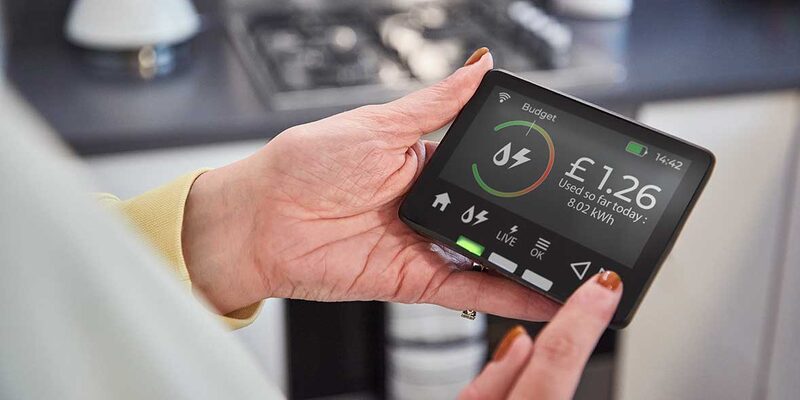
A common misunderstanding is that Ofgem will take up an individual meter fault. It will not. Ofgem monitors energy suppliers and network operators closely to make sure they meet the rules set out in licences, regulations and law, provide good customer service, and reply quickly to customers4. That is a supervisory function, not a casework one.
Ofgem's own consumer pages are explicit about the limit. In the context of the Great British Insulation Scheme, Ofgem states that its ability to help you resolve a complaint is limited, because it sets targets for obligated suppliers, ensures compliance and monitors progress, but has no oversight of contractual arrangements10. The same division of labour applies to smart metering.
What Ofgem does do is act where a pattern of failure emerges. It ran compliance engagement with Great Britain's six largest suppliers to review in greater detail why some smart meters are not operating in smart mode and how this may be addressed7. It also publishes supplier performance reporting, which helps it identify suppliers that are failing to provide an acceptable service or have insufficient financial resilience11. Ofgem administers 12 schemes on behalf of the UK government and the devolved administrations, and its formal enforcement powers include opening investigations, making orders and imposing penalties11.
The practical consequence for a household is a clear sequence. The supplier is the first port of call, and the only body that can actually fix the meter. Ofgem sits above that, watching whether suppliers meet the rules in aggregate. The Ofgem page sets out the regulator's full remit, and the energy complaints and redress page covers the escalation route in detail.
A faulty meter and your payments: agreeing a plan you can afford
A faulty meter does not suspend the bill. What it does trigger is a communication duty. Since 23 February 2026, if a problem with a smart meter is reported, the supplier must tell the customer how it plans to resolve it within five working days, and if it does not, it owes £40 compensation under new rules from Ofgem2. The same five working day resolution plan deadline appears in independent guidance on the new compensation standards12.
Where the fault is a failed installation due to something within the supplier's control, that is a compensation trigger condition in its own right12. So is a supplier that cannot offer an installation appointment within six weeks: Consumer Scotland supported consumers receiving compensation every six weeks should a supplier not be able to offer an appointment in that timeframe13.
On affordability specifically, the standards do not create a payment holiday. What they create is a documented plan and a compensation entitlement if the plan is late. A household that cannot afford payments while a meter is faulty is dealing with a separate set of supplier licence obligations, and the prepayment and vulnerable customer rules page covers those protections.
The planned review of the smart meter Guaranteed Standards
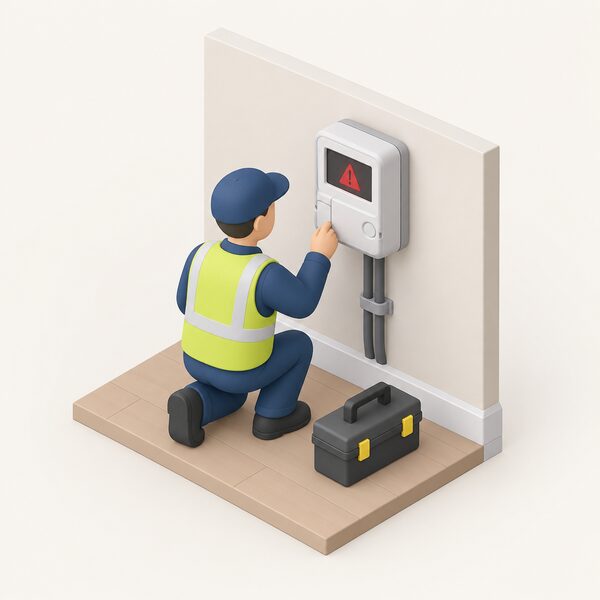
The standards are new, and Ofgem has already scheduled a look back at them. Ofgem intends to review the outcomes of these Guaranteed Standards in Q1 20275. That review date sits roughly a year after the intended implementation, which Ofgem aimed at January 20263.
The scope of the review is likely to be shaped by how the standards perform in their first year. The draft impact assessment behind them noted that smart meters had become the leading cause of consumer complaints, with the figure rising to 30%5. That is the pressure the standards were designed to relieve.
There is also a live question about enforcement transparency. Citizens Advice has argued that Ofgem should publicly report on energy suppliers' compliance with the smart meter Guaranteed Standards, and that the standards should require suppliers to make automatic compensation payments to consumers with a smart meter not operating in smart mode14. Ofgem consulted on automatic compensation for smart metering consumers where their energy supplier fails to meet certain expectations9. Whether that becomes a firm requirement is a matter for the review and any subsequent decision.
The wider policy direction is set out in the smart metering policy framework post 2025 consultation, which proposed requiring suppliers to take all reasonable steps to ensure smart meters in traditional mode are back working in smart mode7. The Clean Flexibility Roadmap repeats the 90 day recovery expectation, requiring that meters are back working in smart mode as soon as possible and no later than 90 days15.
| Standard | Deadline | Consequence of failure |
|---|---|---|
| Installation appointment availability | 6 weeks from request | Compensation owed6 |
| Investigating operational issues | 5 working days for assessment and update | Compensation owed3 |
| Resolution plan after a reported problem | 5 working days | £40 compensation2 |
| Smart mode recovery | 90 days from supplier awareness | Enforcement and review7 |
| Faulty meter repair | 90 days | Enforcement and review1 |
How to raise a complaint and what evidence helps
The statutory backstop is eight weeks. Your energy supplier must try to fix any problems you reported within 8 weeks and resolve the complaint4. If that window closes without resolution, the complaint can go to the Energy Ombudsman. Ofgem's consumer guidance directs complaints to the supplier first and then to the ombudsman, and the energy complaints and redress page sets out how the ombudsman scheme works.
Evidence that helps is evidence with dates. The five working day resolution plan deadline runs from the report, so a record of when the fault was reported is the single most useful item. A log of readings, photographs of the meter and in-home display, and any correspondence about the fault all support the timeline. Where a supplier has ceased trading, the Energy Ombudsman's advice is to record a meter reading and not switch suppliers before the transfer is completed16.
For suspected problems with the meter itself, the supplier carries the investigative duty: if a consumer suspects an issue with their smart meter, or the supplier identifies an issue, they should promptly investigate it, resolve it themselves or with third parties, and keep the consumer informed9. Local authority trading standards services provide consumer advice on problems with services where a supplier dispute needs an outside view17.
Where the limits of the regime show
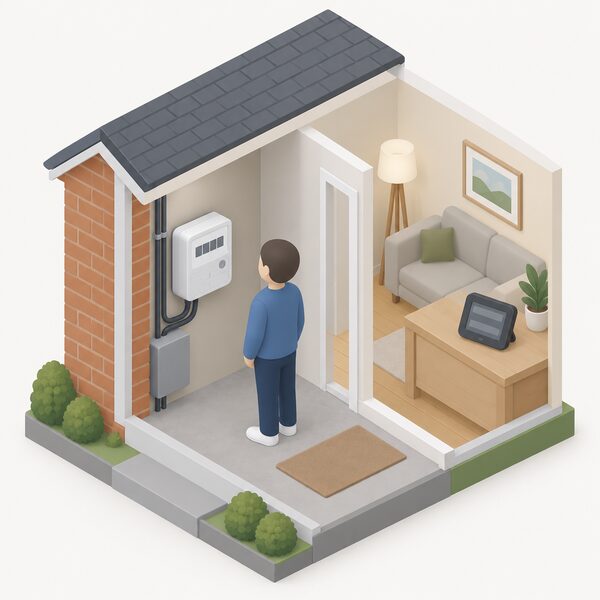
Three limits are worth stating plainly. First, the 90 day repair limit is a maximum, not a target, and it runs from the point the supplier is aware of the fault, which is why reporting promptly matters. Second, Ofgem does not resolve individual cases; its leverage is supervisory and enforcement-based, and it acts on patterns rather than single complaints. Third, the compensation figures are modest relative to the disruption a faulty meter causes, and the automatic compensation proposal that would widen them is still at consultation stage14.
For a household's energy independence, the smart meter is the metering layer, not the supply. A meter stuck in traditional mode still measures consumption, but it loses the functions that make the home's energy visible and controllable: remote readings, live display data and the tariff signals that support flexible use. The dependence that remains is on the supplier to restore smart mode, and on Ofgem to police whether suppliers do so within the 90 day limit. The regulation and energy independence page sets out how far the rules let a household go on its own.
Sources17 cited
- Tough new rules force suppliers to fix faulty smart meters, GOV.UK, 10 March 2026
- Smart meter problems and solutions, Which?, 2026
- Smart Meter Guaranteed Standard Statutory Consultation, Ofgem, 8 August 2025
- Complain about your energy supplier or network operator, Ofgem, 2026
- Smart meter Guaranteed Standards of Performance Draft Impact Assessment, Ofgem, August 2025
- Smart metering policy framework post 2025 consultation document, DESNZ, 2025
- Smart metering policy framework post 2025, GOV.UK, 8 August 2025
- Smart meters: your rights and expectations, GOV.UK, 8 August 2025
- Smart meters, Welsh Government, 2026
- Great British Insulation Scheme: homeowners and tenants, Ofgem, 17 September 2026
- Supplier Performance Report July to December 2023, Ofgem, 2024
- Top energy company issues and how to solve them, Which?, 3 March 2026
- Response to Ofgem consultation on improved Guaranteed Standards for smart meters, Consumer Scotland, 12 May 2025
- Fully operational: maximising consumer protection and transparency in smart metering, Citizens Advice, 27 August 2026
- Clean Flexibility Roadmap July 2026 update, GOV.UK, 17 September 2026
- Advice for consumers when suppliers cease trading, Energy Ombudsman, 27 September 2021
- Problems with services, Isle of Anglesey County Council, 2026
 Smart Meter Faults and FixesYour smart meter has stopped working.
 Smart Meter RulesCan your supplier make you have a smart meter?
 Why You Cannot Get a Smart MeterWhy can some homes not have a smart meter fitted, and what counts as a good enough reason?
 Smart Meter InstallationCan your supplier make you have a smart meter, and how long should you wait for an appointment?
 Report a Faulty MeterWhat to do when a meter over-records, stops recording or produces impossible readings: the evidence to gather, how to raise it with the supplier, the 5 working day and 8 week deadlines, and how the Energy Ombudsman handles meter disputes.
 Meter Standards and AccuracyHow UK smart meters are certified for accuracy, how their readings become a bill, what happens when a meter stops communicating, and how a metering or billing dispute is escalated to a supplier and then to the Energy Ombudsman.