
In this guide
A meter that has stopped recording, that no longer sends readings, or that produces figures no household could plausibly have used is reported to the energy supplier, not to the network operator and not to Ofgem. Ofgem lists a faulty meter among the problems that go to the supplier in the first instance, alongside late, incorrect or missing bills, back billing and being overcharged1. Where a supply has been cut off because of a faulty meter, Ofgem again directs the household to the supplier rather than to the power cut number2. For smart meters, the supplier is explicitly responsible for maintenance and will fix or replace the meter as needed3.
Two deadlines govern what happens next. Under the guaranteed standards for investigating smart meter operational issues, the supplier must complete an initial assessment, take an appropriate action and offer to update the consumer within 5 working days4. Separately, the supplier must try to fix any problem reported within 8 weeks and resolve the complaint5. If it does not, or if it issues a deadlock letter sooner saying the problem cannot be fixed, the dispute can be taken to the Energy Ombudsman5. The Ombudsman can require a supplier to put things right, with financial awards of up to £10,000 for domestic energy disputes, though its stated average award is around £506.
Throughout, the household's protection rests on its own record. A meter dispute is won on dated readings, photographs and a written complaint trail, because the Ombudsman requires sufficient evidence to support the case, including the date the complaint was raised with the supplier8.
What a faulty or inaccurate meter looks like
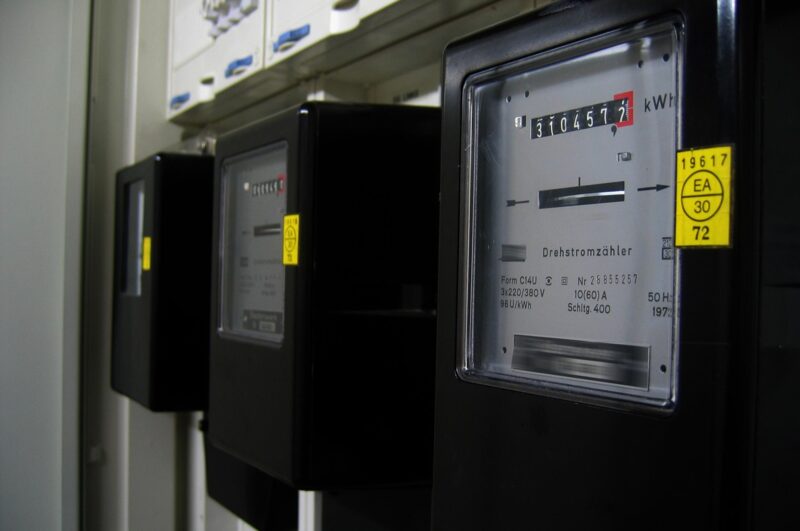
There is no single symptom. The clearest is a register that does not move while heavy appliances run, or one that advances when almost nothing is switched on. For smart meters, Ofgem describes two distinct failures: the meter "may stop recording the energy you use, or may no longer send readings to your supplier"10. These are not the same fault and they do not have the same consequence. A meter that has stopped recording will under-record, and the missing consumption will usually be recovered later. A meter that records correctly but has lost its communications link simply reverts to manual reading.
A third pattern is subtler and more common: the bill stops reflecting the meter at all. Ofgem's proposed billing accuracy monitoring describes testing regular bills to ensure actual meter readings match real consumption and that charges are applied correctly, and is explicit that estimated meter reads are not classed as accurate where they differ from actual consumption11. A run of estimated bills on a property that has a working meter is therefore a billing fault in its own right, whatever the meter is doing.
Where a meter feeds a generation payment rather than a supply, the consequences are sharper. The Energy Ombudsman states that Feed-in Tariff payments stop from the date of the last accurate meter reading12, so a generation meter fault stops income rather than distorting a bill. Under the Domestic Renewable Heat Incentive metering rules, a broken meter had to be notified to Ofgem within 28 days of discovering the fault, and failure to keep meters in good working order or to notify was treated as non-compliance, which could lead to suspension, loss of payments or revocation of accreditation13. Scheme meters carry duties that ordinary supply meters do not.
Smart meters: what they do when they work properly
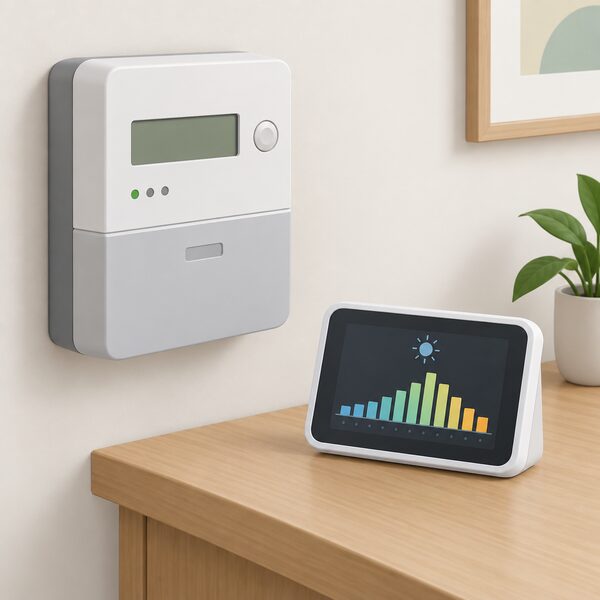
Knowing the normal behaviour makes the abnormal obvious. A smart meter automatically sends electricity and gas meter readings to the supplier10, using a secure network, with nearly real-time updates for electricity3. The Smart DCC describes automatic readings arriving at the supplier monthly, weekly, daily, or even half-hourly14. Government guidance describes energy use being recorded automatically in half-hour periods, enabling billing based on actual rather than estimated usage15. The in-home display shows how much energy is being used during the day16.
The data itself is used to bill for the energy used, to offer new products and services such as new tariffs where permission has been given, and to help make the energy system more efficient by recording demand more accurately10. Ofgem lists the benefits of a meter operating in smart mode as real-time information on usage, more accurate bills, and access to more flexible tariffs, including dual-rate tariffs17.
The crucial point for anyone worried about a fault is that losing smart mode is not the same as losing accuracy. Ofgem is direct: a smart meter that is not operating in smart mode "will still record your energy usage accurately", and manual readings can still be taken17. That distinction decides whether the complaint is about measurement, which affects what is owed, or about communication, which affects convenience and tariff access.
How a meter fault shows up in the billing
Most households discover a meter problem through the bill rather than the meter. The Energy Ombudsman's published case of a missed meter exchange describes an account that for the previous six months had billed for electricity using estimated readings only, with a meter reader having taken a reading of 34518 from the meter eight months earlier20. The pattern is instructive: a physical reading existed, the billing had drifted away from it, and nobody reconciled the two until the consumer complained.
Signs worth treating as a billing fault rather than a seasonal swing include bills marked as estimated over consecutive periods, a catch-up charge appearing after a long estimated run, or a smart meter account that reverts to estimates without explanation. Ofgem's starting instruction for any billing problem is the same as for a meter problem: contact the energy supplier21.
| What is happening | What it usually indicates |
|---|---|
| Register does not advance under load | Meter may have stopped recording10 |
| Meter reads correctly but supplier bills on estimates | Communications loss, not a measurement fault17 |
| Estimated bills differ from actual consumption | Not classed as accurate billing11 |
| Generation meter stopped | FIT payments stop from the last accurate reading12 |
Related pages cover the mechanics: how to take a meter reading, how to get a reading from a smart meter and how to submit meter readings to a supplier.
First step: report the problem to your supplier
Every route into redress begins with the supplier. Ofgem lists a faulty meter among the issues to raise with the supplier22, and the Energy Ombudsman states plainly that the first thing to do is log a dispute with the supplier23. Its complaints service describes the same sequence: speak to the supplier first to raise a complaint, and if they cannot help, the Ombudsman aims to resolve the dispute fairly and impartially24. For heat network customers, the Ombudsman likewise expects the supplier to be contacted and asked to fix the situation before a complaint is brought25.
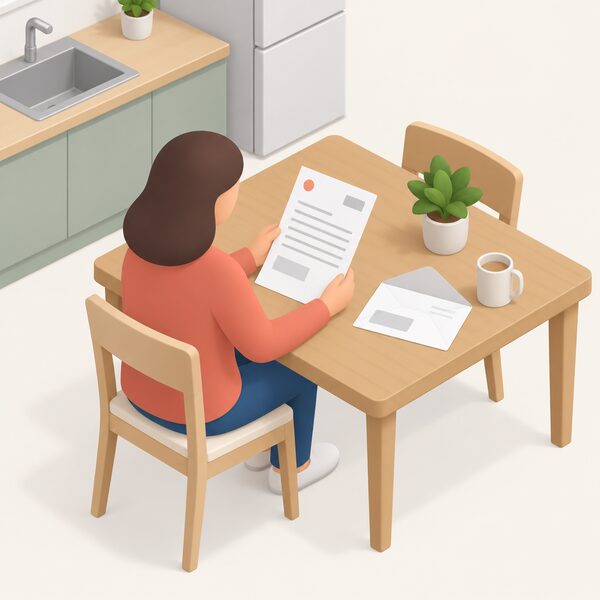
A report is most useful when it fixes the facts in writing on the day it is made. That means recording the date of the complaint, the meter serial number and the reading on the meter face, a description of the symptom in the supplier's own categories (stopped recording, not sending readings, estimated billing), and the reference number the supplier gives. The date matters beyond tidiness: the eight week clock runs from the date the complaint was raised with the supplier5, and the Ombudsman asks for that date as part of its evidence requirement8.
How to complain about an energy supplier and escalate it sets out the wider complaints route, and who to call lists the contacts for each type of energy problem.
Taking manual readings while the meter misbehaves
While a fault is open, the household's own readings are the only independent record of consumption. Ofgem's advice in the different context of a supplier failure applies equally here: take a meter reading as soon as you can, and keep a record of it to make sure you are billed correctly18. A meter out of smart mode can still be read by hand17, and for households without a smart meter the supplier should still send an engineer to read the meter, usually a couple of times a year26.
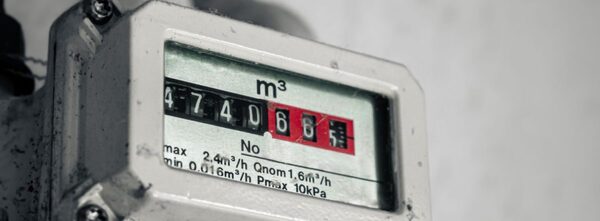
In practice a useful log has four columns: date, time, register identifier where there is more than one, and the figure as displayed including any leading zeros. Photographing the face on the same day, with the serial number visible, anchors each entry. Where readings are taken over a short period covering known usage, the log shows whether the register is advancing at a plausible rate or not moving at all.
Gas figures need a conversion before they can be compared with a bill in kilowatt hours; converting gas meter units to kWh covers that, and how to read a gas meter and how to read an electricity meter cover the registers themselves. The supply numbers that identify the meter point are covered in finding your MPAN and MPRN.
Prepayment meters: topping up when the smart functions fail
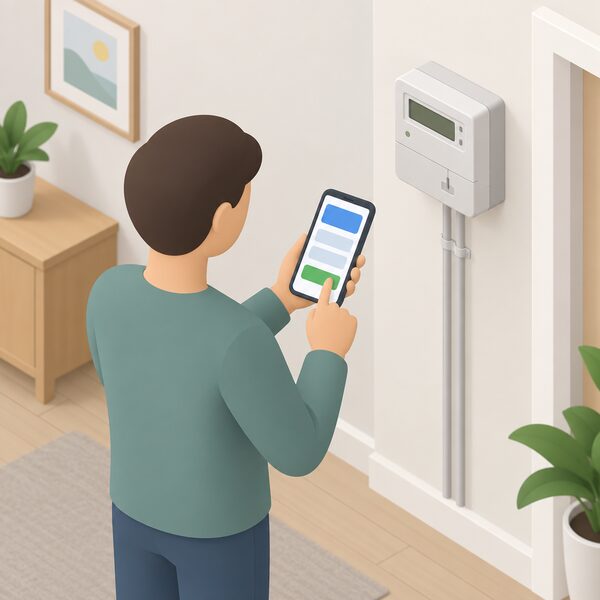
A fault on a prepayment meter is more urgent than one on a credit meter, because the consequence is immediate. Ofgem states that once credit runs out, no energy can be used until the meter is topped up again27. A smart prepayment meter that has lost its communications link may not accept remote top-ups in the usual way, and the household needs an alternative route before the credit runs down.
Ofgem states that with a smart prepayment meter you may be able to top up online or using the supplier's mobile app27. Which routes are available depends on the supplier and the meter, so the supplier is the only reliable source on what will work for a particular installation while a fault is open. The dependence is worth naming: a smart prepayment household relies on a supplier's app, a payment network and a communications link, any of which can fail independently of the meter itself.
Ofgem also confirms that where a household is unhappy with how a supplier has handled a complaint about prepayment meter installation, the Energy Ombudsman can be contacted28. How to top up a prepayment meter and use emergency credit covers the mechanics, and how much emergency credit covers the buffer available.
What happens after you report: the 5 working day and 8 week deadlines
Two separate timescales apply. Ofgem's final decision on smart meter guaranteed standards sets out that for investigating smart meter operational issues the energy supplier must complete an initial assessment, take an appropriate action and offer to update the consumer within 5 working days4. The statutory consultation that preceded it described the same requirement4. That is a response standard, not a repair standard: it obliges the supplier to look at the problem and act, not to have the meter working by day five.
The second is the complaint deadline. Ofgem states that the supplier must try to fix any problems reported within 8 weeks and resolve the complaint5. This runs from the date the complaint was raised, which is why that date is recorded and why the Ombudsman asks for it8.
Where the supplier concludes it cannot resolve the matter, it can issue a deadlock letter, and that shortens the route rather than ending it. The Ombudsman describes suppliers as having 8 weeks to resolve an issue "unless they send you a deadlock letter enabling you to come to us sooner"29.
| Stage | Obligation | Source |
|---|---|---|
| Smart meter operational issue reported | Initial assessment, appropriate action, offer to update, within 5 working days | 4 |
| Complaint raised | Supplier must try to fix and resolve within 8 weeks | 5 |
| Supplier concludes it cannot resolve | Deadlock letter allows earlier escalation | 29 |
| Escalation to Ombudsman | Decision within 6 weeks | 1 |
One caveat on continuity: if a supplier fails while a case is open, Ofgem states that the Energy Ombudsman will contact the household to discuss next steps18.
Escalating to the Energy Ombudsman
Ofgem sets out four triggers for complaining to the Energy Ombudsman: the reported problem is not fixed within 8 weeks, the household and the energy company cannot agree how to fix it, a deadlock letter is received stating the problem cannot be fixed or that the company believes there is no more it can do, or the household is not happy with the decision received5. Trading standards guidance in Wales gives the same test: if the complaint is not resolved in eight weeks, or a deadlock letter is received, the Energy Ombudsman can be contacted19.
The Ombudsman's own eligibility wording across its dispute pages is consistent: a deadlock letter received, or eight weeks without the complaint being resolved8. Its FAQ puts it as "if after 8 weeks your issue is still unresolved, we can then investigate"9. Eight weeks is also the escalation point used for Feed-in Tariff and Smart Export Guarantee complaints and for heat networks12.
The service is free to the consumer where the complaint has been raised with the supplier first and either eight weeks have passed or a deadlock letter has been issued31. Complaints are accepted from both domestic and small business consumers in the energy sector7. Disputes are registered by searching for the name of the energy supplier, and energy complaints can be made by telephone on 0330 440 162432. Heat network callers are directed to press option 332. What is a deadlock letter covers that document in more detail.
What the Ombudsman can and cannot do
The Ombudsman investigates disputes between consumers and energy suppliers where the consumer remains dissatisfied with how the company handled the dispute33. Where a mistake has been made or a household has been treated unfairly, it can require the supplier to put things right23. Outcomes include practical action such as crediting or cancelling an account or changing a tariff, an apology, a financial award, or a combination, and it may make recommendations to prevent the issue recurring6.
Financial awards run up to £10,000 for domestic energy disputes and up to £20,000 for small business disputes, for both energy suppliers and energy networks, and up to £10,000 for energy brokers6. The average award is around £507. Awards are based on the cost of putting things right, such as ensuring the household has been charged accurately, clearing unfair charges or fixing faults6. Where a supplier has failed to make a standard compensation payment, the Ombudsman states it will make an award that ensures the consumer is compensated in line with the regulations.
"However, we can't: - Punish companies - Dictate how companies operate - Issue fines"
That limitation is the honest boundary of the remedy. A household that wants a supplier penalised is in the wrong forum; the Ombudsman compensates and corrects. Its published one millionth case illustrates the scale of a typical corrective package: the supplier was required to reimburse £240 for emergency call-out fees, apply a £350 goodwill credit and provide a formal written apology34.
Its remit has been widening. From 1 April 2025 it can help consumers and small businesses resolve heat network disputes, and from 8 January 2026 it can handle disputes for a number of flexibility service providers35. It can also review disputes with network operators where there is a loss of service or a problem with a connection or repair36, and with Green Deal providers where something goes wrong with a Green Deal plan35. It can consider complaints about EV charging at a consumer's home but not about charging away from the home37. It is approved by Ofgem, which ensures it has the requirements to operate its schemes while remaining fully independent and impartial37.
Change is signalled. In June 2026 the government stated the Ombudsman will be empowered to fine companies that do not comply with its rulings, with new measures set to clarify the route for consumers to go through the courts as a last resort38, and Parliament heard of the ability to issue a penalty fee that will end up as compensation for consumers, to enforce decisions and hold suppliers to account. Those powers are proposed rather than in force at the date of this page. The Ombudsman has itself noted that too many consumers who could use the service either cannot or choose not to, including because they are unaware of who the Ombudsman is or are daunted by the process37. What resolution to expect from the Energy Ombudsman goes further into outcomes.
Evidence to gather and how to submit the case
The Ombudsman's eligibility checklist is short and it is the structure of a good submission: the supplier name must match the bill, the complaint must already have been raised with that supplier, a deadlock letter must have been received or eight weeks passed, and the complainant must have sufficient evidence to support the case, including the date the complaint was raised8.
A meter case is built from:
- Dated photographs of the meter face showing the register and the meter serial number
- A log of manual readings covering the disputed period, with dates and times
- Copies of every bill and statement across the period, marked estimated or actual
- The written complaint, the date it was raised and the reference number given
- The supplier's replies, including any deadlock letter
- Any engineer visit reports or exchange paperwork
Order matters as much as volume. A chronology that runs from the first symptom to the last supplier response, with each document dated, lets the investigation compare what the meter recorded against what was billed. Once evidence is in from both sides, the Ombudsman states that most disputes are resolved within six weeks of receiving it6, and Ofgem states it will inform the complainant of its decision within six weeks1. The Ombudsman will ask for information and evidence, review the evidence from both the household and the energy company, and give the energy company a set of actions to resolve the problem1.
The independence point is worth stating plainly. A household with a meter fault depends on the supplier to diagnose it, on the supplier's engineer to exchange it, on a communications network it does not control, and on a dispute service that can compensate but cannot fine. The one part of that chain a household does control is the record: a reading taken and photographed on a known date, which is the only figure in the dispute that does not come from the other side. Moving or replacing a meter covers what an exchange involves, and the wider home energy how-to guide sets meter problems alongside switching, EPCs and power cuts.
Sources38 cited
- Complain about your energy supplier or network operator, Ofgem, 2026
- Plan for a power cut, Ofgem, 2026
- Smart meters, Welsh Government, 2026
- Final decision: smart meter guaranteed standards of performance, Ofgem, 30 January 2026
- Complain about your energy supplier, Ofgem, 2026
- What to expect, Energy Ombudsman, 19 September 2026
- We may be able to help resolve your energy dispute, Energy Ombudsman, 20 September 2026
- Raise a dispute: eligibility checklist, Energy Ombudsman, 19 September 2026
- Energy Ombudsman FAQs, Energy Ombudsman, 19 September 2026
- Get help with your smart meter, Ofgem, 17 September 2026
- Energy consumer outcomes: proposed implementation, Ofgem, 23 June 2026
- Feed-in Tariffs, Energy Ombudsman, 20 September 2026
- Domestic RHI guide to metering, Ofgem, 2026
- How to get a smart meter, Smart DCC, 2026
- Smart meters: your rights and expectations, GOV.UK, 8 August 2025
- Getting a smart meter, Ofgem, 2026
- Smart meter performance, Ofgem, 2026
- What happens if your energy supplier goes out of business, Ofgem, 2026
- Problems with services: energy, Isle of Anglesey County Council Trading Standards, October 2025
- Case study: missed meter exchange leads to incorrect estimated billing, Energy Ombudsman, 20 September 2026
- Understand your electricity and gas bills, Ofgem, 2026
- Complain about your energy supplier or network operator, Ofgem, 2026
- Understanding your rights, Energy Ombudsman, 20 September 2026
- Facilitated complaints resolution, Energy Ombudsman, 20 September 2026
- Heat networks affected by the Energy Prices Act 2022, Energy Ombudsman, 20 September 2026
- How to understand your electricity and gas bills, Energy Ombudsman, 24 April 2025
- Prepayment meters: consumer guidance, Ofgem, 2026
- Prepayment meter installation without household permission, Ofgem, 2026
- How we can help: energy suppliers, Energy Ombudsman, 20 September 2026
- Worried about your energy bills, Energy Ombudsman, 24 March 2026
- Raise a dispute, Energy Ombudsman, 19 September 2026
- One million consumers helped by Energy Ombudsman, Energy Ombudsman, 7 July 2026
- Biennial assessment of Ombudsman Services under the ADR Regulations, Ofgem, 26 July 2024
- How we can help, Energy Ombudsman, 19 September 2026
- How we can help: network operators, Energy Ombudsman, 20 September 2026
- Response to Ofgem call for evidence, Energy Ombudsman, 28 February 2025
- Greater protections to restore families' trust in home upgrades, GOV.UK, 17 June 2026
- Energy market consumer protection, Hansard, 17 June 2026
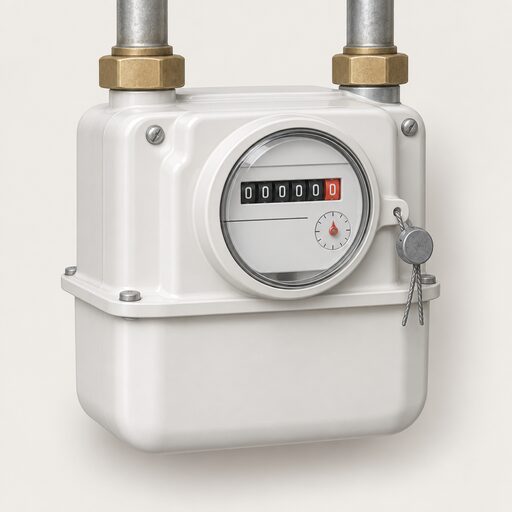 Meter Standards and AccuracyHow UK smart meters are certified for accuracy, how their readings become a bill, what happens when a meter stops communicating, and how a metering or billing dispute is escalated to a supplier and then to the Energy Ombudsman.
 Complaining About a SupplierHow do you complain about your energy supplier, and how long should it take?
 Smart Meter Faults and FixesYour smart meter has stopped working.
 Submit Meter ReadingsThe routes for sending readings, by app, online account, phone and automated line, and the timing that gets them onto the right bill.
 Complain About Energy SupplierThe order of a complaint: the supplier's own procedure, the eight-week point or deadlock, and referral to the Energy Ombudsman in Great Britain or the Consumer Council in Northern Ireland.
 Take Control of Your EnergyHow do you read your own energy use and keep hold of your meter readings?