

In this answer
Short answer
Emergency credit on a prepayment meter is a small buffer that keeps the supply running when the balance runs out. Most suppliers provide around £10, and the National Energy Action guidance puts the figure at £5 on both electricity and gas meters1. The amount is not fixed nationally: it depends on the supplier, the fuel and the meter model, and it is repaid from the next top-up rather than given away.
The mechanism is the same everywhere. A prepayment meter lets a household pay for gas or electricity in advance rather than after use, and emergency credit is the overdraft that covers the gap between running out and getting to a shop3. It is limited, it is reclaimed automatically, and standing charges continue to accrue while it is being used.
How much you can get: £5, £10 or more depending on your meter and supplier
There is no single national figure for emergency credit. Confused.com's guidance states that most suppliers provide emergency credit of around £10 in case a household is unable to top up for any reason, and Citizens Advice Cymru gives the same approximate figure, describing emergency credit of about £10 as the usual amount1. National Energy Action, by contrast, describes a £5 emergency credit on both electricity and gas meters2. The two figures are not contradictory so much as different points on the same range: £5 is the traditional meter figure, £10 the more common modern one.
Supplier practice varies within that range. E.ON Next gives £10 per fuel for most customers, with £5 on some electricity meters, and has been updating emergency credit for electricity from £5 to £10, starting with the most vulnerable customers first4. That update is the clearest signal of direction: the trend is upward, but it is being applied in stages rather than to every meter at once.
| Supplier or source | Emergency credit | Applies to |
|---|---|---|
| Most suppliers (Confused.com) | around £10 | Gas and electricity1 |
| National Energy Action | £5 | Electricity and gas meters2 |
| E.ON Next | £10 per fuel | Most customers4 |
| E.ON Next | £5 | Some electricity meters4 |
| Citizens Advice Cymru | about £10 | Prepayment meters7 |
One separate figure is worth keeping distinct from emergency credit. Where a supplier installs a prepayment meter without permission, it must give the household £30 credit once the meter is installed or the existing meter is remotely switched to prepayment mode8. That is a statutory credit on installation, not the emergency credit buffer, and it does not change the amount available when the balance later runs low.
For a household's energy independence, emergency credit is a short bridge, not a supply. It buys hours or days, not a billing period, and it leaves a debt on the meter that the next top-up has to clear.
When emergency credit becomes available: the activation thresholds

Emergency credit does not appear at any balance. It becomes available when the meter's credit falls to a threshold set by the supplier and the meter type, and the exact trigger point differs between models.
EDF publishes the clearest threshold for one of its own meters: on the Elster smart PAYG gas meter, emergency credit can be activated when the balance drops below £1, but before the credit runs out5. That is a maker's figure for a specific meter, and it shows how narrow the window can be. Once the balance reaches zero, the meter stops supplying.
The general position is that a supplier should offer emergency credit wherever possible, and most pay as you go smart meter systems include it once the balance reaches zero, activated directly through the meter or the in-home display10. On a smart meter in prepayment mode, credit can be added automatically or without visiting a shop, which reduces the number of occasions on which emergency credit is needed at all12.
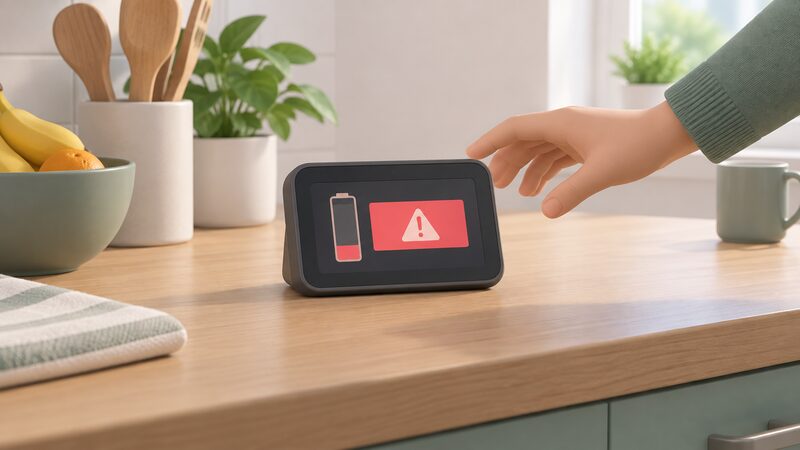
The threshold matters because it determines whether a household can act in time. A meter that allows activation below £1 gives very little warning; a meter that allows it at a higher balance gives more. The in-home display is the practical tool here, showing the credit balance, alerting when the balance is running low, and letting the household activate emergency credit13.
How to activate it on your meter
Activation depends on the meter type, and the two families behave differently.
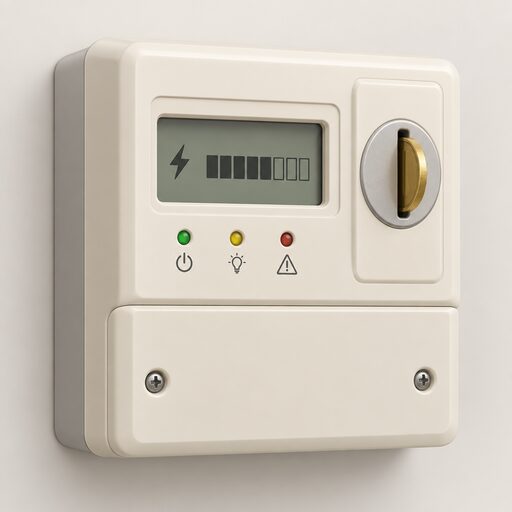
On a traditional prepayment meter, the household uses a smart card, key or token, and sometimes coins, to pay for gas or electricity as it is used14. The meter works through a key or card that has to be topped up with credit, and the same key or card is used to trigger emergency credit at the meter15. The display shows the balance and the status of the supply.
On a smart meter in prepayment mode, activation is usually done through the meter itself or through the in-home display, and there is an emergency credit button for extra time before a top-up can be made11. Smart prepay meters can also be topped up remotely: the national smart meter network carries an over-the-air top-up, so credit can be added without a trip to a shop18.
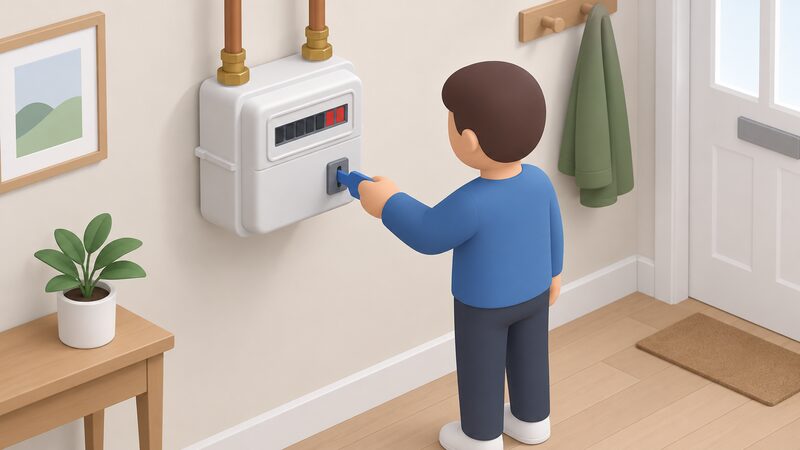
The steps are broadly the same across both types:
- Check the balance on the meter or in-home display.
- Activate emergency credit before the balance reaches zero, using the button, the key or the display menu.
- Confirm the credit has been applied and the supply continues.
- Top up as soon as possible, because the emergency credit is reclaimed from that top-up.
Where a meter shows an unfamiliar symbol after a key is inserted, the supplier can confirm what it means for that model. Symbols vary between manufacturers, and the meter's own instructions are the reliable reference.
Repaying emergency credit: what you owe before your next top-up
Emergency credit is a loan against the next top-up, not a grant. Once activated, the amount used has to be repaid when the household next tops up, and suppliers must work with the customer to agree a payment plan where that is needed6. Citizens Advice puts it plainly: any credit a supplier gives will eventually need to be paid back19.
The practical effect is that the next top-up does not all go to new energy. The meter deducts what is owed first, so a £10 top-up against £10 of emergency credit can leave the meter with little or no forward credit. That is why emergency credit is best understood as a delay rather than a solution.
"Prepayment meters give you a small amount of emergency credit which is designed to maintain your energy supply after you"
Debt on a prepayment meter can come from three sources: emergency credit that has been used, a missed standing charge payment, or an agreed repayment plan21. The repayment route is not only the next top-up. Suppliers can agree an affordable repayment plan, and temporary credit may be paid back from future prepayment card top-ups depending on the supplier9.
For households in debt, the switching rules matter. A household can switch supplier with a prepayment meter while owing up to £500, which means emergency credit debt does not by itself trap a customer with one supplier23. That is a meaningful degree of independence, though the debt still has to be cleared.
What happens to standing charges while emergency credit is in use
Standing charges do not pause when the credit runs out. A standing charge is a fixed daily amount payable no matter how much energy is used, and on a prepayment meter it is charged daily even when there is no credit on the meter, then recovered on the next top-up24. The charge is deducted automatically along with any unpaid standing charge or fuel debt when credit is added20.
That creates a second debt stream alongside emergency credit. A household can owe money on a prepayment meter because it has used emergency credit, missed a standing charge payment, or is on a repayment plan, and the meter will not distinguish between them when the next top-up arrives21. The result is that a top-up can be consumed almost entirely by charges before any new energy is bought.
The scale of the underlying bill is worth setting against the emergency credit figure. The energy price cap for pre-payment meters was £1,597 for the period 1 April to June 2026, which is the annual figure a prepayment household is working against3. Emergency credit of around £10 is a very small fraction of that, which is the point: it covers a gap of hours or days, not a billing period.
Additional support credit for households in vulnerable situations
Emergency credit is the automatic buffer. Additional support credit is the discretionary one, and it is larger and more flexible. It is extra temporary credit, a loan from the supplier with an agreed method of repayment, for example in monthly payments, and it is aimed at prepayment customers in vulnerable situations25.
Ofgem describes additional support credit as a vital tool to support prepayment customers in vulnerable situations who have self-disconnected or are at risk of doing so26. The trigger is self-disconnection or self-rationing by a household in a vulnerable situation, and authorised heat network suppliers are obliged to offer a reasonable amount of additional support credit in a timely manner in those circumstances27.
The route in is often the Priority Services Register. For customers on it, support can include bills in an accessible format such as large print or braille, bills sent to another person such as a family member or carer, regular meter checks, and emergency credit called additional support credit for those with a prepayment meter or smart meter in prepayment mode28. The same support set applies to heat network customers on the register29.
The vulnerability criteria are practical rather than means-tested in the ordinary sense. They include households that would struggle to answer the door or get help in an emergency, cannot get to a shop to top up, or need extra help with communication30. A household that cannot physically reach a top-up point is exactly the case additional support credit is designed for.
Beyond the supplier, there are other routes. Suppliers can provide temporary extra credit if needed, while councils can supply fuel vouchers21. The British Gas Energy Support Grant is open to prepayment meter and credit account British Gas customers and customers of other suppliers, and prepayment meter customers must owe between £50 and £1,700 in energy debt to qualify31. Ofgem has consulted on a Debt Relief Scheme under which prepayment customers should be eligible for support if they top up their existing consumption32.

The independence picture here is mixed. Additional support credit keeps a supply on and prevents self-disconnection, but it is a loan, it depends on a supplier's discretion and a vulnerability test, and it leaves a repayment obligation. It is a safety net rather than a route to self-sufficiency.
Sources32 cited
- Changing from a prepayment meter to a credit meter, Confused.com, 2026-04-20
- How to read your energy bills, National Energy Action, 2026-06-12
- Energy price cap explained, Welsh Government, 2026
- Is a prepayment energy meter right for you?, Which?, 2026-01
- Access emergency credit on your Elster smart PAYG gas meter, EDF Energy, 2026-09-17
- Support for those on prepayment meters, British Gas Energy Trust, 2026-07-07
- You can't afford to top up your prepayment meter, Citizens Advice Cymru, 2026-09-17
- Installing a prepayment meter without your permission, Ofgem, 2026
- Prepayment meters: consumer guidance, Ofgem, 2026
- Energy meters, Age UK, 2026-09-10
- How to use a smart meter in prepay mode to save money, Smart Energy GB, 2026-08-17
- Get help with your smart meter, Ofgem, 2026-09-17
- How to use your smart meter data, Which?, 2026-07-14
- Overdue utility bills, nidirect, 2026-09-17
- A step-by-step guide to setting up gas and electricity in a new home, Energy Helpline, 2026-09-20
- Types of energy tariff, Confused.com, 2025-11-03
- Benefits for you, Smart Energy GB, 2026-08-18
- How do smart meters send readings?, Smart DCC, 2026
- Help if you're struggling to pay your energy bill, Which?, 2026-08-19
- Prepayment meters, Centre for Sustainable Energy, 2025-08
- Prepayment meters guide, Uswitch, 2026-08-26
- How to get help with energy bills, Confused.com, 2025-11-10
- Switch your home energy supplier, Ofgem, 2026
- Gas and electricity standing charges, Confused.com, 2026-07-06
- Struggling to pay your heat network bills, Citizens Advice Scotland, 2026-09-17
- Additional support credit: our expectations, Ofgem, 2025-11-06
- Heat networks consumer protections: draft guidance, Ofgem, 2025-09-05
- If your home is on a heat network, Citizens Advice, 2026-09-17
- If your home is on a heat network (Wales), Citizens Advice Cymru, 2026-09-17
- Struggling to pay your heat network bills, Citizens Advice, 2026-09-17
- Grants available, British Gas Energy Trust, 2026-09-17
- Debt Relief Scheme statutory consultation, Ofgem, 2025-11
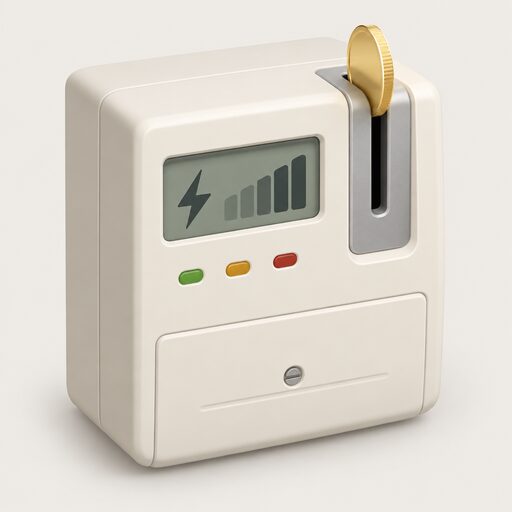 Prepayment MetersHow do you top up a prepayment meter for gas or electricity, and what happens when the credit runs out?
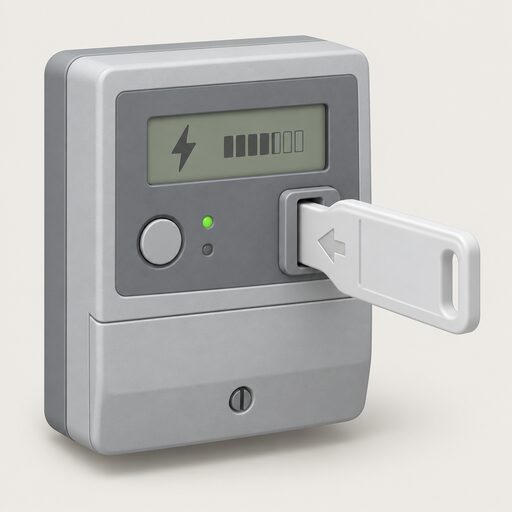 Top Up a Prepayment MeterHow to top up by card, key, app and code, how to enter a vend code by hand and how emergency credit and friendly-hours protection work.
 Smart Prepayment MetersHow prepayment mode works on a smart meter, remote switching between credit and prepay, topping up, emergency and friendly credit, the prepayment price cap, the £500 debt limit for switching, and the free help available when a household cannot top up.
 Prepayment Meter DebtHow debt repayment is set on a prepayment meter, the limits on the share of a top-up that can be taken, and how to have a rate reviewed.
 Prepayment and Pay As You GoHow prepayment and pay as you go energy tariffs work in the UK: meter types, top-ups, emergency credit, debt repayment through the meter, price cap treatment and how households move to a credit meter.
 Home EV Charger CostA home charge point usually costs between seven hundred and fifteen hundred pounds fitted, with most people paying around a thousand.