In this guide
- Who Is Responsible
- Switching Supplier
- Meter Readings
- Smart Meters
- Smart Mode After Switching
- The Price Cap
- Grants and Funding
- Free Advice by Nation
- Complaining to Your Supplier
- The Energy Ombudsman
- Ombudsman Powers and Limits
- Power Cuts and Network Problems
- If Your Supplier Ceases Trading
- Maker Warranties
- EPCs and the Rating Method
Home Energy How-To: The Full UK Guide to Switching, Meter Readings, EPCs, Grants, Complaints and Power Cuts
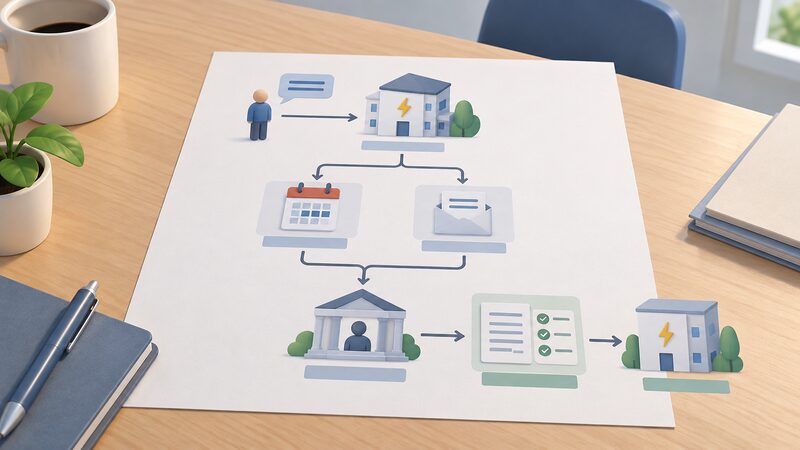
Most household energy tasks in the UK follow a small set of fixed rules. A supplier must try to fix a reported problem and resolve the complaint within 8 weeks1. After that, or sooner if the supplier issues a deadlock letter, the dispute can go to the Energy Ombudsman. The Ombudsman states that most disputes are resolved within 6 weeks of it receiving evidence from both parties2. Policy is for a smart meter that has dropped out of smart mode to be restored as soon as possible and no later than 90 days3. A power cut is a matter for the network operator, not the supplier4.
This page is the hub for those tasks: switching supplier, meter readings, smart meters, the price cap, grants, free advice, complaints, power cuts and supplier failure. Each section gives the rule, who is responsible and where England, Scotland, Wales and Northern Ireland differ. The linked guides carry the step by step detail.
On independence, these tasks do not remove a household's reliance on a supplier, a network and a regulator. They do decide how much control the household keeps within that reliance: accurate bills, a working meter, the right to leave a supplier, and a free route to redress when a company gets it wrong.
Who is responsible for what
Many energy problems start with a call to the wrong organisation. The division of duties below comes from Ofgem, the Welsh Government and the Energy Ombudsman.
| Problem | Who is responsible | Source |
|---|---|---|
| Late, incorrect or missing bills; back billing; overcharging; a faulty meter; poor customer service; refusal to refund credit | The energy supplier | 8 |
| A smart meter that stops working | The supplier, which is responsible for maintenance and will fix or replace the meter as needed | 9 |
| Power cuts or connection issues in the area | The network operator, which is responsible for the pipes and wires that move energy | 4 |
| A dispute with a supplier, energy broker, network operator, Green Deal provider or heat network supplier that the company has not resolved | The Energy Ombudsman | 10 |
Some tasks belong to neither the supplier nor the network. These include checking that an engineer is Gas Safe registered, arranging an electrical inspection and knowing what to do if you smell gas. The page on who to call for an energy problem gathers the contact routes in one place.
Switching supplier: what changes, what stays the same and what can go wrong
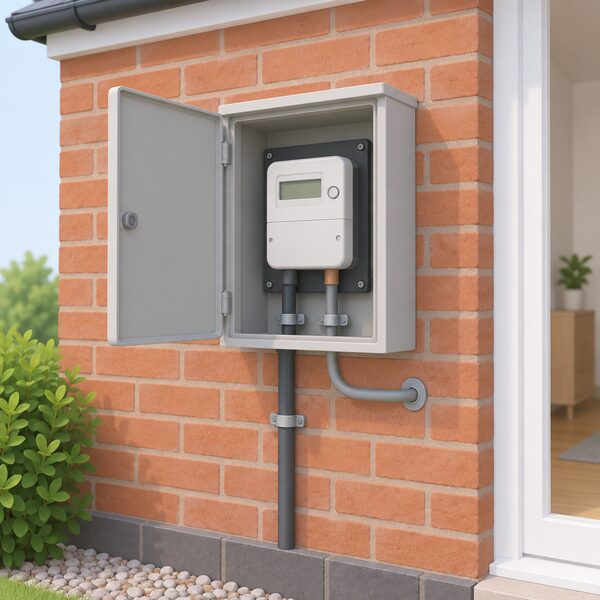
Ofgem's rule is short: "If you pay a supplier directly for the electricity or gas you use at home, you can choose to switch to a different supplier or tariff at any time."5 The right belongs to whoever pays the supplier. The page on switching supplier if you rent covers how that applies to tenants. Residents in alternative housing arrangements who hold their own contract with a supplier may also be able to switch, and they follow that supplier's complaints procedure if something goes wrong11.
Ofgem lists five pieces of information needed to compare and switch5:
- your postcode
- the name of your current supplier
- the name of your current tariff
- the amount you pay for your energy per unit, in kilowatt hours (kWh)
- the amount of energy you use each year
The company that bills changes. The pipes, the wires and the meter do not. The same network operator still delivers the energy and is still the contact in a power cut4. For that reason a switch does not change a household's physical dependence on the grid. It changes the price and the service.
Two things can go wrong. The first affects homes with a Green Deal loan attached to the electricity meter. The scheme rules allow a change of electricity supplier only "as long as the new supplier is taking part in the Green Deal scheme"12. The second affects smart meters. Ofgem warns that a meter may not work in smart mode after a move to a new supplier, and that manual readings may then need to be taken and submitted to the new supplier13. The section on smart mode below covers this.
The full sequence, from quote to final bill, is in the guide to switching energy supplier step by step. Households with a prepayment meter and debt have their own page on switching with prepayment debt.
Meter readings: manual submissions, estimates and why accuracy matters
A bill is either based on a reading or based on an estimate. Ofgem lists "bills based on accurate meter readings and not estimates" as a benefit of a smart meter, which automatically sends electricity and gas readings to the supplier14. The government's guide to smart meter rights says the same: readings "should be sent automatically by your smart meter to your energy supplier"15. The Data Communications Company, which runs the smart network, states that automatic readings can reach a supplier monthly, weekly, daily or even half-hourly16.
A home without a smart meter, or with one that has stopped communicating, has to supply readings by hand. Supplier failure is a case in point. Ofgem notes that after a move to a new supplier the meter may not work in smart mode, "and you may need to take meter readings manually and submit them to your new supplier instead"13. The reading taken on the day of a switch, a house move or a supplier failure sets the boundary between two accounts. An error on that day carries into both bills.
Official statistics use the meter's classification, not the building, to decide what counts as a home. In Great Britain, electricity meters with a profile class of 1 or 2 are classified as domestic meters17. The profile class appears in the supply number on a bill. The guide to finding your MPAN and MPRN explains where to find it.
The practical guides are separate pages:
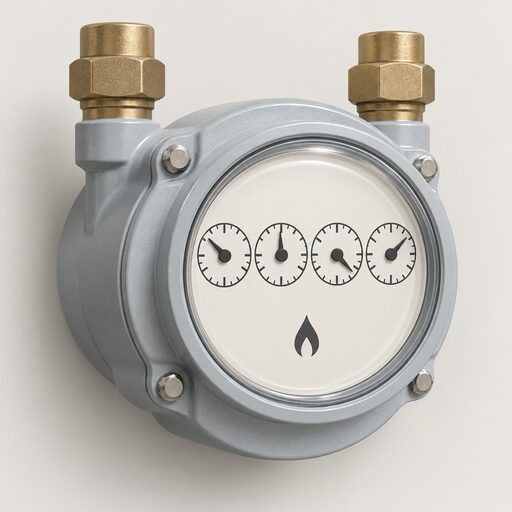
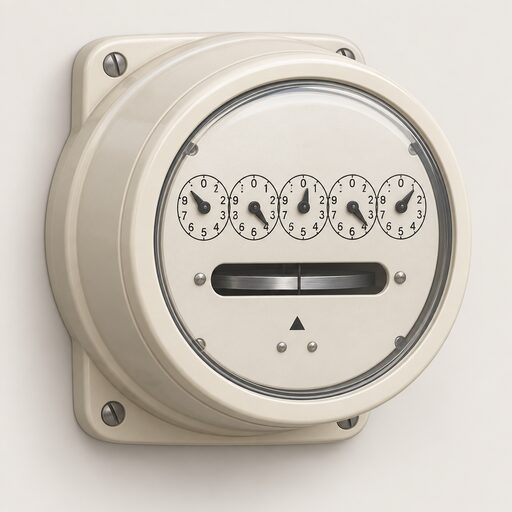
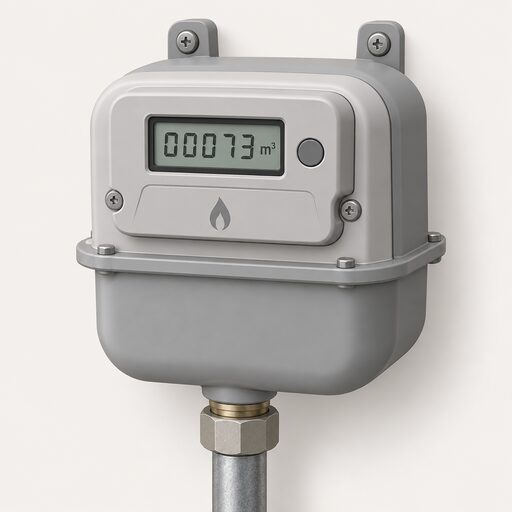
- how to take a meter reading, with detail for gas meters, electricity meters and smart meters
- submitting meter readings to a supplier
- converting gas units to kWh, for checking a gas bill against the meter
- meter readings when moving home
- reporting a faulty or inaccurate meter
Smart meters: what they do and what can go wrong
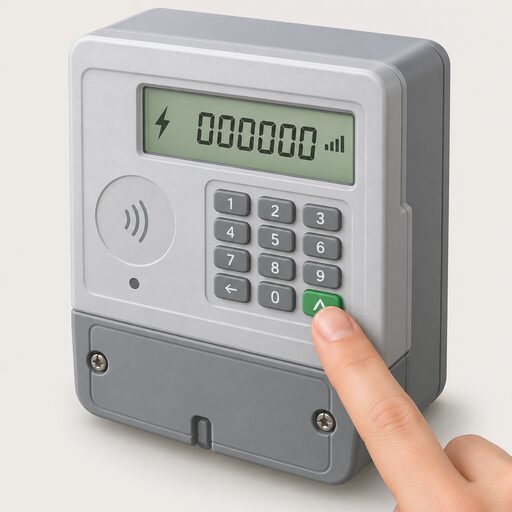
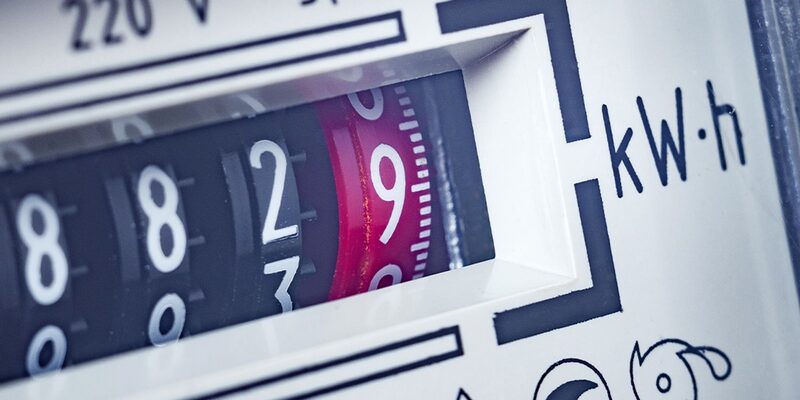
A smart meter measures gas and electricity use and sends the data directly to the energy supplier9. It comes with an In-Home Display so that the household can see and manage its use15. The Data Communications Company describes the benefit in terms of control: the data "puts you in control of your energy usage, meaning you can take energy-saving steps to reduce your CO2 emissions"18. Ofgem adds that a smart meter gives access to more flexible tariffs, including dual-rate tariffs14. This matters to a home with a battery, an electric vehicle or storage heating, because time-based tariffs depend on a working smart meter.
In Great Britain, smart meters are replacing analogue gas and electricity meters as part of a national infrastructure upgrade15. The government's guide "Smart meters: your rights and expectations", dated 8 August 2025, sets out the standards suppliers should follow at each stage of the customer's smart meter journey19. The supplier, not the household, is responsible for maintenance and will fix or replace the meter as needed9.
The main failure is described plainly by the regulator:
"Your smart meter may stop recording the energy you use, or may no longer send readings to your supplier."
A meter in that state still supplies energy, but billing falls back on estimates or manual readings. A faulty display is a separate, smaller problem, covered on the page about an in-home display that is not working. Homes losing an old radio teleswitch meter can read about RTS meter replacement. Homes choosing which fuel to convert first can read gas or electricity smart meter first.
A smart meter also adds dependence. It relies on a national communication system and on the supplier's systems working with it. When either fails, the household goes back to reading the meter by hand.
Smart mode after switching: when a meter stops and restarts
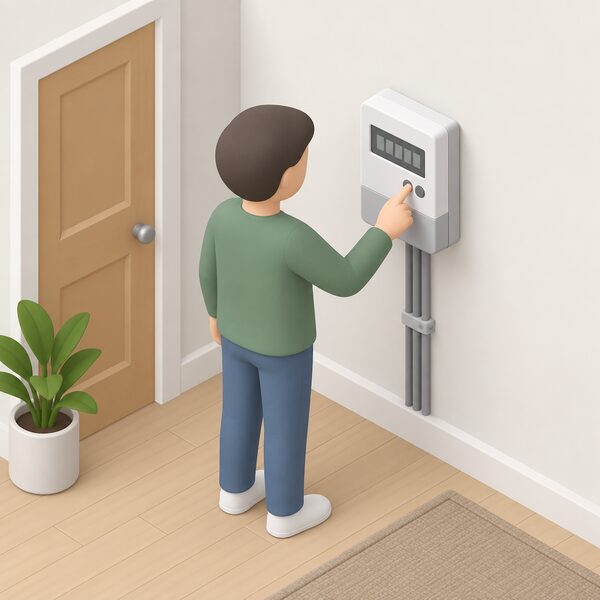
Ofgem's smart meter performance reporting gives three reasons a smart meter may not be operating in smart mode21:
- it loses connection with the supplier
- it loses connection after a change of supplier
- it has been installed without being connected to the national communication system
The second cause applies directly to switching and supplier failure. It is the reason Ofgem tells customers moved to a new supplier that manual readings may be needed13.
The policy response is a deadline. The government's August 2025 consultation on the smart metering framework after 2025 proposed to "require suppliers to take all reasonable steps to ensure smart meters in traditional mode are back working in smart mode" no later than 90 days from the date suppliers are first aware22. The consultation document uses the same wording: as soon as possible and no later than 90 days from the date suppliers are first aware23. The July 2026 update to the Clean Flexibility Roadmap restates the aim: to "ensure meters are back working in smart mode as soon as possible and no later than 90 days"3. Ofgem describes its current supplier installation targets as marking a "transition to a new phase in smart meter programme"24.
Two details of the wording affect a household. The duty is one of "all reasonable steps", which is not an absolute guarantee. The 90 days also run from the date the supplier is first aware, so a household that reports a loss of smart mode starts the clock. In the meantime, accurate billing depends on submitting readings by hand. If the supplier does not act, the normal complaints route applies, because a faulty meter is on Ofgem's list of supplier issues8.
The price cap: why bills move even if you never switch
A household that has never chosen a tariff is on a default tariff, and the price cap applies to default tariffs. The Welsh Government's explanation says the cap applies to default tariffs however the bill is paid, by direct debit or by prepayment meter, and does not apply to fixed, green or time of use tariffs25. The cap limits the rates a supplier can charge. It does not limit the bill, which still depends on how much energy is used.
The cap moves because its component costs move, so a bill changes even when the household does nothing. Ofgem explained the rise for 1 October to 31 December 2025 by pointing to increases in parts of the cost of transporting energy in Great Britain, and to costs towards government schemes and essential support26. For 1 January to 31 March 2026, Ofgem announced "a small monthly increase of 28 pence on the price of energy for a typical" dual fuel household paying by Direct Debit27. Both changes came from network and policy costs that no household can influence.
The cap also gives protection in one unplanned situation. A customer moved to a new supplier after their own has failed is placed on a deemed contract, and Ofgem states that such a customer is "still covered by the energy price cap even if you are put on a deemed contract"13.
Ofgem's price cap announcements refer to Great Britain: England, Scotland and Wales26. For independence, the cap sets a ceiling on the rates paid for energy bought from the grid. Energy a home generates or avoids using sits outside it. The guide to taking more control of your home's energy starts from that point.
Grants and funding: where to look in each nation
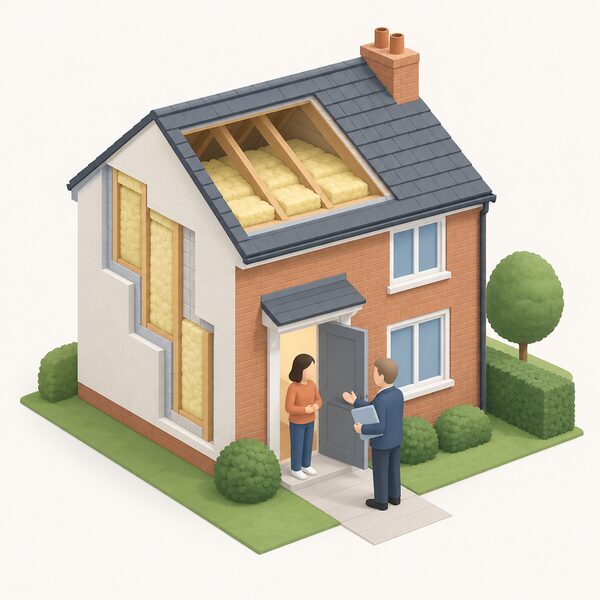
Energy grants are run nation by nation and scheme by scheme, and schemes close. The Green Homes Grant voucher scheme shows how short a scheme's life can be. It provided grants to homeowners and landlords for energy efficient improvements, and ran between September 2020 and March 2021 for domestic properties in England28. Official statistics still track measures installed under its Local Authority Delivery element and under the Home Upgrade Grant, in a release dated July 202529. A household researching grants will find many pages describing schemes that no longer take applications. A scheme's current status is best confirmed with the body that runs it or with one of the free advice services below.
| Nation | Where funding is signposted | Source |
|---|---|---|
| Great Britain | Ofgem points to energy supplier schemes and grants for "making energy-saving improvements to your home" | 30 |
| England and Wales (supplier obligation) | Carmarthenshire County Council notes "a number of schemes available on the ECO Flex website to help fund necessary home energy improvements" | 31 |
| Scotland | Energy Efficient Scotland: Area Based Schemes give home owners and landlords access to grant funding; the Home Energy Scotland Grant and Loan Scheme has published data from launch to the end of December 2023 | 32 |
| Wales | Green Homes Wales, from the Development Bank of Wales, offers "grant funding alongside loans for specific energy efficiency measures" | 34 |
| Northern Ireland | NI Energy Advice gives referrals to energy grants and other sources of help, plus free advice on saving energy, energy efficiency grants and oil buying clubs | 35 |
For England, the government's June 2026 consultation on consumer protection for home upgrade schemes describes a new Home Energy Advice service. It will be a single entry point on GOV.UK to help homeowners, landlords and tenants find tailored, impartial and trusted advice on heating their homes and making them more energy efficient37.
The Energy Company Obligation is a supplier-funded scheme, and its local flexible route is known as ECO Flex. Availability of supplier-funded help varies by area. The pages on checking if you qualify for a grant and applying for a home energy grant follow each scheme's current status. Bill support is covered separately under claiming the Warm Home Discount, the Winter Fuel Payment and grants to write off energy debt.
Free advice by nation: Home Energy Scotland, Citizens Advice and the Consumer Council
Scotland
Home Energy Scotland provides "free, independent and impartial energy advice to householders, community groups and businesses throughout Scotland"32. It is funded by the Scottish Government38 and administered by the Energy Saving Trust on the Scottish Government's behalf39. The Scottish Government's 2025 Heat in Buildings progress report calls it a "free independent advice and referral scheme"40. Ofgem points Scottish households to it for advice on energy efficiency and renewable energy41. Councils use it as the referral partner for enquiries about Area Based Scheme eligibility38, and the City of Edinburgh Council directs residents to it for free advice on improving the energy efficiency of a home42.
A separate Scottish service handles supplier problems. Energyadvice.scot is free for Scottish citizens who have questions about their energy supplier, want to understand its complaints process, or have problems with their energy bills. Its number is 0808 196 86601.
England and Wales
Ofgem's complaints guidance points households in England and Wales to the Citizens Advice consumer service. That service may refer a case to the Extra Help Unit in any of these circumstances1:
- the household needs support with a difficult or urgent complaint
- the person cannot deal with the supplier alone because of personal circumstances
- the person is considered vulnerable
- the household is at risk of being disconnected
Northern Ireland
NI Energy Advice offers "independent and impartial energy advice to domestic householders in Northern Ireland", plus referrals to grants43. nidirect directs homeowners to it for independent advice on solar panels, heat pumps and other energy efficiency measures45. The Energy Ombudsman handles only disputes involving suppliers trading in Britain46, so complaint escalation in Northern Ireland follows a different route. The page on the energy complaint phone number sets out the contacts.
Complaining to your supplier: the first eight weeks
Every energy complaint starts with the company concerned. A household with its own supply contract follows the supplier's complaints procedure, and the details "should be on your bill, or on their website"11. Ofgem lists the matters that belong with the supplier: late, incorrect or missing bills, back billing, overcharging, a faulty meter, poor customer service, and refusal to refund credit8.
A clock starts on the day the complaint is made. Ofgem's wording is: "Your energy supplier must try to fix any problems you reported within 8 weeks and resolve the complaint."47 The Energy Ombudsman gives the same period48. So does the government's smart meter rights guide, under which suppliers "have 8 weeks to investigate and resolve the problem"15. Ofgem's draft consumer protection guidance for heat networks, dated September 2025, carries the rule over: a heat supplier has 8 weeks to resolve the complaint49.
| Type of complaint | First stage | Period | Source |
|---|---|---|---|
| Gas or electricity supplier | Supplier's complaints procedure | 8 weeks | 1 |
| Smart meter installation or operation | Supplier | 8 weeks | 15 |
| Heat network | Heat supplier | 8 weeks | 49 |
| Smart Export Guarantee or Green Deal | The licensee or provider | Eight weeks before referral to the Energy Ombudsman | 39 |
| Nest scheme (Wales) | The scheme's own complaints policy, which escalates the complaint if needed and advises on the applicable appeals procedure | Set by the scheme | 50 |
Not every energy complaint follows this pattern. For the closed Green Homes Grant voucher scheme, a House of Commons Library briefing records that the department's advice was to complain directly to the installer, then to TrustMark, then to dispute resolution39.
The date of the first complaint matters more than any other detail, because every later stage is counted from it. The guide to making an energy complaint covers what to record.
The Energy Ombudsman: when you can escalate and how to do it
Ofgem's guidance on bills says a household can contact the Energy Ombudsman if it is not happy with the way the supplier has handled the complaint51. The same sentence appears in Ofgem's guidance on prepayment meters installed without permission52. The Ombudsman is approved by Ofgem to handle service disputes in the energy sector, and its service is free to consumers46.
Either of two conditions opens the door. The Ombudsman's statement is: "If after 8 weeks your issue is still unresolved, we can then investigate."46 The alternative is a deadlock letter, which the company can send sooner "allowing you to come to us sooner"53. The Ombudsman's dispute forms ask the complainant to confirm two things54:
- a deadlock letter has been received, or 8 weeks have passed without the complaint being resolved
- there is sufficient evidence to support the case, including the date the complaint was first raised with the company
The page on the deadlock letter explains the letter itself.
The process then runs in order4:
- The dispute is registered by searching for the name of the energy company on the Ombudsman's site57.
- The Ombudsman asks for information and evidence relating to the complaint.
- It reviews the evidence from the consumer and from the energy company.
- It informs the consumer of its decision within 6 weeks.
- It gives the energy company a set of actions to resolve the problem.
The Ombudsman states that, on average, most disputes are resolved within 6 weeks of it receiving evidence from both parties2. Counted from the first complaint, the two stages are 8 weeks for the supplier followed by 6 weeks for the Ombudsman. A deadlock letter shortens the first stage.
Its remit now goes beyond suppliers. It covers energy brokers, network operators and Green Deal providers. From 1 April 2025 it covers heat network disputes, and from 8 January 2026 it covers a number of flexibility service providers10. Domestic or micro business Feed-in Tariff generators can refer a dispute after 8 weeks without a mutually agreeable outcome58. The Scottish Government states that the Ombudsman will provide the independent escalation route for heat network consumers59. Heat network consumers who cannot find their supplier on the site can call 0330 440 1624 and press option 357.
Some schemes sit outside the Ombudsman. A review decision under the Domestic Renewable Heat Incentive escalates to the Parliamentary and Health Service Ombudsman through an MP60. There are over 20 ombudsman schemes in the UK, and sectors such as insurance, retail and banking each have their own57.
What the Ombudsman can and cannot do: awards, remedies and limits
The Ombudsman can tell a company to take practical action (for example, credit or cancel an account, or change a tariff), to make an apology, to make a financial award, or any combination of these. It may also make recommendations to stop the problem happening again2.
| Type of dispute | Maximum financial award | Source |
|---|---|---|
| Energy networks | Up to £10,000 for domestic disputes, up to £20,000 for small business disputes | 2 |
| Energy brokers | Up to £10,000 | 2 |
| Flexibility service providers | Up to £10,000 for domestic disputes, up to £20,000 for micro business consumers only | 2 |
| All awards, in practice | Average award around £50 | 6 |
The gap between the £10,000 ceiling and the average of around £50 comes from how awards are set. They are "based on the cost of putting things right, such as ensuring you've been charged accurately", clearing unfair charges or fixing faults2. In most cases the correction to the account is the main remedy and the award is small.
The Ombudsman is equally direct about its limits:
"However, we can't: - Punish companies - Dictate how companies operate - Issue fines"
It says those matters are the responsibility of the companies' trade body or regulator46. A government announcement of 17 June 2026 on home upgrade protections states that the Ombudsman "will be empowered to fine companies if they do not comply with their ruling", and that new measures will clarify the route through the courts as a last resort61. That describes an intended change. The Ombudsman's current published position is still that it does not issue fines.
Other limits:
- Only domestic consumers, micro businesses and small businesses may apply58. A micro business is defined as one using not more than 100,000 kWh of electricity or 293,000 kWh of gas a year, with turnover or balance sheet total not exceeding £2 million. A small business has fewer than 50 employees or their full-time equivalent46.
- It handles only disputes involving suppliers trading in Britain46.
- It can consider complaints about electric vehicle charging at home, but not about charging away from the home62.
- It accepts complaints about deemed contracts63.
In its February 2025 response to Ofgem, the Ombudsman acknowledged that "too many consumers who could use our service either cannot or choose not to". The reasons it gave include consumers not knowing who the Ombudsman is and being daunted by the process62. The page on what resolution to expect from the Energy Ombudsman gives more detail.
Power cuts and network problems: who is responsible and who to contact
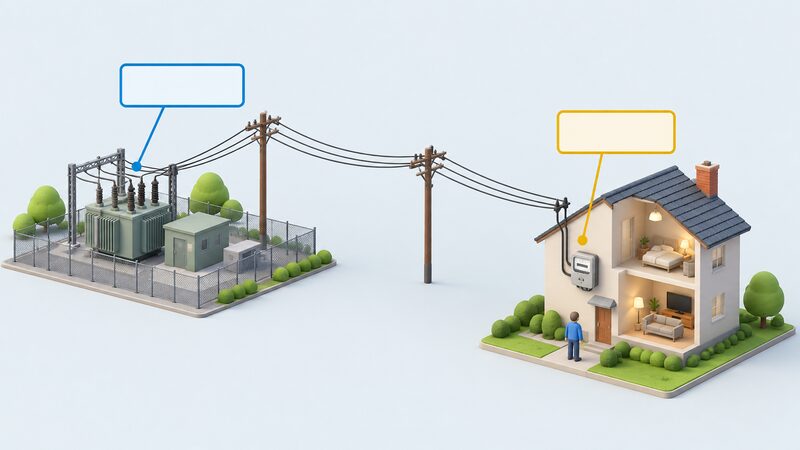
A power cut is not a supplier fault. Ofgem states: "A network operator is responsible for the pipes and wires that move energy", and the instruction is to "contact your network operator if you have a power cut or connection issues in your area"4. The supplier sells the energy and the network operator delivers it. Switching supplier changes nothing about who restores the power.
The operator depends on the address, not on any contract. The Energy Ombudsman notes that a household can find out who its network provider is through the Energy Networks Association website53. A household that knows its network operator's name before a fault happens is better placed when one occurs, and that is part of preparing for a power cut.
Complaints about a network operator follow the same two stage route as supplier complaints. The Ombudsman can consider disputes about network operators "if there is a loss of service or a problem with a connection or repair"53, and the same 8 week or deadlock rule applies. The award limits are those in the table above: up to £10,000 for domestic disputes2.
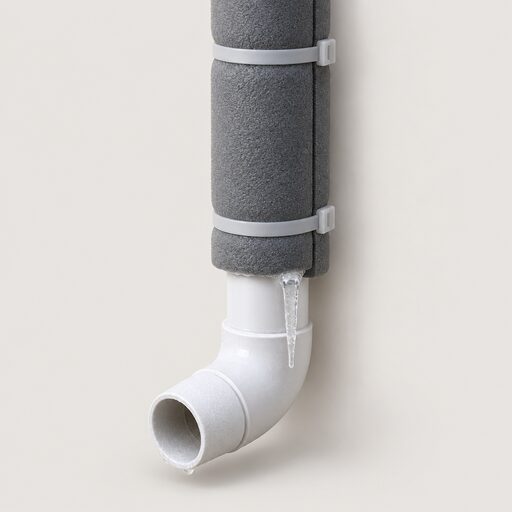
A home with solar panels and a battery is still tied to the network unless it has been set up to run in a power cut, so preparation matters even for a home that generates its own electricity. Related guides cover storms and floods, turning off gas, water and electricity in an emergency, trip switches that keep tripping (a fault inside the home, not on the network), and winter tasks such as preventing frozen pipes, thawing a frozen condensate pipe and preparing a home for winter.
If your supplier ceases trading: what happens to bills, credit and open complaints
When a supplier fails, the supply continues and a new supplier is appointed. Ofgem's guidance makes three points13:
- Credit is protected. "If your supplier goes out of business, your credit balance is still protected by the rules we set", and the new supplier will contact the customer about a refund.
- The price cap still applies. The customer is placed on a deemed contract and is still covered by the energy price cap.
- Smart mode may be lost. The meter may not work in smart mode with the new supplier, and manual readings may be needed.
A reading taken when the failure is announced fixes the boundary between the old account and the new one. The guide to submitting meter readings explains how. A deemed contract is one the customer did not choose. The Energy Ombudsman accepts complaints about deemed contracts for investigation63, so the redress route continues under the new supplier. Households already in difficulty can ask the new supplier, like any other, to "review your current payments and debt repayments"30.
Problems that are still open when a company fails are harder to settle. A House of Commons Library briefing refers to a Green Deal complaint about Home Energy and Lifestyle Management Ltd, "which has gone out of business"39. When the company at fault no longer exists, the normal two stage route has no first stage, and the remedy depends on the rules of the scheme involved. The same applies to anything bought on a company's promise: a warranty, a service plan or an app is worth only as much as the company behind it.
Maker warranties and registration: a task with a deadline
Registering a product warranty is a household task with a fixed date. This page holds a maker's figure for one brand only, Ideal Heating. It is described here and is not compared with or ranked against other brands. The maker states that its boiler warranties "vary between 2 and 12 years depending on your boiler model", subject to the boiler being registered within 30 days of purchase64.
| Maker | Product range | Warranty term | Condition | Source |
|---|---|---|---|---|
| Ideal Heating | Boilers (term varies by model) | Between 2 and 12 years | Registration within 30 days of purchase | 64 |
Missing the 30 day registration window is the kind of administrative slip that can shorten cover. A warranty also depends on the maker continuing to trade. Related pages cover how often a boiler should be serviced, whether DIY repairs can invalidate a warranty, and who arranges a boiler service in a rented home. Routine jobs a household can do itself include bleeding a radiator, repressurising a boiler and resetting a boiler.
EPCs and the rating method behind them
An Energy Performance Certificate rates a home using a government calculation method. For new homes, the method is set in building regulations guidance. In Wales, the 2026 edition of Approved Document L Volume 1 requires the target primary energy rate, target emission rate and target energy use intensity of a new dwelling to be calculated using the UK Government's Standard Assessment Procedure, version 10.365. The rating on a certificate is therefore modelled from the building's fabric and services. It is not a measurement of the household's actual bills.
Three guides cover the practical side: how to read an EPC, getting an EPC or finding an existing one, and challenging an EPC error. The page on who to contact about an EPC problem gives the contacts. For everything else on this site's practical lane, the index is at /how-to/.
Sources65 cited
- Complain about your energy supplier or network operator, Ofgem, 2026
- What to expect, Energy Ombudsman, 2026-09-19
- Clean Flexibility Roadmap: July 2026 update, GOV.UK, 2026-09-17
- Complain about your energy supplier or network operator (home and business), Ofgem, 2026
- Switch your home energy supplier, Ofgem, 2026
- We may be able to help resolve your energy dispute, Energy Ombudsman, 2026-09-20
- Energy Efficient Scotland: Area Based Schemes, West Lothian Council, 2026-09-17
- Complain about your energy supplier or network operator: who to contact, Ofgem, 2026
- Smart meters, Welsh Government Climate Action Wales, 2026
- How we can help, Energy Ombudsman, 2026-09-19
- Alternative homes energy guidance, Ofgem, 2026
- Green Deal: energy saving for your home, GOV.UK, 2026-09-17
- What happens if your energy supplier goes out of business, Ofgem, 2026
- Get help with your smart meter, Ofgem, 2026-09-17
- Smart meters: your rights and expectations (guide), GOV.UK, 2025-08-08
- How to get a smart meter, Smart DCC, 2026
- Domestic electricity consumption indicator, Office for National Statistics, 2025-12-18
- Smart meters and decarbonisation, Smart DCC, 2026
- Smart meters: your rights and expectations (publication page), GOV.UK, 2025-08-08
- Get help with your smart meter (consumer information), Ofgem, 2026
- Smart meter performance, Ofgem, 2026
- Smart metering policy framework post 2025, GOV.UK, 2025-08-08
- Smart metering policy framework post 2025: consultation document, GOV.UK, 2025-08
- Supplier smart metering installation targets, Ofgem, 2026-09-17
- Energy price cap explained, Welsh Government Climate Action Wales, 2026-03-04
- Changes to the energy price cap between 1 October and 31 December 2025, Ofgem, 2025-08-27
- Changes to the energy price cap between 1 January and 31 March 2026, Ofgem, 2025-11-21
- Heat pump deployment quarterly statistics, United Kingdom, 2025 Q2, GOV.UK, 2025-09-04
- Green Homes Grant Local Authority Delivery and Home Upgrade Grant release, July 2025, GOV.UK, 2025-07-31
- Get help with your energy bills, Ofgem, 2026-09-17
- Minimum energy efficiency standards, Carmarthenshire County Council, 2026-09-20
- Area Based Schemes, Glasgow City Council, 2026-06-08
- Home Energy Scotland Grant and Loan Scheme: FOI release, Scottish Government, 2024-09-13
- Green Homes Wales, Development Bank of Wales, 2026-09-17
- Energy saving grants in your area, nidirect, 2026-09-17
- Cost of living support, Belfast City Council, 2026-09-20
- Reforming consumer protection for home upgrade schemes: consultation document, GOV.UK, 2026-06-17
- Home energy efficiency, Argyll and Bute Council, 2026-09-17
- Research briefing CBP-9585, House of Commons Library, 2026-05-13
- Heat in Buildings progress report 2025, Scottish Government, 2025-10-02
- Domestic RHI: who to contact, Ofgem, 2026-09-17
- Financial help for energy efficiency and low carbon heating improvements, City of Edinburgh Council, 2026-09-20
- Heating technologies to suit your home, nidirect, 2026-09-17
- Ventilation systems, nidirect, 2026-09-17
- Support to generate your own electricity, nidirect, 2025-09-22
- Frequently asked questions, Energy Ombudsman, 2026-09-19
- Complain about your energy supplier, Ofgem, 2026
- EV tariffs and home charging: what consumers need to know, Energy Ombudsman, 2026-09-11
- Heat networks consumer protections: draft guidance, Ofgem, 2025-09-05
- Nest home energy support scheme: customer service and complaints policy, Welsh Government, 2024-04-01
- Understand your electricity and gas bills, Ofgem, 2026
- Installing a prepayment meter without your permission, Ofgem, 2026
- How we can help: network operators, Energy Ombudsman, 2026-09-20
- Raise a dispute: VIVID Housing Limited, Energy Ombudsman, 2026-09-19
- Raise a dispute: Theodore Stevenage Limited, Energy Ombudsman, 2026-09-19
- Raise a dispute: Metropolitan Infrastructure Limited, Energy Ombudsman, 2026-09-19
- Raise a dispute, Energy Ombudsman, 2026-09-19
- Feed-in Tariffs: dispute resolution, Ofgem, 2026-09-17
- Heat networks policy, Scottish Government, 2026-09-17
- Domestic Renewable Heat Incentive review request form, Ofgem, 2021-09-02
- Greater protections to restore families' trust in home upgrades, GOV.UK, 2026-06-17
- Response to Ofgem call for evidence, Energy Ombudsman, 2025-02-28
- Deemed contracts and rates, Energy Ombudsman, 2026-09-20
- How long does a heat only boiler last before it needs replacing, Ideal Heating, 2026-09-17
- Approved Document L Volume 1: Dwellings, 2026 edition, Welsh Government, 2026-04