
In this guide
A complaint about an energy supplier follows a fixed order, and the order is what makes it work. The supplier gets the first chance to put things right. It has eight weeks to resolve the issue, unless it sends a deadlock letter sooner, and only then can the dispute go to the Energy Ombudsman1. The Ombudsman is free to consumers, independent of Ofgem, and can order practical action, an apology or a financial award3.
The scale of the route is worth knowing before starting. The Energy Ombudsman has helped resolve over one million consumers with their energy complaints5. Its maximum financial award is up to £10,000 for domestic energy disputes or up to £20,000 for small business disputes, and the most common award is around £50, sometimes called a Time and Trouble Award4.
What a household gets from all this is leverage it does not otherwise have: a supplier that has ignored a call has to answer a case file, and a decision it accepts is binding on it. What remains is dependence on the supplier's own record keeping, on the evidence the household kept, and on the Ombudsman's remit, which covers suppliers trading in Britain and not every energy arrangement a home might have3.

Complaining about an energy supplier: the route from first call to Ombudsman
The route has three stages and no shortcuts. First, the supplier's own complaints procedure. Second, the eight-week point or a deadlock letter. Third, the Energy Ombudsman, which is an independent service, separate to Ofgem, for problems with an energy supplier, an energy broker, a network operator or a heat network supplier7.
Ofgem's guidance is blunt about where a bill problem starts: if there is a problem with your energy bill, contact your energy supplier8. The same instruction appears across Ofgem's bill pages, which state that you can contact the Energy Ombudsman if you are not happy with the way your supplier has handled your complaint8. The Ombudsman's own framing is identical: speak to your energy supplier first to raise a complaint, and if they cannot help, the Ombudsman will aim to fairly and impartially resolve the dispute10.
The categories that can be complained about are wider than billing alone. Ofgem lists late, incorrect or missing bills, back billing, being overcharged, a faulty meter, poor customer service, and refusing to refund credit from your account1. The Ombudsman's remit extends to energy brokers, network operators where there is a loss of service or a problem with a connection or repair, Green Deal providers who are unable or unwilling to help when something goes wrong with a Green Deal plan, and heat network suppliers11.
| Stage | Who acts | Trigger to move on |
|---|---|---|
| 1. Supplier's own procedure | The supplier | Complaint raised and logged2 |
| 2. Eight-week point or deadlock | The supplier | 8 weeks without resolution, or a deadlock letter7 |
| 3. Energy Ombudsman | Independent scheme | Deadlock letter received, or 8 weeks elapsed7 |
For a household, the practical meaning is that the complaint route is the main formal power a customer holds over a supplier. It does not change who supplies the gas or electricity, and it does not remove the dependence on that company's systems, but it converts a grievance into a case with a deadline attached. The Ombudsman itself has noted that too many consumers who could use the service either cannot or choose not to, for reasons including being unaware of who the Ombudsman is or being daunted by the process14. Knowing the order is the defence against that.
Step one: use the supplier's own complaints procedure
The first thing to do is log a dispute with the supplier2. The Ombudsman states that you need to follow the company's dispute process to give it an opportunity to fix any issue, and that your supplier should have a formal dispute process you can request a copy of, often available on its website2. Ofgem's guidance for households that hold their own contract with a supplier says the same: follow their complaints procedure, and the details should be on your bill or on their website15.
Where the household does not hold the contract, the route changes. If you pay a site owner or landlord for your energy and have a problem or complaint, the first point of contact is them16. Ofgem's guidance for residents paying a landlord or site owner by meter readings or estimates states that residents should not make a complaint directly to the energy supplier if they do not have a contract with them17. That is a real limit on the Ombudsman route for park home residents, tenants on landlord-supplied heat and similar arrangements.
Prepayment meter installation without permission is a specific case with its own escalation line. Ofgem's guidance states that you can contact the Energy Ombudsman if you are not happy with the way your supplier has handled your complaint about a prepayment meter installed without your permission18.
What to record and gather while your complaint is live
The record is the case. Ofgem's rules on complaint handling, set out in a 2014 enforcement notice, describe what a regulated provider must record when it receives a consumer complaint: the date the complaint was received, the identity and contact details of the customer making it or on whose behalf it is made, a summary of the complaint, a summary of the advice given or action taken or agreed, whether the complaint has been resolved and, if so, the basis on which it is considered resolved21. That same notice records a £3 million penalty for EDF Energy following an Ofgem investigation into its complaints handling arrangements, where there was evidence of complaints where the supplier had failed to record all the required details, including the date of receipt, a summary of the complaint and action taken21.
The lesson for a household is to keep the mirror image of that record: the date the complaint was raised, what was said, what was promised, and what happened. The Ombudsman asks for the supplier's name, the account holder's name, the account number and the date you first raised your complaint to the supplier, and it lists those details specifically for email and post cases6. Its eligibility checklist is the same list in question form: that you have complained to the supplier already, that you have received a deadlock letter or waited eight weeks without resolution, that you have sufficient evidence to support your case including the date you raised the complaint, and that the supplier name matches the name on the bill22.
What to keep, in practice:
- Bills and statements covering the disputed period
- Screenshots or transcripts of webchat and emails
- Call dates, times and any reference numbers given
- Meter readings taken on the dates that matter
- The name on the account, checked against the name on the bill6
A complaint about a faulty meter or an inaccurate bill is much easier to argue with dated readings attached, and the site's guide to reporting a faulty or inaccurate meter covers how to raise that with a supplier in the first place.
The eight-week rule and the deadlock letter

Eight weeks is the pivot of the whole system. The Ombudsman states that the supplier has 8 weeks to resolve your issue unless it sends you a deadlock letter enabling you to come to the Ombudsman sooner7. Ofgem's guidance puts the same rule in the consumer's terms: if eight weeks pass without a resolution, or your supplier sends you a deadlock letter sooner, you can bring the dispute to the Energy Ombudsman13. Ofgem also states that your energy supplier must try to fix any problems you reported within 8 weeks and resolve the complaint24.
A deadlock letter is not something a household applies for. It is the supplier's written statement that the problem cannot be fixed or that it believes there is no more it can do, and it is one of the escalation triggers Ofgem lists alongside the eight-week point25. The older Ombudsman Services: Energy scheme documents describe the same mechanism: your energy company should write to you at eight weeks or deadlock to tell you how to contact the scheme26.
The eight-week rule applies to heat networks too. Ofgem's heat network consumer protection guidance states that the period after which a complaint can be escalated to the Energy Ombudsman remains eight weeks for heat networks, and that consumers should first notify their heat supplier and work with it to resolve the complaint27. The Ombudsman's heat network case pages repeat the condition in the first person: that the complainant has received a deadlock letter or it has been 8 weeks without the complaint being resolved28.
"If after 8 weeks your issue is still unresolved, we can then investigate."
There is a deadline on the other side of the deadlock letter. The Ombudsman states that you must escalate your dispute within 12 months of receiving the letter3. A household that sits on a deadlock letter for longer than that loses the route.
The Energy Ombudsman: what it is and who can use it
The Energy Ombudsman describes itself as an independent service, separate to Ofgem, for problems with an energy supplier, an energy broker, a network operator or a heat network supplier7. It can process complaints for both domestic and small business consumers in the energy sector30. Its remit has widened in stages: it has handled heat network disputes for consumers and small businesses since 1 April 2025, and from 8 January 2026 it can handle disputes for a number of flexibility service providers31.
Eligibility for business consumers is defined by thresholds. A microbusiness is a company with annual electricity consumption of not more than 100,000 kWh, or gas consumption of not more than 293,000 kWh, fewer than ten employees or their full-time equivalent, and annual turnover or balance sheet total not exceeding £2 million3. A small business has fewer than 50 employees or their full-time equivalent, annual turnover of at most £6.5 million or a balance sheet total of £5.0 million, annual electricity consumption of not more than 200,000 kWh and gas consumption of not more than 500,000 kWh3. Only domestic consumers, micro-businesses and small businesses may apply to the Energy Ombudsman34.
| Consumer type | Electricity consumption | Gas consumption | Other tests |
|---|---|---|---|
| Microbusiness | Not more than 100,000 kWh a year | Not more than 293,000 kWh a year | Fewer than 10 employees; turnover or balance sheet total not exceeding £2 million3 |
| Small business | Not more than 200,000 kWh a year | Not more than 500,000 kWh a year | Fewer than 50 employees; turnover at most £6.5 million or balance sheet total £5.0 million3 |
The territorial limit matters for a UK-wide page. The Ombudsman states plainly that it only handles disputes involving suppliers trading in Britain3. Northern Ireland has a different arrangement: the Consumer Council gives free advice and can investigate complaints about natural gas and electricity35. The Ombudsman's own advice page for consumers worried about energy bills points households struggling to pay towards organisations such as Advice NI, which offers free, independent debt advice35.
For a household, the Ombudsman is the point at which the complaint stops being a private argument with a company. It is free, it is independent of the regulator, and it produces a decision the supplier is obliged to implement within 28 days once accepted3. What it does not do is change the supplier, the tariff or the meter.
What the Ombudsman can and cannot do

The powers are specific and the limits are just as specific. The Ombudsman can tell suppliers to take practical action, such as crediting or cancelling an account or changing a tariff, to make an apology, or to offer a financial award, or a combination of these, and it can make recommendations to prevent the issue happening again4. The older scheme documents describe the same set of powers: the scheme can require the company to correct the problem, apologise, explain what happened, and make a financial award26.
What it cannot do is stated in the same source. The Ombudsman cannot punish companies, dictate how companies operate, or issue fines4. That distinction is worth holding on to: a household expecting a regulator-style penalty is expecting the wrong thing. The Ombudsman resolves the individual dispute and can require the supplier to put the consumer back where they should have been.
| It can | It cannot |
|---|---|
| Require practical action, such as crediting or cancelling an account or changing a tariff4 | Punish companies4 |
| Require an apology4 | Dictate how companies operate4 |
| Require a financial award4 | Issue fines4 |
| Recommend steps to prevent the issue recurring4 | Consider EV charging away from the home14 |
There are remit limits by subject as well. On electric vehicle charging, the Ombudsman can consider complaints relating to EV charging at a consumer's home but is unable to consider complaints about charging away from the home14. On network operators, it can consider disputes where there is a loss of service or a problem with a connection or repair12. On heat networks, it can review disputes with any heat network if the heat network supplier has not done what is required of it by the Energy Bill Relief Scheme and Energy Bill Discount Scheme legislation1.
The maximum award varies by the type of company and the terms of reference covering that scheme, and the Ombudsman states that the level of maximum financial award may vary depending on the type of energy company and the Terms of Reference that cover that scheme4. For energy suppliers, heat networks and energy networks, the published maximum is up to £10,000 for domestic energy disputes or up to £20,000 for small business disputes4.
Outcomes and awards: from an apology to financial compensation
The range of outcomes is wider than cash. Ofgem lists what a complaint can achieve: financial compensation, an apology, agreeing to fix the problem, a refund, or providing an affordable payment plan17. The Ombudsman's own list of what it can tell suppliers to do covers the same ground: practical action such as crediting or cancelling an account or changing a tariff, an apology, or a financial award4.
On the money itself, the Ombudsman is explicit about how awards are calculated. Financial awards are based on the cost of putting things right, such as ensuring you have been charged accurately, clearing unfair charges or fixing faults4. The most common financial award is around £50, sometimes referred to as a Time and Trouble Award3. The maximum is up to £10,000 for domestic energy disputes or up to £20,000 for small business disputes4.
A published case shows the shape of a larger award. In the case the Ombudsman marked as its one millionth, it required the supplier to reimburse £240 for the emergency call-out fees paid by Eva and apply a £350 goodwill credit to her account and provide a formal written apology5. That combination, a refund of costs plus a goodwill credit plus an apology, is the pattern to expect where a supplier has caused a household real expense.
How to escalate: website, phone, email or post
Registration is deliberately multi-channel. The Ombudsman states that you can register your dispute via its website, telephone, email or post30, and repeats the same four channels for flexibility service provider disputes: website, post, email or telephone32. The starting point on the website is to search for the name of your energy supplier29.
| Channel | Detail |
|---|---|
| Website | Search for the name of your energy supplier to begin29 |
| Phone | 0330 440 1624; press option 3 for heat networks when prompted3 |
| Post | Energy Ombudsman, P.O. Box 966, Warrington, WA4 9DF6 |
| Accepted as a route to register a dispute30 | |
| Opening hours | Monday to Friday 8am until 6pm; closed Saturday, Sunday and Bank Holidays6 |
There is a conflict in the published numbers. One support article gives 0845 055 0760 while the Ombudsman's own pages give 0330 440 1624, and the two have not been reconciled35. A household dialling the older number may find it does not connect; the number published on the Ombudsman's current pages is 0330 440 1624.
Once a case is registered, the process runs in a set order:
- The Ombudsman asks you to send information and evidence24.
- It reviews evidence from you and your energy company24.
- It informs you of its decision24.
- It gives the energy company a set of actions to resolve the problem24.
You have up to 14 days to upload evidence to support your case3. Most disputes are resolved within 6 weeks of the Ombudsman receiving evidence from both parties4. When you accept the resolution, your supplier is obliged to implement it within 28 days3.
Free help along the way: Citizens Advice, Resolver and the Extra Help Unit
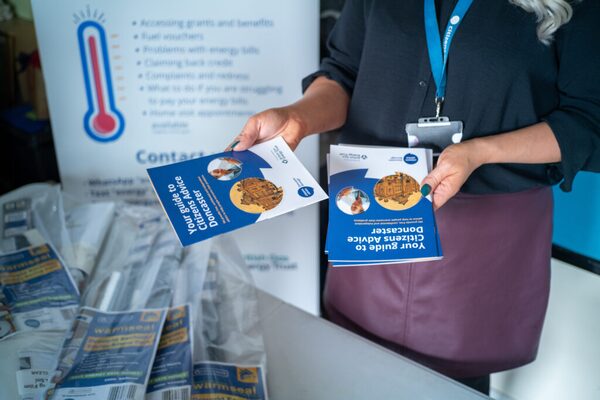
Several free services sit alongside the formal route, and they do different jobs. Citizens Advice's free consumer service can help people in England or Wales with problems with their energy bills or supply1. In Northern Ireland, the Consumer Council gives free advice and can investigate complaints about natural gas and electricity35.
The Extra Help Unit supports vulnerable consumers by raising complaints with energy suppliers on their behalf, particularly where there is a risk of disconnection or complex personal circumstances35. That is a materially different service from advice: it acts for the consumer rather than explaining the options. Suppliers are also expected to refer customers who are struggling to pay bills to organisations such as Advice NI, which offers free, independent debt advice35.
For a household in debt as well as in dispute, the two problems need separating. A complaint about a bill is a dispute about accuracy or service; a complaint about affordability is a debt matter, and the site's guide to energy debt write-off grants covers the grant side. The Ombudsman's own advice page for consumers worried about energy bills is a further free starting point35.
When your supplier has ceased trading, or your complaint falls outside the scheme
Two situations break the standard route. The first is a supplier that has stopped trading. The Ombudsman states that it only handles disputes involving suppliers trading in Britain3, so a company that has ceased trading may fall outside the scheme. Where a supplier has failed, the practical questions become who holds the account now and what happened to any credit balance, and the site's guide to who to call for an energy problem sets out the numbers for that stage.
The second is a complaint that never had a supplier contract behind it. Residents paying a landlord or site owner by meter readings or estimates should not make a complaint directly to the energy supplier if they do not have a contract with them17, and Ofgem's guidance for those households is to contact the site owner or landlord first16. That leaves the Ombudsman route closed for the energy supply itself, though the Ombudsman can still consider some heat network disputes where the supplier has not done what the Energy Bill Relief Scheme and Energy Bill Discount Scheme legislation requires1.
There are also subject limits. Complaints about EV charging away from the home are outside the Ombudsman's remit, while charging at a consumer's home is inside it14. Feed-in Tariff generators have their own route: for a domestic or micro business FIT Generator where a mutually agreeable outcome has not been reached after 8 weeks, the dispute can be referred on33. And the Ombudsman is one of over 20 Ombudsman schemes in the UK, with travel, retail, insurance, employment, financial products and banking handled elsewhere29.
For a household's energy independence, the complaint system is a backstop rather than a source of control. It cannot switch a supplier, install a meter or reduce a bill by itself. What it does is put a deadline on a company, give a free independent decision, and require that decision to be implemented within 28 days3. The dependence that remains is on the supplier's records, on the evidence the household kept, and on a remit that stops at the boundary of Britain and at the edge of a contract.
Sources35 cited
- Complain about your energy supplier or network operator, Ofgem, 2026
- Understanding your rights, Energy Ombudsman, 2026-09-20
- Frequently asked questions, Energy Ombudsman, 2026-09-19
- What to expect, Energy Ombudsman, 2026-09-19
- One million consumers helped by Energy Ombudsman as service marks 20 years, Energy Ombudsman, 2026-07-07
- Creating a case with the Energy Ombudsman, Energy Ombudsman, 2026-09-20
- How we can help energy suppliers, Energy Ombudsman, 2026-09-20
- Understand your electricity and gas bills, Ofgem, 2026
- How your electricity or gas bill is calculated, Ofgem, 2026
- Facilitated complaints resolution, Energy Ombudsman, 2026-09-20
- How we can help, Energy Ombudsman, 2026-09-19
- Network operators, Energy Ombudsman, 2026-09-20
- EV tariffs and home charging, Energy Ombudsman, 2026-09-11
- Review of Ofgem call for evidence, Energy Ombudsman, 2025-02-28
- If you live in a home with a business energy contract, Ofgem, 2026
- Alternative homes energy guidance, Ofgem, 2026
- Complain about your energy supplier or network operator, Ofgem, 2026
- Check energy suppliers can install prepayment meters without household permission, Ofgem, 2026
- Installing a prepayment meter without your permission, Ofgem, 2026
- Installing a prepayment meter without your permission, Ofgem, 2026
- EDF Energy to pay £3 million following Ofgem investigation, Ofgem, 2014-08-22
- Raise a dispute: Cynon Taf Community Housing, Energy Ombudsman, 2026-09-19
- Raise a dispute: Theodore Bracknell Limited, Energy Ombudsman, 2026-09-19
- Complain about your energy supplier or network operator, Ofgem, 2026
- Complain about your energy supplier, Ofgem, 2026
- How to complain about your energy company, Ofgem, 2014-08
- Heat networks regulation: consumer protection guidance, Ofgem, 2026-01-13
- Raise a dispute: Theodore Stevenage Limited, Energy Ombudsman, 2026-09-19
- Raise a dispute, Energy Ombudsman, 2026-09-19
- We may be able to help resolve your energy dispute, Energy Ombudsman, 2026-09-20
- Heat networks affected by the Energy Prices Act 2022, Energy Ombudsman, 2026-09-20
- Information for disputes with flexibility service providers, Energy Ombudsman, 2026-09-20
- Dispute resolution, Ofgem, 2026-09-17
- Advice if you're struggling to pay your energy bills, nidirect, 2026-09-17
- Worried about your energy bills, Energy Ombudsman, 2026-03-24
 Complaining About a SupplierHow do you complain about your energy supplier, and how long should it take?
 Energy Complaints and RedressMaps the routes a householder has when an energy supplier, network operator, broker or heat network gets something wrong, which body handles which dispute, and what the Energy Ombudsman can and cannot do.
 Complaining About an InstallerMaps the escalation path from the installer's own complaints procedure to the scheme provider, consumer code, ombudsman or ADR body and finally the courts.
 The Full Installers GuideHow do you find an installer you can trust, and what should you check before signing anything?
 Report a Faulty MeterWhat to do when a meter over-records, stops recording or produces impossible readings: the evidence to gather, how to raise it with the supplier, the 5 working day and 8 week deadlines, and how the Energy Ombudsman handles meter disputes.
 The Full How To GuideSwitching supplier, sending meter readings, sorting an EPC, claiming a grant, complaining when something goes wrong, coping in a power cut: where do you start with any of it?