
In this guide
The Green Deal is closed to new applicants. The UK Government stopped funding the scheme in July 2015, and it ran as a live programme only from 2013 to 20151. It was never available in Northern Ireland2. What survives is the paperwork: green deal plans taken out in that window are still attached to the properties that carry them, and the charge is still collected through the electricity bill.
That single design choice, a loan tied to the meter rather than to the person who signed it, is why the scheme still matters to householders two decades after it stopped taking applications. A buyer or tenant moving into a green deal property inherits the repayment obligation, and the seller or landlord is legally required to disclose it before the move1. The Energy Performance Certificate for that property must carry specified information about the plan, including that a green deal plan is a type of unsecured loan3.
The scheme's own history is a cautionary one. It cost taxpayers £240 million including grants to stimulate demand, and the National Audit Office found it had not generated additional energy savings4. It was closed in 2015 due to low take-up and concerns about industry standards5. For a household today, the practical questions are narrower: is there a plan on this property, who collects the money, and what replaced the funding.
The Green Deal is closed to new applicants: what that means for householders
The scheme is closed to new applicants, and there is no route back in1. The UK Government stopped funding the Green Deal scheme in July 20152. Anyone searching for a Green Deal loan today is looking at a product that no longer exists, and any website offering to arrange one is not offering the government scheme.
What that leaves is a set of live obligations. A green deal property is defined in legislation as a property in respect of which there is a green deal plan and payments are still to be made under that plan8. That definition is the one that matters, because it determines when the disclosure duties, the EPC requirements and the repayment obligation apply. Once the payments are finished, the property stops being a green deal property for these purposes.
There is no Government reimbursement scheme for any aspect of the Green Deal2. That is worth stating plainly, because it closes off the most common hope: that a household which inherited a plan, or found the work defective, can apply to government to have the money returned. The scheme's closure did not create a compensation route.
For a household's energy independence, the closure means the pay-as-you-save model is not currently available as a government-backed route. Any borrowing for retrofit now comes from commercial lenders or from grant schemes, and the dependence it creates is on a lender rather than on a supplier-funded obligation.
What the Green Deal was and how the pay-as-you-save finance worked
The Green Deal was launched by the previous Coalition Government to incentivise and help fund energy efficiency and renewable energy technologies for homes2. Its purpose was to help people make energy-saving improvements to their home1. The mechanism was set out in consultation as a financing mechanism enabling private firms to offer domestic and non-domestic consumers energy efficiency improvements at no upfront cost, recouped through a charge in instalments on the energy bill9.
The design intent was that the charge stayed with the house on the energy meter9. That is the pay-as-you-save idea in one sentence: the householder does not find the capital, the improvement is installed, and the cost is recovered through the bill over time. The Green Deal was to provide household and business energy efficiency improvements at no up-front cost, with consumers repaying through the savings they make on their energy bills10.
The scheme was legislated for through the Green Deal Framework Regulations, made in 20137. It was open to home owners, landlords and tenants, who could get loans for improvements such as adding insulation or solar panels1. In practice, Green Deal finance was not yet available for rental properties at the point the scheme was being rolled out11, which limited the tenant-facing side of the offer.
The ambition was large. The scheme was designed with the potential to reach over 14 million homes across the country10. That figure describes the eligible stock, not the outcome, and the gap between the two is the story of the scheme's failure.
The golden rule: savings had to cover the cost of the measures
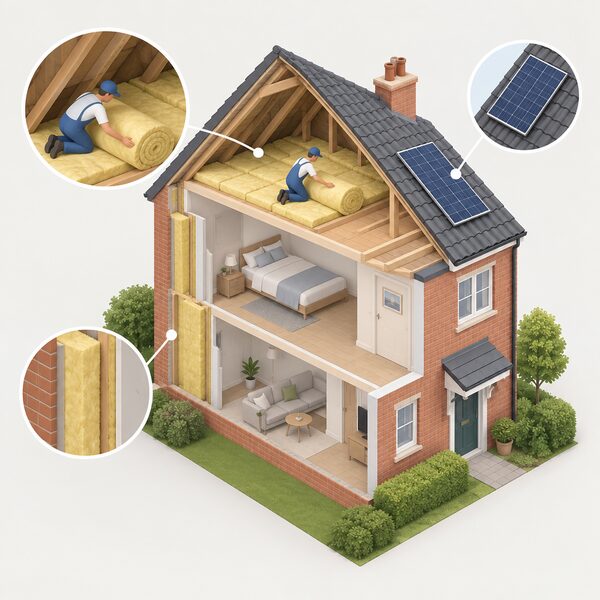
The golden rule was the scheme's central constraint. Packages of improvements offered by Green Deal providers had to meet the Golden Rule, which meant the measures could be paid back from the energy bill savings within the lifetime of the Green Deal plan9. In the Scottish Government's framing, microgeneration technologies were included subject to meeting the golden rule, that estimated savings on bills should always equal or exceed the cost of the work12.
How those savings were calculated matters, because it explains why the rule was weaker than it sounded. Potential energy savings were calculated using RdSAP, the Reduced data-input Standard Assessment Procedure13. Those cost savings were then adjusted downwards to reflect variation in buildings, products, installation techniques and occupant behaviour from those assumed in RdSAP13. The adjustment is an acknowledgement that modelled savings and real savings diverge.
The rule also carried a guarantee requirement. Under the plan, the improvements installed had to be guaranteed for at least five years7. That is a floor, not a typical term, and it sits alongside the repayment period rather than matching it.
"Packages of improvements offered by Green Deal providers must meet the 'Golden Rule' which means that the measures can be paid back from the energy bill savings within the lifetime of the Green Deal plan"
The consequence for households is that the golden rule was a modelling exercise, not a promise about a particular bill. A plan could satisfy the rule on RdSAP figures and still leave a household paying more than it saved, particularly where occupancy or installation differed from the assumptions. That is a structural limit of pay-as-you-save finance, not a failure of any one installer.
What was funded: insulation, heating, glazing and microgeneration
The Green Deal funded packages rather than single measures. Every home was to be able to install packages of energy-saving technologies at no upfront cost with repayments made over time out of the energy savings10. The scheme covered household and business energy efficiency improvements10, and microgeneration technologies were included subject to the golden rule12.
The measures themselves were the familiar retrofit set. Later government schemes show the same categories: insulation, energy-efficient heating systems, and renewable energy installations under the Warm Homes: Local Grant14; insulation such as loft, roofs and walls under ECO15; and solar panels, batteries, heat pumps and insulation under the Warm Homes Plan16. Regional programmes funded insulation, new doors and windows, solar panels, and greener and smarter heating systems in the West Midlands17, and better insulation, new doors and windows, and greener heating systems in an earlier round18. A Welsh programme listed PV, environmental sensors, cavity wall insulation, part wall insulation, triple glazing, doors, loft insulation and TrustMark PAS19.
Installation quality was controlled through accreditation. Improvements were carried out by kite-marked installers10, and the Green Deal quality mark was a green house with a tick on the roof1. That mark is the quickest way to identify legacy paperwork from the scheme.
| Measure category | Examples funded across the era | Source |
|---|---|---|
| Insulation | Loft, roof, cavity and wall insulation | 15 |
| Heating | Energy-efficient and greener heating systems | 14 |
| Glazing and doors | Windows, doors, triple glazing | 17 |
| Microgeneration | Solar panels, batteries, heat pumps | 16 |
For energy independence, the measure list matters less than the finance model. Insulation reduces the energy a home needs; solar and batteries reduce the energy it buys. The Green Deal could fund both, but only where the modelled savings cleared the golden rule, which tended to favour cheaper fabric measures over generation.
How the loan worked: no upfront cost, repayments through the electricity bill
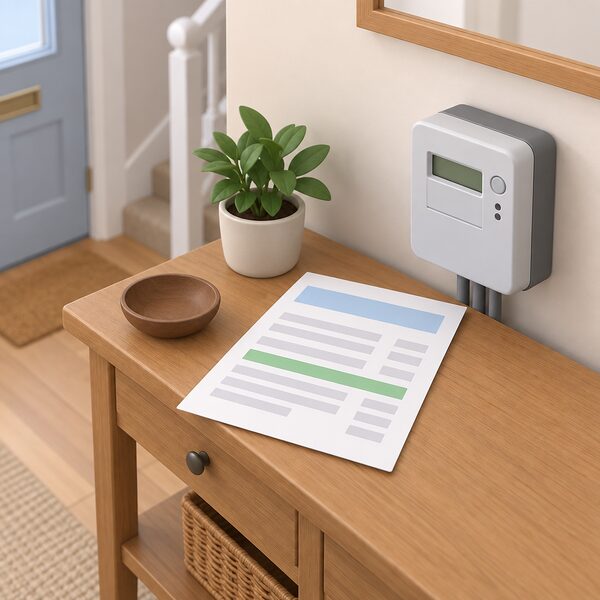
Repayment ran through the electricity bill. A householder repaid through a charge added to their electricity bill1. Green Deal loans were paid back over time with interest, through energy bills2. The charge was collected by the electricity supplier and passed to the company managing the loan, which is why the plan is tied to the meter rather than to a bank account.
The amounts were modest by retrofit standards. The estimated average initial loan amount per Green Deal plan was around £3,6006. That figure is an average across plans recorded to December 2022, and it reflects a scheme that mostly funded smaller packages rather than whole-house retrofit.
Early repayment was possible but not free of consequence. A householder wanting to repay early would get a letter telling them how to do this and about any charges from the company that manages the loan1. Those charges are set by the loan manager, not by government.
The dependence this creates is specific. A household with a live plan depends on the electricity supplier to collect and remit the charge correctly, and on the loan manager for any query about the balance. It cannot shop around to escape the charge by switching supplier, because the obligation sits on the meter.
A loan attached to the property, not the person: what buyers and tenants inherit
This is the feature that still catches people out. The loan is attached to a property, rather than an individual, so if a homeowner sells their home, the loan will pass to the buyer2. If you move into a property that has a Green Deal loan, it is your responsibility to repay it1.
Disclosure is a legal duty, not a courtesy. Your seller or landlord is legally required to tell you about the Green Deal loan1. You must be told before the buyer or tenant moves into the property1. The timing matters: the disclosure has to come before occupation, not at completion or in a welcome pack afterwards.
The Energy Performance Certificate carries the detail. Where an EPC relates to a building which is a green deal property, it must include the information specified in the relevant schedules for each green deal plan with payments still to be made8. That includes a statement indicating that a green deal plan is a type of unsecured loan, and whether or not it is a regulated consumer credit agreement8.
Several other prescribed statements may appear, depending on the property's history:
- Where the provider knows or believes a material alteration has been made, wording must be included noting that the property may have been altered in a way which affects the operation of the improvements installed under the plan8.
- Where an improvement has been removed before the end of its payment period, wording must note that improvements may have been removed and that the estimated savings may not be realised8.
- Where the plan provides for improvement-specific instalments to increase, a statement indicating by how much and when the instalments will increase must be included8.

For a buyer, this is a due diligence item with a number attached. The plan disclosure gives the remaining instalment, the term and any scheduled increase, which together determine what the property actually costs to run. For energy independence, an inherited plan is a fixed cost on the meter that cannot be refinanced away by changing supplier.
Uptake and why the scheme is judged a failure
The scheme's own numbers are unflattering. It cost taxpayers £240 million including grants to stimulate demand, and the National Audit Office found it had not generated additional energy savings4. It was closed in 2015 due to low take-up and concerns about industry standards5. The estimated average initial loan amount per plan, around £3,6006, is consistent with a scheme that never reached the scale of whole-house retrofit.
The Committee on Climate Change's assessment was that secured finance offers the lowest cost of borrowing, while Green Deal reform could be important for households who cannot access secured finance20. That is the scheme's real constituency: households without access to a mortgage or a competitive loan. For them, a charge on the bill was the only route to borrowing, even at a higher effective cost.
The policy recommendation that followed was to implement the Green Finance Taskforce recommendations around green mortgages, such as preferential rates for owners of energy-efficient and low-carbon homes and green loans to cover the upfront costs of home sustainability improvements21. That is a different model: reward the efficient home through the mortgage rather than finance the work through the meter.
The failure was not unique to the Green Deal. The Green Homes Grant Voucher Scheme, which closed to new applications on 31 March 202122, was assessed as an overly complex scheme that could not be delivered to a satisfactory level of performance in the time available24. The Domestic Renewable Heat Incentive closed to new applicants on 31 March 202225. The pattern across the era is short-lived schemes with complex rules.
For households, the lesson is about durability. A scheme that closes mid-stream leaves participants holding obligations that outlast the programme, which is exactly what happened with green deal plans.
The EPC: the assessment that underpinned Green Deal plans and still shows the measures
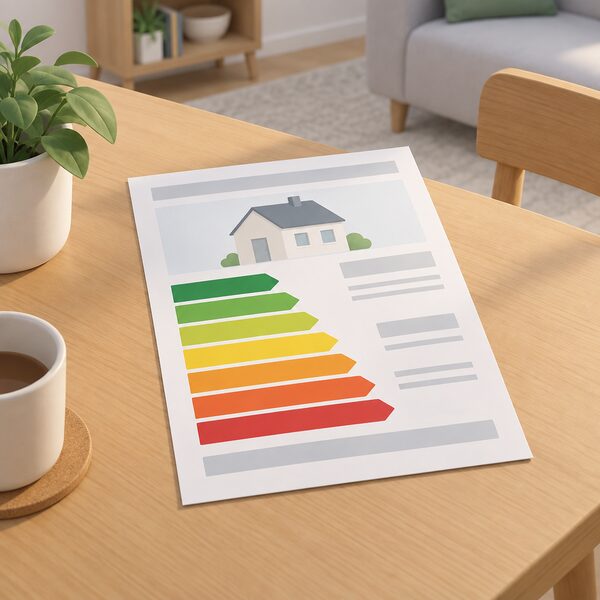
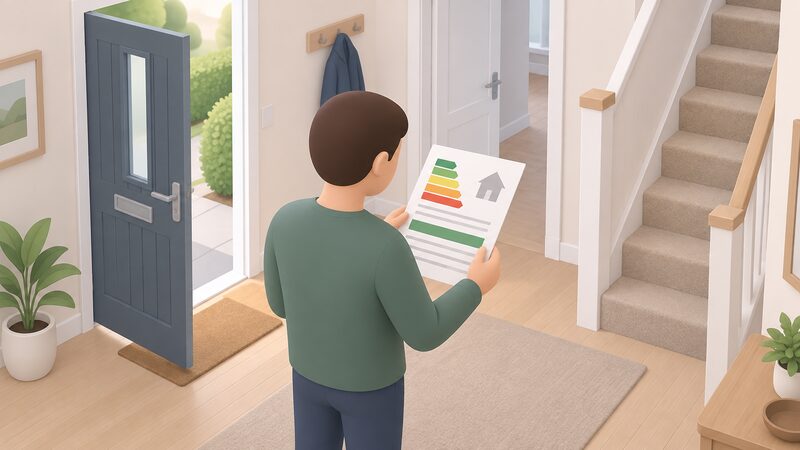
The Energy Performance Certificate was the assessment layer under the Green Deal, and it remains the document that records what was done. Each EPC comes with a report setting out cost effective measures to improve energy efficiency and energy rating, such as low energy bulbs or upgrading insulation27. The EPC contains information on potential energy costs and carbon dioxide emissions, with a coloured chart showing how energy efficient the building is or could be27.
For green deal properties, the EPC carries additional prescribed content. EPCs for green deal properties must include the information specified in the relevant schedules for each green deal plan with payments still to be made8. That is why the EPC, not the plan paperwork, is usually where a buyer first sees the charge.
There was a known gap in the record. Consumer Futures recommended that reporting of Green Deal accredited measures should be required, however they are funded, noting that improvements were not lodged on the EPC database unless funded in part by Green Deal finance11. In other words, a household that paid for the same measures itself might leave no trace on the certificate.
The EPC regime has since changed in Scotland. Where a property is sold or let again within the one-year window that allows an old-style EPC to be reused, it cannot rely on the old-style EPC a second time, and must have a new-style EPC and property report for that next sale or let28. Large non-domestic buildings visited by the public that already display an old-style EPC after 30 April 2028 can carry on using it, but only until it expires or 30 April 2033, whichever comes first28.
In Northern Ireland, Energy Performance Certificates are administered separately, and the nidirect guidance sets out the domestic requirements there27. For a green deal property, the practical point is the same across Great Britain: the certificate is the disclosure document, and it should be read before exchange rather than after.
Complaints, damage and billing disputes: where householders stand now
The complaint route starts with the provider. Contact your Green Deal provider if you have a complaint1. If the complaint is not resolved within 8 weeks of contacting your provider, it can go to either the Financial Ombudsman Service or the Energy Ombudsman depending on what the complaint is about1.
The split between the two ombudsmen is by subject matter. The Financial Ombudsman Service handles cases where you think you were mis-sold the Green Deal, for example if your Green Deal provider did not make you aware of the facts1. The Energy Ombudsman can review disputes with Green Deal providers if they are unable or unwilling to help if something goes wrong with a Green Deal plan29. The Energy Ombudsman's remit covers energy supplier, energy broker, network operator, green deal or heat network supplier disputes29.
That failure is the sharpest limit on the scheme's legacy. A plan's improvement guarantee runs for at least five years7, but a guarantee is only as good as the company standing behind it. Where the installer or provider has ceased trading, the household's remedy is against whoever remains, which may be the loan manager for billing matters and nobody for defective work.
For billing disputes, the charge appears on the electricity bill, so the supplier is the first point of contact for the amount collected, while the loan manager holds the balance and early repayment figures. Damage disputes are different again, and the eight-week escalation applies to them as complaints about the plan.
What replaced it and where energy efficiency funding goes next
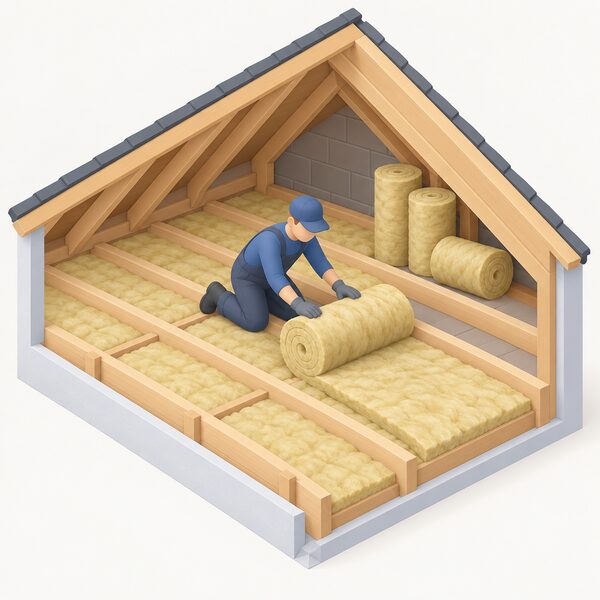
Nothing replaced the Green Deal as a pay-as-you-save mechanism. What followed was a sequence of grant schemes, each with its own eligibility rules and its own closure date. The Green Homes Grant Voucher Scheme closed to new applications on 31 March 202122. The Domestic Renewable Heat Incentive closed to new applicants on 31 March 202225. The Home Upgrade Grant served off-gas homes and has closed.
The current landscape is grant-led rather than loan-led. The Energy Company Obligation funds insulation such as loft, roofs and walls15, and ECO4 Flex operates through local authority flexible eligibility30. The Warm Homes: Local Grant funds insulation, energy-efficient heating systems, and renewable energy installations14. The Warm Homes Plan is described as delivering solar panels, batteries, heat pumps and insulation16. Regional funds continue alongside: the West Midlands Combined Authority has funded insulation, new doors and windows, solar panels, and greener and smarter heating systems17, and an earlier round funded better insulation, new doors and windows, and greener heating systems18. The Welsh Optimised Retrofit Programme funds projects including PV, environmental sensors, cavity wall insulation, part wall insulation, triple glazing, doors, loft insulation and TrustMark PAS19.
Delivery capacity is the recurring constraint. Birmingham City Council's end of ECO announcement noted that installer partners City Energy and Next Energy were no longer able to secure funding from energy companies31. That is the same fragility that undid the Green Deal: a scheme is only as durable as the supply chain delivering it.
For a household's energy independence, the shift from loan to grant changes the dependence. A grant leaves no charge on the meter and no obligation passing to a future buyer. A loan, as the Green Deal showed, does both. The trade-off is availability: grants are means-tested or area-targeted, while the Green Deal was open to any home owner, landlord or tenant whose package cleared the golden rule1.
Where a household is weighing current options, the comparison pages set out how the grant schemes differ, including Green Deal vs Boiler Upgrade Scheme and the wider closed home energy grants that householders still search for. The Energy Company Obligation and ECO4 are the main supplier-funded routes now, with ECO4 Flex for local authority eligibility. For households without access to secured finance, the interest-free loans for home energy page covers the lending that has replaced pay-as-you-save, and grants and energy independence sets out what each model means for a home's autonomy. The home energy grants pillar covers the full set.
Sources31 cited
- Green Deal energy saving measures, GOV.UK, 2026-09-17
- The Green Deal and the Green Homes Grant, House of Commons Library, 2026-05-13
- Energy Performance Certificates and green deal plans, legislation.gov.uk, 2013-01-27
- Investigation into the Department of Energy and Climate Change's loans to the Green Deal Finance Company, National Audit Office, 2016-04-14
- Green Deal closure and low take-up, House of Commons Library, 2015
- Household Energy Efficiency Statistics detailed release, Department for Energy Security and Net Zero, 2023-03-30
- The Green Deal Framework Regulations 2013, legislation.gov.uk, 2013
- Green deal property definition and EPC disclosure, legislation.gov.uk, 2025
- Minor consequential improvements and Part L, Department of Energy and Climate Change, 2012-12
- The Green Deal: energy efficiency improvements, Energy and Climate Change Committee, 2011-12
- Green Deal watching brief part 2, Consumer Futures, 2014-02
- Microgeneration strategy for Scotland, Scottish Government, 2012-06-22
- How savings figures are calculated under the Green Deal's golden rule, GOV.UK, 2013-01-30
- Home and business grants, schemes and advice, East Herts Council, 2026-09-17
- ECO4 Flex open, South Cambridgeshire District Council, 2026-09-17
- DESNZ annual report and accounts 2025 to 2026, Department for Energy Security and Net Zero, 2026-09-17
- Mayor's plan to improve living standards and cut energy bills, West Midlands Combined Authority, 2025-01-30
- £70m of new funding to improve energy efficiency, West Midlands Combined Authority, 2023-03-22
- Optimised Retrofit Programme: 3 funded projects, Welsh Government, 2023-04-26
- Reducing the cost of capital for household low carbon investment decisions, Committee on Climate Change, 2014-07
- UK homes unfit for the challenges of climate change, Committee on Climate Change, 2019-02-21
- Green Homes Grant Voucher Scheme closure, Public Accounts Committee, 2022-05-17
- Green Homes Grant Voucher scheme closure, Public Accounts Committee, 2021-04-30
- Green Homes Grant, National Audit Office, 2021-09-08
- Domestic Renewable Heat Incentive, Ofgem, 2022-03-31
- Domestic Renewable Heat Incentive annual report April 2024 to March 2025, Ofgem, 2025-07-31
- Energy Performance Certificates, nidirect, 2026-02-26
- EPCs are changing, Scottish Government, 2026-08-24
- How we can help, Energy Ombudsman, 2026-09-19
- Heat in buildings: analysis of responses, Scottish Government, 2022-05-10
- End of ECO announcement, Birmingham City Council, 2026-09-20
 Closed Energy PoliciesIf a scheme you used has closed, do you still get paid?
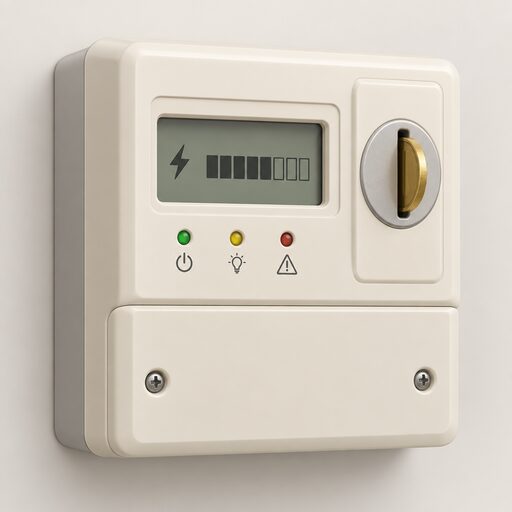 Prepayment and Pay As You GoHow prepayment and pay as you go energy tariffs work in the UK: meter types, top-ups, emergency credit, debt repayment through the meter, price cap treatment and how households move to a credit meter.
 The Full Tariffs GuideWhich energy tariff suits how you live, and will switching really save you money?
 Green Energy TariffsDoes a green tariff really mean greener electricity comes into your home, or just that your supplier buys renewable certificates to match what you use?
 Solar Export PaymentsIf you have solar panels, how do you actually get paid for the electricity you send back to the grid?
 Dual Fuel TariffsExplains what a dual fuel tariff is, how discounts and single billing work, and where separate gas and electricity contracts remain available.