

In this guide
Energy grant scams work by borrowing the credibility of real schemes. The Energy Ombudsman reports a recent increase in fraudulent emails targeting energy consumers that falsely claim to be from the Ombudsman itself, and it states plainly: "We'll never ask consumers to open a new energy account, nor will we request sensitive personal information via online forms or links."1
The schemes being imitated are real. The Energy Company Obligation requires medium and large energy suppliers to support energy efficiency improvements for eligible households, and it is regulated by Ofgem3. What it is not is a grant scheme: "ECO4 is not a grant scheme as it is your energy providers decision which retrofit projects that they choose to fund"4. That single distinction explains most of the confusion that cold callers exploit.
The protection that matters most is structural rather than verbal. All works completed under government energy efficiency schemes have to be undertaken by a TrustMark-registered installer, and TrustMark is a government endorsed quality scheme5. A caller who cannot name a TrustMark registration, or who resists a check against the register, has answered the question already.

What a genuine energy grant approach looks like
A genuine approach starts from a scheme that exists, names it accurately, and can be checked. The published schemes vary in how they reach households. Some are run by councils and devolved bodies, some by suppliers, and some by charities and advice services working alongside them.
| Nation | Scheme or route | How it reaches households |
|---|---|---|
| Scotland | Scottish Welfare Fund Crisis Grant | For a household where "an unexpected crisis happens"9 |
| England | Warmer Homes West Midlands | Funded through Ofgem's Energy Redress Scheme, "paid for by energy companies who may have breached Ofgem administered rules"10 |
| Wales | Green Homes Wales | "access to grant funding alongside loans for specific energy efficiency measures"11 |
| Scotland | City of Edinburgh Council | UK Government-backed schemes regulated by Ofgem12 |
The pattern across all of them is that the scheme has a named administrator, a published eligibility route and a documented process. Tameside Council's service is explicit about its own limits: "Your Home, Better does not offer grants or funding, but can identify sources that could help towards the costs of home energy projects"13. That is what an honest intermediary sounds like. It does not promise money it does not control.
A household can expect a genuine process to involve an eligibility check, a property assessment, and a written record of what is proposed. East Herts Home Energy Support Service, for example, offers "Information on grants and help with checking your eligibility (including all of the grants listed below)", alongside benefits support, supplier switching advice, energy saving advice, debt advice and referral to other organisations or contractors14. Referral to a contractor is the end of an advice process, not the opening line of a cold call.
The real schemes behind legitimate offers: ECO4 and what it funds
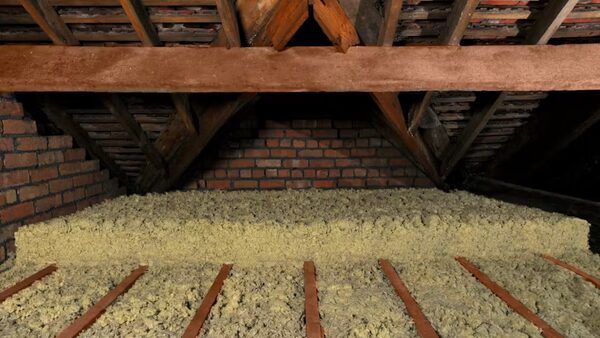
ECO4 is the scheme whose name appears most often in fraudulent approaches, precisely because it is real, large and unfamiliar to most households. It requires medium and large energy suppliers to support energy efficiency improvements for eligible households4. It is funded by energy companies and not the Council, as Birmingham City Council states in its own announcement16.
What it funds is broad, and the councils that describe it use similar language:
- Insulation, boilers and central heating, and solar and renewable energy technologies4
- Heating improvements and insulation17
- Upgrades to heating or improved home insulation18
Ceredigion notes the same supplier obligation structure: "It is important to note that ECO4 is a supplier obligation and not a grant scheme"19.
That structure has consequences a household should understand before agreeing to anything. Because the money is a supplier obligation rather than a public grant, the decision about which projects to fund sits with the energy provider, not with the household and not with the council4. A caller who presents ECO4 as an entitlement that has already been approved for a specific address is misrepresenting how the scheme works.
The scheme has also changed over time. The Welsh Government has issued a written statement on support for householders impacted by the closure of the Energy Company Obligation scheme, which is a reminder that scheme names and rules move20. A cold caller using a scheme name from several years ago, or a name that has since closed, is a warning sign in itself. Households looking for the current position on supplier-funded work can read the guide to the Energy Company Obligation and the detail on ECO4.
TrustMark: the Government Endorsed Quality Scheme for finding an installer
TrustMark is the single most useful check available to a household, because it is the register that government scheme work is required to use. Bristol City Council describes it as "a government endorsed quality scheme"5. Leeds City Council advises households to "consider searching a competent person register, such as TrustMark - Government Endorsed Scheme For Work Done Around You"18. The requirement is not optional: all works completed under government energy efficiency schemes have to be undertaken by a TrustMark-registered installer6.
TrustMark's role extends beyond the initial installation. The Department for Energy Security and Net Zero confirmed that it nominated TrustMark to directly support customers of the failed supplier CES20. TrustMark can be reached on 0333 555 1234, by email at disputes@trustmark.org.uk, or through an online form at its homeowner support page20.
The register also produces data that shows the scale of scheme work. There were around 14,700 Warm Homes: Local Grant measures lodged in the TrustMark data warehouse up to the end of July 2026, covering around 6,700 households21. That is a useful benchmark: a genuine scheme leaves a record.
TrustMark has not been without criticism. The Public Accounts Committee found that neither TrustMark nor the Department for Energy Security and Net Zero have been able to provide minutes of meetings which took place between 2022 and 202422. As of November 2025, 22 installers had been fully reinstated after meeting requirements on TrustMark's "robust six-point plan", including full remediation of the problems identified22. Both facts are worth knowing: the register is the best available check, and it has had to correct itself.
Renewable Energy Consumer Code: protection when buying heat and power systems
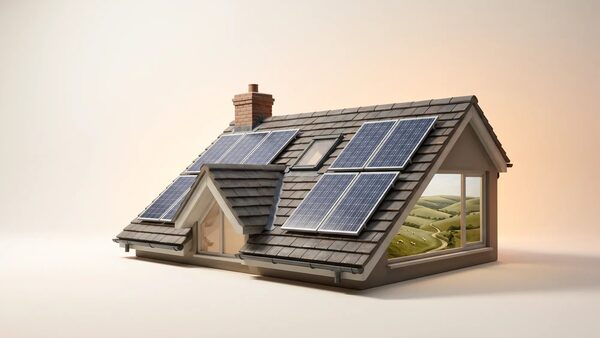
Where an approach concerns solar panels, heat pumps or other generating technology, a second layer of protection applies. The Renewable Energy Consumer Code sets out "the standards applicable to the selling or leasing of small-scale heat and power generators, whether from renewable or other low carbon sources, to domestic consumers"23. It was formed in 2006 and is sponsored and run by Renewable Energy Assurance Ltd23.
The Code covers the parts of a transaction where pressure selling tends to appear: "marketing, pre-contractual information, quotations, deposits, contracts, guarantees and after-sales service"23. It also dovetails with the Microgeneration Certification Scheme23, which certifies, quality assures and provides consumer protection for microgeneration installations and installers including solar photovoltaic panels, biomass, wind, heat pumps and heat products19.
For a household, the practical value is that a seller who claims to be bound by the Code can be held to its standards on quotations, deposits and after-sales service. A seller who cannot say whether they are a member, or who dismisses the question, is telling the household something useful. The general consumer protection framework sits behind both: consumer protection rights apply to energy retrofit contracts as they do to any other purchase3.
How to verify a caller, letter or visitor is genuine
Verification is a short process, and the published guidance describes the warning signs precisely. The Energy Ombudsman lists the characteristics of fraudulent emails using its name:
- They "Use the Energy Ombudsman or a broker name and logo without permission"
- They reference a complaint or review the consumer has not raised
- They contain links to fake forms or websites
- They "Pressure the recipient to act quickly"
- They come from a free email service such as Gmail
- They use a misspelling of a company name2
The information requested is the clearest signal. The forms in these emails "often request sensitive personal information such as full name, address, date of birth, or bank details"2. The Ombudsman states: "We'll never ask you to open a new energy account or share personal details via online word documents"24.
A household can verify an approach by working from the scheme name backwards rather than from the caller forwards. The Meter Point Administration Number is "the unique identifier for your electricity supply point"25, and a genuine scheme will hold records that match a property. A caller who cannot match a reference to the property, or who asks the household to supply it, has inverted the process.
"Report the email to the National Cyber Security Centre (NCSC) by forwarding it to report@phishing.gov.uk"
The same guidance says not to complete any forms or provide personal information, to contact the Energy Ombudsman directly using the details on its official website, and to delete the email2.
Pressure selling and negative marketing: the tactics to refuse
Pressure selling in this sector has a recognisable shape: urgency, an expiring allocation, a claim that the household has been selected, and a request for a decision before anything can be checked. The published guidance does not describe these tactics in the abstract, but the scam characteristics it lists include exactly this pattern, with emails that "Pressure the recipient to act quickly"2.
The Energy Ombudsman also draws a line at the other end of the process. It will refuse to accept a case "if it's apparent that the consumer is pursuing a dispute without merit and intends to cause inconvenience, harassment or expense to the supplier", which it calls a vexatious complaint1. That matters for households who have been badly treated: the complaints route is real, but it is for genuine disputes.
For solar panels and heat pumps specifically, the Renewable Energy Consumer Code's coverage of marketing and pre-contractual information is the relevant standard23. A seller operating under the Code is bound on how it markets and what it discloses before a contract is signed.
Warranties, guarantees and what protection covers if a firm fails
The warranty position on scheme-funded work is set out in TrustMark guidance: "a minimum two-year warranty for work, and a minimum 25-year guarantee for certain measures installed under the ECO"7. The 25-year figure applies to certain measures, not to everything, and the two-year figure is the floor for the work itself.
| Protection | What it covers | Source |
|---|---|---|
| Minimum two-year warranty | Work carried out under the scheme | 7 |
| Minimum 25-year guarantee | Certain measures installed under the ECO | 7 |
| National Energy Foundation repairs | Some homes with defective ECO4 and GBIS solid wall insulation, where the installer has gone out of business and the guarantee was cancelled, fraudulent or missing | 28 |
| Guaranteed Standards payments | Automatic payments to affected consumers when a supplier fails to meet minimum performance standards | 29 |
| Energy Ombudsman award | Industry-mandated payments of £30 for the failure to complete a transfer | 30 |
Where a firm has failed, the position is more complicated and worth stating carefully. The National Energy Foundation, a domestic energy charity, "will also cover the cost of relevant repairs for some homes with defective ECO4 and GBIS solid wall insulation, where the installer has gone out of business and the guarantee was cancelled, fraudulent or missing"28. That is a targeted safety net for solid wall insulation, not a general guarantee scheme.
For energy supply itself, the protections work differently, because they rest on regulated standards rather than on an installer's written guarantee. Guaranteed Standards set out minimum performance standards which all energy suppliers must meet and, when they do not, automatic payments are issued to the affected consumers29. Where a complaint is not resolved, the Energy Ombudsman has awarded industry-mandated payments of £30 for the failure to complete a transfer30.
There is also a narrow legislative defence worth knowing about. Regulation 37 provides a "Defence when energy performance certificate unobtainable"31. It is a specific provision rather than a general protection, but it shows that the framework anticipates situations where the usual documentation cannot be produced.
Where to get free help: Citizens Advice and the official helplines

Free help exists and is well documented. Citizens Advice offers information and support on struggling to pay bills, problems with an energy supplier or supply, saving energy at home and getting a better energy deal32. In England and Wales it can be reached on 0808 223 1133, with a Welsh language line on 0808 223 1144, open Monday to Friday, 9am to 5pm3. In England there is also a number on 0808 144 884432.
The Energy Ombudsman takes energy complaints on 0330 440 1624, with option 3 for heat networks1. Ofgem publishes its own guidance on complaining about an energy supplier or network operator26, and on getting help if a household cannot afford its energy bills32.
In Northern Ireland, NI Energy Advice offers free advice on saving energy in your home, energy efficiency grants, and oil buying clubs33. Belfast City Council also runs cost of living and winter support33. In England, the Local Energy Advice Programme provides a "FREE telephone advice service to help with benefits, money and bill problems"13.
For reporting rather than advice, the routes are specific. Suspected fraud in the Energy Company Obligation goes to counterfraud@ofgem.gov.uk8. Suspected scam emails go to the National Cyber Security Centre at report@phishing.gov.uk2. Ofgem publishes contacts, guidance and resources for the Energy Company Obligation8.
What this means for a household's energy independence
A grant-funded upgrade changes what a home can do for itself, and the scam risk sits directly on that path. Insulation and heating improvements funded through ECO reduce the energy a home needs to buy, which is the substance of independence4. Solar and renewable technologies funded under the same scheme change where the energy comes from4.
What remains is dependence on the scheme's own structure. ECO4 is a supplier obligation, so the decision about which projects to fund sits with the energy provider4. A household that has had work done under a government scheme still depends on the installer's warranty and, for certain measures, on a 25-year guarantee that only holds if the firm survives7. Where a firm has failed, the National Energy Foundation covers repairs for some homes with defective ECO4 and GBIS solid wall insulation, but only where the guarantee was cancelled, fraudulent or missing28.
The verification steps in this guide are therefore not administrative. A TrustMark registration is the mechanism that ties a scheme installation to a body that can be held to account6, and the Renewable Energy Consumer Code is the mechanism that ties a solar or heat pump sale to published standards on quotations, deposits and after-sales service23. Without those, a household has paid for an outcome it cannot enforce.
For the wider picture of what is available and how the schemes fit together, the home energy grants guide sets out the current landscape, and the ECO4 eligibility page covers who qualifies for supplier-funded work.
Sources33 cited
- Energy Ombudsman FAQs, Energy Ombudsman, 2026
- Guidance on scam emails claiming to be from Energy Ombudsman, Energy Ombudsman, 9 February 2026
- Consumer protection rights, GOV.UK, 2026
- ECO4 Scheme, West Lindsey District Council, July 2025
- Get a grant or loan to improve your home energy efficiency, Bristol City Council, 2026
- Spray foam insulation and mortgages, House of Commons Library, 2026
- Green Homes Grant Voucher Scheme, House of Commons Library, 13 May 2026
- Energy Company Obligation contacts, guidance and resources, Ofgem, 17 September 2026
- Scottish Welfare Fund crisis grants, mygov.scot, 17 September 2026
- £1m funding awarded to help keep region's homes warm this winter, West Midlands Combined Authority, 3 November 2022
- Green Homes Wales, Development Bank of Wales, 17 September 2026
- Financial help for energy efficiency and low carbon heating improvements, City of Edinburgh Council, 17 September 2026
- Grants and funding, Tameside Council, 17 September 2026
- Home and business grants, schemes and advice, East Herts Council, 17 September 2026
- Nest home energy support scheme customer charter, Welsh Government, 1 April 2024
- End of ECO announcement, Birmingham City Council, 20 September 2026
- Home energy efficiency, Bridgend County Borough Council, 17 September 2026
- Energy Company Obligation (ECO) scheme, Leeds City Council, 20 September 2026
- ECO flexibility funding, Ceredigion County Council, 17 September 2026
- Written statement: support for householders impacted by closure of the Energy Company Obligation scheme, Welsh Government, 13 March 2026
- Warm Homes: Local Grant statistics, August 2026, GOV.UK, 2026
- Public Accounts Committee report, House of Commons Public Accounts Committee, November 2025
- Renewable Energy Consumer Code, Chartered Trading Standards Institute, 20 September 2026
- Disputes where a company believes it has acted appropriately, Energy Ombudsman, 20 September 2026
- Domestic and homeowner connections help and support, National Energy System Operator, 17 September 2026
- Complain about your energy supplier or network operator, Ofgem, 2026
- Complain about your energy supplier or network operator, Ofgem, 2026
- Greater protections to restore families' trust in home upgrades, GOV.UK, 17 June 2026
- Smart Meter Guaranteed Standard statutory consultation, Ofgem, 8 August 2025
- Switching case study, Energy Ombudsman, 20 September 2026
- Regulation 37: Defence when energy performance certificate unobtainable, legislation.gov.uk, 17 September 2026
- Getting help if you can't afford your energy bills, Ofgem, 17 September 2026
- Cost of living and winter support, Belfast City Council, 20 September 2026
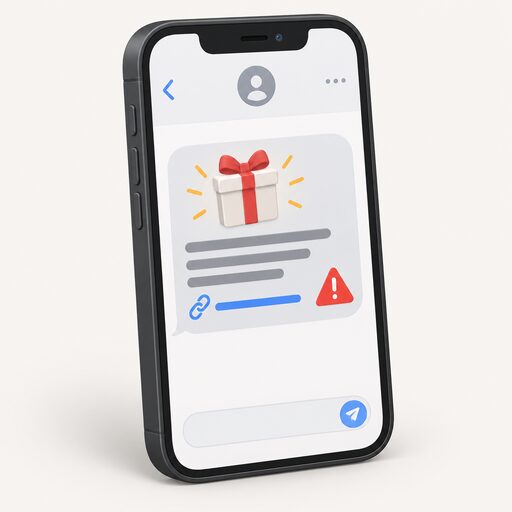 Spot and Report an Energy ScamThe common approaches used in rebate texts, grant cold calls, doorstep sales and fake supplier emails, and the checks that confirm whether contact is genuine.
 Scams and Mis-SellingHow energy supplier scams present, what the doorstep and phone selling rules require, the redress available when a contract was mis-sold, and how the Energy Ombudsman handles a dispute.
 Apply for a Home Energy GrantThe application sequence common to funded schemes: the checker, the survey or assessment, the installer, the paperwork and the sign-off.
 The Full Grants and Schemes GuideWhich grants can you actually get right now, and how do you apply for them?
 Insulation Scams and Cold CallsHow funded insulation mis-selling works, from the cold call and the fake 'illegal insulation' claim to spray foam removal bills, plus the TrustMark check, the guarantee position, and where to report a scam.
 The Full Installers GuideHow do you find an installer you can trust, and what should you check before signing anything?