

In this answer
Short answer
A letter about insulation can be genuine and still not be an offer. Ofgem administers the Energy Company Obligation (ECO) and the Great British Insulation Scheme (GBIS), and it does write to households in some circumstances, including to properties affected by poor quality wall insulation1. Energy suppliers and their installers also write to households under the same schemes. The question is not simply whether Ofgem exists, but whether the letter describes what the scheme actually does.
The single most useful test is this: Ofgem states that ECO is not a grant scheme, and that different companies or installers may provide different levels or types of support2. A letter that presents insulation as fully funded, automatic, or already approved is describing something the scheme does not promise. Eligibility for ECO does not necessarily mean an energy supplier or installer will decide to install measures3.
Timing matters as much as wording. Applications for the Great British Insulation Scheme have now closed4, and the service to check eligibility for free or cheaper home insulation has closed5. The Energy Company Obligation is due to end on 31 December 2026, and councils or suppliers may stop taking applications sooner. A letter arriving now that invites a fresh application to a closed scheme is a strong warning sign.
Why a letter about insulation arrives at all
The Energy Company Obligation started in 2013 and requires energy suppliers to fund heating and insulation measures8. It is paid for through the supplier obligation, which is recovered through energy bills, not through a household application to government. That structure explains why letters come from suppliers and installers rather than from a single national body, and why the same household can be contacted by more than one company.
Ofgem's role is administrative. It sets out procedures for administering the Great British Insulation Scheme9, and it is described in government's own impact assessment as the scheme administrator, with delivery measured by Ofgem10. Suppliers must provide Ofgem with information on projects delivered under the scheme11. Local authorities that operate flexible eligibility notify Ofgem of households for which declarations have been issued, using a declaration notification template12.
That reporting relationship is narrow. It is not a general licence for a supplier to hand a household's details to whichever installer then writes to them. A letter that claims Ofgem has passed details to a named company is making a claim about a data flow that the published rules do not describe.
What the schemes fund is broad. ECO4 covers insulation, boilers and central heating, and solar and renewable energy technologies13, and ECO funding covers insulation such as loft, roofs and walls14. One restriction is worth knowing because it contradicts many letters: ECO4 will not provide for loft or cavity wall insulation on their own3.

What a genuine ECO letter can and cannot promise

A genuine letter can tell a household that measures may be available, that a survey is needed, and that support levels vary. It cannot promise a specific outcome before assessment, because the scheme rules do not work that way.
Ofgem's own wording is the clearest guide: "ECO is not a grant scheme and as such, different companies or installers may provide different levels or types of support"2. Two households on the same street can therefore be offered different packages, or nothing at all. The Derbyshire County Council guidance states the position directly: "eligibility for ECO doesn't necessarily mean that an energy supplier or installer will decide to install energy efficiency measures"3.
There is also a compliance layer that a genuine letter will not misrepresent. Government consulted on updating the wording in the ECO order to clarify Ofgem's ability to reject non-compliant measures, without changing the definition of compliance15. In other words, an installer's involvement is not the same as an approved installation, and measures can be rejected after the fact.
| What a letter may say | What the rules support |
|---|---|
| Measures may be available subject to survey | Yes, support levels vary by company or installer2 |
| You are eligible, so work is approved | No, eligibility does not mean a supplier will install3 |
| Loft or cavity wall insulation alone | No, ECO4 will not provide for these on their own3 |
| Insulation, heating, solar technologies | Yes, these are within scope13 |
For a household, the practical consequence is that a letter is an opening, not a decision. Nothing about the scheme removes the need to read what is being offered, who is offering it, and what the household is being asked to sign or pay.
The signs of a fake Ofgem or insulation letter
Several features of the genuine process are hard to fake convincingly, and their absence is informative.
Ofgem verifies the identity of the individual confirming consent16. Where a property is owned by an organisation, a Letter of Authorisation tells Ofgem the name of the person authorised to provide property owner consent on behalf of the organisation which owns the property16. A letter that asks a householder to confirm consent without any identity check, or that treats a doorstep signature as sufficient, is not following that process.
Ofgem also commissions audits. A statistical audit report summarises the results of a randomised sample of audits, commissioned by Ofgem, to understand the extent of issues with solid wall insulation installed under ECO4 and GBIS17. A letter that claims all installations are inspected and guaranteed as a result is overstating a sampling process.
Other markers to weigh: a demand for payment before any survey; a request for bank details, card details or a deposit; pressure to sign on the doorstep; a claim that the scheme is about to close today; and a phone number or email address that does not match the ones Ofgem publishes. Ofgem's published contact addresses are scheme-specific, including GBIS.enquiry@ofgem.gov.uk for Great British Insulation Scheme enquiries7 and laflex@ofgem.gov.uk for local authority flexible eligibility compliance, declarations, notifications and statements of intent.

How to check a letter before you respond
Checking takes a few minutes and does not require contacting anyone named on the letter.
- Identify which scheme the letter names. ECO and GBIS are separate, with separate published guidance and separate contact addresses7.
- Look up the contact address on the Ofgem website rather than using the one printed on the letter. Boiler Upgrade Scheme enquiries, for example, go to BUS.Enquiry@ofgem.gov.uk19.
- Check whether the scheme is open. GBIS applications have closed4, and the eligibility checking service has closed5.
- Check the installer's claimed role against the rules. Suppliers report project information to Ofgem11; that is not the same as Ofgem endorsing a company.
- If the letter concerns poor quality wall insulation already installed, note that Ofgem is sending letters to all affected properties setting out next steps1. Those letters follow a known remediation process rather than offering new work.
Where a household wants to confirm a scheme position, the published enquiry routes are the reliable ones. Ofgem's Boiler Upgrade Scheme guidance gives BUS.Enquiry@ofgem.gov.uk19, and the Great British Insulation Scheme pages give GBIS.enquiry@ofgem.gov.uk7. Consultation and policy correspondence uses different addresses again, such as smartmetering@ofgem.gov.uk for responses to the smart metering consultation20, which shows how specific these routes are.
"For questions related to LA flex compliance, or declarations, notifications, and statements of intent, contact laflex@ofgem.gov.uk"
The scheme is closing: what that means for letters arriving now
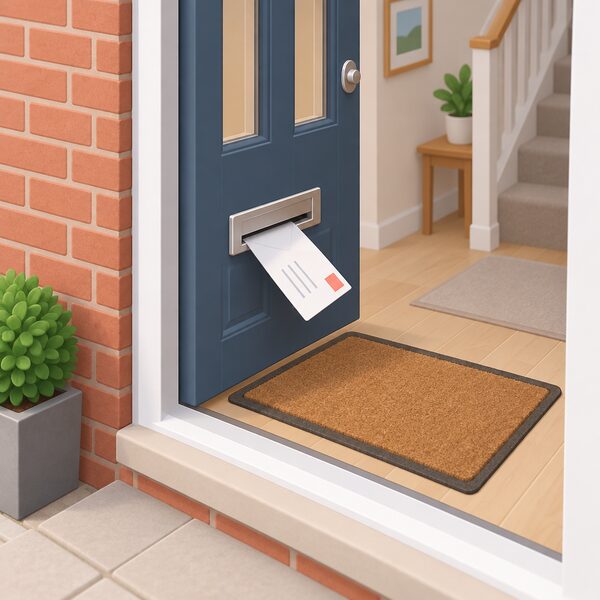
The window for new work is narrowing, and letters that ignore that are suspect.
Applications for the Great British Insulation Scheme have now closed4. The service to check if you are eligible for free or cheaper home insulation has closed5. Cheshire West and Chester Council records that the scheme ended on 31 March 2026 for new applications21. The Energy Company Obligation is due to end on 31 December 2026, and councils or suppliers may stop taking applications sooner.
There is a Welsh dimension. The Welsh Government has issued a written statement on support for householders impacted by the closure of the Energy Company Obligation scheme22. Where a household in Wales is contacted about ECO work, the closure position set out by the Welsh Government is the relevant official statement.
Reporting is also changing. Ofgem intends to add the Great British Insulation Scheme to its supplier performance reporting23, which means delivery under the scheme will be visible in published data rather than only in company claims.
For a household, the practical reading is straightforward. A letter dated now that offers a new application to GBIS is offering something that has closed. A letter about ECO work may still relate to an existing project, a remediation, or a complaint, and those are different propositions from a fresh installation.
If you have already responded: your next steps
Having replied to a letter is not the same as having lost anything, but the steps taken next matter.
If the letter concerned poor quality wall insulation, the remediation route is established. Ofgem is sending letters to all affected properties setting out next steps1, and government publishes guidance on what to do if you have poor quality wall insulation14. Householders dissatisfied with ECO installations carried out by installers other than CES should follow the standard ECO complaints process set out on the Ofgem website22. Complaints about insulation installed under the Great British Insulation Scheme follow the Ofgem energy company obligation complaints guidance5.
If money has changed hands or bank details have been given, report it. Suspected fraud can be reported by emailing counterfraud@ofgem.gov.uk or by calling 0207 901 73736. The same address appears in Boiler Upgrade Scheme guidance for reporting suspected fraud or misuse24. Ofgem will verify the identity of the individual confirming consent16, so a genuine process has an identity check at its centre.
On billing, Ofgem's back billing rules apply where a customer has not been told what they needed to pay through a statement of account before. That is the framework for disputed charges, and it is the opposite of an unexpected upfront demand.
For wider context on how these schemes have performed and what remediation looks like, see the ECO4 and GBIS insulation failures and insulation scams and cold calling. Households weighing what insulation does for independence from suppliers and the grid can read insulation and energy independence, and those checking what is still open can read closed insulation schemes.
Sources25 cited
- What to do if you have poor quality wall insulation, GOV.UK, 2025-01-23
- Energy Company Obligation: homeowners and tenants, Ofgem, 2026-09-17
- Energy Company Obligation ECO4 scheme, Derbyshire County Council, 2026-09-17
- Apply for the Great British Insulation Scheme, GOV.UK, 2026-09-17
- ECO4 scheme, West Lindsey District Council, 2025-07
- Guidance for FIT Generators V18, Ofgem, 2026-04-01
- Energy Company Obligation: contacts, guidance and resources, Ofgem, 2026-09-17
- The Energy Company Obligation, House of Commons Library, 2026-09-20
- Great British Insulation Scheme Delivery Guidance V1.1, Ofgem, 2024-04
- ECO4 and GBIS mid-scheme changes: final stage impact assessment, GOV.UK, 2025-04-07
- Great British Insulation Scheme: local authorities, Ofgem, 2026-09-17
- ECO4 Flex open, South Cambridgeshire District Council, 2026-09-17
- ECO4 and GBIS mid-scheme changes consultation, GOV.UK, 2024-11-14
- Solid wall insulation installed under ECO4 and GBIS: statistical audit results, GOV.UK, 2025-10-13
- Boiler Upgrade Scheme Letter of authorisation, Ofgem, 2026-09-17
- Complain about your energy supplier or network operator, Ofgem, 2026
- Bristol City Council ECO4 and GBIS Flexible Eligibility Statement of Intent, Bristol City Council, 2023-11-29
- Smart Meter Guaranteed Standard Statutory Consultation, Ofgem, 2025-08-08
- Support schemes, Cheshire West and Chester Council, 2026-09-17
- Written statement: support for householders impacted by closure of the Energy Company Obligation scheme, Welsh Government
- Supplier Performance Report Jul-Dec 2023, Ofgem, 2026-09-17
- Boiler Upgrade Scheme guidance for property owners V5, Ofgem, 2026-04
- Boiler Upgrade Scheme guidance for property owners v5.1, Ofgem, 2026-07
- What to do if you get a back bill, Ofgem, 2026
- What to do if you get a back bill, Ofgem, 2026
 Grant ScamsGrant schemes attract cold callers, doorstep sellers and fake approval letters using real scheme names.
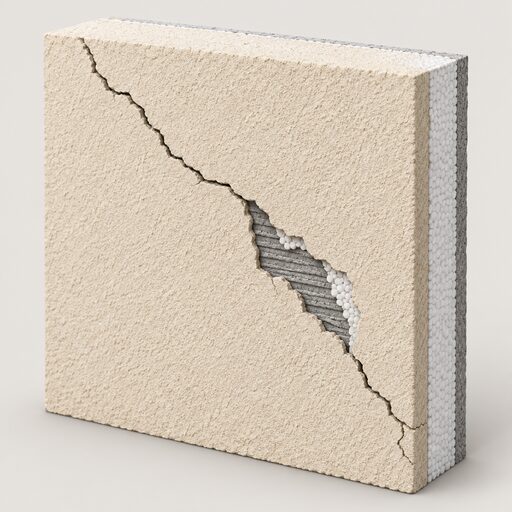 ECO4 and GBIS Install FailuresYour home may have insulation fitted under ECO4 or GBIS that was not done properly.
 Finding an Insulation InstallerHow to find, verify and check an insulation, glazing or ventilation installer in the UK: the registration schemes, trade bodies and guarantee arrangements that cover the work, how to compare quotes, what a written specification should state, and how complaints and disputes are handled.
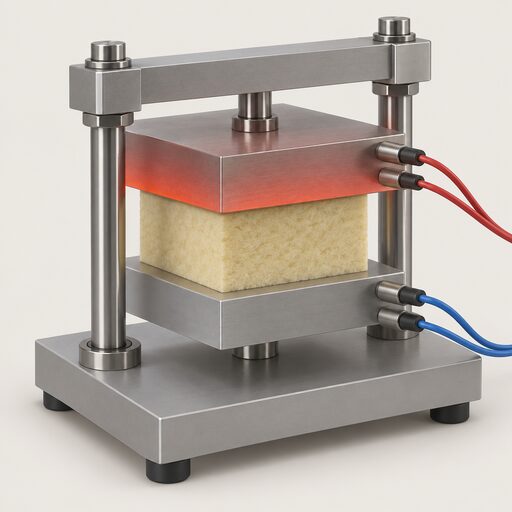 Insulation StandardsHow do you know your insulation was fitted to a proper standard, and who backs the guarantee if the installer disappears?
 Insulation Scams and Cold CallsHow funded insulation mis-selling works, from the cold call and the fake 'illegal insulation' claim to spray foam removal bills, plus the TrustMark check, the guarantee position, and where to report a scam.
 Checking an InstallerBefore you sign anything, how do you know your installer is genuine?