

In this answer
Short answer
The Great British Insulation Scheme eligibility test came down to two things: the council tax band of the property and its energy performance certificate rating. Households in council tax bands A to D in England, and A to E in Scotland and Wales, qualified through the general route where the home's EPC rating was band D or lower1. A second route, the low-income group, covered homeowners and tenants receiving at least one of a list of means-tested benefits1.
The scheme itself has closed. Ofgem's delivery guidance states that the Great British Insulation Scheme ran from 25 July 2023 to 31 March 20262, and the GOV.UK service to check eligibility has closed3. Ofgem's own summary of updates records that the scheme closed on 31 March 20264. Anyone searching for these rules now is looking at a closed scheme, and the eligibility criteria below describe who could have applied while it was open.
What the scheme was matters for reading the rules. It was a government energy-efficiency scheme administered by Ofgem, covering Great Britain, designed to deliver improvements to the least energy-efficient homes, tackle fuel poverty and reduce carbon emissions5. It was formerly known as ECO+ and complemented the Energy Company Obligation (ECO4)6. It was targeted at around 300,000 households7.
The two eligibility routes, and what each required
The scheme set out four eligibility routes in its declaration paperwork: General Eligibility, Low-income and Social Housing, In-fill, and LA Flex9. For a householder, the first two carried almost all the weight.
The general route was the council tax band and EPC test. Eligibility extended to households in lower council tax band properties, bands A to D in England and A to E in Scotland and Wales, so long as their energy efficiency rating was band D or lower7. That is the single most asked question about the scheme, and the answer is that both conditions had to be met together: a low band alone was not enough, and a poor EPC alone was not enough.
The low-income group was for homeowners or tenants who received at least one of Child Benefit, Pension Guarantee Credit, Income-related Employment and Support Allowance, Income-based Jobseeker's Allowance, Income Support, Universal Credit, Housing Benefit, or Pension Credit Savings Credit1. This route did not depend on the council tax band test in the same way, because it identified the household by benefit receipt rather than by property band.
A third path ran through local authorities and devolved administrations. Ofgem's flex guidance enables Local Authorities and Devolved Administrations to widen the eligibility criteria10, allowing participating bodies to refer households they consider to be living in fuel poverty or on a low income, and vulnerable to the effects of living in a cold home, who may not qualify via the standard criteria11. That is the route that reached households the band and benefit tests missed.

Who the scheme applied to, and where
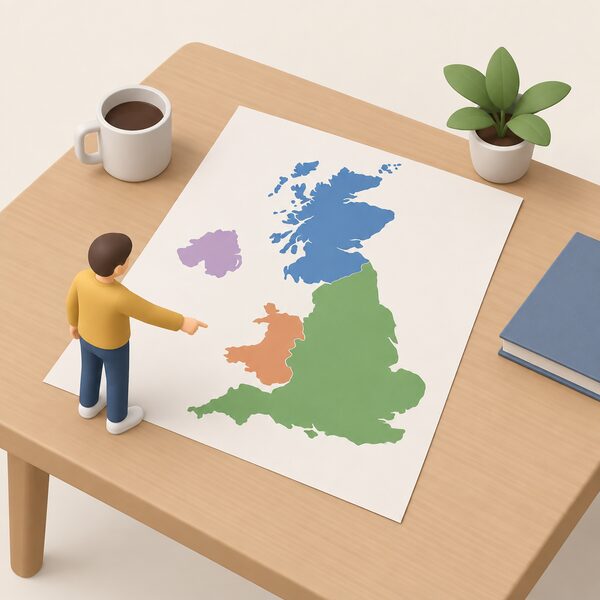
The scheme applied to England, Scotland and Wales7. It did not extend to Northern Ireland, which sits outside the Great Britain energy scheme framework and runs its own arrangements. Ofgem describes the scheme as operating in Great Britain5, and the statistics releases repeat the same territorial scope12.
Tenure was broad. The low-income group covered homeowners or tenants1, and independent guidance on the private rented sector confirms that landlords could access the Great British Insulation Scheme in England and Wales13. That matters because the private rented sector carries some of the worst housing stock, and the scheme was one of the few routes open to landlords to improve it.
There was one significant exception for the worst-rated rented homes. Households in England and Wales in EPC bands F and G were eligible only if either the property had registered a valid exemption or was not in scope of the private rented sector regulations14. In other words, a landlord could not use the scheme to sidestep the minimum energy efficiency standards that already applied to their property.
The scheme's purpose was framed around the least energy-efficient homes in Great Britain, to help tackle fuel poverty and reduce carbon emissions5. The independent response to its launch described it as government support to help eligible households reduce their energy bills15.
Conditions, limits and what eligibility did not promise
The most important condition is the one householders most often missed. Ofgem states that eligibility for the Great British Insulation Scheme does not guarantee that an energy supplier or installer will decide to install measures1. Meeting the criteria put a household in scope; it did not create an entitlement. Delivery depended on which suppliers were obligated, what they chose to fund, and whether an installer would take the job.
The scheme was predominantly a single measure scheme, with extra measures eligible only under certain conditions16. Secondary measures were only eligible for installation where an eligible insulation measure had first been installed in the same property under the scheme16. Certain heating controls, such as room thermostats, were allowed as a secondary measure, but only for eligible insulation measures installed in owner-occupied premises in the low-income group8.
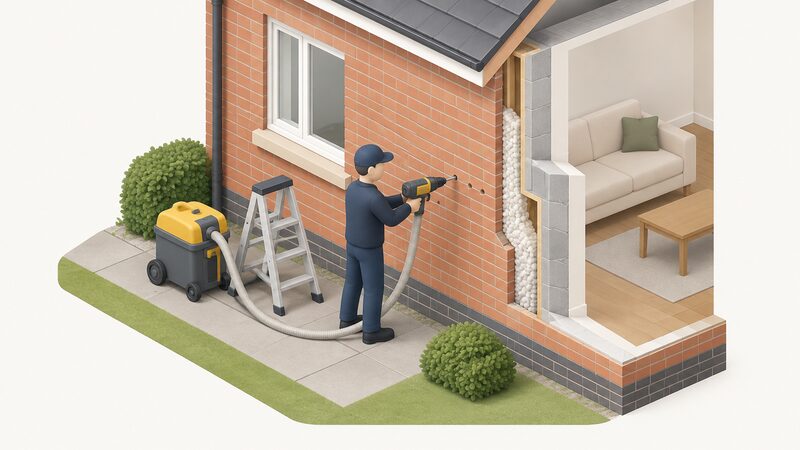
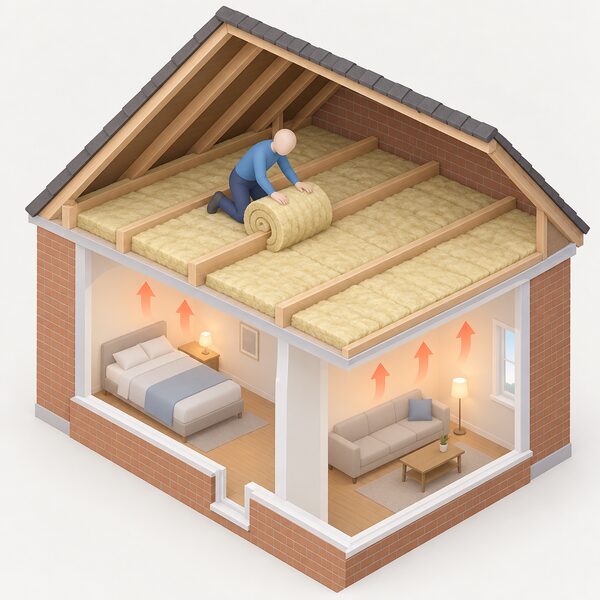
Both the general and low-income groups were eligible for cavity wall insulation including party wall, loft, solid wall, pitched roof, flat roof, under-floor, solid floor, park home and room-in-roof insulation1. Higher-cost measures, such as solid wall insulation, were more likely to require a contribution from the household8. There was no minimum requirement under the scheme for a property's Standard Assessment Procedure rating to be increased by the measure8.
How it was delivered, and the standards that applied
Delivery was through obligated energy suppliers and their installer networks. The scheme delivered the rapid installation of value-for-money insulation measures and, in some cases, heating controls8. All installers had to be a TrustMark-registered business, and all measures available under the scheme had to be delivered according to PAS2030 and PAS2035 standards8.
Ofgem did not administer appropriate guarantees or financial protection for measures installed under the scheme; the current list of appropriate guarantees sits on the TrustMark website8. That is a meaningful limit for a household: the consumer protection around the work came from the TrustMark framework and the installer's own guarantee, not from the scheme administrator.
The application route, while the scheme was open, was to check eligibility and apply via the GOV.UK website, providing property details such as address and council tax band, after which eligible applicants were referred to an energy supplier or approved installer17. Local authority guidance set out the requirements expected of councils when referring eligible households11.
The scheme's delivery guidance was written for suppliers and the supply chain, covering how a supplier meets its obligations18. Enquiries went to the Ofgem team at GBIS.enquiry@ofgem.gov.uk19.
What the closure means for households now
The scheme is closed, and the closure is not ambiguous. The service to check eligibility for free or cheaper home insulation has closed3, and the scheme closed on 31 March 20264. Ofgem's homeowner guidance states the scheme was scheduled to end in April 20261, and the delivery guidance gives the operating period as 25 July 2023 to 31 March 20262. The independent energy jargon guide records that it closed to new applicants in October 202520, which conflicts with the official closure date of 31 March 2026; the official Ofgem and GOV.UK dates are the ones to work from.
For a household's energy independence, the scheme's value was in the fabric of the building. Insulation reduces the heat a home loses, which reduces how much gas or electricity it must buy, and that is the most durable form of independence available to a home that remains connected to the grid. What it did not do was remove dependence: the household still bought its heating fuel from a supplier, still relied on the grid, and still depended on an installer and a guarantee holder to make the work good.
Households that would have qualified should look at the schemes that remain. The Energy Company Obligation and its current phase, ECO4, continue to fund insulation and heating measures for qualifying homes, and ECO4 Flex is the local authority route that widens eligibility in much the same way the Great British Insulation Scheme's flex route did. The Great British Insulation Scheme page covers the scheme as a whole, and Great British Insulation Scheme vs ECO4 sets the two side by side. For the full picture of what is open, the Home Energy Grants and Schemes in the UK guide is the starting point.
Sources20 cited
- Great British Insulation Scheme: homeowners and tenants, Ofgem, 2026-09-17
- ECO4 delivery guidance v3.2, Ofgem, 2025-12-08
- Apply for the Great British Insulation Scheme, GOV.UK, 2026-09-17
- Summary of updates to ECO4 delivery guidance and measures table, Ofgem, 2026-03-26
- Great British Insulation Scheme: energy suppliers, Ofgem, 2026-09-17
- Great British Insulation Scheme, Ofgem, 2026-09-17
- Great British Insulation Scheme: research briefing CBP-9889, House of Commons Library, 2026-09-17
- Great British Insulation Scheme: supply chain, Ofgem, 2026-09-17
- ECO4 and GBIS eligibility and pre-installation declaration, Ofgem, 2026-01
- GBIS and ECO4 LA and supplier flex forms and subsidiary documents, Ofgem, 2023-08-01
- GBIS and ECO4 local authority administration guidance, Ofgem, 2025-04-03
- Great British Insulation Scheme release: September 2025, GOV.UK, 2025-09-18
- Understanding barriers to heat pump uptake in the private rental sector, Nesta, 2025-11-11
- GB Insulation Scheme: government response, GOV.UK, 2023-03
- Which? response to launch of Great British Insulation Scheme, Which?, 2023-09-14
- Great British Insulation Scheme delivery guidance, Ofgem, 2023-08-31
- Great British Insulation Scheme, Fuse Energy, 2026-06-17
- Great British Insulation Scheme delivery guidance, Ofgem, 2025-08-07
- GBIS contacts, guidance and resources, Ofgem, 2026-09-17
- Energy jargon buster, Energy Saving Trust, 2026-03-20
 Check Which Energy Grants ApplyWhich energy grants can you actually get right now, and which have closed?
 The Full Grants and Schemes GuideWhich grants can you actually get right now, and how do you apply for them?
 Closed Energy PoliciesIf a scheme you used has closed, do you still get paid?
 Apply for a Home Energy GrantThe application sequence common to funded schemes: the checker, the survey or assessment, the installer, the paperwork and the sign-off.
 Home Ventilation SystemsWhy do modern insulated homes need extra ventilation, and what happens if they do not get it?
 Finding an Insulation InstallerHow to find, verify and check an insulation, glazing or ventilation installer in the UK: the registration schemes, trade bodies and guarantee arrangements that cover the work, how to compare quotes, what a written specification should state, and how complaints and disputes are handled.