

Short answer
A loft insulation recommendation on an Energy Performance Certificate does not, on its own, block a Boiler Upgrade Scheme application. The rule that once required a property to have no outstanding loft or cavity wall insulation recommendations was removed on 8 May 2024, and from 28 April 2026 properties are no longer required to have a valid EPC to apply for the scheme at all1.
The practical answer depends on which version of the rules an application falls under. Where an EPC does carry a loft or cavity wall insulation recommendation and no exemption applies, the older guidance required the owner to confirm they intended to install it and to obtain a new EPC with no such recommendations by the voucher redemption date2. That requirement has since been dropped, and the government's own response confirmed the removal took effect on 8 May 20243.
What remains is a scheme built around the heat pump itself: a minimum in situ seasonal coefficient of performance of 2.8, a system that provides 100% of the property's space heating, and an installer-led application through Ofgem4.
What the Boiler Upgrade Scheme actually requires of your home
The scheme's requirements sit with the property and the installation, not with the EPC's list of suggested improvements. Insulation requirements, where they applied, were judged through information on the EPC rather than through a separate survey10. The Public Accounts Committee recorded that the Department for Energy Security and Net Zero told it the requirement would be removed in May 2024, "which duly happened on 8 May"3.
The change had been signalled earlier. A consultation response noted that the requirement not to have outstanding EPC recommendations for loft or cavity wall insulation could be removed without risking the installed heat pumps being ineffective11. MCS recorded the outcome as removing the requirement to have no outstanding recommendations for loft and cavity wall insulation on the EPC12.
Two exemptions existed even under the older rules. Installations in eligible self-builds did not need to supply evidence that the minimum required level of insulation was present, because those properties are required to be insulated in line with current building regulations1. And where an EPC listed no loft or cavity wall insulation recommendations at all, the property fulfilled the insulation requirements1.
The current position is simpler. From 28 April 2026, properties are no longer required to have a valid EPC to apply for the scheme4. The government has also set out an intention to amend eligibility criteria to relax the EPC requirement from 2026/27 onwards, adopting a hybrid model13. For a household, the insulation recommendation on an old certificate is not the obstacle it once was.
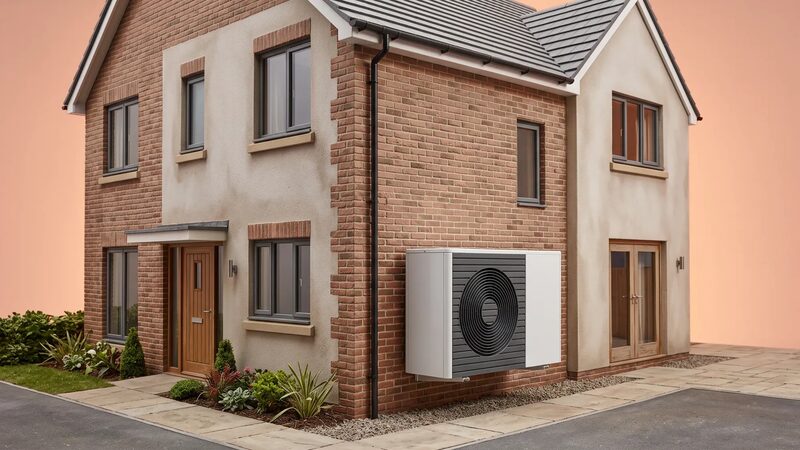
Grant amounts: £7,500 standard, £9,000 for some off-gas-grid homes

The standard grant value is £7,5006. From 21 July 2026, eligible off-gas grid properties can apply for an uplifted grant of £9,000 towards an air-to-water or ground source heat pump7. The uplift applies to homes heated by oil or LPG, and the property must not be fuelled by mains gas14.
| Property and system | Grant | Period |
|---|---|---|
| Standard grant, air source or ground source | £7,500 | Current6 |
| Off-gas grid, oil or LPG, air-to-water or ground source | £9,000 | From 21 July 20267 |
| Off-gas grid uplift period | £9,000 | Runs to 31 March 202716 |
The uplift is temporary. Independent guidance describes it as running until 31 March 2027, with a recommendation to check the latest position16. A maker's guidance frames the same point as a temporary uplift to £9,000 for eligible off-gas grid properties from July 202617, and another states that the £9,000 grant is available to eligible off-gas grid homes reliant on heating oil or LPG only18.
That last point matters for anyone on mains gas. The £9,000 uplift is not available to homeowners with gas central heating systems18. A gas-heated home can still apply for the standard grant, but the higher figure is reserved for properties off the gas network.
For a household's energy independence, the grant reduces the capital cost of moving space heating off a delivered fuel. It does not remove the electricity supply that the heat pump then depends on, and it does not cover the full installed cost. Prices are installer-quoted, and the grant is discounted from the invoice rather than paid to the household.
How the installer-led application and voucher process works
The application is installer-led, with the installer applying for the grant on the property owner's behalf9. The installer discounts the grant from the invoice, applies to Ofgem for a grant voucher, and redeems the voucher after installation and commissioning9. A household cannot apply directly: the scheme is installer-led and you cannot apply yourself14.
The process runs in two stages. Installers submit a voucher application, stage 1a, where Ofgem checks whether the pre-installation eligibility criteria are met. If the application succeeds, Ofgem issues the voucher at stage 1b19. Only MCS certified installers can apply for and redeem vouchers on behalf of property owners20, and they need to create a Boiler Upgrade Scheme installer account on Ofgem's website21.
- The installer checks the property against the scheme rules and quotes for the work.
- The installer submits a voucher application to Ofgem, with confirmation that the property owner has consented to the application being made on their behalf22.
- Ofgem checks the pre-installation eligibility criteria and issues a voucher if the application succeeds19.
- The installation is completed and commissioned.
- The installer redeems the voucher, and the grant is discounted from the invoice9.
Voucher validity varies by technology. The voucher must be redeemed within 6 months for ground source heat pumps8. Installers may also apply for a voucher after an installation has been commissioned, provided the application is properly made within 120 days of commissioning8.
"a previous BUS grant has already been received for installing a heat pump or biomass boiler at the same address"
That restriction means a property can receive only one grant. A property is not eligible if a previous Boiler Upgrade Scheme grant has already been received for installing a heat pump or biomass boiler at the same address23. The funded system must also fully replace the property's existing fossil fuel or electric heating system, except where supplementary heating appliances are permitted24, and it must provide 100% of the space heating needs of the eligible property24.

Where the scheme draws its lines
Several property types and system designs fall outside the scheme, and these limits are worth knowing before an installer is appointed.
- Social housing: properties classed as social housing are not eligible for Boiler Upgrade Scheme funding, and this includes shared ownership properties14. Ofgem lists social housing among ineligible properties25.
- New builds: new builds are excluded unless they are custom-build properties24.
- Hybrid systems: the funded system must fully replace the existing fossil fuel or electric heating system, so a hybrid that retains a fossil fuel boiler as the main heat source does not meet the test24.
- Second grants: a property that has already received a grant for a heat pump or biomass boiler cannot receive another23.
- Performance: the heat pump must achieve an in situ seasonal coefficient of performance of at least 2.84.
Self-build properties are treated differently. Heat pumps may be eligible for Boiler Upgrade Scheme funding where all other scheme rules are met7, and installations in eligible self-builds do not need to supply evidence that the minimum required level of insulation is present1.
On combining funding, the rules are explicit. Funding from the Boiler Upgrade Scheme and the Energy Company Obligation cannot be blended for the same measure or be included within an ECO4 project26. ECO4 itself funds insulation, boilers and central heating, and solar and renewable energy technologies27, so the two schemes can address different measures at the same property, but not the same one. More on how the two compare sits in Boiler Upgrade Scheme vs ECO4, and the insulation side is covered in ECO4.
When the scheme closes and what it means for planning your installation
The scheme is scheduled to close at 11:59pm on 30 December 20299. Ofgem can issue vouchers up to 31 December 202923. The uplifted £9,000 grant for off-gas grid properties runs on a shorter timetable, to 31 March 202716.
Those two dates shape planning. A household considering the higher off-gas grid figure is working to a nearer deadline than the scheme's overall closure, and the voucher must be redeemed within 6 months for ground source heat pumps8. Retrospective applications are permitted if properly made within 120 days of commissioning8, which gives some flexibility where an installation has already taken place.
The wider policy context is a phase-out of fossil fuel heating. The Heat and Buildings Strategy set a target for phasing out gas boilers from 2035 in favour of low-carbon alternatives28. For a household, the scheme's value lies in reducing the upfront cost of a heat pump and moving space heating off oil, LPG or gas. The dependence that remains is on electricity, on the grid connection that supplies it, and on the installer who holds the voucher and the warranty relationship. The grant does not change any of those.
Sources28 cited
- Summary of updates to Boiler Upgrade Scheme Guidance for Property Owners v2.4, Ofgem, 2023
- BUS Property Owner guidance V2.3, Ofgem, 2023
- Boiler Upgrade Scheme: Public Accounts Committee report, UK Parliament, 2024
- Boiler Upgrade Scheme guidance for installers v5.1, Ofgem, 2026
- Boiler Upgrade Scheme, Ofgem, 2026
- Notice of approved grant categories and values for the Boiler Upgrade Scheme, GOV.UK, 2026
- Boiler Upgrade Scheme guidance for property owners v5.1, Ofgem, 2026
- BUS guidance for property owners v5 draft, Ofgem, 2026
- Boiler Upgrade Scheme, Find Government Grants, 2026
- Boiler Upgrade Scheme Installer Guidance, Ofgem, 2022
- Proposed amendments to the Boiler Upgrade Scheme regulations, Energy Systems Catapult, 2023
- Changes to the Boiler Upgrade Scheme, MCS Certified, 2024
- Amendments to the Boiler Upgrade Scheme: government response, DESNZ, 2025
- Boiler Upgrade Scheme guidance for property owners V5, Ofgem, 2026
- The Warm Homes Plan, Elmhurst Energy, 2026
- Oil heating heat pump grant, Low Carbon Hub, 2026
- Heat pump Stoke, Fuse Energy, 2026
- What is the Boiler Upgrade Scheme?, Grant UK, 2026
- Boiler Upgrade Scheme quarterly report, Issue 13, Ofgem, 2025
- Boiler Upgrade Scheme, Ofgem, 2026
- Boiler Upgrade Scheme, MCS Certified, 2026
- Boiler Upgrade Scheme Letter of authorisation, Ofgem, 2022
- Boiler Upgrade Scheme guidance for installers V5, Ofgem, 2026
- Boiler Upgrade Scheme, RECC, 2026
- Boiler Upgrade Scheme installers, Ofgem, 2026
- ECO4 delivery guidance v3.2, Ofgem, 2025
- ECO4 scheme, West Lindsey District Council, 2025
- ECO4 summary updates document, Ofgem, 2022
 Improve an EPC RatingWhich home improvements actually raise your EPC score, and by how much?
 Landlord Energy PermissionHow a tenant raises a request for insulation, heating, glazing or ventilation work in a rented home, what the EPC and the minimum band E rule mean, which grant schemes need landlord consent, and what happens when a landlord refuses.
 Insulation a Heat Pump NeedsWill a heat pump still work if your home is not well insulated, and would you need to add loft, wall or floor insulation first?
 Building Regs Part L InsulationAdding insulation or replacing windows?
 Setting a TargetWhat should you aim for when improving your home: a better EPC band, lower bills, or a low-carbon heating system?
 Grants and Energy IndependenceCan you get a grant for solar panels or a battery?