In this guide
An EPC rating is a score, typically ranging from 1 to 100, that is split into bands from A to G, with A the most efficient1. The score is produced by an assessor using the Standard Assessment Procedure, or the reduced version, RdSAP, for existing homes where full information may not be available2. Fabric measures, loft, cavity, solid wall and floor insulation and replacement glazing, are the levers a household controls directly, and they are the ones the assessment method credits most reliably.
The practical route from a low band to band C is usually insulation first, glazing second, and heating last. Independent guidance puts the effect of loft, wall or floor insulation upgrades at up to two bands, from an E to a C for example3. Double glazing can cut heat loss through windows by half4. Grants of £500 to £1,500 are available in parts of the UK for insulation, and the amounts differ by nation and by scheme5.
What follows sets out how the score is built, how to read the recommendation report, which fabric measures move the number, what the grants pay, how windows are assessed, what happens with listed buildings, and the deadlines that shape the timing of any work.

What an EPC rating is and how the score is worked out
An EPC provides information about the energy efficiency and emissions of a building, and it is accompanied by a recommendations report giving more detail on improvement measures11. Buildings are rated on a scale from A to G, with A being the most efficient11. Both the energy efficiency rating and the environmental impact rating are scored from 1 to 100 and split into bands2.
The assessment method matters more than most households realise. EPC assessors use the Standard Assessment Procedure, with reduced SAP for existing homes where information may not be available2. The current rating is built on the costs of home heating rather than its carbon footprint, which means cheaper heating sources score better even where they emit more13. That single design choice explains several results that otherwise look perverse, including the treatment of heat pumps.
The Committee on Climate Change has been blunt about the limits of the present metrics. It states that the ratings are an important policy tool used to define standards and targets for reducing emissions from homes, but poorly suited to that role, and that the current metrics do not accurately incentivise the energy efficiency and heating solutions required to deliver net zero homes14. Its recommended replacement is four primary metrics using real-world units:
- Total energy use intensity, in kWh/m2/yr
- Space heating demand intensity, in kWh/m2/yr
- Heating system type, ranked from 1 to 6
- Energy cost intensity, in £/m2/yr14
Reforms should be applied alongside wider improvements to the EPC system to improve the quality of assessments and use of data14.
For a household, the consequence is that the band on the certificate is a policy instrument as much as a description of the building. Improving the fabric raises the score under the present method and would raise it under the proposed metrics too, because both reward reduced space heating demand. That is the case for treating fabric measures as the foundation rather than an optional extra.
Reading the certificate: the recommendation report and indicative costs

Each EPC comes with a report setting out the cost effective measures that homeowners or businesses can take to improve energy efficiency and the energy rating, such as low energy bulbs or upgrading insulation7. The recommendation report is a required part of the certificate and provides more detailed information about improvement measures11. In Scotland the certificate outlines the recommended measures available to improve the energy rating, and includes an indicative cost for each improvement16.
That indicative cost is a starting point, not a quotation. It is generated by the assessment method and updated on a quarterly cycle for domestic EPC supplementary cost information17. Prices for the assessment itself vary: EPCs usually cost £50 to £150, and the cost varies from one company to another depending on the size, location and age of the building, so shopping around is normal8.
Looking at the EPC is a good starting point to help improve the energy efficiency of a property, and in Northern Ireland the certificate is the recommended first document to consult before planning any low carbon heating work19.
The certificate is also a public document. It is publicly available, some underlying data may be shared for monitoring and compliance with the energy performance of buildings regulations, and government may use some data for research or statistical purposes7. EPCs cover around 60% of the housing stock in England and around 55% in Wales, based on Census 2021 analysis by the ONS19. In the quarter from January to March 2026, 460,000 EPCs were lodged on the register in England and Wales, domestic and non-domestic combined20.
Fabric first: why insulation and glazing move the score most
Fabric measures change the space heating demand of the building, which is the quantity the assessment method is most sensitive to. Independent guidance puts the effect of loft, wall or floor insulation upgrades at up to two bands, from an E to a C for example3. That is the single largest documented band movement available to a typical household, and it comes from the building envelope rather than from the heating system.
The direction of policy reinforces the point. The Scottish Government has proposed an owner-occupied private housing minimum energy efficiency standard equivalent to EPC C where technically feasible and cost-effective, and where that is not achievable, a minimum fabric energy performance for walls, roof, floor and windows as recommended in the EPC21. In other words, where the band cannot be reached, the fabric standard becomes the fallback requirement. Fabric is the part of the standard that cannot be designed around.
The Energy Company Obligation consultation proposed refining the purpose of the Building Fabric Repair assessment to "assessing the condition of the insulation and related building fabric"22. Earlier building regulation work in Northern Ireland increased standards through higher targets and new minimum insulation values23. Both point the same way: the regulatory attention is on the envelope.
For a household's energy independence, fabric measures are the ones that reduce the demand itself rather than shifting it to a different fuel or supplier. Insulation and glazing reduce the heat that has to be bought, whatever the source. They do not remove the connection to the grid or to a supplier, and they do not generate anything, but they lower the quantity of energy the home depends on and make any future heating change easier to size. That is a different kind of independence from generation, and it is the kind the assessment method rewards.
The order of works matters. Draught-proofing, loft insulation and cavity or solid wall insulation address the largest and cheapest losses first, and glazing follows where windows are the weakest element. The whole-house retrofit planning page sets out the sequence in more detail, and insulation and energy independence covers what the measures do and do not deliver.
Loft, cavity and underfloor insulation: grants of £500 to £1,500
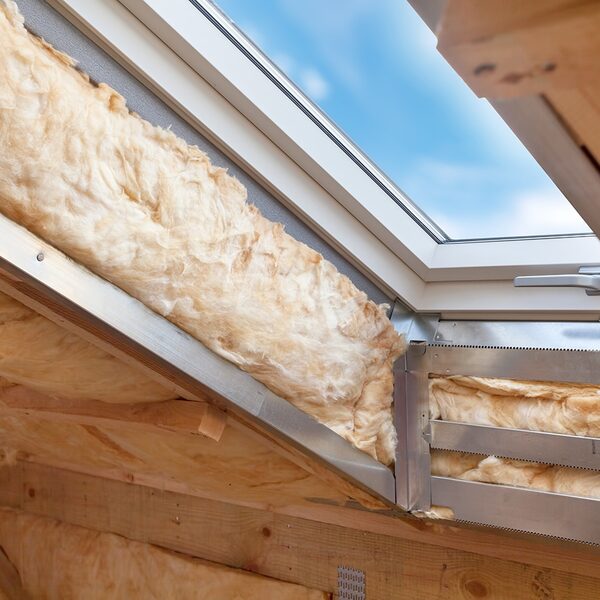
Grant support for insulation is devolved, so the amount and the scheme depend on where the home is. In Northern Ireland, the Efficiency Plus Insulation Cashback scheme offers a grant of 40% towards the cost of cavity wall insulation or loft insulation, up to £650 maximum grant per insulation measure and up to £1,000 maximum grant for cavity wall insulation involving extraction and refill5. The Help to Insulate scheme offers the same 40% structure with the same £650 and £1,000 caps, plus a fully funded additional measure in the form of a hot water tank jacket5.
In Scotland, the Home Energy Scotland grant and loan provides up to £7,500 for energy-efficiency improvements such as insulation and up to £7,500 for clean heating systems such as heat pumps, for owner occupiers6. An uplift of £1,500 is available for rural and island homes to both the clean heating and energy efficiency grants24.
| Nation | Scheme | Insulation support | Cap |
|---|---|---|---|
| Northern Ireland | Efficiency Plus Insulation Cashback | 40% of cavity or loft insulation cost | £650 per measure, £1,000 for cavity extraction and refill5 |
| Northern Ireland | Help to Insulate | 40% of cavity or loft insulation cost, plus funded hot water tank jacket | £650 per measure, £1,000 for cavity extraction and refill5 |
| Scotland | Home Energy Scotland grant and loan | Up to £7,500 for energy-efficiency improvements | £7,500, plus £1,500 rural and island uplift6 |
The £500 to £1,500 band in the heading reflects the range across these schemes: the £650 per-measure cap sits inside it, the £1,000 cavity extraction and refill cap sits inside it, and the £1,500 rural and island uplift sits at the top of it. The £7,500 Scottish figure is a separate and much larger ceiling for a whole programme of works.
In England, the Warm Homes: Local Grant is open to privately rented properties with an EPC rating of Band F or G which have a registered exemption under the Energy Efficiency (Private Rented Property) (England and Wales) Regulations 201526. Local authority schemes have also operated: Leeds City Council's Home Upgrade Grant scheme worked with applicants to agree a combination of upgrades installed to improve the energy efficiency rating of the property27.
Double glazing: how the air gap cuts heat loss, and what it saves
Double glazing works by trapping air between two panes of glass, creating an insulating barrier that reduces heat loss, noise and condensation4. Installing double glazing can cut heat loss through windows by half4. The saving attributed to that reduction in the plan is £50 to £175 a year, and the figure depends on the size of the glazed area, the fuel displaced and the performance of the units installed.
The mechanism is the sealed cavity. A single pane of glass conducts heat readily; two panes separated by a gap of still air slow that transfer, and the wider the gap the greater the effect up to the point where convection within the cavity begins to work against it. The cavity is normally filled with air or an inert gas, and the unit is held apart by a spacer bar around the perimeter. The frame matters as much as the glass, because a poorly fitted or uninsulated frame creates a thermal bridge at the edge of every opening.
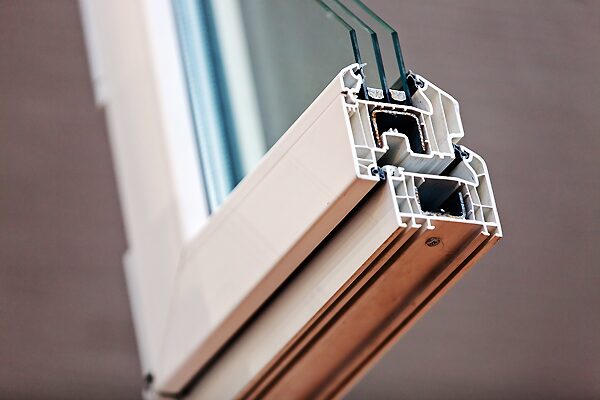
The assessment method credits glazing through its effect on space heating demand, so replacement windows raise the score where the existing windows are single glazed or poorly performing. The gain is smaller than for wall or loft insulation in most homes, because windows are a smaller proportion of the total envelope area, but it is real and it is measurable.
For energy independence, glazing reduces the heat that escapes and therefore the heat that must be bought. It does not change the fuel or the supplier. Its value is in lowering demand at the point of loss, and in improving comfort at the same time, which is why it often appears high on a recommendation report even where the band movement is modest.
When to replace windows: cost, lifespan and doing part of the house
Replacement glazing is notifiable work, and the compliance route runs through a competent person scheme. A tradesperson carrying out the work should be recognised by a reputable competent person scheme28. Where a household installs the glazing itself, there will be several legal hoops to jump through, such as building regulation certification and inspections, because DIY installers are unlikely to be recognised in a reputable competent person scheme28.
Cost is installer-quoted and varies with frame material, unit specification, opening type and access. No published price range for replacement windows is stated here. The assessment method's indicative cost for the measure is generated by the method and updated quarterly, and it is not a quotation17. Double glazing can be an expensive measure to carry out, so it is best done when the windows become defective and need to be replaced anyway17. Where the whole house cannot be done at once, the rooms that cost the most to heat are the ones to choose17.
Where the budget does not stretch to the whole house, the guidance is to choose the rooms that cost the most to heat if you cannot afford to replace all the windows4. That is a practical sequencing rule rather than a performance claim: the rooms with the greatest heat loss and the greatest occupancy give the largest return on a partial installation.
Lifespan is a factor in the timing decision. A sealed unit has a finite service life, and replacing windows that are still performing adequately means paying twice for the same benefit within the assessment period. The certificate's ten-year validity is a useful planning horizon: work done early in that period is reflected in the current certificate, and work done late may be better timed to coincide with the next assessment.
Listed buildings and the character exemption
Listed buildings and historic buildings in designated conservation areas are exempt from the EPC requirement where compliance with minimum energy performance requirements would unacceptably alter their character or appearance29. That exemption is about the certificate, not about the building's performance, and it does not prevent voluntary improvement work.
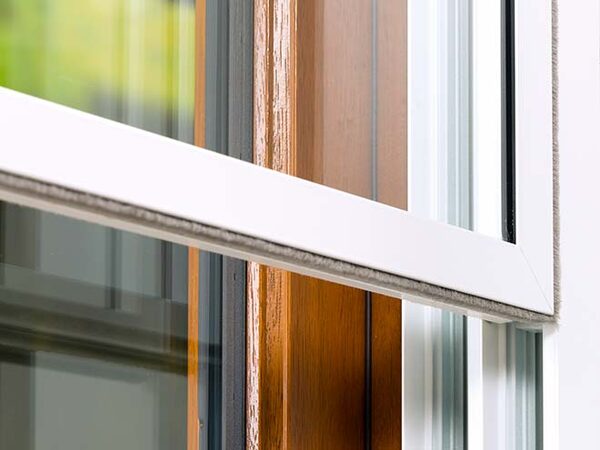
Where glazing is concerned, secondary glazing will be acceptable provided its framing is unobtrusive and it does not obscure internal features or interfere with the operation of shutters and windows29. That is the route most often available for a listed building, because it adds an inner pane without altering the external appearance or the historic window itself.
The exemption regime for the private rented sector is separate and more procedural. The PRS Exemptions Register is for properties which are legally required to have an EPC, are let on a relevant tenancy type, and cannot be improved to meet the minimum standard of EPC band E for one of the listed reasons30. For a wall insulation exemption, the landlord must upload a copy of the written opinion of the relevant expert stating that the property cannot be improved to an EPC E rating because a recommended wall insulation measure would have a negative impact on the property or the building of which it is a part30. A valid exemption is an alternative compliance status for a property that would otherwise have to meet the standard31.
Exemptions expire. After that time the exemption will expire and the landlord must try again to improve the property's EPC rating to meet the minimum level of energy efficiency, and if this still cannot be achieved, a further exemption may be registered30. The exemption is therefore a deferral with a review point, not a permanent status.
EPCs are not required for a defined list of building types:
- Protected buildings
- Places of worship
- Temporary buildings of two years or less
- Low energy demand industrial and agricultural buildings
- Seasonal residential buildings
- Stand-alone buildings under 50 m2
- Buildings suitable for demolition18
The listed buildings insulation and glazing page covers the consent route in full.
How fabric measures are assessed under RdSAP10
The assessment of existing homes runs on reduced SAP, and the method is being replaced. The Standard Assessment Procedure is planned to be replaced by the Home Energy Model in 202720. The Home Energy Model changes will apply to all new schemes started after 4 March 2027, subject to transitional arrangements32. Amendments relating to Part L of Schedule 1 to the Building Regulations 2010 come into force on the same date32.
For fabric measures, the practical effect of the change is that the calculation behind the score becomes more detailed and more sensitive to how the building actually performs. The direction of travel is already visible in the proposed metrics: space heating demand intensity in kWh/m2/yr is one of the four primary metrics the Committee on Climate Change recommends, and that is precisely the quantity insulation and glazing reduce14.
The private rented sector standard is being written against the new metrics. Landlords will be required to ensure their properties meet a minimum score of EPC C against the fabric performance metric and either the heating system or smart readiness metric10. That is a two-part test rather than a single band, and it makes the fabric performance of the building a required element in its own right.
Scotland is reforming its own regime in parallel. The Scottish Government set out plans to reform EPCs by introducing new ratings, redesigning the certificates, and improvements to the operational infrastructure12. Revised Energy Performance of Buildings Regulations were to be laid later in 2025 and brought into force in autumn 202633. New-style EPCs are due to be introduced on 30 April 2028, subject to approval by the Scottish Parliament12.
Deadlines and funding windows to plan around
Several dates shape the timing of fabric work, and they fall in different nations and different schemes.
| Date | What happens | Where |
|---|---|---|
| 31 December 2026 | Energy Company Obligation scheme due to end | Great Britain27 |
| Autumn 2026 | Revised Energy Performance of Buildings Regulations brought into force | Scotland33 |
| 4 March 2027 | Home Energy Model changes apply to new schemes; Part L amendments commence | England and Wales32 |
| 31 March 2027 | 0% VAT on installing energy-saving materials ends | UK32 |
| 1 April 2027 | Reduced rate for relevant supplies of installing energy-saving materials applies | UK32 |
| Second half of 2027 | EPC reforms launched | UK10 |
| 30 April 2028 | New-style EPCs introduced, subject to Scottish Parliament approval | Scotland12 |
| 2030 | Private rented homes required to reach EPC C | England and Wales10 |
| 2033 | Homes with mortgages to achieve EPC C under CCC recommendation | UK34 |
The Committee on Climate Change recommended that standards for lenders targeting EPC C across the housing portfolio should be introduced between 2025 and 2033, so homes with mortgages achieve EPC C by 203334. That is a recommendation rather than a rule in force, and it is stated as such.
The VAT position is the nearest-term consideration for anyone commissioning work. The 0% rate on installing energy-saving materials including insulation and solar panels applies until 31 March 2027, and a reduced rate applies to relevant supplies of installing energy-saving materials from 1 April 202732. The change affects the tax treatment of the installation, not the eligibility of the measure.
In Scotland, the Heat in Buildings Strategy sets the ambition that all buildings across all tenures achieve good energy efficiency by 2033 and zero emissions heating by 2045, with regulation where within legal competence35. The Energy Efficiency Standard for Social Housing post-2020 milestone expects all social housing to meet, or be treated as meeting, EPC band B or be as energy efficient as practically possible by December 203235.
When a new EPC is needed and how long it lasts
An EPC is valid for 10 years, and can be used multiple times during that period7. It is valid if it was entered on to the register no more than 10 years before the date it is made available, or until a newer EPC is produced and registered, whichever is earlier18. The ten-year figure is consistent across the official sources1.
A new certificate is needed in specific circumstances. EPCs must be provided when a building is advertised for sale or for let to a new tenant, and they are also required upon completion of construction of a new building12. Provision of an EPC is a statutory requirement whenever a property is bought, sold or rented, and it was introduced in 200734. They must also be displayed by certain large non-domestic buildings12.
For the private rented sector, the minimum standard is the binding constraint. Since April 2020, landlords can no longer let or continue to let properties covered by the MEES Regulations if those properties have an EPC rating below E, unless they have a valid exemption34. If a property is currently let with an EPC rating of F or G and no action has been taken, it must be improved to a minimum rating of E or an exemption registered where applicable9.
The Scottish Government has consulted on reducing the validity period of EPCs from ten to five years33. That change is not in force, and the ten-year rule applies to certificates already lodged.
Sources35 cited
- Energy efficiency of housing in England and Wales, Office for National Statistics, 2025-10-28
- Energy Performance Certificates, House of Commons Library, 2026-09-17
- House insulation: the ultimate guide, Federation of Master Builders, 2026-09-20
- Glazing, Planning Portal, 2026
- NISEP List of Schemes 2026-27, Utility Regulator Northern Ireland, 2026-04
- Home Energy Scotland grant and loan, House of Commons Library, 2026-05-13
- Energy Performance Certificates, nidirect, 2026-02-26
- Five top tips from Which? to cut your energy bills, Welsh Government, 2026-03-18
- Minimum energy efficiency standards, Carmarthenshire County Council, 2026-09-20
- Clean Flexibility Roadmap: July 2026 update, UK Government, 2026-09-17
- What does an Energy Performance Certificate contain, Planning Portal, 2026-08-24
- Energy Performance of Buildings (Scotland) Regulations 2025 update, Scottish Government, 2025-10-10
- Energy efficiency of housing, Environmental Audit Committee, 2025-05-09
- Letter: reform of domestic EPC rating metrics to Patrick Harvie MSP, Climate Change Committee, 2026-09-19
- Letter: reform of domestic EPC rating metrics to Lee Rowley MP, Climate Change Committee, 2026-09-19
- Energy Performance Certificates: guide, Scottish Government, 2026-08-24
- Technical annex for chapter 2: what EPCs measure, UK Government, 2026-03-09
- Trading Standards guidance: other consumer problems, Isle of Anglesey County Council, 2025-09
- Energy performance of building certificates in England and Wales, April to June 2025, UK Government, 2025-07-31
- Energy performance of building certificates in England and Wales, January to March 2026, UK Government, 2026-05-19
- Heat in Buildings Strategy, Scottish Government, 2021-10-07
- ECO4 and the Great British Insulation Scheme: mid-scheme changes, UK Government, 2024-11-14
- Building Regulations discussion document, Northern Ireland Department of Finance, 2023-10-11
- Scotland's Climate Change Plan 2026-2040, Scottish Government, 2025-11-06
- Scottish Government response to the Green Heat Finance Taskforce, Scottish Government, 2025-12-17
- Warm Homes Local Grant, Greater Manchester Combined Authority, 2026-09-17
- Council launches new scheme to help Leeds residents cut energy bills, Leeds City Council, 2024-01-03
- Understanding double glazing, The CPA, 2025-02-05
- Improving energy saving and sustainability in conservation areas and listed buildings, Brighton and Hove City Council, 2026-09-17
- Guidance on PRS exemptions and exemptions register evidence requirements, UK Government, 2026-05-05
- View private rented sector energy standards exemptions, UK Government, 2026-05-05
- Energy Performance of Buildings (Scotland) Amendment Regulations 2026: BRIA, Scottish Government, 2026-08-24
- Heat in Buildings progress report 2025, Scottish Government, 2026
- Energy efficiency of housing, Public Accounts Committee, 2026-09-20
- Energy saving measures boost house prices, UK Government, 2013-06-17
 Setting a TargetWhat should you aim for when improving your home: a better EPC band, lower bills, or a low-carbon heating system?
 Landlord Energy PermissionHow a tenant raises a request for insulation, heating, glazing or ventilation work in a rented home, what the EPC and the minimum band E rule mean, which grant schemes need landlord consent, and what happens when a landlord refuses.
 The Full Where to Start GuideWhich home improvements actually cut your bills, and which should you do first?
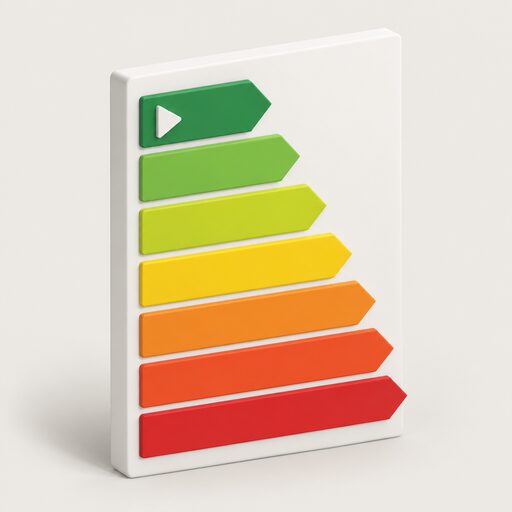 Energy Performance CertificatesAn Energy Performance Certificate rates how energy efficient your home is, from A down to G.
 Heating Controls and EPC RatingsWill fitting a smart thermostat improve my EPC score, or does only the basic heating controls count?
 Using Your EPC to Plan WorkAn EPC comes with a recommendations report, and that report is the part worth reading before you spend anything.