
In this guide
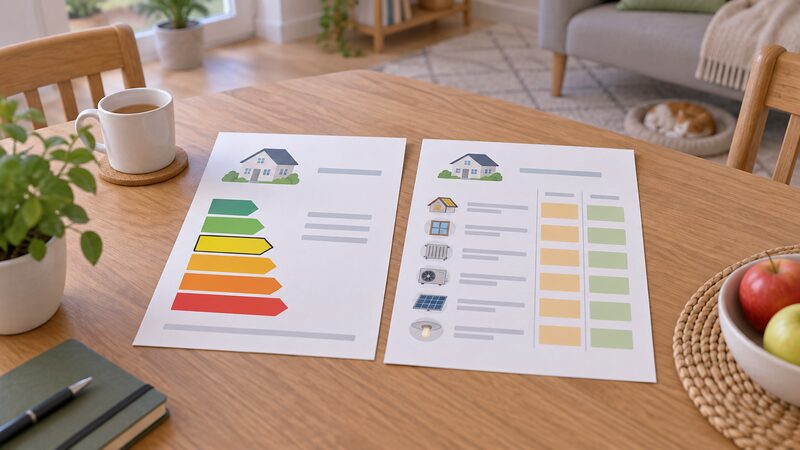
An Energy Performance Certificate explains how energy efficient a building is and how it could be improved, and it does not travel alone: it is accompanied by a recommendations report which provides more detailed information about improvement measures1. That report, rather than the coloured band on the front page, is the part worth reading before any money is spent. It sets out cost effective measures a householder or business can take to improve efficiency and the rating, from low energy bulbs to upgrading insulation, and the measures are modelled in the order given2.
The certificate is a useful starting point and nothing more. Northern Ireland guidance describes looking at an EPC as a good starting point to help improve the energy efficiency of a property3, while the Scottish Government has been blunt that certificates are "intended as a basic, standardised assessment and not a substitute for detailed, technical, retrofit assessment and advice"4. Government research published in May 2026 compared modelled energy use with monitoring data to identify inaccuracies in certificates and to examine weaknesses in current assumptions and processes, including defaults and assessor practices5. The figures printed on a certificate are modelled, not metered.
Certificates are valid for a maximum of ten years, or until another is commissioned for the same building, whichever comes sooner6, and they are required when selling or letting an existing building. Both the certificate and the register entry behind it are changing: Scotland moves to a new-style certificate from 30 April 2028, and the calculation method used across the UK, the Standard Assessment Procedure, is to be replaced by the Home Energy Model.
What the certificate and its recommendations report actually contain
The certificate itself is a standardised summary of the building's modelled performance, and the required content includes a recommendation report11. Regulations require that report to be included unless there is no reasonable potential for energy performance improvements12, which is why a very small number of already-improved homes receive a certificate with little or nothing attached.
The recommendations report lists measures with indicative costs and indicative savings, and it is the document that connects a rating to a plan of work. Guidance for Northern Ireland describes it as a report setting out cost effective measures to improve energy efficiency and the rating, giving low energy bulbs and upgrading insulation as examples2. Certificates are also the basis of many energy efficiency policies in the domestic built environment5, which means the same document is doing two different jobs: informing a household, and defining eligibility and standards for government.
Awareness of the improvement advice is thinner than the policy weight placed on it. In the Winter 2025 public attitudes tracker, 32% of those aware of certificates recalled seeing the section in their home's certificate that recommends ways to improve energy efficiency; among those who had seen it, two in three (65%) said they had made changes, small or large, based on the recommendations8. That is a reasonable conversion rate from a document most people meet once, at the point of buying or renting.
How the rating is worked out: SAP, standard occupancy and modelled costs
Assessors use the Standard Assessment Procedure to determine the energy efficiency rating of a home, with a reduced version, RdSAP, applied to existing homes where full information may not be available13. The content of the domestic certificate is produced by calculations carried out in that methodology14, and the procedure also underpins the approved products and calculation infrastructure used for certificate production15.
Two features of the method explain most of the gap between a certificate and a household's own experience. The first is standard occupancy: standard assumptions are made about occupancy and use, so that different buildings can be fairly compared1. A comparison tool has to hold the occupants constant, so it cannot describe how a particular family heats a particular house. The second is standardised fuel prices. The supplementary cost information used on domestic certificates is updated quarterly14, so the cost figures a reader sees reflect a modelled tariff at a point in time rather than what the household pays.
The method is being replaced. The Standard Assessment Procedure is to be replaced with the Home Energy Model16, and the 2026 accuracy research was designed to support updates to the procedure and to inform its successor, along with the processes surrounding the generation and use of certificates5.
The metrics themselves are contested. The Climate Change Committee has described the ratings as an important policy tool, used to define standards and targets for reducing emissions from homes, but poorly suited to that role, and has recommended four primary metrics in real-world units17:
| Proposed metric | What it measures |
|---|---|
| Energy | Total energy use intensity (kWh/m²/yr) |
| Fabric | Space heating demand intensity (kWh/m²/yr) |
| Heating | Heating system type, in categories ranked 1 to 6 |
| Cost | Energy cost intensity (£/m²/yr) |
Source: Climate Change Committee advice on reform of domestic rating metrics17.
Reading the report: the measures are cumulative, in the order given
The list is not a menu of independent options. Each measure is modelled on the assumption that the ones above it have already been carried out, so the saving attached to a heating measure near the bottom of the list assumes the insulation above it is in place. Picking the fourth item and skipping the first three will not deliver the fourth item's printed saving. This is the single most common misreading of the document, and it is also why the order broadly matches a fabric first sequence rather than a shopping list.
Assessors have limited freedom over that list. They may suppress recommendations if there is evidence to justify doing so, but they cannot add additional recommendations18. A measure that is obviously right for a particular house, but which the software does not generate, will simply not appear. In Scotland, the wording on new-style certificates changes: the Scottish Government has decided to rename recommendations as "Potential Improvement Options"4, and where a polluting heating system is present, the certificate will set out potential improvement options to move to a non-polluting heating system on a technology-neutral basis4.
For a household, the practical reading order is: check which measures are marked as already installed, read the remaining list top to bottom as a sequence, and treat the costs as indicative starting points for quotes rather than budgets. The related pages on the order of energy improvements and where to start work through that sequencing in detail.
What the recommendations leave out
The list is generated, not designed. It does not consider the condition of the building, the moisture risk of a particular wall construction, the ventilation strategy, the state of the roof, or whether the household can live in the house while the work is done. Scottish Government policy work on retrofit assessment has been explicit that ratings do not always capture the true efficiency of a retrofit, and that measures such as PV panels or air source heat pumps may improve a score while failing to address fundamental building issues such as poor insulation or moisture risks19.
Government has also declined to make certificates carry that weight. In consulting on reform, the Scottish Government said it did not propose for certificates to be a substitute for a more detailed or specialist retrofit advice or technical survey, such as assessment following PAS 2030 or PAS 203520. A certificate is therefore a filter, not a design. The fuller documents are described on the pages covering whole house plans and retrofit assessors and coordinators.
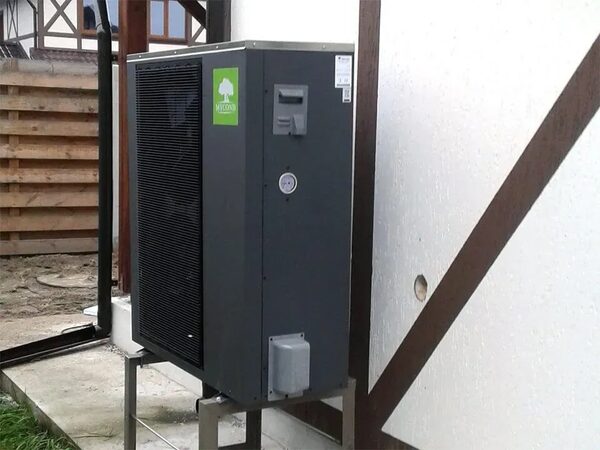
Heat pumps are a frequent absence. Guidance notes that heat pumps are best suited to buildings with good insulation levels, and that insulation may need to be added internally or externally where homes do not already have good levels21. Where the modelling does not find the fabric sufficient, or where the measure sits below others in the sequence, no recommendation appears, and the household is left to take that question to a home energy assessment instead.
How far the cost and saving estimates can be trusted
The estimates are modelled outputs, and their accuracy has been formally investigated. The 2026 accuracy research compared modelled energy use and internal temperatures with monitored data from large-scale datasets, to provide empirical evidence on the accuracy of certificates and the Standard Assessment Procedure5. Its aims included identifying weaknesses in current assumptions and processes, including defaults and assessor practices, and developing insights to improve modelling algorithms and enable dynamic updates when building changes occur, so that future models better reflect real-world energy performance5.
Three things drive the gap between the printed saving and the delivered one. Standard occupancy means the assumed heating pattern, hours and internal temperature are not the household's own1. Standardised fuel prices, refreshed quarterly14, mean that a saving stated in pounds is a modelled tariff calculation and moves when prices move. And default values fill the gaps where the assessor could not see or evidence a construction, which is the point at which two assessors can produce different certificates for the same house.
None of this makes the report worthless. It makes it a ranking rather than a forecast: reliable about which measures matter most in this particular building, weak about the exact pound figure attached to each. Households wanting a number they can hold to should baseline their own energy use first and measure results after the work.
Cost, validity and getting a new or corrected certificate

Only an accredited energy assessor can produce a certificate, and they will visit the property to carry out the assessment2. Qualified assessors can be found on the EPC register23, and the certification body that accredits an assessor is listed as "scheme details" beneath their contact details on the register24, which is the route to a complaint or a correction.
Prices are not fixed. Trading standards guidance states that the cost will vary from one company to another and that householders will have to shop around for the best price, with size, location and age of building affecting it6. One consumer estimate cited by Climate Action Wales puts the usual range at £50 to £1507. Some local schemes help: SHINE London offers limited funding towards the cost of getting a new certificate as part of Warm Homes: Local Grant support25.
| Point | Position |
|---|---|
| Maximum validity | Ten years, or until another certificate is commissioned for the same building6 |
| Stated in ONS analysis | "EPCs are valid for 10 years"26 |
| Scheme requirements | The Boiler Upgrade Scheme works from a certificate no more than ten years old27; feed-in tariff rules treat a certificate as valid if issued before, but not more than ten years before, the commissioning date of a PV installation, and if it was the most recent certificate for the building28 |
| Scotland | Validity is being reduced from ten years to five29 |
Nothing invalidates a certificate because improvements have been made. A new assessment is the only way the register reflects new insulation, a new heating system or solar panels, which matters when selling, letting or applying for a scheme. Buyers and prospective tenants must be given the certificate at no cost, and a buyer receives a copy from the seller that can be reused within the period of validity2.
Renting and selling: the rules that shape priorities
A certificate is required when selling or letting an existing building23, and must be provided when a building is advertised for sale or for let to a new tenant30. Where a building is advertised for sale, the rating must be included in the advertisement31. Under the 2008 regulations, the relevant person must make available free of charge a valid certificate to any prospective buyer or tenant at the earliest opportunity and before contract32, with the duty applying to rental of existing dwellings from 30 December 200832. A narrow exemption applies where the building is to be demolished or subject to major renovation following the sale or rental, or where the buyer or tenant intends that33. Government has said it intends to update regulations so that a certificate is required at the point of marketing rather than the point of sale or rent34. Failure to provide the information can attract a penalty charge notice of £500 or more10, and not having a certificate at all can lead to enforcement action and a penalty charge notice2.
For landlords, the minimum standard is the fixed point around which the recommendations report is read:
- England and Wales: no property without at least a band E rating can be let unless an exemption applies35. Properties currently let at band F or G must be improved to a minimum of E, or an exemption registered where applicable36, and the published exemptions guidance works to the same band E threshold37.
- Proposed tightening: the Government's preferred option has been to require domestic rental properties to meet band C at a minimum for new tenancies from 1 April 2025 and for all tenancies by 1 April 202838. A 2025 consultation proposed allowing properties with a current band C certificate to be recognised as compliant under the future standard until the certificate expires39.
- Scotland: an earlier consultation set out a minimum band E at the point of rental from 1 April 2019, with improvement within six months of a minimum standards assessment and all dwellings to reach that rating by 31 March 202240. Later policy documents commit to regulations requiring private rented sector properties to reach a standard equivalent to band C, where technically feasible and cost-effective, at change of tenancy.
- Grant eligibility: Warm Homes: Local Grant support covers privately rented properties with a rating of band D or E41.
Tenants who cannot commission work themselves will find the practical routes on the page covering where to start if you rent.
Scotland: a different certificate, register and timetable

Properties in Scotland are covered by a separate service, the Scottish EPC Register42, and the Find an Energy Certificate service for England, Wales and Northern Ireland points users there43. A requirement to issue certificate data to a register is long established in the Scottish regulations44.
Scotland is reforming the certificate itself. Regulations will introduce new ratings, redesigned certificates and improvements to the operational infrastructure30. New-style certificates are introduced from 30 April 20289, and between 30 April 2028 and 30 April 2029 a property can be sold or let using either the existing certificate and recommendations report from the 2008 regulations or a new-style certificate and property report from the 2025 regulations9. The redesigned certificate follows a first phase of user testing, with a second phase before the regulations come into force, and its introduction will coincide with the regulations bringing the new rating system into force4. The Scottish Government has said the new rating system could support proposed regulations such as a private rented sector minimum energy efficiency standard45.
The register is also changing hands. The regulations appoint the Scottish Ministers as Keeper of the Register and bring it in-house to the Scottish Government, with the new register designed to be operational when the regulations require46. Lodgement fees are proposed to fund the new register, a new calculation methodology (the Home Energy Model and an updated SBEM) and a new onsite audit and inspection function within the Scottish Government47. Non-personal data, including the report reference number, will be shareable by the Keeper, with names and homeowner details excluded4.
Northern Ireland uses its own register, which issues energy performance certificates, display energy certificates for public buildings, and air conditioning inspection certificates and reports48. For advice on certificates, or where one has not been made available to a buyer or new tenant, the route is the local district council building control2.
Using the certificate as the first step towards energy independence
The certificate tells a household two things that bear directly on independence from imported energy: how much demand the fabric creates, and what the heating system is. Where a polluting heating system is present, a Scottish new-style certificate will set out options to move to a non-polluting system on a technology-neutral basis4, which is a statement about fuel dependence rather than about comfort. Reducing the space heating demand first is what makes a low-carbon heating system workable, since heat pumps are best suited to buildings with good insulation levels21.
The limits are equally plain. A certificate is a modelled comparison, produced under standard occupancy assumptions1, using cost data refreshed quarterly14, by an assessor who cannot add recommendations the software has not generated18. It will not tell a household how much electricity it can generate, how a battery would behave, or whether a wall can safely take internal insulation. And the Scottish Government's own reform case is that current metrics and ratings are not appropriate to drive the improvements needed in fabric and the move to zero direct emissions heating49, reform being taken forward under the Heat in Buildings Strategy as advised by the Climate Change Committee49.
Used properly, the recommendations report does three jobs: it establishes what the assessor recorded as already installed, it ranks the remaining measures in a defensible order, and it produces a set of questions for a fuller assessment. The steps beyond that, a whole house plan, a check on what grant help is available, and a decision on whether to retrofit in stages, are covered across the getting started guide.

Sources49 cited
- Energy performance certificates: a guide, Scottish Government, 2026-08-24
- Energy performance certificates, nidirect, 2026-02-26
- Low carbon heating, nidirect, 2026-09-17
- EPC reform consultation: government response, Scottish Government, 2025-01
- Energy Performance Certificate (EPC) accuracy research, GOV.UK, 2026-05-26
- Energy performance certificates guidance, Isle of Anglesey County Council, 2025-09
- Five top tips from Which? to cut your energy bills, Climate Action Wales, 2026-03-18
- DESNZ Public Attitudes Tracker: heat and energy use in the home, Winter 2025, GOV.UK, 2025
- EPCs are changing, Scottish Government, 2026-08-24
- Buildings for let, Scottish Government, 2023-11-29
- What does an Energy Performance Certificate contain, Planning Portal, 2026
- Approved Document Part L amendment slip, Welsh Government, 2013
- Energy Performance Certificates research briefing, House of Commons Library, 2026-09-17
- Technical annex: what EPCs measure, GOV.UK, 2026-03-09
- National Calculation Methodology and Product Characteristics Database, NCM PCDB, 2026-09-17
- Energy Performance of Buildings Certificates statistical release, January to March 2026, GOV.UK, 2026
- Letter on reform of domestic EPC rating metrics, Climate Change Committee, 2026-09-19
- EPC reform consultation, chapter 3, Scottish Government, 2023-07-25
- Review of retrofit assessment in Scotland, Scottish Government, 2025-06-06
- EPC reform consultation, chapter 5, Scottish Government, 2023-07-25
- Heat pumps, New Forest District Council, 2026-09-17
- Guidance for suppliers, Ofgem, 2021-08
- When is an Energy Performance Certificate required, Planning Portal, 2026
- Domestic RHI: who to contact, Ofgem, 2026-09-17
- Warmer Homes, Greater London Authority, 2026-09-17
- Energy efficiency of housing in England and Wales: 2025, Office for National Statistics, 2025-10-28
- Boiler Upgrade Scheme guidance for installers, version 5.1, Ofgem, 2026-07-02
- Feed-in Tariff guidance for generators, version 18, Ofgem, 2026-04-01
- Heat in Buildings progress report 2025, Scottish Government, 2025-10-02
- Energy Performance of Buildings (Scotland) Regulations 2025: government response update, Scottish Government, 2025-10-10
- Buildings for sale, Scottish Government, 2026-08-24
- Energy Performance of Buildings Regulations, April 2008, Building Control NI, 2008-04-10
- Energy Performance of Buildings amendment, January 2013, Building Control NI, 2013-01-21
- Reforms to the Energy Performance of Buildings regime: partial government response, GOV.UK, 2026-03-09
- Minimum Energy Efficiency Standards, Planning Portal, 2026
- Minimum energy efficiency standards, Carmarthenshire County Council, 2026-09-20
- View private rented sector energy standards exemptions, GOV.UK, 2026-05-05
- Environmental Audit Committee report on energy efficiency of existing homes, UK Parliament, 2026-09-20
- Improving the energy performance of privately rented homes: 2025 update, GOV.UK, 2025-02-07
- Minimum standards of energy efficiency in private rented sector housing, Scottish Government, 2017-04-07
- Warm Homes: Local Grant, Greater Manchester Combined Authority, 2026-09-17
- Planning permission, regulations and information, EPB NI Register, 2026-09-20
- Find an energy certificate, GOV.UK, 2026-09-17
- Energy Performance of Buildings (Scotland) Regulations 2008 explanatory note, legislation.gov.uk, 2026-09-17
- EPC reform: government response, Scottish Government, 2025-07-11
- Energy Performance of Buildings (Scotland) Regulations 2025: children's rights and wellbeing impact assessment, Scottish Government, 2025-10-10
- Scottish Energy Performance Certificate Register consultation, Scottish Government, 2025-10-13
- Get a new energy certificate, EPB NI Register, 2026
- Energy Performance Certificate (EPC) reform: consultation, Scottish Government, 2023-07-25
 Home Energy AssessmentsWhich home energy check do you actually need?
 Energy Performance CertificatesAn Energy Performance Certificate rates how energy efficient your home is, from A down to G.
 Read an EPCA walk through each part of an EPC: the A to G rating and potential rating, the estimated costs, the fabric and heating assumptions and the recommendation table, plus what the assessor did and did not inspect and how the rules differ across the UK.
 Where to Start ImprovementsThe first steps are assessment, not purchase: read the home's EPC and its recommendation report, see actual consumption on a meter or in-home display, and take the no-cost adjustments such as turning the thermostat down one degree.
 Improve an EPC RatingWhich home improvements actually raise your EPC score, and by how much?
 Reducing Your BillRanks household electricity and gas uses by share of the bill and sets out what each measure changes, from heating settings and insulation to appliance use and tariff choice.