
In this guide
The energy side of moving in comes down to three things done early: find out who supplies the property, take readings on the day you take responsibility for it, and get your name onto the account. Everything else, from smart meter checks to the Priority Services Register, follows from those.
The order matters because of money. Until you tell the supplier you have moved in, the property sits on a deemed contract, and the opening reading is the evidence of where your liability starts. Independent guidance sets out the sequence plainly: find out who your energy supplier is, contact them to say you have moved in, and submit your meter readings, taking photographs as evidence1. The same guidance notes that a switch can take up to 21 days to complete, so the earlier the account is in your name, the sooner a cheaper tariff becomes possible1.
What this does for a household's independence is modest but real. Knowing your supplier, your meter point numbers and your meter type is the groundwork for everything later: switching, tariff choice, solar and battery metering, and any grant application that asks for consumption data. What remains dependent is unchanged by moving in. The property is connected to a national gas and electricity network, supplied by a company you did not choose, on a tariff you do not set. Except by switching, you do not control the tariff your energy supplier sets2.
The first-week energy checklist, task by task
The tasks fall into a natural order, and doing them out of order costs time rather than money. The first is identification: who supplies the gas and electricity, and where the meters are. The second is evidence: readings and photographs on day one. The third is notification: telling the supplier you have moved in and setting up the account. The fourth is inspection: whether the meters are smart, what generation they are, and whether they are working in smart mode. The fifth is registration: the Priority Services Register if anyone in the household qualifies, and any local support scheme.
Independent guidance for a new home gives the same three steps in the same order, and adds a fourth for newly built properties: submit meter readings regularly once the account is running1. For a rented house the sequence is identical, with the landlord informed where the meter forms part of the tenancy agreement3.
Two checks are easy to overlook in the first week. One is whether the property is on a domestic or a business energy contract, which changes your rights and your ability to switch. Official guidance suggests checking who holds the energy contract, how charges are calculated, how much residents typically pay, whether charges are metered or estimated, whether you can choose your supplier or tariff, and whether it is possible to switch to a domestic contract6. The other is the paperwork: in Scotland, a Home Report includes an Energy Report, a Property Questionnaire and a Single Survey, and the Energy Report is the starting point for planning any work7.
Find out who supplies your gas and electricity: MPAN and MPRN numbers
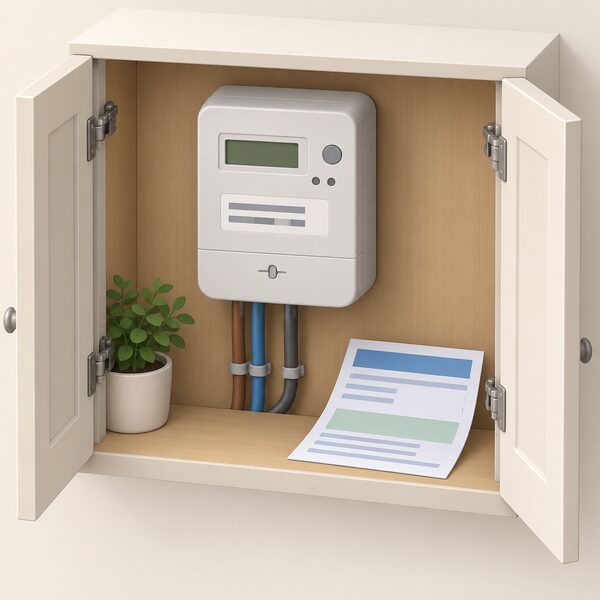
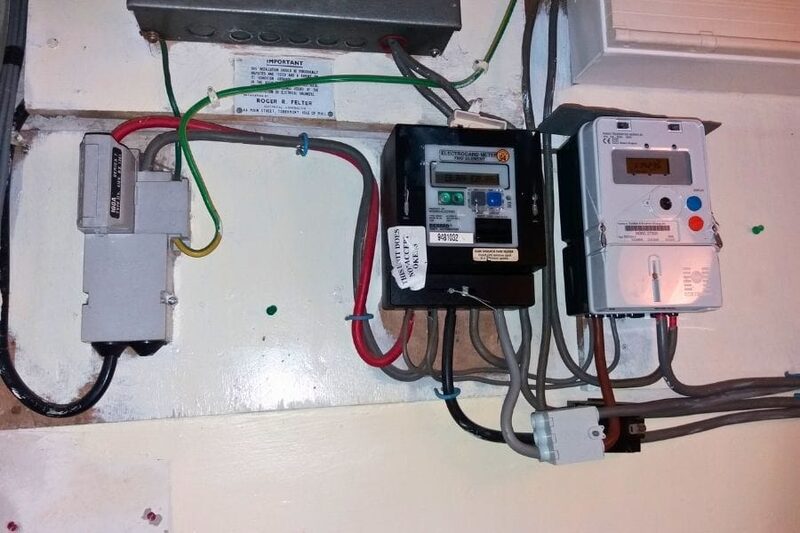
Two reference numbers identify the property rather than the occupant, and they stay with the address when you leave. The Meter Point Administration Number, also called the S number, identifies the electricity supply point and appears on the electricity bill and on the meter9. The MPRN, the Meter Point Reference Number, does the same job for gas. In flats with communal meter cupboards, the numbers can be checked against the individual meters to work out which one serves which home9.
If no bill has arrived and the previous occupier left nothing behind, the supplier can be traced from the address. The number matters for more than admin: it is what a new supplier needs to take over the supply, what a network operator needs to identify the connection, and what any future metering change is recorded against. Getting it wrong at the start creates problems that surface months later as a billing dispute.
The practical sequence for a household is short. Find the numbers, either from a bill, from the meter itself, or by asking the current supplier. Then contact the supplier to say you have moved in. Then submit the opening readings. Independent guidance for a rented house lists exactly these three steps: get the name of your energy supplier, call them to tell them you have moved in, and submit the first gas and electricity reading1.
"you can also check the MPRN (Meter Point Reference Number) against the gas meters and the MPAN (Meter Point Administration Number) against the electricity meters"
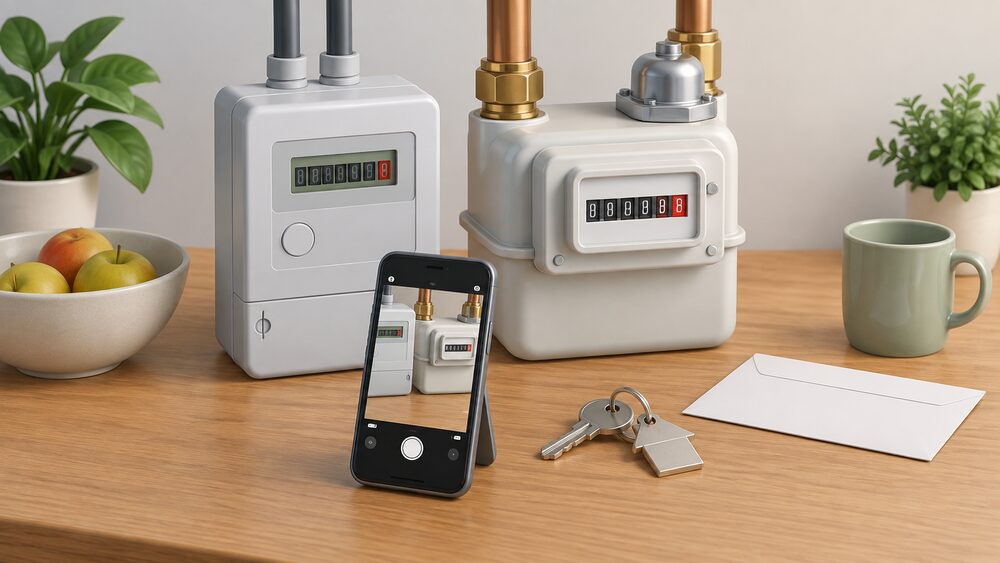
Take opening meter readings on day one
The opening reading is the single most valuable piece of paper in the first week. It fixes the point at which your usage begins, and it is the difference between paying for your own energy and paying for the previous occupier's. Independent guidance is direct about the timing: once you find out who supplies your gas and electricity, speak to them and give the initial meter reading from the day you moved in10. Photographs of the meter face, with the date visible, are the evidence if the figure is later disputed.
There is a second reason to keep readings current. Independent guidance recommends setting a reminder to provide meter readings before new price cap rates come into effect, because a reading taken at the changeover stops the new, usually higher, rate being applied to energy used before it9. That applies to every household on a standard variable tariff, whether or not the meter is smart.
Back billing rules protect against the worst outcome of a missed reading. If a supplier fails to bill you for energy used, there are limits on how far back it can charge, and the rules are set out in consumer guidance on energy back billing11. The opening reading is what makes those limits work in your favour rather than against you.
For a household's independence, the reading is the first piece of data you own about the property. It is the baseline against which every later saving is measured, and it is the figure a grant application or an assessor will ask for. The baseline your energy use page covers how to build on it.
Check whether the meters are smart, and what generation they are
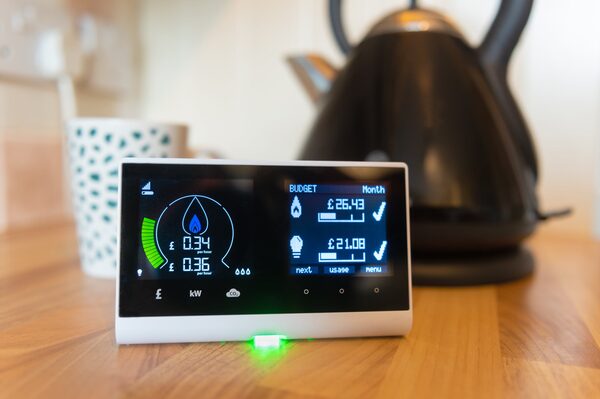
A smart meter sends readings to the supplier automatically, so the quickest test is the in-home display. If you can see your current energy use on the display, the meter should be in smart mode and sending regular readings10. If the display shows nothing, the meter may be installed but not connected, or it may have lost its connection.
Generation matters when you come to switch. SMETS2 meters keep their smart functions across all energy suppliers because they use the purpose-built national network, and they are now the meter type used for any new smart meter installation12. First-generation SMETS1 meters were a different story: some could lose smart functionality when a consumer switched energy supplier13. A migration programme has been moving those meters onto the national network, and a tool built with Citizens Advice allows a household to check whether a given meter has been migrated13.
There is a further capability worth knowing about if the property has, or may later have, solar panels. The smart metering system can support up to four smart electricity meters per household, and smart electricity meters can be used as generation meters to measure exported energy14. That is the metering arrangement behind export payments, and it is worth confirming at the point of moving in rather than discovering later.
| Check | What to look for | Why it matters |
|---|---|---|
| In-home display | Live energy use showing | Meter is in smart mode and sending readings10 |
| Meter generation | SMETS2, or SMETS1 migrated | SMETS2 keeps smart functions across suppliers12 |
| Export metering | A second electricity meter where generation exists | Measures exported energy from microgeneration14 |
| Communications | Connection to the national network | Loss of connection means manual readings15 |
Smart meters: what they do and what they cost
A smart meter automatically sends your electricity and gas meter readings to your supplier16. That single function removes the monthly ritual of reading the meter and submitting figures, and it changes billing from estimates to actual consumption: bills are based on accurate meter readings and not estimates14. The data is used to bill you for the energy you use, to offer new products and services such as new tariffs where you have given permission, and to help make the energy system more efficient by recording demand more accurately14.
The cost to the household is nil. Contact your supplier to get a smart meter for free17. Some providers may offer a free energy efficiency inspection during installation18, which is worth asking about at the point of booking rather than after.
The benefits that bear on independence are about information and control rather than self-sufficiency. The data provided by your smart meter puts you in control of your energy usage, meaning you can take energy-saving steps to reduce your CO2 emissions14. In practice that means seeing what a shower, a tumble dryer cycle or an hour of heating actually costs, and being able to access more flexible tariffs, including dual-rate tariffs14. In prepayment mode, credit can be added automatically or without having to visit a shop14.
What it does not do is reduce dependence on the grid or the supplier. The meter measures and reports; it does not generate. Except by switching, you do not control the tariff your energy supplier sets, though you can change how much energy you use2. The meter is a better instrument for managing a dependency, not an escape from it.
Setting up your account, billing and in-home display
Setting up the account is mostly a matter of information. Official guidance on switching lists what a supplier needs: your postcode, the name of your current supplier, the name of your current tariff, the amount you pay per unit in kilowatt hours, and the amount of energy you use each year4. The last two are the ones a mover rarely has to hand, which is why the opening reading and a copy of the previous bill are worth keeping.
If the property was previously supplied on a business contract, the position is different and worth checking before you move. Official guidance suggests checking who holds the energy contract, how energy charges are calculated, how much residents typically pay, whether charges are metered or estimated, whether you can choose your supplier or tariff, and whether it is possible to switch to a domestic contract6. A domestic contract brings the price cap protections and switching rights that a business contract does not.
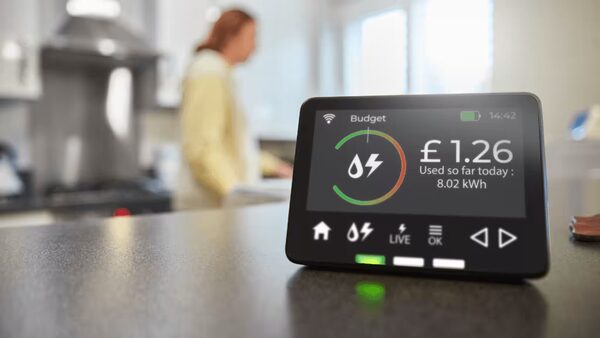
The in-home display is the part of the setup that earns its place on a kitchen surface. It shows you how much energy you are using during the day17, which is the feedback loop that makes any later change measurable. If the display is missing or dead, the supplier can advise; the display is part of the smart meter installation, not a separate purchase.
Timing of a switch is worth planning around. You can begin as soon as you become responsible for the property, which for a purchase is after exchanging contracts1. The switch itself may take up to 21 days to complete, so starting early in the first week shortens the period on the deemed or inherited tariff1. The switching supplier process is covered in more detail on the pillar page.
Prepayment meters: topping up and switching to credit mode
A prepayment meter changes the first week's tasks. Traditional prepayment meters are topped up at a local PayPoint store or Post Office using the meter's key or card, or a barcode for smart prepayment meters19. Smart prepayment meters can have credit added automatically or without a shop visit14, which removes the most common practical difficulty of prepay: being caught without credit at the wrong time.
Moving from prepay to a credit meter is possible, and official guidance describes switching from an existing gas or electricity prepay meter to a smart credit meter as straightforward for customers who meet the conditions3. The condition that most often blocks it is debt. Independent guidance states that if you owe more than £500 for gas and £500 for electricity, you will not be able to switch1. Official guidance on switching puts the prepayment debt limit at up to £5004. The two figures agree on the threshold; the practical point is that arrears above it have to be addressed before a credit meter becomes available.
For a household moving in, the check is simple: establish whether the meter is prepay or credit, whether there is any debt attached to the supply point from the previous occupant, and what the top-up method is. Debt attached to a previous occupier is not yours, but it can take correspondence to separate. The prepayment meter help route through the supplier is the first step.
Registering on the Priority Services Register

The Priority Services Register is a free service that gives extra help to customers in vulnerable situations, and it is worth registering in the first week if anyone in the household qualifies. To sign up you need to contact all your utility suppliers directly20. It is free, and it is the mechanism that puts a household on the list for help during power cuts21.
The register has been broadened over time. Ofgem announced it was broadening the eligibility criteria to include any energy customers in vulnerable situations who need it, including those whose situation is temporary22. That matters for a household that has just moved: a short-term illness, a recovery period after an operation, or a temporary incapacity can qualify, and the registration can be reviewed later. The rationale Ofgem gave is that extra services for energy customers are important, especially as electricity and gas are essential services for health and wellbeing, and the aim is to make sure the right services reach the right people23.
Scale gives a sense of how routine registration is. Ofgem reported that a record 6 million vulnerable electricity consumers and nearly 4.8 million gas consumers were registered on the register in the preceding year23. Ofgem has also noted that some suppliers help vulnerable customers well and others fall short23, which is a reason to confirm registration has actually been actioned rather than assuming it.
The register is free of charge to vulnerable consumers who have been added to it5. For a household's independence it is a resilience measure rather than a supply measure: it does not reduce dependence on the grid, but it changes what happens when the grid fails. The Met Office guidance on what to do in a power cut is worth reading alongside it21.
Where smart meters fall short: coverage, connection loss and switching
Smart meters fail in specific, documented ways, and a household moving in is well placed to check for them. A meter may lose connection with the supplier, lose connection after a supplier change, or have been installed without being connected to the national communication system15. When that happens, the meter may stop recording the energy you use, or may no longer send readings to your supplier14, and manual readings become necessary.
The scale of the problem is documented. A parliamentary committee report identified around 1.4 million meters that were working at the point of installation but had since lost communication11. That figure is from 2023 and describes a subset of the installed base, but it is the clearest official count available and it explains why a mover should not assume a smart meter is functioning just because it is present.
Switching is the other weak point. Consumer guidance warns that you can switch suppliers if you have a smart meter, but your new supplier might not offer all the smart meter services such as remote meter readings, and the meter may need replacing24. Official guidance on supplier failure puts it more bluntly: your meter may not work in smart mode when you move to the new supplier, and you may need to take meter readings manually and submit them to your new supplier instead8. There is a recovery path: your meter may work in smart mode again if you change tariffs or suppliers8.
The generation distinction is the practical defence. SMETS2 meters keep their smart functions across all energy suppliers12, so a household that has one and switches should keep automatic readings. A household with an older SMETS1 meter that has not been migrated may not. The check is worth doing before switching rather than after.
Your rights: refusing a smart meter, renting and landlord consent
It is your right to refuse the installation of a smart meter, but replacement options may be limited if a traditional meter is faulty or unsafe12. That is the balance: refusal is permitted, but a meter that has reached the end of its safe life will still need replacing, and the replacement offered may be smart.
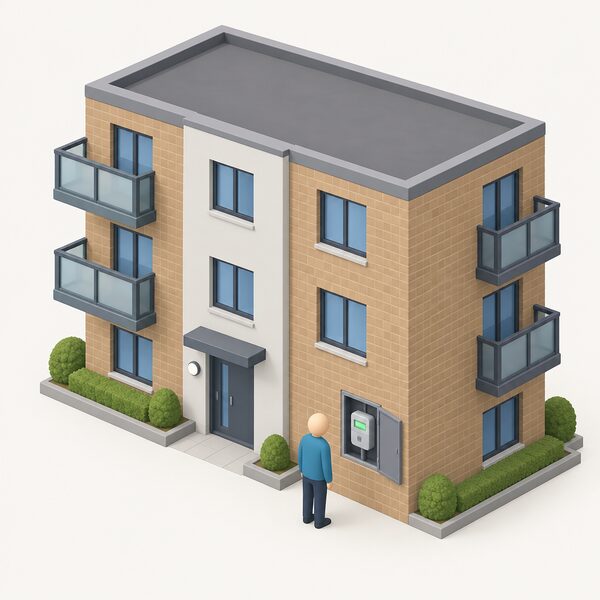
For renters, the position turns on who holds the energy account. Renters who are the account holder for the energy bills are entitled to ask for a smart meter from their supplier without their landlord's permission3. Where the energy bill is in the tenant's name, it is the tenant's choice to have a smart meter installed, and letting the landlord know before the change is recommended12. If the lease requires the landlord's permission to change the meter, Ofgem, the energy regulator, says the landlord should not unreasonably prevent this3. Tenants who pay their own gas and electricity can ask for a smart meter, and can apply if they are renting, are a prepay customer, or if the meter is located outside the property, for example in flats with communal meter boxes3.
Landlord consent is a separate matter where energy efficiency measures are involved rather than metering. The private rented sector exemption guidance sets out the evidence required where consent for a relevant energy efficiency measure was required and sought, and was refused, or was granted subject to a condition the landlord was not reasonably able to comply with25. That is the route by which a tenant can proceed when a landlord will not agree to a measure.
For a household planning beyond the first week, the getting started guide sets out the order in which energy work is best done, and the energy checks when buying a house page covers what to look at before completion rather than after. The first week's tasks are the foundation for both.
Sources25 cited
- A step by step guide to setting up gas and electricity in a new home, Energy Helpline, 2026-09-20
- How do smart meters save energy, Smart DCC, 2026
- How to get a smart meter, Smart DCC, 2026
- Switch your home energy supplier, Ofgem, 2026
- Priority Services Register review, Ofgem, 2026-01-13
- If you live in a home with a business energy contract, Ofgem, 2026
- Home reports, Scottish Government, 2026-09-17
- What happens if your energy supplier goes out of business, Ofgem, 2026
- How to read your gas and electricity meter, Confused.com, 2025-12-15
- Moving house energy checklist, Energy Saving Trust, 2026-05-01
- Smart meter roll-out, Public Accounts Committee, 2023-10-20
- Smart meters, Energy Ombudsman, 2026-09-20
- Upgrading Britain's first generation smart meters, Smart DCC, 2026
- Smart meters and decarbonisation, Smart DCC, 2026
- Smart meter performance, Ofgem, 2026
- Getting a smart meter, Ofgem, 2026
- Get help with your smart meter, Ofgem, 2026
- Smart meters, Welsh Government, 2026
- Get help with your prepayment meter, Ofgem, 2026
- Heating your home, Carmarthenshire County Council, 2026-04-04
- What to do in a power cut, Met Office, 2026-09-20
- More customers in vulnerable situations receive help under Priority Services Register, Ofgem, 2016-10-25
- Some suppliers helping vulnerable customers, others falling short, Ofgem, 2018-06-18
- Problems with services, Isle of Anglesey County Council, 2025-10
- Guidance on PRS exemptions and exemptions register evidence requirements, GOV.UK, 2026-05-05
 Moving Home Energy AccountsMoving home means you get a new energy supplier whether you choose one or not, so who supplies your new place and what happens to your old account?
 Where to Start ImprovementsThe first steps are assessment, not purchase: read the home's EPC and its recommendation report, see actual consumption on a meter or in-home display, and take the no-cost adjustments such as turning the thermostat down one degree.
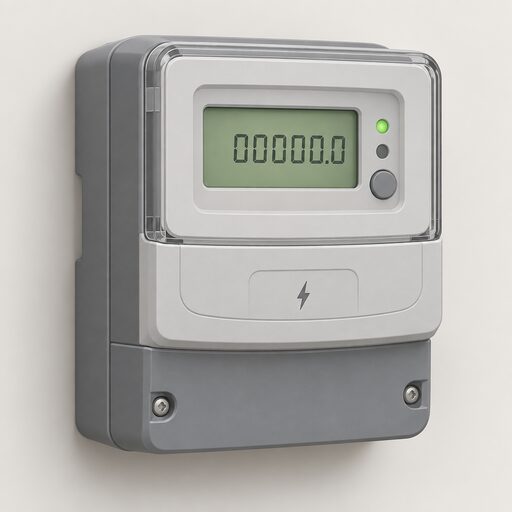 Take Control of Your EnergyHow do you read your own energy use and keep hold of your meter readings?
 Where to Start If You RentRenting means you can switch supplier or get a smart meter yourself, but insulation, glazing and heating need your landlord's agreement.
 The Full Where to Start GuideWhich home improvements actually cut your bills, and which should you do first?
 The Full How To GuideSwitching supplier, sending meter readings, sorting an EPC, claiming a grant, complaining when something goes wrong, coping in a power cut: where do you start with any of it?