

In this answer
Short answer
Moving house and switching supplier are two separate clocks, and conflating them is where most of the confusion comes from. The switch itself is quick: Ofgem's rule is that suppliers must switch your electricity or gas supply from your old supplier to your new supplier within five working days1. The Energy Switch Guarantee, the industry scheme most large suppliers sign up to, says switches should be complete within 21 days without any supply interruptions2. The 21-day figure is the backstop for the whole process, not the normal wait.
The moving-house clock is different again. You cannot start a switch at a property until you become responsible for it, which for a purchase means after you have exchanged contracts3. Before that point the account is not yours to move. Once you are responsible, the switch runs to the standard five-working-day rule, and you can begin comparing and choosing on the day you take the keys.
What catches people out is the gap between moving in and switching. When you move in, whoever supplied energy to the previous owners automatically becomes your supplier, and the tariff will usually change4. That is a deemed contract, and it applies whether or not you have signed anything. The switch away from it is what the five-day and 21-day figures describe.
How long switching takes when you move house: up to 21 days
The headline figure for a move-related switch is up to 21 days, and it comes from the Energy Switch Guarantee rather than from the statutory rule. Under the guarantee, switches should be complete within 21 days without any supply interruptions2. The same 21-day figure appears in independent guidance on the moving process, which notes that the process of moving can take up to 21 days and that the new supplier should manage it7. Guidance aimed at tenants paying their own bills gives the same completion window8.
The tighter figure is five working days. Ofgem states that suppliers must switch your electricity or gas supply from your old supplier to your new supplier within five working days1. Citizens Advice gives the same timescale, saying your new supplier should switch you within five working days5. The Energy Saving Trust puts it at up to five working days9, and the Energy Switch Guarantee itself says it should take no longer than five working days to complete your switch10. One consumer guide describes the switch as usually taking place within five working days11.
Why the two figures coexist: the guarantee's 21 days is a maximum, not a target, and it was set when the switching process was slower. The guarantee's own material notes that previously the switching process took 21 days10, which is where the number entered common usage. In practice, a straightforward move-related switch on a domestic credit meter completes in the five-working-day window, and the 21-day figure matters when something goes wrong, when a meter needs attention, or when the property has an unusual supply arrangement.
For a household's independence, the practical point is that the switch is not the slow part of moving. The slow parts are the notice you give the old supplier, the final bill, and any meter work. A meter move, if one is needed, takes far longer: it typically takes 6 to 8 weeks from payment to completion12, and the actual process of moving the meter should not take more than a few hours, but from application to completion could take several weeks13.
Telling your current supplier before you go: the 48-hour notice

The obligation that runs on a different clock from the switch is notice to your existing supplier. Citizens Advice gives the minimum as at least 48 hours' notice5, and the Energy Saving Trust repeats the same minimum, adding that some suppliers may let the process start earlier14. Uswitch frames it as a requirement rather than a courtesy: at least 48 hours' notice, with notification possible well in advance4. Confused.com puts the same figure on the call to the existing supplier, at least 48 hours before the move-out date, to give the date of the move15.
The 48 hours is a floor, not a target. The same guidance consistently suggests giving more, and the reason is administrative rather than technical: the supplier needs time to transfer your account to your new house if it offers that, or to close your account and produce a final bill14. A supplier that only learns of the move on the day itself can still close the account, but the final bill and any credit refund will take longer to sort out.
There is a second reason to give notice early. If you are on a fixed-term contract and want to carry the plan to your new address, eligibility depends on your name being on the energy bill at the new address and on you calling your supplier at least 48 hours before you move4. Miss the notice and the fixed plan does not travel with you.
What happens during the switch, step by step
The switch itself is largely handled for you. Your new supplier contacts your existing supplier on your behalf, arranges your switch date and asks for a final meter reading16. The information needed to switch is an address and a recent bill11. Comparing and switching takes only a few minutes, and the date your gas or electricity will switch is notified to you17. The entire process usually takes a few weeks, with no interruption to energy supply14.
The sequence, in order:
- You choose a supplier and tariff for the new property, once you are responsible for it.
- The new supplier contacts the old one, arranges the switch date and requests a final meter reading16.
- The switch completes within five working days under the statutory rule1, with 21 days as the guarantee's backstop2.
- A 14-day cooling-off period runs, during which you can cancel the switch and return to your old supplier1.
- The old supplier produces a final bill, which most commonly is calculated within 6 weeks of your switch18.
The cooling-off period is worth understanding properly, because it interacts with the timing. Ofgem states that if you change your mind, you can cancel your switch within 14 days1. The Energy Switch Guarantee describes the same right as returning to your old energy supplier if you change your mind within 14 days10. Age UK's guidance puts the two together: switching should happen within 5 days of the 14-day cooling-off period19. That phrasing reflects the sequence rather than a longer wait, but it explains why some households experience a switch that feels slower than five days.
If something goes wrong, there is a remedy with its own clock. Where a supplier makes a mistake, it should pay any resulting amount by cheque or into your bank account within 10 working days of the date they agree a mistake was made1. If you are switched away in error, the supplier has 21 working days to switch you back1.
How moving house differs from a normal supplier switch
A normal switch is a choice. A move-related switch starts from a position you did not choose. When you move, you are automatically switched to the new property's supplier, and even if the tariff is the same brand you had before, the terms will usually differ7. The Energy Saving Trust states it plainly: when you move in, whoever supplied energy to the previous owners will automatically become your supplier14.
That automatic assignment is the single biggest difference. In a normal switch you leave a supplier you selected; in a move you inherit one. Until you either agree a tariff with that supplier or switch away, you are on its deemed contract terms, which are typically its standard variable rates rather than a fixed deal. Standard rate tariffs are the default a household falls onto when no choice has been made17, and the range of tariff types available once you do choose is set out in the usual categories of fixed, variable and tracker products20.
The second difference is timing. A normal switch can be started at any point, subject to the rules on fixed-term contracts. The switching window for a fixed-term contract opens from either 49 days before the end of the fixed term, or when a supplier sends the statement of renewal terms, whichever is earlier21. A move-related switch cannot start until you are responsible for the property3, so the two clocks are anchored to different events.
The third difference is that a move involves two properties and therefore two sets of obligations. The old address needs 48 hours' notice and a closing reading; the new address needs an account opened in your name and, if you want to change supplier, a switch. Tenants have an additional layer: switching is possible where you pay the supplier directly, but a change from prepayment to credit requires a physical change to the property and a check with the landlord first22.
For independence, the move is a moment of exposure. You arrive on someone else's supplier and someone else's tariff, and the only way out is to run the switch. The grid connection, the network operator and the physical supply do not change at all; what changes is who bills you and on what terms.
Meter readings and final bills: getting the dates right
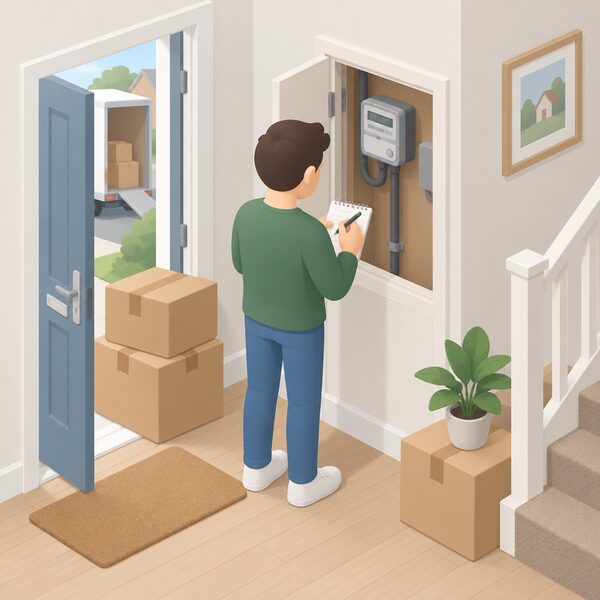
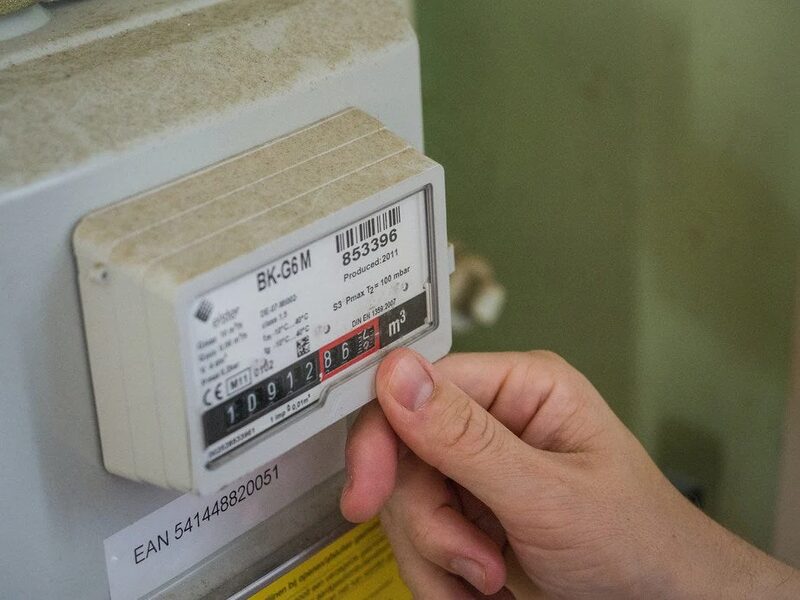
Readings are what stop you paying for someone else's energy. Part of the switchover process includes taking a meter reading on the day of your switch23. Your new supplier is responsible for taking a meter reading when you switch, and for all future meter readings at your property after the energy switch takes place24. That does not remove the value of taking your own reading on moving day, particularly at the property you are leaving, where the closing reading determines the final bill.
The final bill has its own timetable. Most final bills are calculated within 6 weeks of your switch18. Once issued, you will have 28 days to pay5. If the account was in credit, the balance is refunded after the final bill is settled, and there is a route to reclaim credit from accounts closed when you moved home or switched suppliers during the past five years25.
Direct Debits should be handled in a specific order. When you switch supplier, you will be asked to set up your direct debit ahead of the date the new supplier takes over the supply, and the old direct debit should be cancelled after the final bills are paid26. Cancelling the old mandate before the final bill lands can leave the account unpaid and delay any refund.
If the new property has a prepayment meter, the timing changes. Contact your energy supplier at least three days before moving in and ask if the meter needs to be reset or if you need a new key or card, and set up a new online account6. Prepayment meters carry their own constraints, including the debt rules that can affect switching27.
Where the property is in Wales, the same national rules apply, and Citizens Advice Cymru handles consumer energy problems on the same basis as the England and Wales service28. Northern Ireland operates a separate market with its own suppliers and network arrangements, so switching rules and timescales there follow the Utility Regulator's framework rather than the Energy Switch Guarantee.
Sources28 cited
- Switch your home energy supplier, Ofgem, 2026
- The Great Energy Savings Switch, Uswitch, 2026-09-19
- A step-by-step guide to setting up gas and electricity in a new home, Energy Helpline, 2026-09-20
- Moving house gas and electricity guide, Uswitch, 2026-08-26
- Moving home: dealing with your energy supply, Citizens Advice, 2026-09-20
- Prepayment meters, Centre for Sustainable Energy, 2025-08
- Dealing with your energy supplier, Centre for Sustainable Energy, 2026-01
- Tenants guide to switching, Uswitch, 2026-05-29
- Switching your energy supplier, Energy Saving Trust, 2026-06-26
- Energy Switch Guarantee, Uswitch, 2026-09-20
- Energy switching, Confused.com, 2026
- Make changes, Wales & West Utilities, 2026-09-20
- How to move your gas or electricity meter, Uswitch, 2026-09-04
- Moving house energy checklist, Energy Saving Trust, 2026-05-01
- How to switch supplier when moving house, Confused.com, 2025-06-27
- How to check your energy tariff and switch if you find a better deal, British Gas Energy Trust, 2026-07-30
- Standard rate tariffs, Uswitch, 2026-08-26
- Electricity only, Confused.com, 2026
- Getting the best energy deal, Age UK, 2026-09-10
- Types of energy tariff, Confused.com, 2025-11-03
- Guide to the customer communications rule changes, Ofgem, 2018-12
- Prepayment meter change to credit meter, Uswitch, 2026-04-23
- What happens to credit if I switch, Uswitch, 2026-05-29
- Energy your questions answered, Confused.com, 2026-07-03
- Government help with gas and electric bills, StepChange, 2026-09-20
- Direct debit, Uswitch, 2025-10-22
- Your gas or electricity supplier has put up its prices, Citizens Advice Wales, 2026-09-17
- Switching energy suppliers guide, EDF Energy, 2026-08-26
 Switching SupplierHow long does switching energy supplier actually take, and what happens if you owe money?
 Switch Energy SupplierThe practical sequence of a domestic energy switch: the details and readings needed, the five working day transfer, cooling-off periods, exit fees and the final bill.
 Moving Home Energy AccountsMoving home means you get a new energy supplier whether you choose one or not, so who supplies your new place and what happens to your old account?
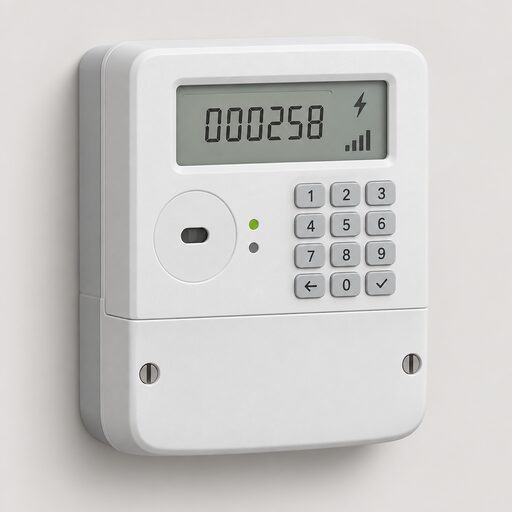 Moving Home Energy ChecklistThe immediate energy tasks on moving in: finding the supplier and meters, taking opening readings, checking whether the meters are smart, setting up billing, prepayment top-ups, the Priority Services Register, and your rights as a buyer or renter.
 Payback Periods ComparedHow long does it take for a home energy upgrade to pay for itself?
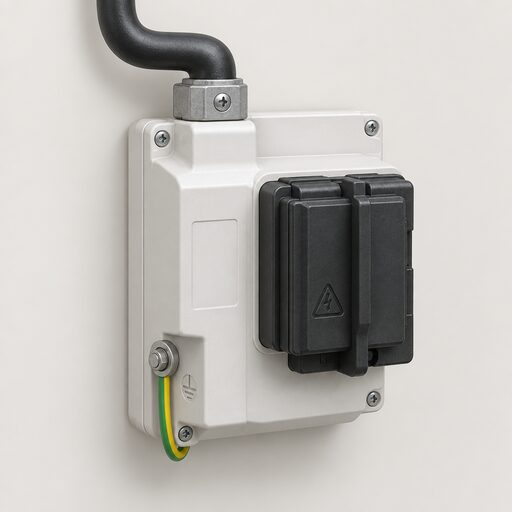 New Electricity ConnectionWho do you contact for a new or upgraded electricity connection, and what will it cost?