

In this answer
Short answer
The short answer is that a household usually does not need to cancel the Direct Debit at all. The old supplier closes the mandate as part of closing the account, and the new supplier sets up its own instruction ahead of the takeover date. Independent switching guidance is explicit on the sequence: set up the Direct Debit with the new supplier ahead of the date it takes over supply, and cancel the old Direct Debit after paying the final bills1.
Cancelling early is the step that causes trouble. The old account still has to be billed for the energy it supplied, and the final bill is settled from the account, not from the mandate. Ofgem states that when you switch, your old supplier will refund any credit in your final bill, and that you could get compensation if it does not2. A household that cancels the mandate first and then disputes the final figure has removed the mechanism that would have collected or refunded the difference.
The Direct Debit Guarantee sits behind all of this. If there is an error in a Direct Debit payment, you are entitled to a refund under the Guarantee, and if a bill changes and you are not told, you can contact your bank to dispute the charge and seek compensation4. That protection is what makes the "leave it to the supplier" approach safe: the mandate is not the only route to getting money back.
Why cancelling early complicates the final bill and the refund
The final bill is the pivot. The old supplier has to bill the period it supplied, apply any credit to that charge, and either send a bill for the outstanding amount or refund the leftover credit to the bank account4. That process assumes a live payment relationship with the account. Cancelling the mandate does not stop the bill being produced, but it does remove the route by which an underpayment would normally be collected, and it can make the account look as though the household has walked away from it.
There is also a timing trap. A final bill should arrive within 6 weeks of completing the switch, confirming how much the old supplier owes you7. Until that bill lands, nobody knows whether the account is in credit or in debit. Cancelling the mandate in that window is a decision taken without the number that matters.
The consequences of a cancelled mandate are not only administrative. A Direct Debit that fails because there are not enough funds may be returned unpaid and could result in a charge from your bank to cover additional administration1. A mandate cancelled by the customer does not produce that charge, but it does mean any instalment the supplier still expected will not be collected, and the account moves into arrears instead.
Switching while in debit is allowed. If your account is in debit or you still owe money to your old supplier you can still switch energy suppliers, and the debt is settled through the final bill9. Where the money has been owed for less than 28 days and the household pays by Direct Debit or on receipt of a bill, the switch can proceed with the debt added to the final bill10. None of that requires cancelling anything.
How the switch handles the Direct Debit at each end
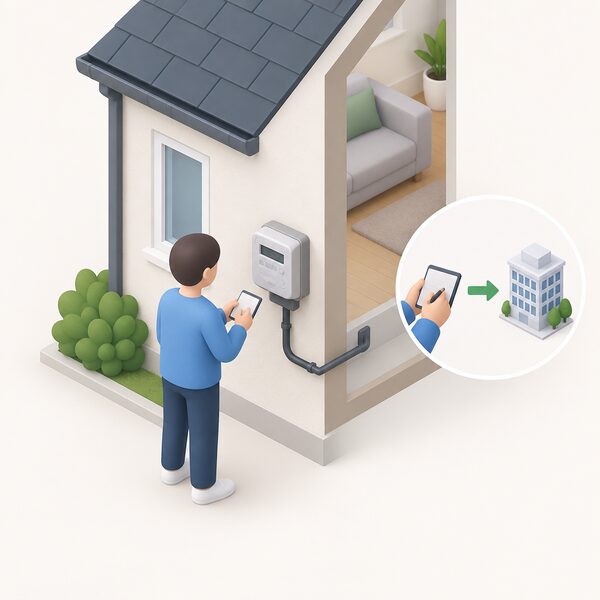
The switch itself is handled between the two suppliers. The new supplier contacts the existing supplier on your behalf, arranges the switch date and asks for a final meter reading11. The household's part is the new mandate: when you switch supplier, you will be asked to set up your Direct Debit ahead of the date the new supplier takes over the supply1.
The old mandate then ends through the account closure. Power NI, for example, states that if you pay by Direct Debit it will cancel it once a Keypad installation has been completed12. That is a supplier describing its own closing process, and it shows the pattern: the cancellation is triggered by the account event, not by the customer contacting the bank.
There is a regulatory backdrop to the amounts themselves. Suppliers must ensure that customer fixed Direct Debit amounts are based on accurate and up to date information to ensure credit balances are not excessive13. Suppliers are also expected to review a Direct Debit annually14. A household that has just switched is therefore entering a payment arrangement that should be recalibrated against actual usage rather than left at whatever figure was first suggested.
Two mandates can briefly coexist. The new instruction is a separate mandate to a separate supplier, so setting it up does not cancel the old one, and the old one does not cancel the new one. That overlap is normal and is the reason the guidance puts the old cancellation after the final bills rather than before the takeover.
Cancelling a Direct Debit yourself: the Guarantee and the bank's role
A Direct Debit is an instruction to the bank, so the bank can act on the customer's instruction to cancel it. The Direct Debit Guarantee is the protection attached to that instruction: if there is an error in your Direct Debit payment, you are entitled to a refund under the Guarantee4. Where a bill changes and you are not told, you can contact your bank to dispute the charge and seek compensation15.
The notice duty runs the other way. A supplier must notify you of a change in your Direct Debit payment amount or payment date in advance16. Your supplier should give you reasonable notice of any changes to your direct debit payments, and should also explain why the change is necessary6. That is the rule that makes an unexplained increase challengeable, and it applies in Wales on the same terms as in England7.
Cancelling through the bank alone leaves a gap. The bank acts on the customer's instruction, so the supplier may not be told in advance, and the account can then record a missed instalment. Cancelling through the supplier as well, or simply letting the account closure do it, keeps the two records aligned.
"If your bill changes and you are not told, you can contact your bank to dispute the charge and seek compensation."
What happens to the credit balance when you switch
Credit is the household's money and it follows the final bill. Ofgem states that your old supplier will refund any credit in your final bill, and that you could get compensation if it does not2. The Energy Switch Guarantee commits signatories to refunding any credit due within 14 days of your final bill5. One consumer body reports a £40 payment where a credit balance is not refunded within 10 working days of the final bill deadline6.
Refunds are not conditional on switching. You do not have to switch suppliers to get your credit returned to you4. If you are in credit with your current supplier, the money can be claimed back from them when you switch, and the same claim can be made without switching at all17.
Suppliers can refuse a refund in defined circumstances. Grounds include that Direct Debit payments will not cover future bills without a credit balance in place, or that no recent meter reading has been supplied or a smart meter is not working correctly18. Those are the cases where the credit is doing a job on the account rather than sitting idle.
There is a wider point about old accounts. You might be due a refund if you closed old energy accounts when you moved home or switched suppliers during the past five years19. Ofgem also operates a check for money owed on an energy bill20. Neither route requires a Direct Debit to be cancelled.
If the old Direct Debit keeps taking payments after the switch
A payment taken after the switch date is usually an instalment towards the final bill rather than a double charge. The old supplier still has to bill the period it supplied, and the final bill applies any credit to that charge before refunding the remainder4. Until the final bill is settled, the account can legitimately still be collecting.
The dates to work to are fixed. A final bill should arrive within 6 weeks of completing the switch, confirming how much the old supplier owes you7. The Energy Switch Guarantee puts the credit refund within 14 days of the final bill5. Where a credit balance is not refunded within 10 working days of the final bill deadline, one consumer body reports a £40 compensation payment6.
If a payment looks wrong, the Guarantee is the route. If there is an error in your Direct Debit payment, you are entitled to a refund under the Direct Debit Guarantee, and where a bill changes without notice you can dispute the charge with your bank and seek compensation4. The supplier's own duty to give reasonable notice of changes to the payment amount or date, and to explain why the change is necessary, is the standard against which the payment can be tested6.
Where the switch itself was not authorised, the position is different again. If you have been switched to a new supplier without your agreement, you will still get bills from your old supplier and you will not have to pay the new supplier anything once you are switched back22. That is an erroneous transfer, not a Direct Debit problem, and it is resolved by reversing the switch rather than by cancelling a mandate.
For households on Fuel Direct, deductions for ongoing bills can be stopped at any time by contacting the office that pays the benefit23. That is a separate mechanism from a Direct Debit and is not affected by the switch process.
Where the Direct Debit discount fits

Most suppliers offer a discount if you pay by direct debit instead of cash or cheque17. The rules on how that discount can be structured are narrower than the marketing suggests: energy suppliers are not allowed to offer discounts to people who pay by direct debit, but they can restrict access to the cheapest tariffs to direct debit customers24. In practice the saving usually appears as a cheaper tariff rather than a line on the bill.
That distinction matters when a household is deciding whether to cancel. Cancelling the mandate can move the account off the cheapest tariff, which is the mechanism behind the warning not to cancel a direct debit when claiming back credit21. The discount is also not the only lever: check if your energy supplier offers variable direct debit payments, and if it does not, that is a reason to consider switching supplier rather than cancelling the mandate25.
Paying by Direct Debit spreads the cost of energy usage evenly over 12 equal monthly payments, rather than paying more over the winter8. Suppliers may increase the direct debit amount over the winter months to cover additional usage, while the rates charged per unit of energy do not change1. That is a cash-flow adjustment, not a price rise, and it is the change most likely to be mistaken for a post-switch error.
For households that want to change how they pay without changing supplier, the process is direct: give your energy supplier a call, ask about the discount you will be offered, and the change should appear on the next bill16. Moving from cash and cheque to Direct Debit is available unless there is a prepayment meter16. Moving the other way, from prepayment to credit, requires the energy account to be debt-free, and some suppliers may run a credit check for a direct debit plan26.
Sources26 cited
- Direct Debit energy payments guide, Uswitch, 2025-10-22
- Switch your home energy supplier, Ofgem, 2026
- How your electricity or gas bill is calculated, Ofgem, 2026
- What happens to credit if I switch, Uswitch, 2026-05-29
- Energy Switch Guarantee, Uswitch, 2026-09-17
- Getting the best energy deal, Age UK, 2026-09-10
- Energy credit explained, Confused.com, 2026-07-03
- Customer credit balances explained, Energy UK, 2024-03-22
- Switching energy supplier, Energy Helpline, 2026-09-20
- How to switch energy supplier, Which?, 2026-05-15
- How to check your energy tariff and switch, British Gas Energy Trust, 2026-07-30
- Changing to Keypad and your final bill, Power NI, 2026-09-20
- Customer credit balance explanatory note, Ofgem, 2024-03
- Top energy company issues and how to solve them, Which?, 2026-03-03
- Energy consumer rights, Uswitch, 2025-08-19
- Paying for energy by cash, Uswitch, 2025-09-05
- Energy supplier has increased your Direct Debit, Citizens Advice, 2026-09-17
- Your gas or electricity supplier has put up its prices (Wales), Citizens Advice, 2026-09-17
- Understanding energy bills, StepChange, 2026-09-20
- Check if you are owed money on your energy bill, Ofgem, 2026
- Energy credit claim back, End Fuel Poverty Coalition, 2025-04-14
- You've been switched to a new energy supplier without your agreement, Citizens Advice, 2026-09-17
- Water, gas and electricity bills, GOV.UK, 2026-09-17
- Dealing with your energy supplier, Centre for Sustainable Energy, 2026-01
- Variable direct debit payments, Citizens Advice, 2026-09-17
- Prepayment meter change to credit meter, Uswitch, 2026-04-23
 Final Bills and Credit RefundsHow final bills and credit refunds work when you leave an energy supplier: the six-week deadline for the final bill, the ten-working-day deadline for refunding credit, the twelve-month back billing limit, and the automatic compensation that applies when suppliers miss these standards.
 Switching SupplierHow long does switching energy supplier actually take, and what happens if you owe money?
 Direct Debit and CreditExplains how fixed monthly direct debits are set and reviewed, why balances build over the year, and the rules on refunding credit.
 Price Cap RatesPaying by direct debit, prepayment or standard credit changes what you pay under the price cap, so which method is cheapest?
 Section 75 and ChargebackIf an installer takes your deposit and then goes bust, can you get your money back from the card company?
 Installation ContractsCan you cancel a solar panel or boiler contract after signing?