
In this answer
Short answer
A direct debit that rises without explanation is one of the most common energy complaints in the UK. The first thing to establish is whether the increase is justified. Suppliers raise payments when a household is using more energy than the supplier estimated, and the unit rate and daily standing charge can stay exactly the same while the monthly amount climbs1. A supplier may also raise the amount over the winter months to cover additional usage2.
Where the increase reflects higher usage, the payment is doing what it is designed to do. Where it does not, the household can dispute it. The route runs through the supplier first, then the Energy Ombudsman, with free advice available from Citizens Advice and, in Scotland and Northern Ireland, from separate national services.
Why suppliers raise direct debits, and when the increase can be challenged
A direct debit is a forecast, not a bill. The supplier estimates what the coming months will cost and divides that across twelve payments. Payments rise when usage runs ahead of the estimate, and the supplier may use the extra to clear an arrears balance over a few months1. On a fixed tariff, the price of energy and the daily fee can stay the same while the monthly payment still goes up, because the change is driven by consumption rather than by rates2.
Suppliers are not permitted to offer discounts to people who pay by direct debit, but they can restrict access to their cheapest tariffs to direct debit customers7. That is a commercial choice about tariff eligibility, not a discount, and it is worth knowing when weighing up whether to move to another payment method.
The scale of the shift over the long term is significant. Electricity bills paid by Direct Debit instalment increased by 128.84% between 2014 and 2023, against 120.63% for standard credit bills and 106.43% for prepayment8. That is a decade-long trend rather than a single supplier decision, and it explains why so many households find themselves querying the monthly figure.
A direct debit set too high or too low by the supplier was reported by 7% of respondents to a Which? energy customer survey covering September to October 20253. Suppliers should review a direct debit annually in any case3. Where a review has not happened, or where the estimate behind the payment looks wrong, that is the point at which a challenge is reasonable.
Check the account before complaining: readings, tariff and balance
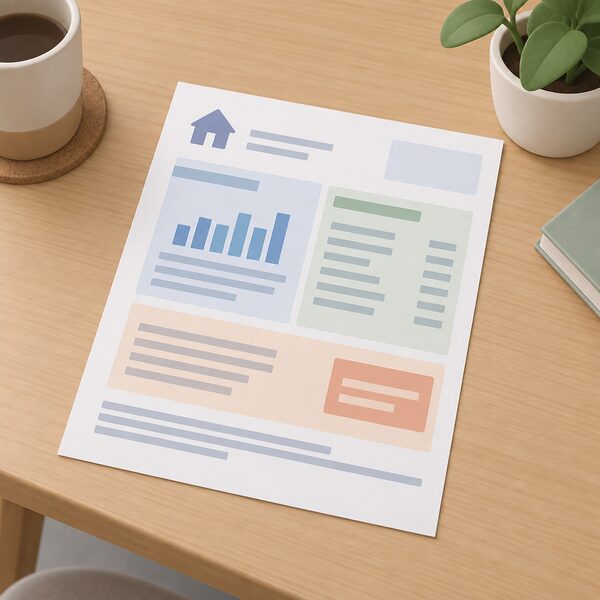
A dispute is only as strong as the account information behind it. Three things decide whether a direct debit is set correctly: whether the meter readings are actual or estimated, what tariff applies, and whether a credit balance has built up.
Credit builds when a household pays for more energy than it has used, which is exactly what a set monthly Direct Debit produces across the warmer months9. That credit is the household's money. A supplier may refuse a refund where the Direct Debit payments would not cover future bills without the credit balance in place, or where no recent meter reading has been supplied or a smart meter is not working correctly9. Those are the grounds a supplier can rely on, and they are worth checking before a refund is requested.
Smart meter customers have rights around readings and billing that support an accurate account10. Where a bill has not arrived for some time, the account position is unclear and the direct debit may be based on an old estimate.
The practical check is straightforward: compare the consumption on the last bill against the consumption in the same period a year earlier, confirm whether the readings were actual or estimated, and look at whether the account is in credit or arrears. A household that can state those three things has a complaint the supplier has to answer on the facts.
Complaining to your supplier: the first step
Every escalation route in the UK energy market starts with the supplier. The Energy Ombudsman states plainly that before contacting it, a consumer should notify the supplier and work with them to try to resolve the issue12. Ofgem's guidance is the same: where there is a problem with an energy bill, the household should contact the energy supplier13. The Ombudsman's own consumer guidance repeats the rule: a complaint must be raised with the supplier in the first instance4.
The same principle applies to less common supply arrangements. A heat network customer should contact the heat network supplier and ask them to fix the situation before raising a complaint with the Energy Ombudsman14. Where a household pays a site owner or landlord for energy, that party is the first point of contact for a problem or complaint15.
Complaints about related matters follow their own first step. A complaint about an Energy Performance Certificate goes first to the Domestic Energy Assessor, and then to their certification body if the household is still unhappy16.
Put the complaint in writing where possible, state the account number, the current payment, the payment the household believes is correct, and the evidence behind that figure. Ask for the direct debit to be reviewed and for a written explanation of how the current amount was calculated. Keep a record of the date the complaint was made, because the eight-week clock for the Ombudsman runs from it.
Escalating to the Energy Ombudsman
The Energy Ombudsman is the approved dispute resolution body for the energy market. It deals with consumer complaints about energy bills, mis-selling, problems with energy supply and problems with switching supplier17. It is free to the consumer where the issue is not resolved after eight weeks, or where a deadlock letter has been received, following a complaint to the supplier first4.
The eligibility conditions are set out clearly. A consumer can complain if a reported problem is not fixed within eight weeks, if the consumer and the energy company cannot agree how to fix it, if a deadlock letter is received, or if the consumer is not happy with the decision received18. The same escalation applies to complaints about prepayment meter installation: where a household is not happy with how the supplier handled the complaint, the Ombudsman is the next step19.
Once a case is escalated, the Ombudsman will ask for information and evidence, review evidence from both the consumer and the energy company, inform the consumer of the decision within six weeks, and give the energy company a set of actions to resolve the problem18.
The Energy Ombudsman deals with complaints only after the supplier has had its chance to put things right: a complaint must be raised with the supplier first, and the case becomes eligible if the issue is not resolved after eight weeks or a deadlock letter is issued12.
The remedy available is an action imposed on the supplier rather than a payment made by the Ombudsman, which is why the evidence pack matters. A complaint that shows the readings, the tariff and the balance is easier to decide than one that disputes the amount alone.
Free help from Citizens Advice, and the Extra Help Unit
Citizens Advice offers information and support on a range of topics, including struggling to pay bills, problems with an energy supplier or energy supply, saving energy at home and getting a better energy deal5. The consumer service takes questions about a problem to do with energy bills or energy supply5. Lines are open Monday to Friday, 9am to 5pm, and the energy chat service is usually available over the same hours5.
Where a complaint is difficult or urgent, the consumer service may refer the household to the Extra Help Unit. Referral criteria include needing support with a difficult or urgent complaint, being unable to deal with the energy supplier alone because of personal circumstances, being considered vulnerable, or being at risk of disconnection from an energy supply21. The Extra Help Unit supports vulnerable consumers by raising complaints with energy suppliers on their behalf, particularly where there is a risk of disconnection or complex personal circumstances4.
There is a further consequence worth knowing about. A household referred to the local authority for support by its energy supplier or by Citizens Advice because it is struggling to pay electricity or gas bills can qualify under ECO4 Flexible Eligibility22. Advice contact can therefore open access to efficiency funding as well as resolving a billing dispute.
Local authority schemes add another layer. Some councils advertise a free telephone advice service to help with benefits, money and bill problems23.

Help in Wales, Scotland and Northern Ireland

Support is devolved, and the routes differ by nation. The Welsh government publishes guidance on getting help with home energy bills for people who live in Wales5. Business Wales covers help with small business or microbusiness energy bills24. Published contact numbers for Welsh-language energy advice differ between documents, so the current number should be checked before calling.
In Scotland, Energyadvice.scot runs a free service for Scottish citizens with questions about their energy supplier, wanting to understand their supplier's complaints process, or with problems with their energy bills25.
In Northern Ireland, the Consumer Council NI and Northern Ireland Energy Advice give free, independent and impartial energy advice to all domestic householders26. Northern Ireland also has its own arrangements for low carbon heating support26.
If you are struggling to pay as well as disputing the amount
A dispute about the level of a direct debit and an affordability problem are different things, and they need to be raised separately. A Direct Debit that cannot be met may be returned unpaid, and that can result in a charge from the bank to cover additional administration6. The supplier should be told about the affordability issue at the same time as the dispute, so that the payment arrangement and the complaint are handled on the correct track.
The wider context is that domestic energy debt and arrears rose 5% from £4.55bn to £4.79bn between Q4 2025 and Q1 2026, and were up 15% on Q1 202527. Households in dispute about a payment are not doing so in isolation.
Price cap levels themselves move in small increments that rarely explain a large direct debit change. From 1 January to 31 March 2026 there was a monthly increase of 28 pence for a typical dual fuel Direct Debit household28. For electricity only customers on Economy 7 meters, the Direct Debit cap level rose from £1,145 to £1,179, an increase of £34 or 3%29. An earlier change for the same customer group moved the level from £1,150 to £1,201 for 1 April to 30 June 202530. A direct debit rising by considerably more than these figures is being driven by usage or arrears rather than by the cap.
Where a household is in credit, a refund may be requested, but the supplier can refuse where the Direct Debit payments would not cover future bills without the credit balance, or where no recent meter reading has been supplied or a smart meter is not working correctly9. Credit builds precisely because a set monthly payment exceeds usage in warmer months31.
Sources31 cited
- Energy supplier has increased your direct debit, Citizens Advice, 2026-09-17
- Your gas or electricity supplier has put up its prices, Citizens Advice, 2026-09-17
- Top energy company issues and how to solve them, Which?, 2025-09
- Worried about your energy bills, Energy Ombudsman, 2026-03-24
- Get help with your energy bills, Ofgem, 2026-09-17
- Direct debit guide, Uswitch, 2025-10-22
- Dealing with your energy supplier, Centre for Sustainable Energy, 2026-01
- Energy statistics, Uswitch, 2025-12-17
- Energy credit guide, Confused.com, 2026-07-03
- Smart meters: your rights and expectations, GOV.UK, 2025-08-08
- How your electricity or gas bill is calculated, Ofgem, 2026
- How we can help: energy suppliers, Energy Ombudsman, 2026-09-20
- Understand your electricity and gas bills, Ofgem, 2026
- Heat networks affected by the Energy Prices Act 2022, Energy Ombudsman, 2026-09-20
- If you live in a home or business with an energy contract, Ofgem, 2026
- Who to contact, Ofgem, 2026-09-17
- Problems with services, Isle of Anglesey County Council, 2025-10
- Complain about your energy supplier or network operator, Ofgem, 2026
- Installing a prepayment meter without your permission, Ofgem, 2026
- Get help with your home or business energy bills, Ofgem, 2026-09-17
- If you need more help about a consumer issue: energy, Citizens Advice, 2026
- ECO flexibility funding, Ceredigion County Council, 2026-09-17
- Energy saving grants and funding, Tameside Council, 2026-09-17
- Raise a dispute: Direct Energy Utilities, Energy Ombudsman, 2026-09-19
- Complain about your energy supplier, Ofgem, 2026
- Low carbon heating, nidirect, 2026-09-17
- Energy debt, National Energy Action, 2026-Q1
- Changes to energy price cap between 1 January and 31 March 2026, Ofgem, 2025-11-21
- Summary of changes to energy price cap 1 October to 31 December 2025, Ofgem, 2025-08-27
- Summary of changes to energy price cap 1 April to 30 June 2025, Ofgem, 2025
- Check if you are owed money on your energy bill, Ofgem, 2026
 Complain About Energy SupplierThe order of a complaint: the supplier's own procedure, the eight-week point or deadlock, and referral to the Energy Ombudsman in Great Britain or the Consumer Council in Northern Ireland.
 Complaining About a SupplierHow do you complain about your energy supplier, and how long should it take?
 Energy Complaints and RedressMaps the routes a householder has when an energy supplier, network operator, broker or heat network gets something wrong, which body handles which dispute, and what the Energy Ombudsman can and cannot do.
 Ways to Pay an Energy SupplierHow you pay for gas and electricity changes what you are charged, and by how much.
 Direct Debit and CreditExplains how fixed monthly direct debits are set and reviewed, why balances build over the year, and the rules on refunding credit.
 Prepayment Meters and DebtCan your energy supplier force you onto a prepayment meter because you owe them money?