In this guide
Boilers and Home Heating: The Full UK Guide
Most UK homes are heated by a boiler burning mains gas. The rest use oil, LPG, electricity or solid fuel, and a small but growing share use a low-carbon system such as a heat pump. Boilers are the most common heating type in UK homes1. In the government's Winter 2025 public attitudes tracker, three quarters of people (75%) said a gas boiler was their main method of heating the home, and 5% named an oil boiler2.
Heating and hot water account for over half of most UK energy bills3. The fuel and the appliance therefore shape a household's running costs more than any other choice, and they also decide which outside suppliers the home depends on. This page describes each heating type found in UK homes and the radiators, underfloor pipes and controls that distribute the heat. It also covers the rules on installation and servicing and the policy direction away from fossil fuel boilers.
On energy independence the position is mixed. A gas, oil or LPG boiler ties the home to a delivered or piped fuel, and it still needs mains electricity to run. Electric heating removes the fuel supply but deepens dependence on the grid and on electricity prices. No system described here makes a home self-sufficient on its own. The sections below state what each one depends on.
Heating systems in UK homes: the full picture
Energy Saving Trust groups UK heating systems into three families: boilers, low carbon heating and electric heating1. Boilers are the largest group. The published figures for their share differ because the sources measure different things at different dates, so they are best read together.
| Measure | Figure | Date |
|---|---|---|
| Gas boiler as main method of heating, all households | 75% | Winter 20252 |
| Oil boiler as main method of heating | 5% | Winter 20252 |
| Homes using gas boilers for central heating and hot water | 23 million | February 202510 |
| UK homes using gas or oil for heating | Around 90% | June 202611 |
| UK homes using oil for heating | Around 1.5 million | September 20254 |
| UK households using LPG | Around two hundred thousand | September 20254 |
| UK households using electric heating, such as storage heaters | Around 2.3 million | June 20255 |
| UK homes with low carbon heating systems | 9% | 20259 |
The 75% figure comes from a survey that asked people about their main heating method. The "around 90%" figure counts homes on either gas or oil. Both show that about nine in ten homes burn a fossil fuel for warmth, and everything else shares the remainder.
Geography drives most of the variation. Oil heating is concentrated off the gas grid, and Which? notes that the 1.5 million oil-heated homes include many in Northern Ireland4. OFTEC describes liquid fuel heating as the fuel of choice for around one million homes in Great Britain and a similar number in Ireland12. England, Scotland and Wales share a gas network and broadly the same pattern of gas heating. Support schemes and building standards differ between the four nations, and those differences are noted in the sections where they apply.
For independence, the starting point in most homes is a single appliance, fed by a single imported fuel, with heat distributed through water-filled radiators. That is a concentrated dependency. The route away from it starts with understanding how the parts fit together.
Boilers: the most common heating type, in gas, oil, LPG and biomass

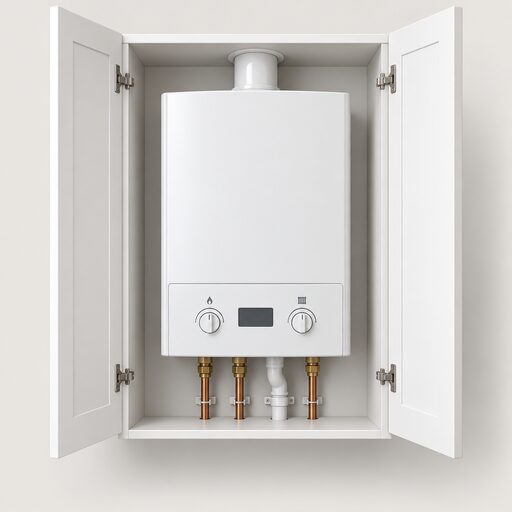
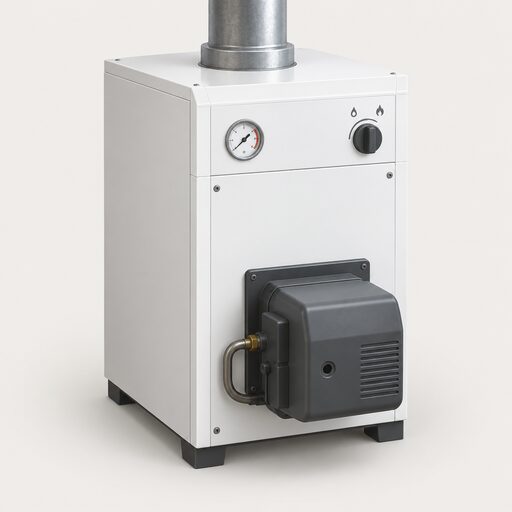
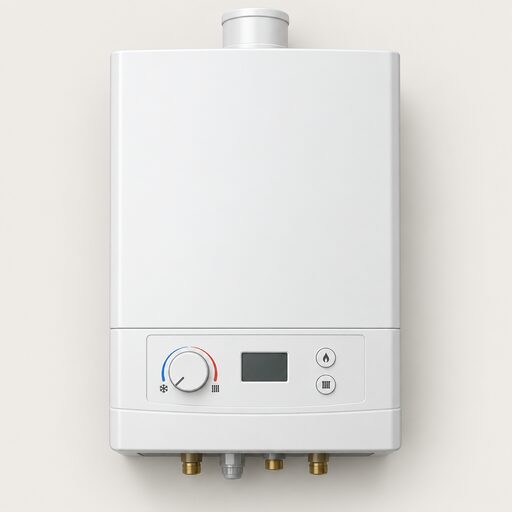
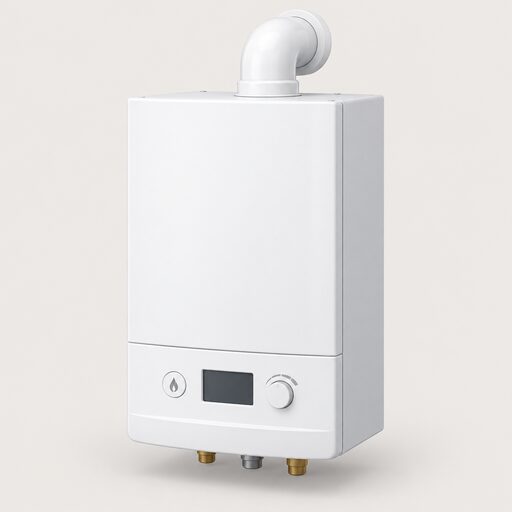
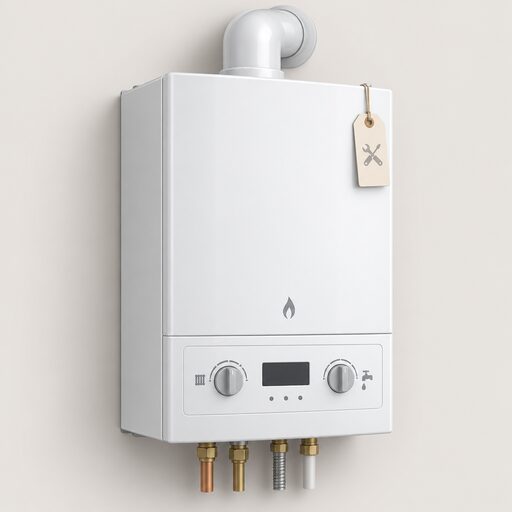
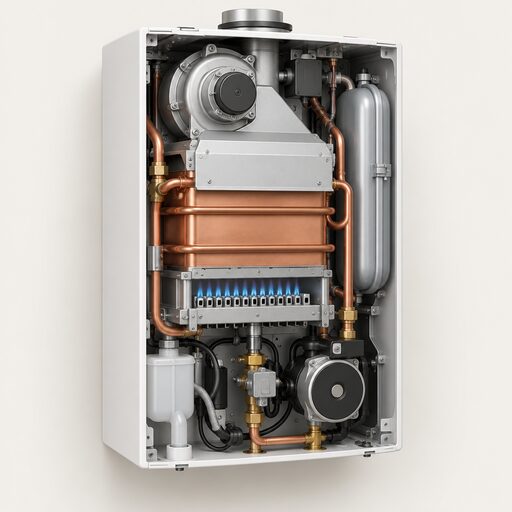
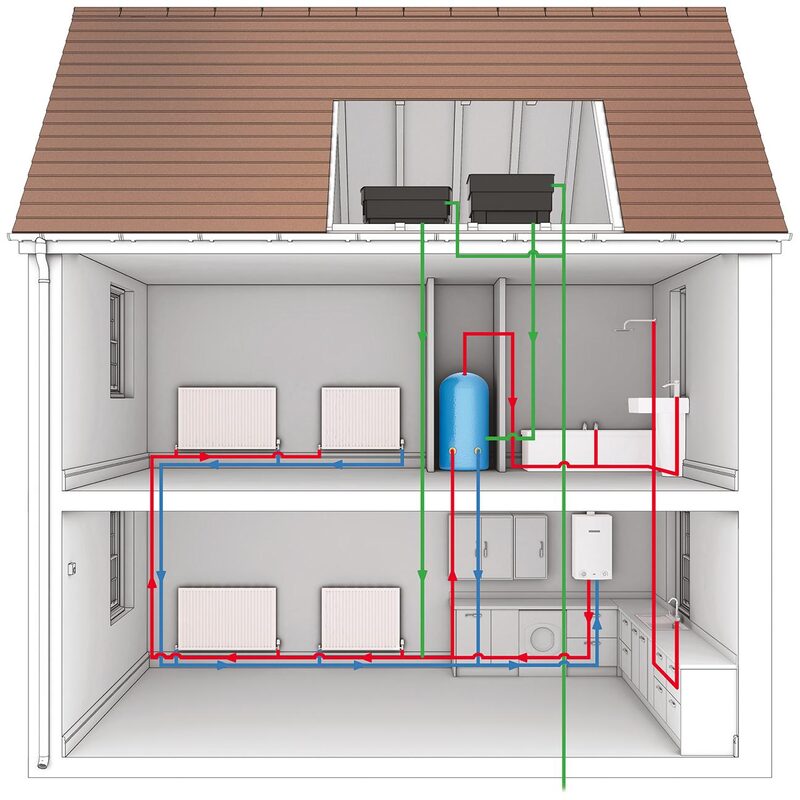
A boiler heats water, which is then pumped to radiators or underfloor pipes and, in most systems, also supplies the hot taps. Boilers are usually fuelled by gas or oil, but sometimes by liquid petroleum gas (LPG) or biomass1. The fuel decides where the appliance can be used. Mains gas needs a grid connection. Oil and LPG need a tank and deliveries. Biomass needs fuel storage and a suitable flue.
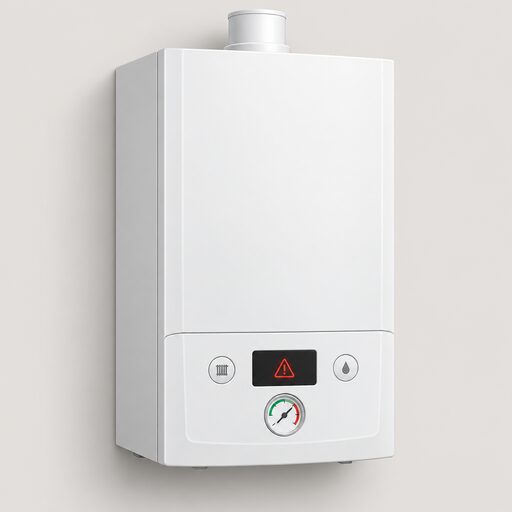
Gas boilers come in three layouts, and manufacturers build their ranges around them. Vaillant, for example, states that it makes three types of gas boiler: combination (combi) boilers, system boilers and regular (open vent) boilers13.
| Boiler layout | How hot water is provided | More detail |
|---|---|---|
| Combi | Heated on demand, with no cylinder | Combi boilers |
| System | Stored in a cylinder, with main components inside the boiler | System boilers |
| Regular (open vent, heat-only) | Stored in a cylinder, usually with tanks in the loft | Regular boilers |
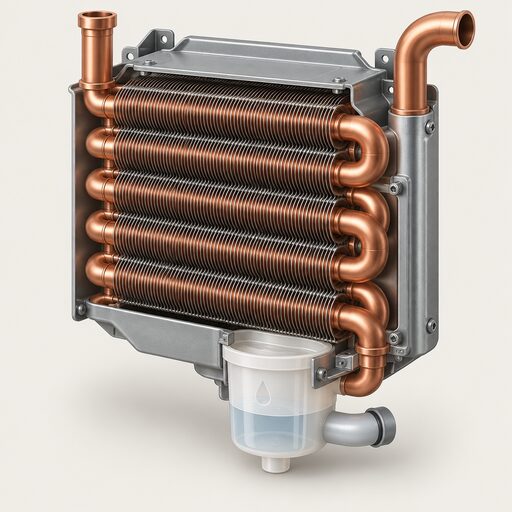
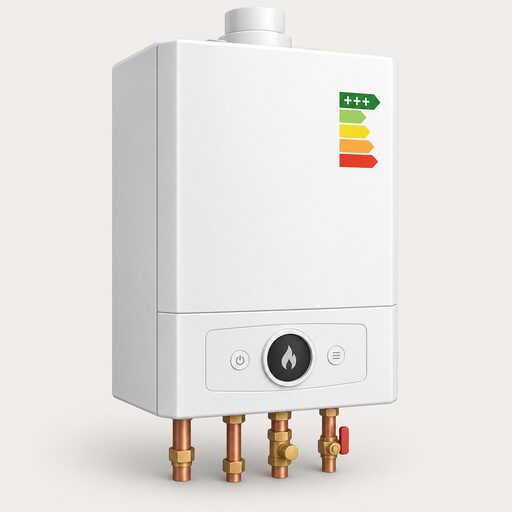
Almost all modern boilers are condensing appliances. Welsh Government building regulations guidance states that a replacement gas boiler will probably have to be a condensing boiler unless there is sufficient reason why one cannot be installed. The same guidance says a gas boiler installer should be Gas Safe Registered6. How the condensing process recovers heat from flue gases is covered on the condensing boilers page. The legal framework is on the building regulations for heating page.
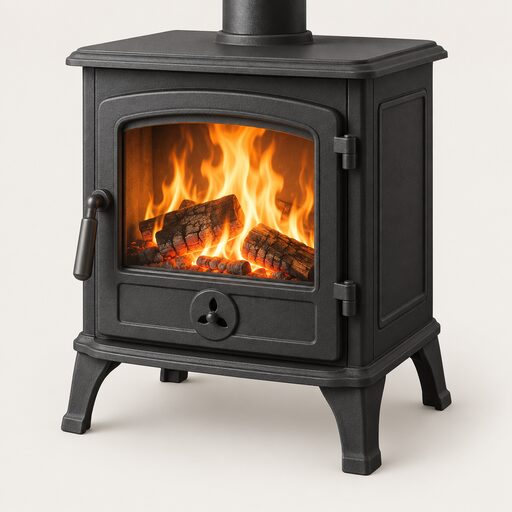
Biomass is the one boiler fuel that is not fossil-based. In Scotland, the New Build Heat Standard restricts what can be fitted in new homes, which makes the policy treatment of bioenergy important there. The biomass boilers and stoves page sets out the appliance types and fuel requirements.
Whatever the fuel, a boiler is a single point of failure, and it depends on parts and engineers tied to a particular manufacturer. Boiler sizing and boiler installation are dealt with on their own pages.
Gas boilers: around 90% efficient and usually the cheapest to run
For a home with a mains gas connection, Energy Saving Trust states that a modern condensing gas boiler is usually the cheapest to run compared with oil, electricity, LPG and house coal14. Gas costs far less per unit than electricity. Nesta puts the unit price of electricity at almost 4 times that of gas, and says that for a typical-sized home a heat pump currently costs about the same to run as a gas boiler10.
Uswitch's guidance says a modern central heating boiler might have an efficiency of 90%, against around 50% to 60% for a gas fire15. The regulatory floor is lower than that. Welsh Government guidance sets out the minimum for a newly installed boiler:
"Each boiler must have a minimum efficiency of 86% for gas and 85% for oil."
Rated efficiency is reached only when the system is set up to let the boiler condense. That is why boiler flow temperature and boiler efficiency and ErP ratings have their own pages.
Installation is cheap compared with the alternatives. Nesta gives £2,000 to £4,000 as the cost of a typical gas boiler installation16. A full breakdown is on the new boiler cost page.
A low purchase price, low running cost and an installer in every town explain why 23 million homes still use gas boilers10. The cost is a complete dependence on a piped fuel. Boilers also account for around 60 per cent of all domestic CO2 emissions, according to the Planning Portal7. The gas boilers page covers fuel, types and efficiency in more depth. The heat pumps compared with boilers page sets the two technologies side by side.
Oil and LPG: the main options off the gas grid
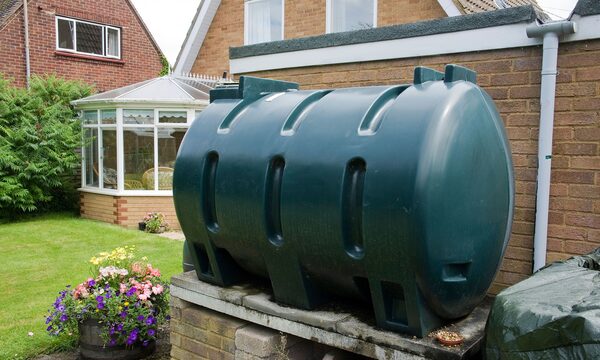
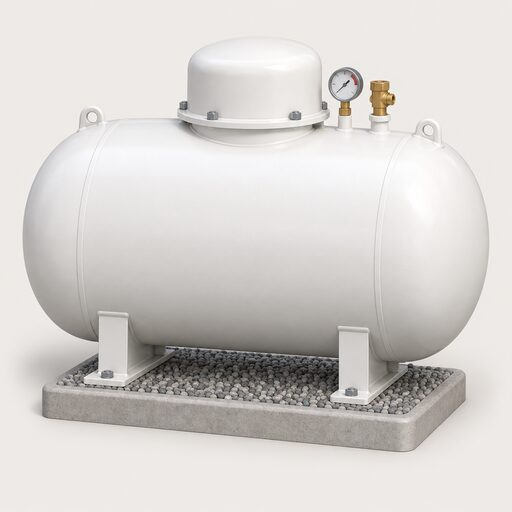
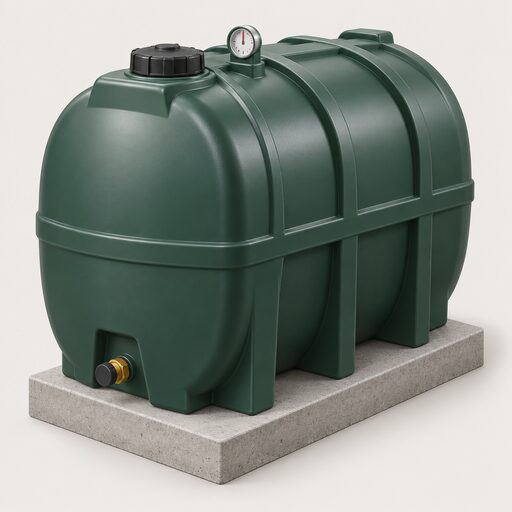
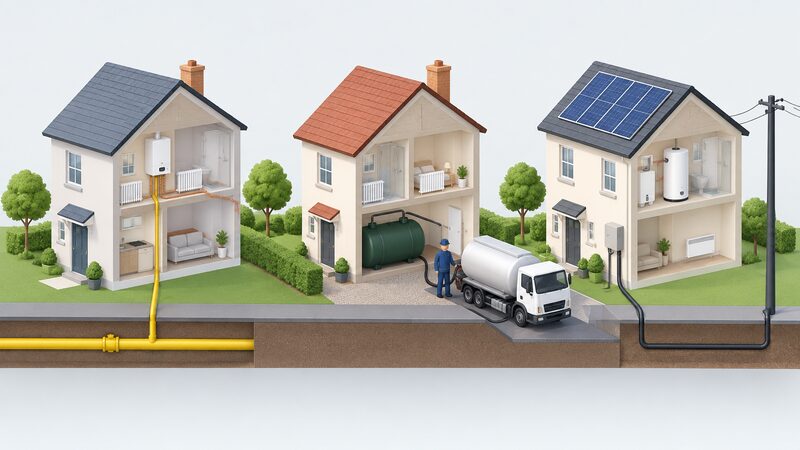
Homes without a gas connection rely on transportable fuels or electricity. Around 1.5 million UK homes use oil for heating and around two hundred thousand households use LPG4. Both fuels run a conventional wet central heating system with a boiler, radiators and a cylinder or combi arrangement. A householder would notice little difference from gas except the tank in the garden and the delivery lorry.
The two fuels differ in who owns the storage. OFTEC explains that an LPG tank, unlike a liquid fuel tank, is usually owned by the company that supplies the gas. That can make a new installation cheaper, but an ongoing annual rental charge applies12. Which? adds that a household might need to buy or rent its LPG tank from the supplier, which adds to the cost4. An oil tank is normally the householder's own property and responsibility. The rules on siting and inspection are on the domestic oil tanks page.
On cost, a House of Commons Library briefing gives an annual heating cost of £1,800 to £2,200 for bulk propane LPG in a three-bed semi-detached house across Great Britain's regions, as at March 202617. Oil prices move with the crude market and are bought in bulk, so an off-grid household carries price risk each time the tank is filled. The comparison pages on LPG vs oil boilers and gas vs oil boiler running costs go further.
Support differs by nation:
- Northern Ireland: the home heating oil support scheme provides a £100 digital pre-paid card to help with the cost of home heating oil18.
- England: the UK Government delayed the ban on installing oil and LPG boilers, and new coal heating, in off-gas-grid homes from 2026 to 2035, as the Scottish Government recorded in its November 2023 consultation19.
- Grants: homes heated by oil or LPG may be eligible for a £9,000 government grant towards a heat pump20.
A full tank gives an oil or LPG home weeks of stored energy on site, which a gas home does not have. It is still an imported fossil fuel bought from a supplier, and the boiler still needs mains electricity. More detail is on the oil boilers, LPG boilers and heating and heating a home off the gas grid pages.
Electric boilers and storage heaters
Around 2.3 million UK households use electric heating, such as storage heaters5. Electric heating falls into two groups. Direct systems turn electricity into heat at the moment of use. Storage systems take in electricity at cheaper times and release the heat later.
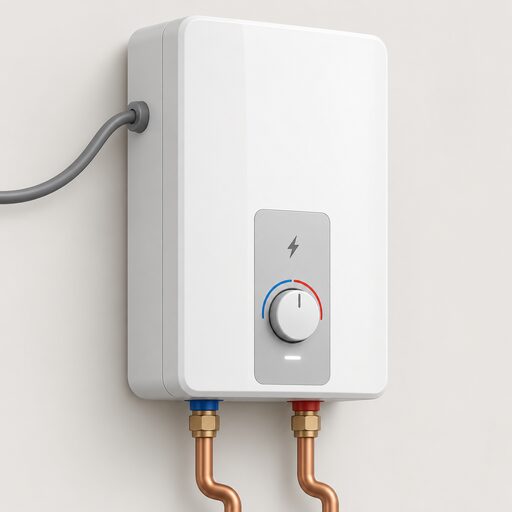
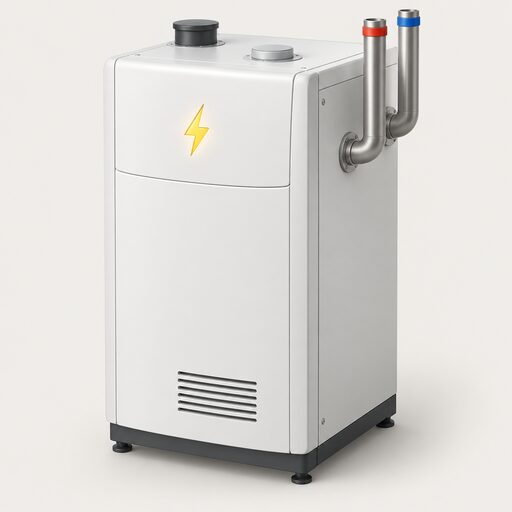
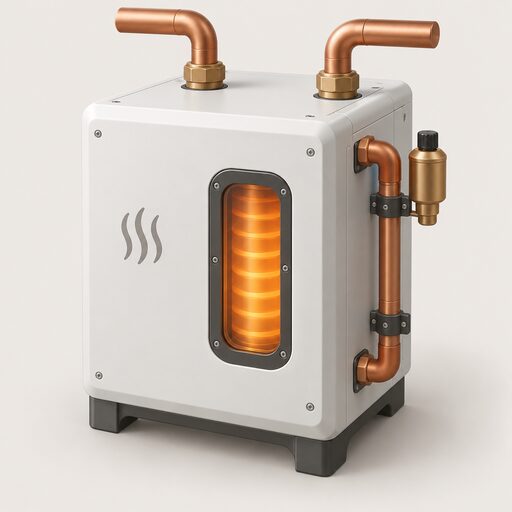
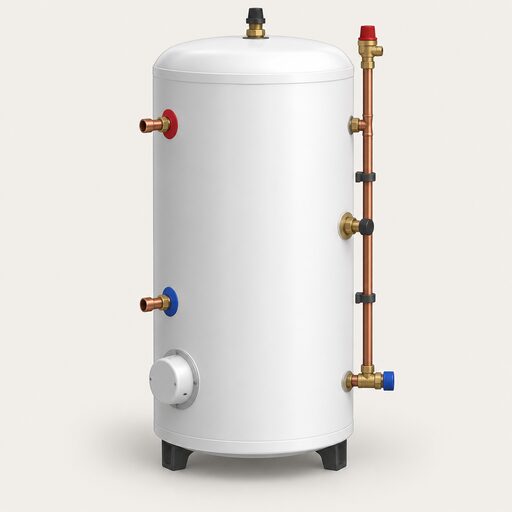
An electric boiler uses electricity to heat water before sending it through radiators or underfloor heating pipes. It is therefore a like-for-like substitute for a gas boiler in a wet system, with no flue and no gas supply. Energy Saving Trust notes that these systems usually include a large hot water tank to store the heat, and that the most common electric meters used with electric boilers are Economy 10 meters21. The tank allows the boiler to draw on off-peak periods instead of paying the day rate for every unit.
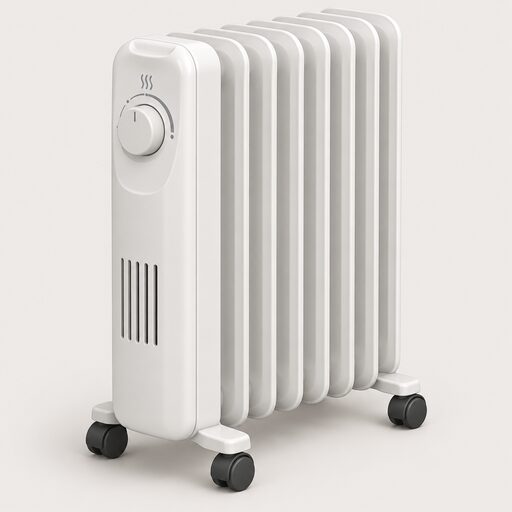
Storage heaters work by using cheaper, off-peak night-time electricity to create and store heat for use the next day, and they are sometimes called Economy 7 heaters22. The appliances are cheap to buy and maintain. Their limit is control: heat stored overnight has usually run down by the evening, when it is most wanted. The storage heaters page explains how modern high heat retention models address this. Older installations that relied on radio switching are covered on the Radio Teleswitch Service shutdown page.
Running cost is where electric heating falls short. The Centre for Sustainable Energy published these annual figures in June 2026, each on its own stated basis11:
| System | Annual running cost | Basis |
|---|---|---|
| Electric boiler | £2,690 | Space heating, average flat or small home, Economy 7 |
| Heat battery | Around £1,770 | Average home on Economy 7 or an off-peak tariff |
| Infrared panels | Around £1080 | A flat |
| Heat pump | £800 to £1,050 | One of the cheapest electric heating options |
A heat pump costs far less to run than an electric boiler because a heat pump moves heat and does not generate it. Every form of direct electric heating is exposed to the electricity unit price. The electric boilers, electric heating running costs and Economy 7, Economy 10 and heating tariffs pages give the detail. Electric heating is the one family that can run on a household's own generation, which the final section returns to.
Infrared heating: radiant panels and what they cost

Infrared heating works differently from a radiator or a convector. Energy Saving Trust explains that infrared systems provide heat via radiation, with heat radiating outwards from the heater and warming any surfaces it comes into contact with23. A conventional radiator warms the air and the air warms the room. A panel warms the people, walls and furniture in its line of sight. Placement therefore matters more than with other emitters, and a room with obstructed sight lines heats unevenly.
Installation is simple, because a panel needs only an electrical supply and a fixing. The Centre for Sustainable Energy puts installation at £100 to £200 per heater, and running costs at a level similar to panel heaters: around £1080 a year for a flat11. Energy Saving Trust's assessment is that, for a whole house system, infrared heating could be less expensive to install than a boiler or heat pump and radiators, but will cost more than just replacing an existing boiler23.
Two limits apply. The first is that an infrared panel is direct electric heating, so each unit of heat costs a unit of electricity at whatever the tariff charges. Panel makers publish efficiency claims, and those do not alter the running cost comparison in the table above. The second is that panels heat rooms only. Hot water needs a separate appliance such as a cylinder with an immersion heater, covered on the hot water cylinders page.
Infrared suits rooms used intermittently, homes with no wet system, and spaces where pipework is impractical. It offers no fuel independence beyond what the household's electricity supply already provides. The infrared heating page covers panel types and sizing. The infrared panels vs storage heaters page compares the two main options for an all-electric flat.
Underfloor heating: wet and dry systems
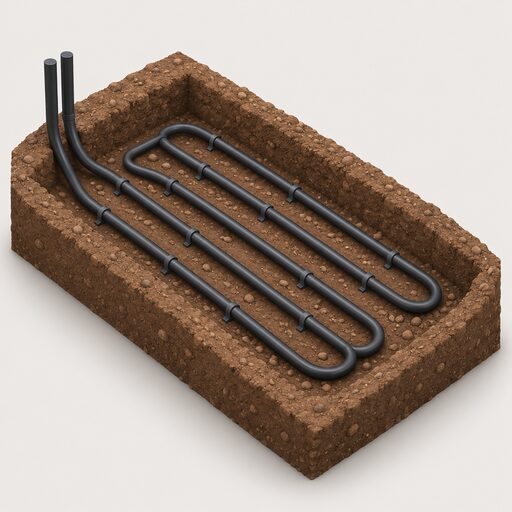
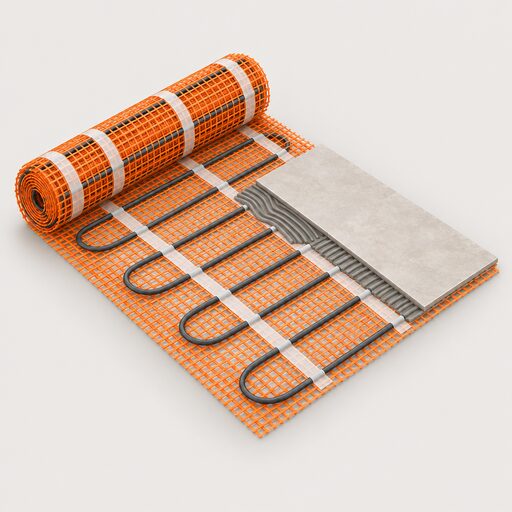
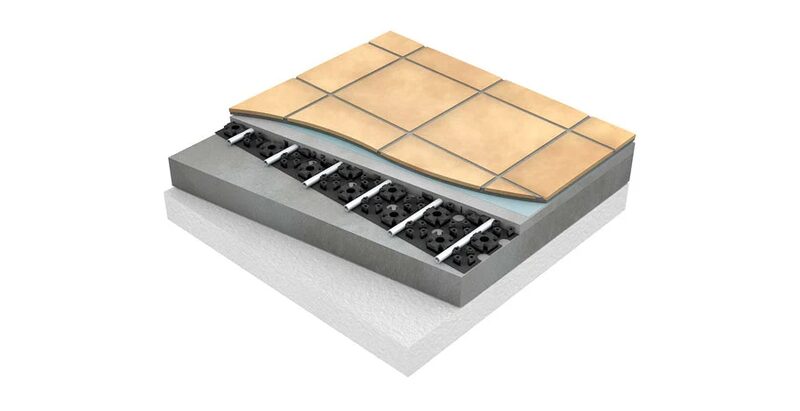
Underfloor heating turns the floor into the heat emitter. It comes in two forms, a water-based (wet) system and an electric (dry) system. In a wet system, Energy Saving Trust explains, a series of pipes is laid underneath the floor and connected to the heating source, which sends warm water through them24. A dry system uses electric heating elements under the floor finish and is a form of direct electric heating, with the running costs that implies.
The case for wet underfloor heating rests on surface area. Energy Saving Trust states that, because its surface area is larger than that of radiators, a home can be heated with a wet underfloor system at lower boiler or heat pump flow temperatures, saving money on energy bills. It adds that wet systems are easy to combine with low carbon heating systems like heat pumps24. A floor that works at low water temperature lets a condensing boiler condense more of the time. It also lets a heat pump run at its most efficient.
| Wet underfloor heating | Dry (electric) underfloor heating | |
|---|---|---|
| Heat source | Boiler or heat pump, via water pipes24 | Mains electricity, via heating elements |
| Flow temperature | Lower than radiators24 | Not applicable |
| Heat pump pairing | Easy to combine24 | Not applicable |
| Typical use | Whole floors, new build and major renovation | Single rooms such as bathrooms |
The limits are practical. Laying pipes means lifting or building up floors, so wet systems are mostly fitted during new build, extension or renovation work. A heated floor also responds more slowly than a radiator, so it suits steady heating better than short bursts.
For independence, wet underfloor heating is an enabling technology and not a heat source. It fixes no fuel choice and leaves the home ready for a low temperature heat source later. The underfloor heating page covers floor build-ups, controls and costs.
Radiators: sizing, bleeding and compatibility with lower flow temperatures
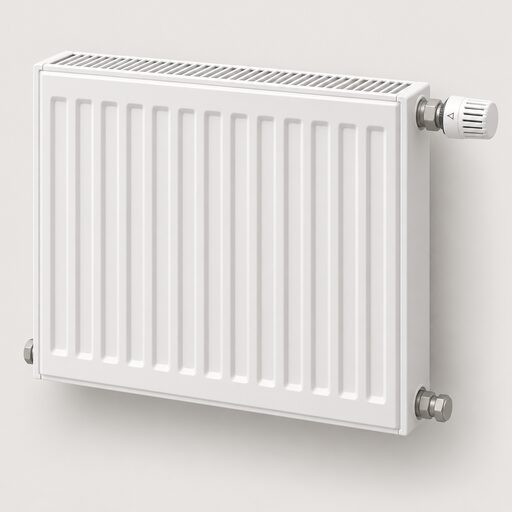
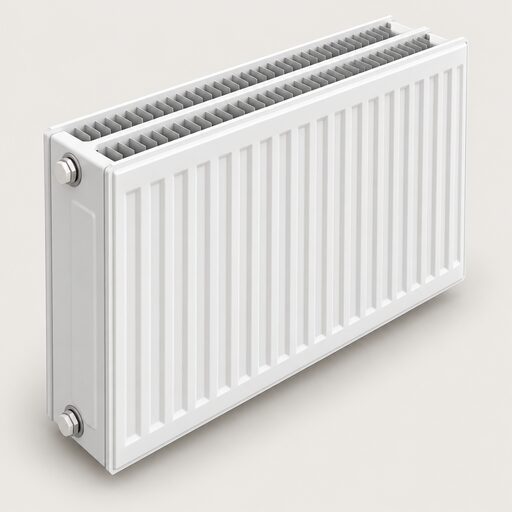
Radiators are the emitters in most UK homes. A radiator's output depends on its surface area and on the temperature of the water inside it, so sizing becomes important when the heat source changes. A radiator sized for a hot boiler circuit gives out less heat when the water is cooler.
Nesta estimates that about 7 out of 10 properties would need larger radiators to operate at lower flow temperatures. It uses a working assumption of £200 per radiator25. The City of Edinburgh Council's local heat and energy efficiency strategy states that radiators for a low temperature heating system typically need to be around 2.5 times larger than a conventional radiator26. The two figures describe different things. The first is the share of homes needing some change. The second is the size of the change to an individual radiator where one is needed. Neither implies that every radiator in a home must be replaced. In practice the rooms with the highest heat loss and the smallest radiators are the ones affected.
Nesta's work also points to timing. It estimates that homes which carry out electrical upgrades at natural trigger points would save £200 to £300 and 1 to 2 days on their heat pump installations25. The same reasoning applies to radiators changed during redecoration.
Cold spots and what they indicate
Two patterns of uneven heating have different causes, according to Smart Energy GB27:
- Cold at the top, warm at the bottom: trapped air is the likely cause, and bleeding the radiator releases it.
- Hot at the top, cold at the bottom: the problem might be sludge or debris in the system, which a professional can flush out.
The second pattern indicates corrosion products circulating in the system water. They also reduce boiler efficiency and shorten component life. Water treatment and system balancing are covered on the heating system design and balancing page. Emitter types are covered on the radiators and heat emitters page.
Controls, servicing and everyday running costs

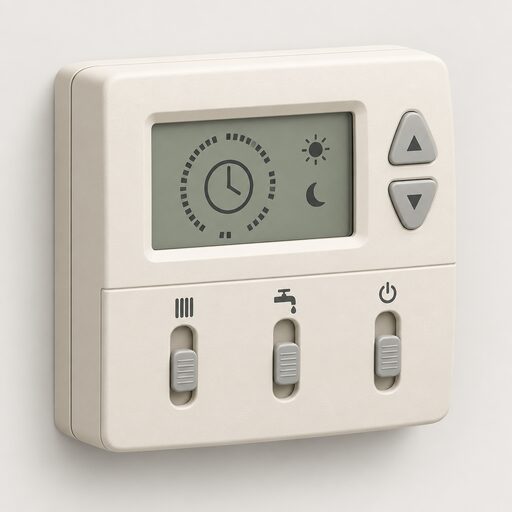
Controls are the cheapest intervention on this page. Energy Saving Trust puts the cost of a full set, meaning a programmer, a room thermostat and thermostatic radiator valves on all radiators, at around £600. It says that using them will help the average semi-detached house save £100 each year in Great Britain and £110 in Northern Ireland8. The saving assumes a system that previously had no controls, so a home that already has a working thermostat and timer will see less. The heating controls and thermostats page describes each device. The Boiler Plus page sets out the control requirements that apply when a boiler is replaced in England.
Servicing
Boilers are normally serviced once a year, and the gas work must be done by a Gas Safe registered engineer6. In rented homes the responsibility is the landlord's:
"Renting your home? Your landlord should arrange and pay for the service."
The boiler servicing and maintenance, gas safety in the home and carbon monoxide safety pages cover what a service includes and the landlord's gas safety record.
Pressure and clearance
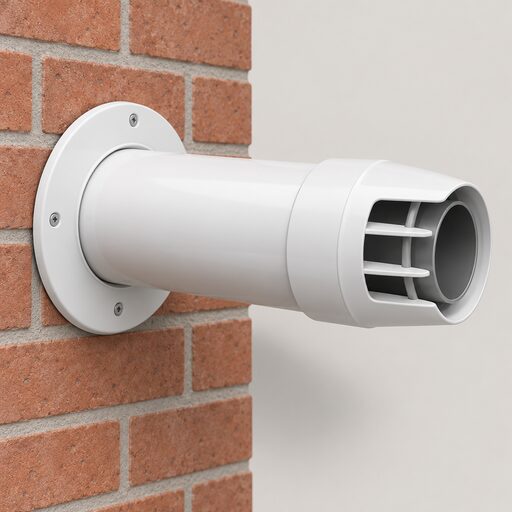
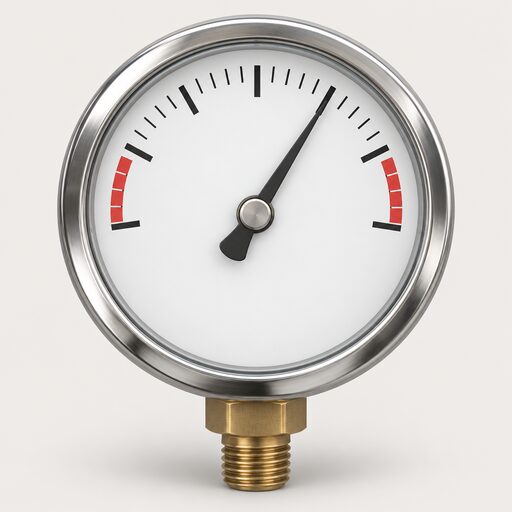
Two routine checks cause a large share of callouts. Cadent's guidance is that boiler pressure should be somewhere between 1 and 1.5 bar on the gauge on the front of the boiler29. A reading below that range indicates the system needs topping up, and the procedure is in each manufacturer's instructions. See the boiler pressure page. Where a boiler is housed in a cupboard, Uswitch's guidance is that it should be fitted with at least 60 mm clearance30. The installation manual for the particular model gives the binding figures, including the space needed for servicing access. Flue positions are covered on the boiler flues page.
Fuel accounts for most of the day-to-day running cost. The home heating running costs by fuel page compares them. Insurance-style products are described on the boiler cover and service plans page.
Brands and product ranges sold in the UK
The UK boiler market is supplied by a small number of manufacturers, several of which sell under more than one name. The Potterton, Baxi and the brands behind UK boilers page explains the ownership structure. The table describes ranges using each maker's own statements. It is descriptive and does not rank them.
| Maker | Range or product | What the maker states |
|---|---|---|
| Vaillant | Gas boilers | Three types manufactured: combi, system and regular (open vent)13 |
| Worcester Bosch | Greenstar | The name given to all of the Worcester gas fired boiler range32 |
| Viessmann | Stainless steel heat exchanger | 10-year guarantee against leaks resulting from corrosion33 |
| Grant | Vortex Eco External oil boiler | Models of 15 to 21 kW, 21 to 26 kW and 26 to 35 kW, all also available as sealed system models34 |
| Warmflow | Professional oil boilers | Internal and external models with heat outputs from 15 to 33 kW; extended warranty subject to terms and conditions35 |
| Dimplex | All products | Two-year standard guarantee36 |
Guarantee lengths vary widely between makers and between components. They usually depend on registration and annual servicing, which the boiler warranties page explains. A guarantee is only as durable as the company behind it, so it is a dependency as well as a protection.
Individual range pages include Vaillant boilers, Worcester Bosch boilers, Viessmann boilers, Ideal boilers, Baxi boilers, Grant oil boilers, Warmflow oil boilers, Dimplex storage heaters, Heatrae Sadia and Herschel Infrared. Standards marks are explained on the heating appliance standards and certification page.
Lifespan, replacement and your consumer rights
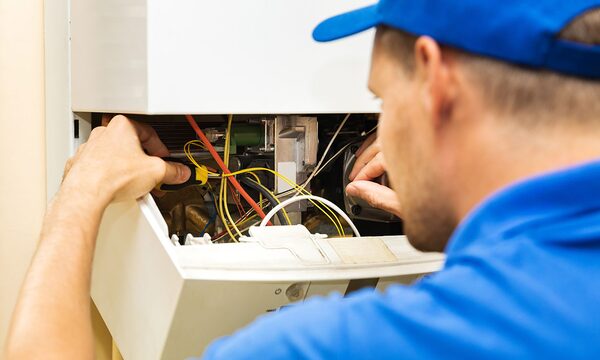
The Planning Portal gives the current lifespan of a boiler as around 15 years7. Most households therefore make this decision once or twice in their time in a home, often in a hurry because the old appliance has failed in winter. A boiler fitted today will probably still be running in the early 2040s, after the policy dates discussed in the next section. The how long do boilers last page looks at what shortens or extends service life. The common boiler faults and fault codes page helps distinguish a repairable fault from the end of an appliance's life.
When a boiler is replaced, the rules described earlier apply. The replacement will probably have to be a condensing boiler. It must meet the minimum efficiency. A gas appliance must be fitted by a Gas Safe registered installer6. Oil installations have their own competent person route, described on the OFTEC registration page.
On tax, HMRC's guidance lists heating equipment that attracts the reduced 5% VAT rate, but only to the extent that it is grant-funded by certain funders for people aged over 60 or in receipt of certain benefits. The list includes gas-fired boilers, oil-fired boilers, electric storage heaters, radiators, and the installation, repair and maintenance of a central heating system or a renewable source heating system37. Outside those conditions the reduced rate on this list does not apply. A quotation should state its VAT position.
A household's protections come from several places:
- the installer's registration body and its complaints process
- the manufacturer's guarantee, subject to its registration and servicing conditions
- for homes on a heat network, the separate arrangements now being brought under statutory regulation
A home served by a heat network has no appliance of its own to replace, and no choice of supplier either.
The phase-out of fossil fuel boilers and the move to low-carbon heating
No law requires a working boiler to be removed. The House of Commons Library states that there is currently no legal requirement for existing homes to be retrofitted or for low-carbon heating technologies to be installed in existing homes. It notes exceptions for privately rented homes and homes owned by local authorities and housing associations in some parts of the UK38. The will gas boilers be banned page follows the position in detail.
Policy documents agree on the direction, and the date they return to is 2035. The Climate Change Committee's Seventh Carbon Budget pathway has all new and replacement heating systems becoming low carbon after 2035, to reach a fully decarbonised housing stock by 205039. Energy Saving Trust has called for a commitment to a 2035 phase out date for the installation of new fossil fuel boilers. It notes that the share of UK homes with low carbon heating will need to rise from 9% today to 39% in the next decade9. For off-gas-grid homes in England, the ban on installing oil and LPG boilers was delayed from 2026 to 203519.
The nations differ. Scotland's proposed Heat in Buildings Bill listed the systems it would treat as clean heating: heat pumps, electric storage heaters, heat networks, wet electric heating and other direct electric heating technologies19. New build rules are moving faster than rules for existing homes in every nation. The Future Homes Standard page covers England, and the Clean Heat Market Mechanism page explains the obligation placed on boiler manufacturers.
The government's heat pump campaign says studies suggest 90% of UK homes already have enough insulation to run a heat pump20. Alternatives that keep a boiler-like appliance are covered on the heat batteries and zero emission boilers and hydrogen-ready boilers pages.
What heating choice means for household energy independence
Each heating system can be judged on three questions. Where does the energy come from? Can the household produce or store any of it? What else has to keep working for the heat to stay on?
| System | Energy source | On-site storage | Still depends on |
|---|---|---|---|
| Gas boiler | Piped mains gas | None | Gas network, gas supplier, mains electricity31 |
| Oil or LPG boiler | Delivered fuel | Tank, often weeks of supply | Deliveries, fuel prices, mains electricity; LPG tank usually owned by the supplier12 |
| Electric boiler or storage heaters | Grid electricity | Heat stored in a tank or heater core21 | Grid, tariff structure, meter type |
| Infrared panels | Grid electricity | None | Grid and the unit price |
| Wet underfloor heating and radiators | Whatever heat source feeds them | None | The heat source |
Combustion boilers score poorly on self-supply. A household cannot make its own gas, oil or LPG, and a power cut stops the appliance regardless of how much fuel is available31. A full oil or LPG tank does provide a buffer against short-term supply disruption, which the gas network does not. The household pays for that buffer through bulk purchases and price exposure.
Electric systems work the other way round. They cost more per unit of heat, as the running cost table shows, and they depend entirely on the grid. They are also the only systems that can use electricity generated on the home's own roof. Systems with storage, such as a cylinder, a heat battery or a storage heater, can shift demand to cheap or self-generated hours. A heat pump delivers the most heat per unit of electricity, and CSE's running cost range of £800 to £1,050 a year reflects this11.
Emitters and controls matter because they can be reused with a different heat source. Radiators sized for low flow temperatures, wet underfloor heating and good zoning work with any future heat source, and they reduce fuel use with the present one. The home heating and energy independence page develops this analysis. The choosing heating by home type page applies it to flats, terraces, rural houses and park homes. All pages in this lane are indexed from the boilers and heating hub.
Sources39 cited
- Heating your home, Energy Saving Trust, 2026-05-19
- DESNZ Public Attitudes Tracker: heat and energy use in the home, Winter 2025, Department for Energy Security and Net Zero, 2025
- Renewable heat: what is right for your home, Energy Saving Trust, 2026-05-19
- LPG central heating, Which?, 2025-09-22
- How to make electricity cheaper, Nesta, 2025-06-05
- Building regulations: boilers and heating, Welsh Government, 2026-09-17
- Heating and hot water, Planning Portal, 2026
- Tips to improve the EPC rating of your home, Energy Saving Trust, 2026-08-03
- What the UK needs from the Warm Homes Plan: Wales, Energy Saving Trust, 2025-04-17
- Domestic heating technology options, Nesta, 2025-02-03
- Electric heating, Centre for Sustainable Energy, 2026-06
- Off gas grid heating: what options are available, OFTEC, 2026-09-17
- How to get your new Vaillant boiler, Vaillant, 2026
- Boilers, Energy Saving Trust, 2026-05-20
- Heat the whole house or one room, Uswitch, 2026-08-20
- A policy plan for decarbonising home heating, Nesta, 2023-07-19
- Research briefing CBP-9838, House of Commons Library, 2026
- Apply online for home heating oil support, nidirect, 2026-09-17
- Delivering net zero for Scotland's buildings: consultation on proposals for a Heat in Buildings Bill, Scottish Government, 2023-11
- Heat pumps, UK Government, 2026-09-10
- Electric heating, Energy Saving Trust, 2026-07-01
- What is Economy 7, Smart Energy GB, 2026-04-07
- Infrared heating explained, Energy Saving Trust, 2026-03-13
- Underfloor heating, Energy Saving Trust, 2025-10-02
- How to get homes more ready for heat pumps, part 2, Nesta, 2026-02-12
- Edinburgh Local Heat and Energy Efficiency Strategy, City of Edinburgh Council, 2023-12
- How to bleed a radiator, Smart Energy GB, 2026-08-17
- Take control of your heating at home, Energy Saving Trust, 2026-09-11
- Boiler not working, Cadent Gas, 2026-09-20
- Boiler maintenance, Uswitch, 2026-09-03
- Storms and bad weather, Energy Networks Association, 2026-09-17
- Boilers explained, Worcester Bosch, 2026-09-17
- 10-year warranty on stainless steel heat exchanger, Viessmann, 2022-08-19
- Vortex Eco External oil-fired boilers, Grant UK, 2026-09-20
- Professional oil boilers, Warmflow, 2026-09-17
- Dimplex product page with standard guarantee statement, Dimplex, 2026-09-17
- VAT rates on different goods and services, HM Revenue and Customs, 2026-07-10
- Research briefing CBP-8830, House of Commons Library, 2026-09-17
- The Seventh Carbon Budget, Climate Change Committee, 2025-02-26