
In this guide
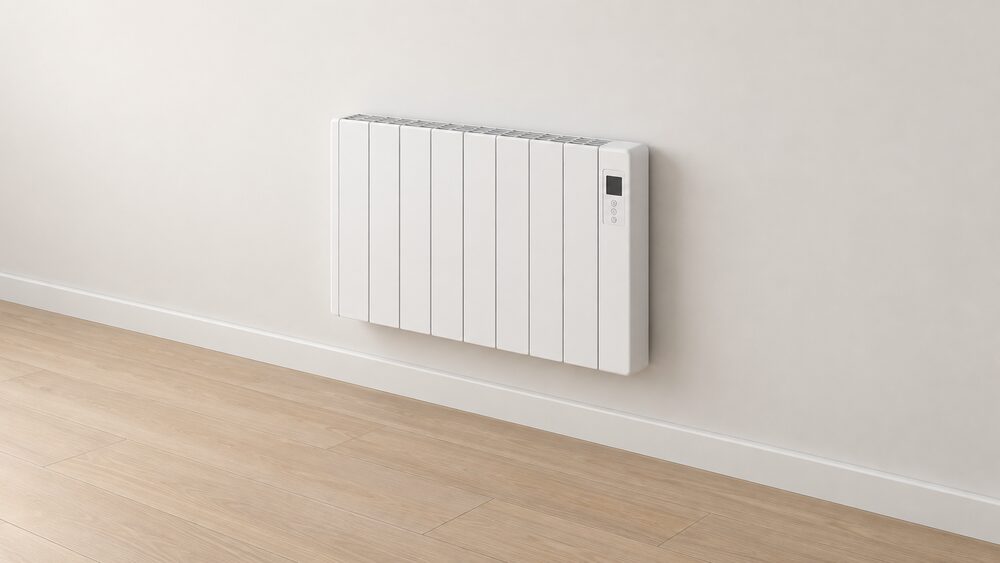
Rointe is a European electric heating brand whose UK range is built around wall-mounted electric radiators rather than boilers. The radiators are sealed units filled either with a heat transfer fluid or built around a natural stone core, heated by an electric element, and the maker states that they convert 99.9% of the energy consumed into heat1. There is no flue, no gas supply and no water circuit, so a Rointe radiator can be fitted in a room with no chimney and no pipework.
The warranty is split, and that split matters more than the headline. Rointe gives a 10-year warranty on the aluminium body and 3 years on the electronic components across its radiator ranges2. The body is the part that rarely fails; the electronics are the part that does, and they carry the shorter term. Proof of purchase, in the form of the invoice or purchase receipt, is required to validate the warranty1.
For a household's energy independence the position is mixed. A Rointe radiator removes the gas connection, the boiler, the flue and the annual gas service, and it runs from the home's electricity supply, which the maker notes is compatible with solar generation4. What remains is a dependence on the grid and on an electricity supplier, plus, if the Nexa app is used, a dependence on broadband and on the manufacturer's servers. Electric resistance heating also converts every unit of electricity into heat at the price of that unit, which is the running cost question rather than an efficiency one.
What Rointe electric radiators are and how they work
A Rointe electric radiator is a sealed aluminium body with an electric heating element inside and a control panel on the front. In the thermal fluid models the body is filled with what the maker calls Thermal Fluid Tech, described as a high-efficiency heat transfer fluid, and an armoured steel electric resistance transforms electrical energy into heat6. The fluid carries that heat across the whole surface of the radiator rather than concentrating it at the element, which is what gives the unit its thermal mass and its slow release after the element switches off.
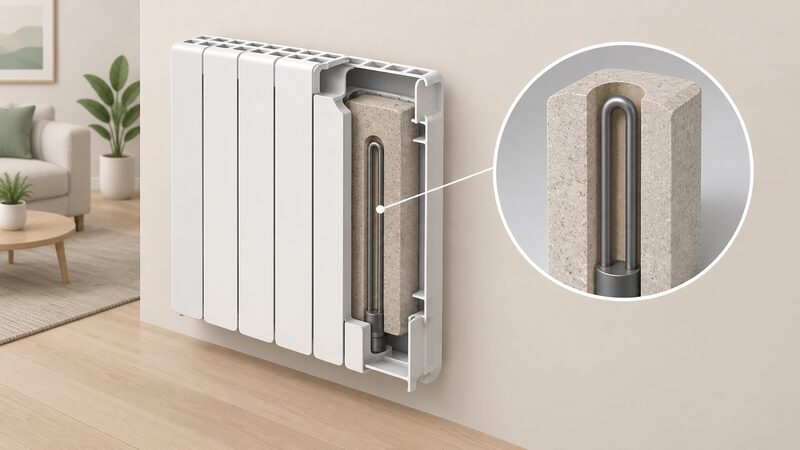
The natural stone models work on the same principle with a different medium. Rointe's natural stone technology incorporates a steatite core with the heating element inserted inside, and the maker describes steatite as a volcanic stone with a great ability to store heat and release it slowly7. The practical difference is the shape of the heat: a stone core holds more and releases it over a longer period, while a fluid-filled body responds more quickly.
Both types are designed to be hung on the wall rather than stood on the floor9. Rointe states that its radiators maintain room temperature with an accuracy of plus or minus 0.1 °C, and that surface temperatures do not exceed 43 °C on the standard models1. That surface figure is the reason the maker positions low surface temperature versions for schools, day care centres and residences, where contact with a hot surface is a real risk1.
Efficiency: 99.9% of consumed energy converted to heat
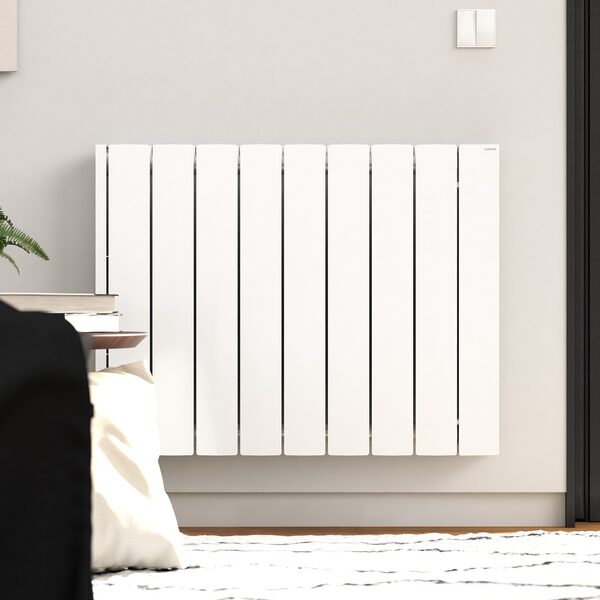
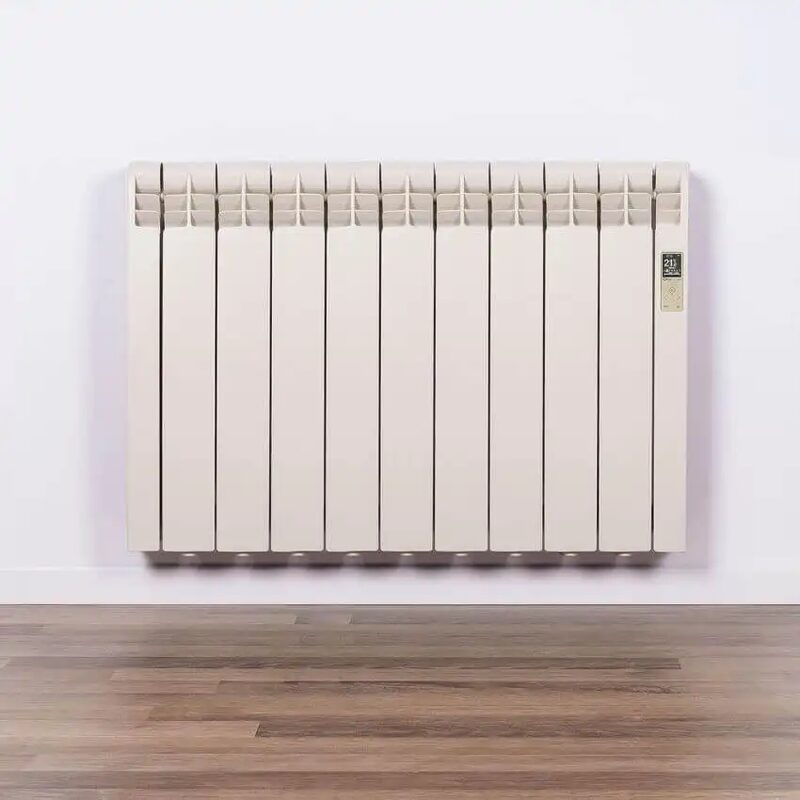
The efficiency claim is consistent across Rointe's product pages: electric radiators convert 99.9% of the energy consumed into heat1. That figure describes conversion at the appliance, and it is a fair description of resistance heating, because almost nothing is lost up a flue or through a chimney. It is not a statement about running cost. A 99.9% efficient electric radiator still costs whatever the electricity unit rate is, and the same 99.9% figure applies to a cheap panel heater.
Where the maker's claims go further is in the control systems rather than the element. Rointe states that its Fuzzy Logic Energy Control keeps temperature stable to within plus or minus 0.1 °C, and that the system allows power savings of up to 62%3. A separate page puts power savings at up to 65% for the same advanced control system4. Those two figures are the maker's own and they differ between pages; both describe savings against the product's own behaviour rather than a measured reduction in a household's bill.
The energy-saving test conditions are worth reading carefully. Rointe states that its savings figures are calculated for 24 hours over the total cumulative power rating of the product, tested by independent laboratories in a climatic chamber at a fixed temperature of 21 °C8. That is a controlled test, not a lived-in house with doors opening and occupants adjusting settings.
"Electric radiators stand out for their extraordinary efficiency, as they convert 99.9% of the energy consumed into heat."
Thermal fluid or natural stone core: which technology fits which home
Rointe sells its radiators with either advanced thermal fluid or natural stone core technology, and the choice is about how the heat is delivered rather than how much is produced1. Both convert electricity to heat at the same stated rate; they differ in how long the heat lingers after the element stops.
Thermal fluid models suit rooms that are occupied in bursts. The fluid heats quickly and the body reaches temperature sooner, so a bathroom or a study used for an hour in the morning warms up without a long wait. The maker's thermal fluid range is described as filled with a high-efficiency heat transfer fluid heated by an armoured steel element6.
Natural stone models suit rooms occupied for long, continuous periods. Rointe states that its radiators with a natural stone core store heat and release it slowly and gradually, maintaining comfort even after they are switched off7. The core is steatite, and the same description appears on the non-WiFi natural stone range8. For a living room used all evening, that slow release smooths the temperature and reduces the number of heating cycles.
| Core type | Medium | Behaviour | Suited to |
|---|---|---|---|
| Thermal fluid | Thermal Fluid Tech fluid, armoured steel element6 | Reaches temperature quickly, releases steadily | Rooms used in short bursts |
| Natural stone | Steatite core with element inside7 | Stores heat, releases it slowly and gradually7 | Rooms occupied for long periods |
Neither option changes the fuel. Both run on electricity, and both are compatible with renewable generation such as solar according to the maker4. A household with a large solar array and a daytime presence has a different running-cost picture from one charging the same radiators on a standard tariff overnight.
Control and smart features: the Nexa app, Fuzzy Logic and energy-saving modes
Rointe's control layer is the Nexa app, which the maker states controls radiators, towel rails, storage heaters, underfloor heating and hot water with Rointe products, inside and outside the home10. Control is also available directly from the radiator panel, so the app is an addition rather than the only route1.
The energy-saving functions are the part worth understanding. Open Windows mode detects a sudden drop in ambient temperature and automatically shuts the product down; on the non-WiFi range the trigger is a drop of at least 4 °C within 30 minutes, after which Anti-Frost mode runs for 2 hours5. Limited Mode caps the power the radiator can draw, and Night and Holiday modes adjust behaviour for those periods1. In AUTO mode the radiator calculates when to start generating heat, up to a maximum of 2 hours in advance5.
The low-profile WiFi range adds two further features. A Night mode reduces the temperature by up to 1.5 °C over 3 hours, turns off the screen and silences the product11. The same range includes an AIH Intelligent System, described as an artificial intelligence layer that learns habits and offers personalised recommendations through the Nexa app, and the maker states that total installed radiator power can be reduced by up to 30% through the app11.
Low surface temperature versions carry an integrated sensor and a Surface Temperature Limit function, settable from the Nexa app, which allows a safe maximum contact temperature to be set4. That is the feature that makes the range usable in a room with small children or vulnerable adults.
Safety and running unattended, day and night
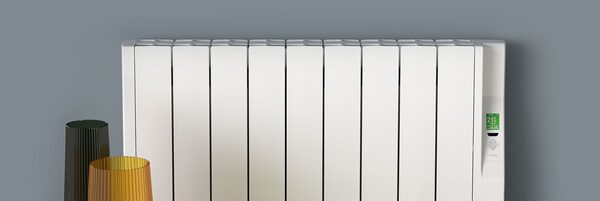
Rointe states plainly that its radiators can operate autonomously and unattended both day and night, because they monitor the ambient temperature and stop heating when it is not necessary12. That is the maker's position, and it is the basis on which the range is sold for continuous background heating.
Independent safety guidance points the other way, but it is written about a different product class. Electrical Safety First advises never leaving a heater unattended for long periods while in use or while asleep14. Its guidance covers portable heaters, and it names an oil-filled radiator as an example of a heater that is relatively low risk in terms of igniting nearby items14. A fixed, wall-mounted electric radiator with a capped surface temperature is not the same appliance as a plug-in fan heater, and the maker's unattended-use statement is specific to its own products.
The clear rules are about obstruction and clearance. Rointe states that clothing, towels or other objects must not be placed on the radiator while in use, as this could cause overheating and permanently damage the radiator electronics or structural elements8. The maker advises maintaining a free space of at least one metre around the radiator5. Its separate towel rail and towel dryer products are filled with thermal fluid and are designed to hold towels, which is the appropriate product for that job16.
One further point sits outside the radiator itself. Turning a radiator off permanently in an unused room can lead to damp and mould, and independent guidance suggests leaving such rooms heated at a low level with the doors closed instead18. That applies to any fixed heater, not to Rointe specifically.
Warranty: 10 years on the body, 3 years on electronics
The warranty is the clearest thing to get right before buying, because the headline number and the term that matters are different. Rointe gives a 10-year warranty on the aluminium body and 3 years on the electronic components2. The same split appears on the natural stone range, where the body carries 10 years and the electronics 37.
The maker's warranty documentation names specific ranges, including the D Series, Belize, Olympia, Kyros, Sygma, Aria and Palau, at 10 years on the aluminium body and 3 years on electrical and electronic components19. A separate terms document sets out component-level periods for non-portable electric radiators, listing the aluminium body against corrosion, the paint and thermal fluid leakage at 5 years, and the control panel at 2 years with options to extend by a year at a time20. Those documents do not agree with each other on the body term, and the product pages state 10 years. A household relying on the longer figure should keep the paperwork that came with the specific model.
Proof of purchase is a condition, not a formality. Rointe states that it is essential to have the invoice or purchase receipt to validate the warranty, and repeats the requirement across its ranges1. Registration also feeds the company's tree-planting scheme, under which a tree is planted each time a Rointe heating product is purchased and registered21.
Installing and looking after a Rointe radiator
Installation is simpler than for a wet system because there is no pipework, no flue and no gas connection. Rointe supplies brackets, fixings and a template with each radiator, and states that a self-install is possible with those parts, while recommending a qualified electrician for a more professional or hard-wired installation16. The maker's mounting guidance is 10 to 15 cm above the floor, with at least one metre of free space around the unit1.
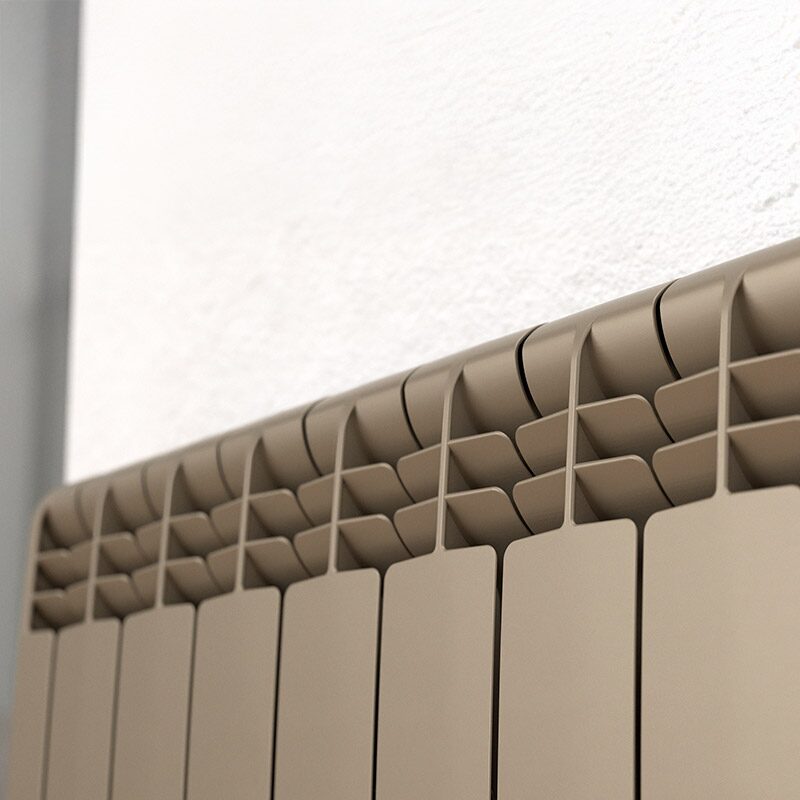
Maintenance is limited to dust and airflow. Rointe recommends cleaning its towel rails at least once every 6 months, especially before the winter season17. Electric radiators have no water to bleed and no combustion components to service, so the annual radiator checks that apply to wet systems, such as checking at least once a year whether they need bleeding, do not apply here23. The maker's own manufacturing note is that the bodies are cast by injection moulding, which is what produces the sealed, one-piece casing13.
Support runs through the maker's published channels. Rointe lists a UK support telephone number, 0203 321 5928, on its product pages, alongside email and a website contact form6. Its Irish support line is 01 553 0523, and a Spanish support number, 900 103 061, appears on some pages11. The numbers differ by market, so the documentation supplied with the unit is the reliable reference.
Sustainability, certifications and the company behind the products
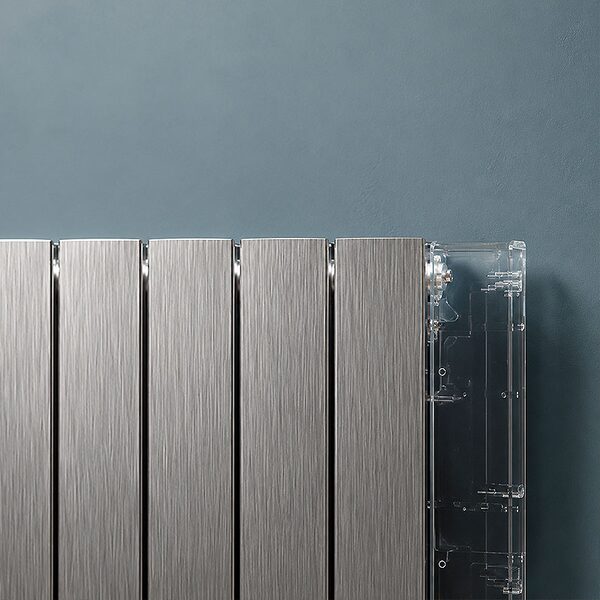
Rointe states that its radiators are made from a recycled aluminium alloy with ASI sustainability certification, and that its products and components, including electric towel rails, are made in Europe4. The maker also states that it manufactures with renewable energy from its own solar panels, that its packaging is 100% recyclable, and that its products are fully compatible with renewable energy systems including solar photovoltaic and wind turbines21.
On compliance, Rointe states that all its radiators comply with Lot20 and Ecodesign regulations and carry the ECODESIGN badge1. Those are the European energy labelling and ecodesign requirements that apply to electric local space heaters sold in the UK market. The company received the EcoVadis Silver Medal in May 2026, placing it among the top 15% of businesses assessed by that platform, and its EONIQ product featured at the German Design Awards 2026 ceremony in Frankfurt21. The maker's own records also describe a German Design Award in the Excellent Product Design, Energy category, so the award references differ between the company's pages.
The independence picture is straightforward. A Rointe radiator takes a home off gas for that room, removes the boiler, the flue and the annual gas safety check, and runs on electricity that can be self-generated. What it does not remove is the grid connection, the electricity supplier, or the dependence on a manufacturer for spares and on an app and broadband connection for remote control. For a household weighing up electric heating against a wet system, the wider comparison sits in electric radiators and panel heaters and in electric heating running costs.
Sources24 cited
- Electric radiators range, Rointe, 2026-09-20
- Electric radiators without WiFi, Rointe, 2026-09-20
- WiFi electric radiators, Rointe, 2026-09-20
- Electric radiators (Ireland), Rointe, 2026-09-20
- Electric radiators without WiFi (Ireland), Rointe, 2026-09-20
- Thermal fluid WiFi radiators, Rointe, 2026-04-08
- WiFi natural stone radiators, Rointe, 2026-04-08
- Natural stone radiators without WiFi, Rointe, 2025-05-14
- Rointe design, Rointe, 2025-09-25
- WiFi natural stone (Ireland), Rointe, 2026-04-08
- Short WiFi low-profile radiators, Rointe, 2026-07-17
- Rointe support, Rointe, 2026-07-01
- Aluminium and steel in Rointe heating products, Rointe, 2024-12-18
- Portable heaters safety advice, Electrical Safety First, 2026-09-17
- Potential risk to households this winter, Electrical Safety First, 2026-09-19
- WiFi electric towel rails, Rointe, 2025-09-25
- Designer towel dryers (Ireland), Rointe, 2025-09-25
- Energy saving myths, Centre for Sustainable Energy, 2026-07
- Product warranty, Rointe, 2025-11-12
- Warranty terms and conditions, Rointe, 2026-08-03
- Electric heating review: get ready for autumn, Rointe, 2025-08-26
- Product FAQs, Rointe, 2026-06-03
- Boiler maintenance guide, Uswitch, 2026-09-03
- How to bleed a radiator, Uswitch, 2026-09-04
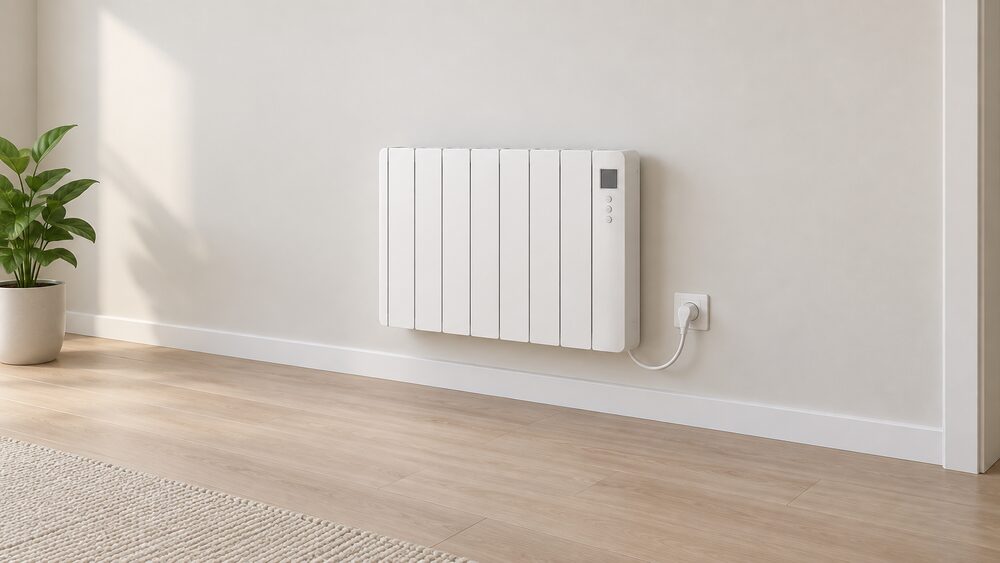 Rointe electric radiatorsRointe's D and Belize radiators run on electricity alone, so there's no boiler, gas supply or flue to worry about.
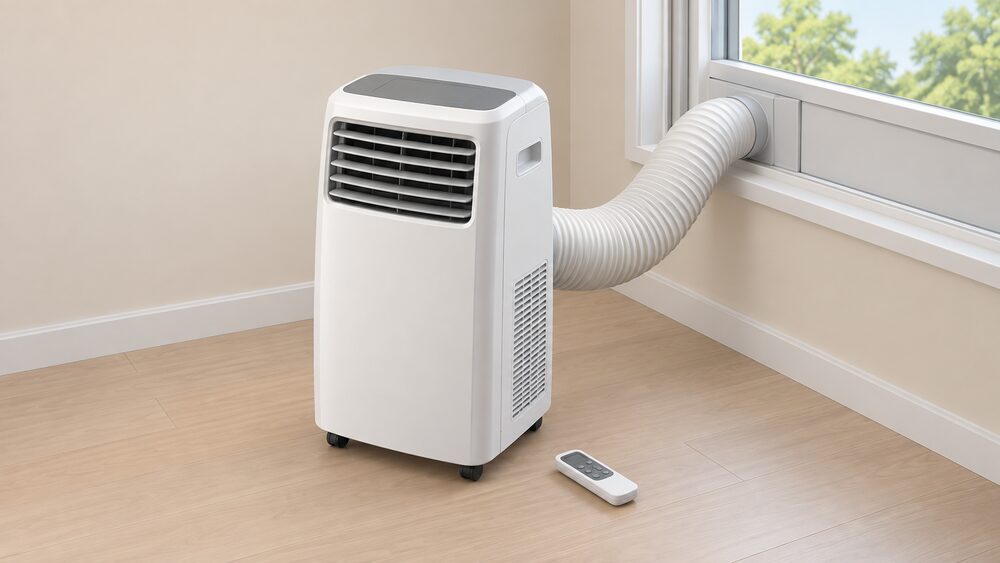 Rointe heat pump cylinders and electric heatingRointe makes electric radiators, towel dryers and water heaters, plus portable air conditioners with heat pump capability.
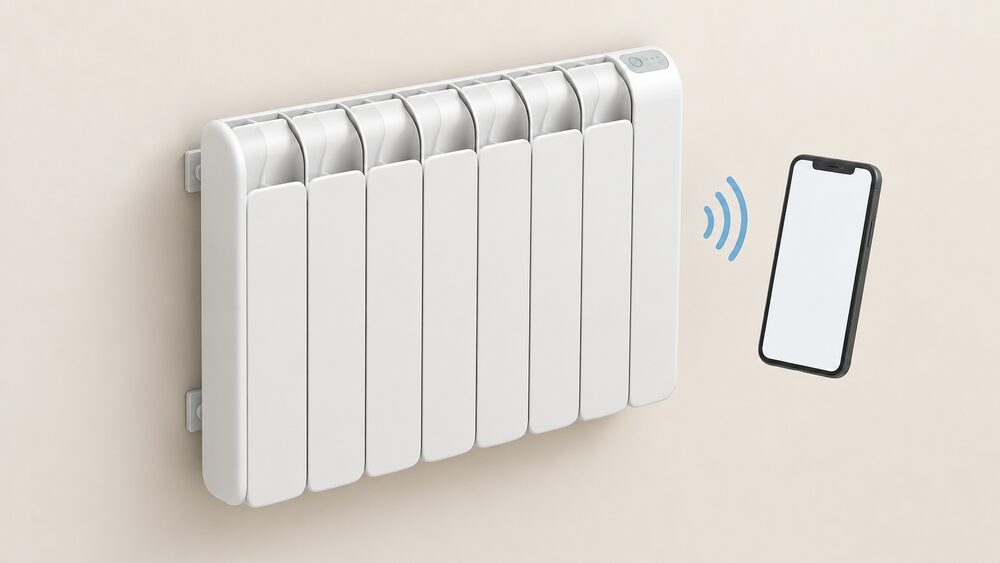 Rointe Radiator Controls and the Nexa AppRointe radiators work with the Nexa app, but do you need the app at all, and what happens if your WiFi drops?