
In this guide
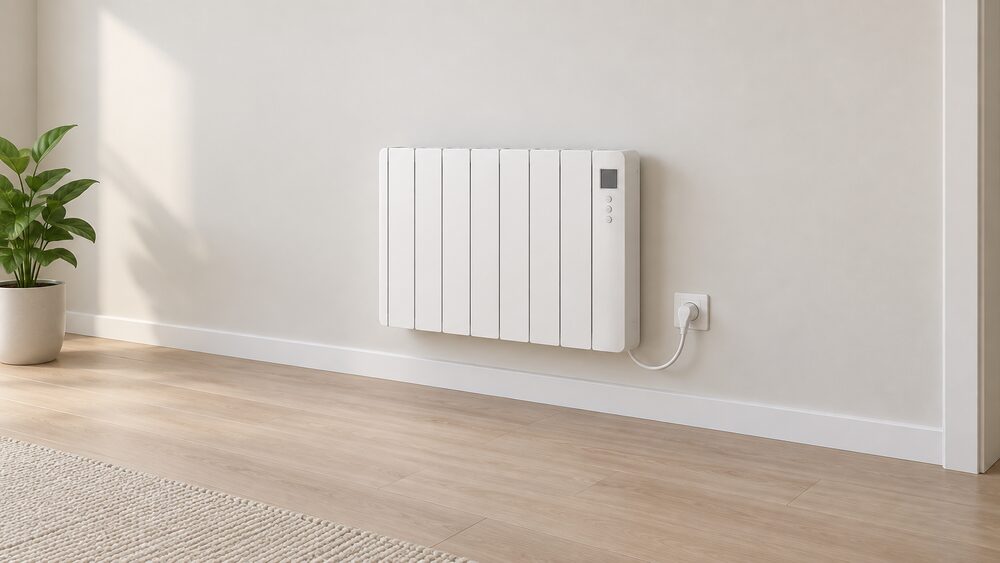
Rointe is a European electric heating manufacturer with over 40 years of expertise in the sector, and its UK-facing electric radiator line is built around two core technologies: a sealed thermal fluid and a natural stone core1. The radiators are 100% electric, so they need no gas supply, no flue and no boiler, and the maker states that they convert 99.9% of the energy consumed into heat2.
The warranty structure is the headline commercial fact. Rointe offers a 10-year warranty on the aluminium body and 3 years on the electronic components, and the terms name the D Series and Belize among the covered ranges3. Proof of purchase is required to validate any claim2.
What the range does for a household is straightforward: it moves space heating off the gas grid and onto electricity, which makes the running cost a function of the tariff and the fabric of the house rather than of a fuel supplier. What it does not do is remove dependence on the electricity grid, on a supplier, or, for the WiFi models, on a home broadband connection and the Rointe Nexa app.
Rointe: a Spanish maker with over 40 years in electric heating
Rointe describes itself as a European manufacturer with more than four decades of expertise in electric heating, and its product literature positions the brand around sustainability as much as hardware1. The company states that it manufactures its products using renewable energy from its own solar panels, that its packaging is 100% recyclable, and that every purchase and registration of a Rointe heating product triggers tree planting through reforestation initiatives6.
On compliance, Rointe states that its products are built to comply with UK Building Regulations, Part L requirements and the upcoming Future Homes Standard, and that its heating systems meet Lot20 eco-design standards and are designed to perform within SAP criteria1. The radiator pages repeat the Lot20 and Ecodesign compliance claim2. These are the maker's own statements about its own products, and they matter for a household because Part L and Lot20 are the frameworks a specifier or building control officer will check against.
The company also holds an Ecovadis Bronze medal and describes itself as a member of the UN Global Compact1. A later announcement reports an EcoVadis Silver Medal, placing Rointe among the top 15% of businesses assessed by the platform, dated 29 May 20261. The two awards are different tiers reported at different times.
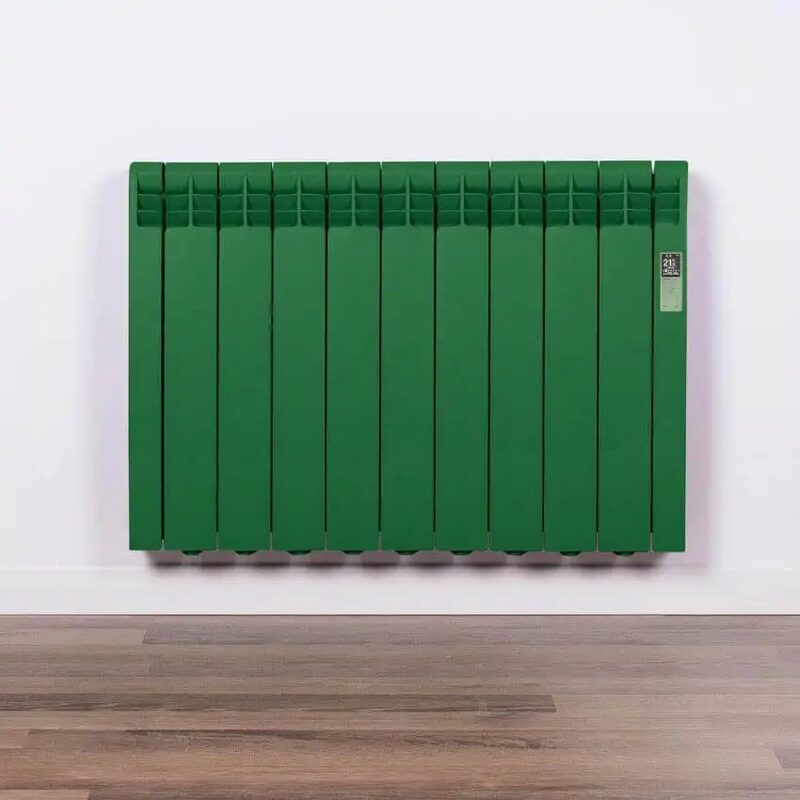
The manufacturing detail is worth knowing because it shapes what the radiator is made of. Rointe states that its radiators are made of a recycled aluminium alloy with ASI sustainability certification, and that the bodies are high-purity aluminium moulded by injection, a casting process the company says produces its exclusive and patented design7.
The D and Belize ranges: thermal fluid and natural stone cores
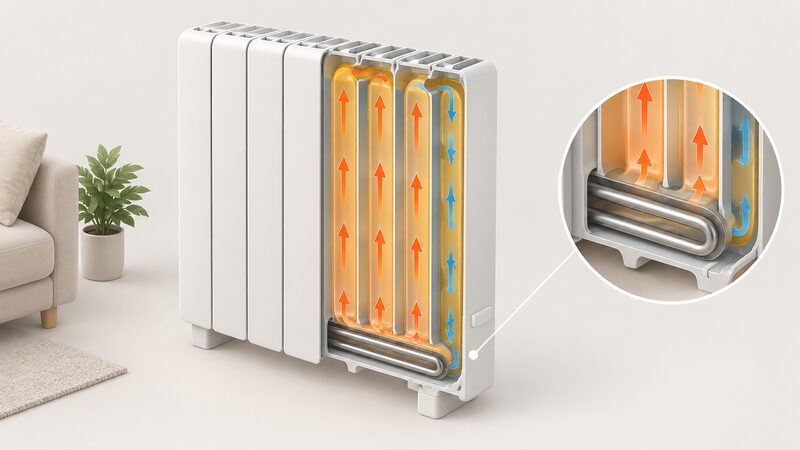
Rointe's electric radiators are available with either advanced thermal fluid or natural stone core technology, and the two approaches behave differently in a room2. The thermal fluid models are filled with Thermal Fluid Tech, described as a high-efficiency heat transfer fluid, and the maker elsewhere identifies the fluid as an exclusive high-thermal-transfer mineral oil7. The heating element in these models is an armoured steel electric resistance that transforms electrical energy into heat2.
The natural stone models use a steatite core, a volcanic stone that Rointe says has a great ability to store heat and release it slowly and gradually9. The maker states that Rointe radiators incorporate a stone core up to 34% larger than other models on the market10. That is a comparative claim about other manufacturers' products, made by Rointe, and it is not independently verified here.
| Feature | Thermal fluid models | Natural stone models |
|---|---|---|
| Core medium | Thermal Fluid Tech mineral oil7 | Steatite volcanic stone9 |
| Heating element | Armoured steel resistance2 | Not stated |
| Heat behaviour | Fluid circulates heat to the body | Stone stores and releases heat slowly9 |
| Body material | Recycled aluminium alloy, ASI certified6 | Aluminium body3 |
| Body warranty | 10 years3 | 10 years3 |
The practical difference is in how the heat arrives. A fluid-filled body responds to a demand for heat relatively directly, while a stone core holds energy and releases it over a longer period, which suits a room that is occupied on a predictable schedule. Both are sealed units with no water connection, no pump and no flue.
Efficiency: 99.9% of energy consumed converted into heat

Rointe's central efficiency claim is that its electric radiators convert 99.9% of the energy consumed into heat, a figure repeated across the thermal fluid, natural stone and WiFi product pages2. It is worth being precise about what that number means. It describes conversion at the appliance: almost all the electricity drawn is turned into heat in the room rather than lost up a flue. It says nothing about how much heat the building retains, how the room is controlled, or what the electricity costs.
That distinction is the whole of the running cost question. A gas boiler loses a proportion of its input up the flue, which is why efficiency ratings for boilers sit below 100%. An electric resistance heater has no flue to lose heat through, so the conversion figure is high by construction. The cost per unit of delivered heat then depends entirely on the price of electricity against the price of gas, and on the tariff the household is on.
Rointe also publishes a power saving claim of up to 65% attributed to its advanced control system, described as reducing electricity consumption without losing performance2. A separate claim states that the Fuzzy Logic system can save up to 62% in power4. These are the maker's modelled figures for its own control technology, not measured outcomes for a particular house, and the two percentages differ between pages.
The controls themselves are where the savings are meant to come from. Fuzzy Logic Energy Control is described as keeping the temperature stable with a precision of ±0.1 °C4. The energy-saving functions include Open Windows mode, which detects sudden drops in temperature and shuts the product down automatically, plus Limited Mode, Night mode and Holiday mode2. Limited Mode allows a custom temperature range with minimum and maximum temperatures locked by a password, which limits the temperatures a user can select4.
For a household, the honest reading is this: the conversion efficiency is as good as electric heating gets, and the variable that decides the bill is the tariff and the insulation, not the badge on the radiator. Running costs by fuel are set out in electric heating running costs, and the tariff structures that suit direct electric heating are covered in Economy 7, Economy 10 and heating tariffs.
Control: the Nexa app, Fuzzy Logic and energy-saving modes
Rointe's WiFi radiators are controlled from the Rointe Nexa app or directly from the radiator panel2. The app's stated scope is broad: it controls radiators, towel rails, storage heaters, underfloor heating and hot water with Rointe products, inside and outside the home8. That makes Nexa a single control layer across a Rointe installation rather than a per-radiator remote.
One of the more consequential app functions is a power reduction. Rointe states that with the Nexa app a household can reduce up to 30% of the total installed power of its radiators8. In practice that is a load management feature: it caps what the installation draws, which matters in a property with a limited supply or a household wanting to stay within a particular tariff band. It is a maker's figure for its own app.
The app also carries the safety functions on the low surface temperature models. Rointe LST radiators incorporate a sensor that measures the temperature of the radiator surface, allowing the contact temperature to be customised and reduced through the Nexa app, using a Surface Temperature Limit function that sets a safe maximum2. The maker states that surface temperatures on these models do not exceed 43 °C2. That is the relevant specification for a care home, a nursery or any room where a hot surface is a hazard.
This is also where the range creates its clearest dependence. Local control at the panel continues without an internet connection, but scheduling from elsewhere, energy monitoring and remote adjustment all depend on a home broadband connection, Rointe's servers and the manufacturer's app. A household that wants heating that cannot be switched off by a server outage should weigh that against the convenience. The wider picture is in heating controls, thermostats and TRVs.
Warranty: 10 years on the body, 3 years on the electronics
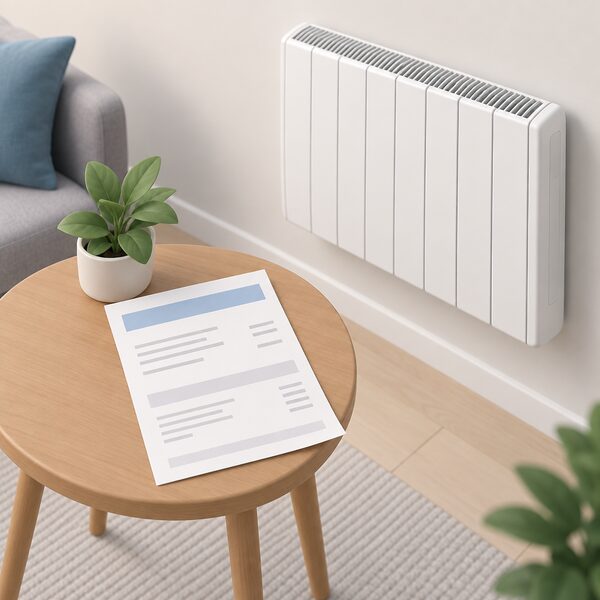
The warranty is the strongest commercial argument for the range, and it is also the part with the most conditions. Rointe's warranty terms state that the D Series, Belize, Olympia, Kyros, Sygma, Aria and Palau carry 10 years warranty on the aluminium body and 3 years on electrical and electronic components3. The radiator pages repeat the same split: a 10-year warranty on the aluminium body and 3 years on electronic components2.
The company frames the 10-year term as an extension rather than a baseline. Its warranty page states that it has decided to extend the warranty to 10 years for aluminium radiators and steel towel rails3. A separate warranty schedule for non-portable electric radiators lists different component-level periods, including 5 years for the aluminium body against corrosion, paint and thermal fluid leakage, and 2 years for the control panel, heating elements and plastic closures13. The documents give different figures for overlapping components, and the component schedule is the more granular of the two.
The claim requirement is repeated across the range pages and the support articles, in the same words each time2. Registration and support run through Rointe's own channels, with a UK support telephone number of 0203 321 5928 published on the product pages10 and an Irish number of 01 553 0523 for the Irish operation14. The general principles of guarantee registration and what voids a manufacturer's term are set out in boiler warranties and guarantee registration.
Installing a Rointe radiator: clearances, mounting and safety
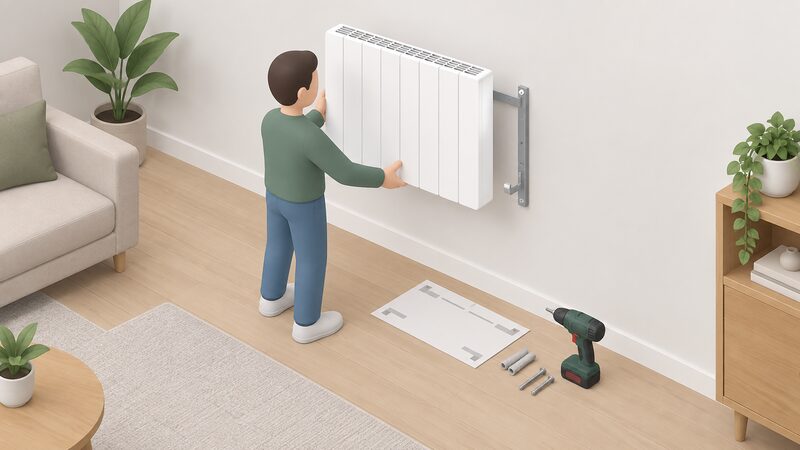
Rointe's installation guidance is specific on two measurements. For optimal performance the radiator should be installed 10 to 15 cm above the floor2. The maker also advises maintaining a free space of at least one metre around the radiator2. The second figure is the one that catches people out in a small room, because it is a clearance requirement rather than a suggestion about appearance.
The fixings come in the box. Rointe states that brackets, fixings and a template are provided with each radiator, so all that is needed are a few tools16. The maker's general guidance on electric radiators confirms that a template and installation kit are provided and that installation involves drilling, screwing and connecting15. There is no pipework, no flue and no gas connection, which is why the installation is a competent DIY task in many cases rather than a trade job.
On obstruction, the maker is explicit: clothing, towels or other objects should not be placed on the radiator while in use, as this could cause overheating and permanently damage the radiator electronics or structural elements18. That is a warranty-relevant instruction as well as a safety one.
The electrical side is the part that is not covered by the maker's guidance. A fixed electric radiator is a permanent load on a circuit, and the circuit, the protective device and the earthing arrangements are matters for the wiring regulations rather than the product manual. The requirements are set out in electrical safety and supply for electric heating.
Running costs and compatibility with solar and other renewables
Rointe states that all its products are 100% electric and compatible with renewable energies such as solar2. The company goes further elsewhere, describing its electric heating systems as fully compatible with renewable energy systems such as solar panels (photovoltaic), wind turbines and more6. A related page states that the products are 100% compatible with renewable energy systems including photovoltaics and turbines16.
Compatibility here means an electrical compatibility, not a control integration. A photovoltaic array or a wind turbine produces electricity, and an electric radiator consumes electricity, so the two can sit on the same supply. Whether the household actually captures the benefit depends on whether generation coincides with heating demand, and on whether the tariff or inverter setup allows self-consumption to be maximised. Rointe's pages do not describe a specific control link between its radiators and a solar inverter.
The dependence that remains is the grid. An electric radiator draws from the mains whenever the sun is not generating, and the household remains a customer of an electricity supplier. There is no flue, no fuel delivery and no gas standing charge, which is a genuine simplification, but the running cost is exposed to electricity prices in full. For a property off the gas grid, that trade is often the reason for choosing electric heating in the first place, and the alternatives are compared in heating a home off the gas grid.
The wider question of how far electric heating takes a household towards independence, and where the remaining dependencies sit, is covered in home heating and energy independence. The range sits within the broader category described in electric radiators and panel heaters.
Cleaning and care: what to do and what to avoid

Rointe recommends cleaning its radiators at least once every six months, particularly before the winter season19. That is a maker's recommendation for its own products, and it is a wipe-down task rather than a service: there is no combustion to check, no pressure to top up and no filter to replace.
Independent guidance adds a point that is easy to miss. Dust behind radiators should be cleared even if they look clean, because doing so helps them heat up quicker and distribute warmth more effectively20. On an electric radiator the same logic applies to the gap between the unit and the wall, which is also the clearance the maker asks for.
What to avoid is set out more firmly than what to use. Rointe's instruction is not to place clothing, towels or other objects on the radiator while in use, because this could cause overheating and permanently damage the radiator electronics or structural elements18. That covers the common habit of drying washing on a heater.
For painted finishes generally, maker guidance on radiator preparation describes using fine grit sandpaper to go gently over the surface and remove rust, then vacuuming the dust and cleaning again before recoating21. Where paint needs to come off entirely, the same guidance describes sanding with coarse-grit paper and then using a paint stripper, scraping off the softened paint with a scraper21. A roller is offered as an alternative application tool, though the guidance notes it may not reach the smaller nooks and crannies as well as other methods21. That guidance is about painted radiators in general rather than Rointe's finishes specifically, and it is worth noting that abrasive work on a coated aluminium body is a different proposition from sanding a steel panel.
The maintenance comparison with a wet system is stark. Independent guidance on boiler maintenance advises checking radiators at least once a year to see whether they need bleeding22. A sealed electric radiator has no water in it to bleed, no inhibitor to check and no annual service requirement, which is one of the clearest practical advantages of the technology.
Sources22 cited
- Electric heating aligned with net zero commitments, Rointe, 2025-09-01
- Electric radiators range, Rointe, 2026-09-20
- Product warranty, Rointe, 2025-11-12
- Electric radiators without WiFi, Rointe, 2026-09-20
- WiFi electric radiators, Rointe, 2026-09-20
- Electric heating review: get ready for autumn, Rointe, 2025-08-26
- Thermal fluid WiFi radiators, Rointe, 2026-04-08
- Short WiFi radiators, Rointe, 2025-09-25
- Natural stone radiators without WiFi, Rointe, 2025-05-14
- WiFi natural stone radiators, Rointe, 2026-04-08
- WiFi electric radiators (Ireland), Rointe, 2026-09-20
- Electric radiators (Ireland), Rointe, 2026-09-20
- Warranty terms and conditions, Rointe, 2026-08-03
- Support (Ireland), Rointe, 2026-07-01
- Electric or gas heating, Rointe, 2024-12-18
- Electric towel rails without WiFi, Rointe, 2025-09-25
- WiFi electric towel rails, Rointe, 2025-09-25
- Natural stone radiators without WiFi (Ireland), Rointe, 2025-05-14
- WiFi thermal fluid radiators (Ireland), Rointe, 2026-04-08
- Simple tips for a greener Easter, Home Energy Scotland, 2026-03
- Can you paint radiators?, Viessmann, 2022-05-31
- Boiler maintenance guide, Uswitch, 2026-09-03
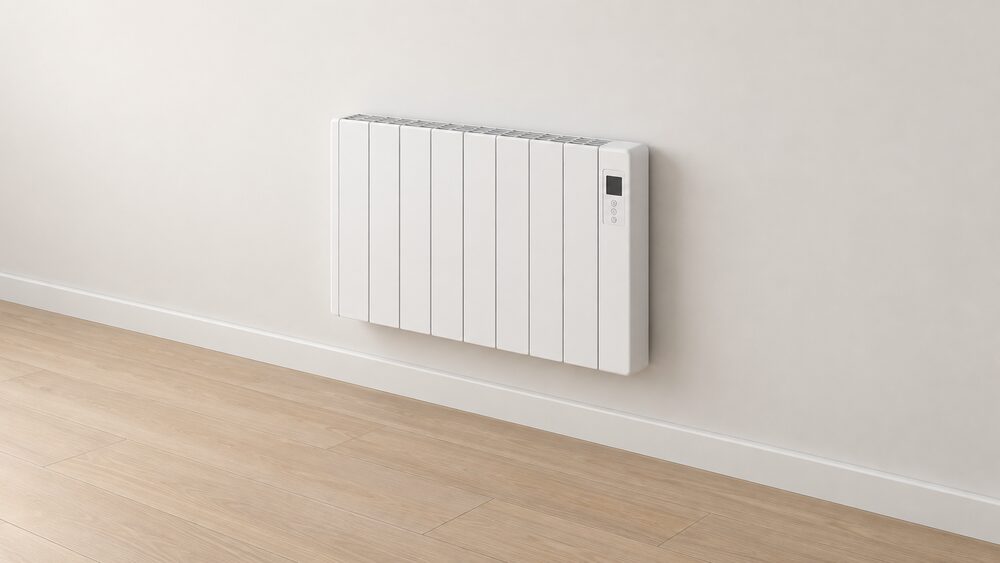 Rointe electric radiators and heatingRointe electric radiators run on electricity alone, with no gas or pipework, so are they cheap to run and do they heat a room well?
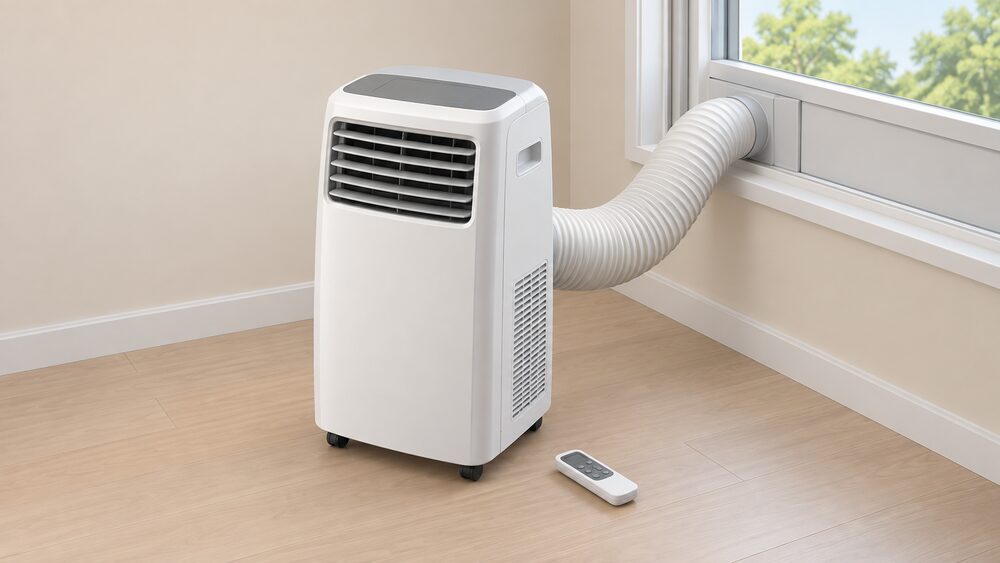 Rointe heat pump cylinders and electric heatingRointe makes electric radiators, towel dryers and water heaters, plus portable air conditioners with heat pump capability.
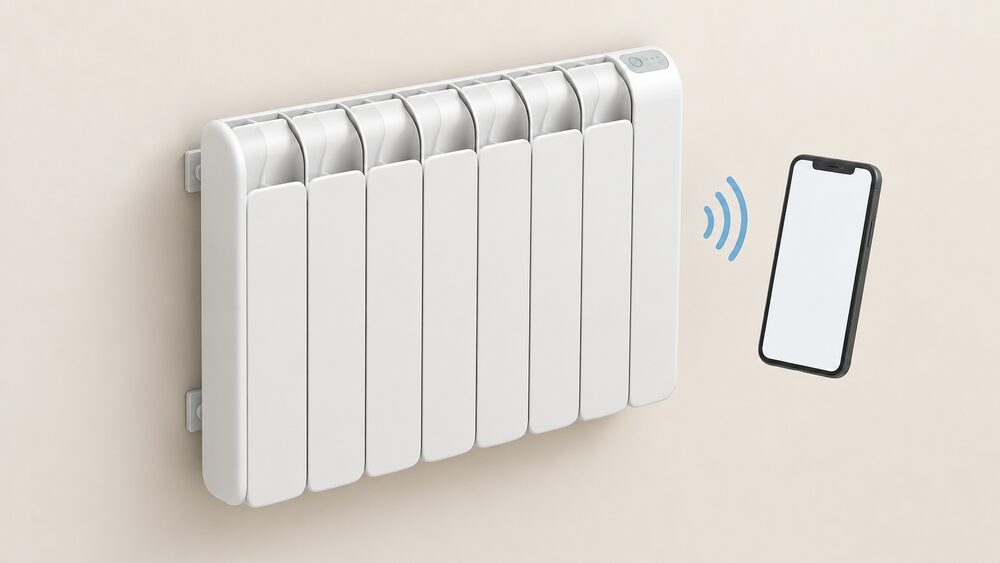 Rointe Radiator Controls and the Nexa AppRointe radiators work with the Nexa app, but do you need the app at all, and what happens if your WiFi drops?