
In this answer
Short answer
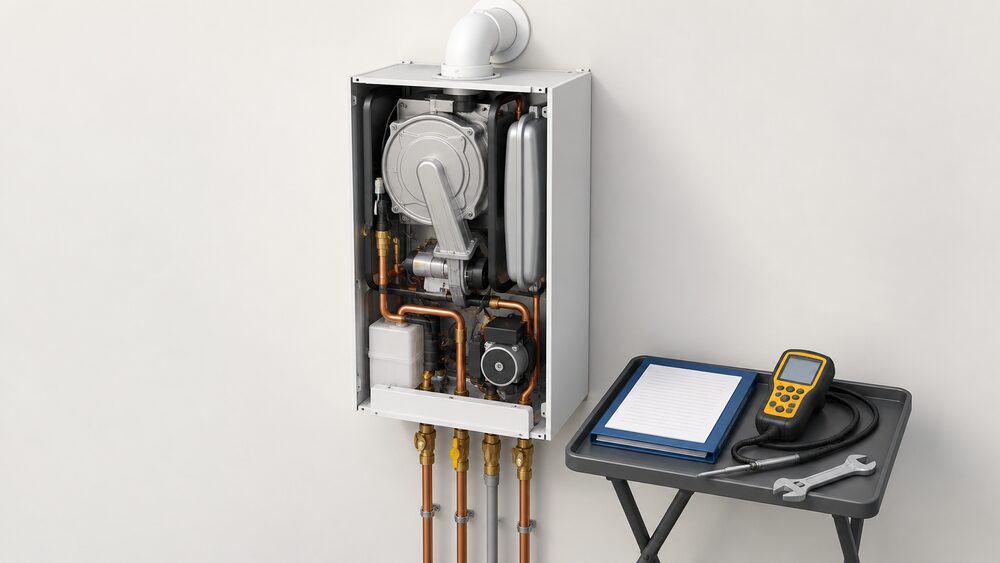
A domestic boiler in the UK typically lasts 10 to 15 years. That figure is repeated by independent advice bodies, official planning guidance and manufacturers alike: the Energy Saving Trust puts the average lifespan at 10 to 15 years1, the Planning Portal works on a current boiler lifespan of around 15 years2, and independent consumer guidance gives 10 to 15 years in an average household where the appliance has been regularly serviced and looked after3.
The upper end is real but conditional. Boilers can run beyond 15 years and even up to 203, and a superior quality appliance may reach 20 years4. Heat-only boilers, which carry fewer components and run at lower pressure, are credited with 15 to 20 years where they are serviced annually5. Against that, one European assessment of stock and sales data put the average boiler life in the UK at just 8.5 years, against an EU-wide average product life of 24 years6, a gap that says more about how often British households replace boilers than about how long the hardware can physically run.
For a household budgeting for replacement, the practical planning assumption is a boiler bought today reaching its middle to late teens, with servicing every 12 months and a repair-or-replace decision arriving somewhere between years 10 and 15.
Design lifetime versus real-world service life
Most boilers are designed to last around 15 years10, and 15 years is the figure used as the typical service life in UK energy research11. That is the engineering expectation: the heat exchanger, fan, pump and controls are specified to see out roughly a decade and a half of normal duty.
What actually happens in UK homes diverges from that in both directions. The 2019 European assessment of boiler stock and sales found an average product life of 24 years across the EU, with the UK at the bottom of the range at 8.5 years6. UK boilers are not worse built; they are replaced sooner, often at the point of a fault, a house move or a bathroom refit rather than at the end of the appliance's useful life. Consumer policy work has noted that gas and oil boilers tend to last at least ten years and are therefore only replaced very infrequently, which is precisely why those replacement moments matter so much as decision points12.
The lesson for a household is that "how long will it last" and "when will I replace it" are different questions. The first is answered by build quality, installation and maintenance; the second is usually answered by an unplanned breakdown on a cold morning.
What maintenance and servicing actually do
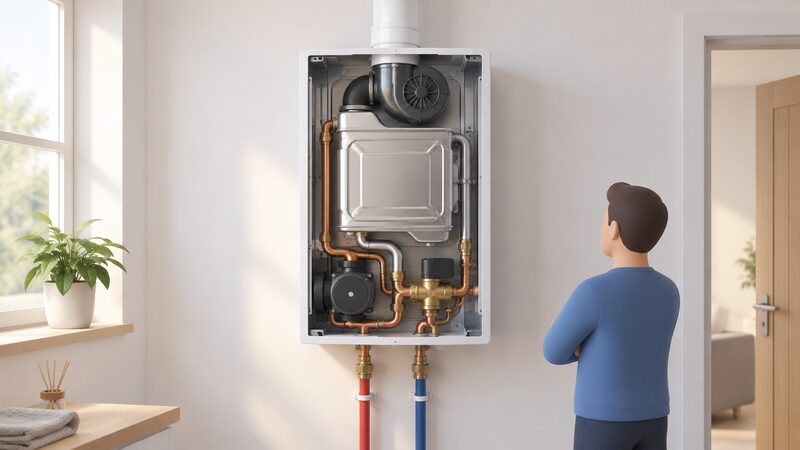
Four things govern how long a boiler survives: the quality of the installation, the type of boiler, usage levels and ongoing maintenance13. Only the last is still in a household's hands once the appliance is on the wall.
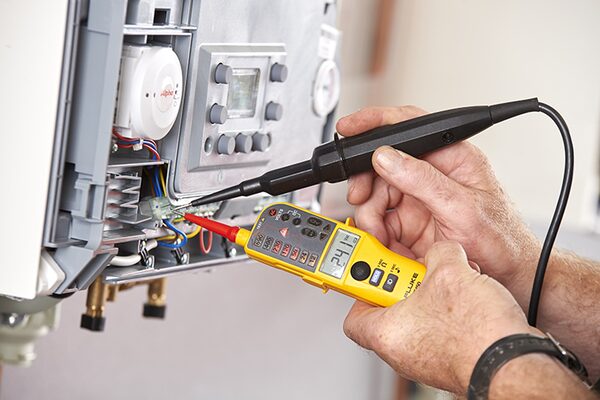
The servicing recommendation is unambiguous and consistent across independent bodies. A boiler should be serviced at least once a year, in other words every 12 months7. The Centre for Sustainable Energy states the boiler should be serviced annually to ensure that it stays in good working order and maintains its efficiency14, and the Heating and Hotwater Industry Council recommends the boiler and system are serviced and checked annually15.
"An annual service can keep your boiler running smoothly and extend its life - delaying an expensive replacement by years"
Trade guidance makes the same point in broader terms: regular maintenance improves efficiency, extends the lifespan of the system, and helps catch small issues before they become larger ones17. Cleaning and maintenance prolong both the life and the efficiency of a boiler11.
There is a contractual dimension as well. Manufacturer warranties are conditional on that annual service being done and recorded.
Does boiler type change how long it lasts?
Broadly, no. The same 10 to 15 year band is quoted for combi, system, regular and oil boilers alike19. Independent guidance gives 10 to 15 years for a combi, 10 to 15 for a system boiler in a larger household, and 10 to 15 for a conventional boiler serviced and well maintained annually3.
| Boiler type | Quoted lifespan | Condition |
|---|---|---|
| Combi | 10 to 15 years20 | Same range as system and regular |
| Combi (modern) | Up to 15 years21 | High efficiency, fewer pressure issues |
| System | 10 to 15 years3 | Serviced annually |
| Heat-only / regular | 15 to 20 years5 | Well maintained, annual service |
| Biomass | 20 to 30 years22 | Longer lifespan than gas |
The one consistent outlier is the heat-only boiler, quoted at 15 to 20 years by more than one manufacturer5. A combi is a more complex appliance, combining space heating and instantaneous hot water in one case, and it runs on mains pressure; a heat-only unit does less work with fewer parts. Even so, the difference between types is smaller than the difference between a well-installed, annually serviced boiler and a poorly commissioned one in a system with dirty water. The combi boilers, system boilers and regular boilers pages set out how each configuration works.
Repair or replace: the thresholds in use
There is no single rule, but the published thresholds cluster tightly. Where repair costs are low and the boiler is under 10 years old, repair is usually the right call; where repair costs are stacking up, or the boiler is approaching or beyond 12 to 15 years, replacement becomes the more sensible option20. Independent guidance sets a more cautious line, suggesting a newer boiler under eight years old is likely more sensible to repair than replace24, and that a boiler over fifteen years old could be time to replace10.
Manufacturers converge on the same territory: most boilers are replaced around 10 to 15 years into their life8, a boiler approaching its average lifespan of around 15 years is probably worth considering replacing25, and a heat-only boiler over 15 years old is worth considering for replacement even if it seems to be working fine5.
Three practical considerations sit behind those numbers:
- Cumulative repair spend. Repeated call-outs for different faults indicate general wear, not one failed part.
- Parts availability. Older models become harder to source spares for, which lengthens downtime.
- Efficiency. An ageing appliance costs more to run for the same heat delivered.
Changing type at the same time adds cost: moving from a heat-only boiler to a combi or a heat pump increases costs further because the full heating system often needs replacing5. Costs are installer-quoted; see new boiler cost.
Warranties are not lifespans
Manufacturers offer warranties of 7 to 12 years to balance risk and costs8, and some models go considerably further: ATAG's iC Economiser Plus range is described as offering up to 18 years, with 10 years as standard9. A long warranty is a statement about the maker's confidence and about repair liability. It is not a prediction of service life, and it does not make the appliance last longer.
Two dependencies follow from that. The first is on the manufacturer's continued existence and parts supply for the length of the cover. The second is on the annual service condition: the guarantee is only as durable as the household's service record. Boiler warranties covers registration and conditions in detail.
Lifespan and the move to low-carbon heating
Boiler lifespan sets the rhythm of household heating decisions. Because a gas boiler runs 10 to 15 years26, a home fitting one now is making a commitment that reaches well into the next decade, and each replacement moment is one of the few realistic opportunities to switch technology. Consumer policy work frames these as trigger points precisely because boilers are replaced so infrequently12.
The comparison is not lopsided. Government-commissioned work on domestic hybrid heat pumps gives an expected heat pump lifetime of 15 to 20 years, and records a stakeholder view that boiler life would be longer than heat pump life27. Biomass boilers are quoted at 20 to 30 years22.
From an independence standpoint, a boiler's lifespan is the length of a fuel commitment. A gas boiler ties a household to the mains gas network and a supplier for the life of the appliance; an oil boiler ties it to deliveries and a tank. Neither dependency is reduced by the boiler lasting longer; a longer life simply defers the next decision. Households planning around heat pumps compared with boilers or wider home heating and energy independence generally work back from the expected replacement date rather than waiting for a failure, because an emergency replacement rarely allows a change of technology. Background on the whole subject sits on the boilers and home heating guide.

Sources27 cited
- Tips to improve the EPC rating of your home, Energy Saving Trust, 2026-08-03
- Heating and hot water: permitted development, Planning Portal, 2026
- How long does a boiler last?, Uswitch, 2024-11-13
- Heat pumps vs boilers: what you need to know, Hitachi, 2026-09-17
- How long does a heat only boiler last, Ideal Heating, 2026-09-17
- Boiler review Task 2 draft final report, Solar Heat Europe, 2019-01
- Boiler maintenance guide, Uswitch, 2026-09-03
- How long do combi boilers last, Intergas, 2026-04-23
- ATAG iC Economiser Plus boilers, Quiet Mark, 2026-09-17
- Hot water guide, Uswitch, 2025-01-31
- The secret life of boilers, part two, CREDS, 2020-06-29
- Boiler retirement: using trigger points to support homeowners, Which?, 2026-07-10
- How long does a boiler last, Alpha Innovation, 2026-06-11
- Upgrading and replacing your boiler, Centre for Sustainable Energy, 2026-06
- Domestic heating guidance, HHIC, 2026-09-17
- Keeping warm in winter, CIPHE, 2022-12-19
- Spring into home care, APHC, 2025-05-07
- Standard warranty terms and conditions, Ideal Heating, 2026
- How long does a boiler last, EDF, 2026-09-17
- How long do boilers last in the UK, Navien, 2026-05-19
- How long do boilers last, Vaillant, 2026
- How long does it take to fit a boiler, Uswitch, 2026-09-16
- Boiler FAQs, Ideal Heating, 2026-09-17
- Boiler repair, Uswitch, 2024-11-05
- How long does a boiler last, Ideal Heating, 2026-09-17
- Heat pump FAQ, Octopus Energy, 2026-09-18
- Domestic hybrid heat pumps final report, UK Government, 2016-11
 Cycle Life and DegradationHow long will a home battery actually last, and what decides that?
 Boiler WarrantiesHow long does a boiler warranty actually last, and what do you have to do to keep it?
 The Full Boilers and Heating GuideWhich boiler suits your home, and when is it worth swapping the old one?
 Servicing and MaintenanceWhat an annual gas or oil boiler service covers, the intervals manufacturers specify, the link between servicing records and warranty validity, and what servicing means for a household's energy independence.
 Gas Boilers GuideMains gas boilers heat around 23 million UK homes.
 Manufacturer WarrantiesHow long does a boiler, heat pump or solar panel warranty actually last, and what do you have to do to keep it valid?