In this guide
ATAG is a premium domestic gas boiler brand sold in the UK through a closed installer network: the maker states it sells only to Gas Safe registered installers, so a householder cannot buy one direct1. The range covers combi, system and regular boilers, with the iC Economiser Plus combi carrying a warranty of up to 18 years, 10 years of it as standard2.
The brand's strongest independent evidence is owner satisfaction. In a Which? survey of 198 ATAG boiler owners, 84% said they were satisfied, two percentage points above the average across brands, and 87% would recommend one to a friend3. The same survey gave ATAG a customer score of three stars out of five, describing it as average and leaving room for improvement3.
That combination, high satisfaction alongside a middling overall score, is the honest summary of the brand. It is well liked by the people who own it, sold through a network that controls who fits it, and priced at the premium end without a published list price. What follows sets out the range, the warranty conditions, the installer route and the limits.
The ATAG range: combi, system and regular
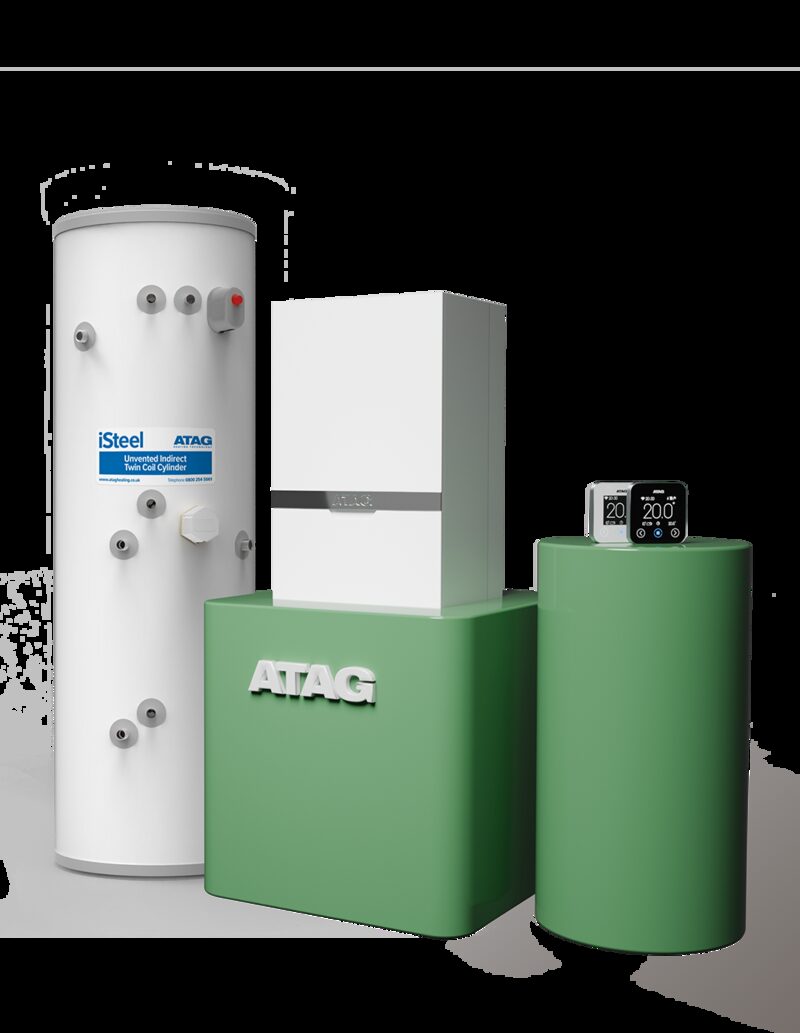
ATAG builds three boiler types for UK homes. The iC range is the combi line, the iS is the system boiler and the iR is the regular or heat-only boiler1. The iC Economiser sits at the top of the combi range, described by the maker as "the combi to beat"1. The iSteel cylinder range is made to pair with the iS system and iR regular boilers, so a household choosing either of those types takes on a hot water cylinder as part of the installation1.
The practical difference between the three types is where the hot water comes from. A combi heats water on demand and needs no cylinder, which the maker gives as the reason the iC suits homes with limited space1. A system boiler works with a cylinder and is described as perfect for larger homes1. A regular boiler also uses a cylinder and, in most installations, a feed and expansion tank in the loft.
Output and bathroom count drive the choice within the combi line. ATAG states that its combi boilers can meet the demands of more than one bathroom6. That is a claim about the range as a whole rather than a single model, and it depends on the flow rate the incoming mains can deliver, not only on the boiler's output. A household with two showers running at once needs the mains supply checked as well as the boiler sized.
Siting is one area where the regular range is presented as flexible: the maker states that extensive flue solutions mean the iR can be sited almost anywhere in the home1. Flue route and termination position are governed by the regulations rather than by the brand, and the rules are set out on our boiler flues page. For the underlying differences between the three types, see combi boilers, system boilers and regular boilers.
Efficiency and running costs
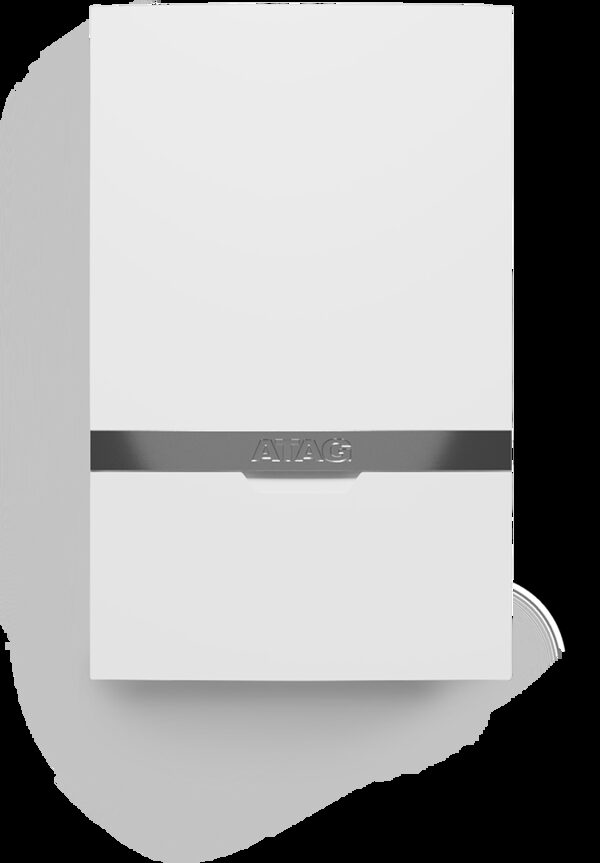
The efficiency claims attached to ATAG boilers need separating into two kinds. The first is the ErP rating: the iC Economiser Plus is listed as Boiler Plus compliant with an ErP rating of A2. ErP is the European energy labelling framework that UK boiler ratings sit within, and an A rating is the top band7. The second kind is a running cost figure, and that is where the numbers get looser.
The saving usually quoted for a boiler upgrade is not ATAG-specific. Independent guidance puts the annual saving from replacing a G-rated boiler with an A-rated condensing boiler with full heating controls at around £320 a year for a semi-detached home on mains gas, at energy prices in July 20268. That is a comparison between two efficiency bands, not between two brands, and it assumes the controls are upgraded at the same time.
The wider cost of a gas boiler replacement is put at around £3,700 on average by one independent source9, and at £3,500 for a G-rated to A-rated swap with thermostatic radiator valves by another10. A sealed system boiler is estimated at £1,700 to £3,500, assuming the job does not qualify as a large one11. These are general figures across brands and system types, and none of them is an ATAG price.
For a household thinking about independence, a gas boiler of any brand keeps the home on the gas grid and on a gas supplier. The efficiency gain from replacing an old boiler reduces the volume of gas bought, which lowers the bill and the exposure to price, but it does not change the fuel or the dependence. That distinction is developed on our heating and energy independence page.
Warranty: up to 18 years, with 10 as standard
ATAG's warranty is the longest headline term in the UK domestic market as the brand presents it. The iC Economiser Plus is offered with a warranty of up to 18 years, with 10 years as standard2. ATAG's own brand page repeats the same structure, describing a market leading warranty of up to 18 years with 10 years as standard4. The iC Economiser Plus also carries a lifetime guarantee on the ATAG iCon stainless steel heat exchanger2.
Two things follow from that structure. The first is that the 10 year figure is the one most buyers will actually receive, with 18 years sitting at the top of a ladder that depends on the model and on the installer. The second is that the heat exchanger guarantee is a separate promise from the boiler warranty, covering one component rather than the appliance.
"they offer the longest warranty option on the market of up to 18 years! All boilers come with 10 years warranty as standard"
Warranty terms of this length are only as good as the conditions attached to them, and the conditions are not set out in the published material. Annual servicing is the usual requirement across the industry, and a missed service is the commonest reason a long guarantee is refused. Our boiler warranties page covers how registration and servicing conditions work in general, and boiler servicing and maintenance explains what an annual visit involves.
Because ATAG sells only to Gas Safe registered installers, the warranty relationship runs through the installer rather than directly between householder and maker1. That makes the installer's own registration with ATAG the thing that determines which term applies, and it makes the commissioning paperwork the document worth keeping.
Buying an ATAG boiler: the installer route
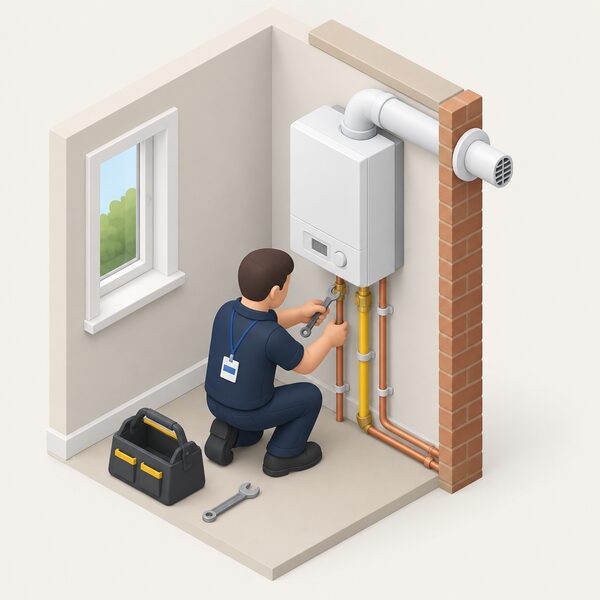
ATAG's distribution model is the defining feature of buying one. The brand states it sells only to Gas Safe registered installers1. A householder therefore cannot order a boiler from the manufacturer, and the purchase runs through a trade account rather than a retail channel.
The Gas Safe requirement is not an ATAG invention. Only Gas Safe registered engineers are legally allowed to install boilers in the UK12, and the same register is the one to check for anyone working on gas appliances or flues in rented property13. Pipework replacement should also use Gas Safe registered engineers14, and new gas boilers and appliances should be installed and serviced by an accredited Gas Safe engineer to prevent gas leaks15. Only a qualified and registered Gas Safe engineer is legally permitted to work on boilers in the UK16.
The route to a quote is a postcode search. ATAG's boiler finder runs in three steps: tell us about your home, our product suggestion, get your free quote6. The maker states that a request produces a free quote from a local ATAG registered installer1, and that it will respond within 48 hours1.
What the installer network buys a household is a narrower choice of fitter and, in principle, a more controlled installation. What it costs is the ability to shop the appliance separately from the labour, and the ability to compare a bare boiler price across retailers. The trade-off is the same one that applies to any brand sold through a closed network.
What an ATAG boiler costs
There is no published ATAG list price for a boiler or for a supplied-and-fitted installation. Prices are installer-quoted, and the figures that exist in the public domain are general boiler replacement costs rather than ATAG-specific ones.
| Item | Figure | Basis |
|---|---|---|
| Gas boiler replacement, G-rated to A-rated with TRVs | £3,500 | Independent guidance, GB10 |
| Gas boiler replacement, average | around £3,700 | Independent guidance, 20269 |
| Sealed system boiler | £1,700 to £3,500 | Independent estimate, not a large job11 |
| New boiler, general | around £1,500 | Independent guidance17 |
| Heat-only oil boiler, total | £3,075 average | Independent statistics5 |
| System oil boiler, total | £3,163 average | Independent statistics5 |
The spread between those figures is wide because they measure different things. The £1,500 figure is a boiler cost rather than an installed cost17. The £3,500 and £3,700 figures are installed replacements including controls or thermostatic radiator valves9. The oil figures are included for contrast only, since ATAG's UK range is gas5.
Three factors move an ATAG quote in particular. The first is the model and output within the iC, iS or iR range. The second is whether the system type is changing, since a regular-to-combi conversion involves removing a cylinder and tank and is more work than a like-for-like swap. The third is flue route and siting, which is where the iR's flue options matter1. VAT treatment is not stated in any of the figures above, so they should be read as quoted rather than as confirmed VAT-inclusive prices. Wider cost context across brands and fuels sits on our new boiler cost page.
Smart controls, Quiet Mark and what owners say
ATAG holds Quiet Mark certification as a brand, and the iC Economiser Plus is certified individually4. Quiet Mark is an independent certification scheme that lists products assessed for noise, and ATAG's certification is described as another way to ensure the brand is answering the needs of the consumer4. The iC Economiser Plus is certified to a standard that means it can be placed in any room of the home2.
The iC Economiser Plus also carries a built-in heat recovery feature, described as providing a compact energy efficient solution for heating and hot water2. The same listing records that 95% of the boiler packaging is recyclable and plastic free2, and that the boiler has a built-in frost protection device2.
Owner evidence is the strongest independent material on the brand. In a Which? survey of 198 ATAG boiler owners, 84% said they were satisfied, two percentage points above the average across the brands surveyed, and 87% would recommend one to a friend3. The same survey found ATAG customers more likely to say they were satisfied, at 54%, than very satisfied, at 30%3. The overall customer score was three stars out of five, described as average and leaving some room for improvement3.
On documentation, an independent readability study scored ATAG manuals at 53.35 out of 100 across nine manuals, ranking the brand tenth among those assessed5. That is a mid-table position: neither notably clear nor notably poor. For general owner experience with gas boilers, independent survey work found gas boiler users gave a median recommendation score of nine out of ten, with 76% reporting no problems during installation and 93% confident in using and controlling their boiler18.
Where the range has limits
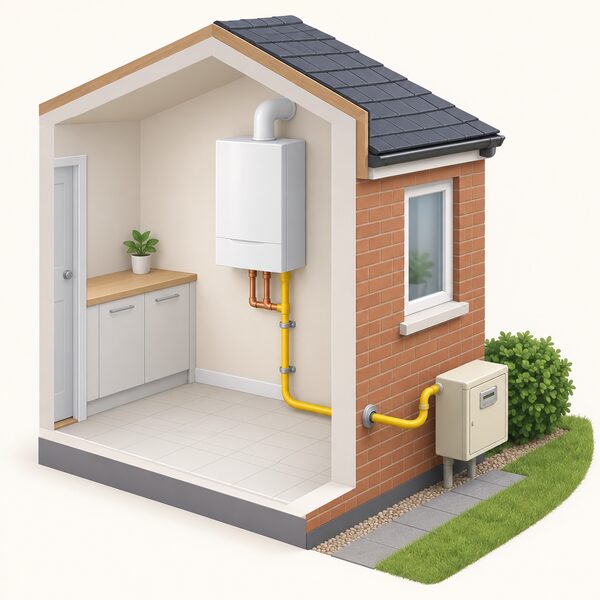
The clearest limit is the sales channel. Because ATAG sells only to Gas Safe registered installers1, a householder has no route to buy the appliance directly, no manufacturer list price to compare against, and no ability to separate the boiler cost from the fitting cost in a quote. Everything about price and availability runs through the installer.
The second limit is warranty conditionality. The 18 year figure is a maximum, and the 10 year figure is the standard term2. The published material does not set out the servicing and registration conditions attached to either, so the term that applies in a given house is a question for the installer quoting for the work. A long guarantee that lapses through a missed service is worth no more than a short one.
The third is the fuel. ATAG's UK domestic range is gas, so a household choosing one stays on the gas grid and on a gas supplier. The efficiency gain over an old boiler reduces the volume of gas bought, but the dependence on the network and the supplier is unchanged. Households off the gas grid have no ATAG option in the published range, and the alternatives are covered on our off-grid home heating page.
The fourth is documentation and support. ATAG's published pages do not state telephone support hours, and the contact route offered is the boiler finder, which passes an enquiry to a local installer with a stated 48 hour response1. For a gas escape or a suspected carbon monoxide problem, the correct route is the National Gas Emergency Service rather than a manufacturer's form, and the Gas Safety Advice Line is open between 9.00am and 5.30pm Monday to Thursday and 9.00am to 5.00pm on Friday, excluding bank holidays19. That line gives safety advice, not ATAG product support.
ATAG heat pumps: what is coming
ATAG lists heat pumps under a Coming Soon section on its products page, with a link to register interest1. That is the extent of the published position: no models, outputs, prices or dates are given. A household weighing a heat pump against a gas boiler should treat the ATAG entry as an announcement rather than a product.
The wider policy picture is unsettled in ways that bear on the choice. A government consultation set out proposals to improve boiler and heating system efficiency through minimum standards, to mandate that from 2026 all newly-installed gas boilers are hydrogen-ready, and to examine the potential role of gas boiler and electric heat pump hybrids in heat decarbonisation in the 2020s and 2030s20. The same consultation process noted that hydrogen ready replacement boilers would be considered in the next Part L review21. A 2021 Part L uplift applied to gas boilers as a heating appliance22.
On the regulatory side, the Regulation for boilers and water heaters under the energy related products framework is due to be published soon7. Hybrid heat pumps are described in independent guidance as upgradeable to a range of future low or carbon free heating options, including all-electric, electric-hydrogen hybrid, electric-biofuel hybrid and electric heat pump with instantaneous electric23.
Official statistics on heat pumps used in central heating in England and Wales carry a next release date of to be announced24, so the installed base is not currently being updated in that series. For a household, the practical reading is that a gas boiler bought now is a decision about the next 10 to 15 years, and that the direction of policy is toward lower-carbon heat without a settled timetable. Our hydrogen-ready boilers and heat pumps compared with boilers pages set out what those claims and comparisons actually cover.
Sources24 cited
- ATAG products, ATAG Heating
- ATAG iC Economiser Plus boilers, Quiet Mark, 2026
- ATAG boilers review, Which?, 2025
- ATAG brand page, Quiet Mark, 2026
- Boiler statistics, Uswitch, 2024
- Upgrading and replacing your boiler, Centre for Sustainable Energy, 2026
- Energy related products directive, CIBSE, 2026
- How long does it take to fit a boiler?, Uswitch, 2026
- Renewable technologies: what really cuts energy bills, Energy Saving Trust, 2026
- Boilers advice, Energy Saving Trust, 2026
- Best boilers guide, Confused.com, 2025
- Domestic gas installation and health and safety, nidirect, 2025
- Safety check, Liquid Gas UK, 2026
- Gas leaks safety, Uswitch, 2026
- What pressure should your boiler be?, Uswitch, 2024
- Getting your broken boiler repaired or replaced, Citizens Advice
- How long does a boiler last?, Uswitch, 2024
- Heat pumps: a user survey, Nesta, 2023
- Gas safety advice line, Health and Safety Executive, 2026
- Boiler consultation, CIPHE, 2026
- Government response to Future Homes Standard consultation, UK Parliament, 2021
- Part L and F review stage 2a government response, Welsh Government, 2021
- Hybrid heat pumps, HHIC, 2026
- Heat pumps used in central heating, England and Wales, Office for National Statistics, 2025