
In this guide
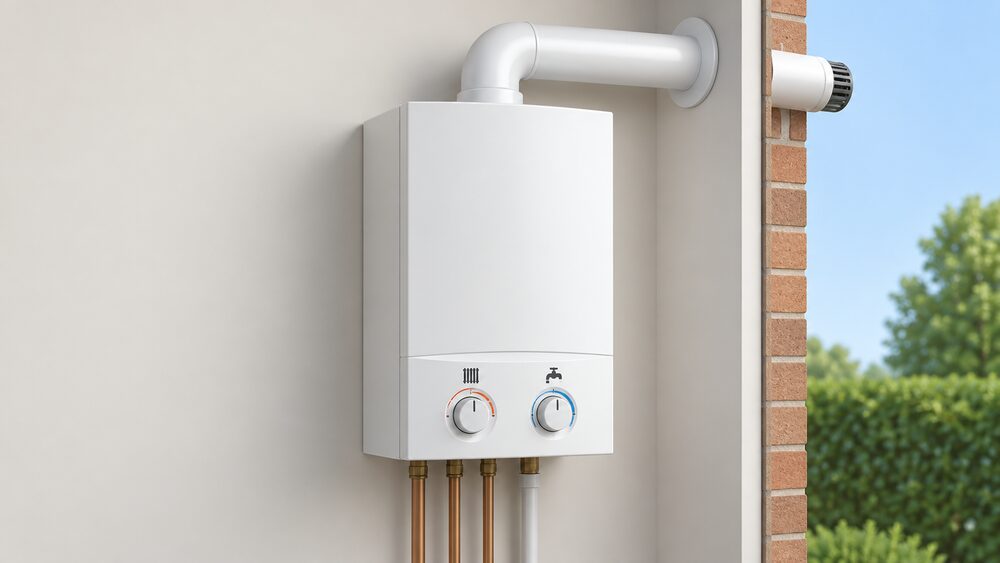
Boiler flow temperature is the temperature your boiler heats the water to before it sends it to your radiators1. It is the single setting that decides whether a condensing boiler actually condenses, and therefore whether the household gets the efficiency the appliance was sold on. Most condensing boilers in UK homes are set at 70 to 80°C, well above the point at which condensing begins2. The recommended range for a gas combi is 55 to 60°C3.
The prize is real but modest. Nesta's trial work suggests households could save about 8% of their annual gas use by lowering the flow temperature from 80°C to 60°C, though it also reports that the saving might fall to 3.6% once households compensate by adjusting other settings2. The Energy Saving Trust reports claims that average gas bills could fall by as much as 9%1. Welsh Government guidance puts the range at 8 to 13% of the gas bill4.
What follows is what the setting does, how low each boiler type can go, what the radiators will tolerate, and where the evidence on savings is firm and where it is not.
What flow temperature is, and what it is not
Flow temperature is the temperature of the water leaving the boiler for the heating circuit. It is not the temperature of the room, and it is not the temperature of the hot water at the tap. On a combi boiler there are two dials or settings, one for the radiators and one for hot water, and they are independent1. That separation matters: the radiator flow temperature can be turned down as far as the household likes without affecting the hot water1.
The setting exists because a boiler has to be told how hot to make the water before it knows how much gas to burn. A higher flow temperature pushes more heat into the radiators faster, which is why houses warm up quickly at 80°C. A lower flow temperature delivers heat more slowly, and the house takes longer to reach the temperature asked of it3. The trade is between speed and efficiency, and it is the household's to make.
The same setting appears in the background of every efficiency figure quoted for a boiler. The Standard Assessment Procedure, which underpins energy performance certificates, bases its default efficiency data on a design flow temperature of 55°C or higher, and the Product Characteristics Database records individual boilers on the same basis7. A boiler running at 80°C is not running at the efficiency its certificate implies.
Why a lower flow temperature means a more efficient boiler
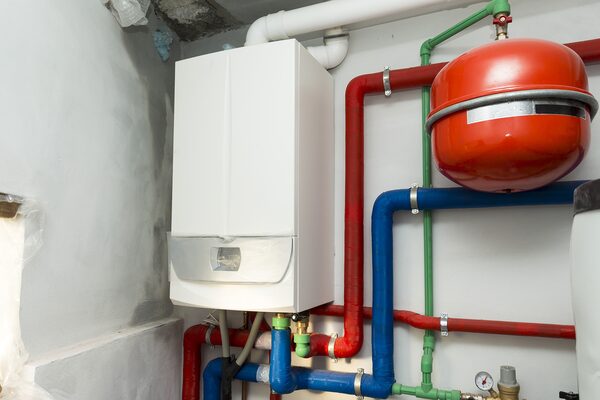
A condensing boiler is defined by its use of the latent heat released when water vapour in the flue gases condenses8. That recovery is what separates it from an older boiler, and it only happens when the water coming back from the radiators is cool enough. The threshold is around 54°C: below that return temperature, the boiler starts condensing more2. One trade source puts the figure at below 55°C9.
The mechanism is straightforward. Hot flue gas meets a cool heat exchanger, the water vapour in it condenses, and the heat released is used to pre-heat the water going back into the boiler10. If the return water is already hot, the flue gas stays above its dew point and the latent heat leaves through the flue. The boiler still heats the house, but it does so as a conventional boiler wearing a condensing badge.
The efficiency difference is not trivial. Recovering heat from waste gas results in a 10 to 12% increase in boiler efficiency, based on modelling by Harish Satyavada and Simone Baldi from 201611. Nesta's research found that turning the flow temperature down to 60°C improves a boiler's efficiency by nearly 4%1. The two figures measure different things, one the theoretical gain from condensing at all and one the practical gain from a specific setting change, and both point the same way.
"Boilers are more efficient when the return temperature is low, and this can save you both energy and money."
The wider point is that a condensing boiler's efficiency is not a fixed property of the appliance. It is a property of the appliance plus the setting plus the radiators plus the weather. The same boiler can run near its rated efficiency in March and well below it in January, without anything being wrong.
The numbers: 75 to 80°C as installed against 55 to 65°C recommended
The gap between how boilers are set and how they should be set is the central fact of this subject. Condensing combi boilers tend to have heating flow temperatures set to 75 to 80°C4. Many boilers are set to heat water to 75 to 80°C12. Nesta reports that many condensing boilers are currently installed to have a flow temperature of between 70°C and 80°C2. Existing modern condensing boiler systems tend to deliver space heating circulation at higher flow temperatures, typically up to 75°C13.
Against that, the recommendations cluster lower. Nesta suggests the best flow temperature for a gas combi is 55 to 60°C3. The Energy Saving Trust advises trying 65°C on a conventional boiler1. Welsh Government guidance states that 50 to 70°C is enough for many homes4. Northern Gas Networks suggests a combi can be turned down to 60°C or less14. The Low Carbon Hub puts the figure at around 55 to 60°C15.
| Source | Recommended flow temperature | Applies to |
|---|---|---|
| Nesta | 55 to 60°C | Gas combi boilers3 |
| Energy Saving Trust | 65°C | Conventional boilers1 |
| Welsh Government | 50 to 70°C | Many homes4 |
| Northern Gas Networks | 60°C or less | Combi boilers14 |
| Low Carbon Hub | 55 to 60°C | Boilers generally15 |
| Nesta | 60°C or lower | Condensing boilers2 |
The spread reflects different houses rather than disagreement about physics. A well-insulated home with large radiators can run at 50°C. A draughty Victorian terrace with small radiators may need 65°C to stay warm on a cold day. The recommendation is a starting point, not a specification.
Condensing mode: getting the return below about 54°C
The return temperature is what the boiler sees after the water has passed through the radiators, and it is always lower than the flow temperature by the amount of heat the radiators gave up. That drop is the household's lever. A flow temperature of 60°C with radiators that shed enough heat to bring the return below the condensing threshold keeps the boiler in condensing mode. A flow temperature of 80°C with the same radiators gives a return that is not. The threshold itself is set by the flue gas: reducing the temperature of water vapour from the burner flame to well below the boiling point of water, usually around 50°C, is what allows the latent heat to be recovered [S100].
This is why the advice is about flow temperature rather than return temperature: the household can set the first and can only influence the second. Reducing the flow temperature also lowers the return temperature1. The two move together.
Nesta's seasonal guidance for condensing combis sets out a sliding scale rather than a single figure2:
- Winter: 60°C
- Early spring and late autumn: 55°C
- Mid spring and mid autumn: 50°C
- Late spring and early autumn: 50°C or below if comfortable
The logic is that a boiler needs a higher flow temperature to hold a house warm when it is cold outside, and can run lower when it is mild. The Energy Saving Trust makes the same point: if the weather is mild and the household has a combi, it is more likely to be able to heat the home with a lower flow temperature1.
Combi, system or regular: how the setting differs
The boiler type decides how low the flow temperature can go, and the reason is hot water storage.
A combi heats water on demand and has no cylinder, so the heating circuit and the hot water circuit are separate. The radiator flow temperature can be turned down as far as the household likes without affecting the hot water1. That makes the combi the simplest case: the only constraint is whether the radiators can keep the house warm.
A system or regular boiler heats a cylinder as well as the radiators, and the cylinder has to reach a temperature that keeps water safe to store. Citizens Advice states that the flow temperature can safely be turned down to a minimum of 65°C, and warns against setting it lower5. The Energy Saving Trust makes the same point in different words: with a conventional boiler the setting cannot go below 65°C, so the mild-weather reductions available to a combi are not available1.
| Boiler type | Minimum flow temperature | Why |
|---|---|---|
| Combi | No fixed floor; step the setting down to the lowest comfortable position5 | Heating and hot water circuits are separate1 |
| System or regular | 65°C5 | The cylinder must be reheated to a safe temperature |
| Heat pump | 55°C default in the calculation7 | Lower flow temperatures are the design norm |
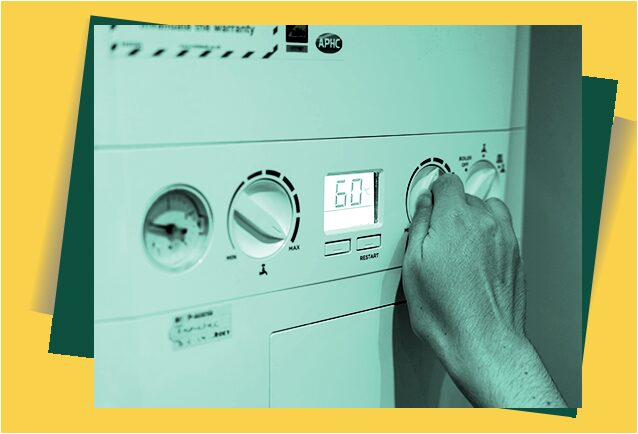
For a combi, the practical method is to lower the flow temperature setting and see whether the house still feels comfortable, repeating until it does not5. That is a process of trial rather than a single correct number, and it will land in a different place in a different house. On boilers with a digital display, setting the control to around the 12 o'clock position brings it to 60°C in most cases [S21]. Reducing the combi boiler flow temperature may mean rooms take a bit longer to reach the desired temperature, and vulnerable people and underlying health conditions are worth considering before the setting is changed [S21].
Will the radiators cope at lower temperatures?
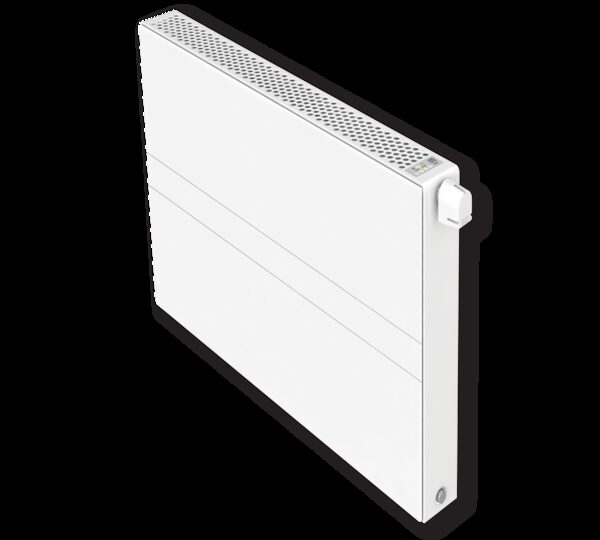
This is where most attempts to lower the flow temperature succeed or fail. A radiator's heat output depends on the difference between the water inside it and the air around it, so dropping the water temperature cuts the output. Radiators that were fine with a boiler running at 75°C may not be big enough at 45°C16.
The scale of the problem is documented. About 7 out of 10 properties would need larger radiators to operate at lower flow temperatures17. That figure comes from work on heat pump readiness, where the target is a system with radiators and pipework suitable for 55°C flow or below17. It is a demanding standard, and it is not the same as the 60°C that a combi can often manage.
There is more room than the headline suggests. Most radiators are suitable for low temperature heating, with a flow temperature of at least 45°C, provided they are sized correctly18. Where a radiator is too small, the answer is usually more surface area rather than more wall space: double or triple panel radiators give more surface area without taking up extra room16.
For context, conventional radiators run at 60 to 70°C, while underfloor heating runs at about 35°C20. Heat pumps typically send hot water to radiators at a lower temperature than a fossil fuel system, often between 35 and 45°C21. A combi at 60°C sits between the two, which is why it is usually achievable without new radiators and a heat pump's 45°C often is not.
How much you could save: up to 8% on the heating bill
The savings evidence comes from three directions and does not agree precisely, which is worth stating plainly.
Nesta's randomised controlled trial work estimates about 8% of annual gas use from lowering the flow temperature from 80°C to 60°C2. The same source reports that the gas saved might fall from 8% to 3.6% once households compensate, for example by turning the thermostat up or running the heating longer2. A separate Nesta report describes an 8% to 9% saving on total household gas use from the same change, based on a lab experiment with Salford University's Energy House and modelling by Cambridge Architectural Research22.
The Energy Saving Trust reports claims that average gas bills could go down by as much as 9% by turning the boiler flow temperature down1. Welsh Government guidance is more generous, stating that doing this could save between 8 and 13% on the gas bill12. Southern Gas Networks puts a cash figure on it: turning down a combi boiler's flow temperature to 60°C or below could save an average of £112 a year14.
| Measure | Saving | Source |
|---|---|---|
| Gas use, 80°C to 60°C | About 8% | Nesta2 |
| Gas use, after household compensation | 3.6% | Nesta2 |
| Total household gas use, 80°C to 60°C | 8% to 9% | Nesta22 |
| Gas bill | Up to 9% | Energy Saving Trust1 |
| Gas bill | 8% to 13% | Welsh Government12 |
| Annual cash saving, combi at 60°C or below | £112 a year | Southern Gas Networks14 |
The gap between 8% and 13% is not resolved by the documents. The lower figures come from trials that measured what households actually did; the higher figure is a modelled estimate of what the change is worth. A household should expect the lower end unless it holds the setting and does not compensate elsewhere.
The national picture is larger than any one household. Turning down the boiler flow temperature on combi boilers to 60°C would save an estimated 10.1 TWh a year across the UK, with an 8% saving on the household bill23. Turning down the hot water temperature on combi boilers would save 4.1 TWh a year and 2.1% on the bill23. The two measures are separate and can be taken together.
Changing the setting, and what to do first
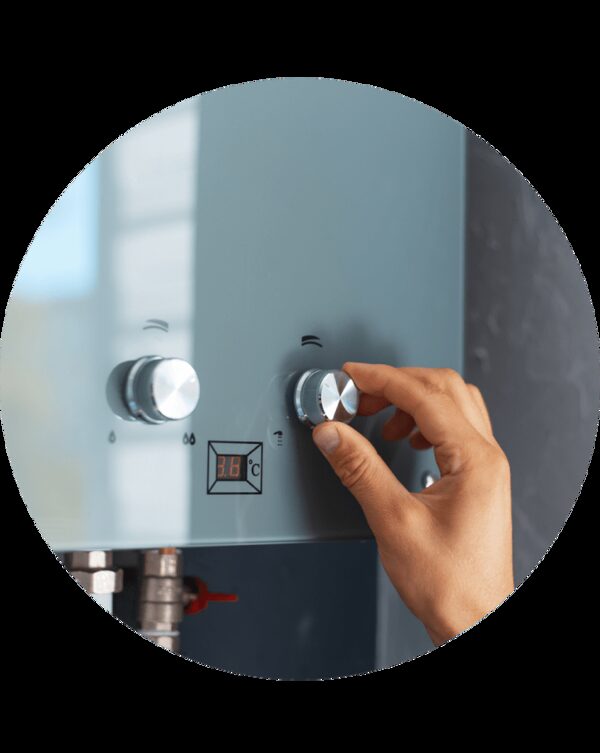
On a combi with a digital display, setting the control to around the 12 o'clock position brings it to 60°C in most cases3. The target is 60°C3. On other models the control is a numbered dial or a menu item, and the boiler's manual is the only reliable guide.
Two cautions apply. Reducing the combi boiler flow temperature may mean rooms take a bit longer to reach the desired temperature, and households with vulnerable people or underlying health conditions should consider that before making the change3. There is also a risk of adjusting the wrong settings on the boiler by accident1, which is why one change at a time is the sensible sequence.
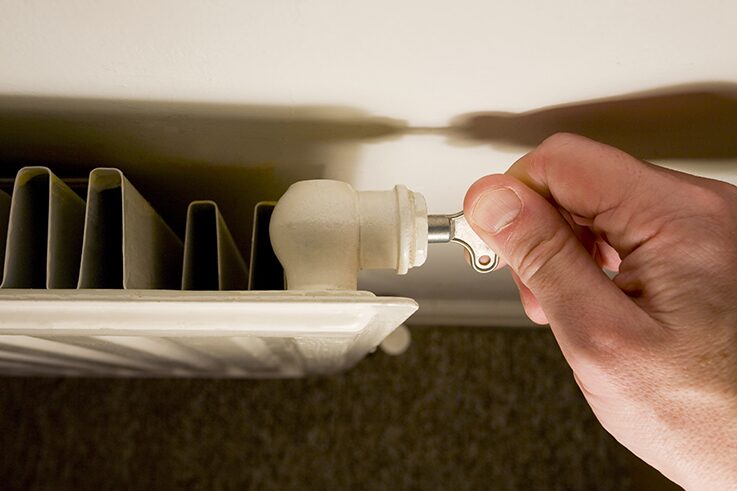
Before changing anything, the system should be working properly. Bleeding radiators removes trapped air, and the central heating must be switched off and the radiators allowed to cool completely first, to avoid scalding24. Radiators should be checked at least once a year to see whether they need bleeding6, and once or twice a year is enough25. Moving furniture away from radiators, turning radiators off in unused rooms and fitting thermostatic valves in the rooms used most all help the system run at a lower temperature26.
The service interval does not change. A gas boiler should be serviced at least once a year, in other words every 12 months6, and the same annual service is recommended for a boiler or heat pump27. In a rented home the landlord should arrange and pay for the service27. A boiler running at a lower flow temperature is not under more stress than one running hot; if anything the reverse.
What it means for energy independence
Lowering the flow temperature is the cheapest efficiency measure available to a gas-heated home. It costs nothing, needs no installer, and takes a few minutes. It reduces the volume of gas the household buys, which reduces exposure to gas prices and to the grid. That is a genuine gain in independence, and it is the only one on offer here.
The dependence that remains is substantial. The household still buys gas from a supplier, still relies on the gas network, and still depends on a boiler with moving parts that will fail. A boiler's current lifespan is around 15 years28, and a replacement is a significant cost to plan for29. Lowering the flow temperature does not change any of that; it makes the years in between cheaper.
There is also a forward-looking constraint. A combi has no cylinder, and a heat pump installation generally wants one, along with radiators sized for a lower flow temperature. Nesta's work on heat pump readiness found that about 7 out of 10 properties would need larger radiators to operate at lower flow temperatures17. Radiators are currently zero-rated for VAT if installed alongside a heat pump17, and bigger radiators are not mandatory but could hugely improve how well a heat pump heats a home30.
The flow temperature setting is therefore best understood as a free improvement to the system a household already has, and as practice for the lower-temperature system it may eventually need. It is not a step towards independence in itself. It is a way of getting more out of the gas boiler while the gas boiler is still there.
Sources30 cited
- Should I turn my boiler's flow temperature down?, Energy Saving Trust, 2026-05-20
- Lowering boiler flow temperature to reduce emissions, Nesta, 2026-09-17
- Boiler flow temperature, Smart Energy GB, 2026-04-22
- Five top tips from Which? to cut your energy bills, Welsh Government, 2026-03-18
- Heat your home efficiently, Citizens Advice, 2022-12-21
- Boiler maintenance, Uswitch, 2026-09-03
- Low temperature heating, NCM PCDB, 2026-09-17
- SAP 10.3 full specification, BRE Group, 2026-01-13
- Danfoss boiler efficiency, CIPHE, 2024-07-26
- Upgrading and replacing your boiler, Centre for Sustainable Energy, 2026-06
- Helping homeowners optimise their boiler flow temperatures, Nesta, 2022-10-10
- Energy saving tips, Welsh Government, 2023-06-21
- Controls guide for air-water heat pump systems, BEAMA, 2024-10
- Reducing your energy usage, Southern Gas Networks, 2026
- Your home retrofit guide, Low Carbon Hub, 2025-10-30
- How to ensure a heat pump runs efficiently, Energy Saving Trust, 2026-05-19
- Should we be making homes heat pump ready?, Nesta, 2026-02-12
- Myson: low temperature heating, CIPHE, 2024-01-25
- Heat pump installation: a step by step guide, Energy Saving Trust, 2026-07-15
- Low energy buildings, CAT, 2025-06-27
- Heat pump fact check, Energy Saving Trust, 2026-07-01
- The impact of boiler optimisation on gas consumption and household comfort, Nesta, 2023-10-12
- Boiler statistics, Uswitch, 2024-01-04
- How to bleed a radiator, Uswitch, 2026-09-04
- Cold weather energy saving: your top tips, Energy Saving Trust, 2025-09-22
- Stay safe, warm and connected this winter, Cadent Gas, 2026-09-20
- Take control of your heating at home, Energy Saving Trust, 2026-09-11
- Heating and hot water, Planning Portal, 2026
- Energy saving house viewing tips, Energy Saving Trust, 2026-05-20
- Underfloor heating, Uswitch, 2025-12-10
 The Full Boilers and Heating GuideWhich boiler suits your home, and when is it worth swapping the old one?
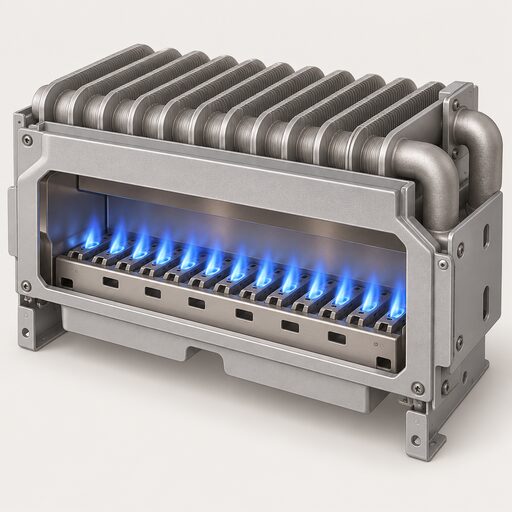 Load Compensation and ModulationA boiler that only switches on and off wastes money, because it runs too hot to work at its best.
 Thermostat and Room TemperaturesWhat temperature should a thermostat be set to, and does it differ from room to room?
 Heating Schedules and SetbackIs it cheaper to leave the heating on low all day, or set it to come on only when you need it?
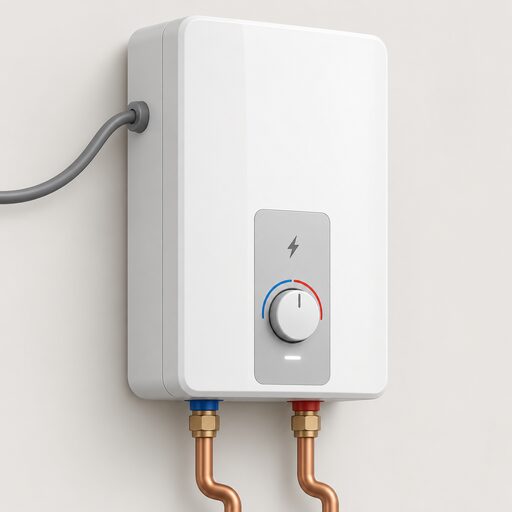 Electric BoilersHow electric flow boilers heat a conventional wet system, what they cost to buy and run, where they suit UK homes, and why point-of-use efficiency near 99% does not translate into cheap heating at the meter.
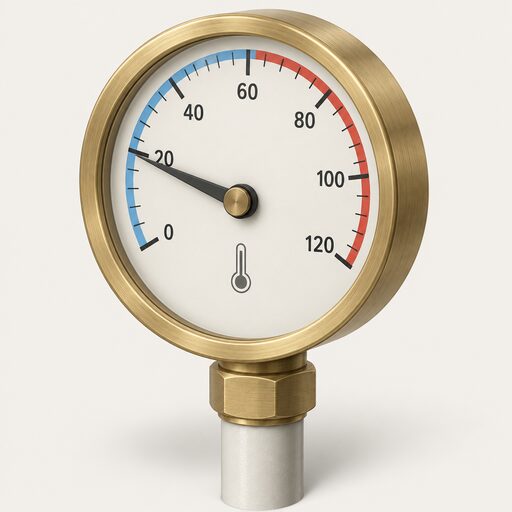 Weather Compensation ControlsDoes your boiler or heat pump run hotter on cold days and cooler when it is mild?