
In this guide
A micro-CHP boiler is a boiler first and a generator second. Its primary function is to run central heating for the home, and it produces heat and hot water in the ordinary way, but it also generates electricity as a by-product while it runs1. Northern Ireland's official guidance describes a CHP unit as gas-fired and states that it generates about 1 kW of electricity while it is running1. Independent guidance from Energy Saving Trust puts a typical domestic system at up to 1 kW of electricity once warmed up, at a typical heat-to-power ratio of about 6:12.
That ratio is the whole story of the technology in one number. For every six units of heat the unit delivers, it delivers roughly one unit of electricity, and only while it is firing. The micro-CHP boiler will need to be on for it to generate any electricity2. A household that wants electricity in July, with the heating off, gets none from this appliance.
The appeal is straightforward: a home that already burns gas for heat can, in principle, generate some of its own electricity from the same fuel, reducing what it draws from the grid. The limits are equally straightforward. The electrical output is small against a household's demand, the unit is heat-led rather than demand-led, and the UK market for domestic units has never grown beyond a niche. This page sets out what the technology does, what the rules allow, and what remains dependent on the grid, a supplier and the gas network.
What a micro-CHP boiler is: heat first, electricity as a by-product
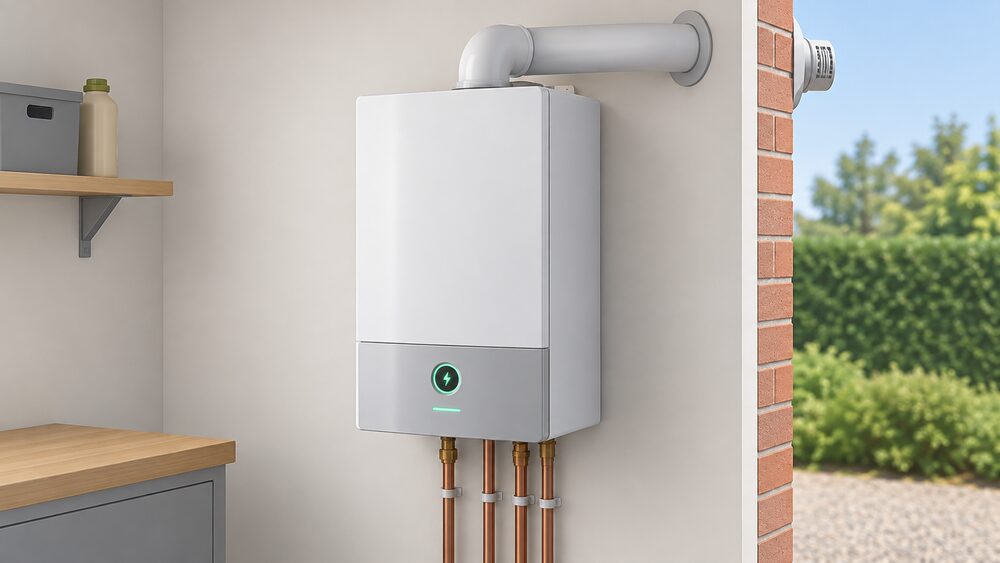
The formal definition of combined heat and power is the simultaneous conversion of primary fuels into mechanical or electrical and thermal energy, meeting certain quality criteria of energy efficiency6. A domestic micro-CHP unit applies that principle at boiler scale. Planning Portal's guidance describes these systems as generating both heat and electricity, offering a highly efficient alternative to traditional boilers7. Northern Ireland's guidance is blunter about the priority: the unit's primary function is to run central heating for the home, and it also generates about 1 kW of electricity while it is running1.
The distinction between heat-led and electricity-led operation matters more than any specification. A micro-CHP unit follows the heat demand of the house. When the thermostat calls for heat, the unit fires and generates electricity alongside the heat. When the house is warm, the unit stops, and so does the generation. Energy Saving Trust states the main output of a micro-CHP system is heat, with some electricity generation, at a typical ratio of about 6:1 for domestic appliances2.
That is a different proposition from a solar panel, which generates whenever there is light regardless of what the house is doing, or from a battery, which stores electricity for when it is wanted. A micro-CHP unit produces electricity as a consequence of heating the house, in a fixed proportion to the heat it delivers. In a cold month, running long hours, it produces a steady trickle of power. In a warm month, it produces nothing.
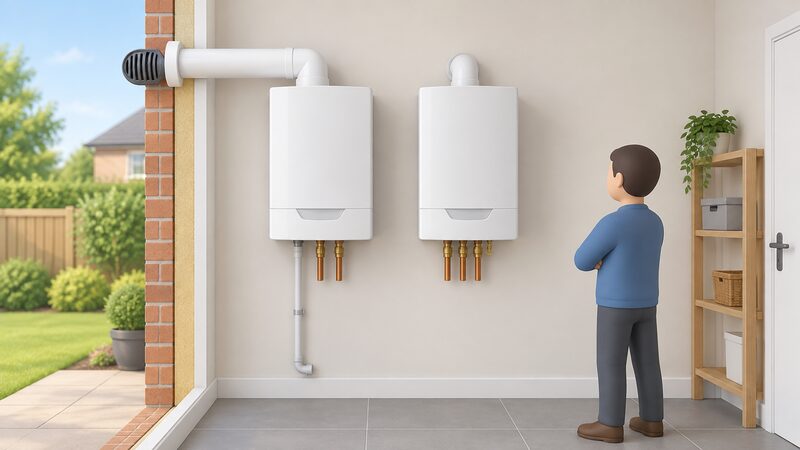
The practical consequence for a household is that micro-CHP is a heating appliance with an electrical side benefit, not an electricity generating asset that happens to heat water. It can be mounted on a wall or can stand on the floor, so it fits the spaces a boiler fits2. Independent guidance states that if you already have a conventional boiler, a micro-CHP unit should be able to replace it, as it is roughly the same size2. What it cannot do is change the fundamental relationship between the household and the gas network: it burns more of the same fuel, more efficiently overall, rather than removing the fuel dependency.
How much electricity a domestic unit produces: up to 1 kW, with a 6:1 heat-to-power ratio
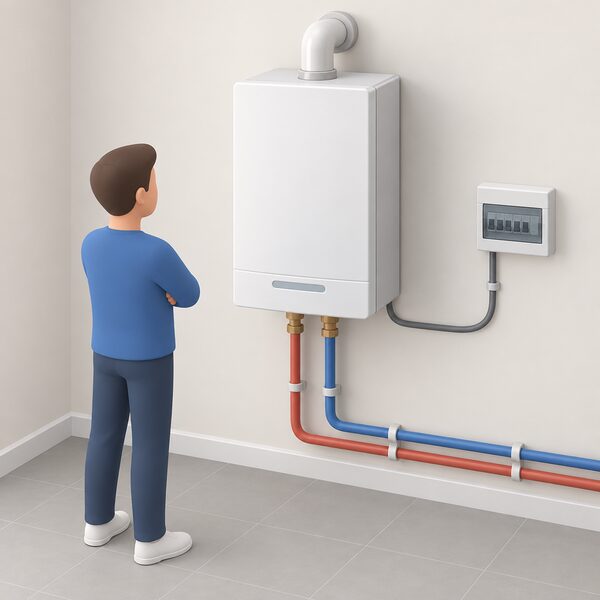
The headline figure is about 1 kW of electrical output while the unit is running, and up to 1 kW once warmed up for a typical domestic system1. Against a medium household electricity consumption of 2,700 kWh a year, used by Ofgem for bill values, that output is meaningful only if the unit runs for long periods8. A unit running at full electrical output for 2,000 hours a year would produce roughly 2,000 kWh, but that is a calculation the sources do not make, and real running hours depend on the house, the weather and the controls.
The 6:1 ratio explains why the electrical output cannot simply be scaled up. To get more electricity from a heat-led unit, the household would have to burn more heat, which means either wasting heat or having a much larger heat demand. Energy Saving Trust states the main output of a micro-CHP system is heat, with some electricity generation, at a typical ratio of about 6:1 for domestic appliances2.
Scheme definitions draw the boundary of what counts as micro-CHP. Ofgem's Feed-in Tariff generator guidance describes fossil fuel-derived Combined Heat and Power (CHP) up to 2 kW or "microCHP"3. The Feed-in Tariff scheme supported micro combined heat and power installations with an electrical capacity of 2 kW or less9. The Smart Export Guarantee, which replaced the export element of the Feed-in Tariff, sets a much higher ceiling: micro-CHP installations must not exceed 50 kW total installed capacity, within an overall 5 MW limit for eligible technologies4.
| Measure | Figure | Source basis |
|---|---|---|
| Electrical output, typical domestic unit | up to 1 kW once warmed up | Energy Saving Trust2 |
| Electrical output, Northern Ireland guidance | about 1 kW while running | nidirect1 |
| Heat-to-power ratio | about 6:1 | Energy Saving Trust2 |
| Micro-CHP capacity definition, Feed-in Tariff | up to 2 kW | Ofgem3 |
| Micro-CHP capacity limit, Smart Export Guarantee | up to 50 kW | Ofgem4 |
The gap between the 2 kW definition and the 50 kW scheme limit reflects different purposes: the first defines the technology class, the second sets the eligibility ceiling for export payments. For a household, the relevant number is the 1 kW of actual output, not the scheme ceiling.
Fuels and where a micro-CHP unit fits: gas, LPG, oil and bio-liquid models
Domestic micro-CHP systems are usually powered by mains gas or liquified petroleum gas (LPG), however some models are now available that run on oil or bio-liquids, including biodiesel2. Northern Ireland's guidance describes a CHP unit as gas-fired1. The fuel determines almost everything else about the installation: the flue, the emissions rules, the servicing regime and the household's exposure to a particular fuel supply chain.
For gas and LPG units, the household remains connected to a piped network or a stored fuel supply, and the micro-CHP unit adds an electrical output to an existing dependency rather than reducing it. For oil and bio-liquid units, the household is already off the gas grid, and the micro-CHP unit generates electricity from a fuel that must be delivered and stored on site. That brings the tank rules with it: oil tank owners are advised to arrange for the boiler and tank to be serviced at least once a year by an OFTEC technician, including any underground pipework10.
Emissions rules apply to the appliance itself. Approved Document L states that a micro-CHP unit's maximum heating plant emission rate must be no greater than the emission rate of a regular boiler using the same fuel11. In other words, the unit is not permitted to be a dirtier way of heating the home than the boiler it replaces, even though it produces electricity as well.
Where a micro-CHP unit fits is largely a question of what it replaces. Independent guidance states that if you already have a conventional boiler, a micro-CHP unit should be able to replace it, as it is roughly the same size, and that units can be mounted on a wall or can stand on the floor2. The physical fit is rarely the constraint. The constraint is whether the household's heat demand is long and steady enough for the electrical output to matter, and whether the fuel supply and flue route suit the unit.
Cost, installation and servicing compared with a conventional boiler
Independent guidance is direct on cost: a micro-CHP system will cost more than a traditional boiler2. No published UK price for a domestic micro-CHP unit appears in the available guidance, so prices are installer-quoted, and no range should be assumed. The comparison that can be made is with the boiler the unit replaces, and the premium buys the electrical output and the associated controls and connections.
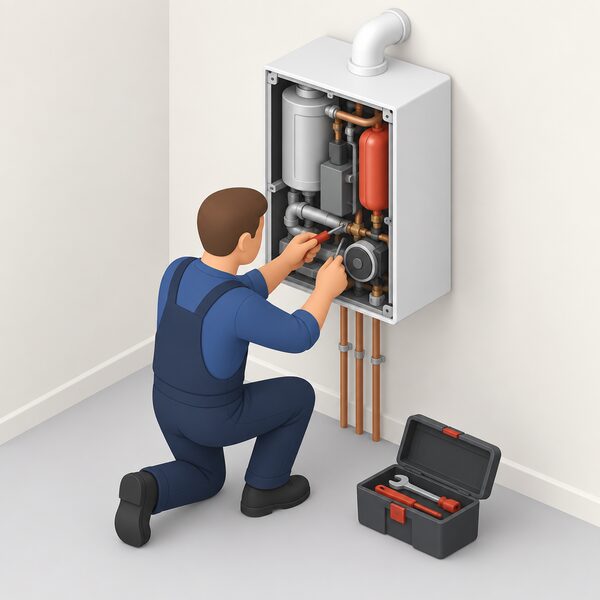
Servicing is the area where micro-CHP is closest to a conventional boiler. Energy Saving Trust states that servicing costs and maintenance should be similar to a standard boiler, although a specialist will be required2. That qualification matters: a household cannot assume its usual boiler engineer will service a micro-CHP unit, and the pool of specialists is smaller than the pool of gas engineers.
For oil-fired equipment, the servicing rule is explicit. Oil tank owners are advised to arrange for the boiler and tank to be serviced at least once a year by an OFTEC technician, including any underground pipework10. That annual requirement applies to the boiler and the tank, not to the micro-CHP function separately, but it sets the servicing rhythm for an oil micro-CHP installation.
Installation also brings electrical work into scope. Cumberland Council's building control guidance lists small scale generators such as micro combined heat and power units (Micro CHP) among electrical work in special locations or installations that is notifiable unless the installer is a member of a Competent Persons Self Certification Scheme12. The same guidance covers kitchens, bathrooms, shower rooms and solar photovoltaic power supply systems12. A micro-CHP installation therefore has two regulatory strands: the heating side, which follows boiler rules, and the electrical side, which follows the notification rules for small scale generators.
On lifespan, micro-CHP units are boilers and are expected to last like boilers. Independent guidance states a boiler typically lasts 10 to 15 years in an average household if it has been regularly serviced and looked after, and that in some cases boilers can go longer than 15 years and even up to 20 years5. A well-maintained boiler can last up to 15 years, with replacement recommended at 1513. A system boiler, suited to larger households, can last 10 to 15 years5. A conventional boiler, suited to larger, older properties, can also last 10 to 15 years if serviced and well-maintained annually5. The micro-CHP unit's additional electrical components are not covered by a separate lifespan figure in the available guidance.
Planning permission and flue rules for micro-CHP
Planning permission is not normally needed when installing a micro-combined heat and power system in a house if the work is all internal14. The same rule is stated for Wales: planning permission is not normally needed when installing a micro-combined heat and power system in a house if the work is all internal15. For boilers and heating generally, planning permission is not normally required for installation or replacement of a boiler, and not normally required if all the work is internal16.
The flue is where the position changes. If the boiler or heating system requires the installation of a flue outside, then planning permission may be needed, though it will normally fall under permitted development16. For micro-CHP specifically, flues on the rear or side elevation of the building are allowed to a maximum of one metre above the highest part of the roof14. In a conservation area or in a World Heritage site the flue should not be fitted on the principal or side elevation if it would be visible from a highway14.
Listed buildings and designated areas need separate consideration. If the building is listed or in a designated area, even if permitted development rights apply, it is advisable to check with the local planning authority before a flue is fitted, and consent is likely to be needed for internal alterations14. Local authority guidance confirms that installing boiler flues will require listed building consent18.
Two further rules apply. If the project also requires an outside building to store fuel or related equipment, the same rules apply to that building as to other extensions and garden outbuildings14. And guidance is based on national rules, but additional local rules may also affect what permissions are needed, and should be checked before applying or starting work17.
Building regulations approval is a separate requirement from planning permission. Building Regulations Approval will be needed for a boiler and flue, and for biomass heating and flue work18. Approved Document J provides guidance on the safe installation and usage of heat producing appliances, including boilers, chimneys and flues, and safe fuel storage installations including solid fuel, liquid oil fuels, and gas-fired heating19. For flue materials, plastic flue systems must be appropriately designated in accordance with BS EN 14471:2005 to suit the appliance, fuel and flue characteristics20. In Wales, the equivalent guidance covers heat producing appliances20. In Northern Ireland, Technical Booklet L sets a minimum flue size of 125 mm diameter for a pellet burner or pellet boiler meeting the Clean Air (Northern Ireland) Order, which may be reduced to no less than 100 mm when permitted by the appliance manufacturer and supported by calculation according to BS EN 13384:121.
Selling surplus electricity back to the grid through the SEG
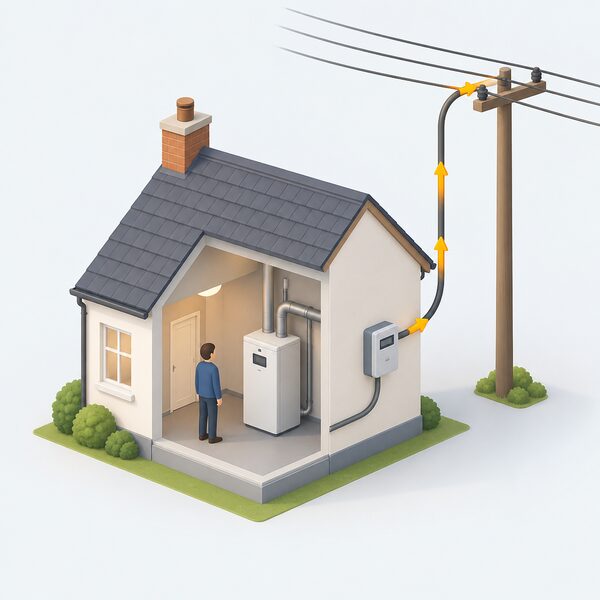
Micro-CHP is an eligible technology under the Smart Export Guarantee. Ofgem's scheme rules list solar photovoltaic (solar PV), wind, micro combined heat and power (micro-CHP), hydro and anaerobic digestion (AD) as eligible technologies4. Generators are paid by their chosen SEG licensee for the electricity which they export back to the National Grid22. The scheme exists so that households can sell surplus electricity to the grid23.
The capacity rules are specific. The total installed capacity of the installation must not exceed 5 MW, and micro-CHP installations must not exceed 50 kW4. Anyone with an installation of one of the eligible technology types up to a capacity of 5 MW, or up to 50 kW for micro-CHP, can participate23. Certification requirements also apply: micro-CHP, solar PV and wind installations up to 50 kW require both installer certification and installation certification4.
In practice, the export income from a domestic micro-CHP unit is limited by the same 6:1 ratio that limits its output. A unit producing up to 1 kW of electricity while running will export only what the house does not use at that moment, and the periods when a heating unit runs are often the periods when the house is drawing power for lighting, cooking and appliances. The scheme's own figures show how small the non-solar share has been: 24.4 GWh was exported in SEG Year 2 across all technologies24. The Feed-in Tariff, the predecessor scheme, supported micro combined heat and power installations with an electrical capacity of 2 kW or less, and its annual report records the scheme's later years9.
For a household, the SEG is a genuine route to payment for exported units, but it is not a route to energy independence. The household remains connected to the grid, remains a customer of a licensed supplier for the electricity it imports, and depends on a SEG licensee to pay for what it exports. The micro-CHP unit reduces the volume imported; it does not remove the connection.
How micro-CHP fits into a home's energy independence
The independence case for micro-CHP rests on generating electricity from the fuel the house already burns for heat. A unit that produces up to 1 kW while running, at a 6:1 heat-to-power ratio, offsets some grid import during the heating season2. That is a real but bounded benefit: the household still buys gas or LPG or oil, still imports electricity when the unit is off, and still relies on the grid for the balance of its supply.
The dependence that remains is worth stating plainly. The unit is gas-fired in the Northern Ireland description, so a gas-connected household remains exposed to gas prices and the gas network1. An LPG household depends on delivered LPG. An oil or bio-liquid household depends on deliveries and on tank storage, with the annual OFTEC servicing requirement that comes with oil equipment10. In every case the household depends on a manufacturer for parts and support, on a specialist for servicing, and on a SEG licensee for any export payment2.
Micro-CHP also sits awkwardly against the direction of UK heating policy. The technology is a fossil fuel appliance that produces electricity as a by-product, and the wider policy context is a move away from fossil fuel boilers. The UK Government has proposed phasing out the sale of most new fossil fuel boilers from 2035, with exemptions for unsuitable homes, and the Heating and Buildings Strategy signalled an ambition to phase out installation of new natural gas boilers beyond 203526. Micro-CHP units that run on gas or oil sit inside that trajectory rather than outside it.
Where micro-CHP does fit the independence picture is as a partial offset rather than a replacement. A household with a long heating season, a suitable flue position and a specialist installer nearby can generate a modest amount of its own electricity from the same fuel it was already buying. A household looking to remove its dependence on gas, or to generate meaningful volumes of electricity, needs a different technology. The comparison with heat pumps and with solar thermal water heating is instructive: those technologies change the fuel or the source, while micro-CHP changes only the efficiency with which the existing fuel is used.
For households weighing the wider picture, the site's guide to home heating and energy independence sets out how the different technologies compare on dependence, and the boilers and home heating pillar covers the conventional options that micro-CHP would replace.
Where micro-CHP stands today: a small share of installed capacity
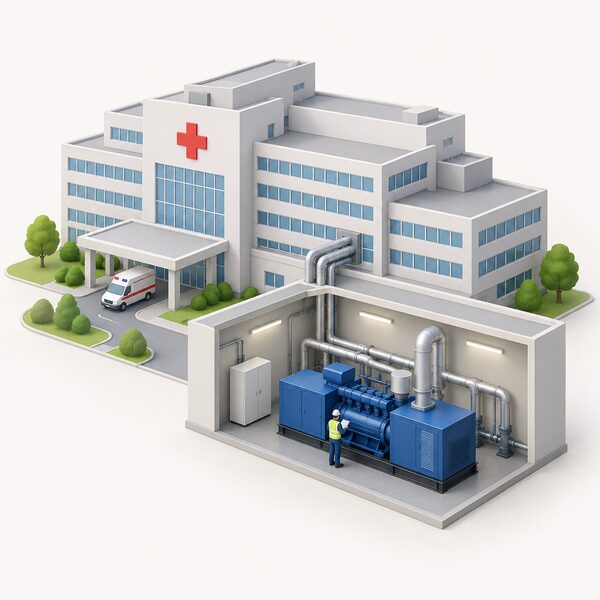
The technology has never moved beyond a niche in UK homes. Scotland's microgeneration strategy described micro CHP as being in a pre-commercial state, with 15,000 fuel cells under test in Japan27. That assessment dates from 2012, and the available guidance does not record a subsequent UK deployment figure for domestic micro-CHP. Northern Ireland's guidance notes that CHP systems have been in use for some time in Northern Ireland in large scale installations such as hospitals and leisure centres, which places the established use of the technology at commercial scale rather than in homes1.
The scheme record tells a similar story. The Feed-in Tariff supported micro combined heat and power installations with an electrical capacity of 2 kW or less, and its annual reports cover the scheme's operation9. The Smart Export Guarantee's annual report for 2022-23 records 24.4 GWh exported in SEG Year 2 across all eligible technologies24. Micro-CHP is one of five eligible technologies, and the export volumes are dominated by solar.
The reasons for the stall are visible in the facts themselves. The electrical output is small, at up to 1 kW, and it is available only while the unit runs1. The unit costs more than a traditional boiler2. Servicing requires a specialist2. The policy direction is away from fossil fuel boilers, with the UK Government proposing to phase out the sale of most new fossil fuel boilers from 203526. And the market has not produced the volume of installations that would bring costs down or widen the specialist base.
For a household considering micro-CHP today, the honest position is that the technology works as described, the rules for installing it are settled, and the export route exists, but the market is thin and the electrical benefit is modest. A household that wants to generate its own electricity has more established options, and a household that wants to reduce its dependence on gas has options that do not involve burning more of it. Micro-CHP remains a legitimate answer to a narrow question: how to get some electricity from a heating fuel, in a house that heats for long hours, without adding a second generating technology.
Sources27 cited
- Micro combined heat and power, nidirect, 2026-09-17
- Micro combined heat and power, Energy Saving Trust, 2022-08-05
- Guidance for Feed-in Tariff generators, Ofgem, 2024-09
- Guidance for SEG licensees, Ofgem, 2019-12
- How long does a boiler last?, Uswitch, 2024-11-13
- Directive 2002/91/EC on the energy performance of buildings, legislation.gov.uk, 2002-12-16
- Sustainable home energy solutions, Planning Portal, 2024-09-02
- Summary of changes to the energy price cap, 1 October to 31 December 2025, Ofgem, 2025-08-27
- Heat in buildings: statistics detailed release, March 2023, HM Government, 2023-03-30
- Check your oil tank, nidirect, 2026-09-17
- Approved Document L, Volume 1: dwellings, HM Government, 2026
- Electrical safety, Cumberland Council, 2026-09-17
- New boiler, Uswitch, 2025-03-21
- Micro combined heat and power: planning permission, Planning Portal, 2026
- Planning permission: micro combined heat and power, Welsh Government, 2026
- Boilers and heating: planning permission, Planning Portal, 2026-09-17
- Boilers and heating, Planning Portal, 2026-09-17
- Permitted development checklist, Bath and North East Somerset Council, 2015-01
- Approved Document J: combustion appliances and fuel storage systems, Planning Portal, 2015-10
- Building regulations guidance, Part J: heat producing appliances, Welsh Government, 2026-09-17
- Technical Booklet L: 2012, Building Control Northern Ireland, 2012
- Smart Export Guarantee: generators, Ofgem, 2026-09-17
- Smart Export Guarantee, Ofgem, 2026-09-17
- Smart Export Guarantee annual report 2022-23, Ofgem, 2023-09-29
- Feed-in Tariffs annual report, scheme year 13, Ofgem, 2023-12
- Heat and Buildings Strategy, HM Government, 2035
- Microgeneration strategy for Scotland, Scottish Government, 2012-06-22
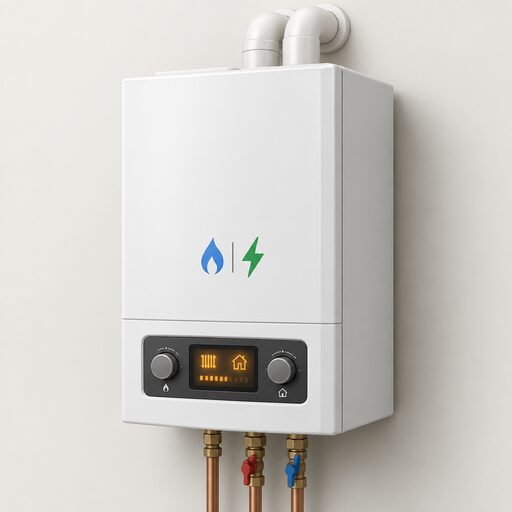 Micro-CHP Cost and OutputDomestic micro-CHP costs more than a conventional boiler and produces roughly 1kW of electricity alongside its heat.
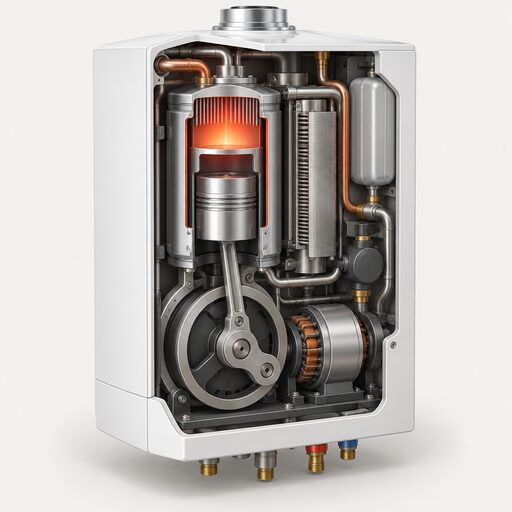 Micro-CHP TypesWhich type of micro-CHP actually gets fitted in UK homes, and how much electricity does one make while it heats your house?
 Micro-CHP Performance TestingHow well a micro-CHP boiler performs in your home decides what you get paid and what you save.
 The Full Wind, Hydro and Micro-CHP GuideCould a small wind turbine or water wheel work at your home, and what about boilers that make their own electricity?
 Heat Batteries and Zero EmissionA heat battery stores cheap overnight electricity as heat, then releases it to warm your home or your hot water.
 Domestic Fuel CellsA fuel cell boiler makes electricity and heat at the same time, usually from mains gas.