

In this guide
Micro-CHP certification in the UK runs through the Microgeneration Certification Scheme, usually shortened to MCS. MCS is an independent certification scheme for microgeneration installation companies and products, and it covers micro-CHP alongside solar panels, heat pumps and small wind turbines1. For a household, the certificate is the document that proves the installation was done by a certified installer using a certified product, and it is the key that opens government incentives and export payments.
The scope is defined by size. MCS covers microgeneration technologies of 50kW or smaller, and for the Feed-in Tariff and the Smart Export Guarantee, micro-CHP installations must not exceed 50kW, with an accredited capacity limit of 2kW for micro-CHP3. PV and wind qualify at a declared net capacity of 50kW or less, while micro CHP qualifies at an electrical capacity of 2kW or less4.
What certification does not do is guarantee that a unit performs as predicted. MCS requires installers to provide a design-stage prediction of system efficiency, not verify actual performance, and it does not require remediation of systems that are underperforming relative to their design5. That distinction sits at the centre of how micro-CHP is rated in the UK, and it shapes what a household can expect from the paperwork.
What micro-CHP is and why certification matters
Micro-CHP, or micro combined heat and power, generates electricity as a by-product of heating a home. It sits in the same family as the other microgeneration technologies that MCS was built to cover, and it is treated as an electricity-generating technology for certification purposes. The Microgeneration Certification Scheme is an industry-led scheme designed to support the development of the microgeneration industry and to drive the quality and reliability of installations1. It has been developed in partnership with Government, experts in the field and other organisations representing consumer interests1.
Certification matters for three practical reasons. First, it is the recognised quality mark: MCS certifies, quality assures and provides consumer protection for microgeneration installations and installers, covering small-scale renewable electricity technologies such as solar photovoltaic panels, biomass, wind, heat pumps and heat products8. Second, it is a condition of the support schemes. The SEG and the government's previous Feed-in Tariff and Renewable Heat Incentive schemes all require the renewable energy product and installer to be certified and to meet MCS standards9. Third, it is a condition of some permitted development rights, where an installation must comply with the MCS Planning Standards or equivalent10.
The scheme's own description of its role is broad. MCS sets and maintains technical standards for installations and products, certifies installers and products against those standards, issues MCS certificates for completed eligible installations, and assists certification bodies to review and address cases and consumer issues relating to installers or products3. For a household weighing up a micro-CHP unit, that combination of product certification, installer certification and a complaints route is the substance behind the badge.
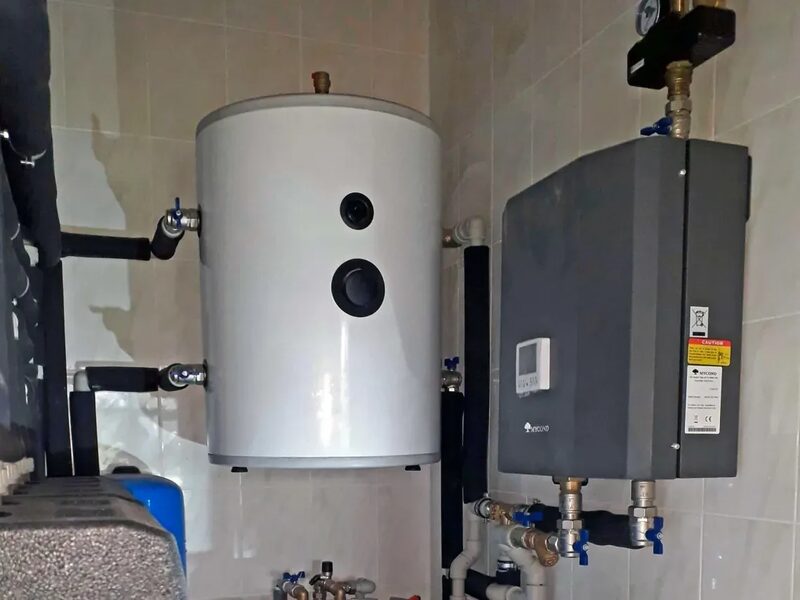
MCS: the UK's certification scheme for microgeneration products and installers

MCS is a certification scheme for microgeneration installation companies and products, aiming to ensure consistent standards and provide confidence to consumers6. It is independent, and it operates through certification bodies rather than directly employing the assessors. All MCS installers are required to be a member of a UKAS approved certification body, which assesses their competence11.
The scheme covers both sides of a job. Certification is offered for products and installer companies, and it includes a code of practice based on The Office of Fair Trading Consumer Code12. That code of practice is what turns a technical standard into a set of obligations about how a household is treated during a sale.
For government schemes, certification is not optional. Installers under UK Government schemes must be TrustMark registered and/or Microgeneration Certification Scheme certified9. The two routes overlap but are not identical, and a household checking an installer for a grant-funded job will usually be looking for both.
The scheme has been revised over time. MCS has created new obligations under the Customer Commitment and now manages consumer complaints centrally13. It also runs back-office checks on installer businesses, including financial performance, director checks, public-domain business information, previous customer complaints and legal proceedings13. Those checks are aimed at the installer's standing rather than at the performance of any individual system.
"MCS is an independent certification scheme for microgeneration installation companies and products."
Micro-CHP units are eligible for MCS certification
Micro-CHP is within the technologies MCS certifies. MCS certification covers installations of small-scale renewables, from solar panels, to heat pumps, to small wind turbines2. Micro-CHP sits in the same small-scale generation category, and the Feed-in Tariff rules treated it explicitly: solar PV and wind installations with a declared net capacity of 50kW or less, and micro CHP installations, must be commissioned by an MCS-certified installer using an MCS-certified product14.
The capacity thresholds differ by technology, and this is where micro-CHP is treated more tightly than PV or wind.
| Technology | Certification threshold | Source |
|---|---|---|
| Micro-CHP | Electrical capacity of 2kW or less for accreditation; installation must not exceed 50kW | 4 |
| Solar PV | Declared net capacity of 50kW or less | 4 |
| Wind | Declared net capacity of 50kW or less | 4 |
| Microgeneration generally | 50kW or smaller | 3 |
The 2kW figure is the accredited capacity limit for micro-CHP, and it appears in the Feed-in Tariff guidance for licensed electricity suppliers4. The 50kW figure is the outer bound for the technology as a whole under the SEG and the closed Feed-in Tariff4. A unit above the accredited limit does not lose its status as microgeneration, but it falls outside the capacity band that the support schemes were written around.
For a household, the practical consequence is that the certificate and the capacity declaration have to line up. A micro-CHP installation that is certified but declared above the relevant threshold will not satisfy the scheme rules that depend on that threshold.
What MCS certification does and does not cover
The most important limit in the whole scheme is the difference between a prediction and a measurement. MCS requires installers to provide a design-stage prediction of system efficiency, not verify actual performance5. The certificate confirms that a certified installer used a certified product and followed the standards. It does not confirm that the system delivers the heat and electricity the estimate suggested.
The same report identifies a second gap. MCS specifies handover documentation but not the quality of verbal explanation, household understanding, structured follow-up or ongoing support5. A household can therefore hold a complete set of documents and still have had little explanation of how the unit is meant to run.
Two further points are worth stating plainly, because they are sometimes assumed to be covered when they are not. Weather compensation is not mandatory under current requirements of the Microgeneration Certification Scheme, and third party non-modulating controls are not prohibited5. Neither is a certification failure.
The certificate itself has a timing rule that matters for incentives. MCS certificates should only be issued once the installation is fully installed and commissioned, and certificates issued before completion will not be accepted14. A certificate dated before the system was finished is not a valid basis for a scheme application.

System performance estimates: the Pre-Sale Information and System Performance Estimate Standard

The performance estimate a household receives before signing is governed by a specific standard. MCS published MCS 037: 2025 version 1.0, covering system performance estimates and pre-sale information for micro CHP installations, issued on 1 January 202516. The Pre-sale Information and System Performance Estimate Standards outline how to carry out system performance estimates and contain the pre-sale information that must be provided to a customer13.
That means the estimate is a required document, produced to a defined method, and given to the customer before the sale rather than after. It is the mechanism by which a household sees a modelled figure for the property in question, based on the property's characteristics rather than on a generic product rating.
The standards have been revised before, and the revisions have followed evidence. The Microgeneration Certification Scheme installation standards for heat pumps were improved and the new version came into force in March 201217. Later that year, Microgeneration Certification Scheme standards for heat pumps and wind turbines were updated in light of the findings18. The pattern is that standards move when field evidence shows they need to.
There is a related standard worth distinguishing. MCS 012 is a test and declare standard, and its function is sometimes misunderstood19. A test and declare standard is not the same as a performance guarantee, and it should not be read as one.
For a household, the estimate is the document to keep. It records what the installer predicted for the property, and it is the reference point if the system later falls short, even though the scheme does not compel remediation on that basis5.
Consumer protection: complaints, remediation and the limits of the scheme
MCS provides a complaints route, and it has been centralised. MCS has created new obligations under the Customer Commitment and now manages consumer complaints centrally13. A household with an issue should contact MCS if the problem concerns the installation process, the installer, or the MCS certificate or product6.
There is a hard deadline. For MCS certified installations, a complaint must be raised no more than two years after the date that the system was commissioned6. That runs from commissioning, so the date on the certificate is the date that matters.
Consumer code membership sits alongside the scheme. MCS installation companies working with domestic customers must be a member of a Consumer Code approved by the Trading Standards Institute20. Installers operating under the redeveloped MCS installer scheme are no longer required to hold a separate consumer code membership to deliver work under the Boiler Upgrade Scheme, while installers not transitioned to that scheme must still hold consumer code membership with one of the other two approved codes of practice, HIES and RECC6.
The limits are as important as the cover. MCS does not require remediation of systems that are underperforming relative to their design5. It also does not cover the quality of verbal explanation, household understanding, structured follow-up or ongoing support5. Wider consumer problems, including faulty goods, poor service, contracts, building work, rogue traders, credit and store cards, counterfeit goods and fraud, sit with the general consumer protection helplines rather than with MCS21.
Government has consulted on changing this landscape. A consultation proposed creating a single end-to-end consumer protection service, accountable to government and responsible for system oversight and performance, as well as providing advice, case management and support for consumers22. That proposal is not the current scheme.
Using MCS certification to access government incentives and the SEG
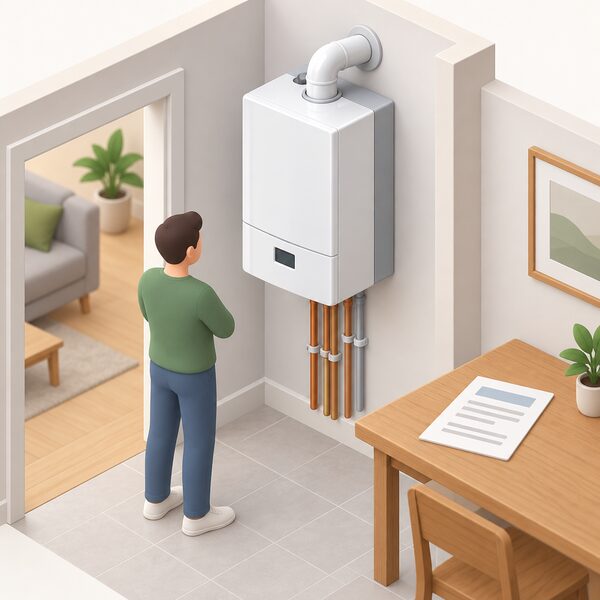
Certification is the gateway to the support schemes. The SEG and the government's previous Feed-in Tariff and Renewable Heat Incentive schemes all require the renewable energy product and installer to be certified and to meet MCS standards9. For solar PV, wind and micro-CHP installations up to 50kW, a Smart Export Guarantee application means presenting a Microgeneration Certification Scheme certificate or equivalent23.
The Feed-in Tariff is closed to new applicants, but its rules still describe how micro-CHP was treated and they remain the reference for existing installations. Generators should demonstrate that the installation and installer are suitably certified, and the guidance sets out that micro-CHP, solar PV and wind qualify at capacities of 50kW or less24. The total installed capacity of an eligible installation must not exceed 5MW, and micro-CHP installations must not exceed 50kW24.
The Boiler Upgrade Scheme operates on the same principle. Installers under UK Government schemes must be TrustMark registered and/or Microgeneration Certification Scheme certified9. MCS also undertakes its own checks on installations completed by MCS-certified installers, separate from Ofgem's audit programme, and MCS may contact a household directly7. Property owners contacted for those checks should aim to respond within seven days6.
For a household, the sequence is straightforward: certified product, certified installer, certificate issued after commissioning, then the scheme application. A certificate issued before the installation was complete will not be accepted14.
Planning permission and flue rules for micro-CHP installations
Planning permission is not normally needed when installing a micro-combined heat and power system in a house if the work is all internal25. Where a flue is involved, the permitted development rules set out where it can go.
| Rule | Requirement | Source |
|---|---|---|
| Flue height | Maximum of one metre above the highest part of the roof, on the rear or side elevation | 25 |
| Conservation areas and World Heritage sites | The flue should not be fitted on the principal or side elevation if it would be visible from a highway | 25 |
| Listed buildings and designated areas | Advisable to check with the local planning authority before a flue is fitted; consent is likely to be needed for internal alterations | 25 |
| Outside buildings for fuel or equipment storage | The same rules apply as to other extensions and garden outbuildings | 25 |
The installer is expected to check compliance. The installer of the equipment should check to ensure that the installation complies with the Microgeneration Certification Scheme planning standards, including requirements on noise1. Those planning standards currently apply only to domestic properties, and the noise control standard for air source heat pumps is available for the United Kingdom10.
The position differs across the nations. In Scotland, air source heat pumps are not subject to prior notification and approval but must comply with MCS Planning Standards or equivalent standards15. Scottish consultation documents state that any ASHP installed under permitted development rights must comply with the Microgeneration Certification Scheme Planning Standards or equivalent, and separately that installations must comply with MCS 020 planning standards or equivalent27. In Wales, micro-combined heat and power is addressed through building regulations, and the equipment, installation and testing must all comply with the relevant standards29.

Checking an installer and contacting MCS
Checking certification is free. MCS provides a free, interactive platform for finding certified installers2. The government-endorsed route is to use the Microgeneration Certification Scheme to find certified installers, and to get at least three quotes from reputable installers30. The scheme ensures that installers adhere to a strict code of conduct30.
MCS can be contacted through its website or by calling 0333 103 81307. For routine post-installation verification carried out on behalf of Ofgem, the number is 0333 103 81987. MCS may make contact by email or phone for a short, routine verification7.
The scheme's relevance extends beyond electricity generation. It is described as an important accreditation for electricity-generating technologies such as solar PV31, and it certifies, quality assures and provides consumer protection across solar photovoltaic panels, biomass, wind, heat pumps and heat products8. Micro-CHP sits within that family, and the same certificate, complaint route and capacity rules apply.
For a household, the certification chain is what makes a micro-CHP installation legible to the grid, to the support schemes and to a complaints process. What it does not do is guarantee the modelled output, and that gap between a design-stage prediction and measured performance is the single most important thing to understand before signing5.
Sources31 cited
- The Microgeneration Certification Scheme, Planning Portal, 2026-09-17
- Stron Renewables: the next generation of heat pump installers, MCS Certified, 2026-08-20
- Boiler Upgrade Scheme guidance for installers V5, Ofgem, 2026-09-17
- Feed-in Tariffs guidance for licensed electricity suppliers V15.0, Ofgem, 2021-12-13
- Consumer protection and the heat pump transition, Department for Energy Security and Net Zero, 2026-05
- Boiler Upgrade Scheme guidance for installers V5, Ofgem, 2026-04-28
- Boiler Upgrade Scheme guidance for property owners V5 draft, Ofgem, 2026-03-25
- ECO4 Flex and GBIS Flex information document, Ceredigion County Council, 2025-11
- Consumer protection for home upgrade schemes, House of Commons Library, 2026-05-13
- Permitted development rights for non-domestic solar panels and domestic air source heat pumps, Scottish Government, 2025-09
- Warm Homes Social Housing Fund wave 3 scheme guidance addendum, Department for Energy Security and Net Zero, 2026-06
- The Microgeneration Certification Scheme, Planning Portal, 2026
- Redeveloped MCS installer scheme: what are the key changes and benefits, NICEIC, 2026-03-09
- Feed-in Tariffs FAQ v5, Ofgem, 2018-12
- Householder permitted development rights guidance, Scottish Government, 2021-04-01
- Micro CHP Pre-Sale Information and System Performance Estimate Standard, MCS Certified, 2025-01-01
- Analysis from the first phase of the Energy Saving Trust heat pump field trial, Department of Energy and Climate Change, 2012-03
- Microgeneration strategy for Scotland, Scottish Government, 2012-06-22
- Fire and solar PV systems literature review, Department for Business, Energy and Industrial Strategy, 2017-07-17
- Who to contact, Ofgem, 2026-09-17
- Consumer protection rights, GOV.UK, 2026-09-17
- Reforming consumer protection for home upgrade schemes, Department for Energy Security and Net Zero, 2026-06-17
- Smart Export Guarantee annual report year 5, Ofgem, 2025-12
- Guidance for SEG licensees, Ofgem, 2019-12
- Micro-combined heat and power: planning permission, Planning Portal, 2026
- Permitted development rights for non-domestic solar panels and domestic air source heat pumps, Scottish Government, 2015-06-22
- Permitted development rights: support and provision for new homes consultation, Scottish Government, 2025-09
- Scottish Government review of permitted development rights phase 3 consultation, Scottish Government, 2023-05-31
- Building regulations: micro combined heat and power, Welsh Government, 2026-09-17
- Solar panels, London Borough of Hammersmith and Fulham, 2026-09-17
- Solar panels, Oxfordshire County Council, 2026-09-17
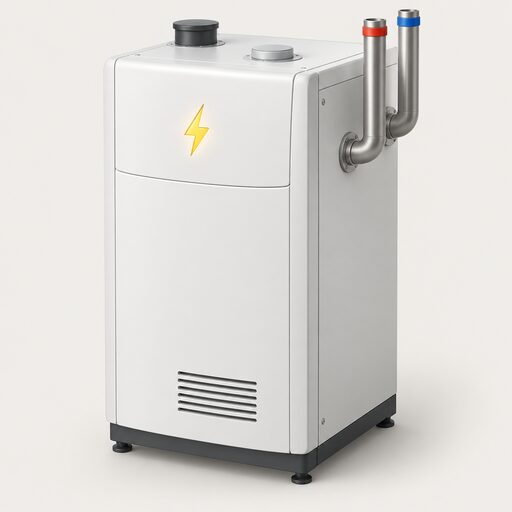 Micro-CHP for HomesA micro-CHP boiler makes electricity while it heats your home, but only when the heating is on.
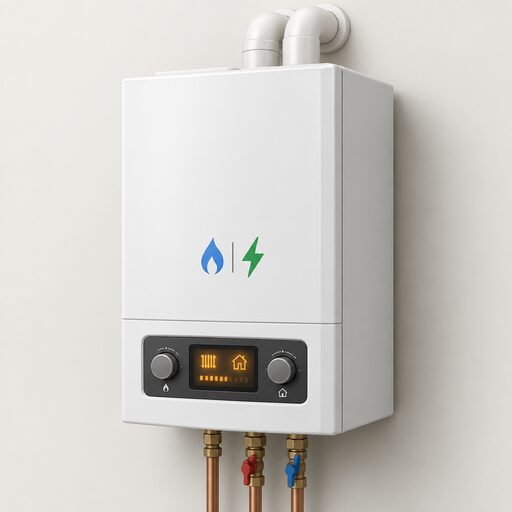 Micro-CHP Cost and OutputDomestic micro-CHP costs more than a conventional boiler and produces roughly 1kW of electricity alongside its heat.
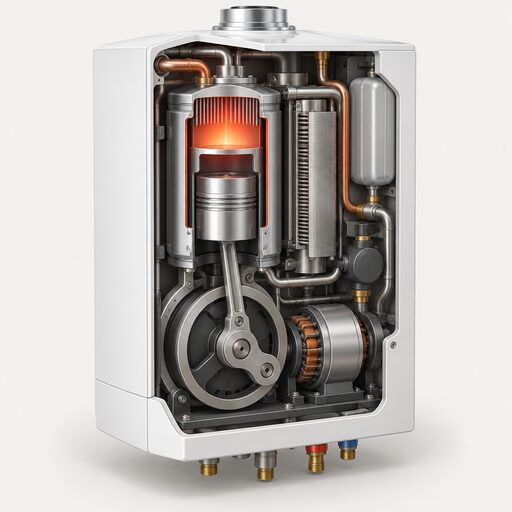 Micro-CHP TypesWhich type of micro-CHP actually gets fitted in UK homes, and how much electricity does one make while it heats your house?
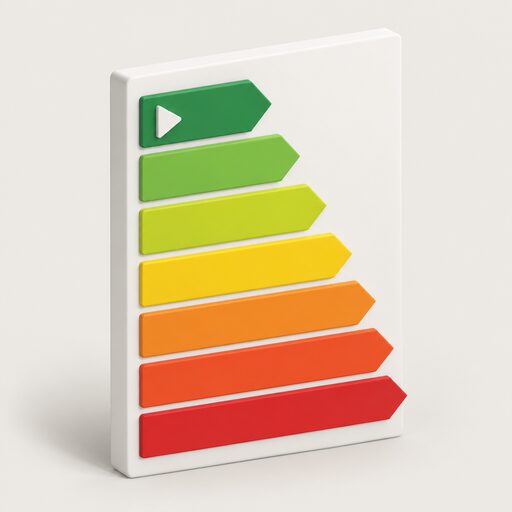 Energy Performance CertificatesAn Energy Performance Certificate rates how energy efficient your home is, from A down to G.
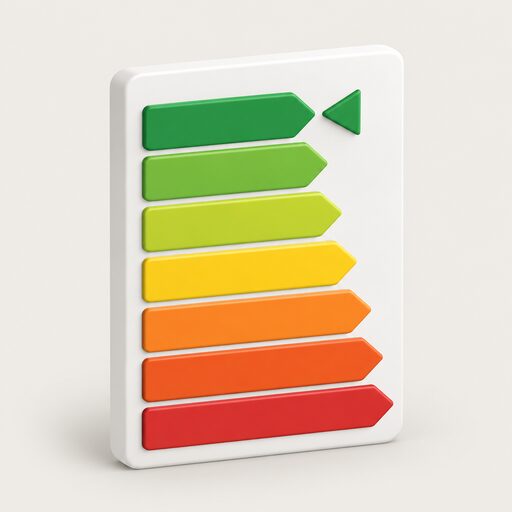 Energy Checks Before BuyingHow energy efficient is the house, and what will it cost to heat?
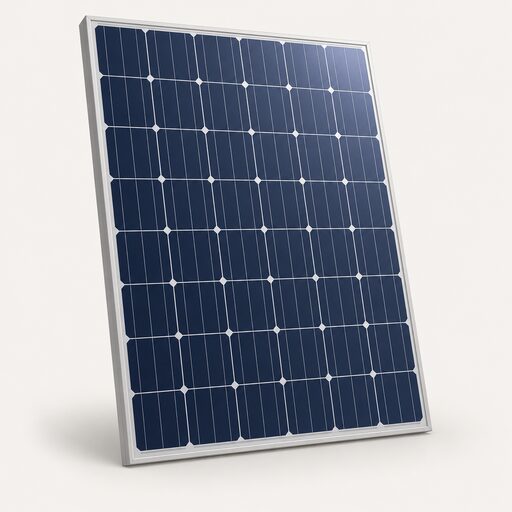 MCS ExplainedMCS is the quality mark for solar panels, heat pumps and other home renewables.