
In this guide
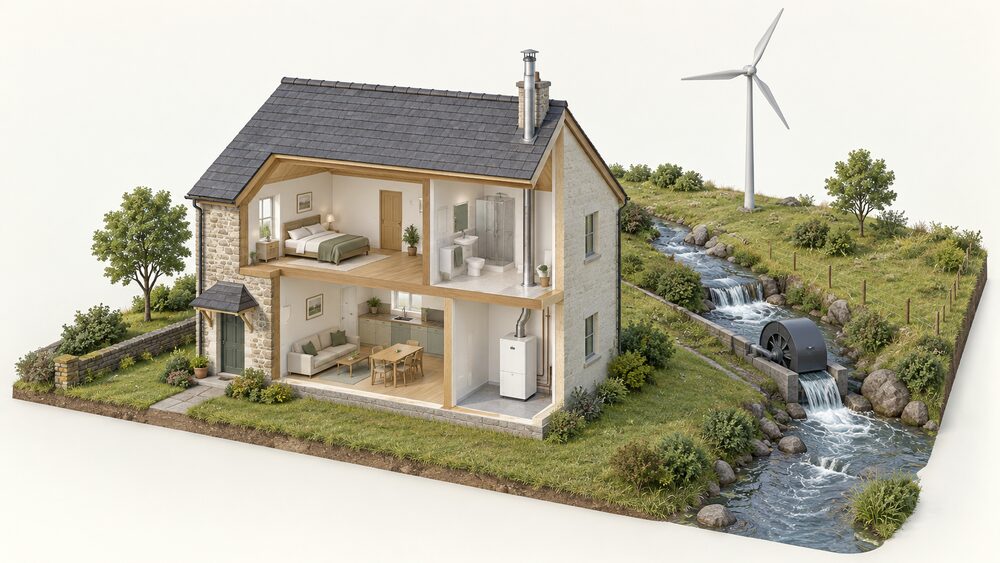
The technology that suits a home is decided by the site, not by preference. Micro hydro needs a watercourse with usable head and flow, and official guidance notes that for houses with no mains connection but with access to a micro hydro site, a good hydro system can generate a steady, more reliable electricity supply than other renewable technologies at a lower cost1. Micro wind needs exposure and space. Micro CHP needs a gas supply and a steady heat demand, because it is a heating appliance first: a domestic unit generates about 1kW of electricity while it is running2.
The legal frame is broad. Microgeneration is defined in legislation as equipment relying wholly or mainly on biomass, biofuels, fuel cells, photovoltaics, water (including waves and tides), wind, solar power, geothermal sources, combined heat and power systems and other sources, with an electricity output not exceeding 50 kilowatts3. Scottish householder guidance gives the same split: up to 50 kilowatts of electricity or 45 kilowatts of thermal energy per section 82(6) of the Energy Act 20044.
What that means for independence is uneven. A hydro scheme on a suitable site can carry a house, including one with no mains connection. A micro CHP unit cannot: it burns gas, so it deepens the household's relationship with the gas network even as it cuts the electricity drawn from the grid. Flats and dense urban sites rarely suit any of these technologies, and the planning rules for flues make them harder still.
Which microgeneration suits your home and site?
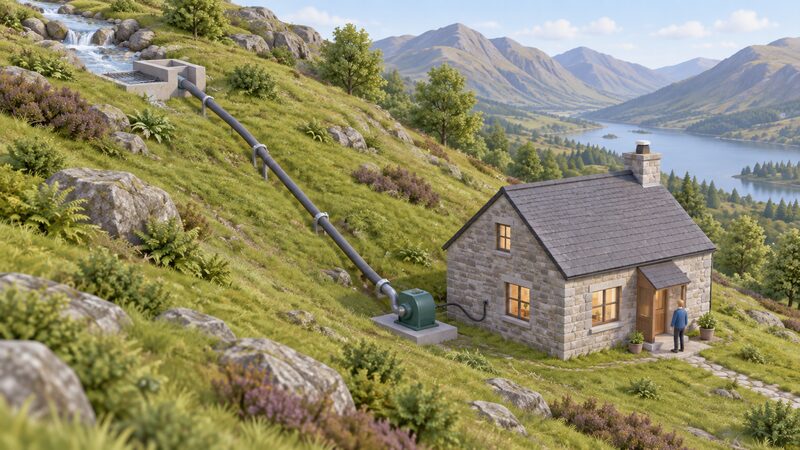
The starting point is the resource the site actually holds. Micro hydro is the most site-specific of all: it needs running water, and the Planning Portal describes micro-hydro systems as ideal for off-grid homes, offering long-term savings despite high initial costs1. That combination, high capital and steady output, is what distinguishes hydro from the other options. It is also the only one of these technologies that can plausibly carry a property with no mains connection at all.
Micro wind sits in the middle. It needs exposure and, in practice, land or a suitable mounting point, and the permitted development regime in Scotland treats free-standing wind turbines as one of the micro-renewables covered by householder rights, alongside solar panels, biomass and air source heat pumps9. The Scottish sustainability appraisal lists the same set: solar panels, biomass, free-standing wind turbines and air source heat pumps10.
Micro CHP is different in kind. It is not a generator that happens to make heat; it is a heat source that happens to make electricity. Official guidance describes these systems as generating both heat and electricity, offering a highly efficient alternative to traditional boilers11. That framing matters for site matching: the home needs a gas supply, a flue position and enough heat demand to keep the unit running, because the electricity is a by-product of running the heating.
Fuel cells appear in the same legal family. The legislation lists fuel cells among the sources that qualify as microgeneration3, and the ECO4 measures table includes Fuel Cell mCHP among the renewable heat sources that count as boiler measures, alongside air to water ASHP, GSHP and biomass boiler12. So a fuel cell micro CHP unit is treated, for scheme purposes, as a heating measure rather than an electricity generator.
For flats and dense urban sites, no technology in this group fits well. There is no watercourse, no meaningful wind exposure, and no flue route that the planning rules make easy. The realistic alternatives for a flat are the measures that do not need a site: insulation, and the demand-side changes that official guidance says could make household energy bills cheaper13.
Micro CHP: heat first, electricity as a by-product
The defining characteristic of micro CHP is the order of its outputs. The Feed-in Tariff annual report defines it as a technology that generates heat and electricity simultaneously, from the same energy source, normally natural gas14. The heat is the product; the electricity is what comes along with it. That is why the technology is assessed as a heating replacement rather than as a generator.
The capacity limits follow from that. For MCS accreditation purposes, micro CHP is defined as having an electrical capacity of 2kW or less6. The Feed-in Tariff scheme supported micro combined heat and power installations with an electrical capacity of 2kW or less15. The Smart Export Guarantee, by contrast, allows micro-CHP up to 50kW, within a technology list that also includes solar PV, wind, hydropower and anaerobic digestion, with installations up to 5 megawatts in capacity7.
The fuel position is narrow. Official guidance states plainly that a CHP unit is gas-fired2. The Feed-in Tariff definition says the same energy source is normally natural gas14. No confirmed domestic micro CHP unit running on another fuel is documented, so no other fuel can be stated as an option. This is the central limit of the technology for energy independence: it reduces the electricity a household buys, but it does not reduce the gas.
There is a wider system argument about what gas should be used for. Written evidence to a parliamentary committee states that using green hydrogen would require 4 to 6 times more renewable energy per unit of heat than a heat pump16. That is a comparison of system efficiency, not a statement about any individual appliance, but it bears directly on how much independence a gas-fired heat source can deliver.
For larger biomass CHP the ratios are different in scale: for each MW of electrical generation around 3MW of heat will be produced, and biomass CHP sizes tend to range from around 1MW to many MW of electrical generation capacity17. Those are not domestic machines, but they show the same heat-led logic at commercial scale.
What a micro CHP unit produces: about 6:1 heat to electricity
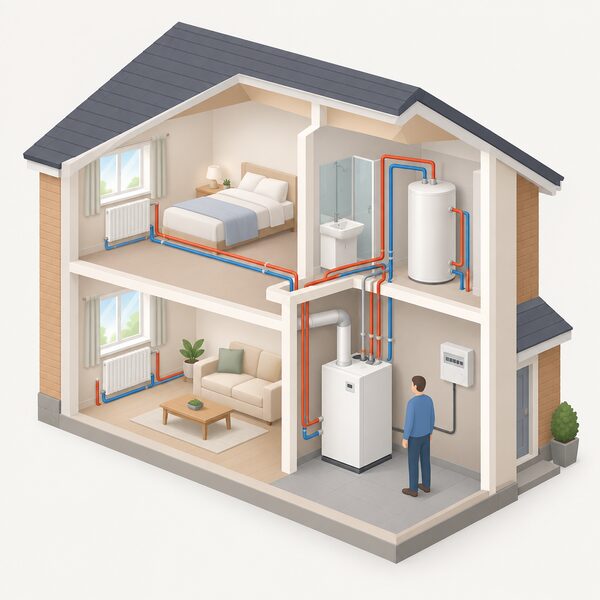
The headline output figure is small. A micro combined heat and power unit generates about 1kW of electricity while it is running2. It also produces heat and hot water8. Set against a domestic heating load, that is a by-product rather than a supply: the unit earns its place by heating the home efficiently, and the electricity is a modest offset against what the house would otherwise import.
The heat-to-electricity ratio implied by these figures is roughly six to one, which is why the technology is described as heat-led. The unit runs when there is heat demand, and the electricity arrives only then. In a well-insulated home with a low heat demand, that means fewer running hours and less electricity; in a leaky home with a long heating season, it means more of both. The output is therefore a function of the building, not just the appliance.
The scheme definitions reinforce the small scale. Micro CHP with an electrical capacity of 2kW or less is the MCS category6, and the Feed-in Tariff supported micro combined heat and power installations with an electrical capacity of 2kW or less15. The Smart Export Guarantee allows micro-CHP up to 50kW7, but that ceiling is a scheme boundary, not a description of what domestic units produce.
For a household thinking about independence, the arithmetic is sobering. A unit making about 1kW while running, for the hours the heating is on, offsets a slice of imported electricity. It does not make the home self-sustaining, and it does not touch the gas bill except by making the heat more efficient. The independence it offers is partial and conditional on the heating running.
"It also generates about 1kW of electricity while it's running."
Micro CHP or a conventional boiler: which fits which home
The fit question turns on heat demand and gas supply. A micro CHP unit is described as offering a highly efficient alternative to traditional boilers11, and it produces heat and hot water8. Where a home has a gas connection, a flue route and a heating season long enough to keep the unit running, it can take the boiler's place. Where the home is well insulated and the heat demand is small, the running hours that generate the electricity are also small, and the case weakens.
The funding rules show how official schemes treat it. The ECO4 measures table lists Fuel Cell mCHP among the renewable heat sources that count as boiler measures, alongside air to water ASHP, GSHP and biomass boiler12. That places fuel cell micro CHP in the same category as heat pumps and biomass for scheme purposes, which is a statement about eligibility rather than about performance.
The wider grant landscape is less welcoming. The Northern Ireland Sustainable Energy Programme excluded solar PV, micro CHP, micro hydro and micro wind, on the basis that they were not considered cost effective at that time18. That is a 2009 position and it applies to one scheme in one jurisdiction, but it shows that micro CHP has not always been treated as a priority measure.
For homes without a gas supply, the comparison changes entirely. A micro CHP unit is gas-fired2, so a property off the gas grid cannot use one without a fuel supply that is not documented. For those homes, the technologies that suit the site are the ones that harvest what is there: water, wind, or the heat in the air and ground that the Scottish consultation lists among micro-renewables10.
Where a household is weighing micro CHP against a heat pump, the system-efficiency evidence is relevant: green hydrogen would require 4 to 6 times more renewable energy per unit of heat than a heat pump16. That does not decide any individual case, but it sets the terms on which gas-fired heat and electric heat compare at system level.
Planning permission and flue rules for micro CHP
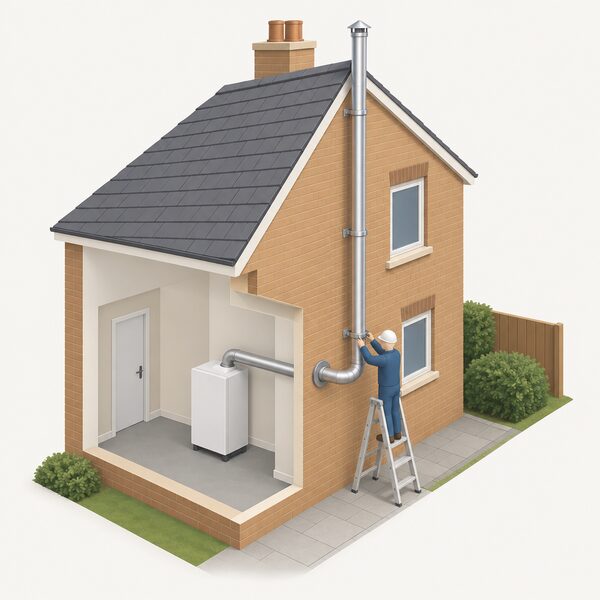
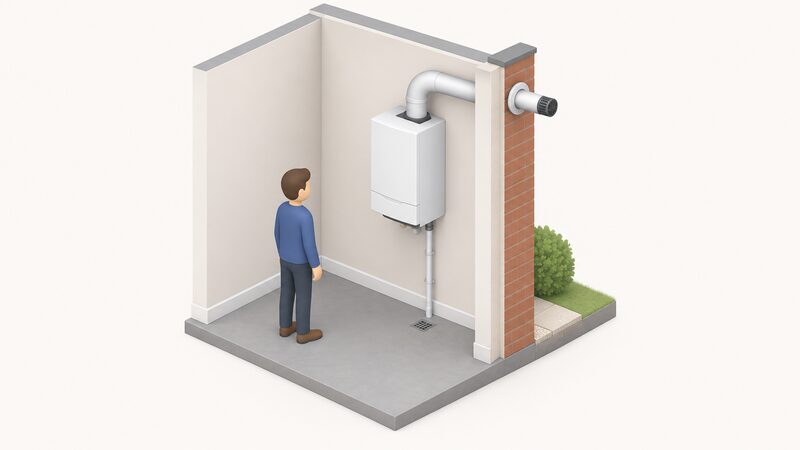
The internal work is straightforward. Planning permission is not normally needed when installing a micro-combined heat and power system in a house if the work is all internal8. The complications begin at the wall.
Flues on the rear or side elevation of the building are allowed to a maximum of one metre above the highest part of the roof8. Fitting, altering or replacing an external flue, chimney, or soil and vent pipe is normally considered to be permitted development, not requiring planning consent, if the conditions outlined are met19. Those conditions are where most of the difficulty sits.
In a conservation area or in a World Heritage site the flue should not be fitted on the principal or side elevation if it would be visible from a highway8. Scottish householder guidance states the rule more firmly: planning permission is required if the flue is to be attached to the principal elevation of a dwellinghouse or flat within a conservation area or World Heritage Site5. The same rule appears in the Scottish circular on householder permitted development rights20.
For listed buildings and designated areas, the advice is consistent across sources: even where permitted development rights apply, it is advisable to check with the local planning authority before a flue is fitted, and consent is likely to be needed for internal alterations8. The Planning Portal gives the same steer for flues, chimneys and vent pipes19. Where a project also needs an outside building to store fuel or related equipment, the same rules apply to that building as to other extensions and garden outbuildings8.
Costs, servicing and what owning one means for energy independence
No published price for a micro CHP unit is available, and no servicing cost. Prices for this class of work are installer-quoted, and no range can be stated from the evidence here. What is documented is the benefit framing: renewable energy technologies help households meet their own energy requirements and reduce their home's carbon dioxide emissions21. That is the general case for microgeneration, and it applies to micro CHP only in part, because the gas input remains.
The independence a micro CHP unit delivers is therefore narrow and specific. It reduces the electricity imported from the grid during the hours the heating runs. It does not reduce the gas drawn from the network, and it does not insulate the household from gas prices or from the supplier relationship. A household that wants to cut its exposure to both fuels needs a technology that harvests an on-site resource, which is why hydro and wind appear so prominently in the site-matching question.
The funding route for microgeneration generally runs through certification. MCS is described as the leading quality assurance organisation for microgeneration, meaning small scale renewable technologies of 50kW or smaller22. For low carbon heating or solar panels to be eligible for the Warm Homes: Social Housing Fund, they must be installed using an MCS approved product, by an MCS certified installer, to the relevant MCS installation standard, except for high heat retention storage heaters covered by PAS 203022. Under the Feed-in Tariff, solar PV and wind with declared net capacity of 50kW or less, and micro-CHP installations, went through the MCS application process managed by FIT licensees14.
For generators more broadly, the guidance is that installations and installers should be suitably certified up to 50kW7. The Feed-in Tariff application route split at the same point: PV or wind with declared net capacity up to and including 50kW, or micro CHP with declared net capacity up to and including 2kW, applied to a FIT licensee, while larger PV and wind up to 5MW, and all anaerobic digestion and hydro up to 5MW, applied to Ofgem for ROO-FIT accreditation23.
The Northern Ireland position is worth stating separately. The Northern Ireland Sustainable Energy Programme excluded solar PV, micro CHP, micro hydro and micro wind as not considered cost effective at that time18. That is a scheme rule from 2009, and it means the funding landscape for these technologies has differed across the UK.
Selling surplus electricity back to the grid through the SEG
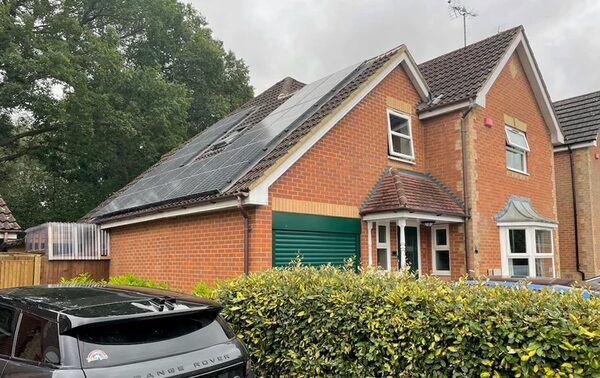
The Smart Export Guarantee is the route for selling surplus electricity. It supports solar photovoltaics, wind, micro-combined heat and power, hydropower and anaerobic digestion, which can be up to 5 megawatts in capacity, or up to 50 kW for micro-CHP, and installations must be located in Great Britain7. The scheme's purpose is to let a household sell surplus solar electricity to the grid24.
For a micro CHP owner, the export route is technically available but practically limited. A unit making about 1kW while running2 is unlikely to be generating much beyond the house's own demand at the moment it runs, and it runs when the heating is on, which is often when the house is drawing most. The SEG is more naturally suited to technologies with output that can exceed demand, such as solar PV in summer or hydro running steadily.
The eligible energy sources under the SEG are solar photovoltaic, wind, hydro, anaerobic digestion and micro-combined heat and power7. The Feed-in Tariff, now closed to new applicants, had a different structure: it supported micro combined heat and power installations with an electrical capacity of 2kW or less15, and its eligible low carbon energy sources were anaerobic digestion, hydro generating station, combined heat and power, solar PV and wind6.
For a household weighing these technologies, the export question is secondary to the site question. A technology that suits the site will produce; one that does not will not, whatever the export tariff. The site characteristics, water, wind, heat demand and gas supply, decide what can be installed at all.
Sources24 cited
- Hydro Electricity, Planning Portal, 2026
- Micro combined heat and power, nidirect, 2026-09-17
- Energy Act 1994, Schedule 8, legislation.gov.uk, 2024-02-01
- Householder permitted development rights guidance, page 8, Scottish Government, 2021-04-01
- Householder permitted development rights guidance, page 11, Scottish Government, 2021-04-01
- FIT Guidance for Licensed Electricity Suppliers V17.1, Ofgem, 2024-09-06
- Guidance for SEG Licensees, Ofgem, 2019-12
- Micro combined heat and power: planning permission, Planning Portal, 2026
- Householder permitted development rights guidance, Scottish Government, 2021-04-01
- Extending permitted development rights: sustainability appraisal, Scottish Government, 2019-11-05
- Sustainable home energy solutions, Planning Portal, 2024-09-02
- ECO4 Measures Table, Ofgem, 2023-08-09
- Demand side response, POST, 2026-06-07
- Feed-in Tariffs Annual Report Scheme Year 13, Ofgem, 2023-12
- HEE Stats Detailed Release, March 2023, Department for Energy Security and Net Zero, 2023-03-30
- Written evidence on hydrogen and heat, UK Parliament, 2023-08
- Energy conservation, Building Control Northern Ireland, 2010-08
- NISEP Framework Document, Utility Regulator Northern Ireland, 2009-09
- Flue, chimney or soil and vent pipe, Planning Portal, 2026-09-17
- Circular 1/2024: householder permitted development rights, Scottish Government, 2024-05-28
- Home energy generation, Planning Portal, 2026
- Warm Homes: Social Housing Fund wave 3 scheme guidance addendum, Department for Energy Security and Net Zero, 2026-06
- FIT FAQ, Ofgem, 2016-07
- Solar panels, London Borough of Hammersmith and Fulham, 2026-09-17
 Technology by Home TypeWhich new energy technologies actually work in a flat, a terrace or a rural home?
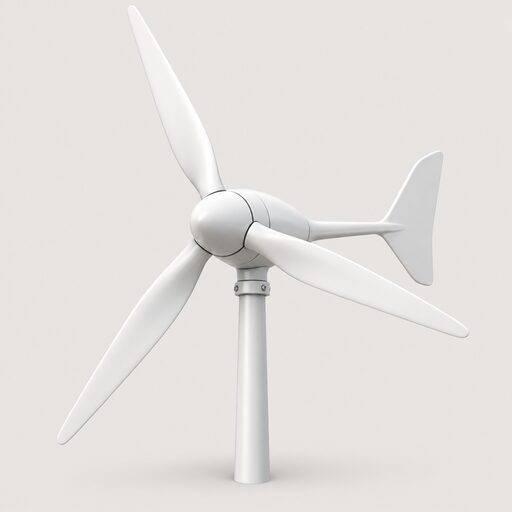 The Full Wind, Hydro and Micro-CHP GuideCould a small wind turbine or water wheel work at your home, and what about boilers that make their own electricity?
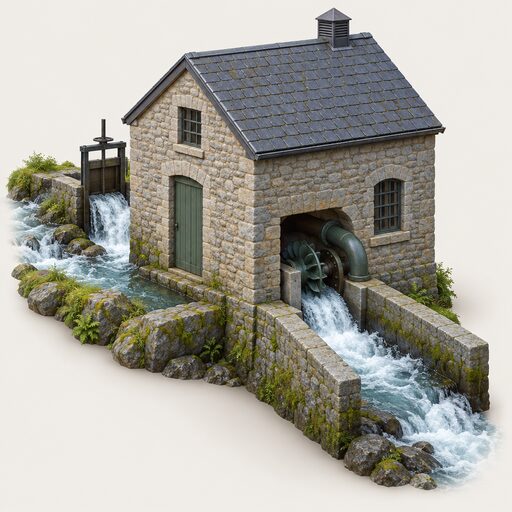 Micro Hydro Power for HomesA stream on your land that flows all year can make steady electricity, day and night, even when there is no sun or wind.
 The Full Your Type of Home GuideLiving in a flat, an old listed house or somewhere off the gas grid changes what energy help you can get and what you are allowed to install.
 Choosing Heating by Home TypeWhat heating can you actually have in a flat, a park home, a listed building or a new build?
 Batteries by Home TypeLooks at how house type, occupancy pattern, electrical supply and available space change what storage can achieve, from flats and terraces to rural and off-grid properties.