In this guide
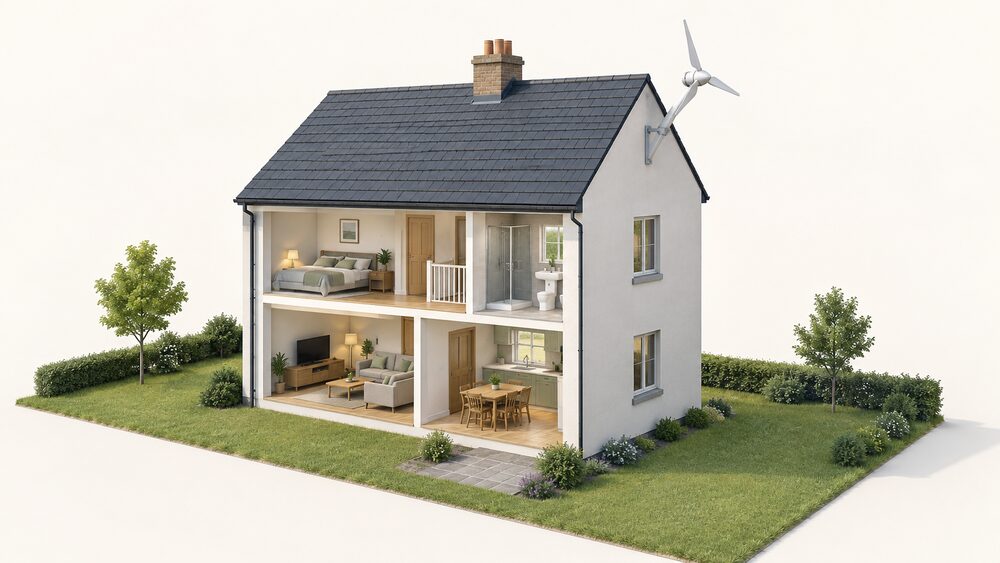
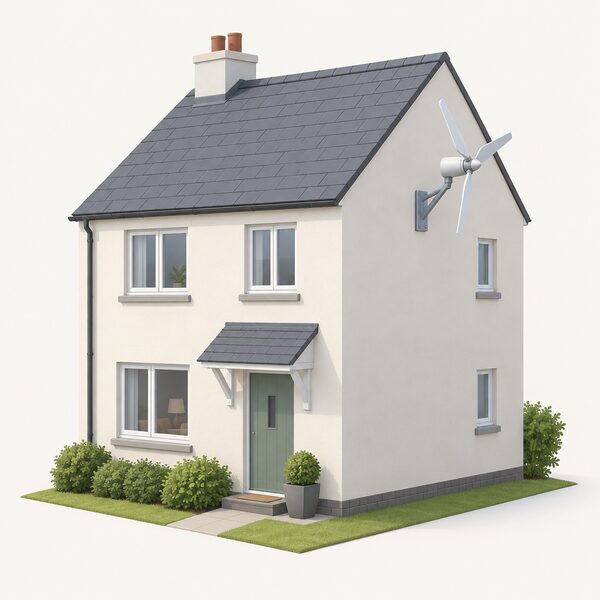
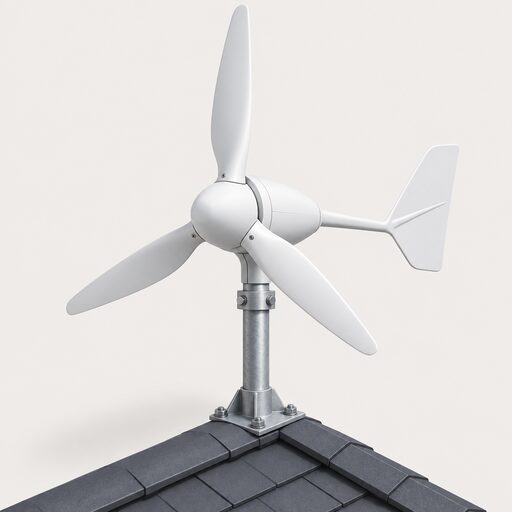
A roof or building-mounted wind turbine is a small machine fixed to the fabric of a house, a gable wall or a detached outbuilding, rather than standing on its own mast. Wind turbines harness the power of moving air to create electricity: the wind forces rotor blades around, driving a turbine that generates electricity1. Building-mounted machines are smaller than pole-mounted ones and can generate around 2 kW of electricity, against around 6 kW for a typical pole-mounted turbine3. Across the domestic small wind market more broadly, building-integrated turbines mounted on gable walls, roof-tops or poles are rated at 1 kW to 6 kW depending on the model4. Whatever the rating, a building-mounted installation must comply with the Microgeneration Certification Scheme Planning Standards (MCS 020) or equivalent standards to be permitted development5.
The trade-off is plain. Building-mounted turbines cost less to install than pole-mounted ones, but they tend to be smaller and less efficient3. In built-up urban areas, studies show them to be far less effective owing to lower wind speeds6, though they can work in urban settings where there is consistent wind7. That is why guidance repeatedly returns to siting: a domestic turbine is a plausible option where a house is in an exposed or isolated location8.
Planning is the other defining feature. Building-mounted turbines are treated separately from stand-alone ones, and the treatment differs across the four nations. In England a building-mounted machine can be permitted development on a detached house or a detached building within the grounds of a house or a block of flats, subject to strict height, swept area, boundary and appearance limits9. In Wales, permitted development rights do not apply to wind turbines mounted on a dwellinghouse or a building within its curtilage at all, so a planning application is required10.
What a roof-mounted turbine is and what it can realistically power
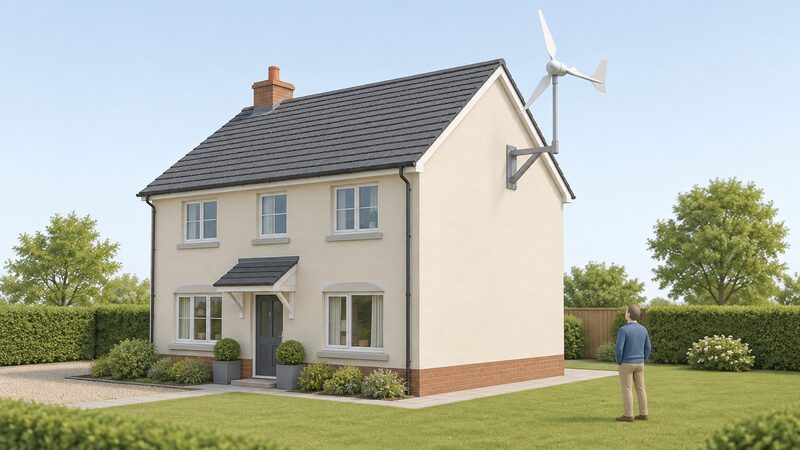
There are two main types of domestic wind turbine in the UK: the freestanding or pole-mounted turbine, and the roof-mounted turbine6. The building-mounted family is wider than the name suggests: these smaller turbines can be installed on rooftops or building sides7, and building-integrated models are mounted on gable walls, roof-tops or poles4. In legislation the distinction is drawn from the other direction: a stand-alone wind turbine means a wind turbine which is not fixed to a building12. Anything fixed to a building falls into the building-mounted class.
Output is what determines what the machine can do. A building-mounted turbine generating around 2 kW sits well below the 2.5 to 6 kW that is described as a typical domestic system size for a home, depending on location and house size4, and well below a pole-mounted machine at around 6 kW3. Small wind turbine units that charge a battery can be as small as around 100 W, with larger units generating between 0.6 and 50 kW for homes and businesses6. Pole-mounted turbines typically produce 3 to 15 kWh of electricity7. The practical point is that a roof-mounted machine occupies the bottom of the domestic range, so it is better understood as a contribution to a household's electricity use than as a means of covering it, and the rest of the demand continues to come from the grid and a supplier.
In practice a 2 kW roof machine is a contribution to a household's consumption rather than a replacement for the supply. It cannot be relied on to carry a house through a still week, and unless it is paired with battery storage and an off-grid controller, the grid connection remains the backstop. The benefits claimed for domestic turbines are free electricity, electricity storage and cutting or eliminating a home's carbon footprint6, but the first of those depends entirely on the wind resource at the specific site, not on the rating on the nameplate. For a fuller treatment of sizing, see wind turbine output and sizing and wind turbine siting and wind speed.
Structure, roof loading and why mounting matters

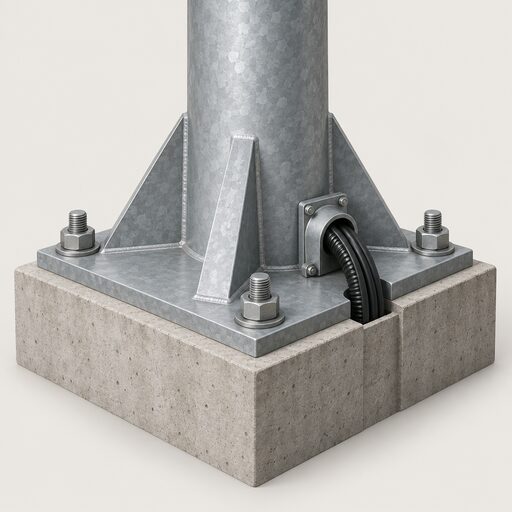
A pitched roof is a load-carrying structure with a defined job. The timber elements form the overall pitch, span across the building, support the tiles or covering on top, and transfer wind and snow loads down to the walls13. Rafters form the main pitch of the roof and support the tiles and battens, and the ridge board forms the apex where rafters are fixed on both sides13. A turbine bolted to that structure applies a rotating, fluctuating load that the roof was not designed around, and it does so at the point furthest from the walls that carry the load.
The materials used to cover a roof should be durable and capable of resisting the elements of the weather14. Any penetration of the covering for a mounting bracket therefore has to be made good. The comparable standard for roof-mounted solar, MCS 012, covers wind uplift, fire retardance and rain ingress for pitched roof mountings and modules15, which indicates the three failure routes that any roof fixing has to address: the fixing pulling out under uplift, fire performance of the assembly, and water getting in at the penetration.
Vibration and transmitted noise are the practical complaint with building-mounted machines, because a rigid fixing conducts rotor vibration into the building fabric rather than dissipating it into a mast and the ground. The planning rules recognise the amenity dimension rather than the structural one: the turbine must be sited, so far as practicable, to minimise its effect on the external appearance of the building and its effect on the amenity of the area9. Structural adequacy is handled separately from planning. Related reading: wind turbine noise and neighbours and do I need building regulations approval for a wind turbine.
Permitted development in England: who qualifies
Permitted development rights for building-mounted wind turbines in England apply only to installations on detached houses, which excludes blocks of flats, and to other detached buildings within the boundaries of a house or block of flats9. So a turbine on a semi-detached or terraced house is outside the class, as is a turbine on the flats themselves. Where flats are involved, the block must consist wholly of flats and should not, for example, also contain commercial premises9.
Two further conditions sit alongside the dimensional limits. The installation must not be sited on safeguarded land, and development is permitted only where the installation complies with the Microgeneration Certification Scheme Planning Standards (MCS 020) or equivalent standards9. That last condition is the one most often missed: permitted development status is conditional on the product and installation meeting a named standard, not merely on the measurements. See MCS certification for wind and hydro installations and do I need an MCS certified installer for permitted development wind.
Where the rights do not run, the route is an application. Under permitted development rights it is in some cases possible to install domestic wind turbines without an application for planning permission, so long as specified limits and conditions are met; in other cases an application to the local authority is needed to add a domestic turbine to a house or the grounds surrounding it16.
The key measurements: height, swept area, clearance and boundary
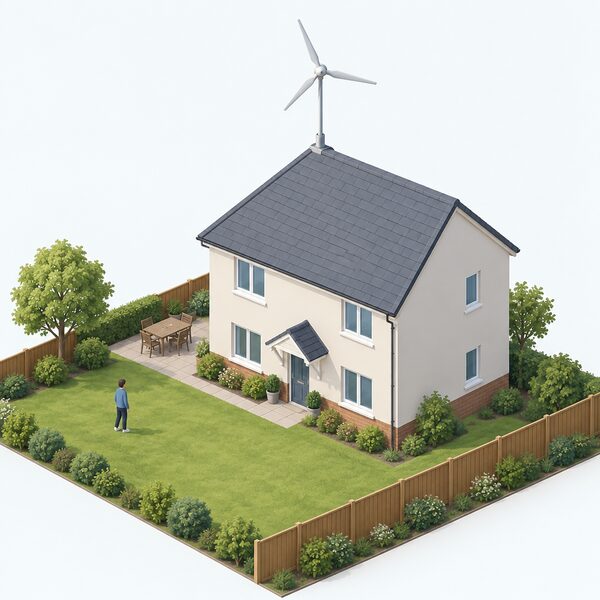
The English limits for a building-mounted turbine come from Class H of the 2015 order. Development is not permitted where the highest part of the turbine including blades would protrude more than 3 metres above the highest part of the roof, excluding the chimney, or exceed 15 metres in height, whichever is the lesser; where the swept area of any blade would exceed 3.8 square metres; where any part including blades would be within 5 metres of any boundary of the curtilage; or where the distance between ground level and the lowest part of any blade would be less than 5 metres17.
The stand-alone class differs on several of those points, which is why the two must not be read across to each other.
| Limit | Building-mounted, England | Stand-alone, England | Detached dwellinghouse, Scotland |
|---|---|---|---|
| Height | 3 m above highest part of roof (excluding chimney) or 15 m overall, whichever is lesser17 | Highest part not to exceed 11.1 m18 | Blade tip height not to exceed 15 m19 |
| Swept area per blade | 3.8 sq m17 | 3.8 sq m18 | Not more than 4 sq m20 |
| Lowest blade above ground | Not less than 5 m9 | Not less than 5 m18 | At least 5 m19 |
| Boundary | No part within 5 m of any boundary9 | Overall height including blades plus 10% of that height from any point on the boundary18 | No part less than 5 m from the curtilage boundary21 |
The five metre blade clearance is the measurement that most often rules out a low bungalow or a single-storey outbuilding, because it is taken from ground level, not from the roof. The five metre boundary rule for building-mounted machines is absolute and unrelated to turbine size, whereas the stand-alone setback scales with the machine: a taller turbine must stand proportionately further back. Scotland consulted on the five metre figure for turbines attached to a dwelling and recorded views that it was both too low and too high22, which is a reasonable indication that the number is a policy compromise rather than a technical threshold. More detail at how far must a wind turbine be from my property boundary.
Materials, appearance and the duty to remove
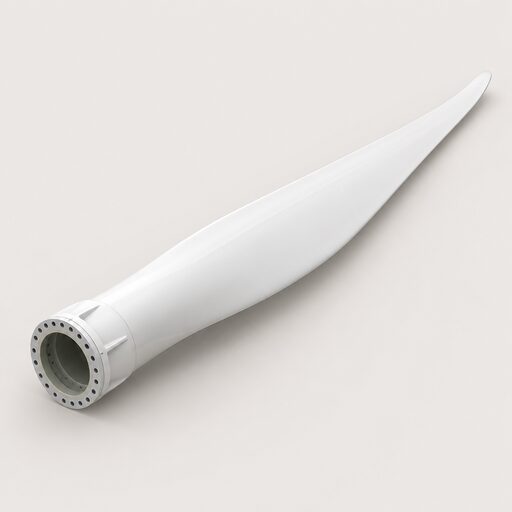
Three conditions attach to the permitted development right in England, and they bind for the life of the installation rather than only at the point of fitting. The turbine must use non-reflective materials on its blades; it must be sited, so far as practicable, to minimise its effect on the external appearance of the building and its effect on the amenity of the area; and it must be removed as soon as reasonably practicable when no longer needed for microgeneration9. The legislation puts the materials condition as a requirement that "the blades of the wind turbine is made of non-reflective materials"17.
No colour is specified. The non-reflective requirement is about glint and flicker from a spinning surface, which is why it applies to the blades specifically rather than to the nacelle or mounting. Blade materials in the small wind market vary: one UK-available machine, the Leading Edge LE-300 Standard, uses glass reinforced, UV resistant nylon blades23, while the LE-600 is manufactured from hard anodised and powder coated high quality aluminium alloys and stainless steel with sealed for life bearings, so no greasing or maintenance is required, the maker states24.
The removal condition matters for a household thinking about independence over decades. A turbine that has stopped working, or whose maker has gone, is not simply an inert fixture: the permission under which it was installed is conditional on its removal once it is no longer serving microgeneration. Several UK small wind brands have failed, and owners of those machines face exactly this position; see Windsave roof turbines, Proven Energy wind turbines and Evance wind turbines.
Listed buildings, conservation areas and designated land
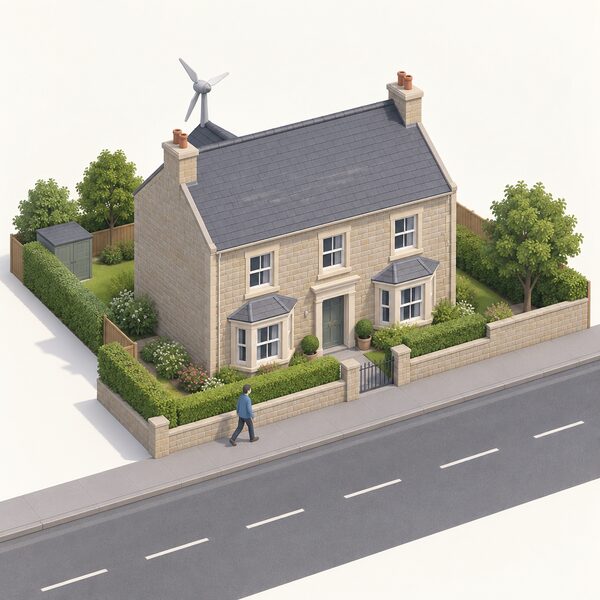
Permitted development rights for building-mounted turbines do not apply to a turbine within the curtilage of a listed building, within a site designated as a scheduled monument, or on designated land other than conservation areas. Designated land includes national parks and the Broads, Areas of Outstanding Natural Beauty, and World Heritage Sites9.
Conservation areas are the exception that is handled by a siting rule rather than an outright exclusion. In a conservation area an installation is not permitted if the building-mounted turbine is on a wall or roof slope which fronts a highway9. The legislation puts the same point as a prohibition where the turbine would be installed on a wall or roof slope of the detached dwellinghouse, or of a building within its curtilage, which fronts a highway17. The effect is that a rear-facing slope may still qualify while a street-facing one will not.
The stand-alone class handles conservation areas differently again: development is not permitted where the turbine would be installed so that it is nearer to any highway bounding the curtilage than the part of the house or block of flats nearest to that highway18, and Welsh guidance frames the conservation area test in terms of whether the stand-alone turbine would be visible from a highway which bounds the curtilage10. In Scotland, free-standing turbines are excluded from permitted development within a conservation area, a World Heritage Site, a site of special scientific interest, a site of archaeological interest, or within the curtilage of a listed building19. Listed building consent is a separate consent from planning permission: see listed building consent for microgeneration.
The first-installation rule and the clash with air source heat pumps
This is the condition that catches the most households, because it links two technologies that have nothing else in common. Only the first installation of any wind turbine is permitted development, and only if there is no existing air source heat pump at the property; additional wind turbines or air source heat pumps at the same property require an application for planning permission9.
The restriction is symmetrical. A heat pump's permitted development right under Class G is not available where a wind turbine is installed on the same building or within the curtilage of the dwellinghouse or block of flats, nor where a stand-alone wind turbine is installed within the curtilage25. Official guidance states it bluntly:
"You can't install an air source heat pump if you already have a wind turbine."
Welsh guidance is to the same effect: an air source heat pump cannot be installed under permitted development where a standalone wind turbine is already installed within the curtilage of the home27. Development is permitted only if there is no existing wind turbine on a building or within the curtilage of that property28.
A few related points on heat pumps, since the two often get planned together:
- Only the first installation of an air source heat pump is permitted development on a house which is not detached or on a block of flats; for detached houses, the first two are permitted development28.
- An air source heat pump must not be installed on a roof29, and one on a pitched roof would require planning permission30.
- On a flat roof the unit must not be sited within one metre of the external edge of that roof27.
- Within a conservation area or World Heritage Site, a heat pump must not be installed on a wall or roof that fronts a highway31.
For a household, the practical consequence is sequencing. Installing a turbine first closes off the heat pump's permitted development route, and installing a heat pump first closes off the turbine's. Neither becomes impossible, but the second one becomes a planning application. The two technologies also serve different parts of the energy bill, so the choice is not like-for-like. See micro-CHP vs an air source heat pump for a related comparison.
Wales, Scotland and Northern Ireland: where the rules diverge
Planning Portal guidance on turbines and on roof work relates to the planning regime for England, and states that the policy in Wales may differ9. It does differ, and on the central point.
Wales. Permitted development rights do not apply to wind turbines mounted on a dwellinghouse or building within the curtilage of the dwellinghouse, and it will be necessary to make a planning application to the local planning authority to install a building-mounted turbine10. Stand-alone turbines can be permitted development in Wales provided all limits and conditions are met, with the highest part not exceeding 11.1 metres, blade clearance of not less than five metres, and a boundary setback of the overall height including blades plus 10 per cent of that height10. Welsh guidance gives a maximum swept area of 9.6 square metres for a stand-alone turbine10, against the 3.8 square metres in the English stand-alone guidance18; the documents differ and the figures should be read against the regime each applies to.
Scotland. Class 6HC allows the installation, alteration or replacement of a wind turbine on a detached dwellinghouse, with a swept area of not more than 4 square metres20, and no part of the turbine less than 5 metres from the boundary of the curtilage of the dwellinghouse19. Free-standing turbines in Scotland must have a blade tip height not exceeding 15 metres, a lowest blade at least 5 metres from ground level, and must stand not less than 110 per cent of the blade tip height from the curtilage of another dwelling19.
Northern Ireland. For small-scale wind turbines, planning approval is needed4.
VAT also splits along a national line: wind turbines qualify for a lower rate of VAT in Great Britain only33. Separately, the reduced rate was withdrawn from the installation of wind turbines in an earlier change34, so the VAT position should be checked as at the date of any quotation. Nation-specific detail sits at wind turbine planning permission in England, Scotland, Wales and Northern Ireland.
Mounting kits and what a roof machine costs
Mounting hardware is a small fraction of the total. One UK maker lists wind power mounting kits over a price range of £29.48 through £1,405.3611, covering brackets, poles, tower components and joiners rather than any generating equipment.
| Item | Figure | Basis |
|---|---|---|
| Wind power mounting kits | £29.48 to £1,405.3611 | UK maker listing, read August 2026 |
| Roof-mounted 1 kW system | £2,000 to £4,00035 | Reported range, 2026 |
| Roof-mounted turbine, 1 kW system | Up to £3,00036 | Distributor guidance, August 2026 |
| Small wind, turbine plus tower and installation | £2,500 to £6,000 per rated kW37 | Independent guidance, June 2025 |
| 6 kW pole-mounted system, equipment and installation | Around £35,0003 | Energy Saving Trust, May 2026 |
| 6 kW pole-mounted system | Around £31,00038 | Network operator guidance, 2026 |
| Annual maintenance | £100 to £200, by system size7 | Independent guidance, August 2026 |
| Inverter replacement, larger system | £1,000 to £2,0007 | Independent guidance, August 2026 |
The two pole-mounted figures for the same 6 kW specification, around £35,000 and around £31,000, come from different documents and disagree. Both are given here rather than averaged. The gap between a roof machine at a few thousand pounds and a pole machine at tens of thousands is real, and it reflects the mast, groundworks and larger rotor, but so does the gap in output: around 2 kW against around 6 kW3. Installed prices for a specific site are installer-quoted. Fuller treatment at domestic wind turbine cost and pole-mounted vs roof-mounted wind turbines.
How a roof turbine compares with the alternatives on a house
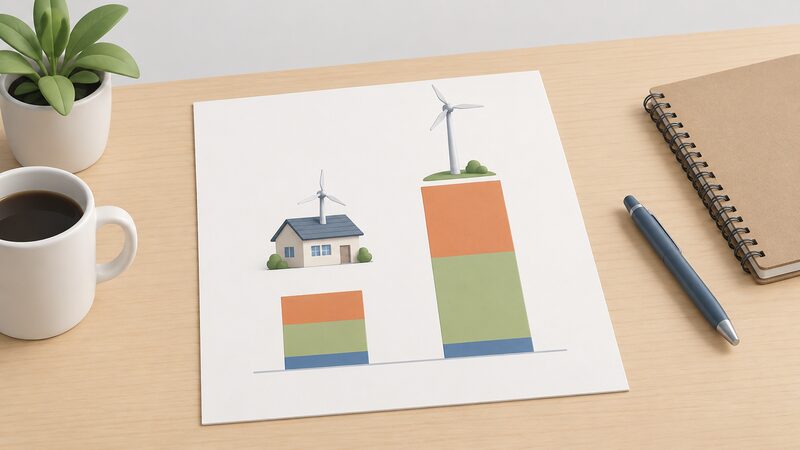
Set against roof-mounted solar, the arithmetic is unfavourable in most settings. A typical domestic rooftop solar system produces around 3.5 kilowatts at its peak and cost £6,100 in 202639, and rooftop panels are reported generating 3,800 kWh to 4,350 kWh a year40. A building-mounted turbine at around 2 kW3 faces the additional problem that in built-up areas such machines are far less effective owing to lower wind speeds6. Solar's resource on a roof is predictable and mapped; wind's on the same roof is disturbed by the building itself and by everything around it.
Where a roof turbine has a case is the same case that domestic wind has generally: an exposed or isolated location, where guidance says a domestic turbine could be a suitable renewable energy option8. Even then the choice between roof and mast is usually settled by the mast, because free-standing installation puts the rotor into cleaner air. There are two types of installation to consider, roof mounted and free-standing38, and roof mounting buys a lower capital cost at the price of efficiency3.
On independence, the honest position is limited. A 2 kW roof machine reduces imported units when the wind blows and does nothing when it does not. Unless the household adds storage and an off-grid controller, the grid supplier remains the source of firm power, and the export side still depends on a supplier arrangement. The equipment itself carries a dependence on a manufacturer for blades, bearings and inverters, and the small wind sector in the UK has a record of companies failing. Where a turbine is combined with a heat pump ambition, the permitted development interaction described above constrains the order of work. Wider comparisons: micro wind vs solar PV for an off-grid home, which microgeneration suits your home and site and the microgeneration overview.
Sources40 cited
- Advice on renewable technologies, Home Energy Scotland, 2026-09-20
- Are home renewables right for you?, Energy Saving Trust, 2025-12-11
- Wind turbines, Energy Saving Trust, 2026-05-20
- Wind, nidirect, 2026-05-18
- How does wind energy work, Power NI, 2026-04-09
- Wind turbines for the home, Uswitch, 2026-01-06
- Small wind turbines, MCS, 2026-08-18
- Generating renewable electricity, Energy Saving Trust, 2025-12-11
- Planning permission for building-mounted wind turbines, Planning Portal, 2026-09-17
- Planning permission: wind turbines, Welsh Government, 2026-09-17
- Wind power mounting kits, Marlec, 2026-08-07
- Town and Country Planning (General Permitted Development) (Wales) Order 2012, article 2, legislation.gov.uk, 2012
- Building regulations: roof, Welsh Government, 2026-09-17
- Constructing a new roof, Welsh Government, 2026-09-17
- Fire and solar PV systems: literature review, GOV.UK, 2015
- Wind turbines: planning permission introduction, Planning Portal, 2026
- Class H: installation or alteration etc of wind turbine on domestic premises, legislation.gov.uk, 2026-09-17
- Planning permission for stand alone wind turbines, Planning Portal, 2026-09-17
- Circular 1/2024: householder permitted development rights, free-standing turbines, Scottish Government, 2024-05-28
- Circular 1/2024: householder permitted development rights, Class 6HC, Scottish Government, 2024-05
- Town and Country Planning (General Permitted Development) (Scotland) Amendment Order 2024, legislation.gov.uk, 2024-05-24
- Permitted development rights phase 3: consultation analysis, Scottish Government, 2024-03-28
- Leading Edge LE-300 Standard wind turbine, Wind and Sun, 2026-09-20
- Leading Edge LE-600 wind turbine, Wind and Sun, 2026-09-20
- Class G: installation or alteration etc of air source heat pumps on domestic premises, legislation.gov.uk, 2026-09-17
- Air source heat pumps: planning advice, Cornwall Council, 2026-09-17
- Planning permission: heat pumps, Welsh Government, 2026-09-17
- Planning permission for air source heat pumps, Planning Portal, 2026-09-17
- Planning (General Permitted Development) Order (Northern Ireland) 2015, schedules, legislation.gov.uk, 2026-09-17
- Fact sheet 5: air source heat pumps, Pendle Borough Council, 2026-09-17
- Air source heat pump guide, Eastleigh Borough Council, 2025-05
- Roof: planning permission, Planning Portal, 2026-09-17
- Energy-saving products: tax on shopping, GOV.UK, 2026-09-17
- VAT: changes to the reduced rate for energy saving materials, GOV.UK, 2015-12-09
- Solar panels vs wind turbines, Heatable, 2026
- Generate your own electricity, Sunsave, 2026-08-05
- Wind power information, Centre for Alternative Technology, 2025-06-27
- Wind power, Electricity North West, 2026-09-19
- POSTnote on rooftop solar, UK Parliament POST, 2026-06-25
- Plug-in solar panels, Which?, 2026-09-15
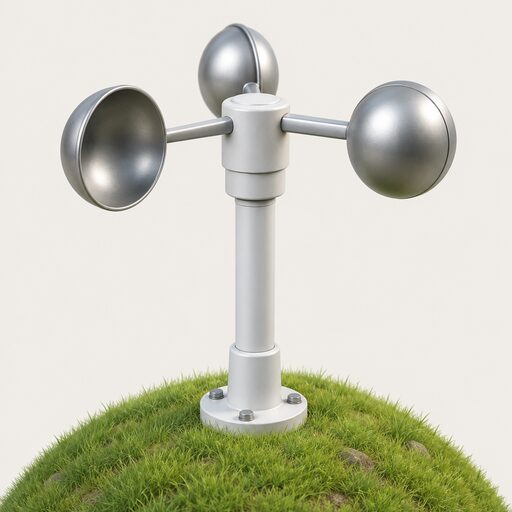 Wind Turbine Output and SizingHow much electricity a home wind turbine makes depends far more on your wind than on its size.
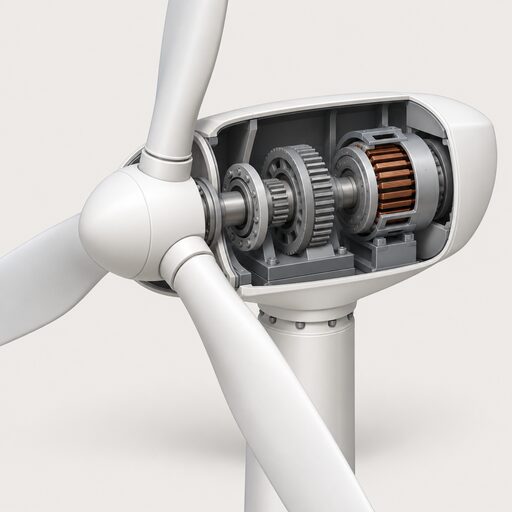 Domestic Wind TurbinesCan a wind turbine really power a home, and is your site windy enough?
 Wind Turbine InstallationWill a wind turbine actually pay for itself in a normal British garden, and how much wind does your spot really need?
 Wind Turbine Planning in EnglandCan you put up a small wind turbine at home without asking the council first?
 Small Wind Turbine StandardsA small wind turbine needs the right certificate before it can go up, and that affects whether you need planning permission and whether you can get paid for the electricity you send to the grid.
 Domestic Wind Turbine CostA home wind turbine usually costs between nine thousand and nineteen thousand pounds, but the real price depends on its size and how it is mounted.