
In this comparison
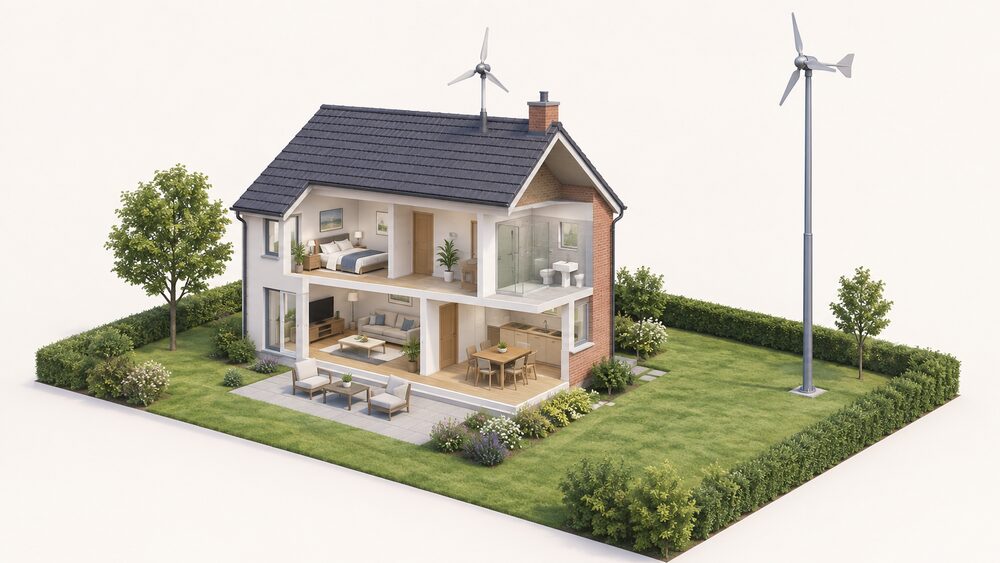
A small wind turbine can be fixed to the building or carried on its own mast, and the two choices behave very differently. Independent guidance splits installations into roof mounted and free-standing, and notes that building-mounted turbines cost less to install than pole-mounted ones but tend to be less efficient1. Pole-mounted machines sit in cleaner, faster air; roof-mounted machines are cheaper, simpler to site and far more constrained by planning rules and by the building itself.
The headline numbers set the scale. A pole-mounted turbine can generate around six kilowatts of electricity, and a well-sited 6kW machine can supply enough power for two average homes2. For equipment and installation, a 6kW pole-mounted system costs around £35,000 according to one independent figure, and around £31,000 according to another; the two documents disagree, so both stand2. Building-mounted turbines cost less but are smaller and less efficient2.
The deciding factor is rarely the turbine. It is the wind at the height the machine will actually run at, and the rules that govern where it may stand. A site needs a local annual average wind speed of five metres per second or more before a small turbine is worth considering at all3.
Pole-mounted vs roof-mounted: the short answer
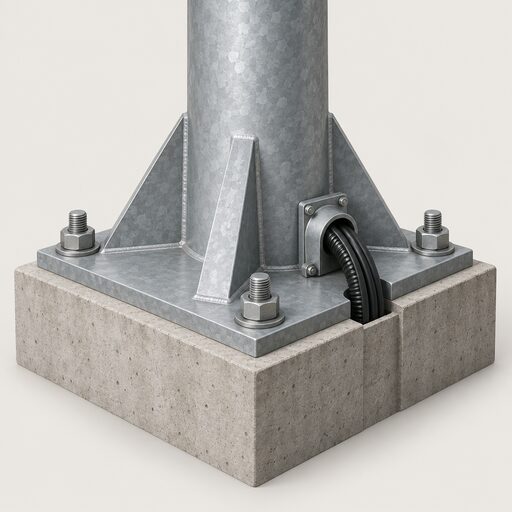
The two options are not variations on one product. A pole-mounted turbine is a free-standing machine on its own mast, and independent guidance describes free-standing turbines as working best in a large open place that is exposed to the wind2. A roof-mounted turbine is bolted to the structure of the house, and independent guidance describes these as cheaper to install but smaller and less efficient2.
That efficiency gap is not a matter of build quality. It follows from physics and from the building. A mast can be placed where the wind is least disturbed, at a height the householder chooses within the permitted limits. A roof fixing point is wherever the roof happens to be, usually below the surrounding tree line and often in the turbulent wake of neighbouring buildings. Independent guidance is blunt about the consequence: systems work best in exposed, windy locations and are less suitable for built-up or sheltered areas2.
There is also a planning asymmetry. In England, permitted development rights for building-mounted turbines apply only to installations on detached houses, not blocks of flats, and other detached buildings within the boundaries of a house or block of flats4. Stand-alone turbines have their own permitted development route within the boundaries of a dwellinghouse, subject to limits and conditions5. In Wales and Northern Ireland, planning permission is required before a wind turbine is installed at all2.
For a household weighing energy independence, the pole-mounted route buys more generation and more control over siting, at a materially higher cost and with a larger physical footprint. The roof-mounted route buys a lower entry price and a smaller visual change, at the cost of output and of a set of structural questions about the building. Neither removes dependence on the grid unless the system is sized and wired for off-grid operation, and both depend on a manufacturer remaining in business for spares and warranty support.
How roof-mounted turbines work
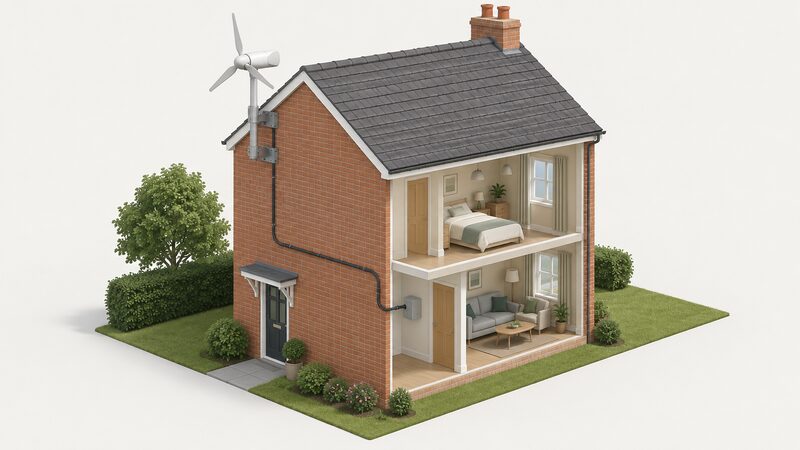
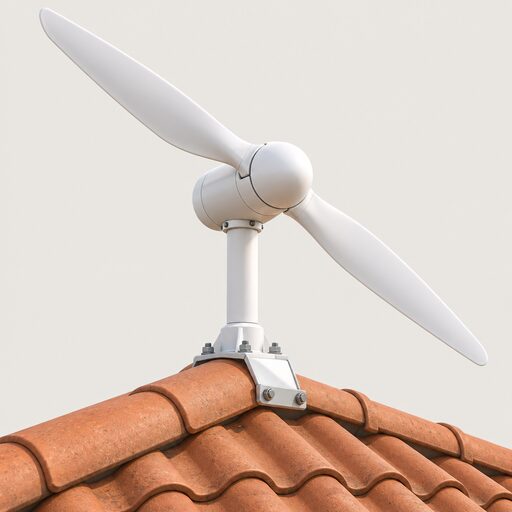
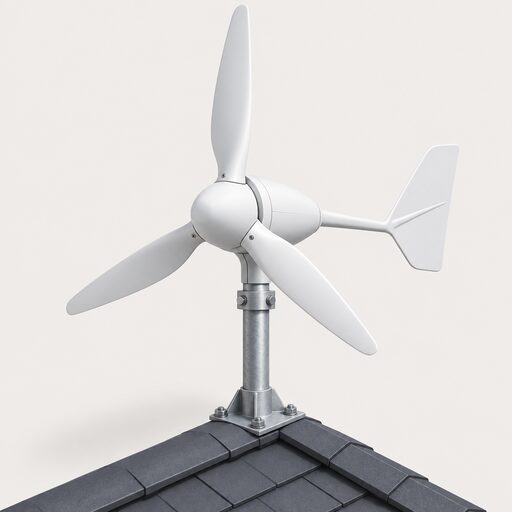
A building-mounted turbine is fixed to the roof or a gable wall and feeds the house through the same electrical system as any other generator. Official guidance for Northern Ireland describes building integrated turbines mounted on gable walls, roof-tops or poles and rated at 1kW to 6kW depending on the model3. The mounting position is therefore a choice within a single product family, not a different class of machine.
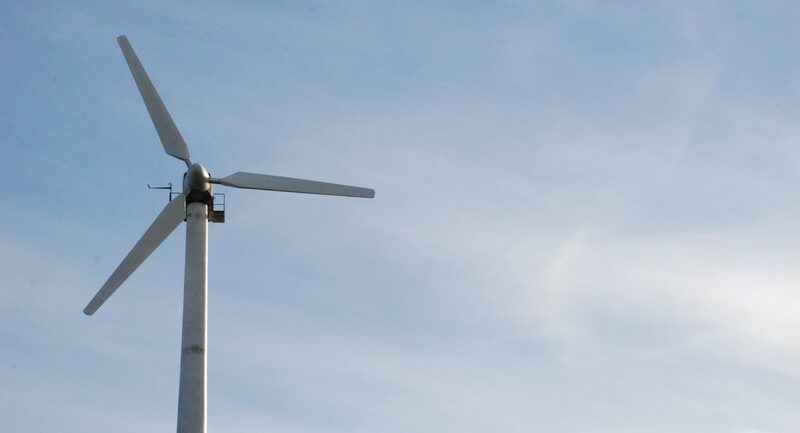
The practical difference is the air the rotor sees. A roof-mounted turbine runs in the boundary layer, the band of slowed and tumbled air that forms over every building. Independent guidance notes that vertical axis turbines take up less space than horizontal turbines but tend to be less efficient than horizontal turbines2, which matters on a roof where space and mounting height are both restricted.
Roof mounting also brings the turbine inside the building regulations regime. Official guidance states that if a solar panel is installed on a roof, building regulations will normally apply6, and the same logic of structural loading applies to any roof-mounted equipment. The additional loading on the roof structure is a stated consideration in official guidance7. A turbine is a dynamic load, not a static one, and official guidance describes the size, weight and force exerted on fixed points by a turbine attached to the house as considerable6.
For a household, the implication is that roof mounting is a building project as much as an energy project. The turbine itself may be the smaller part of the work. Fixings, strengthening, cable routes and the isolation of vibration from the living space all sit between the decision and the first kilowatt hour.
Wind resource: height matters more than anything
Wind speed rises with height, and the gap between roof level and mast height is the single largest determinant of output. Official guidance sets the threshold plainly: a small wind turbine should be considered where the local annual average wind speed is five metres per second or more3. That figure is an annual average at the proposed site, not a gust speed and not a figure read at ground level.
The permitted development limits show how much height the rules allow. In England, no part of a building-mounted turbine, including blades, should protrude more than three metres above the highest part of the roof excluding the chimney, and the overall height must not exceed 15 metres including building, hub and blade, whichever is the lesser4. The same limits appear in the legislation: the highest part of the turbine including blades must not protrude more than three metres above the highest part of the roof, or exceed 15 metres in height, whichever is the lesser8.
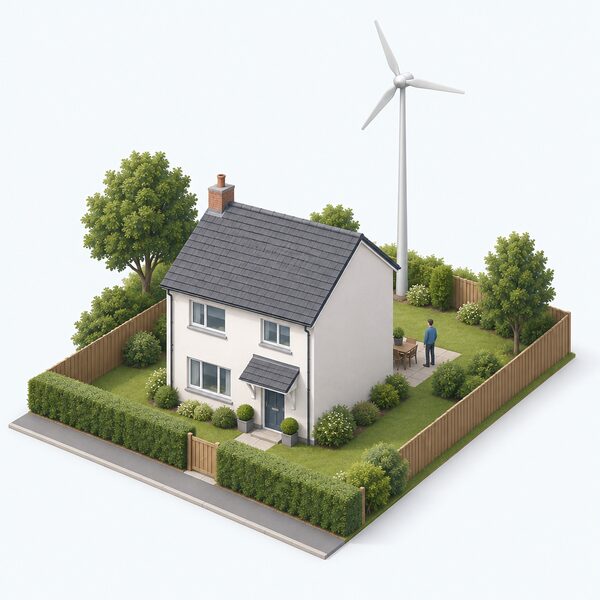
A stand-alone turbine has a different ceiling. The highest part of the stand-alone turbine must not exceed 11.1 metres5. In Scotland, free-standing turbines have a blade tip height limit of 15 metres, with the lowest part of the blade at least five metres from the ground and a setback of 110 per cent of the blade tip height from the curtilage of another dwelling10.
The comparison is stark. A roof-mounted machine is capped at three metres above the roof line, which on a typical two-storey house puts the rotor perhaps eight or nine metres above ground. A pole-mounted machine can reach 11.1 metres in England or 15 metres in Scotland, and can be sited at the point in the garden where the wind is least obstructed rather than wherever the roof happens to be. That is the whole argument for the mast, and it is a planning argument as much as an engineering one.
"Systems work best in exposed, windy locations and are less suitable for built-up or sheltered areas."
Noise, vibration and the building
A turbine on a mast transmits noise to the air. A turbine on a roof transmits noise and vibration into the structure, and the structure is where people sleep. Official guidance describes the size, weight and force exerted on fixed points by a turbine attached to the house as considerable6, which is a statement about the building as much as about the machine.
The permitted development rules reflect that concern in their clearance requirements. In England, the distance between ground level and the lowest part of any wind turbine blade must not be less than five metres for a building-mounted installation4, and the same five metre minimum applies to stand-alone turbines5. The legislation repeats the five metre clearance rule for building-mounted machines8. In Scotland, the proposed permitted development rights for wall and roof-mounted turbines would require no part of the turbine, including blade tips, to be less than five metres from the ground, and no part including blades to protrude more than three metres above the highest part of the roof10.
Those clearances exist for safety and for the building, but they also shape the noise picture. A rotor mounted close to a wall radiates into the wall. A rotor on a mast radiates into open air, and the distance between the machine and the nearest bedroom window is a design choice rather than a constraint.
There is a further limit that catches households planning a combined retrofit. Building-mounted turbine permitted development applies only if there is no existing air source heat pump at the property, and additional wind turbines or air source heat pumps at the same property require an application for planning permission4. The air source heat pump permitted development rules in England and Wales are not available where a wind turbine is installed on the same building or within the curtilage of the dwellinghouse or block of flats11. A household cannot stack these technologies under permitted development; the second one needs an application.
Cost and installation compared
The cost gap between the two mounting types is real but narrower than the output gap. Independent guidance states that building-mounted turbines cost less to install than pole-mounted ones, but tend to be smaller and less efficient2. The same guidance gives around £35,000 for equipment and installation of a 6kW pole-mounted system2. A separate independent figure puts a 6kW pole-mounted system at around £31,0001.
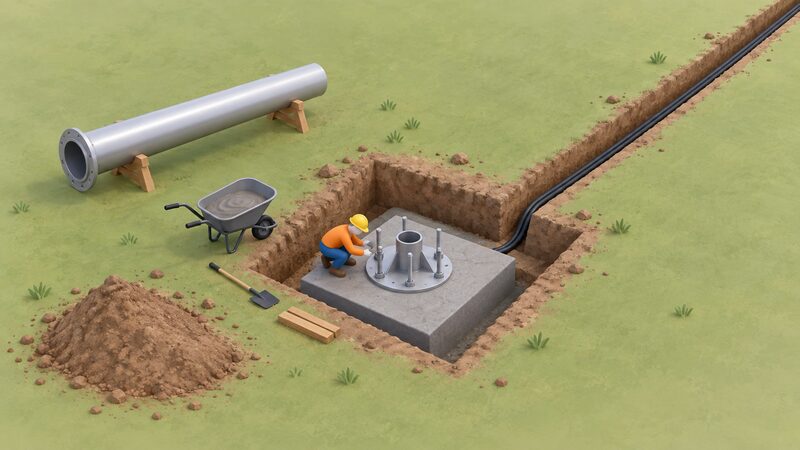
What the money buys differs by mounting type. A pole-mounted installation includes the mast, the foundation, the cable trench and the machinery. A roof-mounted installation avoids the mast and foundation but adds structural work to the building and the access arrangements to get the machine onto the roof. Official guidance notes that the size, weight and force exerted on fixed points would be considerable6, which is the reason the structural work is not optional.
| Pole-mounted | Roof-mounted | |
|---|---|---|
| Typical output | Around 6kW2 | 1kW to 6kW depending on model3 |
| Cost | Around £35,000, or around £31,000 on a second figure, for 6kW2 | Costs less to install than pole-mounted2 |
| Efficiency | Higher, in exposed air2 | Lower, and smaller machines2 |
| Height limit (England) | 11.1m highest part including blades5 | 3m above roof, 15m overall, whichever lesser4 |
| Boundary rule | Height plus 10 per cent from any boundary5 | Not applicable in the same form |
| Planning (Wales and NI) | Permission required2 | Permission required2 |
For a household, the cost comparison is not simply capital against capital. A pole-mounted machine that produces more electricity per pound spent on the machine may still lose on total cost per kilowatt hour if the site is poor. A roof-mounted machine that costs less may produce too little to justify the structural work. The wind resource at the specific site decides which way that falls, and it is measured, not assumed.
Planning permission in the UK
The four nations do not share a regime, and the differences matter more for wind than for most home technologies.
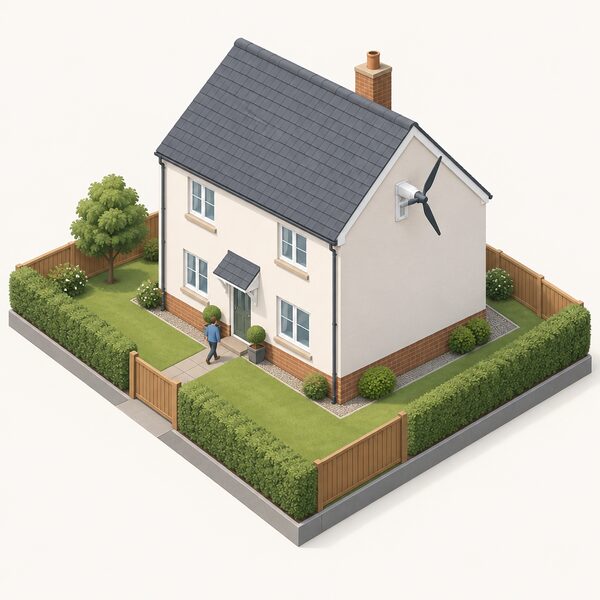
In England, permitted development rights for building-mounted wind turbines apply only to installations on detached houses, not blocks of flats, and other detached buildings within the boundaries of a house or block of flats4. The limits include the three metre roof protrusion and 15 metre overall height caps, the five metre blade clearance, and the single-turbine and no-heat-pump conditions4. Stand-alone turbines within the boundaries of a dwellinghouse can be permitted development provided all the limits and conditions are met, including the 11.1 metre height cap and the boundary setback of the turbine's overall height plus 10 per cent5.
In Wales, planning permission is required before a wind turbine is installed2. The Welsh Government publishes separate guidance on wind turbine planning permission9.
In Scotland, the rules are more complex, and in some specific situations planning permission may not be needed2. The Scottish Government's householder permitted development rights circular sets out free-standing turbine limits: a blade tip height of no more than 15 metres, a minimum five metre blade clearance from the ground, and a setback of not less than 110 per cent of the blade tip height from the curtilage of another dwelling10. Proposed rights for wall and roof-mounted turbines would require the machine to be mounted on a detached dwellinghouse, to be the only turbine on that dwellinghouse, and would not extend to turbines attached to outbuildings or structures that do not form part of the dwellinghouse itself10.
In Northern Ireland, planning permission is required before a wind turbine is installed2. Building integrated turbines rated at 1kW to 6kW can be mounted on gable walls, roof-tops or poles3.
Conservation areas add a further layer. In England, an installation is not permitted if the building-mounted wind turbine is on a wall or roof slope which fronts a highway4, and the legislation repeats that restriction for land within a conservation area8. Solar panels face a different and generally lighter regime in conservation areas, which is worth noting because households often consider both technologies together: official guidance states that planning permission is not usually required to install solar panels on the roof of a house or block of flats in a conservation area12, and solar panels fitted to roofs in conservation areas do not require planning permission provided they meet the general rules13.
Which suits which home
The choice follows from the site, not from preference. A household with a large, open, exposed garden and a measured annual average wind speed at or above five metres per second is in the territory where a pole-mounted machine can be justified3. A household in a town, in a valley, or surrounded by taller buildings is in the territory independent guidance describes as less suitable for wind2, and the mounting question becomes secondary to whether a turbine is appropriate at all.
Where a roof-mounted machine is considered, the building itself sets the terms. Detached houses are the only dwellings eligible for permitted development in England4, and the structural loading question has to be answered before anything is fixed7. The five metre blade clearance rule constrains how low a machine can sit4, and the three metre roof protrusion cap constrains how high it can go4.
For households combining technologies, the permitted development interaction is the practical trap. A wind turbine and an air source heat pump cannot both rely on permitted development at the same property4. Battery storage changes the economics rather than the planning position: independent guidance confirms that with battery storage, excess electricity from wind turbines and solar panels can be stored for later use2. That makes a smaller, well-sited turbine more useful than a larger, badly sited one, because the storage captures what the machine produces rather than exporting it at times of low value.
The independence question deserves a plain answer. A pole-mounted turbine with battery storage can carry a household through low-wind periods and reduce what it draws from the grid, but it does not remove the connection unless the system is designed for off-grid operation. A roof-mounted turbine reduces imports by a smaller margin and leaves the household dependent on the grid for the majority of its demand. Both leave the household dependent on the manufacturer for parts and on the installer for maintenance. The mounting choice changes the size of the contribution, not the nature of the relationship with the network.
Sources13 cited
- Wind power, Electricity North West
- Wind turbines, Energy Saving Trust, 2026-05-20
- Wind, nidirect, 2026-05-18
- Planning permission: building-mounted wind turbines, Planning Portal, 2026-09-17
- Planning permission: stand-alone wind turbines, Planning Portal, 2026-09-17
- Building regulations, Planning Portal, 2026
- Solar panels guidance, City of York Council, 2026-09-17
- Class H: installation of wind turbine on domestic premises, legislation.gov.uk, 2026-09-17
- Planning permission for wind turbines, Welsh Government, 2026-09-17
- Householder permitted development rights, Scottish Government, 2024-05-28
- Class G: air source heat pumps on domestic premises, legislation.gov.uk, 2026-09-17
- Planning permission: solar equipment on a house or block of flats, Planning Portal, 2026-09-17
- Planning and solar, Frome Town Council, 2025-09-02
 Building-Mounted Wind TurbinesWill a wind turbine on your roof actually make enough electricity to be worth it?
 Wind Turbine Planning in EnglandCan you put up a small wind turbine at home without asking the council first?
 Domestic Wind TurbinesCan a wind turbine really power a home, and is your site windy enough?
 Domestic Wind Turbine CostA home wind turbine usually costs between nine thousand and nineteen thousand pounds, but the real price depends on its size and how it is mounted.
 Wind Turbine Output and SizingHow much electricity a home wind turbine makes depends far more on your wind than on its size.
 Wind Turbine InstallationWill a wind turbine actually pay for itself in a normal British garden, and how much wind does your spot really need?