In this guide
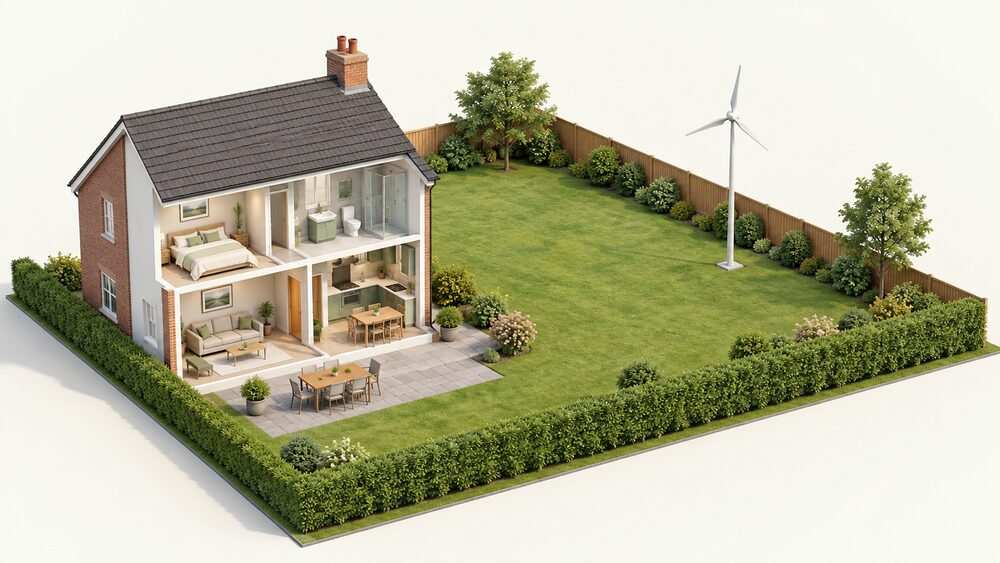
In Wales, one free-standing wind turbine in the grounds of a house can be put up without a planning application, as permitted development, provided every limit and condition is met. The Welsh Government sets the highest part of the turbine at no more than 11.1 metres, the swept area of any blade at no more than 9.6 square metres, and requires the turbine to stand back from every point on the property boundary by at least its own overall height plus 10 per cent. Only the first turbine qualifies, and only where there is no air source heat pump at the property1.
A turbine fixed to the house, or to another building within its grounds, is treated differently. The Welsh Government states that permitted development rights do not apply to wind turbines mounted on a dwellinghouse or on a building within its curtilage, so a roof or wall turbine always needs a planning application to the local planning authority1. This is one of the clearest places where Wales departs from England, which allows building-mounted turbines up to 3 metres above the roof and 15 metres overall.
For household energy independence, the practical effect is that the lightest-touch route in Wales is a pole-mounted turbine in open ground, away from boundaries. That route still depends on a certificated installer and product, rules out combining the turbine with an air source heat pump under the same rights, and leaves the household connected to the grid and a supplier for whatever the turbine does not produce. Anything larger, closer to the boundary or fixed to a building goes through the council.
Permitted development in Wales: what Class H allows
Permitted development is a national grant of planning permission for set kinds of work, so that no individual application is needed. Welsh legislation made in 2012 states that where such rights apply, no specific application for planning permission is required3. For small wind, the relevant right is Class H of the Welsh permitted development order, which covers "the installation, alteration or replacement of a stand alone wind turbine within the curtilage of a dwellinghouse"4.
Three features of the Welsh class matter to a householder.
- It is for stand-alone turbines only. The Welsh class is written for a turbine on its own mast or tower, not one fixed to a building4. The Welsh Government confirms that building-mounted turbines have no permitted development rights1.
- It is for the grounds of a dwellinghouse. The wording covers the curtilage of a dwellinghouse4, which is narrower than the English class, which also extends to blocks of flats5.
- It carries a standards condition. Development is not permitted by Class H "unless the stand alone wind turbine complies with the MCS Planning Standards or equivalent standards"6.
The Welsh Government describes the result: a stand-alone turbine within the boundaries of a dwellinghouse "can be considered to be permitted development, not needing an application for planning permission, provided ALL the limits and conditions listed below are met"1. Missing any single limit, whether height, blade area, boundary distance, location or the heat pump rule, takes the whole installation outside the rights.
The distinction between Wales and England dates from the way the rules were made. England's current rules sit in a 2015 order5, while the Welsh class comes from the 2012 Welsh order4, and English Planning Portal guidance on wind turbines carries the line that it "relates to the planning regime for England, the policy in Wales may differ"7. Figures from English guidance are therefore not a safe guide to what is allowed in Wales. More on the English position is in wind turbine planning permission in England, and the wider context of small generators is on the microgeneration pillar page.
Stand-alone limits: 11.1 m high, 9.6 m² of blade and the boundary rule
The three physical tests for a stand-alone turbine in Wales are height, blade size and distance from the boundary1.
| Limit | Wales (Welsh Government) | England (Planning Portal and 2015 order) |
|---|---|---|
| Highest part, including blades | 11.1 metres1 | 11.1 metres7 |
| Swept area of any blade | No more than 9.6 square metres1 | No more than 3.8 square metres5 |
| Distance from boundary | Overall height plus 10 per cent, from any point on the boundary1 | Overall height plus 10 per cent7 |
| Lowest blade tip above ground | Not stated in the Welsh Government limits | At least five metres7 |
| Safeguarded land | Not stated in the Welsh Government limits | Not permitted7 |
The height limit is the same on both sides of the border. The blade limit is not: the Welsh Government figure of 9.6 square metres for the swept area of any blade is well above England's 3.8 square metres, which allows a larger rotor in Wales before a planning application is needed1. Swept area is the circle the blades pass through, so it governs rotor size, and rotor size has a large bearing on how much electricity a small turbine can produce. How rotor size translates into output is covered in how much electricity a home wind turbine produces.
The boundary rule is the one that most often rules out a garden site. An installation is not permitted if any part of the turbine, including its blades, would be closer to any point on the property boundary than the overall height of the turbine plus 10 per cent of that height1. In practice a turbine built to the full 11.1 metres needs a clear radius around it greater than its own height in every direction, which suits a field or a large rural plot rather than a typical suburban garden. A shorter mast reduces the distance needed, but it also tends to place the rotor in slower, more turbulent air, a trade-off explained in wind speed and siting for a home wind turbine. The measurement itself is set out in how far a wind turbine must be from the property boundary.
Building-mounted turbines: no permitted development in Wales
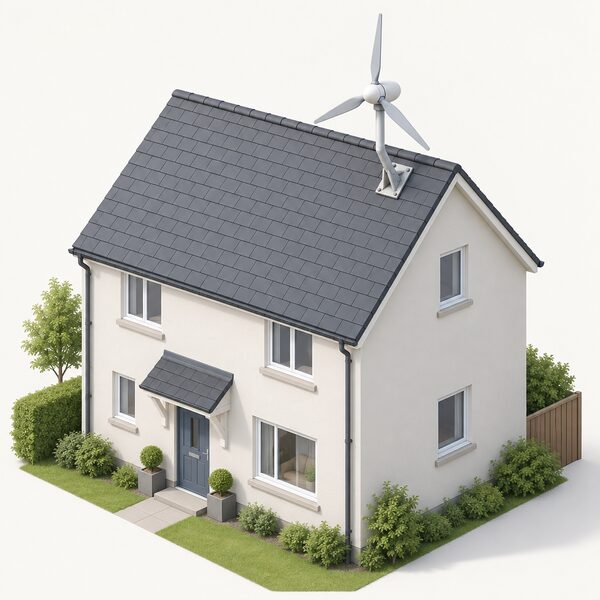
In Wales, a turbine fixed to a roof, wall or chimney, or to a garage, barn or outbuilding within the grounds of the house, falls outside permitted development altogether. The Welsh Government states: "Permitted development rights do not apply to wind turbines mounted on a dwellinghouse or building within the curtilage of the dwellinghouse"1. It adds that it "will be necessary to make an planning application to your local planning authority if you wish to install a building" mounted turbine1.
For comparison, the English 2015 order allows a turbine on a building only if its highest part, including blades, would neither protrude more than 3 metres above the highest part of the roof (excluding the chimney) nor exceed 15 metres in height, whichever is the lesser5. Planning Portal guidance for England adds that the rights apply only to detached houses and other detached buildings within the grounds of a house or block of flats, that no part may be within five metres of any boundary, that the lowest blade must be at least five metres from the ground, and that the blade swept area must not exceed 3.8 square metres8. In Scotland, Class 6HC covers a turbine on a detached dwellinghouse, with the same 3 metre limit above the roof9 and a swept area of no more than 4 square metres10.
| Nation | Building-mounted turbine | Key limit |
|---|---|---|
| Wales | No permitted development; application needed1 | Not applicable |
| England | Permitted on detached houses and detached buildings in the grounds8 | 3 m above roof or 15 m overall, whichever is lesser5 |
| Scotland | Permitted on a detached dwellinghouse (Class 6HC)9 | 3 m above the highest part of the roof, excluding the chimney10 |
| Northern Ireland | Planning approval is needed for small-scale turbines11 | Not applicable |
A Welsh application for a roof turbine is not ruled out; it is simply decided by the council on its merits rather than granted automatically. Roof and wall turbines have their own practical limits, discussed in roof and building-mounted wind turbines and pole-mounted vs roof-mounted wind turbines.
Conditions that come with permitted development
Meeting the size limits is not the end of it. Welsh legislation attaches continuing conditions to a Class H turbine: the blades "must be made of non-reflective materials", the turbine must be sited so far as practicable to minimise its effect on amenity, and it must be removed when no longer needed for, or capable of, microgeneration6. These are conditions of the permission itself, so a turbine that breaches them afterwards is no longer covered by the right.
The full set of conditions in Wales is:
- Standards. The turbine must comply with the MCS Planning Standards or equivalent standards6.
- First installation only. Only the first installation of any wind turbine is permitted development1.
- No air source heat pump. The right applies only if there is no existing air source heat pump at the property1.
- Non-reflective blades6.
- Siting to minimise effect on the amenity of the area6.
- Removal as soon as reasonably practicable when no longer needed for microgeneration1.
"the blades of the stand alone wind turbine must be made of non-reflective materials"
The heat pump condition reflects how the two technologies are handled together. English legislation for air source heat pumps, which applies in England and Wales, withholds the heat pump right where "a wind turbine is installed on the same building or within the curtilage of the dwellinghouse or block of flats"5. Wales also has its own heat pump rules: the Welsh Government reported in January 2024 that its permitted development rights for air source heat pumps require a minimum 3 metre distance from the boundary, to reduce noise pollution potential12. Noise from the turbine itself, and how neighbours are protected, is discussed in wind turbine noise, shadow flicker and neighbours.
For the household, the removal condition means a turbine that fails and is left standing as scrap is not simply a private matter. A dead turbine on its mast, still in place long after it stopped generating, is outside the terms under which it was allowed.
MCS 020 and the certificated installer
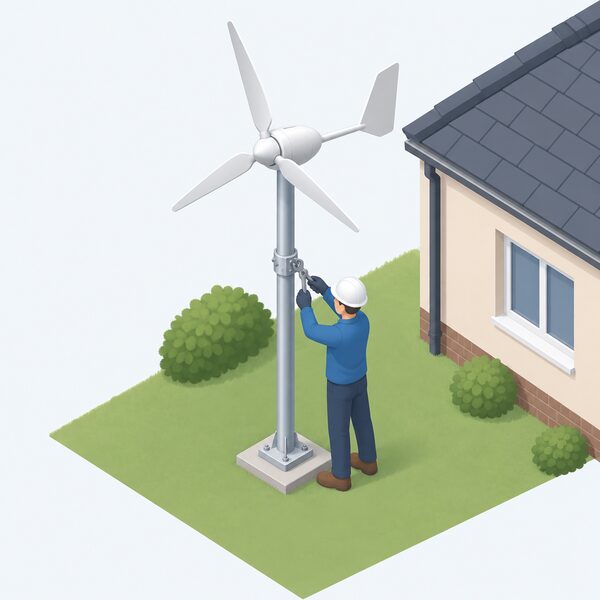
The standards condition is where planning meets product certification. Welsh legislation made in 2026 defines "MCS Planning Standards" as the product and installation standards for air source heat pumps and wind turbines specified in MCS 020(a) and MCS 020(b) respectively, so a wind turbine is judged against MCS 020(b)13. The Welsh Class H right is not available unless the turbine complies with those standards or equivalent standards6.
Planning Portal guidance explains what that means in practice: one of the limits of permitted development rights for wind turbines and air source heat pumps is that equipment must be installed by an installer who has been certificated through the scheme, using a certificated product14. That guidance is written for England and notes that policy in Wales may differ, but the Welsh legislation's own reliance on the MCS Planning Standards points the same way13.
This creates a dependence that sits alongside the planning rules. The planning right relies on a certification scheme, on a manufacturer having its product certificated, and on an installer holding certification. Where a maker has stopped trading, spares and certification can become harder to secure; several UK small wind makers have failed, as set out on the Proven Energy and Evance pages. More on the scheme itself is in MCS certification for wind and hydro, small wind turbine standards and certification and whether an MCS certified installer is needed for permitted development wind.
Where permitted development does not apply
Location can remove the right regardless of turbine size. The Welsh Government states that permitted development rights do not apply to a turbine within the curtilage of a Listed Building, or within an Area of Outstanding Natural Beauty, a World Heritage Site or a site of special scientific interest1.
In Wales, the following all need a planning application:
- any turbine within the grounds of a listed building1;
- any turbine in an Area of Outstanding Natural Beauty, a World Heritage Site or a site of special scientific interest1;
- any turbine fixed to the house or another building within its grounds1;
- a second turbine, or a turbine where an air source heat pump is already installed1;
- a stand-alone turbine above 11.1 metres, with a blade swept area over 9.6 square metres, or too close to the boundary1.
Conservation areas need care. The English rule is that in a Conservation Area a stand-alone turbine is not permitted if it would be nearer to any highway bounding the property than the part of the house nearest that highway7. English guidance also excludes Scheduled Monuments and designated land, which it defines as national parks and the Broads, Areas of Outstanding Natural Beauty and World Heritage Sites7. In Scotland, a free-standing turbine is not permitted at all in a conservation area, a World Heritage Site, a site of special scientific interest, a site of archaeological interest or within the grounds of a listed building10. The Welsh Government's published list names listed buildings, Areas of Outstanding Natural Beauty, World Heritage Sites and sites of special scientific interest1; the position for a particular Welsh conservation area, national park or scheduled monument is one for the local planning authority to confirm. A listed property may also need separate consent, covered in Listed Building Consent for microgeneration.
When a full planning application is needed
Any turbine outside the limits and conditions above needs planning permission from the local authority. Planning Portal guidance puts it simply: "In other cases, you will need to apply for planning permission from your Local Authority to add a domestic wind turbine" to a house or its grounds15. In Wales that covers every building-mounted turbine as well as any stand-alone turbine that misses a limit1.
A planning application does not mean refusal. It means the council considers the particular site, including the effect on neighbours and the landscape, and may approve with conditions of its own. The contrast with Northern Ireland is worth noting: NI Direct states for small-scale wind turbines that "Planning approval is needed"11, so Wales sits between Northern Ireland and England in how much it allows without an application.
At the other end of the scale, large projects do not go to the local council at all. All onshore wind generation projects with a capacity of 10 MW or more are classed as Developments of National Significance and decided by Welsh Ministers2. That threshold is far beyond a household turbine, but it shows that Wales runs its own consenting system for wind at every scale.
Planning is separate from building regulations. Planning Portal guidance for England states that if a turbine is not attached to the house, only the electrical installation and connection are captured by building regulations, and that an installer registered with a competent person scheme may self-certify work on a turbine attached to the house16. Some UK building regulations amendments made for England state that they do not apply to buildings in Wales other than excepted energy buildings17, so the Welsh position is set by Welsh regulations. See building regulations approval for a wind turbine.
Applying to your Local Planning Authority

The Local Planning Authority is usually the planning department of the local council, and for any question about a particular case, official guidance states that "the first thing to do is to contact your Local Planning Authority"18. Planning Portal guidance adds: "Always check with your Local Planning Authority about planning issues before you have a system installed"15.
That check matters even for a turbine that appears to fit permitted development. Guidance on the rules is "an introductory guide and is not a definitive source of legal information", and additional local rules may apply15. A council can confirm whether the site is in a protected area, whether any local restriction removes the rights, and whether the boundary measurement works.
The usual sequence is:
- Check the proposal against the Welsh Class H limits and conditions1.
- Contact the planning department of the local council about the site, and ask about pre-application advice and any fee18.
- Where permitted development does not apply, submit a planning application to the local planning authority1.
- Arrange grid connection separately with the network operator, as covered in G98 and G99 for wind, hydro and CHP.
Funding is a separate question from planning. The Welsh Government directs householders to check their eligibility for its help with home energy measures1; current schemes are covered in grants and funding for micro wind, hydro and micro-CHP.
Wales policy context and where the rules differ from England
Planning is devolved, and Wales has used that to set its own course on renewable energy. Several differences from England bear directly on a household turbine.
| Point | Wales | England |
|---|---|---|
| Stand-alone blade swept area | 9.6 m²1 | 3.8 m²5 |
| Building-mounted turbines | No permitted development1 | Permitted within limits8 |
| Blocks of flats | Class covers the curtilage of a dwellinghouse4 | Class extends to blocks of flats5 |
| Large onshore wind | 10 MW or more decided by Welsh Ministers2 | Not covered here |
Welsh policy has moved in stages. A 2013 Welsh amendment order was presented as reducing the need for householders to secure planning permission for certain developments19. Planning Policy Wales Edition 4, announced in 2011, dealt with major energy proposals over 50MW20. More recently, a Welsh Government report published in March 2024 proposed that permitted development rights could extend to renewable energy developments below a size threshold, giving 5MW as an example, and that by 2025 renewable energy applications with a statutory time allocation should be treated as approved where no decision was made in time21. Those are proposals from a consultation document, not rules a householder can rely on.
In practice, the English guidance most readers find first is repeatedly marked as applying to England, with Wales possibly different7. For a household in Wales, the governing sources are the Welsh order and the Welsh Government's own guidance1. For comparison with the other nations, see Scotland and Northern Ireland.
What the rules mean for energy independence

The Welsh rules make one route relatively easy: a single stand-alone turbine, up to 11.1 metres, in open ground with enough room to meet the boundary test1. The more generous 9.6 square metre blade limit1 allows a larger rotor than England does without an application, which matters because rotor size drives output. For a rural home with space and wind, that is a real opening towards producing a share of its own electricity.
The limits are equally real. A household cannot combine a turbine and an air source heat pump under permitted development1, so electrifying heating and generating from wind at the same property means a planning application for one of them. Roof turbines, the only option for many urban and suburban homes, always need an application1. The permission depends on certificated products and installers13, and the turbine remains an addition to a grid connection and a supplier, not a replacement for them. Whether wind suits a particular home at all depends on the site's wind resource, covered in what average wind speed a small wind turbine needs, and the wider picture is in micro wind, hydro and CHP and energy independence.
Sources21 cited
- Planning permission: wind turbines, Welsh Government
- Energy Generation in Wales 2021, Welsh Government, 2022-10
- Town and Country Planning (General Permitted Development) (Amendment) (Wales) (No. 2) Order 2012, legislation.gov.uk, 2012-09-06
- Town and Country Planning (General Permitted Development) (Amendment) (Wales) Order 2012, legislation.gov.uk, 2012-05-19
- GPDO 2015, Schedule 2 Part 14 Class H: wind turbine on domestic premises, legislation.gov.uk
- Town and Country Planning (General Permitted Development) (Amendment) (Wales) Order 2012, article 2, legislation.gov.uk, 2012
- Planning permission: stand alone wind turbines, Planning Portal
- Planning permission: building-mounted wind turbines, Planning Portal
- Scottish Statutory Instrument 2024 No. 102, legislation.gov.uk, 2024-05-24
- Circular 1/2024: householder permitted development rights, Scottish Government, 2024-05-28
- Wind, NI Direct, 2026-05-18
- Written statement: air source heat pump noise and permitted development rights in Wales report, Welsh Government, 2024-01-11
- Welsh Statutory Instrument 2026 No. 79, legislation.gov.uk, 2026-03-10
- The Microgeneration Certification Scheme, Planning Portal
- Wind turbines, Planning Portal
- Wind turbines: building regulations, Planning Portal
- The Building Regulations &c. (Amendment) Regulations 2016, legislation.gov.uk, 2016-03-10
- What is planning permission, Planning Portal
- Written statement: stimulating home building in Wales, Welsh Government, 2013-07-17
- Written statement: Planning Policy Wales Edition 4, Welsh Government, 2011-02-28
- Preparing Wales for a renewable energy 2050, Welsh Government, 2023-10
 Wind Turbine Planning in EnglandCan you put up a small wind turbine at home without asking the council first?
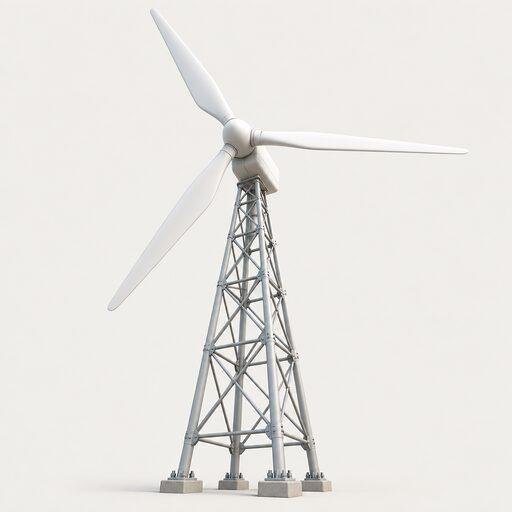 Wind Turbine Planning ScotlandScotland lets some home wind turbines go ahead without planning permission, but only if they stay within strict size and distance limits.
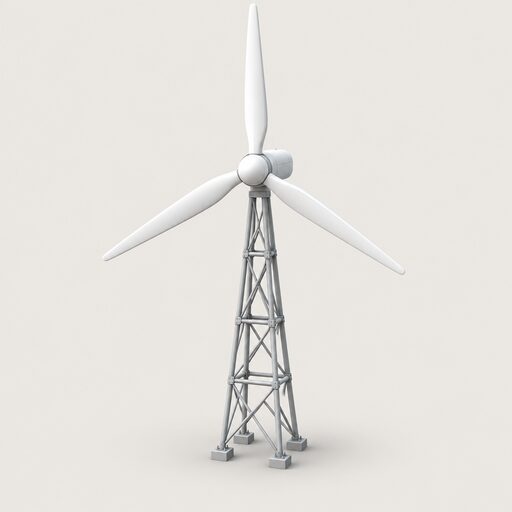 Wind Turbine Planning in NIDo you need planning permission for a home wind turbine in Northern Ireland?
 Planning Permission WalesDo you need planning permission for an air conditioning unit outside your home in Wales?
 Planning Permission WalesDo you need planning permission for solar panels on your house in Wales?
 Planning Permission in WalesDo you need planning permission for a heat pump in Wales?