
In this guide
The Smart Export Guarantee (SEG) is the mechanism that pays households in Great Britain for electricity a wind turbine, hydro scheme or micro-CHP unit sends to the grid. It launched on 1 January 2020 under the Smart Export Guarantee Order 2019, and it requires certain licensed electricity suppliers, known as SEG licensees, to offer a tariff and pay eligible generators for exported electricity1. The rate must always be above zero, but beyond that floor suppliers set the price, the contract length and the other terms themselves3.
The scheme covers wind, hydro, solar PV, anaerobic digestion and micro-CHP. Wind, hydro, solar and AD qualify up to a total installed capacity of 5MW; micro-CHP qualifies up to 50kW5. Payments are calculated from export meter readings, so a meter capable of half-hourly measurement is the practical gate to being paid at all1.
The money is real but modest in scale. Ofgem's Year 5 annual report records 443.1 GWh of low carbon electricity exported during 2024 to 2025, enough to power over 160,000 typical UK homes for a year, at an average tariff rate of 10.8p/kWh3. Northern Ireland sits outside the SEG entirely and has its own arrangements6.
What the Smart Export Guarantee pays small generators for
The SEG is an export-only payment. It pays for electricity that leaves the property and reaches the grid, measured at the meter, and nothing else. Ofgem's own description is that the scheme "enables small-scale generators to receive payments from electricity suppliers for electricity which they export back to the National Grid, providing certain criteria are met"1. The obligation on suppliers is set out in the same terms: the scheme "requires electricity suppliers to pay small-scale generators for low-carbon electricity which they export back to the National Grid"2.
That distinction matters for a household weighing up a wind, hydro or CHP installation. The SEG does not pay for generation, only for export. Every unit consumed on site, whether by the heating system, the hot water cylinder or an appliance, is a unit that earns nothing under the scheme. The value of self-consumption is the avoided import price, which is a separate calculation from the export tariff.
The legal basis is the Smart Export Guarantee Order 2019, together with Conditions 57 and 58 of the Standard Conditions of the Electricity Supply Licence4. Ofgem administers the scheme on the government's behalf3. The original consultation that preceded it set the expectation that "the tariff levels set by suppliers for the SEG will reflect the value of the exported electricity and take account of the costs and benefits of small-scale generation," with no additional costs expected to be passed on to other consumers7.
In practice, the scheme is a market rather than a fixed subsidy. Suppliers compete for export customers, and the terms they offer vary widely. For a household, that means the SEG is not a single rate to look up but a set of offers to compare, and the comparison is worth doing because the spread between the lowest and highest published rates is large.
Which technologies qualify: wind, hydro, micro-CHP and the 5MW limit
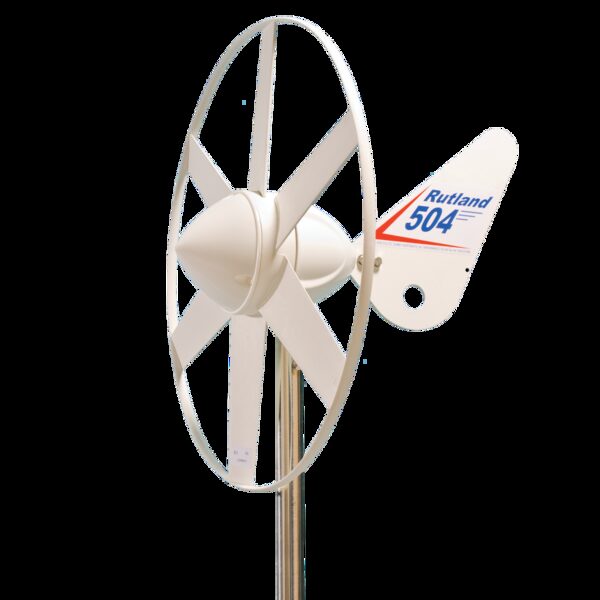
Five technologies are eligible: solar photovoltaic panels, onshore wind, hydro, anaerobic digestion and micro combined heat and power3. The capacity ceiling is 5MW of total installed capacity for all of them except micro-CHP, which is capped at 50kW5. Ofgem's scheme rules put it plainly: the scheme is open to "anyone with an installation of one of the following technology types up to a capacity of 5MW, or up to 50kW for micro-CHP"5.
For a domestic wind turbine or a micro hydro scheme, the 5MW limit is far above anything a single property would install, so capacity is rarely the binding constraint. The binding constraints are siting, certification and metering. A micro-CHP unit, by contrast, sits much closer to its 50kW ceiling in commercial settings, though domestic units are far smaller.
| Technology | Capacity limit | Certification route |
|---|---|---|
| Onshore wind | 5MW total installed capacity | MCS certificate or equivalent3 |
| Hydro | 5MW total installed capacity | MCS certificate or equivalent3 |
| Solar PV | 5MW total installed capacity | MCS certificate or equivalent3 |
| Anaerobic digestion | 5MW total installed capacity | MCS certificate or equivalent3 |
| Micro-CHP | 50kW | MCS certificate or equivalent3 |
Installations must be located in Great Britain and meet the applicable eligibility criteria5. That excludes Northern Ireland from the SEG, a point developed below. The scheme is a government-backed initiative, and Ofgem's annual reporting treats it as a settled part of the small-scale generation landscape rather than a pilot3.
For households considering a non-solar generator, the practical question is usually whether the technology and the site can meet the certification and metering conditions at all. The microgeneration pillar covers how wind, hydro, micro-CHP and fuel cells compare as household technologies, and the G98 and G99 connection guide explains the separate grid-connection process that runs alongside SEG registration.
How SEG tariffs are set: rates from 1p to over 15p per kWh
Suppliers set the rate. The legislation requires only that a SEG tariff pays more than zero pence per kWh of metered export, and Ofgem confirms that "all SEG tariffs must pay a rate greater than 0p/kWh at all times"3. Within that floor, "SEG licensees can choose the tariff rate, contract length and some other relevant terms which they will offer generators as part of their SEG contract"4.
The result is a wide spread. Independent guidance records rates that "can be as low as 0.01p/kWh" at one end and "as high as 20-40p/kWh" at the other10. One official source states that as of June 2026 SEG payments can reach up to 25 pence per kWh, which it describes as comparable to the unit rate of electricity11. The average tariff rate offered during SEG Year 5 was 10.8p/kWh, a further 30% increase from SEG Year 43. Independent guidance puts the average around 12p/kWh12.
The gap between the average and the extremes reflects how suppliers price export. Some offer a flat rate for simplicity; others tie the rate to wholesale prices or to time of day, which can produce much higher headline figures for exports in peak periods and much lower ones overnight. A single published rate is therefore not comparable with another unless the contract structure is comparable too.
"SEG Licensees determine the rate, contract length and other terms which SEG Generators will receive."
That is the central economic point. Export is normally worth less per unit than import costs, so a generator that maximises self-consumption and exports only the surplus will generally do better than one that exports everything and buys back what it needs. The scheme was designed on that basis: the original consultation expected tariff levels to reflect the value of exported electricity rather than to subsidise generation7.
Measured export or deemed 50%: why the smart meter matters
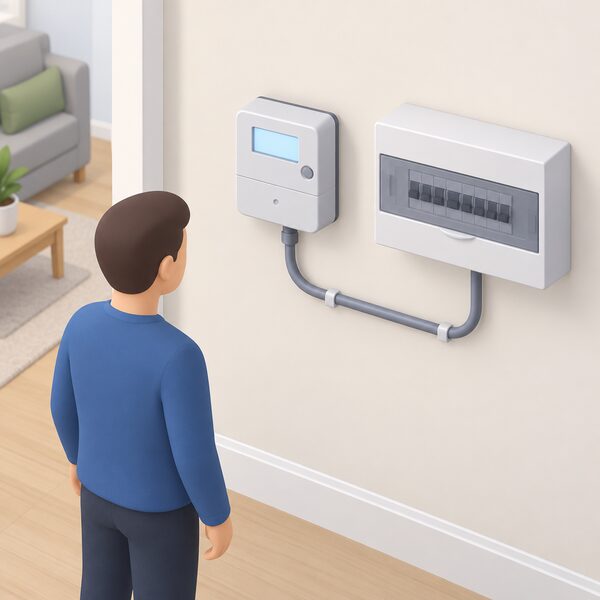
Under the SEG, payment is based on measured export. Generators must have a smart meter to monitor exports, and the meter must be capable of taking measurements at half-hourly intervals2. Ofgem's guidance for generators is explicit that installations qualify "provided they are fitted with an export or smart meter capable of taking measurements at half-hourly intervals"2. The government's position is that SMETS-compliant smart meters are compatible with microgeneration and enable measurement of export on a half-hourly basis9.
This is a change from the old Feed-in Tariff approach. Under the FIT scheme, export could be deemed rather than measured: a set percentage of generation meter readings was assumed to have been exported, and for Scheme Year 13 that percentage was 75% for hydro and 50% for all other technologies15. Deeming removed the need for an export meter but paid on an assumption rather than on what actually left the property.
The SEG has no deemed option. Exported power must be metered, with a meter capable of reporting exports on a half-hourly basis8. For a household, that means the meter is not an administrative detail but the instrument that determines the payment. A generator without a compliant meter cannot be paid, however much it exports.
The half-hourly requirement also shapes what a battery can do. Because exports are recorded in half-hourly periods, storage can move generation from a low-value period to a higher-value one, and the meter will record the difference. That is a commercial decision about when to export, not a change to eligibility.
Certification and registration: MCS and Flexi-Orb
Two conditions sit alongside the meter. The technology and the installer must be certified under the Microgeneration Certification Scheme (MCS) or an equivalent scheme, and suppliers may ask for the MCS certificate as evidence6. For solar PV, wind and micro-CHP installations up to 50kW, Ofgem's annual reporting describes presenting an MCS certificate as the standard route3.
MCS is not the only accepted route. Independent guidance states that "currently, MCS is the most widely accepted certification, [and] the equivalent scheme offered by the Flexible Energy Oversight Registration Body (Flexi-orb) is also accepted by most SEG rate providers"16. The practical consequence is that a household should confirm which certification a chosen supplier accepts before committing to an installer, because a certificate that one licensee accepts may not satisfy another.
The risk of getting this wrong is concrete. Official guidance warns that "having your solar system installed by a non-accredited installer could mean that you are not eligible to apply for the Smart Export Guarantee (SEG)"17. The same logic applies to wind, hydro and micro-CHP: the installer's accreditation is part of the eligibility chain, not a quality nicety.
There is also an interaction with the closed Feed-in Tariff scheme. Generators intending to claim SEG payments must not be in receipt of an FIT export tariff for the same generation capacity18. Ofgem's guidance for FIT generators sets out the mechanism: "in order to register for the SEG, you must first opt out of FIT export payments for their installation by contacting your FIT licensee"19. The two export payments cannot run together on the same capacity.
Most accredited FIT installations will be eligible for the SEG, provided they have a smart or export meter installed19. For a household with an older wind or hydro installation still on FIT generation payments, that means the generation tariff can continue while export payments move to the SEG, subject to the meter condition being met.
Adding battery storage: what it does to your export payments
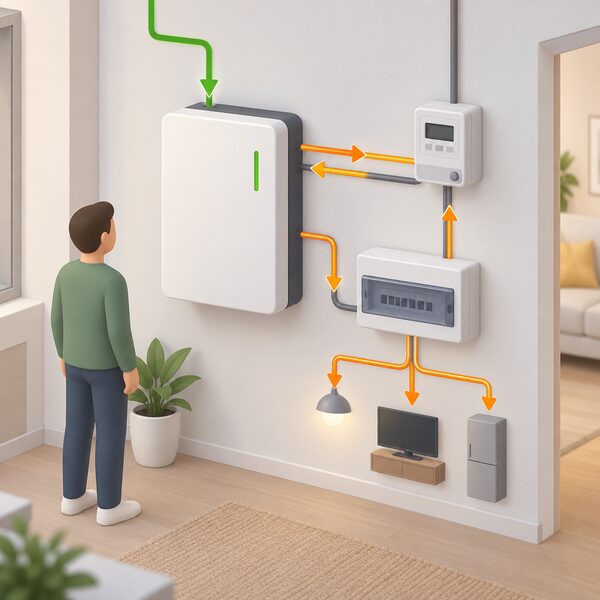
A battery does not change SEG eligibility. The scheme pays for metered export, and a battery changes when that export happens rather than whether it qualifies. Independent guidance describes SEG payments as "exclusively an export tariff, based solely on how much electricity you export back to the grid, as recorded by your smart meter"10. Nothing in the eligibility conditions turns on whether storage is present.
What storage changes is the volume and timing of exports. A battery absorbs surplus generation that would otherwise be exported immediately, then releases it later, either to the household or to the grid. If the household uses the stored electricity itself, those units never reach the meter and earn nothing under the SEG, but they displace imports at the full import price. If the battery exports at a time when the tariff is higher, the same units earn more than they would have at the moment of generation.
The economics therefore depend on the tariff structure. A flat-rate SEG tariff gives storage no export-price advantage, only a self-consumption advantage. A time-varying tariff can reward shifting exports into peak periods, which is where the higher published rates apply. The trade-off is between the value of avoided import and the value of the export payment, and the two are rarely equal.
For a household, the honest summary is that a battery is a self-consumption and arbitrage device, not a SEG device. It can raise the value of a given unit of generation, but it does not raise the rate the supplier pays, and it does not remove the certification or metering conditions. The battery storage guidance from the Centre for Sustainable Energy covers the household side of that decision.
Exporting in Northern Ireland: the Power NI Microgen tariff
The SEG does not extend to Northern Ireland. Independent guidance states it directly: "Smart Export Guarantee (SEG) tariffs aren't available in Northern Ireland"6. The scheme's territorial extent is Great Britain, and installations must be located there to qualify5. A household in Northern Ireland therefore cannot register for a SEG tariff with a licensed supplier in the way a household in England, Scotland or Wales can.
Northern Ireland has its own support landscape. The Northern Ireland Sustainable Energy Programme (NISEP) is an energy efficiency programme for domestic and non-domestic customers, administered under the Utility Regulator, and the regulator publishes the list of schemes annually20. That programme addresses energy efficiency rather than export payments, so it is not a substitute for an export tariff.
On the connection side, Technical Booklet F1: 2022 encourages designers of renewable electricity generation technologies to engage at an early stage with Northern Ireland Electricity Networks (NIE) to confirm that an export connection can be provided22. That is a distinct step from any payment arrangement, and it applies to any generator intending to export.
For rates and terms, the position is that any Northern Ireland export tariff is a matter for the supplier offering it. Two Power NI renewable generation tariff figures appear in a 2025 price list, 6.958 p/kWh and 13.916 p/kWh, and the two figures conflict, so neither can be stated as the current rate. Households in Northern Ireland should confirm the current rate and terms directly with the supplier. The Northern Ireland export payments page and the Northern Ireland grid connection guide cover the two halves of that process.
Contract terms, exit fees and switching suppliers

Because suppliers set the terms, contract length and exit arrangements vary as much as the rate. Ofgem's guidance confirms that "SEG licensees determine the rate which they will pay SEG Generators, the contract length and other terms, but the tariff rate must always be above zero"19. The original consultation that designed the scheme was explicit that "suppliers would determine the tariff per kWh for remuneration, and the length of the contract"8.
The published tariff tables show how much variety that produces. One supplier's SEG tariff is listed as fixed with no fixed end date, paying 3.0p per kWh on a three-month payment cycle, with no requirement to take import supply from the same company13. Another entry in the same table shows a fixed tariff at 1.0p per kWh13. These sit well below the 10.8p/kWh average recorded for SEG Year 5, which illustrates why comparing offers matters more than accepting the first one3.
| Feature | What varies between licensees |
|---|---|
| Rate | Set by the licensee, above zero4 |
| Contract length | Chosen by the licensee4 |
| Payment cycle | Set by the licensee; one example is three months13 |
| Import supply requirement | Not universal; one example requires no import supply13 |
| Exit terms | Set by the licensee4 |
The separation of export payment from import supply is a genuine feature of the scheme, not a technicality. A generator can be paid by one company for exports while buying electricity from another, and at least one published tariff explicitly does not require the household to take import supply from the payer13. That widens the field of offers a household can consider.
All licensed electricity suppliers are required to declare their SEG status annually, which is how the list of participating licensees is maintained4. Ofgem publishes the supplier list, and the scheme is governed by the Order and the standard licence conditions rather than by individual contracts alone4.
The Community and Smaller-scale Electricity Export Guarantee Scheme: what is planned
A separate scheme has been proposed for community and smaller-scale exporters. Under the Community and Smaller-scale Electricity Export Guarantee Scheme, exporters would "register their site with GEMA, install a smart export meter that meets specifications defined by GEMA," and notify GEMA if their ownership structure meets the definition of a Community or Smaller-scale Energy site23. The scheme is aimed at sites that "generate low carbon electricity with a capacity below 5MW"23.
The registration requirements are more prescriptive than the SEG's. Where the SEG relies on MCS certification and a compliant meter, the proposed scheme adds site registration with GEMA and a notification duty tied to ownership structure. That reflects its community focus: the scheme is designed around a class of site rather than around individual technologies.
The SEG itself continues to operate as a government-backed initiative, with Ofgem administering it and reporting annually on volumes and rates3. The broader policy direction is toward more small-scale low-carbon generation rather than less, and the consultation record shows the scheme being reviewed and extended rather than wound down24.
For a household, the practical position is unchanged: the SEG is the route to payment for exported wind, hydro and micro-CHP generation in Great Britain, the rate is set by the supplier, and the conditions are certification, a compliant meter and a site in Great Britain. The feed-in tariff page covers the closed scheme that the SEG replaced, and the grants and funding page covers the capital-side support that sits alongside export income.
Sources24 cited
- Smart Export Guarantee (SEG): generators, Ofgem, 2026
- Smart Export Guarantee (SEG), Ofgem, 2026
- Smart Export Guarantee Annual Report Year 5, Ofgem, 2025
- Smart Export Guarantee (SEG): electricity suppliers, Ofgem, 2026
- Smart Export Guarantee guidance for generators, Ofgem, 2026
- Smart Export Guarantee, Energy Saving Trust, 2026
- The future for small-scale low-carbon generation: SEG, legislation.gov.uk, 2019
- The future for small-scale low-carbon generation, GOV.UK, 2019
- Guidance for SEG licensees, Ofgem, 2019
- Can I switch energy supplier if I have solar panels?, Uswitch, 2026
- POST note: small-scale low-carbon generation, Parliament, 2026
- Battery storage, Centre for Sustainable Energy, 2025
- Smart Export Guarantee, Solar Energy UK, 2026
- Smart Export Guarantee, MCS Certified, 2026
- Feed-in Tariffs Annual Report Scheme Year 13, Ofgem, 2023
- Solar panel costs, Which?, 2026
- Solar photovoltaic (PV) panels, London Borough of Bromley, 2026
- FIT Guidance for Licensed Electricity Suppliers V17.1, Ofgem, 2024
- Feed-in Tariffs: generators, Ofgem, 2026
- Northern Ireland Sustainable Energy Programme annual report, Utility Regulator, 2026
- NISEP list of schemes published, Utility Regulator, 2023
- Technical Booklet F1: 2022, Building Control Northern Ireland, 2022
- Community and Smaller-scale Electricity Export Guarantee Scheme, Parliament, 2023
- Solar carparks and EV charging call for evidence, GOV.UK, 2025
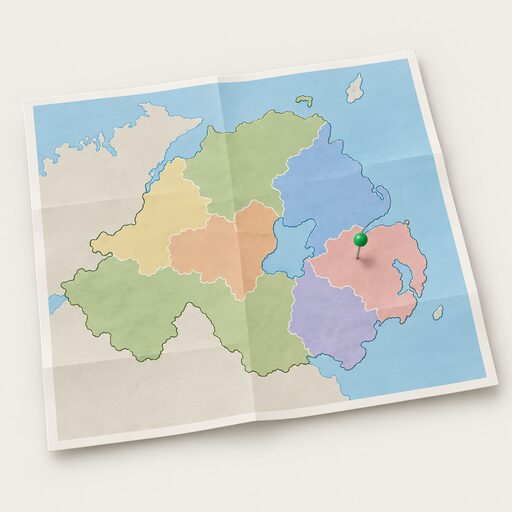 Community Energy in NICan a community group in Northern Ireland sell power to its neighbours, and is there funding to get a project off the ground?
 Home Energy Planning Rules in NIDo you need planning permission for solar panels or a heat pump in Northern Ireland?
 Wind Power on the UK GridOffshore wind now supplies a big share of Britain's electricity, and it keeps growing.
 Export Rates Per kWhHow much will your supplier pay you for the solar power you send to the grid, and why do rates vary so much from one company to another?
 G98 and G99 Grid ConnectionConnecting a wind turbine, hydro turbine or micro-CHP unit at home raises the question of whether it needs G98 or G99.
 Wind Turbine Output and SizingHow much electricity a home wind turbine makes depends far more on your wind than on its size.