In this guide
The Smart Export Guarantee is the scheme that pays small-scale generators for electricity they export to the grid. It came into force on 1 January 2020 under the Smart Export Guarantee Order 2019, and it works by obliging electricity suppliers that meet the threshold to offer an above-zero export tariff to eligible installations1. Payments are calculated from export meter readings, and the generator is paid by their chosen SEG licensee for every unit fed back2.
Eligibility rests on three things fitting together: a certified technology installed by a certified installer, a connection notified to the network operator under the right standard, and a meter that can record export at half-hourly intervals and is registered for settlement4. Miss any one of them and the application stalls, however well the panels perform.
The scheme is deliberately light on the household. A generator applies directly to a SEG licensee, and that licensee need not be the company supplying the home's electricity1. What the household must supply is evidence: the MCS certificate, the network operator's confirmation, and a meter that produces the readings the supplier needs.
What the Smart Export Guarantee is and who pays you
The SEG enables small-scale generators to receive payments from electricity suppliers for electricity exported back to the National Grid, provided certain criteria are met1. It replaced the export side of the Feed-in Tariff, which closed to new applicants, and it is governed by the Smart Export Guarantee Order 2019 together with Conditions 57 and 58 of the Standard Conditions of the Electricity Supply Licence2.
The obligation sits on suppliers. SEG licensees must offer a SEG tariff to all eligible generators, and the licence condition requires an above-zero export tariff for an eligible installation once the stated conditions are satisfied1. Suppliers are free to determine the terms of what they offer, for example whether the rate is fixed or variable, and they can choose the tariff rate, contract length and other relevant terms in their SEG contract9. Smaller suppliers may opt to provide a SEG tariff voluntarily, but if they do they must adhere to the rules and guidance associated with the scheme11.
For the household, the practical consequence is that the export contract is a separate commercial arrangement from the supply contract. A generator can apply for a SEG tariff with any SEG licensee, and the licensee does not need to be the same company as the current energy supplier. Separate companies can be used for SEG payments, electricity supply and gas supply1. That separation is the first piece of independence the scheme offers: the export income is not tied to whoever sells the home its imported units.
What it does not do is remove dependence on the grid. The SEG is a payment mechanism for exported units, not a route to self-sufficiency, and it pays only for what is metered as leaving the property. A household that stores its own generation and uses it on site earns nothing on those units, because they were never exported.
Eligibility: MCS certification of both technology and installer

The certification requirement covers two things at once: the technology and the installer must be certified under the Microgeneration Certification Scheme, or an equivalent scheme, and suppliers may ask for the MCS certificate as evidence4. Access to many incentives depends on using an MCS-certified installer, so the certificate is the document that unlocks the application rather than an administrative afterthought12.
Where certification is missing, the consequences are concrete. Without MCS certification, homeowners may be unable to access SEG payments, qualify for certain grants, or demonstrate compliance properly12. Having a solar system installed by a non-accredited installer could mean the household is not eligible to apply for the SEG at all5. That is a permanent condition of the installation, not something a later application can cure, which is why the certificate matters more at the point of purchase than at the point of application.
The MCS certificate is also the document a supplier is most likely to request first, because it ties the installation to a known standard and a known installer. A household buying a system should expect to hold the certificate, the commissioning documents and the network operator's confirmation together as one evidence set.
Eligible technologies: solar PV, wind, micro-CHP, hydro and anaerobic digestion
The SEG covers five technology types: solar photovoltaic, wind, micro combined heat and power, hydro and anaerobic digestion2. The legislation sets out the eligible low-carbon energy sources as anaerobic digestion, hydro generation stations, combined heat and power systems with an electricity capacity of 50 kilowatts or less, solar photovoltaic, and wind up to the maximum capacity specified in the SEG Order8.
The capacity ceiling follows the Feed-in Tariff pattern. Installations using solar PV, wind, hydro and anaerobic digestion technologies are eligible up to 5MW total installed capacity6. Within that, the accreditation route differs by size: non-micro wind and solar PV installations with declared net capacity over 50kW, all anaerobic digestion and hydro installations, and community and school applicants went through Ofgem's ROO-FIT process, while smaller installations were handled by the licensee13. The same split appears in the FIT guidance, where anaerobic digestion, hydro, PV over 50kW up to 5MW, and wind over 50kW up to 5MW had to apply through ROO-FIT6.
Take-up is heavily concentrated in solar. In SEG Year 3 there were 30 installations for other technology types, 23 micro-combined heat and power and seven wind14. That distribution matters for a household weighing options: the scheme is technology-neutral on paper, but the administrative and metering requirements are the same whether the generator is a rooftop array or a small hydro scheme, and the volume of applications runs overwhelmingly through solar PV.
For anaerobic digestion there is an extra step. To be eligible, SEG AD installations are required to submit a SEG AD Compliance Declaration to Ofgem15. That is a scheme-specific document with no equivalent for solar, wind, hydro or micro-CHP.
Export metering: why you need a smart meter that records exports
All installations eligible for the FIT scheme are also eligible for the SEG, provided they are fitted with an export meter or smart meter capable of taking measurements at half-hourly intervals3. SEG payments are calculated by using export meter readings, so the meter is not a convenience but the basis of the payment itself2.
The technical requirement is precise. Exports under the SEG must be metered on a half-hourly basis and registered for settlement, but they will not be required to be settled on a half-hourly basis16. The meter must be capable of measuring export at half-hourly intervals17. In practice this means a registered smart meter that records exported electricity, even where the household is not signing up to a smart tariff4.
Government's position is that SMETS-compliant smart meters are compatible with microgeneration and enable measurement of export on a half-hourly basis18. A smart meter automatically sends electricity and gas meter readings to the supplier, so the readings that underpin SEG payments arrive without the household submitting them19. Smart meters are supplied free of charge through the supplier, and they also give access to more flexible tariffs, including dual-rate tariffs19.
Two practical cautions belong here. A smart meter may stop recording the energy used, or may no longer send readings to the supplier, and a meter may not work in smart mode after a change of supplier, in which case readings may need to be taken manually and submitted20. Where a supplier goes out of business, Ofgem's safety net arrangements apply to supply, but the export contract is a separate arrangement with its own licensee21.
G98 and G99: the connection standards behind your application

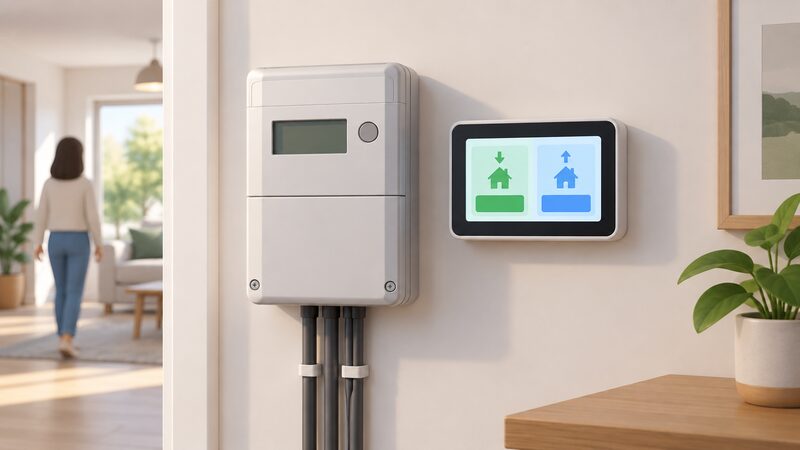
Before a supplier will pay for exports, the connection itself has to be notified to the distribution network operator under the correct engineering standard. The two standards that govern small-scale generation connections are G98, for smaller installations, and G99, for larger ones and for applications that need prior approval.
The network operator's response to a compliant application is documentary. One operator describes its DNO response as an email confirmation indicating that it has logged the commissioning documents in its system and verified that the system complies with G98/G99 standards22. That confirmation is the evidence a supplier expects to see alongside the MCS certificate.
For applications that meet the SGI 1, 2 or 3 criteria, the operator will undertake a review of the network and, if certain conditions are met, issue a Fast Track notification22. Where those criteria are not met, the application moves to a fuller review, which takes longer and may attach conditions to the connection.
The practical sequence for a household is therefore: certified installation, commissioning documents, notification to the network operator, confirmation of compliance, then the SEG application with the meter in place. The G98 or G99 confirmation is not something the household generates; it is issued by the network operator once the installer has submitted the paperwork.
Batteries and storage: how they reduce or affect your export payments
Storage changes the economics of export without changing eligibility. A household with an energy storage system can still apply for the SEG, and a battery could store electricity from the grid before exporting it later4. A storage device such as a household battery or electric vehicle that has the ability to import and export electricity could be used to benefit from the SEG9.
The treatment of stored electricity is set out in the scheme's own guidance. Government decided not to prevent SEG payments being made on so-called brown electricity exported from a storage device or non-renewable equipment co-located with a SEG technology, but suppliers are not obligated to pay on brown electricity16. That is a permission, not a guarantee: the licensee decides whether its tariff pays on units that did not originate from the accredited technology.
Ofgem has published dedicated guidance on co-location, updated to include an appendix on the co-location of battery storage with installations receiving a Smart Export Guarantee tariff23. That guidance is aimed at participants in the Renewables Obligation, Feed-in Tariffs, Renewable Energy Guarantees of Origin and Smart Export Guarantee schemes who are considering co-locating electricity storage with an accredited generating station, FIT installation or SEG installation23.
The independence point cuts both ways. A battery lets a household keep more of its own generation for its own use, which reduces imports and reduces exports at the same time. Every unit diverted to the battery is a unit not sold, so a household weighing storage against export income is trading one benefit for another. The scheme does not resolve that trade-off; it simply allows the export side to continue where the licensee's terms permit it.
Applying to a supplier: SEG tariffs and what to compare
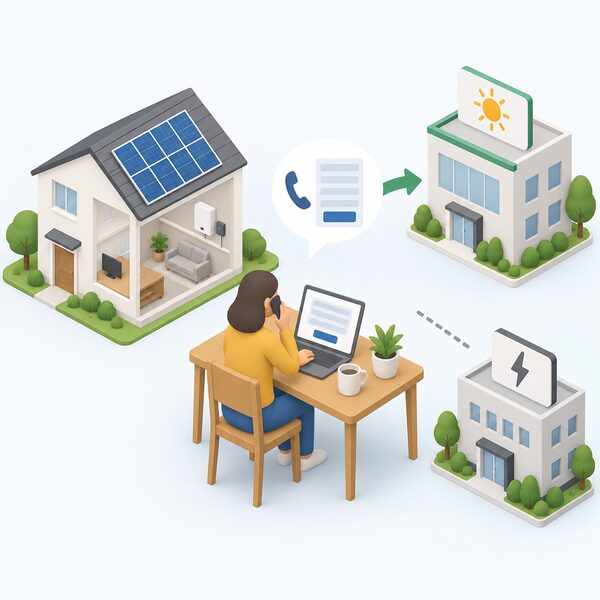
Applications go to the licensee, not to Ofgem. Generators who wish to receive payment for exported electricity need to apply to a SEG licensee, which is an electricity supplier offering a SEG tariff, and generators should contact SEG licensees directly1. Ofgem publishes a list of SEG licensees every year, and the application is made directly to a SEG tariff supplier4.
What can be compared between licensees is the commercial package. SEG licensees can choose the tariff rate, contract length and some other relevant terms which they will offer generators as part of their SEG contract10. Suppliers are required to offer a tariff but are free to determine its terms, for example fixed or variable9. Some tariffs are bundled with a condition, such as the purchase of import electricity14.
The separation of contracts is the feature most worth understanding. A household can apply for a SEG tariff with any SEG licensee, and the licensee does not need to be the same company as the current energy supplier; separate companies can be used for SEG payments, electricity supply and gas supply1. Because the supply contract and the export contract are distinct, a household that pays a supplier directly for electricity or gas can choose to switch supplier or tariff at any time without disturbing the export arrangement25.
| What the household controls | What the licensee controls |
|---|---|
| Which SEG licensee to apply to1 | Tariff rate and contract length10 |
| Whether supply and export sit with different companies1 | Whether the rate is fixed or variable9 |
| Whether to switch import supplier at any time25 | Any bundling conditions, such as buying import electricity14 |
For rates themselves, see Smart Export Guarantee rates and the comparison of Good Energy and Octopus SEG tariffs. The application mechanics, readings and statements are covered in applying for an export tariff.
Homes with legacy FIT installations: how they qualify for the SEG
A household already on the Feed-in Tariff can move its export side to the SEG, but only by giving up the FIT export payments for that installation. In order to register for the SEG, the generator must first opt out of FIT export payments for the installation by contacting the FIT licensee7. A generator intending to claim SEG payments must not be in receipt of an FIT export tariff for the same generation capacity6.
The prohibition is drafted to prevent double payment. The prospective SEG generator must not also receive or benefit from the FIT export tariff, or receive SEG payments from another SEG licensee for the installation8. Generation payments are a different matter: Ofgem guidance for FIT generators states that generation payments will not be affected7.
Two installations can be treated separately. SEG payments may be received where FIT export payments are received for a different installation, as long as the installations are completely separate with distinct import and export meters and different import and export MPANs14. The licence conditions take the same line: an increase using a different eligible low-carbon energy source must be treated as a separate eligible installation8. A generator must also inform the SEG licensee as soon as reasonably possible of extensions to an eligible installation8.
There is a further exclusion worth knowing. An installation containing generating equipment which has previously been accredited under the FIT or RO scheme is not eligible, so equipment cannot be recycled into a new claim26. Accreditation itself was never automatic: an eligible installation was not classed as accredited until the licensee received confirmation from Ofgem that it had gained entry into a tariff period and was entered onto the central register26. FIT licensees were also required to verify the identity of the generator when registering an installation26.
For the wider picture of the closed scheme and its export payments, see Feed-in Tariff export payments and the direct comparison in Feed-in Tariff vs Smart Export Guarantee.
What eligibility means for a household's energy independence
The SEG gives a household a contractual route to payment for exported units, and it does so without tying that income to the company that supplies its imported electricity1. That is a genuine piece of independence: the export contract can be moved, the supply contract can be moved, and the two need never sit with the same firm.
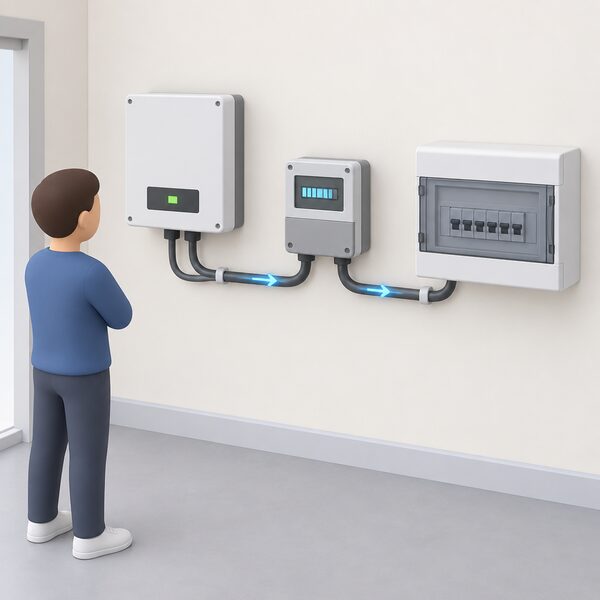
The dependence that remains is substantial and worth stating plainly. The household still relies on the grid to take its exports and on a licensed supplier to meter and pay for them. It relies on a meter that must be registered for settlement and capable of half-hourly measurement, and on a network operator's confirmation that the connection complies with G98 or G993. It relies on the MCS certificate issued at installation, which cannot be obtained retrospectively if the installer was not certified5. And it relies on the licensee's own terms, since the rate, the contract length and any bundling conditions are the supplier's to set10.
Storage adds a further layer of choice rather than removing dependence. A battery allows more self-consumption and less export, and the scheme permits payment on brown electricity without obliging any supplier to make it16. The household decides how much of its generation to keep and how much to sell; the scheme sets the boundaries within which that decision is made.
For the tariff landscape around these arrangements, the pillar page on UK energy tariffs sets out how import and export pricing fit together, and tariffs and household energy independence develops the wider argument.
Sources26 cited
- Smart Export Guarantee (SEG) for generators, Ofgem, 2026-09-17
- Smart Export Guarantee (SEG), Ofgem, 2026-09-17
- Feed-in Tariffs scheme closure, Ofgem, 2026-09-17
- Smart Export Guarantee, Energy Saving Trust, 2026-05-20
- Solar photovoltaic (PV) panels, London Borough of Bromley, 2026-09-17
- Feed-in Tariffs, Ofgem, 2026
- Guidance for FIT Generators V18, Ofgem, 2024-09-06
- Draft licence conditions, Department for Business, Energy and Industrial Strategy, 2026-09-17
- Smart Export Guarantee: earn money for exporting renewable electricity, GOV.UK, 2020-01-01
- Smart Export Guarantee (SEG) electricity suppliers, Ofgem, 2026
- The future for small-scale low-carbon generation, GOV.UK, 2019-02-11
- Solar panel grants and incentives, The CPA, 2026-05-21
- Feed-in Tariffs Annual Report Scheme Year 13, Ofgem, 2023-12
- Smart Export Guarantee Annual Report 2022-23, Ofgem, 2023-09-29
- Smart Export Guarantee Annual Report Year 5, Ofgem, 2025-12
- Smart Export Guarantee impact assessment, legislation.gov.uk, 2019-06
- Guidance for SEG licensees, Ofgem, 2019-12
- The future for small-scale low-carbon generation: SEG, Department for Business, Energy and Industrial Strategy, 2019-01
- Getting a smart meter, Ofgem, 2026
- What happens if your energy supplier goes out of business, Ofgem, 2026
- Switch your home energy supplier, Ofgem, 2026
- G99 Fast Track process, Electricity North West, 2026-09-19
- Guidance for generators: co-location of electricity storage and hydrogen production, Ofgem, 2024-03-20
- Contacts, guidance and resources, Ofgem, 2026-09-17
- Feed-in Tariffs for generators, Ofgem, 2026-09-17
- FIT Guidance for Licensed Electricity Suppliers V17.1, Ofgem, 2024-09-06
 Solar Export PaymentsIf you have solar panels, how do you actually get paid for the electricity you send back to the grid?
 MCS CertificationWhy do so many installers and tariff schemes ask about MCS certification when you get solar panels?
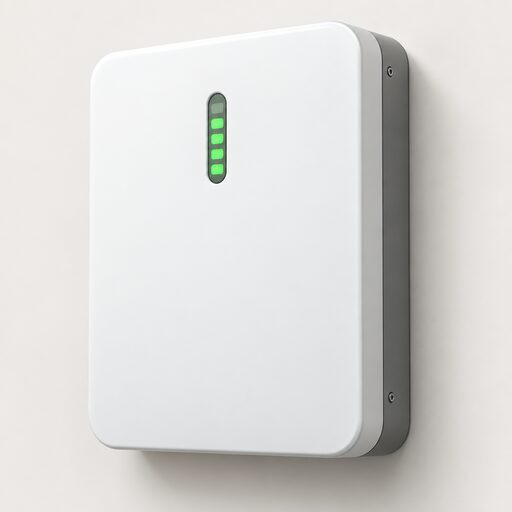 Exporting From a Home BatteryCan you actually get paid for electricity your home battery sends to the grid?
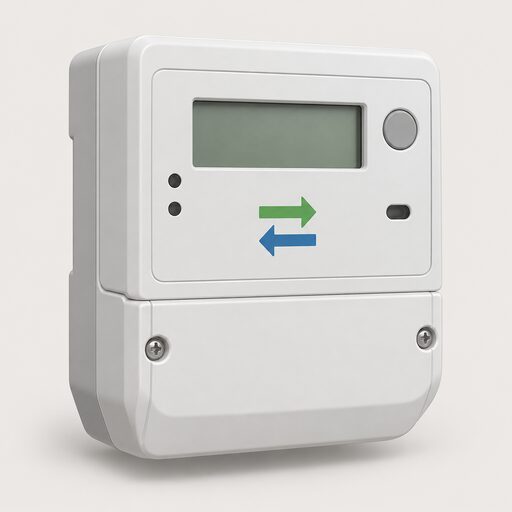 Grid Connection Rules for V2GCan your charger send power back to the grid?
 Export Rates Per kWhHow much will your supplier pay you for the solar power you send to the grid, and why do rates vary so much from one company to another?
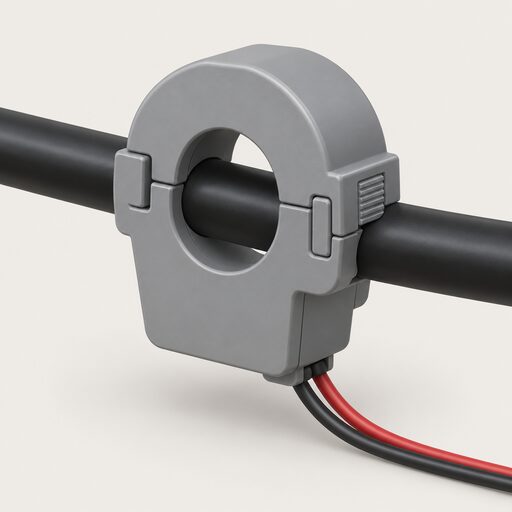 Export Metering and LimitationYour solar panels are capped so they cannot send much power back to the grid.