

In this answer
Short answer
Yes. A household on the Feed-in Tariff can opt out of the FiT export rate and take a Smart Export Guarantee tariff instead, while the FiT generation tariff continues to be paid to the end of the contract. The two schemes cannot pay for the same exported electricity, so the export side must be given up before the SEG begins1.
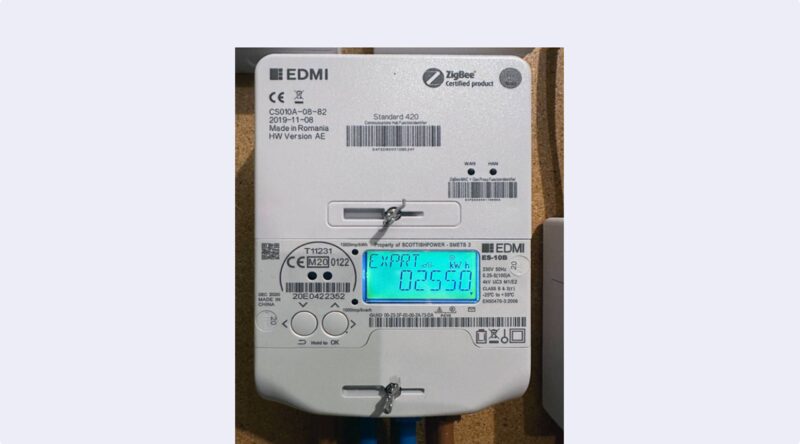
The mechanics are set by Ofgem. To register for the SEG, a generator must first opt out of FiT export payments for the installation by contacting their FiT licensee, and most accredited FiT installations are eligible provided a smart or export meter is installed3. The generation tariff is untouched by that step: one supplier states the generation payment makes up the majority of the FiT payment and will not change, and another confirms generation payments remain the same4.
The decision is one-way and account-specific. Once switched, FiT export payments cannot be restored, and a household on a deemed or estimated FiT export rate cannot return to that arrangement after a smart meter is fitted1. On earnings, supplier guidance is blunt: most people already on the FiT are unlikely to earn more with the SEG, though it very much depends on the rate7.
Switching from FiT export payments to a SEG tariff: what is allowed
The rule that shapes everything here is a prohibition on double payment. Ofgem states plainly that a generator cannot receive both SEG payments and FiT export payments for the same electricity3. The licence conditions behind the scheme put it in the same terms: a prospective SEG generator must not also receive or benefit from the FiT export tariff, or receive SEG payments from another licensee for the same installation9.
What is allowed is the split. A household can discard the FiT export rate and replace it with a SEG tariff while retaining the main generation tariff portion of the FiT payment1. Independent guidance from the Energy Saving Trust frames it as opting out of FiT export payments and taking SEG payments instead, with FiT generation payments continuing2. Ofgem's generator guidance requires that opt-out as a precondition: a household intending to claim SEG payments must not be in receipt of an export tariff under the FiT for the same installation and generation capacity, and must contact its FiT licensee first10.
There is one route to holding both, and it depends on physical separation rather than paperwork. A household can receive SEG payments for one installation while still receiving FiT export payments for a different installation, provided the installations are completely separate, with distinct import and export meters and different import and export MPANs10. That is a two-array arrangement, not a way to double up on one roof.
The SEG itself is not administered by government. Energy suppliers that have signed up to either scheme administer it and make the payments, and the government does not make FiT or SEG payments directly1. That matters for the switch: the counterparty is a licensed supplier, and the terms are commercial.
What you keep and what you give up
The FiT was a two-part payment, and only one part moves. The generation tariff is paid for every unit generated regardless of where it goes, and it stays with the FiT. The export tariff is paid for units sent to the grid, and that is the element replaced by the SEG. One supplier describes the generation payment as making up the majority of the FiT payment and confirms it will not change; another states that FiT generation payments remain the same and the generation tariff is not lost4.
Both FiT generation and export rates are index-linked to inflation, meaning they rise and fall with it11. That is a feature of the FiT, and it is one reason the export rate being surrendered may be worth more than a flat SEG rate in some accounts. The SEG has no equivalent index-linking rule: licensees determine the rate, the contract length and other terms which generators will receive8.
The SEG also pays on a different basis. The FiT pays for both generating and exporting electricity, while the SEG only compensates for the electricity exported12. A household that consumes most of what it generates therefore gets little from either export mechanism, and the switch changes little in cash terms.
| Element | Under the FiT | After moving export to SEG |
|---|---|---|
| Generation payment | Paid per unit generated, index-linked11 | Continues unchanged4 |
| Export payment | FiT export rate, index-linked11 | Replaced by the SEG rate set by the licensee8 |
| Payment basis | Generation and export12 | Export only12 |
| Rate set by | The FiT scheme | The chosen SEG licensee8 |
"Generation payment, this makes up the majority of your payment and will not change."
The switch is one-way: you cannot go back to FiT export payments
The export side of the decision is permanent. Once a household has switched to a SEG tariff, it cannot switch back to FiT export payments, although the generation tariff remains unaffected1. Independent guidance is equally direct: a household must choose one scheme for its export payments and cannot be paid by both SEG and the FiT for the same energy sent to the grid6.
A second, less obvious trap sits behind the first. A household on a deemed or estimated FiT export rate cannot go back to that arrangement once a smart meter is fitted6. Deemed export was a convenience for installations without an export meter, paying an assumed proportion of generation. Fitting a smart meter ends that assumption, and the move to metered export is not reversible.
There is also a limit on the SEG side: a household cannot get SEG payments from more than one supplier2. So the export tariff is a single, exclusive arrangement, and the choice of licensee is the choice of rate.
Will you earn more on SEG? What most FiT households should expect
For most existing FiT households, the honest answer is probably not. Supplier guidance states that most people who already get the Feed-in Tariff are unlikely to earn more with the SEG, though it very much depends on the rate7. The reason is structural: the FiT export rate was a scheme-wide, index-linked figure, while the SEG is a commercial rate set by each licensee, and SEG rates are often less than what a household pays for electricity13.
The SEG replaced the FiT, and it is widely described as the less generous of the two. One consumer body notes that the FiT has been replaced by the much-less-generous Smart Export Guarantee scheme14. Another independent guide makes the same point in different words: the SEG replaced FiT and pays for exported electricity, but unlike FiT, SEG rates vary by supplier, so shopping around matters15.
What a household can control is the rate it accepts. SEG licensees choose the rate, the contract length and other terms, but the tariff must be above zero where the scheme conditions are met9. Rates vary by supplier, and a fixed SEG tariff pays a set rate per kWh exported over the length of the contract2. Some tariffs carry no fixed end date16.
For a household with panels only, the practical comparison is between the existing FiT export rate and the best available SEG rate, and the arithmetic is account-specific. Where a battery or a heat pump is involved, the picture widens: independent guidance suggests looking for a good SEG tariff for exported electricity and then either a dynamic tariff or a heat pump tariff for import, from the same company17. That is a whole-home tariff decision, not just an export one.

Who benefits most from switching: recent FiT sign-ups versus older accounts
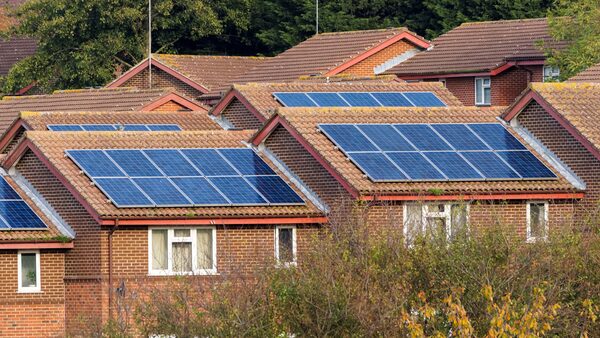
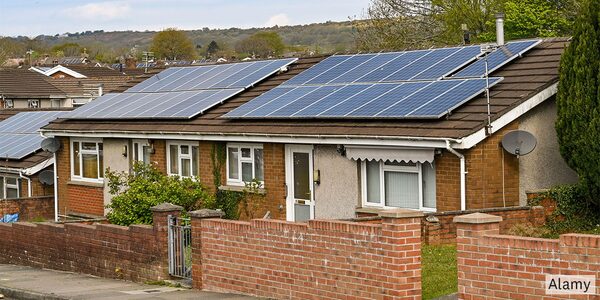
The FiT paid households that installed renewable generation technology between 2010 and 201918. Within that window, rates fell over time, and that is what splits the population. Recent FiT sign-ups, on lower export rates, may get a better deal by switching to the SEG; most people already on the FiT are unlikely to earn more7. Older accounts, on the higher legacy export rates, are the least likely to gain.
The FiT is closed to new entrants, but new installations can still benefit from the SEG from licensed providers19. That means the SEG is now the only export route for anything installed today, and the switch question is specific to the legacy FiT population.
There is a commercial angle worth knowing about. Solar buyback schemes have been targeted at people who have older solar panels enrolled in the feed-in tariff scheme, which is now closed to new applications20. A household on a legacy FiT export rate is therefore a known target for third-party offers, and the value of the rate being surrendered is exactly what such offers are built around.
| Household type | FiT export rate position | Likely SEG outcome |
|---|---|---|
| Installed 2010 to 2019, early years | Higher legacy export rate, index-linked11 | Unlikely to earn more7 |
| Recent FiT sign-ups | Lower export rate | May get a better deal by switching7 |
| Deemed or estimated export | Assumed export proportion | Lost permanently once a smart meter is fitted6 |
| New installation today | Not eligible for FiT19 | SEG is the only export route19 |
How the switch is made, and who pays
The process runs in two steps, in order. First, contact the FiT licensee to opt out of FiT export payments for the installation3. Second, apply directly to a SEG tariff supplier; Ofgem publishes a list of SEG licensees2. Signing up is not automatic, so a household must sign up to the tariff to get payments21.
The choice of licensee is genuinely open. A household can apply for a SEG tariff with any SEG licensee, and the licensee does not need to be the same company as the current energy supplier3. It can also use separate companies for SEG payments, electricity supply and gas supply3. Independent guidance makes the same point: a household can sign up for SEG payments with a different company to its energy supplier, so shopping around is worthwhile22.
Two conditions sit underneath the application. Most accredited FiT installations are eligible for the SEG provided a smart or export meter is installed3. And a household cannot receive FiT export payments or public grants if it signs up to the SEG23.
On the money itself, the amount due and the contract length are determined by the chosen SEG licensee3. The government does not make the payments; the suppliers that have signed up to the scheme administer it and pay1. For a household, that means the export income depends on a commercial counterparty, and the terms are the ones in that licensee's contract.

What this means for household energy independence
The switch is a trade of one dependence for another. Staying on the FiT export rate keeps a scheme-wide, index-linked payment set under the old rules, administered by the FiT licensee11. Moving to the SEG keeps the generation tariff but hands the export rate to a commercial licensee that sets the rate, the contract length and the terms8. Neither route removes the household from the grid, and neither removes reliance on a supplier to make the payment.
What the generation tariff preserves is the more valuable half. It is paid on everything generated, not just what is exported, and it is index-linked11. That is the part of the FiT that supports self-consumption economics, and it survives the switch intact4.
What the switch does not change is the physical dependence. Export still requires a grid connection and a meter, and the SEG pays only for exported units12. A household that wants to reduce reliance on the export market altogether would be looking at self-consumption, storage or diversion rather than tariff switching, and those are separate decisions from this one.
The wider context is that the FiT is closed and the SEG is the successor scheme19. For a household weighing the switch, the question is narrow and answerable: what is the current FiT export rate, what SEG rates are on offer, and is the difference worth giving up a rate that cannot be recovered1.
Sources25 cited
- Can I switch energy supplier if I have solar panels?, Uswitch, 2026-06-04
- Smart Export Guarantee, Energy Saving Trust, 2026-05-20
- Smart Export Guarantee: information for generators, Ofgem, 2026-09-17
- Smart Export payments, Good Energy, 2025-11-07
- Octopus Flux, Octopus Energy, 2026-09-16
- Feed-in Tariff guide, Uswitch, 2026-07-13
- Switching energy suppliers with solar panels, OVO Energy, 2021-04-19
- Smart Export Guarantee, Ofgem, 2026-09-17
- Draft licence conditions, Department for Business, Energy and Industrial Strategy, 2026-09-17
- Guidance for FiT Generators V18, Ofgem, 2026-04-01
- FIT Guidance for Licensed Electricity Suppliers V17.1, Ofgem, 2024-09-06
- Smart Export Guarantee explained, Energy Helpline, 2026-09-20
- Solar panel costs, Which?, 2026-08-03
- Free solar panels and solar buyback, Which?, 2026-03-26
- Buying a house with solar panels, Energy Saving Trust, 2026-08-13
- Smart Export Guarantee, Solar Energy UK, 2026-05-12
- Tariffs for renewable technology, Energy Saving Trust, 2026-08-12
- Household energy bills and green levies, Nesta, 2026-09-20
- Understanding barriers to heat pump uptake in the private rental sector, Nesta, 2025-11-11
- Beware these solar panel cold calls, Which?, 2024-08-29
- New calculator shines a light on solar panels, Energy Saving Trust, 2026-08-17
- Solar photovoltaic, Centre for Alternative Technology, 2026-03-10
- Smart Export Guarantee, OVO Energy, 2026-09-17
- The future for small-scale low-carbon generation: SEG, Department for Business, Energy and Industrial Strategy, 2019-01
- Smart Export Guarantee: information for electricity suppliers, Ofgem, 2026
 Export Tariff ApplicationsHow the Smart Export Guarantee application works, how export readings are collected, and how often payments are made.
 Solar Export PaymentsIf you have solar panels, how do you actually get paid for the electricity you send back to the grid?
 Export Rates Per kWhHow much will your supplier pay you for the solar power you send to the grid, and why do rates vary so much from one company to another?
 Exporting From a Home BatteryCan you actually get paid for electricity your home battery sends to the grid?
 The Full Tariffs GuideWhich energy tariff suits how you live, and will switching really save you money?
 Solar and Battery Import TariffsWhat does a special import tariff actually get you when you have solar panels or a home battery?