

In this answer
Short answer
A fixed-rate tariff locks in your unit rate and standing charge for the length of the contract, not your total bill. The amount charged is set by how much energy is used, the unit cost and the daily fee, so a household that uses more still pays more even though the price per unit has not moved1. What the fix buys is protection from price changes during the fixed term, and what it gives up is the benefit of any fall1.
The decision turns on one comparison: the fixed rate on offer against the price cap that governs standard variable and prepayment tariffs. The price cap does not apply to fixed-term tariffs, so a cap rise does not reach a household inside a fix, and a cap fall does not either3. Independent guidance puts the switching threshold at no more than 40% more expensive than the current price cap5.
Most fixed deals run 12 months, with 12, 24 and even 36 month terms available, and most carry exit fees for each fuel if the contract is left early6. Suppliers must contact a household 42 to 49 days before a fixed-term tariff ends, which is the window in which the next decision is normally made8.
What a fixed-rate tariff actually locks in
The guarantee is narrower than the name suggests. A fixed-rate tariff locks in the price per unit of energy and the standing charge for the duration of the contract, protecting the household from changes in energy prices during the fixed term1. It does not lock in the total bill, which moves with how much energy is used1. A cold winter, a new appliance or a change in working patterns all change what is paid, even though the rate has not moved.
The components are worth separating. The unit cost of energy and the daily fee are fixed; the amount charged is the energy used multiplied by the unit cost, plus the daily fee10. A household that understands its annual consumption in kilowatt hours can therefore work out what a fixed deal will cost with reasonable accuracy, and a household that does not is comparing headline rates without knowing the bill they produce.
There is a second, quieter feature of a fix: the price is the same each day, at any time of day11. That matters for households weighing a fix against a time-of-use tariff, where the whole point is that electricity costs different amounts at different hours. A fix is the opposite trade: one flat rate in exchange for giving up the ability to shift load into cheaper windows.
For energy independence, the fix is a hedge, not a source of supply. It changes what a household pays for grid electricity and gas, and it does nothing about where that energy comes from or whether the household could run without it. A household with solar panels and a battery has more options than one without, because it can reduce the units it buys in the first place, but the tariff decision itself remains a contract about price.
Fixed versus the price cap: how to judge the deal

The price cap sets a limit on what suppliers can charge customers on standard variable and prepayment tariffs4. It does not limit the total bill, only the rates that produce it12. Fixed tariffs, business energy contracts, heat networks and heating oil all sit outside it3. That is the whole basis of the comparison: a fixed deal is judged against a cap that would otherwise govern the household's rates, and the gap between the two is the price of certainty.
The cap has moved sharply in recent years. Rapid increases in wholesale energy prices from mid-2021 onwards led to a 54% increase in the price cap in April 202213. Since summer 2022 the cap has been set every quarter rather than every six months, in response to high and volatile wholesale prices14. A quarterly cap means a variable tariff household sees its rates reviewed four times a year, which is the volatility a fix is designed to remove.
Ofgem has consulted on updating how the cap level is set for single-rate customers, those who pay the same price for electricity regardless of when they use it15. That is a technical change to the mechanism rather than a change to who the cap covers, but it is a reminder that the cap is an administered price, not a market one, and that its level is a policy decision as much as a cost calculation.
The practical test is straightforward. A fixed deal priced below the cap is cheaper than doing nothing, and independent guidance confirms such deals exist, worth checking for households still paying out-of-contract rates16. A fixed deal priced above the cap is buying insurance, and the question becomes whether the household values that certainty more than the difference. Around 11 million households are on a standard variable tariff or one they have not chosen, which is the population for whom this comparison is live9.
The switching threshold: no more than 40% above the cap
The most commonly quoted rule of thumb is that a fixed-rate deal is worth considering at no more than 40% more expensive than the current price cap5. The figure is a threshold, not a target: it marks the point beyond which the premium for certainty is generally judged too high, not a level at which every household should switch.
The same 40% figure appears in a different context that is worth keeping separate. On Economy 7, a household would have to use more than 40% of its electricity during the night to make switching worthwhile17. The number is coincidental, and the two tests measure different things: one compares a fixed rate with a cap, the other compares night usage with day usage. Neither substitutes for the other.
Applying the threshold requires knowing the current cap level and the fixed rate on offer, both expressed in the same units. Unit rates and standing charges are the figures to compare, alongside whether prices are fixed or can change, the length of any fixed-term contract, payment methods available, customer service and support, and any additional benefits or incentives18. A deal that clears the 40% test on price but carries a long term and a high exit fee is not automatically the better choice.
Consumer understanding of exit fees is weaker than it should be. Ofgem research found that 57% net of consumers could identify that exit fees may still apply to a fixed contract even when moving to another deal with the same supplier19. That is a gap that matters at the point of comparison, because a household that assumes switching within a supplier is free may misjudge the true cost of the deal it is signing.
Typical fixed terms: 12 to 18 months, and the options on offer
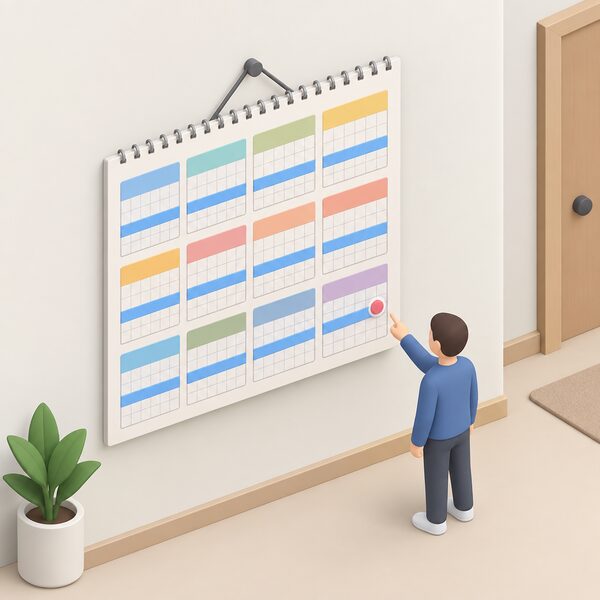
Fixed deals offer peace of mind by locking in the price of energy for the length of the contract, typically 12 months20. Longer terms exist: 12, 24 or even 36 months are available6, and fixed energy tariffs usually run 12 to 24 months21. A fixed rate tariff normally has a minimum term of 12 months22. Ofgem's own consumer research tested 12 month fixed term, 24 month fixed term and standard variable options, which reflects the shape of the market households actually choose from19.
The habit that independent guidance recommends is switching every 12 to 18 months23. That is slightly longer than the typical contract, which means the practical rhythm is to review at the end of each fix rather than to hold one for its full advertised life and drift. Suppliers are required to contact a household 42 to 49 days before the end date of a fixed-term tariff, informing them of what happens next8. Switching with 21 to 49 days left on the current tariff avoids spending a few days or weeks on the current supplier's standard variable rate20.
What happens at the end of a fix is the part households most often misjudge. With a fixed rate, the household rolls onto the provider's standard variable rate when the tariff ends24. Suppliers will probably move a household to their standard variable tariff when a fixed plan ends, although some may offer the chance to move to another deal2. The rollover is not a penalty imposed for inaction so much as the default position, and it is the reason the notice window matters.
What switching costs you, and what it does not
Moving from a variable rate to a fixed tariff should not cost anything, because there is no contract to break25. The costs sit on the other side of the decision. Most fixed tariffs include exit fees for each fuel, payable if switching before the end of the contract7. Ofgem guidance confirms that a household may have to pay its previous supplier an exit fee if it was on a fixed rate tariff and chose to leave before it ended26. Independent guidance is blunter: leaving a fixed contract early may mean an early exit fee6.
The standard test is to compare the exit fee with the savings available on the new deal, since moving to a cheaper tariff could still save money overall18. Choosing a tariff with low or no exit fees, in case circumstances change, is advice offered for exactly this reason27. Some fixed-rate tariffs charge a fee if the contract is left before it ends, and the amount varies by supplier and by fuel18.
There are protections on the switching process itself. If a switch is not completed within a set period, the new supplier must pay the household £40, and the same £40 applies if the energy supply is switched by mistake26. Prepayment meter customers face a separate limit: switching is blocked if more than £500 is owed in gas or electricity20.
"You may have to pay your previous supplier an 'exit fee' if you were on a fixed rate tariff and chose to leave before it ended."
The wider point is that switching is a repeatable process, not a one-off. Reviewing the tariff regularly to ensure it is the best deal, and being aware of any exit fees, is the pattern that keeps the cost of the contract visible28. A household that fixes and forgets has bought certainty and then stopped checking whether it was worth the price.
Where a fixed tariff fits an energy-independent household

A fixed tariff is a price contract, and price is only one of the dependencies a household carries. The grid still delivers the energy, a supplier still bills for it, and gas still heats most homes. What a fix changes is exposure to wholesale price movements during the term, and what it leaves untouched is everything else: the physical supply, the standing charge that applies whatever the usage, and the fact that the household cannot generate its own power unless it has installed generation.
That is why the tariff decision sits alongside, rather than instead of, the measures that reduce units bought. A household with solar panels and a battery can shift consumption into its own generation and export the surplus, and fixed tariffs are valid for a certain period, typically 12 months, after which a new option has to be found29. The export side of that arrangement is a separate contract with its own terms, and it is worth reading alongside the import decision rather than after it.
Some tariffs are explicitly built for households with controllable load. OVO's Charge Anytime requires the customer to already be signed up to a home energy tariff, whether fixed or standard variable, which shows that a fix and a smart-charging add-on are not mutually exclusive30. The same logic applies across the market: a fixed import tariff can sit underneath a time-of-use or EV arrangement, and the household's independence comes from the combination rather than from the fix alone.
There is also a supplier-side dependency worth naming. Fixed tariff customers with smaller scheme savings were affected by changes involving 100 Green, Fuse Energy, Good Energy, Home Energy and Tulo Energy, suppliers funding only one of two schemes31. A fixed rate is only as durable as the company standing behind it, and the financial position of the supplier is part of the risk a household takes on when it signs a 12 or 24 month contract.
For a household weighing the decision, the honest summary is this: a fix removes price risk for a defined period, at the cost of a premium over the cap and an exit fee if circumstances change. It does nothing for supply independence, and it does not reduce consumption. Households that want to cut what they buy need generation, storage or load-shifting, and the tariff is the wrapper around those choices rather than a substitute for them.
Sources31 cited
- Fixed-rate tariffs: switching, Home Energy Scotland, 2024
- Fixed energy deals, Uswitch, 2026
- What is the energy price cap, Energy Saving Trust, 2026
- Ofgem guide, Uswitch, 2026
- Average gas and electric bills in the UK, Energy Helpline, 2026
- Fixed and variable tariffs: what's the difference, Energy Helpline, 2026
- Energy tariffs explained, Uswitch, 2026
- How to complain about your energy bill, Which?, 2026
- Energy bills to fall for millions, Turn2us, 2026
- Your supplier has put up its prices, Citizens Advice, 2026
- Energy flexibility, Smart Energy GB, 2026
- Best deal energy, Home Energy Scotland, 2026
- Energy price cap research briefing, House of Commons Library, 2026
- Energy price cap methodology decision, Ofgem, 2025
- Energy price cap technical approach, Ofgem, 2026
- Cheap ways to stay warm this winter, Which?, 2026
- What is Economy 7, Energy Helpline, 2026
- How to check your energy tariff and switch, British Gas Energy Trust, 2026
- Understanding consumers' energy tariff choices, Ofgem, 2025
- How to switch energy supplier, Confused.com, 2025
- How to switch energy supplier, Which?, 2026
- Gas and electricity, Confused.com, 2026
- When is the best time to switch my energy deal, Uswitch, 2026
- Understanding energy bills, StepChange, 2026
- Green energy tariffs, Confused.com, 2025
- Switch your home energy supplier, Ofgem, 2026
- Five top tips to cut your energy bills, Welsh Government, 2026
- Energy saving tips, British Gas Energy Trust, 2026
- Are solar panels worth it, Which?, 2026
- OVO EV energy tariffs, Uswitch, 2025
- What the Middle East conflict means for your energy bills, Which?, 2026
 Fixed-Rate Energy TariffsWhat a fixed energy tariff fixes and what it does not, the contract lengths sold in the UK, exit fees and the 49-day window, how fixed rates compare with the price cap, and what happens when the term ends.
 The Full Tariffs GuideWhich energy tariff suits how you live, and will switching really save you money?
 Energy Price CapThe price cap sets the most you pay for each unit of gas and electricity, plus the daily standing charge, but not your total bill.
 Fixed and Variable TariffsCompares capped standard variable tariffs with fixed deals, including exit fees, contract end and rollover.
 Which Tariffs Your Meter AllowsHow meter type decides which energy tariffs a household can access, from single-rate and two-rate meters to smart, prepay and restricted configurations, and the constraints faced by flats, rented homes and homes without a working smart connection.
 Standing Charge ReformPeople on low usage ask why they pay a daily charge at all, and whether a zero standing charge tariff is really coming.